
How to Protect a Finger Cut Without Gloves (2026 Guide)
How to Protect a Finger Cut Without Gloves is a common problem when gloves feel bulky, uncomfortable, or impractical for daily use. A small cut on your finger can easily get worse from water, friction, or dirt if left exposed.
The good news is there are smarter, easier solutions that protect your finger while allowing full movement. In this guide, you’ll learn practical methods, doctor advice, and the best protection options to keep your finger safe and healing properly. For a complete guide on finger protection, explore all available solutions.
Quick Answer
You can protect a finger cut without gloves by using finger cots, bandages, or protective covers. These create a barrier against water, dirt, and friction while keeping your finger flexible and comfortable during daily tasks.
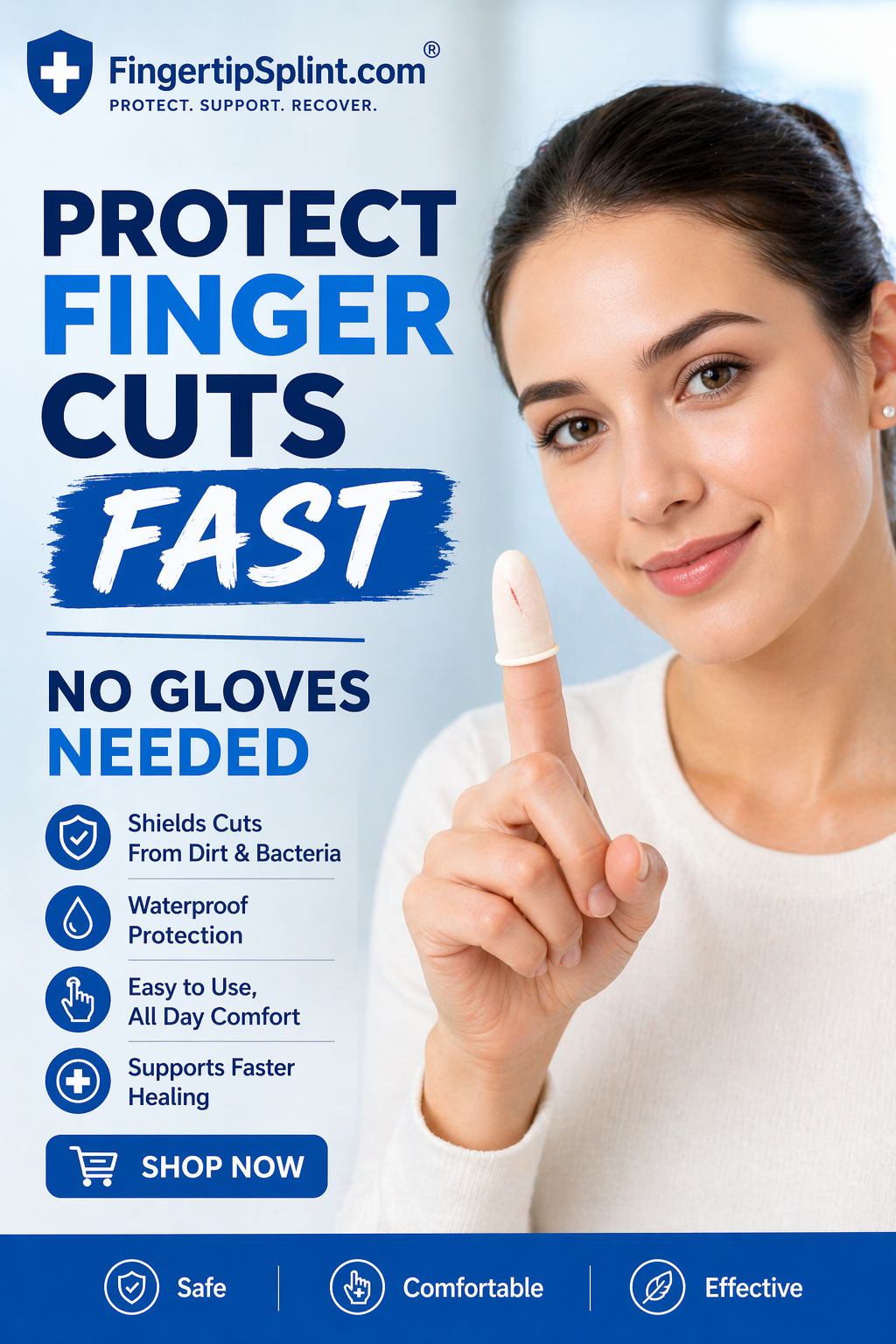
Why Finger Cuts Get Worse Without Protection
- Exposure to water softens the wound
- Friction delays healing
- Dirt increases infection risk
- Daily tasks reopen the cut
If your injury needs more support, consider finger brace options or medical splints.
Best Ways to Protect a Finger Cut Without Gloves
- Finger cots: best protection option for daily use
- Bandages: basic wound coverage
- Finger sleeves: light comfort protection
- Waterproof covers: for washing and showering
Explore the recommended solution for reliable protection.
With vs Without Protection
| WITHOUT Protection | WITH Finger Protection |
|---|---|
| Open to dirt | Clean barrier |
| Slower healing | Faster recovery |
| High irritation | Reduced friction |
| Risk of infection | Safer healing |
7 Benefits of Protecting a Finger Cut Properly
- Prevents infection
- Speeds healing
- Reduces pain
- Protects from water
- Allows daily activity
- Keeps wound clean
- Improves comfort
Read more in our guide on how finger cots support healing.
Step-by-Step: How to Protect Your Finger
- Clean the wound
- Apply antiseptic
- Cover with bandage
- Use finger cot for protection
- Replace daily
Quick Tips
- Keep wound dry
- Change covering daily
- Use correct size finger cot
- Avoid tight pressure
- Keep hands clean
Common Mistakes
- Ignoring small cuts
- Leaving wound exposed
- Using dirty bandages
- Wearing too tight covers
Who Needs This?
- Workers handling water
- People with cuts
- Home cooks
- Athletes
For additional comfort, see finger sleeves and silicone protectors.
Doctor Advice
Protecting a cut is essential. Seek medical help if:
- Wound is deep
- Signs of infection
- Pain increases
According to Mayo Clinic and WebMD, proper wound protection reduces infection risk and improves healing.
Best Recovery Bundle
- Finger cots
- Bandages
- Finger splints
Browse the shop collection for full options.