Distal Phalanx Fracture Splint: Complete Guide, Uses & Best Support

A distal phalanx fracture splint helps protect the fingertip, reduce unnecessary movement, and support recovery after a fingertip fracture, mallet finger, tendon injury, or post-surgery healing. This authority page explains symptoms, splint types, how to choose the right support, common mistakes, recovery tips, and when to seek medical care.

Shop Distal Phalanx Fracture Splint

What Is a Distal Phalanx Fracture?

The distal phalanx is the small bone at the very tip of your finger. It helps you pinch, type, grip, press buttons, hold tools, and complete small daily movements. A distal phalanx fracture means this fingertip bone has been cracked, crushed, broken, or injured.

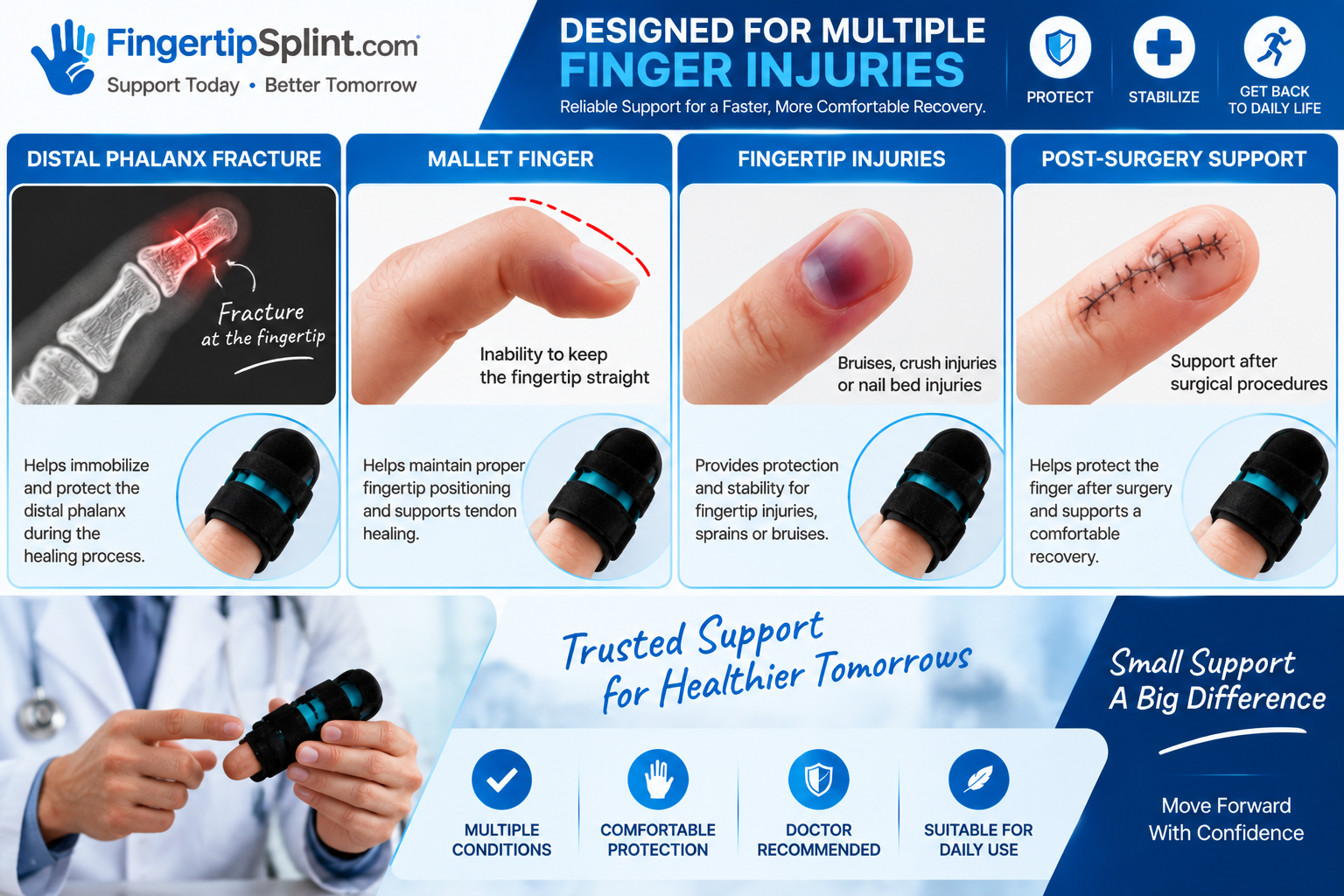
This type of injury can happen from a door crush injury, sports impact, direct blow, fall, heavy object, workplace accident, or sudden bending of the fingertip. Some injuries also involve the tendon that straightens the fingertip, which is why distal phalanx injuries are often discussed together with mallet finger.

AAOS explains that mallet finger affects the tendon that straightens the end joint of a finger or thumb, called the DIP joint. Because this area controls fingertip extension, the finger may droop when the tendon is injured. :contentReference[oaicite:1]{index=1}

Quick Answer: What Does a Distal Phalanx Fracture Splint Do?

A distal phalanx fracture splint stabilizes and protects the fingertip. It helps limit bending, reduce accidental bumps, and keep the injured area supported during recovery. For many fingertip injuries, consistent support is more important than occasional support.

Common Symptoms of a Fingertip Fracture or Mallet Finger

Symptoms may appear immediately after injury or become more noticeable over the first few hours. If the fingertip is swollen, painful, bruised, tender, drooping, or hard to straighten, you may need medical evaluation and fingertip support.

!

Pain & Tenderness

Sharp pain at the fingertip, especially when pressing, gripping, or touching the injured area.

Swelling

The fingertip may look larger, tight, warm, or inflamed after trauma.

Drooping Fingertip

The fingertip may bend downward and become difficult to straighten, often seen with mallet finger.

Symptom Possible Meaning Action
Pain after impact Possible fracture, bruise, sprain, or tendon injury Rest, protect, and consider medical evaluation
Drooping tip Possible mallet finger or tendon injury Keep straight and seek guidance
Severe swelling Possible deeper injury or fracture Get checked, especially if movement is limited
Numbness/color change Circulation or nerve concern Seek urgent medical advice

Why Splinting Is Important

Finger healing depends on protection and correct positioning. If the injured fingertip keeps bending, getting bumped, or moving during daily tasks, pain and irritation can continue. A splint works like a protective shield that reduces unnecessary motion.

NHS guidance for mallet finger says the finger needs to be kept straight to let the injury heal, and the splint may be worn for up to 8 weeks depending on the injury. :contentReference[oaicite:2]{index=2}

1

Injury

Finger is crushed, bent, hit, or strained.

2

Instability

Fingertip becomes painful, swollen, or weak.

3

Splint Support

Splint helps stabilize and protect the tip.

4

Recovery Routine

Consistent support helps healing stay on track.

Best Product Option: FingertipSplint Distal Phalanx Fracture Splint

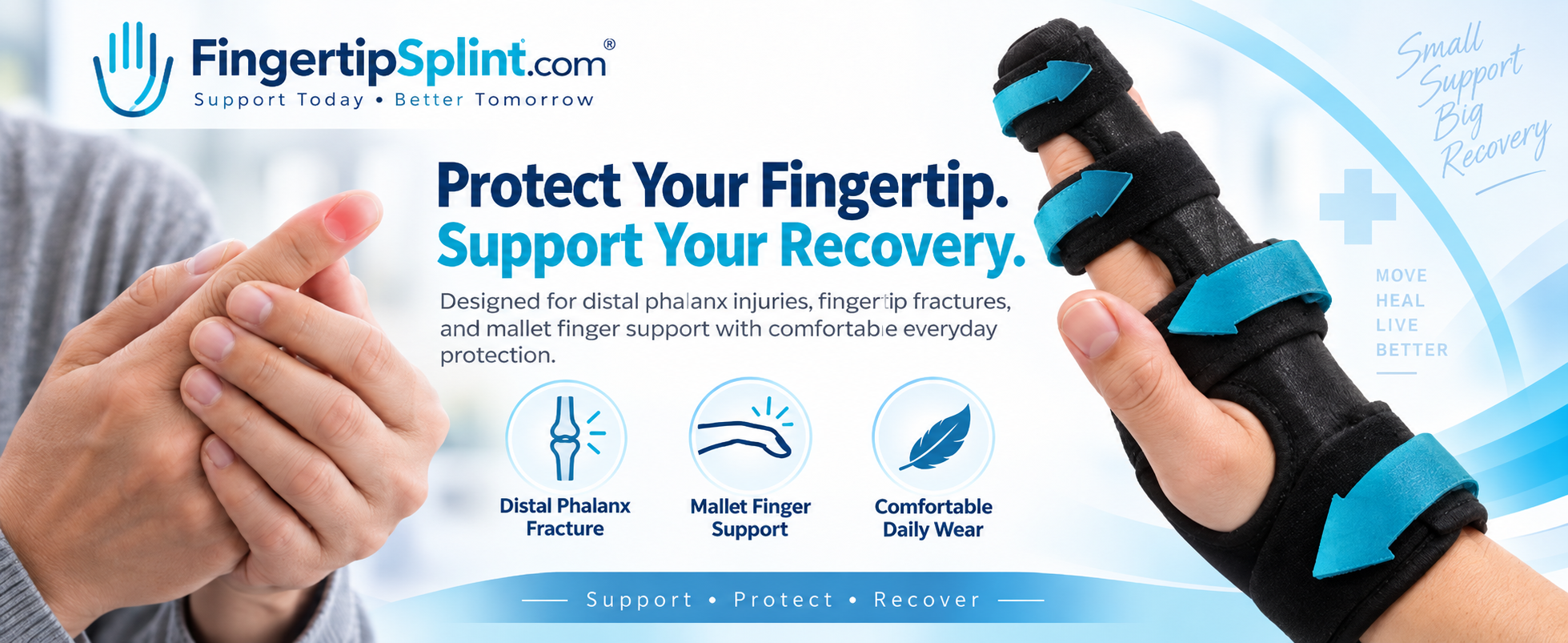
Our Distal Phalanx Fracture Splint is designed for people who need adjustable fingertip immobilization, stronger protection, and comfortable daily support. It is a practical choice for distal phalanx fractures, mallet finger support, tendon injuries, finger sprains, sports injuries, and post-surgery recovery.

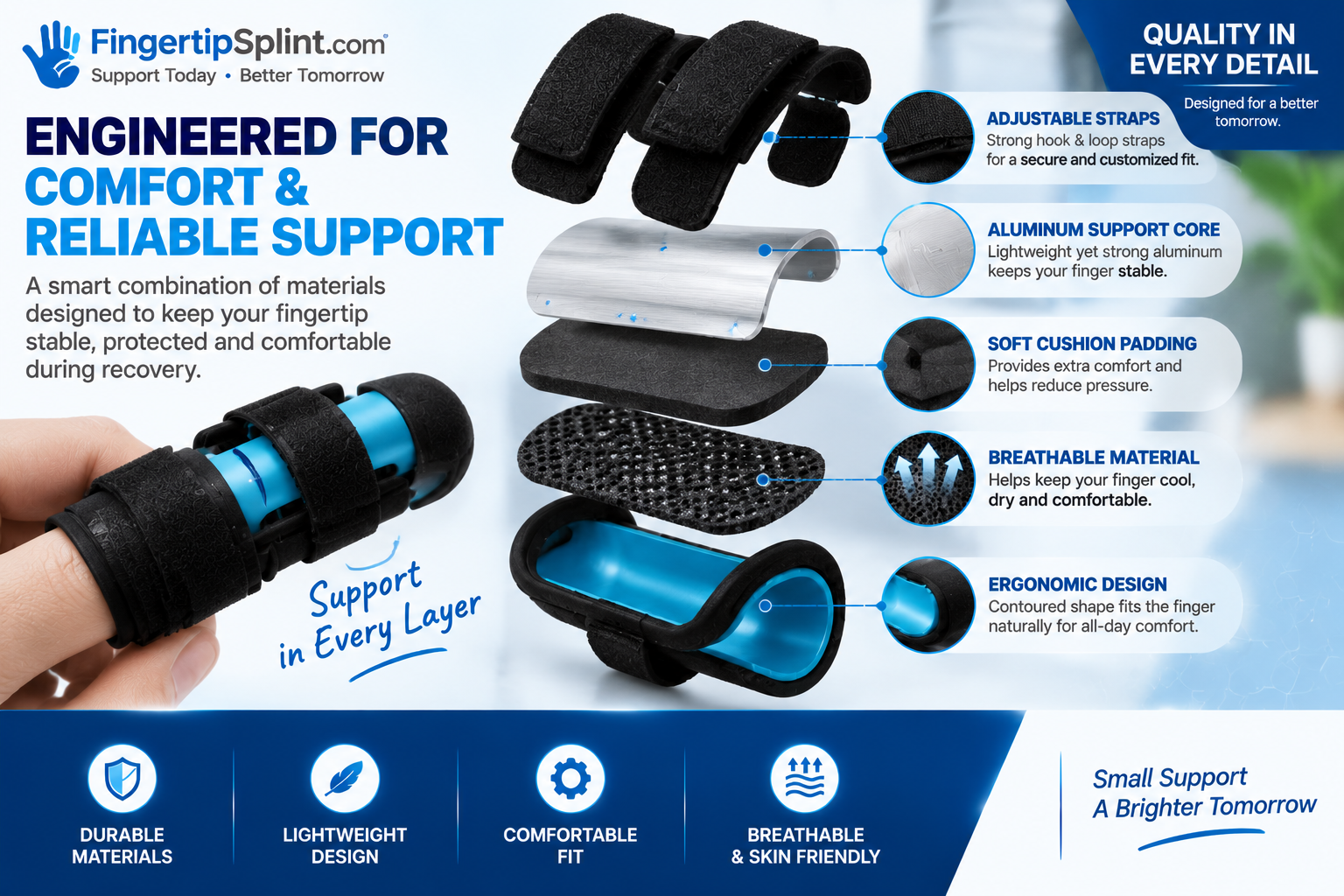
Unlike small splints that only cover the fingertip, this fingertip immobilizer provides broader support with soft material, adjustable straps, and a secure design. It helps keep the finger protected while still being comfortable enough for daily wear.

Maximum Support

Helps stabilize the fingertip and reduce unwanted movement during recovery.

Adjustable Fit

Hook-and-loop straps allow a secure fit for comfort and support.

Breathable Comfort

Soft, lightweight material supports longer wear without heavy bulk.

View Product

Types of Splints for Distal Phalanx Injuries

Different finger injuries may require different splint styles. Some people need a small stack splint, while others need a more supportive fingertip immobilizer or aluminum finger splint. Merck notes that U-shaped aluminum splints are useful for distal phalanx fractures because they provide extra protection to the fingertip. :contentReference[oaicite:3]{index=3}

Splint Type Best For Benefits Limitations
Stack Splint Mallet finger and fingertip alignment Small, lightweight, easy to wear Limited coverage for broader hand support
Aluminum Splint Rigid fingertip protection Strong support and can be shaped May feel harder or less comfortable
Fingertip Immobilizer Fracture support, mallet finger, tendon injuries Adjustable, comfortable, supportive, protective Must be applied correctly for best fit
Full Hand Splint More complex hand injuries More coverage and restriction Bulkier for daily use

Product Comparison: FingertipSplint vs Generic Splints

FingertipSplint Distal Phalanx Splint

  • Adjustable secure strap system
  • Designed for fingertip immobilization
  • Supports distal phalanx fractures
  • Useful for mallet finger and tendon injuries
  • Soft, comfortable material
  • Protective design for daily recovery
Shop Product

Generic Low-Quality Splints

  • May slip during movement
  • May feel hard or bulky
  • Limited adjustability
  • Can trap sweat and irritate skin
  • May not support the fingertip properly
  • Often lacks clear usage guidance

Interactive Feature Score Chart

A strong distal phalanx fracture splint should score well in stability, adjustability, comfort, protection, and daily usability.

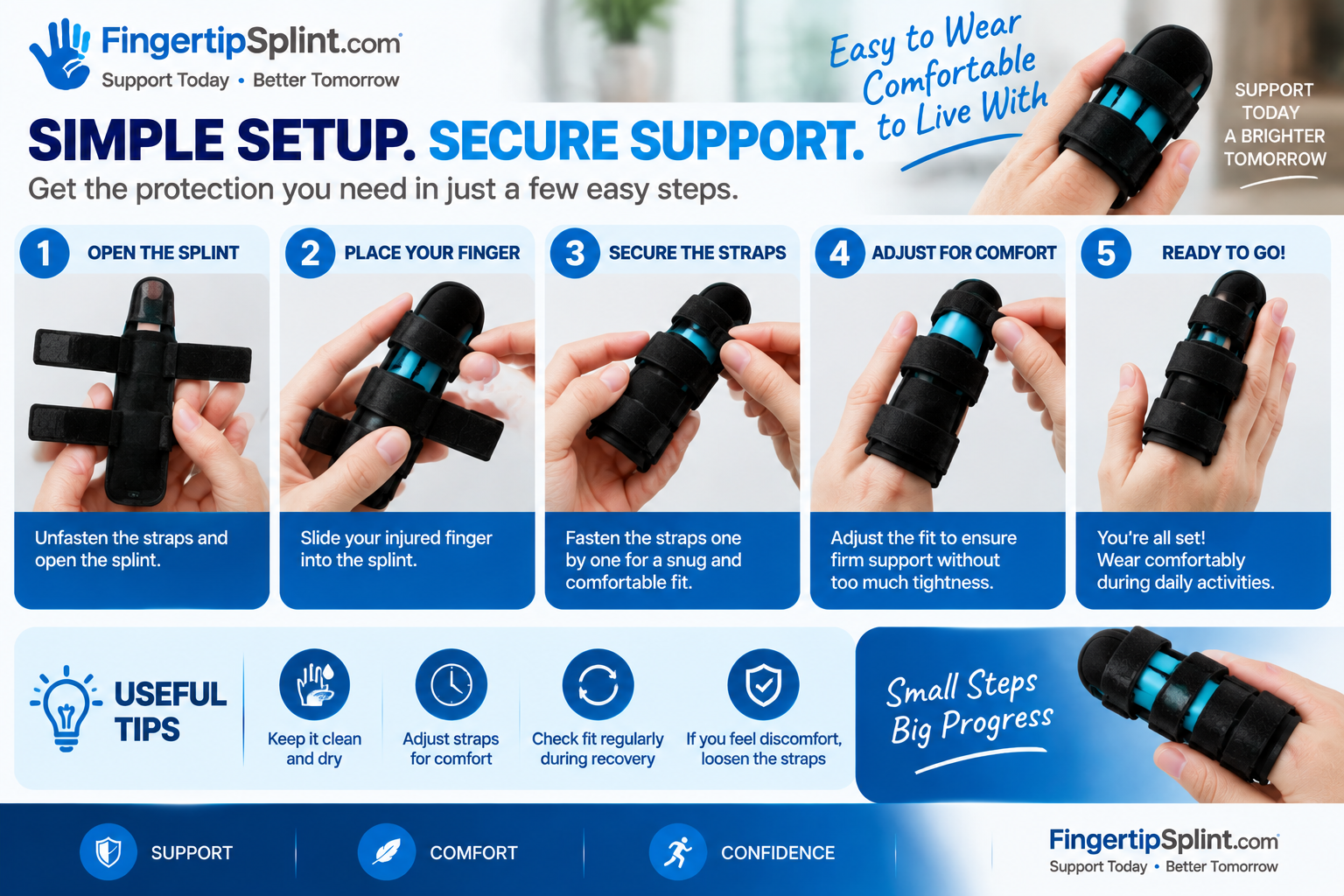
How to Use a Fingertip Immobilizer Splint

Proper application is important. A splint should be secure enough to protect the finger, but not so tight that it causes numbness, tingling, color change, or strong pressure.

1

Place Finger

Position your injured finger gently inside the splint.

2

Align Tip

Keep the fingertip straight and properly supported.

3

Secure Straps

Fasten straps until stable but comfortable.

4

Check Comfort

Make sure there is no numbness or excessive pressure.

Safety note: This page is for education and product guidance. Severe pain, deformity, numbness, open wounds, or suspected fracture should be checked by a qualified healthcare professional.

How Long Should You Wear a Distal Phalanx Fracture Splint?

The exact timeline depends on the injury, fracture pattern, tendon involvement, and medical advice. For mallet finger, NHS says the splint may be worn for up to 8 weeks and the finger should be kept straight. Oxford University Hospitals guidance also emphasizes keeping the end joint straight while cleaning and drying the finger and splint. :contentReference[oaicite:4]{index=4}

Recovery Stage Main Goal Helpful Tip
First days Reduce movement and protect the fingertip Use support and avoid bumps
Early weeks Keep finger stable as advised Do not remove carelessly
Mid recovery Maintain consistency Keep splint dry and clean
Return to use Follow professional guidance Avoid rushing heavy activity

Common Mistakes to Avoid

Removing Too Early

If your provider recommends continuous splinting, removing it early may affect recovery.

Wearing Too Tight

A splint should not cause numbness, tingling, color change, or sharp pressure.

Ignoring Skin Care

Moisture can cause irritation. Keep the splint and finger clean and dry.

Using Wrong Splint Type

Different injuries need different support levels. Choose based on fit and function.

Returning to Sports Too Soon

Sports impacts can disturb healing if the fingertip is still unstable.

No Medical Check

Severe injuries may require imaging, treatment, or professional splinting.

Internal Learning Hub

Use this page as your main authority hub for the keyword distal phalanx fracture splint. Link users naturally to your product and supporting blogs.

External Medical Resources

For additional education, these trusted resources explain finger splints, mallet finger, and fingertip injury care:

AAOS OrthoInfo NHS Cleveland Clinic Merck Manual

Final Recommendation

A distal phalanx fracture splint is more than a simple finger cover. It is a recovery support tool designed to protect the fingertip, limit painful movement, and help the finger stay stable during healing. If you need adjustable support for a fingertip fracture, mallet finger, tendon injury, or post-surgery recovery, our fingertip immobilizer is a strong product choice.

Protect Your Finger Today

FAQs About Distal Phalanx Fracture Splints

What is a distal phalanx fracture splint?

A distal phalanx fracture splint is a finger support used to stabilize and protect the tip of the finger after a fracture, tendon injury, or mallet finger.

Is a fingertip immobilizer good for mallet finger?

Yes, a fingertip immobilizer may help keep the fingertip straight and protected. Follow medical advice because mallet finger often requires consistent positioning.

How long should I wear a distal phalanx fracture splint?

The timeline depends on the injury. Some mallet finger injuries require several weeks of continuous splinting. Follow your healthcare provider’s instructions.

Can I sleep with a finger fracture splint?

Many people wear splints while sleeping when continuous support is advised. The splint should be secure but not painfully tight.

How tight should the splint be?

It should feel secure but comfortable. If you notice numbness, tingling, strong pressure, or color change, loosen it and seek advice if symptoms continue.

Can I use this for sports injuries?

Yes, it may support sports-related fingertip injuries. Avoid returning to sport too early if pain, swelling, or instability remains.

What is better: stack splint or fingertip immobilizer?

A stack splint is smaller and useful for some mallet finger injuries. A fingertip immobilizer offers broader support and adjustability, which may be better for users needing stronger protection.

Where can I buy a distal phalanx fracture splint?

You can buy it directly here: Distal Phalanx Fracture Splint product page.