


Pinky Finger Splint for Pain Relief: Best Support for Broken, Sprained & Arthritis Finger
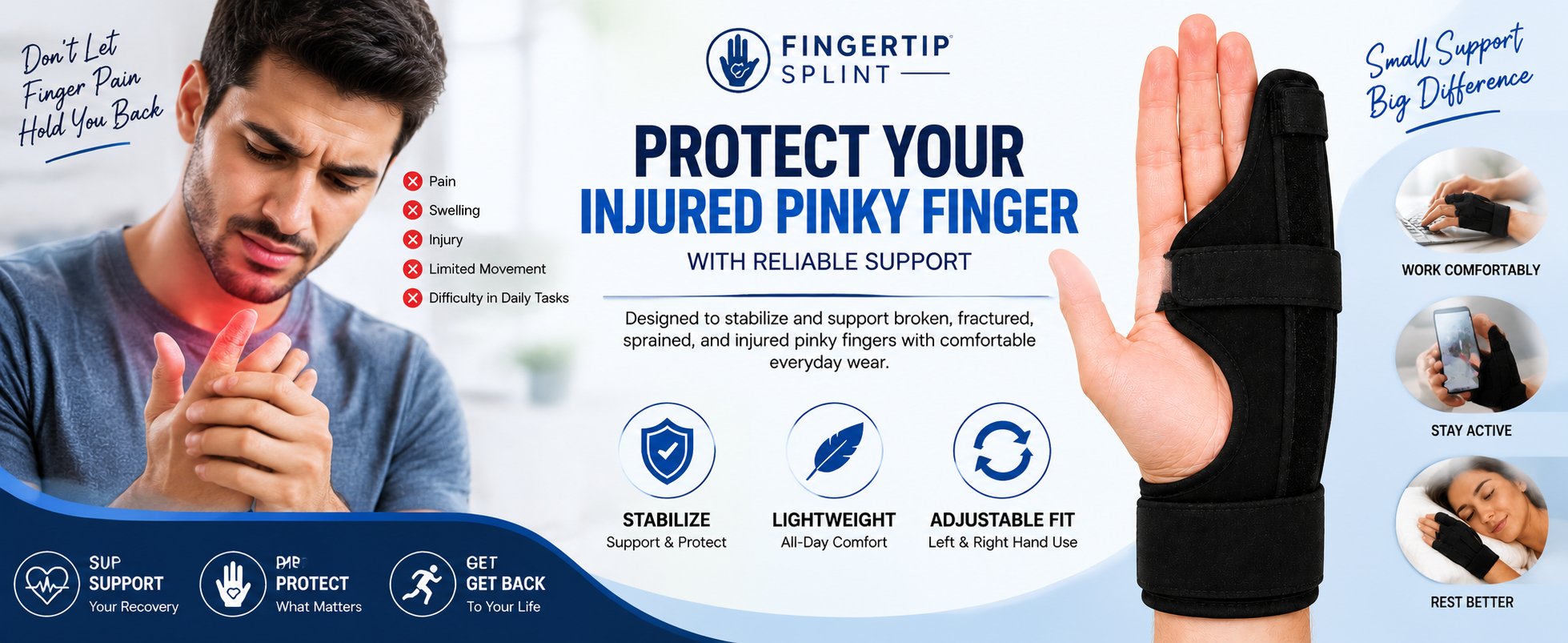
Pinky finger splint for pain is one of the fastest ways to protect a painful, swollen, sprained, fractured, or arthritis-affected little finger before the injury becomes worse.
A pinky finger splint for pain helps reduce unnecessary bending, protects the small finger during daily work, and gives your hand more confidence while recovering.
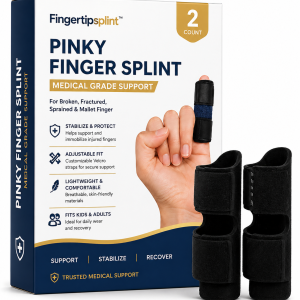
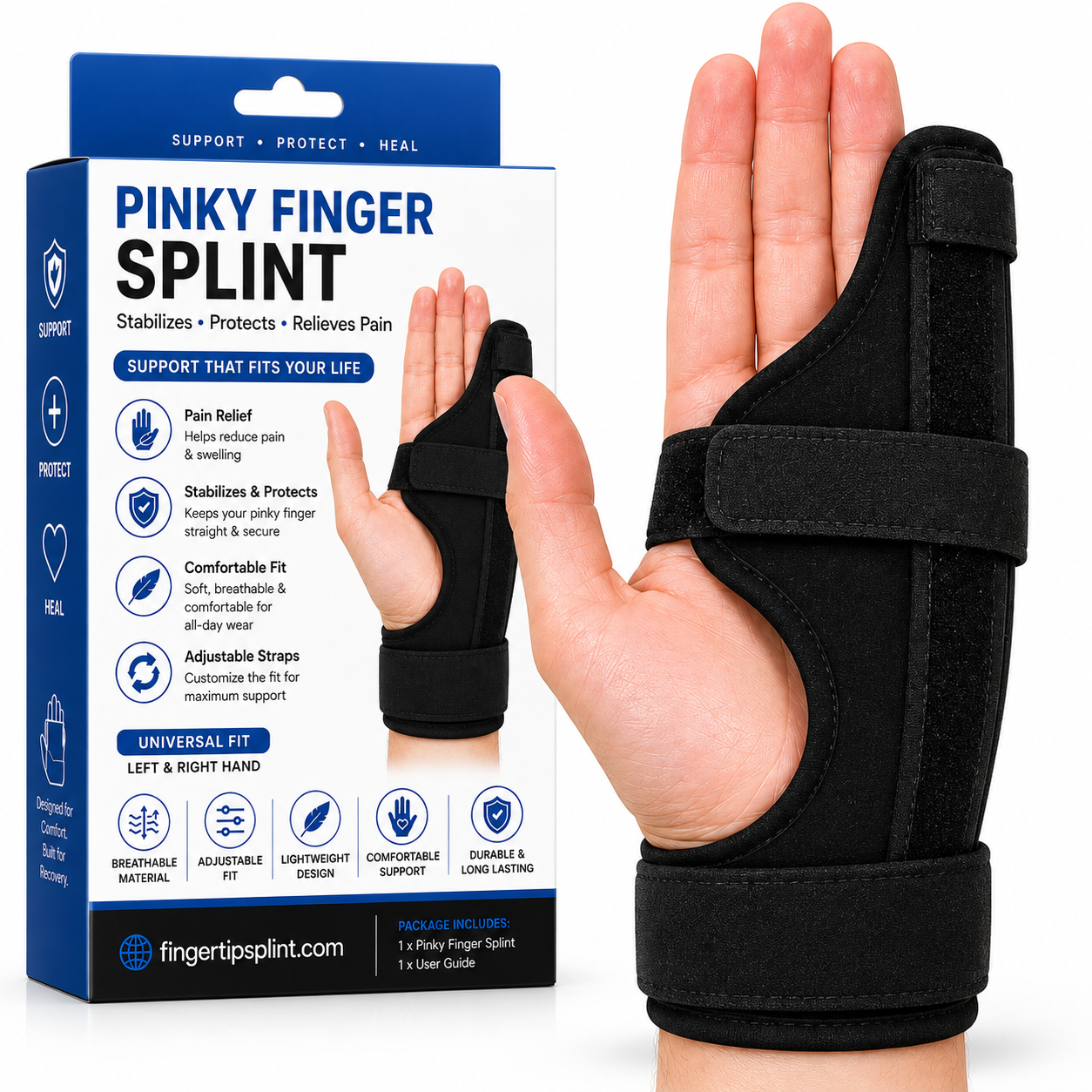
For everyday support, choose the Best Pinky Finger Splint. If your injury feels stronger, swollen, or fracture-related, choose the Pinky Finger Splint for Broken & Fractured Fingers.
Comfortable pinky finger splint for pain relief, daily protection, and recovery support.
Pinky Finger Splint for Pain: Quick Answer
A pinky finger splint for pain supports the little finger, reduces painful movement, and protects the injured area during daily activity. For mild pain, arthritis stiffness, sprain discomfort, or daily support, buy the Best Pinky Finger Splint. For stronger injury protection after impact, swelling, or suspected fracture, buy the Pinky Finger Splint for Broken & Fractured Fingers.
Why You Need a Pinky Finger Splint for Pain Relief
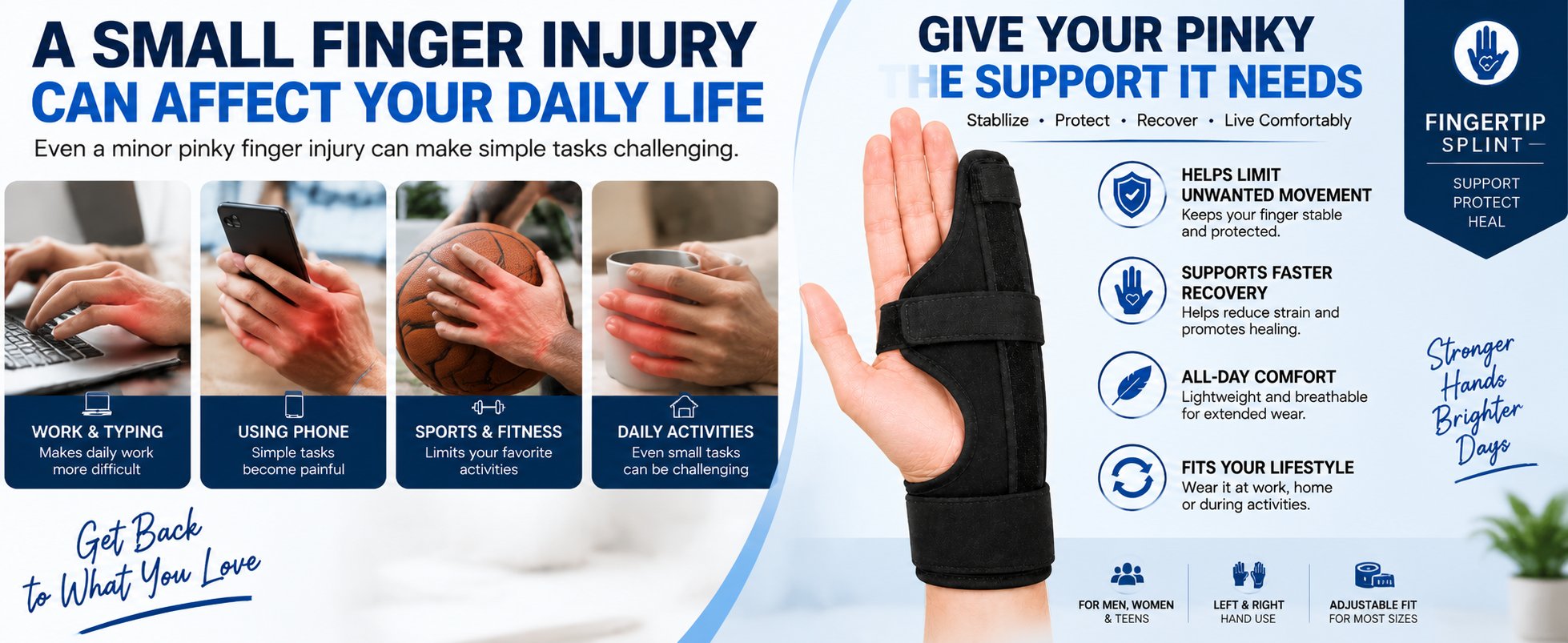
The pinky finger may look small, but it plays an important role in grip strength, hand balance, typing, lifting, driving, sports, and daily movement. When the little finger becomes painful, even simple tasks can become uncomfortable.
Many people ignore pinky pain because they think it will disappear on its own. But repeated bending, bumping, or gripping can keep irritating the finger. A painful pinky can come from a sprain, fracture, jammed finger, arthritis stiffness, tendon strain, or daily overuse.
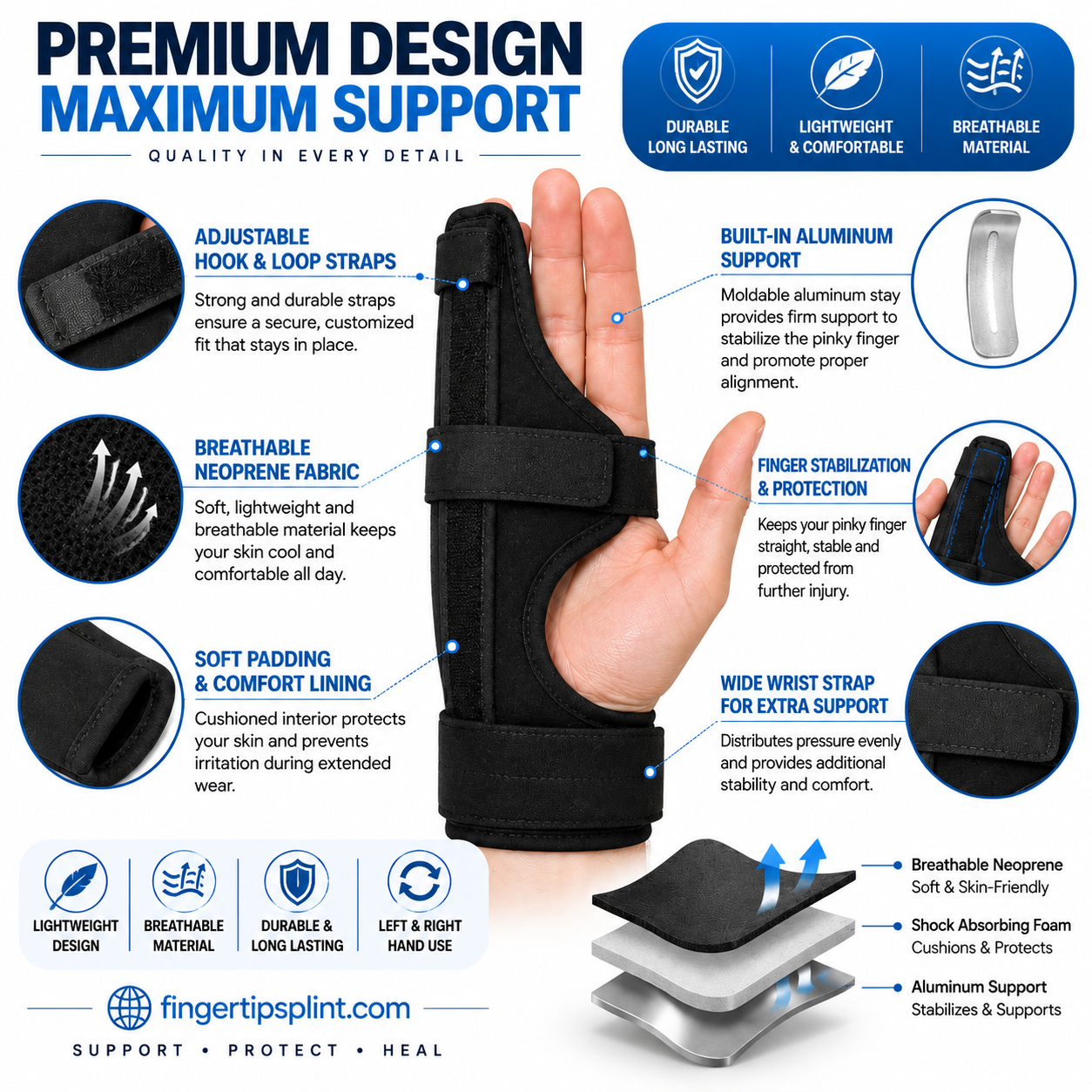
A pinky finger splint for pain helps by limiting unnecessary movement. It supports the small finger, protects it from accidental bumps, and gives the injured area a more stable position while you recover.
For deeper guidance, read the full pinky finger splint guide and the buyer-focused buy pinky finger splint guide.
Best Pinky Finger Splint for Pain: Daily Support vs Fracture Support
Best Pinky Finger Splint for Pain and Daily Use
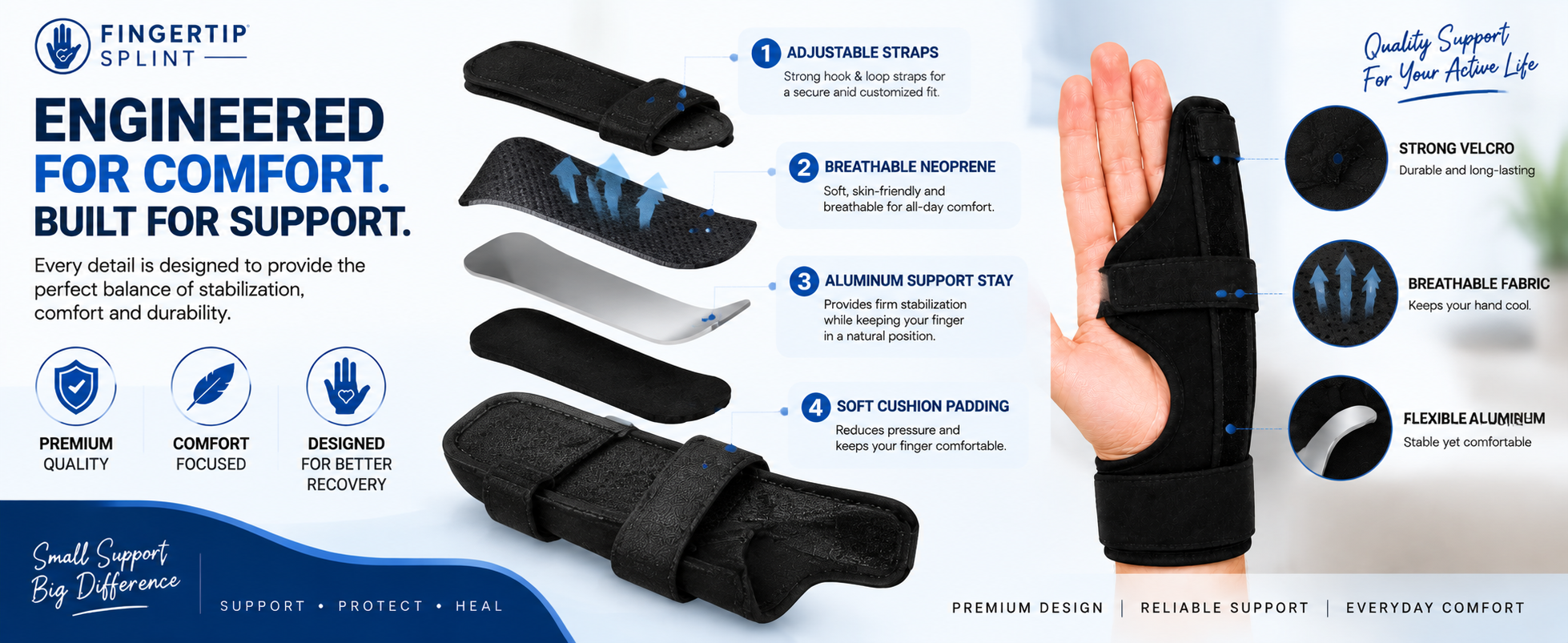
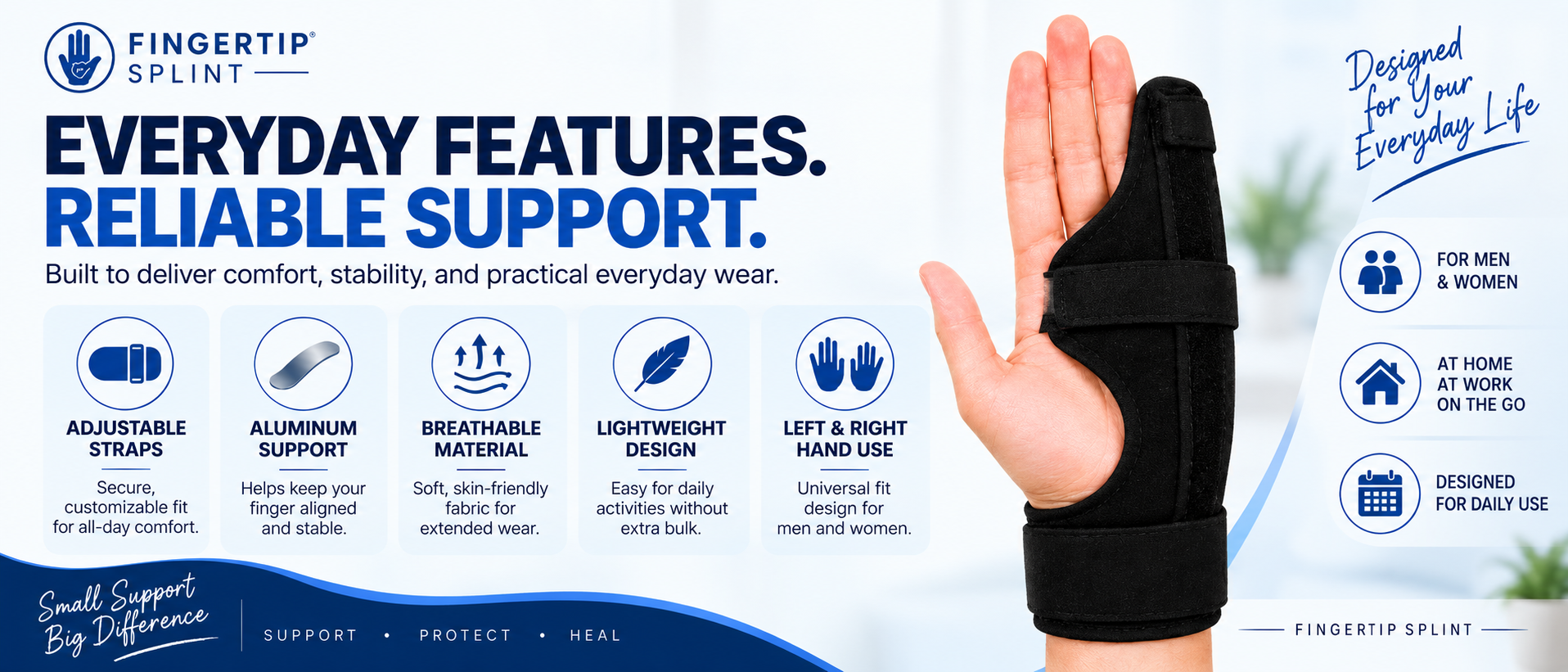
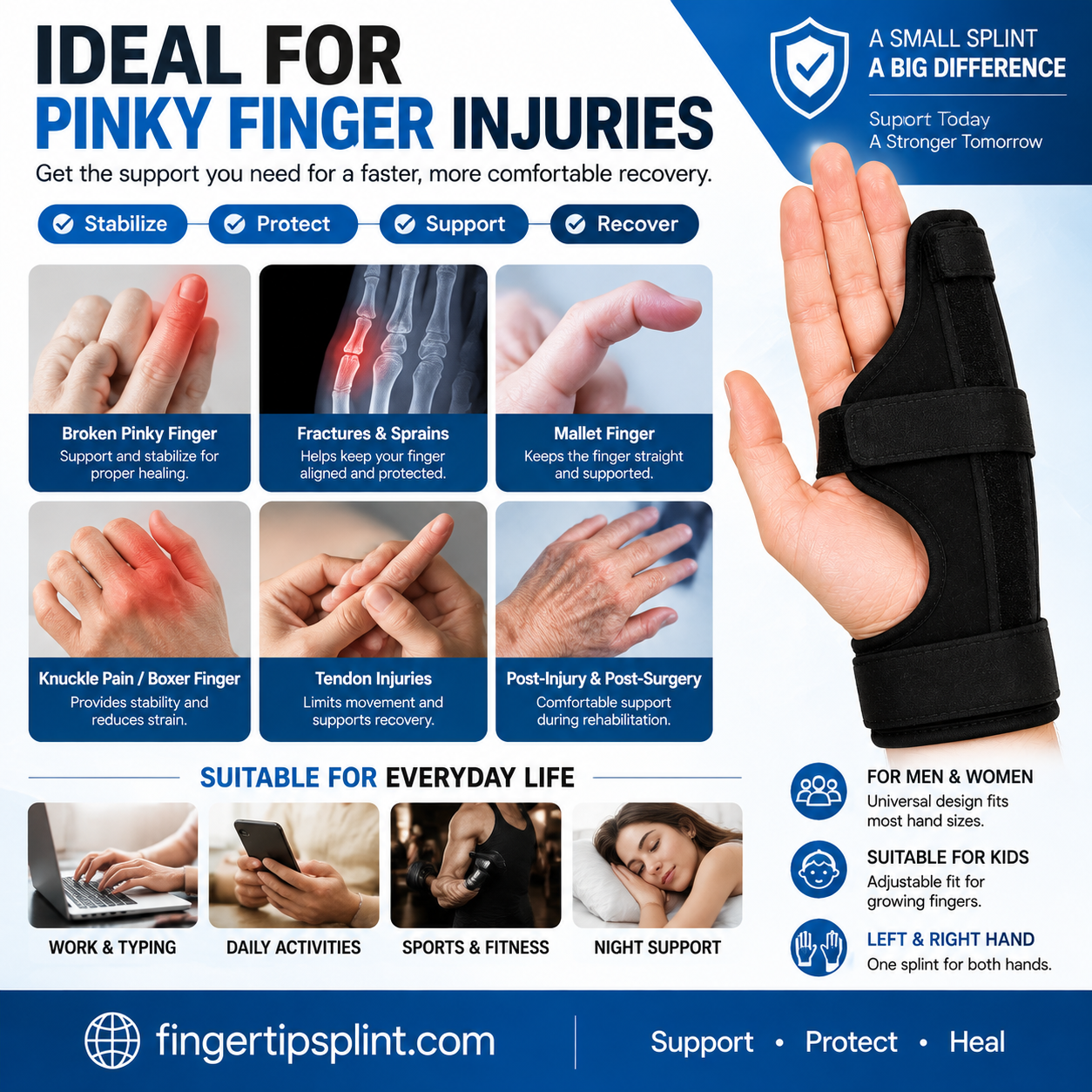
The Best Pinky Finger Splint is ideal for daily pinky pain, mild sprains, arthritis stiffness, bending discomfort, and general small finger protection.
- Lightweight daily support
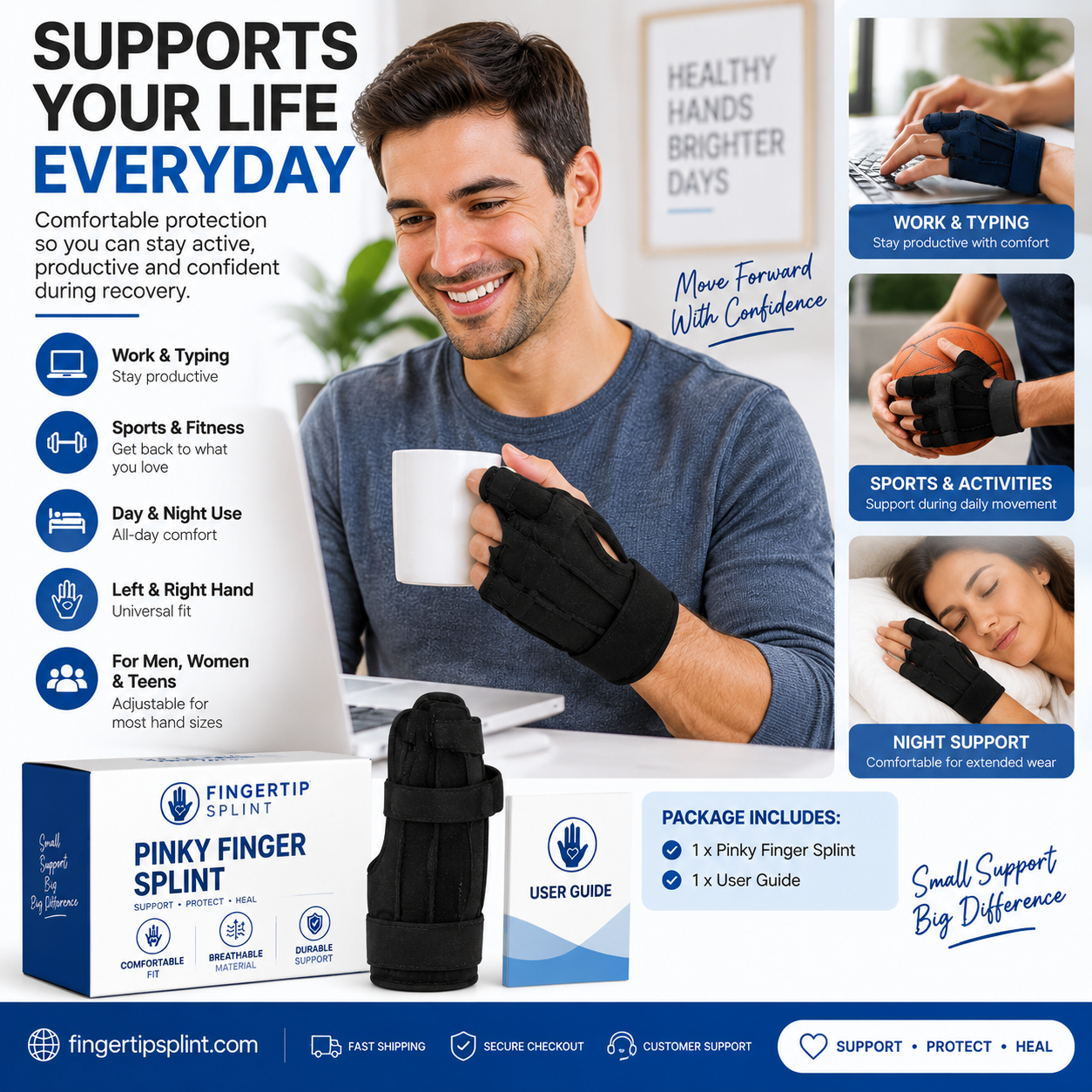
- Comfortable for work and sleep
- Helpful for painful bending
- Good for mild injury protection
Pinky Finger Splint for Broken & Fractured Fingers
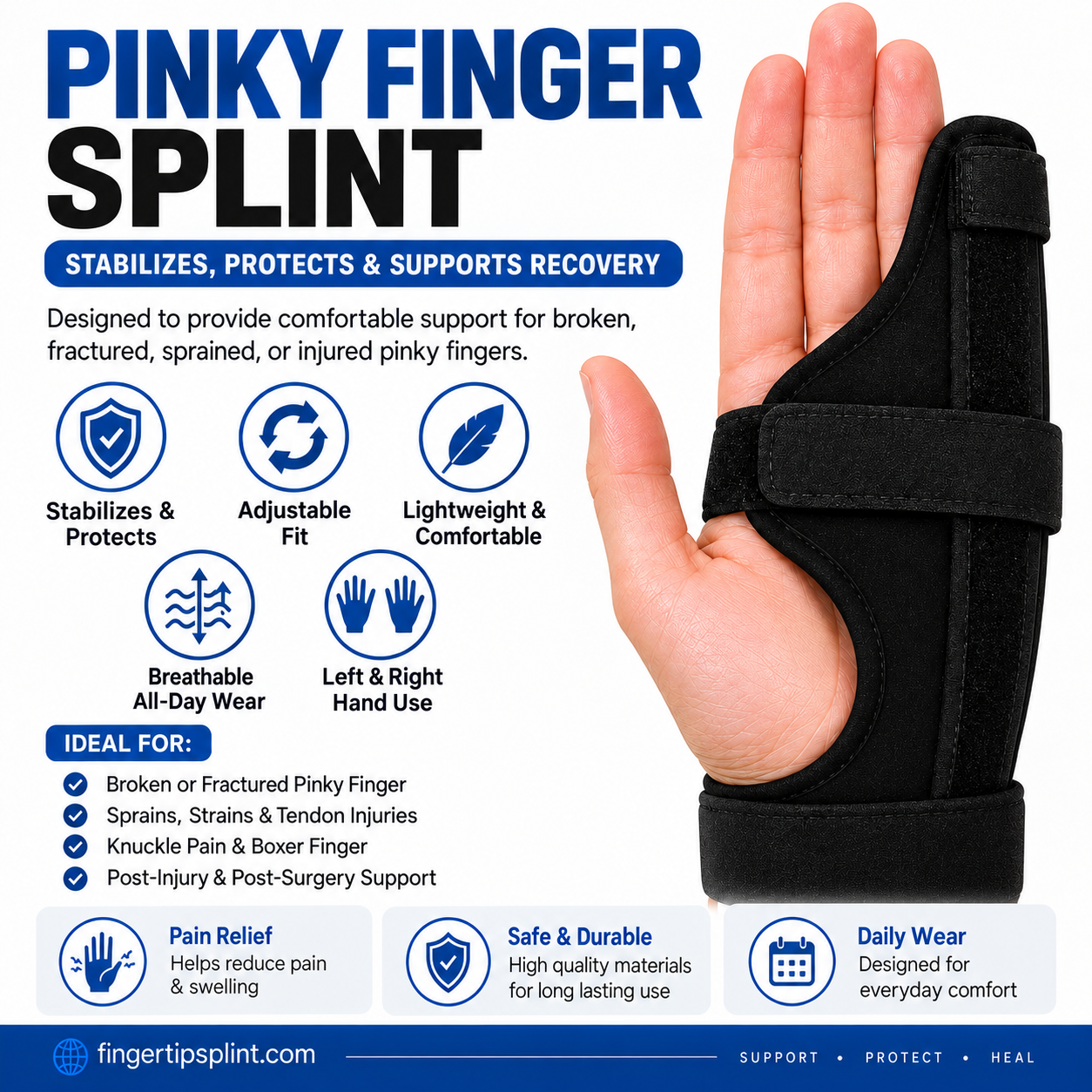
The Pinky Finger Splint for Broken & Fractured Fingers is better when the pinky is swollen, painful after impact, bruised, or possibly fractured.
- Stronger injury support
- Better fracture-style protection
- Helps reduce harmful bending
- Useful after sports or impact injury
Types of Pinky Finger Pain That May Need Support
Broken Pinky Finger
A broken pinky finger can happen after a fall, sports injury, crush injury, or direct impact. Signs may include swelling, bruising, sharp pain, tenderness, and difficulty moving the finger. For this type of injury, compare the best splint for broken pinky finger and the broken pinky finger cast vs splint guide.
Sprained Pinky Finger
A sprained pinky happens when ligaments are stretched or irritated. A pinky finger splint for pain can help protect the ligament while the finger calms down. Read more in the sprained pinky finger guide.
Arthritis Little Finger Pain
Arthritis can make the pinky finger stiff, sore, and weak during gripping. A comfortable splint may help reduce stress during daily tasks and protect the joint from painful movement.
Small Finger Injury
If your injury is focused on the little finger, a proper small finger splint can provide more targeted support than a generic hand brace.
Pinky Finger Splint for Pain: Without Support vs With Support
| Factor | Without Support | With Pinky Splint |
|---|---|---|
| Pain | Finger keeps bending and hurting | Movement is reduced for better comfort |
| Protection | Higher risk of bumping or twisting again | Finger stays guarded during daily use |
| Daily Work | Typing, gripping, and lifting feel stressful | Better stability during light tasks |
| Recovery Routine | No clear support plan | Structured protection during healing |
9 Benefits of Using a Pinky Finger Splint for Pain
1. Helps Reduce Painful Movement
When the injured finger bends again and again, pain can increase. A pinky finger splint for pain helps limit that movement and gives the finger a calmer recovery environment.
2. Protects the Small Finger During Daily Life
Your pinky is easy to bump against desks, doors, bags, bedsheets, and sports equipment. A splint provides a protective layer.
3. Supports Better Alignment
A splint helps hold the finger in a safer position and reduces awkward bending during work or sleep.
4. Helps With Sprain Recovery
For sprains, support can help protect irritated ligaments from repeated stretching.
5. Useful for Fracture-Style Protection
If your injury feels more serious, the Broken & Fractured Pinky Splint gives stronger support for injury-focused protection.
6. Helps Arthritis Comfort
For arthritis pain, a splint may help reduce stress during gripping, typing, or daily hand use.
7. Improves Confidence
A painful pinky can make you nervous. A splint helps you feel more protected while doing normal tasks.
8. Supports Sleep Protection
Many people accidentally bend painful fingers while sleeping. A splint can help reduce nighttime irritation.
9. Helps You Stay Consistent
Recovery is easier when you have a clear support plan. A splint keeps your finger protected during the most vulnerable stage.
How to Use a Pinky Finger Splint for Pain Correctly
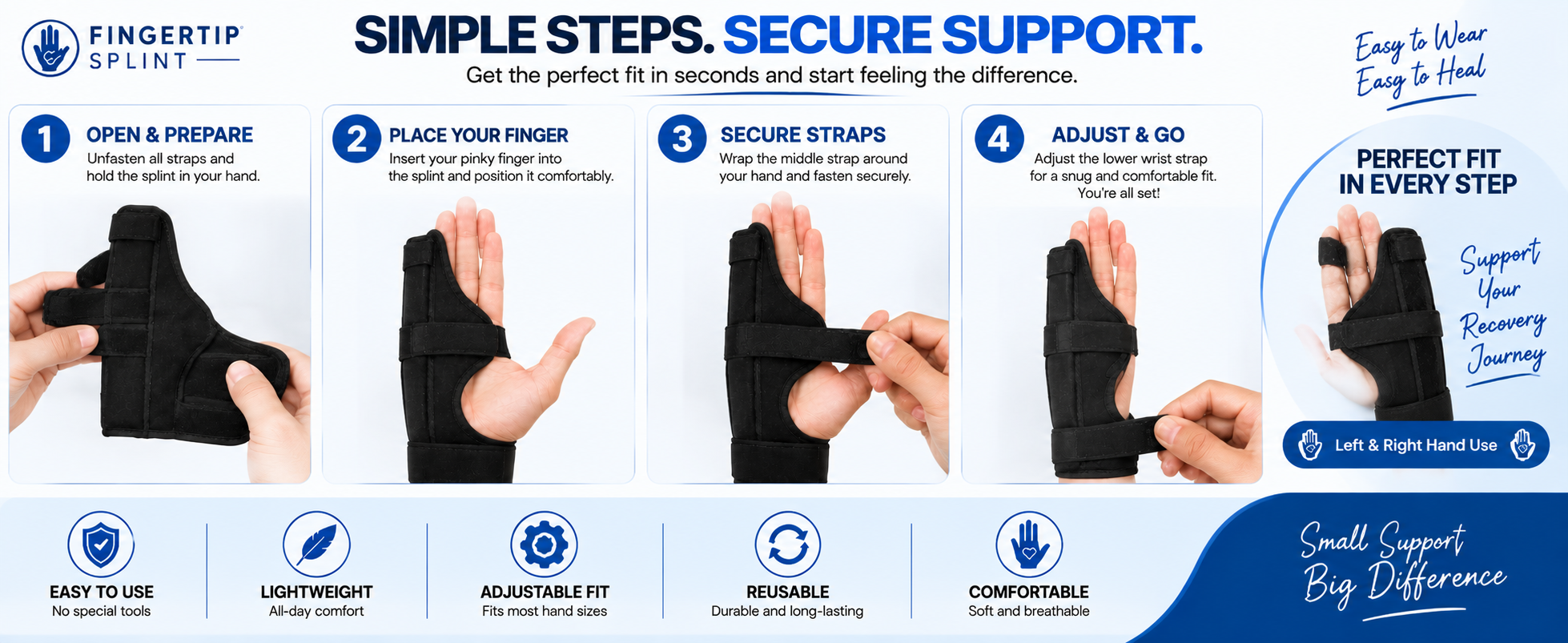
- Check your finger first: If it is crooked, numb, blue, severely swollen, or extremely painful, seek medical care.
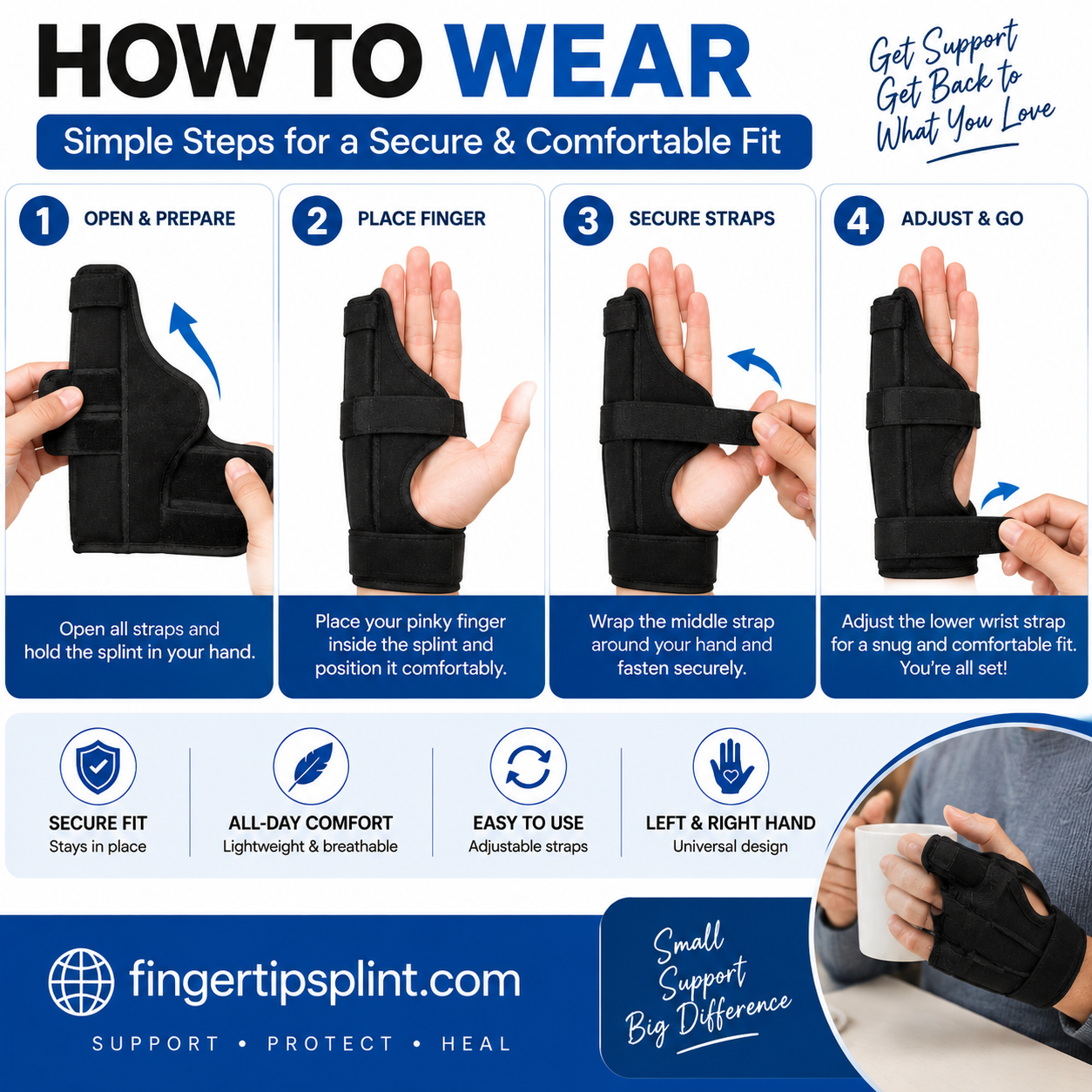
- Place the finger gently: Do not force the pinky into a painful position.
- Secure the splint: It should feel snug, not tight.
- Check circulation: Loosen the splint if your fingertip becomes numb, cold, blue, or tingly.
- Use during risk moments: Wear it during work, typing, sleep, walking, or tasks where the pinky may bend.
For a complete usage breakdown, read the finger splint for pinky finger guide.
Common Mistakes That Delay Healing
1. Ignoring the Injury
Many people wait too long because the pinky looks small. Early support is easier than dealing with worsening swelling, pain, or stiffness.
2. Buying the Wrong Splint
Daily pain and fracture-related pain may need different support. For general support, choose the Best Pinky Finger Splint. For stronger protection, choose the Pinky Finger Splint for Broken & Fractured Fingers.
3. Removing Support Too Early
Less pain does not always mean full recovery. Removing support too soon can allow painful movement to return.
4. Wearing It Too Tight
A splint should stabilize, not squeeze. Tightness can cause numbness or discomfort.
Doctor Advice: When to Seek Medical Help
A splint supports the finger, but it does not diagnose the injury. Seek medical care if you notice severe swelling, deformity, numbness, open wounds, intense pain, or inability to move the finger.
For general medical education, review trusted sources such as Mayo Clinic, WebMD, Healthline, and Cleveland Clinic.
Best Recovery Bundle Strategy
- Pinky finger splint: Daily support and protection
- Broken & fractured splint: Stronger injury support
- Finger exerciser: Later-stage strength recovery when safe
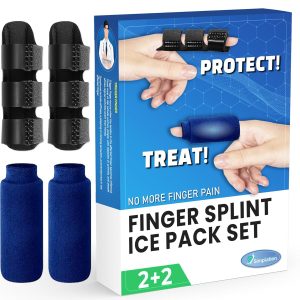
- Finger sleeves: Comfort protection for sensitive fingers
Buy the Right Pinky Finger Splint for Pain Today
Do not let pinky pain disturb your work, sleep, grip, or confidence. Choose the right support based on your injury level.
Final Recommendation
If your pinky finger pain is mild, stiff, sprained, or arthritis-related, start with the Best Pinky Finger Splint.
If your pinky is swollen, painful after impact, bruised, or possibly fractured, choose the Pinky Finger Splint for Broken & Fractured Fingers.
A pinky finger splint for pain is a simple but powerful way to protect your finger early and support a safer recovery routine.