
Small Finger Splint: Premium Guide for Pinky Pain, Sprains, and Broken Finger Support
Small finger splint support can make the difference between protecting your pinky properly and accidentally making the injury worse. If your little finger is painful, swollen, bent, jammed, sprained, or recovering from a broken pinky finger, the right splint helps stabilize movement while you heal.
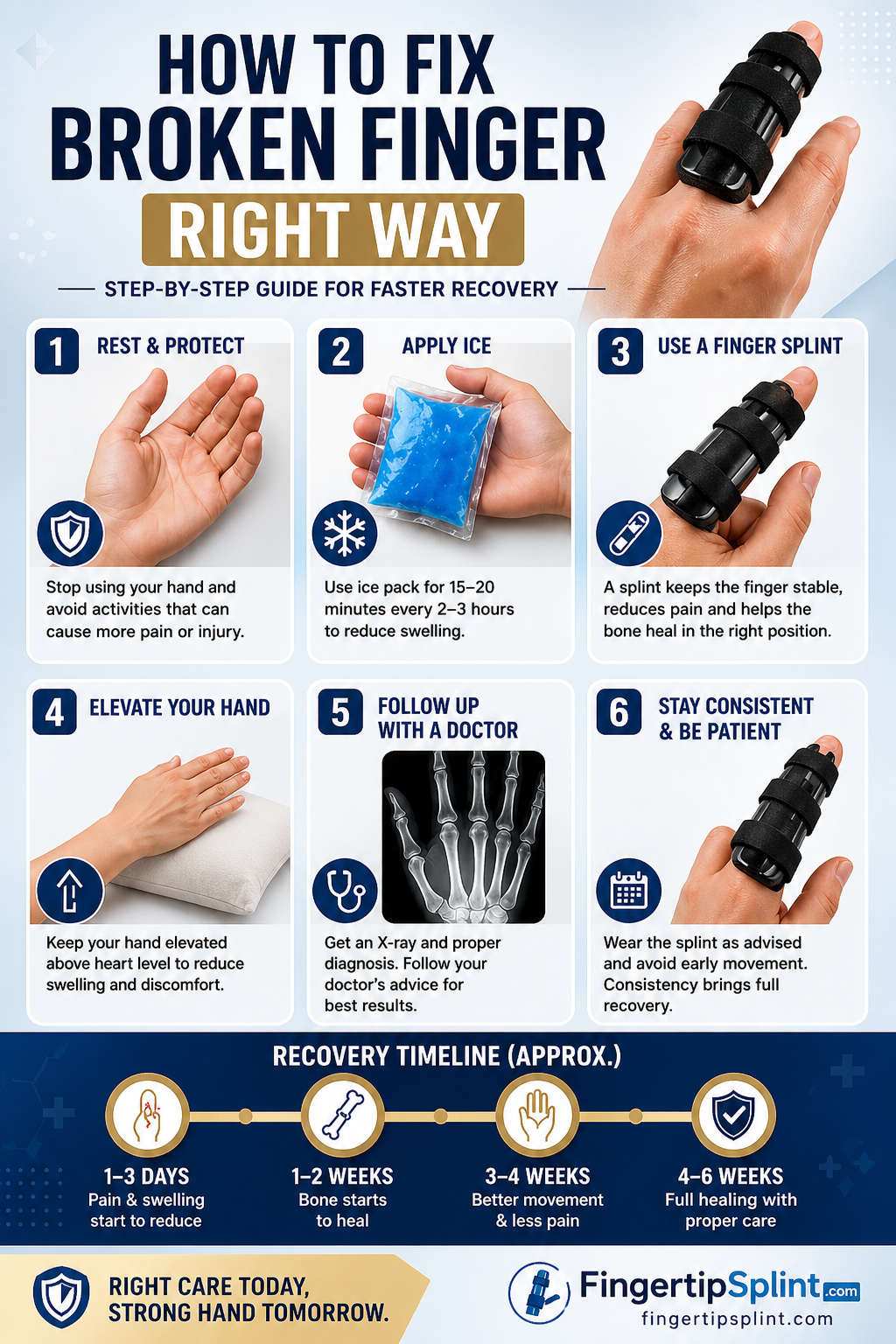
Quick Answer: Do You Need a Splint for a Sprained Pinky Finger?
A Sprained Pinky Finger may need a splint if the finger hurts when bending, feels unstable, swells after use, or keeps getting bumped during daily tasks. A splint helps limit painful movement and protect the joint, but severe pain, deformity, numbness, or suspected fracture needs medical evaluation first.
For daily pinky support, choose the Best Pinky Finger Splint. If your injury is stronger, swollen, painful after impact, or fracture-related, shop the Pinky Finger Splint for Broken & Fractured Fingers.
Table of Contents
Trust Section: Why This Guide Helps You Choose Safely
Pinky finger injuries look small, but they can affect grip, typing, sports performance, hand balance, and daily comfort. The small finger supports the outer edge of the hand, helps stabilize grip, and often gets injured during falls, ball sports, gym training, door accidents, work pressure, and sudden twisting.
This guide is written in a healthcare-focused buyer style. It does not replace a doctor, X-ray, or professional diagnosis. If your finger is visibly bent, severely swollen, numb, blue, cut open, or impossible to move, get medical care first. For mild support needs, a well-fitted finger splint for pinky finger can be a smart protection option.
Why a Small Finger Injury Should Not Be Ignored
The pinky finger is often underestimated because it is small, but it plays a major role in grip strength and hand control. When the little finger is painful, even simple tasks become uncomfortable. Typing, holding a phone, opening a door, gripping a steering wheel, lifting weights, cooking, and sleeping can all irritate the injury.
A Sprained Pinky Finger may feel like a small issue at first. You may notice swelling, tenderness, bruising, stiffness, or pain when bending. The danger is that people often keep using the finger because they think it will “go away.” That repeated movement can delay recovery and increase discomfort.
A broken pinky finger can also be subtle. Some people can still move the finger even when a fracture exists. That is why pain after trauma, swelling, deformity, or bruising should be taken seriously. A medical professional may recommend imaging, immobilization, buddy taping, a cast, or a splint depending on the injury.
If you are comparing support options, start with the complete pinky finger splint guide and the broader splint for hand and fingers pillar page. These pages help you understand which support style fits different finger injuries.
Broken Pinky Finger Cast vs Small Finger Splint
Many people search for a broken pinky finger cast because they assume every broken finger needs a hard cast. In reality, treatment depends on the exact injury. Some fractures may need a cast, some may need a professional splint, some may require buddy taping, and serious injuries may need specialist care.
A cast is usually more rigid and less removable. It is often used when stronger immobilization is needed. A splint may be more practical for certain mild injuries because it can stabilize the finger while still being easier to manage for hygiene and daily routines. Never choose a splint instead of medical care when the injury looks severe.
| Feature | Broken Pinky Finger Cast | Small Finger Splint |
|---|---|---|
| Purpose | Strong immobilization for fractures that need firm support. | Stabilizes and protects the pinky from painful bending. |
| Comfort | Can feel bulky and harder to clean around. | Often lighter, adjustable, and easier for daily use. |
| Best For | Doctor-managed fractures and more serious injuries. | Sprains, mild support, post-care protection, and selected injuries. |
| Removal | Usually removed by a healthcare professional. | May be removable depending on medical advice and product type. |
If you are unsure whether your injury needs a cast or splint, get evaluated. For product-based support, the adjustable pinky finger splint 2-pack is a strong option for customers who want backup support for work, home, and recovery routines.
Recommended Solution: Small Finger Splint for Daily Protection
The best protection option for many pinky injuries is a splint that keeps the finger supported without feeling unnecessarily bulky. A quality pinky splint should feel stable, easy to wear, adjustable, and comfortable enough for routine use.
For buyers searching “small finger splint,” “pinky splint,” “pinky finger splint,” or “finger splint for pinky finger,” the first recommended option is the Best Pinky Finger Splint. It is made for everyday support, comfort, and small finger protection.
If the injury feels more painful, swollen, or related to a suspected break, the stronger recommendation is the Pinky Finger Splint for Broken & Fractured Fingers. This gives buyers a clear second option for fracture-style pinky support.
Benefits of Wearing a Small Finger Splint
1. Helps Reduce Painful Movement
The biggest advantage of a small finger splint is controlled movement. When your pinky is injured, every accidental bend can trigger pain. A splint on pinky finger support helps remind your hand not to move the injured area too aggressively.
2. Protects the Pinky During Work
Typing, packing orders, lifting items, cooking, cleaning, and gripping tools can stress the little finger. A splint adds a protective barrier and reduces the risk of bumping or bending the finger during routine activity.
3. Supports Sprained Pinky Finger Recovery
A sprain can feel mild one day and painful the next if you keep stressing the joint. Stabilizing the finger gives soft tissues a better chance to calm down. For wound or bandage protection around fingers, you may also read this guide on finger cots for bandage protection.
4. Helps Build Confidence After Injury
Many customers feel nervous after a broken pinky finger or sprain because they fear accidentally hitting the finger again. A reliable splint creates a sense of control. That confidence matters, especially when returning to work, sport, gym, or daily tasks.
How to Wear a Small Finger Splint Correctly
Wearing a splint correctly matters. A splint should support the finger without cutting circulation. It should feel secure, but not painfully tight. If the fingertip becomes blue, numb, cold, or more swollen, remove or loosen the splint and seek medical advice.
Step 1: Check the Finger First
Before wearing any splint, inspect your pinky. Look for open cuts, severe swelling, deformity, bleeding, or numbness. If these signs are present, do not depend on a product alone.
Step 2: Place the Pinky in a Comfortable Position
Position the little finger naturally. Avoid forcing it straight if doing so causes sharp pain. A small finger splint should support alignment, not create new pain.
Step 3: Secure the Straps
Fasten the splint gently. The goal is stable support. You should not feel throbbing pressure. Check circulation after wearing it for a few minutes.
Step 4: Use During High-Risk Tasks
Wear the splint when the finger is most likely to be bumped, twisted, or overused. This may include working, sleeping, walking in crowded spaces, sports, or daily chores.
For sports-related finger trauma, the baseball finger splint for jammed finger guide explains why finger injuries from impact need careful support.
Small Finger Splint Recovery Timeline
Recovery depends on the injury. A mild Sprained Pinky Finger may improve faster than a fracture. A broken pinky finger may require professional immobilization and follow-up. Use this timeline as a general educational guide, not a diagnosis.
| Timeline | What You May Notice | What to Do |
|---|---|---|
| Day 1–3 | Pain, swelling, bruising, stiffness, tenderness. | Rest, protect, elevate, use cold therapy carefully, and seek care if severe. |
| Week 1 | Swelling may reduce, but movement may still hurt. | Use a pinky splint during risk activities if appropriate. |
| Week 2–3 | Improved comfort in mild sprains; fractures still need caution. | Follow medical advice and avoid heavy gripping too early. |
| Week 4+ | Gradual return to activity for many mild injuries. | Consider gentle mobility only when safe and advised. |
For a deeper fracture-focused article, read the broken pinky finger cast guide. It helps users understand when stronger immobilization may be recommended.
Common Small Finger Splint Mistakes
Mistake 1: Ignoring Severe Symptoms
If the finger is crooked, numb, very swollen, or severely painful, do not just buy a splint and hope. Get medical care. A splint is support, not a replacement for diagnosis.
Mistake 2: Wearing the Splint Too Tight
Tight support can reduce circulation. The splint should stabilize the finger, not squeeze it. Check your fingertip color and sensation regularly.
Mistake 3: Removing Support Too Early
Many people stop wearing support as soon as pain improves. This can be risky because healing tissue may still be weak. Use support during high-risk activities until your finger feels stable.
Mistake 4: Choosing the Wrong Splint Style
A fingertip droop may need a different support than a side sprain or general pinky pain. Compare mallet finger splint, finger brace, and pinky-specific splint options before choosing.
Who Should Use a Small Finger Splint?
A small finger splint may be useful for people with mild pinky pain, sprains, jammed finger discomfort, post-injury support needs, or protection during daily work. It may also help people who feel vulnerable after a minor injury and want extra stability while moving through the day.
It is especially useful for office workers, warehouse workers, athletes, gym users, students, parents, drivers, and anyone who repeatedly bumps or bends the little finger during daily life.
Doctor-Style Advice Before You Buy
Think of a splint as a protection tool. It helps control motion and reduce accidental stress, but the correct treatment depends on the injury. If you suspect a fracture, dislocation, tendon injury, or serious sprain, professional evaluation is the safest step.
For mild cases, choose a small finger splint that is adjustable, supportive, comfortable, and easy to use. If your goal is everyday pinky stability, the small finger splint product is a focused option. If you want broader injury support, browse orthopedic splints for more choices.
Best Product Recommendation
For buyers searching “small finger splint,” “pinky splint,” “pinky finger splint,” or “finger splint for pinky finger,” the recommended solution is a lightweight adjustable pinky splint that stabilizes the little finger without making the hand feel trapped.
Choose the adjustable pinky finger splint 2-pack if you want one splint for home and one for work, travel, or backup use.
Bundle Strategy: What to Buy With a Small Finger Splint
A splint protects movement, but some customers also need skin protection, wound coverage, or recovery exercise tools after the painful stage improves. A smart bundle may include a pinky finger splint, latex finger cots for protection, and later-stage hand strengthening tools like a finger exerciser.
This approach supports different phases: protection first, hygiene and coverage second, then gradual strength and confidence later. Do not begin strengthening while the finger is still acutely painful or medically restricted.
Quick Tips for Faster, Safer Pinky Support
Do not wait until the finger becomes more painful.
Stable support should not cause numbness.
Give the pinky time to calm down.
A small finger needs focused support.
Severe pain or deformity needs care.
A 2-pack helps for work and home.
Protect Your Pinky Before It Gets Worse
Pinky pain can disturb your work, sleep, grip, and confidence. The right small finger splint gives your little finger the support it needs while you continue daily life more comfortably.
Small Finger Splint FAQ
Conclusion: Choose Protection Before Pain Controls Your Hand
A small finger splint is not just a simple brace. It is a protection system for one of the most ignored but important fingers in your hand. Whether you are dealing with a Sprained Pinky Finger, pinky pain, a jammed finger, or support after a broken pinky finger, the right splint helps reduce risky movement and gives your finger a safer recovery environment.
If you want the recommended daily support option, start with the Best Pinky Finger Splint. If your injury needs stronger protection, choose the Pinky Finger Splint for Broken & Fractured Fingers. For broader options, visit the FingertipSplint shop.