
Protect Fingers from Water Damage
Protect Fingers from Water Damage if you want cuts, bandages, cracked skin, or sensitive fingertips to heal properly instead of getting worse. Water may look harmless, but repeated exposure can soften skin, loosen dressings, increase irritation, and slow recovery fast.
If your fingers are exposed to handwashing, cleaning, cooking, showers, sweat, or wet work, the right protection can make a major difference. In this guide, you’ll learn what water damage does to fingers, who needs protection most, what actually works, and which products give the best protection option for daily use. For a complete guide to fingertip coverage, start with our main finger cot resource.
Table of Contents
- What water damage does to fingers
- Protect Fingers from Water Damage the right way
- Who needs finger protection most
- Best daily protection methods
- With vs without protection comparison
- Step-by-step guide
- Quick tips
- Common mistakes
- Doctor advice and FAQs
Quick Answer
To protect fingers from water damage, keep wounds and sensitive skin dry, use a secure outer barrier like a finger cot, change damp dressings quickly, and reduce repeated exposure to water during daily tasks. This helps prevent irritation, infection risk, and delayed healing.
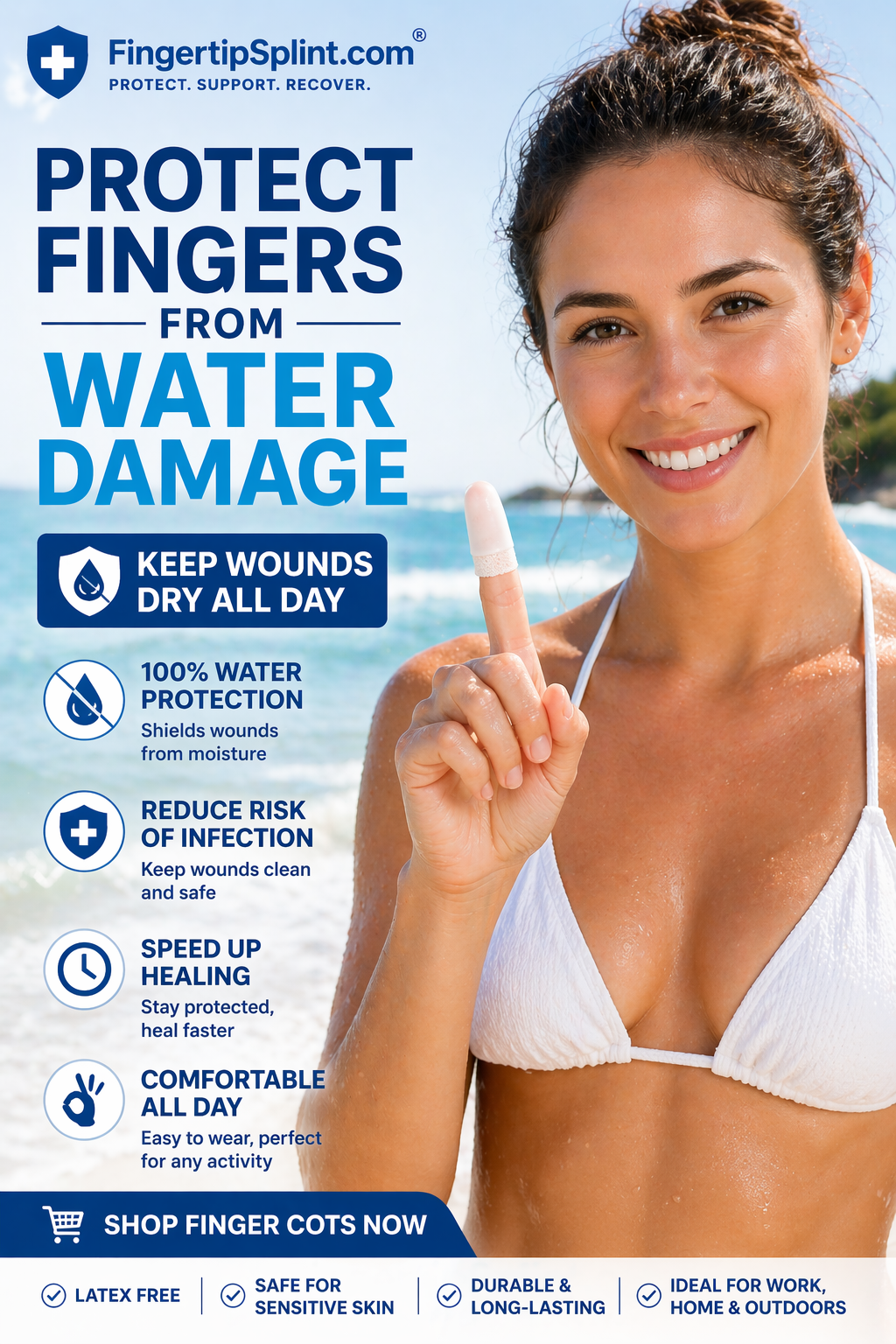
Protect Fingers from Water Damage
Finger skin takes more stress than most people realize. It bends, rubs, grips, washes, dries, and repeats that cycle all day. Once a finger is cut, bandaged, cracked, or irritated, water becomes a bigger problem than most people expect.
Even short exposure can weaken a dressing, soften healing skin, and make the area feel sore or unstable. Over time, that leads to repeated irritation, delayed healing, and more frustration with basic tasks.
This is one reason people move from basic bandages alone to targeted fingertip solutions like latex finger cots or other focused finger protection products.
Why Water Damage Is So Hard on Fingers
Moisture Weakens Dressings
Bandages often loosen faster on fingers because of bending, sweating, and repeated contact with water.
Skin Gets Softer and More Fragile
Wet skin is easier to irritate, especially when the finger keeps rubbing against tools, surfaces, and fabrics.
Daily Tasks Keep Reopening the Problem
Handwashing, cleaning, cooking, and bathing keep exposing the same area again and again.
Healing Progress Gets Interrupted
Instead of staying protected, the wound or irritated spot keeps going back to the same stressed condition.
If you are already dealing with a cut, our related article on finger cots for cuts explains why simple fingertip protection is often more effective than people expect.
Who Should Protect Fingers from Water Damage?
- People with small cuts or healing finger wounds
- Anyone wearing a bandage on a fingertip
- Home cooks, cleaners, and people doing wet chores
- Workers who wash hands often
- People with cracked fingertips or sensitive skin
- Anyone who notices repeated stinging, peeling, or tenderness after water exposure
If sensitivity is part of the problem too, our blog on finger cots for sensitive skin may help you connect the dots between water exposure and recurring fingertip irritation.
Best Ways to Protect Fingers from Water Damage Daily
- Use a finger cot over the affected area: this creates a practical barrier without covering the whole hand.
- Change wet dressings immediately: a damp bandage should not stay on for hours.
- Reduce long water exposure: even routine washing can add up quickly during the day.
- Choose the right fit: loose protection slips off, while overly tight protection becomes uncomfortable.
- Protect early, not late: once the finger is already soaked or irritated, you are already behind.
For many people, the recommended solution is a targeted fingertip protector that is easier to wear than gloves and more reliable than a bandage alone.
With vs Without Protection
| Daily Situation | Without Protection | With Finger Cot Protection |
|---|---|---|
| Pain | Finger stings and feels irritated after water contact | Less direct exposure means less irritation |
| Healing time | Moisture keeps slowing progress | Drier conditions support better recovery |
| Risk | Bandage loosens, wound gets exposed | Outer barrier helps keep the area protected |
| Comfort | Finger feels messy, soft, and tender | Protection feels more stable during use |
| Daily life | Normal tasks become annoying or painful | Cooking, washing, and chores feel easier to manage |
How to Choose the Best Protection Option
The right option depends on what you are trying to solve. If your problem is daily moisture exposure on one finger, finger cots are often the best protection option because they cover only the area that needs help. If the issue is pain from movement or injury, you may need support rather than just a moisture barrier.
Choose Finger Cots If:
- You want to keep one fingertip dry
- You have a small bandage or healing cut
- You need protection during daily chores
- You do not want the bulk of full gloves
Choose a Splint If:
- You need stability, not just coverage
- You are dealing with a sprain or impact injury
- You need finger positioning support
- You are managing a more serious hand issue
If support is part of your recovery too, compare products like a stack splint, mallet finger splint, or finger splint for pinky finger depending on the finger involved.
Step-by-Step Guide to Protect Fingers from Water Damage
- Clean and dry the finger fully before applying any dressing.
- If needed, place a fresh bandage smoothly over the affected area.
- Add a finger cot or fingertip cover over the bandage.
- Check that the fit is secure but not too tight.
- Use the protection during the task that exposes your finger to water.
- Replace the dressing or outer cover if it becomes wet or dirty.
If your main concern is showers or bathing, our post on waterproof finger cots for shower is one of the most useful related reads in this cluster.
Quick Tips
- Protect the finger before water exposure, not after.
- Replace wet bandages instead of trying to dry them out.
- Keep spare finger cots nearby if you wash your hands often.
- Use focused fingertip protection instead of bulky gloves when only one finger needs help.
- Do not ignore repeated stinging, peeling, or softening of the skin.
- Use a protective cover during cooking, cleaning, and bathroom routines.
Common Mistakes That Make Water Damage Worse
- Waiting until the bandage is already wet: prevention works better than constant replacement.
- Using only a basic dressing: finger bandages often need an outer protective layer.
- Choosing a loose fit: slipping protection will not keep water out reliably.
- Ignoring daily exposure patterns: short repeated contact can be just as damaging as one long soak.
- Using the wrong product: if you need water protection, soft comfort alone is not enough.
Doctor Advice: When to Get Help
Protecting fingers from water damage is a smart daily habit, but it is not a replacement for medical care. If the finger becomes red, swollen, very painful, drains fluid, or is not improving, you should get it checked.
- Get medical advice if the wound keeps reopening.
- Seek help if there are signs of infection or worsening tenderness.
- Do not ignore pain that seems deeper than surface irritation.
Trusted health resources like Mayo Clinic, WebMD, Healthline, and Cleveland Clinic all support the importance of proper wound care, dryness, and infection awareness.
Best Recovery Bundle
If your finger is exposed to water often, one item may not be enough. A smarter daily setup usually includes:
- Finger cots for waterproof fingertip protection during tasks
- Finger sleeves for lighter comfort support when the finger is dry
- Finger brace or splint if stability is needed beyond skin protection
This layered setup helps people move between work, handwashing, cooking, cleaning, and rest without constantly exposing the same irritated area.
Keep Fingers Dry, Protected, and Healing
If water keeps making your finger worse, stop relying on a basic dressing alone. A simple finger cot can help create the dry, protected barrier your finger needs to recover more comfortably.
Learn more in our complete guide or browse the best daily protection option below.
Shop Finger Cots NowFAQs
Conclusion
Protect Fingers from Water Damage if you want wounds, dressings, and sensitive skin to actually improve instead of staying stuck in the same irritated cycle. The right daily barrier can reduce moisture problems, improve comfort, and make healing easier. If your fingers are exposed to water regularly, this is not a small upgrade. It is one of the simplest ways to protect recovery and avoid setbacks.