
How to Stop Finger Skin Peeling
Finger Skin Peeling can start as a small dry patch and quickly turn into burning, cracking, tenderness, and daily discomfort. If your fingertips keep peeling after washing, working, cleaning, or healing from a cut, the problem usually is not random. It is repeated irritation, moisture imbalance, or lack of proper protection.
In this guide, you’ll learn why finger skin starts peeling, what makes it worse, how to calm it down, and which products help protect healing skin. For a complete guide to fingertip protection, start with our main finger cot page.
Table of Contents
- What causes finger skin peeling
- Finger Skin Peeling and why it gets worse
- Who needs fingertip protection most
- How to stop peeling fast
- With vs without protection
- Step-by-step daily care
- Quick tips
- Common mistakes
- Doctor advice and FAQs
Quick Answer
Finger Skin Peeling usually improves when you reduce irritation, protect the area from water and friction, keep the skin dry but not over-dried, and use a gentle protective layer like a finger cot during daily tasks. Consistent protection helps peeling skin calm down and heal faster.
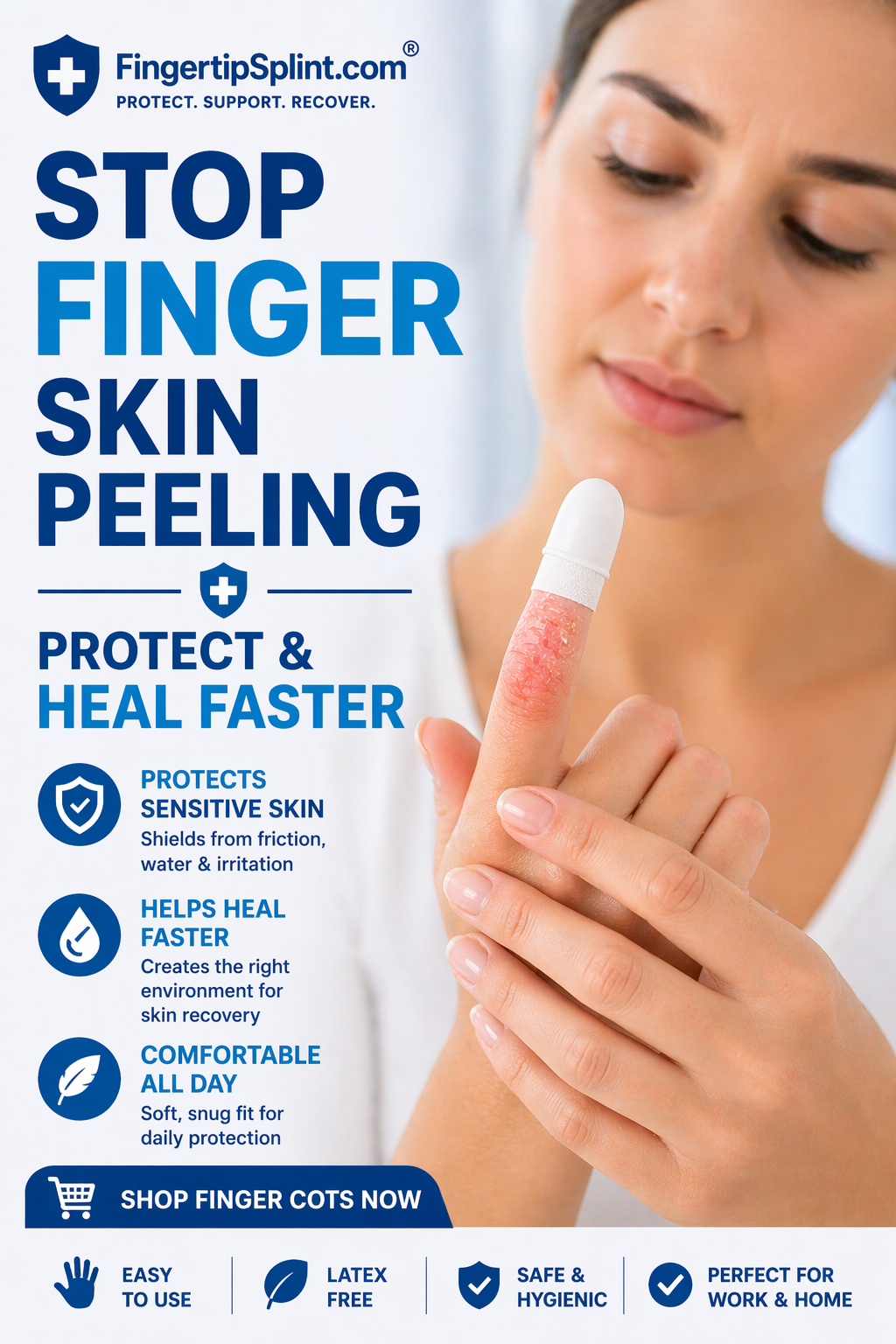
Finger Skin Peeling
Peeling fingertips are more than a cosmetic issue. When the top layer of skin keeps lifting or cracking, the finger becomes more sensitive to soap, water, heat, cleaning products, rough surfaces, and repeated motion. That creates a cycle where the skin gets irritated, starts peeling, feels sore, and then peels again.
For many people, this happens because the fingers are exposed to too much washing, too much friction, or too little protection during work and chores.
This is why targeted fingertip protection often works better than doing nothing and hoping moisturizer alone will fix it.
Why Finger Skin Starts Peeling
Too Much Water Exposure
Frequent washing, cleaning, and wet work can weaken the outer skin barrier and make peeling worse.
Repeated Friction
Typing, gripping tools, lifting, packaging, and daily movement can keep rubbing the same sore spot.
Healing Cuts or Irritated Skin
When a finger is already healing, the outer layer is easier to disturb and peel.
Harsh Daily Exposure
Soap, cleaners, temperature changes, and rough surfaces can all keep sensitive fingertips from settling down.
If your peeling is connected to moisture or daily exposure, you should also read our article on finger cots for sensitive skin.
Who Needs Protection Most?
- People with dry, cracked, or tender fingertips
- Workers who wash hands often
- Home cooks and cleaners
- People with minor cuts or healing skin damage
- Anyone whose fingertips peel after regular daily tasks
If peeling is happening around a cut or healing bandage, our related guide on finger cots for bandage protection may be especially useful.
How to Stop Finger Skin Peeling Fast
- Reduce contact with water during trigger tasks: repeated wet exposure keeps peeling active.
- Protect the fingertip during work: a finger cot can reduce daily rubbing and surface irritation.
- Keep the area clean and dry: not soaked, not dirty, and not left unprotected.
- Avoid picking or rubbing loose skin: this usually makes the area more raw.
- Use targeted protection during chores, typing, or cooking: prevention works better than reacting later.
For many users, the recommended solution is a finger cot that creates a simple barrier against friction, moisture, and repeat irritation.
With vs Without Protection
| Daily Situation | Without Protection | With Finger Cot Protection |
|---|---|---|
| Pain | Peeling skin keeps stinging or burning | Less direct contact means less irritation |
| Healing time | Outer skin keeps reopening or rubbing off | Skin gets a calmer environment to recover |
| Risk | Sensitive area stays exposed all day | Barrier reduces daily aggravation |
| Comfort | Typing, washing, and chores feel annoying | Daily tasks feel easier to manage |
| Daily life | You keep noticing the same sore fingertip | Finger feels more stable and protected |
Best Protection Option for Peeling Fingertips
If your main issue is the skin itself, not a structural injury, the goal is not heavy support. The goal is to stop daily damage. That is why finger cots are often the best protection option for peeling skin. They cover just the affected finger, reduce contact with wet surfaces, and help prevent the outer layer from getting rubbed again and again.
Choose Finger Cots If:
- You need one fingertip protected
- Your skin is peeling, cracked, or sensitive
- You want less friction during chores or work
- You do not need rigid finger support
Choose a Splint If:
- You have joint or tendon pain
- You need stability, not skin coverage
- You are managing a more serious finger injury
- You need finger positioning support
If pain or structural injury is part of the problem too, compare support options like a stack splint, mallet finger splint, or splint for hand and fingers.
Step-by-Step Daily Routine for Peeling Fingers
- Wash gently and dry the finger completely.
- Do not peel away loose skin aggressively.
- Protect the finger before chores, water exposure, or repetitive work.
- Use a finger cot during the task that usually triggers irritation.
- Replace the cover if it gets wet or dirty.
- Let the fingertip rest when the trigger task is over.
If your work environment keeps making things worse, our guide on rubber finger cots for work is another smart related read.
Quick Tips
- Protect the finger during the activity that causes the peeling.
- Do not leave the fingertip wet for long periods.
- Replace damp covers or dressings quickly.
- Use targeted finger protection instead of ignoring the problem.
- Reduce repeated rubbing from tools, dishes, packaging, or surfaces.
- If skin is also sore from cuts, see our guide on finger cots for cuts.
Common Mistakes That Make Finger Skin Peeling Worse
- Overwashing without protection: too much water exposure can keep the skin barrier unstable.
- Ignoring repeated friction: the same task may be reopening the same irritated spot every day.
- Picking at the peeling skin: this often turns a mild issue into a sore, raw one.
- Leaving the finger exposed during chores: wet work and cleaning can quickly undo progress.
- Using the wrong solution: if the issue is skin irritation, support braces alone will not solve it.
Doctor Advice: When to Get Checked
Finger skin peeling is often caused by irritation, moisture, or repeated friction, but you should not ignore it if it becomes severe or keeps getting worse.
- Get medical advice if the finger becomes very red, swollen, or painful.
- Seek help if the skin is deeply cracked, bleeding often, or looks infected.
- Do not ignore peeling that does not improve with protection and reduced irritation.
Trusted resources like Mayo Clinic, WebMD, Healthline, and Cleveland Clinic all reinforce the importance of protecting damaged skin and watching for infection or worsening symptoms.
Best Recovery Bundle
If your fingertips peel often, one product may help, but a smart setup often works better:
- Finger cots for friction and moisture protection during daily tasks
- Finger sleeves for lighter comfort support when the hands are dry
- Finger support products if pain or injury is also involved
This approach works well for people who move between work, cleaning, cooking, typing, and other repetitive hand use through the day.
Stop Peeling, Protect Your Fingers, and Stay Comfortable
If peeling skin keeps coming back, stop letting daily friction and moisture make it worse. A simple fingertip barrier can help protect the area and support faster recovery.
Learn more in our complete guide or choose the best protection option below.
Shop Finger Cots NowFAQs
Conclusion
Finger Skin Peeling usually gets worse when daily triggers stay the same. The key is not to wait for it to magically settle. Protect the area, reduce repeated irritation, and use the right fingertip barrier during the tasks that keep causing trouble. That one change often makes the biggest difference in comfort, healing, and daily function.