💉 Finger injury recovery
How to shower with a finger injury (without getting your splint wet)
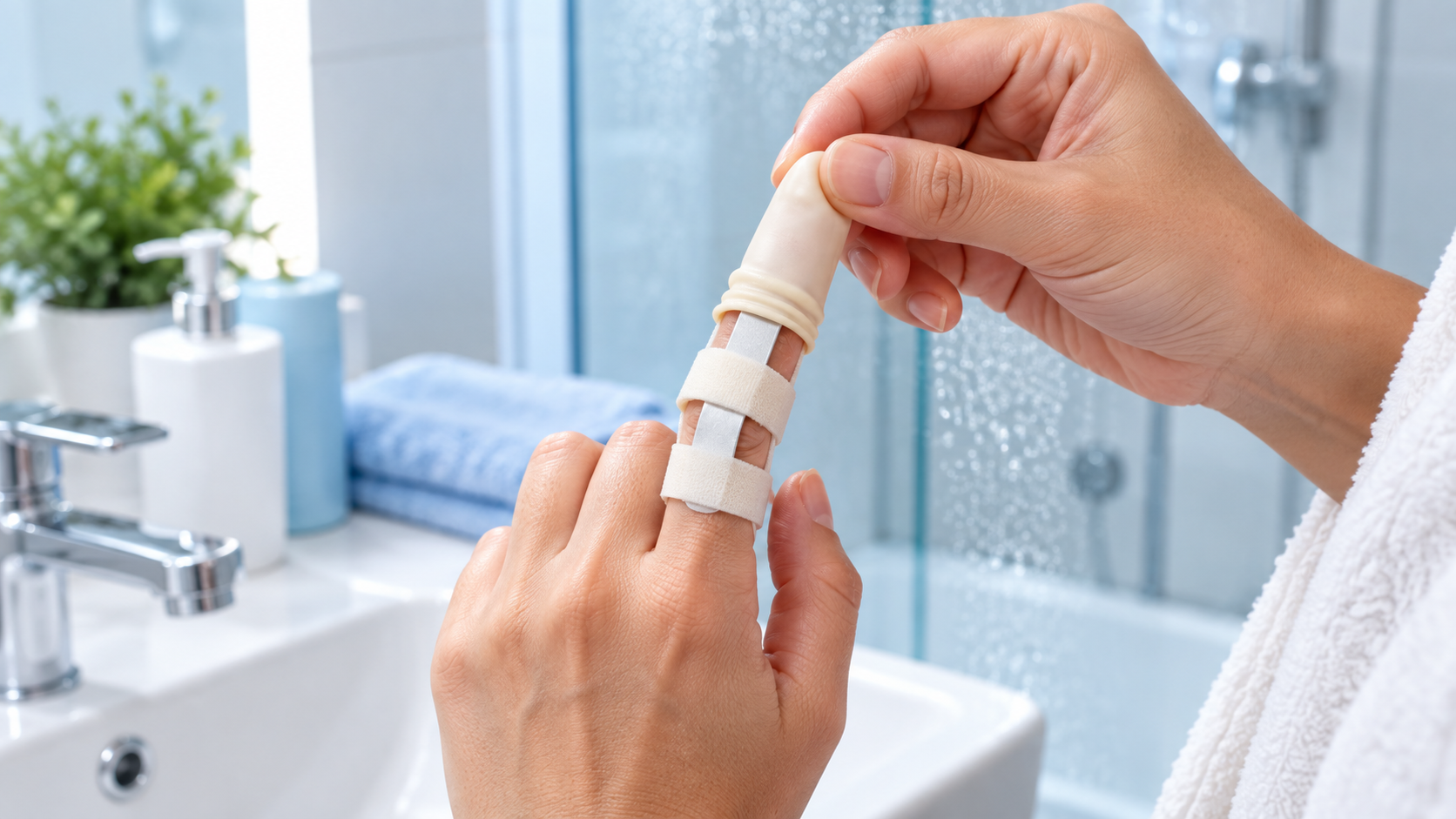
Using the right waterproof finger cots for shower protection is the easiest thing you can do to protect your splint, keep your wound dry, and avoid setting your recovery back by weeks.
Quick answer
Roll a waterproof finger cot for shower over your splinted finger before stepping in. It creates a tight seal around your finger, keeping your bandage, wound, and splint completely dry. Latex cots work best — they seal tight and are thin enough that they won’t add awkward bulk. Takes about 10 seconds to apply.
Why getting your splint wet is a real problem
Most people assume a quick shower won’t do any damage. Sometimes it doesn’t — but the risk is real enough that you shouldn’t gamble with it, especially during the early weeks of recovery.
Finger splints are typically lined with foam or neoprene padding. When that padding gets wet, it stays damp for hours. That prolonged moisture softens the skin underneath — a condition called maceration — which makes it fragile, prone to blistering, and more vulnerable to infection right at the site you need to heal.
Keeping wounds clean and dry is one of the most effective ways to support the healing process and reduce infection risk during recovery.
— Mayo Clinic, wound care guidanceStep-by-step: showering safely with a finger splint
This is the routine that works — the same one occupational therapists recommend to patients recovering from finger fractures and tendon injuries.
-
1Check your splint is properly positioned
Before adding any protection, make sure the splint hasn’t shifted. It should sit flat against your finger with the injured area fully supported. If it’s moved, gently reposition it now — you want it in the right place when you seal it up.
-
2Choose the right size waterproof finger cot
Finger cots come in small, medium, and large. For a splinted finger, go one size up from what you’d normally need — the splint adds bulk. The cot should slide on with light resistance. If it feels like it might cut off circulation, it’s too small.
-
3Roll it on from the fingertip downward
Don’t try to stretch it on from the base. Start at the tip of your finger and unroll the cot down toward your hand. This method creates a much better seal and — critically — avoids bending the finger during application.
-
4Check the seal at the base
Press gently around the edge where the cot meets your skin. There should be no gaps. For extra security, some people wrap a single strip of waterproof medical tape around the base. This is especially worth doing if you shower for longer than five minutes.
-
5Shower normally — but avoid direct water pressure on the finger
You don’t need to hold your hand above your head the whole time. Just avoid pointing the finger directly into the shower stream for a sustained period. A quick rinse is fine; prolonged soaking is not, even with the cot on.
-
6Remove the cot carefully after your shower
Roll it back off from the base toward the tip — the reverse of how you put it on. Don’t yank it. Dry your whole hand thoroughly, check the splint is still correctly positioned, and you’re done.
Which waterproof finger cot is best for showering?
Not all finger cots are equal when it comes to shower protection. Here’s how the three main types compare:
Latex finger cot
Creates the tightest natural seal and is thin enough to fit under a splint without awkward bulk. Best water resistance of all three options. Avoid only if you have a latex allergy.
Silicone finger cot
The best option for people with latex allergies. Slightly thicker and more durable. Can be washed and reused multiple times, which makes it more economical for an 8-week recovery.
Vinyl finger cot
More affordable but less stretchy. Works in a pinch, but the seal at the base isn’t as reliable as latex or silicone for shower use specifically. Best used as a short-term backup.
You can browse our full range of waterproof finger cots in latex, silicone, and vinyl to find the right fit for your injury. We also carry silicone finger protectors for added cushioning during recovery.
What to do if you don’t have a finger cot right now
Your injury just happened and you need to shower tonight. Here are two stopgap solutions that work reasonably well until you can get the proper product:
Option 1: a small plastic bag and a rubber band
Slide a small sandwich bag over your splinted finger, gather it loosely at the base, and secure it with a rubber band. Not tight — you do not want to restrict blood flow. It’s not elegant, but it protects your splint adequately for a single shower. Check circulation before stepping in.
Option 2: waterproof medical tape
Wrap your splint and finger snugly with waterproof (not standard) medical tape before showering. Apply a few overlapping layers and smooth down the edges. This will resist a quick shower if done properly. Remove it afterward — leaving wet tape against skin for hours causes its own irritation.
Finger cot vs splint — what’s the difference?
Patients often confuse these two products. They serve completely different purposes and are frequently used together during recovery.
| Feature | Waterproof finger cot | Finger splint |
|---|---|---|
| Purpose | Keeps finger dry during showering | Immobilizes the finger to heal |
| Waterproof | ✓ Yes | ✗ No |
| Provides support | ✗ No | ✓ Yes |
| Worn during shower | ✓ Yes — over the splint | ✗ Not directly |
| Best for | Shower protection, wound hygiene | Fractures, mallet finger, tendon injuries |
| Used together? | ✓ Yes — cot goes over the splint in the shower | |
If your injury needs structural support as well as shower protection, explore our mallet finger splint, stack splint, and full finger splint collection.
Why Use Waterproof Finger Cots for Shower
When you shower with an exposed wound, water can soften skin and increase infection risk. According to Mayo Clinic, keeping wounds clean and dry supports healing.
Products like finger cots and silicon finger protector help provide that barrier.
Frequently asked questions about waterproof finger cots for shower
-
Yes — with the right protection. Slide a waterproof finger cot for shower over your splinted finger before stepping in. It creates a watertight seal around the entire finger, keeping your splint, dressing, and wound dry throughout the shower. Do not shower without this protection if you want to avoid slowing your recovery.
-
For mallet finger, your splint must remain on and completely dry for the entire immobilization period — typically 6 to 8 weeks. For other injuries, your doctor or physiotherapist will advise when it’s safe to get the area wet. In general, keep it dry until you receive specific clearance otherwise.
-
Act quickly. Pat it dry with a clean towel, then use a hairdryer on a cool, low-heat setting to dry it out fully — never use high heat as this can deform the splint material. Check that it’s still sitting correctly on your finger. If the padding is permanently damaged or the splint has lost its shape, contact your healthcare provider for a replacement before your next shower.
-
For most finger injuries — and especially mallet finger — no. The finger must stay immobilized at all times. Even one brief moment of bending can damage the healing tendon and restart your entire recovery period from zero. Always use waterproof finger cots for shower protection instead and keep the splint on throughout.
-
Latex cots are generally single-use — soap and repeated water exposure degrades the latex quickly. Silicone cots can be washed and reused several times before they need replacing. Replace any cot as soon as you notice tearing, loss of elasticity, or discolouration. Using a compromised cot is worse than using none — it gives a false sense of protection.
-
A bath is actually riskier than a shower for a finger injury, because you’d be resting near standing water for a longer period and the temptation to rest your hand on the tub edge means more chance of accidental splashing or submersion. Use the same finger cot protection regardless. Alternatively, rest your protected hand on the edge of the tub and wash yourself with the other hand.
Ready to shower safely?
Shop our full range of waterproof finger cots for shower — available in latex, silicone, and vinyl with same-day dispatch.