
How to Keep Bandages Dry All Day
Keep Bandages Dry if you want wounds to stay protected, comfortable, and less likely to get irritated during daily activities. Wet dressings can loosen, collect dirt, and slow recovery, especially on fingers that move constantly.
This guide explains why bandages get wet so fast, how to prevent it, what products actually help, and when a better protection option makes more sense. For a complete guide to fingertip protection, start with our main finger cots page.
Table of Contents
- Why keeping bandages dry matters
- Keep Bandages Dry the smart way
- Common reasons bandages get wet
- Best protection options
- With vs without added protection
- Step-by-step guide
- Quick tips
- Mistakes to avoid
- Doctor advice and FAQs
Quick Answer
To keep bandages dry all day, use a clean outer barrier like a finger cot or waterproof cover, change dressings when damp, avoid direct water exposure, and choose a secure fit that stays in place during daily movement. Dry bandages protect wounds better and reduce irritation.
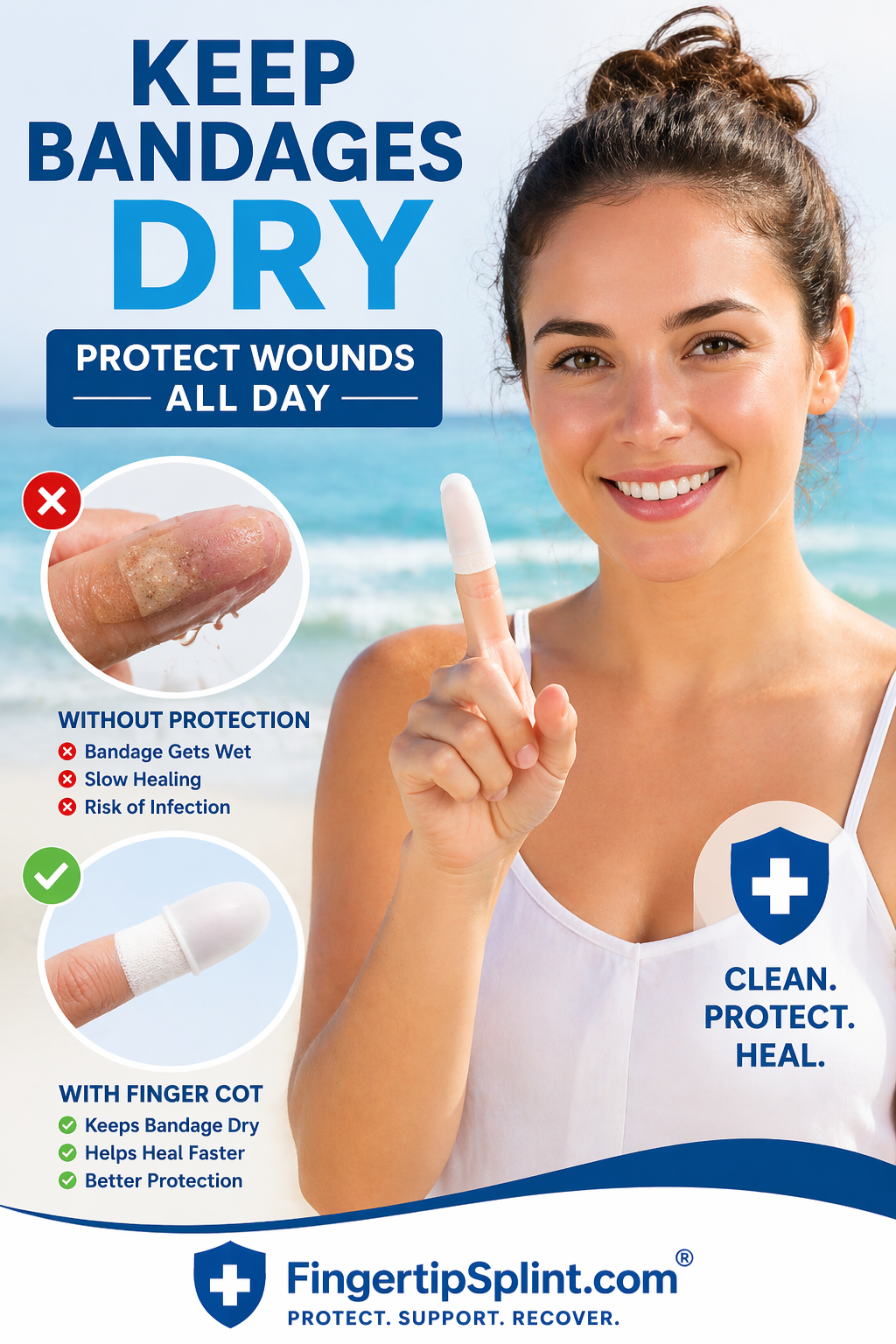
Keep Bandages Dry
Wet bandages are one of the fastest ways to make a small wound feel worse. Once moisture gets into the dressing, it can loosen the adhesive, increase friction, and make the area feel soft, irritated, or dirty. That is why many people switch from a bandage alone to a layered protection method.
If you are already dealing with a cut that keeps reopening, our guide on finger cots for cuts explains why targeted finger protection often works better than a basic dressing on its own.
Why Keeping Bandages Dry Matters
Better Wound Hygiene
A dry covering helps the wound stay cleaner and more stable during daily movement.
Less Irritation
When the dressing stays dry, it is less likely to rub, loosen, or bunch up around the wound.
More Comfort
Dry protection usually feels more secure and less messy during work, chores, or errands.
Better Healing Support
Daily protection works best when the wound is not repeatedly exposed to moisture and friction.
If your bandage is on a finger that bends often, adding a protective layer like latex finger cots can be the recommended solution for more reliable daily coverage.
Common Reasons Bandages Get Wet Too Fast
- Handwashing several times a day
- Cooking, cleaning, and dishwashing
- Sweat and trapped moisture
- Loose bandages that shift during movement
- Using only a basic dressing with no outer protection
Daily tasks can quickly ruin a dressing on the hands. That is especially true if you also need protection during kitchen work. Our article on finger cots for cooking protection covers that situation in more detail.
Best Ways to Keep Bandages Dry All Day
- Use a finger cot over the bandage: this creates a simple outer barrier for daily tasks.
- Change the dressing if it gets damp: do not leave wet material on the wound all day.
- Choose the right size protection: loose coverage shifts, tight coverage feels uncomfortable.
- Limit direct water exposure: even quick splashes add up during the day.
- Use targeted protection instead of bulky gloves: this is often easier and more practical.
If your goal is simple fingertip coverage without full-hand bulk, the best protection option is often a focused cover designed just for one finger.
With vs Without Extra Protection
| Daily Situation | Without Extra Protection | With Finger Cot Protection |
|---|---|---|
| Pain / irritation | Bandage gets damp and rubs more | Outer layer reduces moisture and friction |
| Healing time | Wet dressing can slow recovery | Dryer coverage supports better healing conditions |
| Risk | Higher chance of loose or dirty bandage | More secure daily protection |
| Comfort | Bandage may feel messy or unstable | Finger feels more protected during movement |
| Daily life | Work and chores become frustrating | Routine tasks feel easier to manage |
Step-by-Step Guide to Keep Bandages Dry
- Clean and dry the wound area properly before applying a fresh dressing.
- Place the bandage smoothly so it is secure and not folded.
- Add a finger cot or protective cover on top of the bandage.
- Check the fit so it feels snug but not painfully tight.
- Replace the outer protection if it gets wet, dirty, or stretched out.
- Change the bandage if moisture gets underneath the dressing.
If your wound is also taking longer than expected to recover, read do finger cots help wounds heal faster for a related cluster topic.
Quick Tips
- Always replace a bandage if it becomes wet underneath.
- Use fresh finger cots instead of reusing dirty ones.
- Choose targeted finger protection for easier daily movement.
- Keep water exposure short whenever possible.
- Carry spare dressings and covers if you are active during the day.
- Use a secure outer layer if you wash your hands often.
Common Mistakes That Make Bandages Wet Faster
- Relying on the bandage alone: basic dressings often need an extra protective layer on fingers.
- Keeping a damp bandage on too long: moisture under the dressing can irritate the wound.
- Using the wrong size cover: a poor fit can slip and let moisture in.
- Ignoring repeated exposure: washing, cleaning, and sweating can all affect the dressing.
- Not changing protection often enough: daily use needs regular replacement.
Who Needs This Most?
Keeping bandages dry matters most for:
- People with finger cuts or small healing wounds
- Workers who wash hands often
- Home cooks and cleaners
- People covering a small dressing during daily activity
- Anyone with sensitive skin or repeated irritation
For related comfort support, see our guides on finger cots for bandage protection and finger cots for sensitive skin.
Doctor Advice: When to Get Professional Help
Keeping a bandage dry is important, but it does not replace proper medical care. If the wound is deep, very painful, red, swollen, draining, or not improving, you should get medical advice.
- Get checked if the wound keeps reopening.
- Seek help if redness, swelling, or pain is increasing.
- Do not ignore signs that may suggest infection.
Trusted resources like Mayo Clinic, WebMD, Healthline, and Cleveland Clinic also recommend keeping wounds clean, protected, and monitored for warning signs.
Best Recovery Bundle
If you want a smarter daily setup, a simple bundle can help you stay protected across different situations:
- Finger cots for keeping bandages dry during daily activity
- Finger sleeves for lighter comfort use after tasks are finished
- Finger support products if you also need stability, not just coverage
This approach works especially well for people moving between work, chores, handwashing, and light activity throughout the day.
Protect Your Bandage the Smarter Way
If wet dressings keep slowing your recovery, switch to a practical outer layer that helps keep your finger clean, dry, and protected all day.
Learn more in our complete guide if you want a full breakdown before you buy.
Shop Finger Cots NowFAQs
Conclusion
Keep Bandages Dry if you want a wound to stay protected, cleaner, and more comfortable through the day. A basic dressing often is not enough on an active finger, especially when water and friction are constant. Adding the right outer protection can make healing easier, daily tasks simpler, and recovery more reliable.