


Splint on Pinky Finger: Why Your Pinky Hurts While Bending and How to Fix It
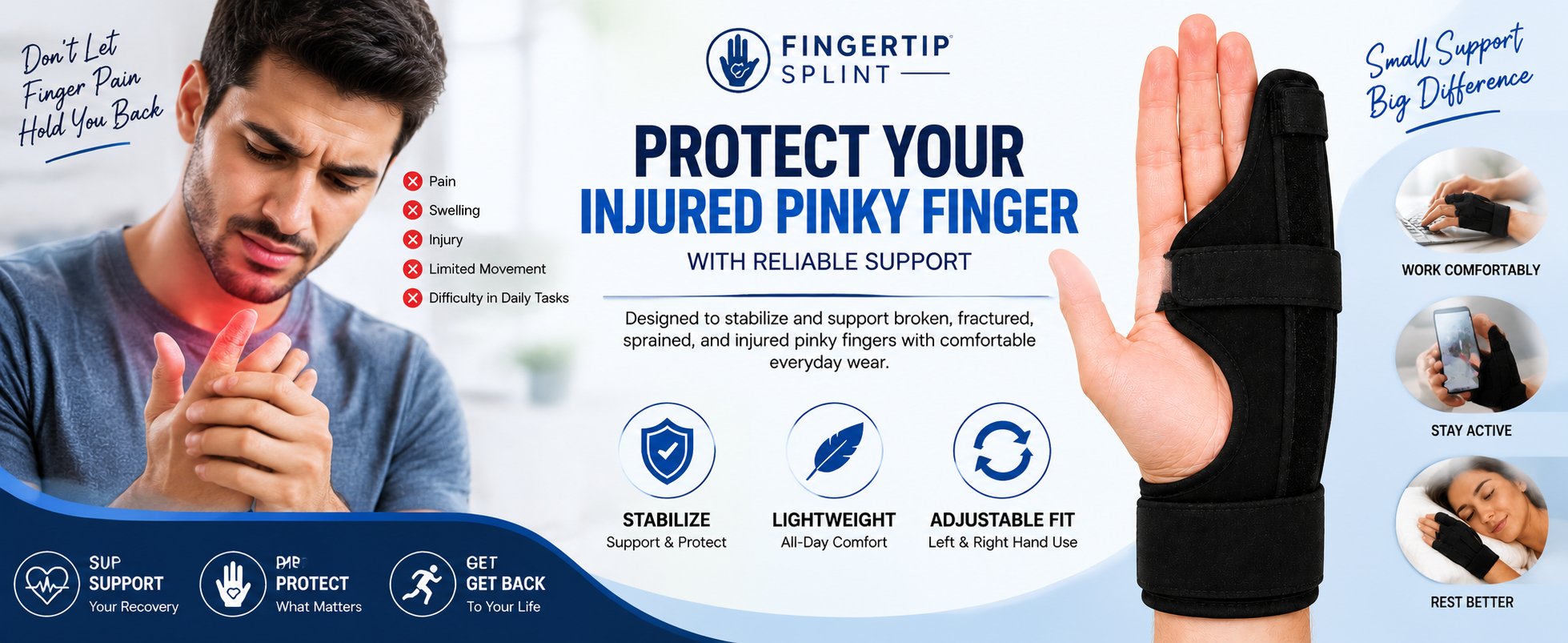
If you feel sharp pain, stiffness, swelling, or weakness when bending your small finger, wearing a splint on pinky finger may be the support your finger needs before the injury becomes worse.
Shop Best Pinky Finger Splint Buy Broken & Fractured Pinky Splint
Quick Answer: Do You Need a Splint on Pinky Finger?
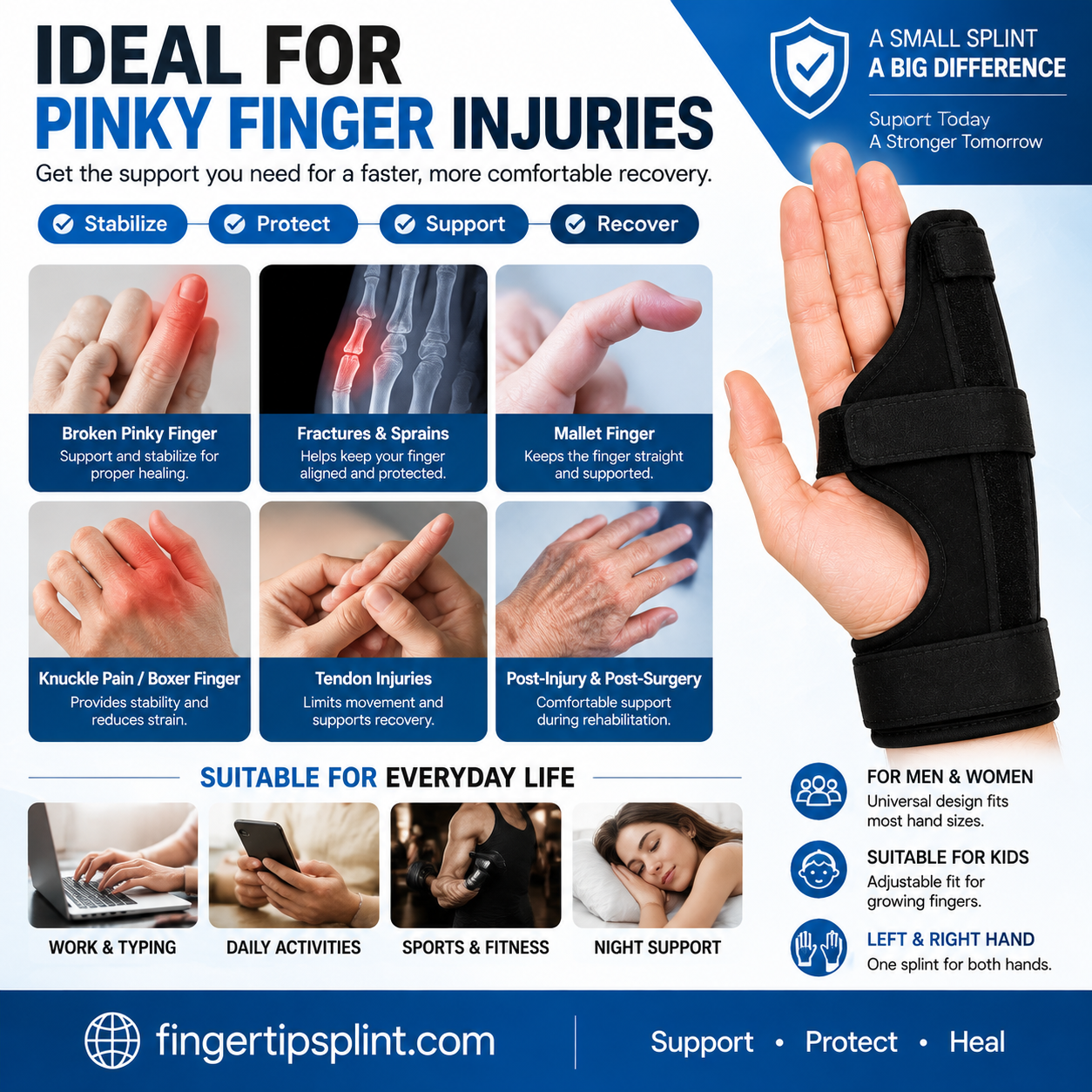
A splint on pinky finger may help if your pinky hurts while bending, feels unstable, looks swollen, or becomes painful after sports, impact, twisting, typing, gripping, or a fall. A pinky splint supports the small finger, limits painful movement, and helps protect the joint while you decide whether the injury is a sprain, jam, tendon strain, or possible fracture.
For serious swelling, deformity, numbness, open wounds, severe bruising, or pain after trauma, get medical evaluation. A broken finger may require medical treatment, and a splint is not a replacement for diagnosis.
Trust Section: Why Pinky Finger Pain Should Not Be Ignored
The pinky finger looks small, but it plays a major role in hand strength. It helps with gripping, typing, lifting bags, holding tools, using phones, catching balls, and stabilizing your hand during daily tasks. When your pinky hurts while bending, the problem is not always “minor.” Pain can come from a sprain, jammed joint, tendon irritation, ligament strain, swelling, or a broken pinky finger.
Many people wait too long because the finger still moves a little. That is where the risk starts. If the small finger keeps bending again and again while irritated, the joint can stay inflamed. If you keep working, playing sports, or lifting objects without protection, the pain may become sharper and recovery may become slower.
This is why a quality finger splint for pinky finger can be a smart early protection option. It supports the painful finger, reduces unnecessary bending, and gives the injured area a more stable environment.
Table of Contents
- Why pinky finger pain happens while bending
- Sprain vs broken pinky finger vs jammed finger
- Splint vs broken pinky finger cast
- Best product solution
- How to wear a pinky splint
- Recovery timeline
- Mistakes to avoid
- FAQs
Why Pinky Finger Pain While Bending Happens
Pinky finger pain while bending usually means one of the small structures inside the finger is irritated. Your pinky has joints, ligaments, tendons, bones, soft tissue, and small stabilizing structures. When one of these is stretched, hit, twisted, compressed, or forced backward, bending can become painful.
A common example is a Sprained Pinky Finger. This happens when the ligaments around the joint are overstretched. You may notice swelling, tenderness, bruising, and pain when trying to bend or straighten the finger. Mayo Clinic lists pain, swelling, bruising, and limited movement as common sprain symptoms, which is why these warning signs should be taken seriously.
Another cause is a jammed finger. This often happens in basketball, cricket, baseball, gym training, or even during a simple fall. The fingertip is pushed toward the hand, irritating the joint. Healthline notes that splinting can help keep a jammed finger still and prevent further injury, especially when movement causes pain.
Sometimes, pain while bending may come from a broken pinky finger. A fracture can cause deeper pain, bruising, swelling, deformity, or pain that becomes worse when you touch or move the finger. In this case, a broken pinky finger cast or medical splint may be recommended by a clinician depending on severity.
If your pinky pain started after impact, sports injury, twisting, or a fall, do not treat it casually. Early protection with a pinky finger splint for stable support can help stop repeated bending while you monitor symptoms and seek care if needed.
Splint on Pinky Finger vs Broken Pinky Finger Cast
Many people search for a broken pinky finger cast because they think every painful pinky injury needs a hard cast. In reality, support depends on the injury. A cast is usually more rigid and may be used for certain fractures. A splint is often more flexible, easier to wear, easier to remove when allowed, and more practical for mild to moderate support needs.
A small finger splint is useful when the goal is to stabilize the pinky, reduce painful bending, and protect the injured area during daily movement. It is especially helpful for people who need protection while typing, working, walking, sleeping, or doing light daily tasks.
| Option | Best For | Main Advantage | Limitation |
|---|---|---|---|
| Pinky splint | Sprain, mild injury, support, protection | Easy to wear and practical for daily use | Not enough for severe fractures without medical care |
| Broken pinky finger cast | More serious fracture cases | Very rigid immobilization | Less flexible and requires medical fitting |
| Buddy taping | Minor jammed finger support | Simple and low cost | Less protective than a structured splint |
| Finger brace | Daily stabilization and comfort | Supportive and reusable | Must fit properly |
If your pain is mild but bending makes it worse, a finger splint for pinky finger may be the best protection option. If your finger looks crooked, numb, severely swollen, or extremely painful, see a medical professional before relying on home treatment.
Product Solution: Best Protection Option for Pinky Finger Pain
The recommended solution for many people with pinky pain while bending is a supportive pinky finger splint. The purpose is simple: protect the finger from movement that keeps irritating it. When your pinky bends repeatedly during typing, sleeping, gripping, or working, the injured tissue gets stressed again and again. A splint creates a controlled position so the finger is not constantly forced into painful motion.
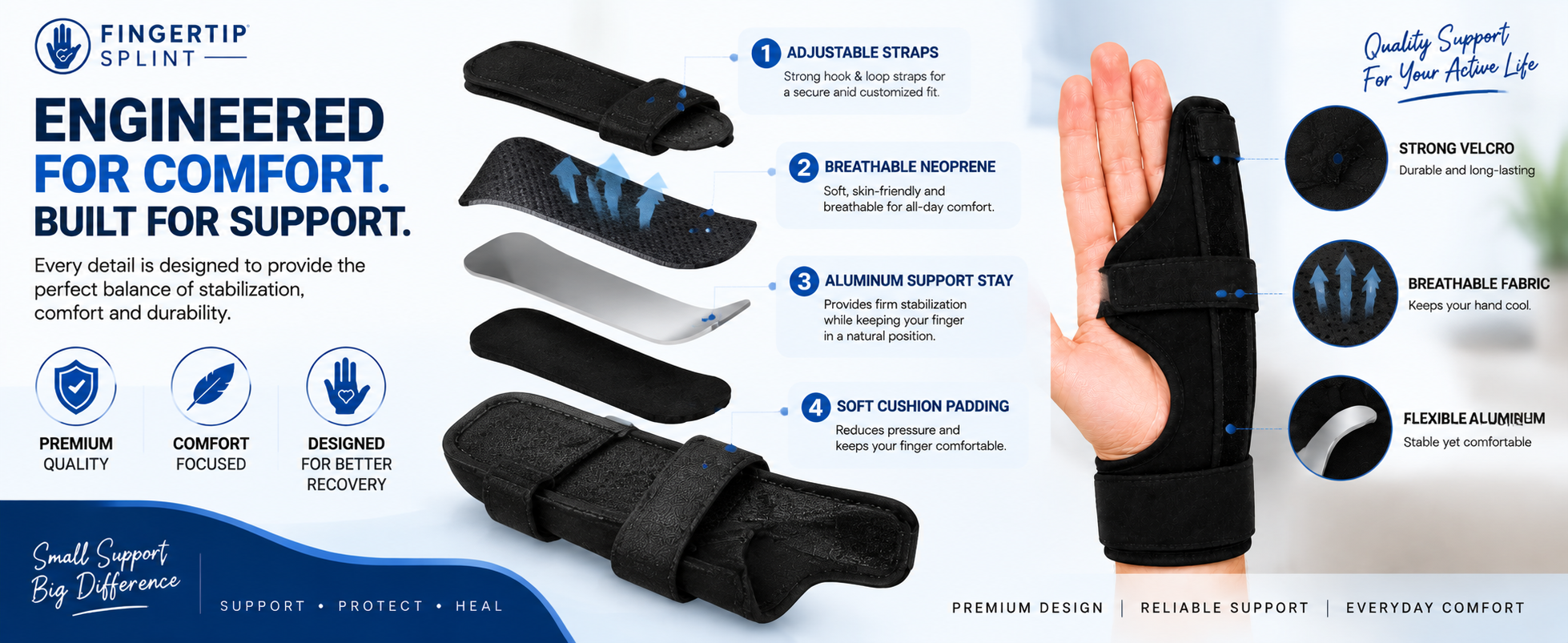
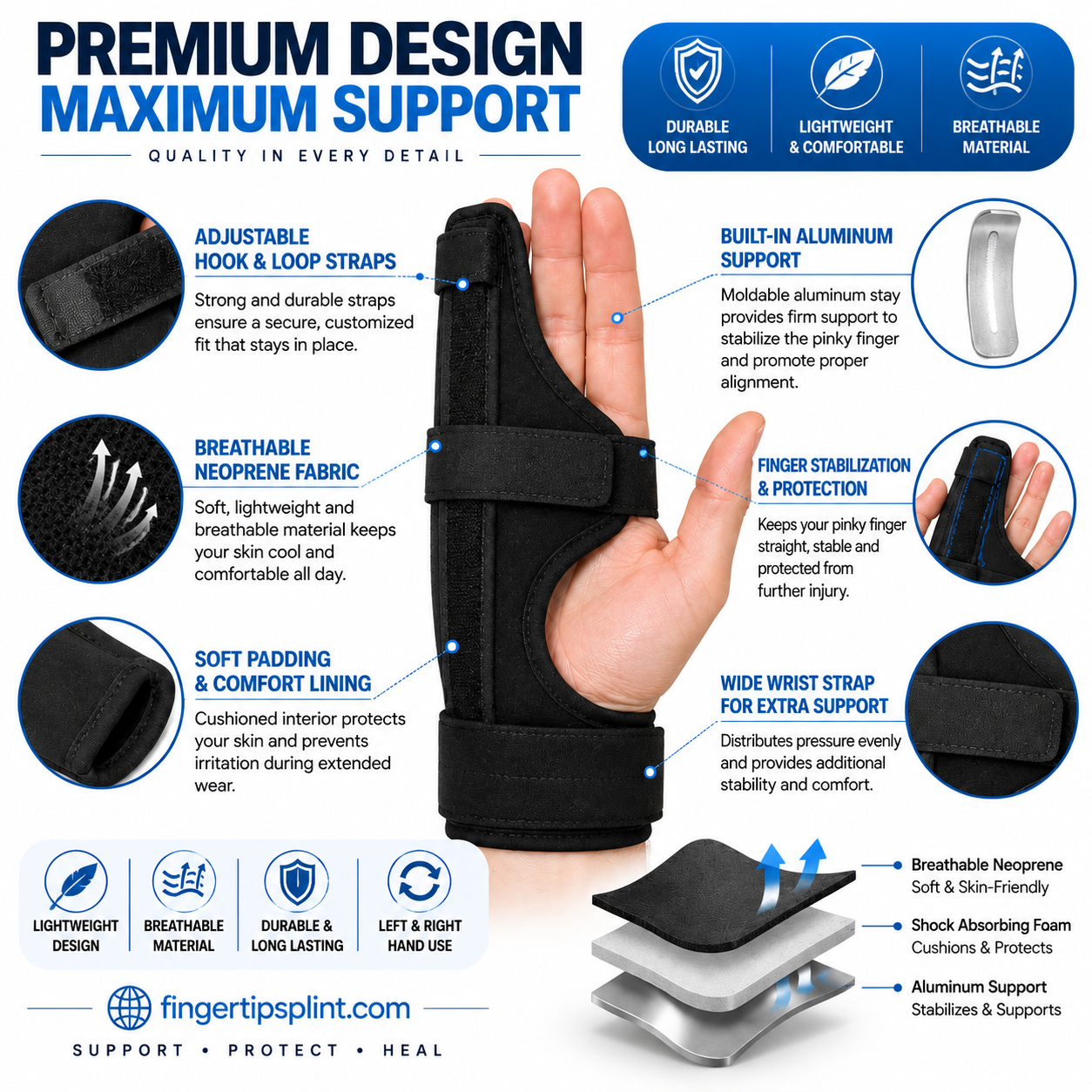
For ecommerce buyers, comfort matters as much as support. A good pinky splint should feel stable without cutting circulation. It should sit securely on the small finger, reduce painful bending, and be easy enough to wear during daily activities.
For direct support, visit the Finger Splint for Pinky Finger product page. You can also explore more finger support options in the FingertipSplint shop.
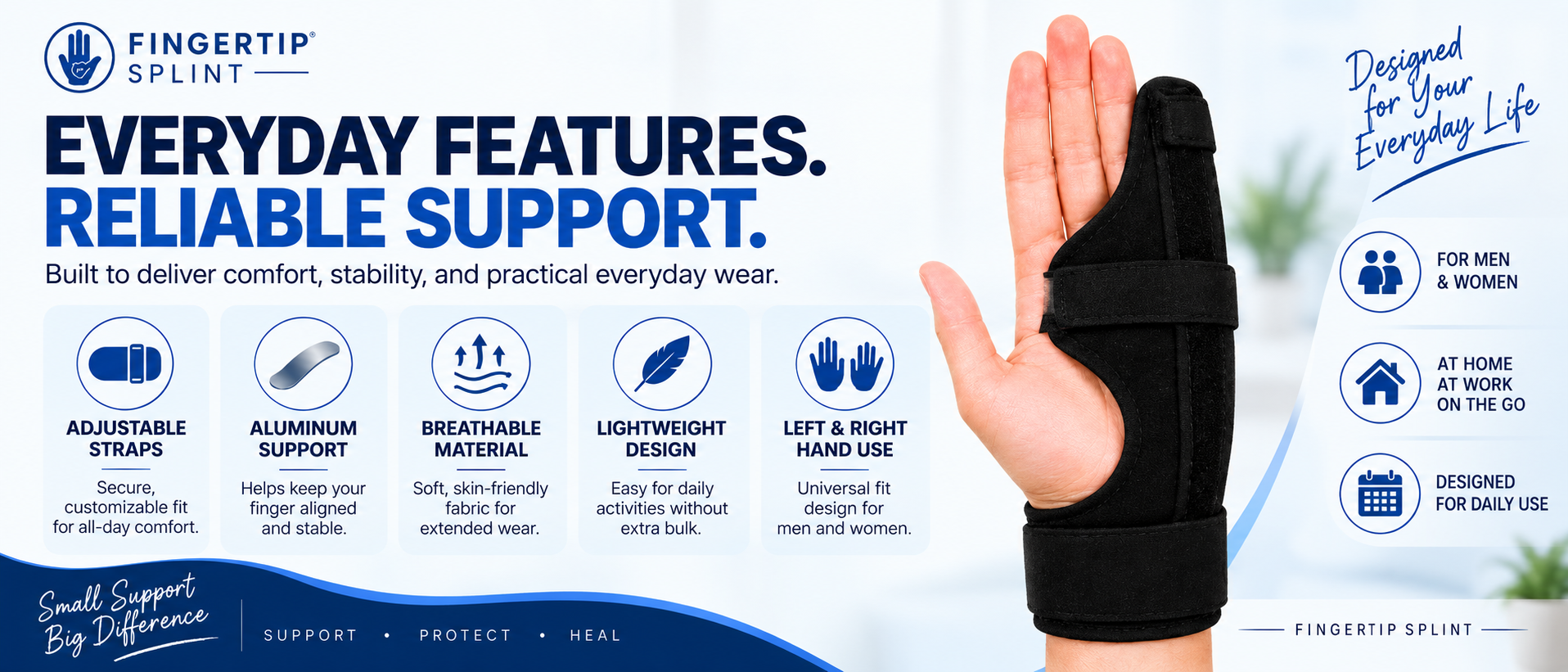
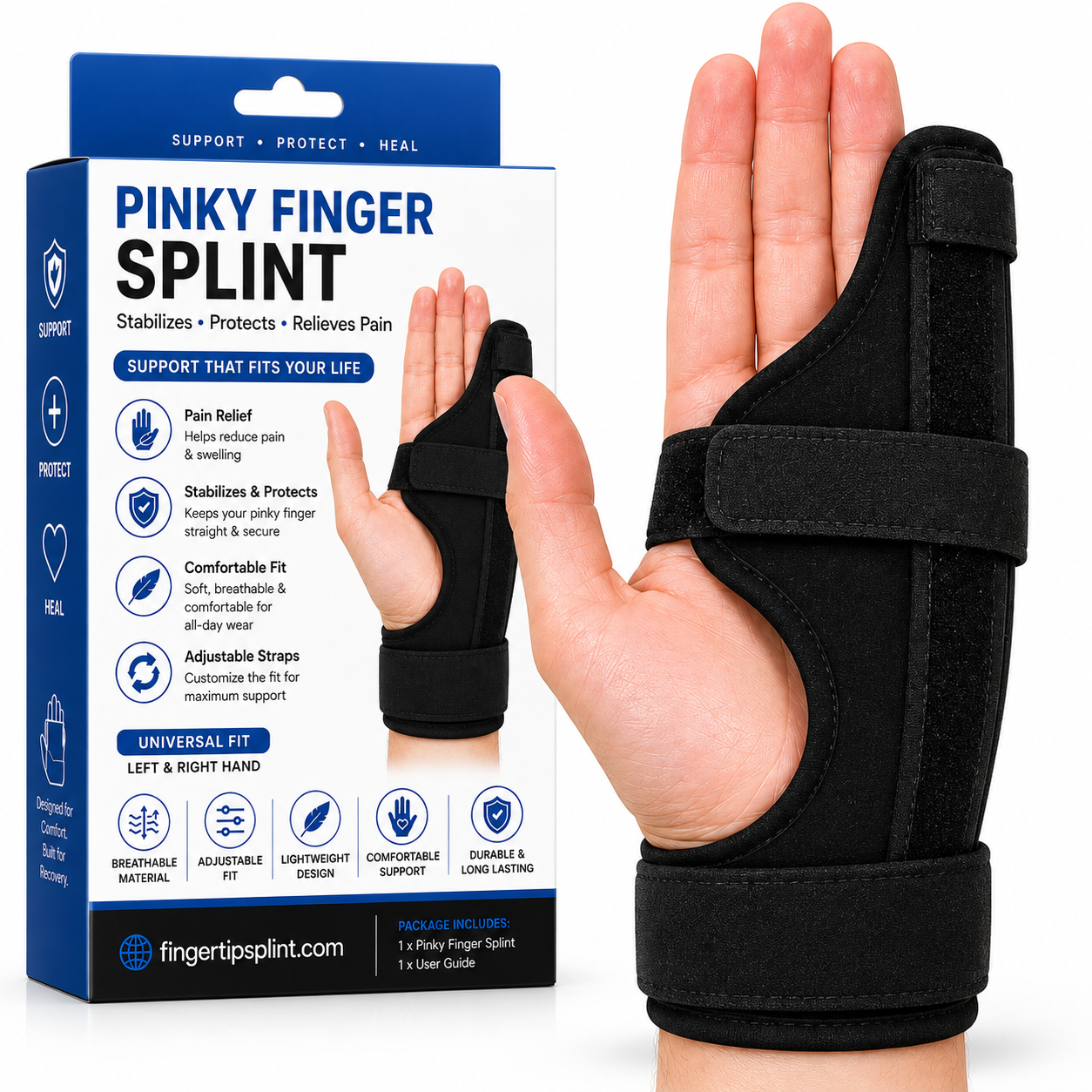
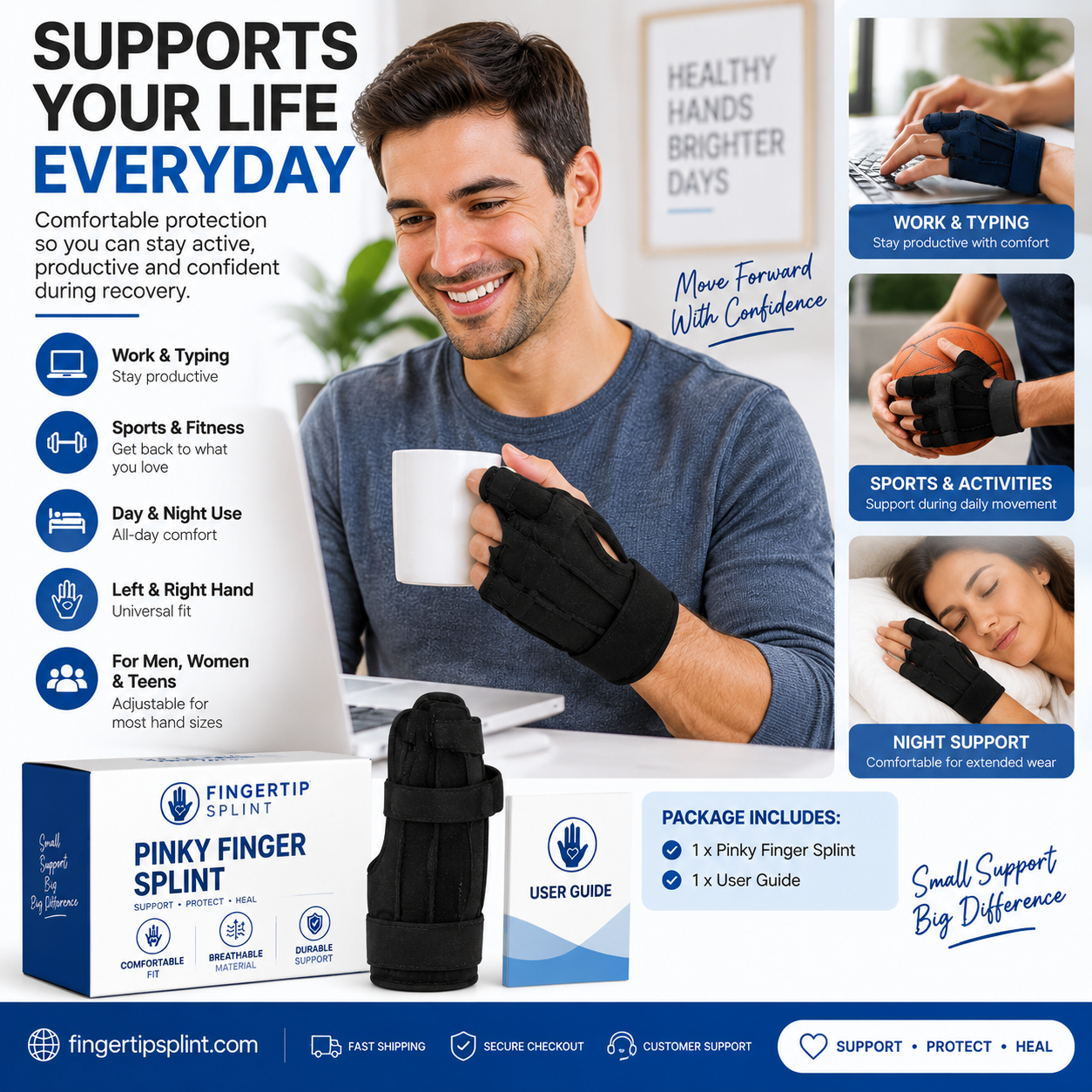
For daily pinky support, the best option is the Best Pinky Finger Splint. It is designed for people who need comfortable protection, stable support, and easy daily wear.
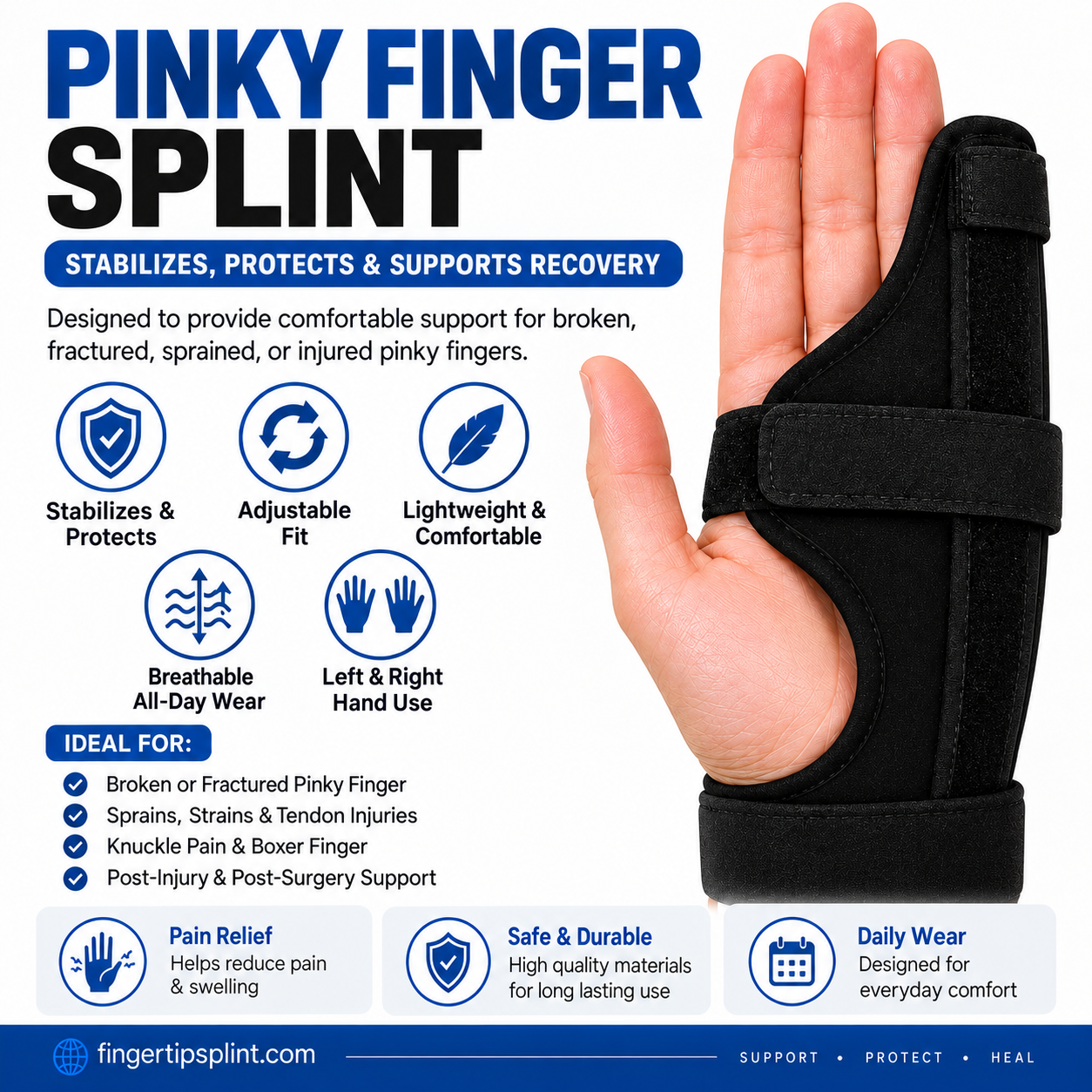
If your pinky injury is more painful, swollen, or related to a suspected break, you can also choose the Pinky Finger Splint for Broken & Fractured Fingers. This product is ideal for buyers searching for stronger pinky support after injury, impact, or fracture-related pain.
Shop Best Pinky Finger Splint Buy Broken & Fractured Pinky SplintBenefits of Wearing a Splint on Pinky Finger
1. It helps reduce painful bending
The biggest benefit of wearing a splint on pinky finger is limiting the motion that triggers pain. If your pinky hurts every time you bend it, the joint or soft tissue may need rest. The splint acts like a protective guard, reminding your hand not to overuse the finger.
2. It protects the finger during work
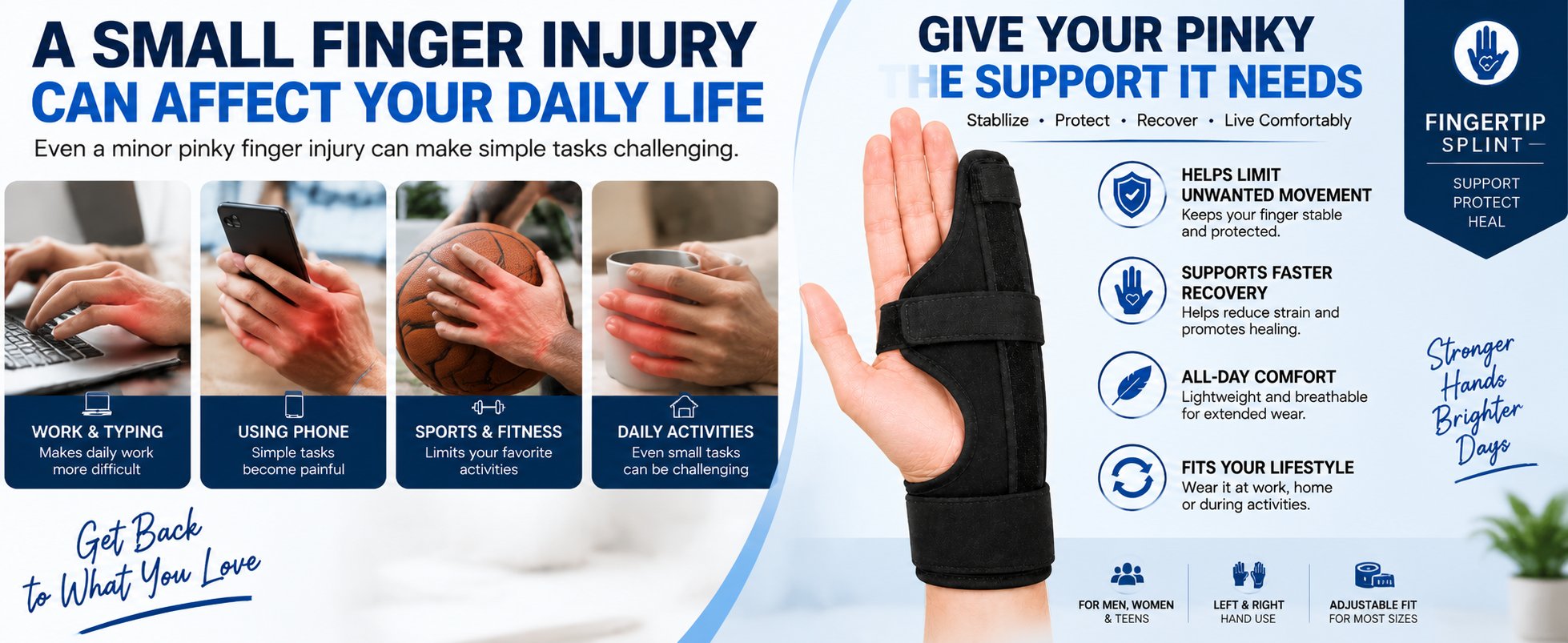
Typing, packing orders, cooking, gym training, driving, and phone use can all stress the small finger. A small finger splint gives your pinky a layer of support while you continue light daily tasks.
3. It may prevent the injury from becoming worse
Many pinky injuries become worse because people keep using the finger normally. Repeated bending can increase irritation. A splint helps protect the finger from accidental knocks and sudden bending.
4. It gives peace of mind
Pain creates fear. You may worry: “Is it broken?” “Will it heal wrong?” “Should I keep using it?” A splint does not diagnose the injury, but it gives immediate support while you decide the next step.
5. It supports recovery routines
For mild sprains or jammed fingers, recovery often includes protection, rest, ice, and gradual return to movement. Mayo Clinic discusses rest, ice, compression, and elevation for sprains, while WebMD notes splinting can be part of broken finger treatment. Always follow professional advice if symptoms are severe.
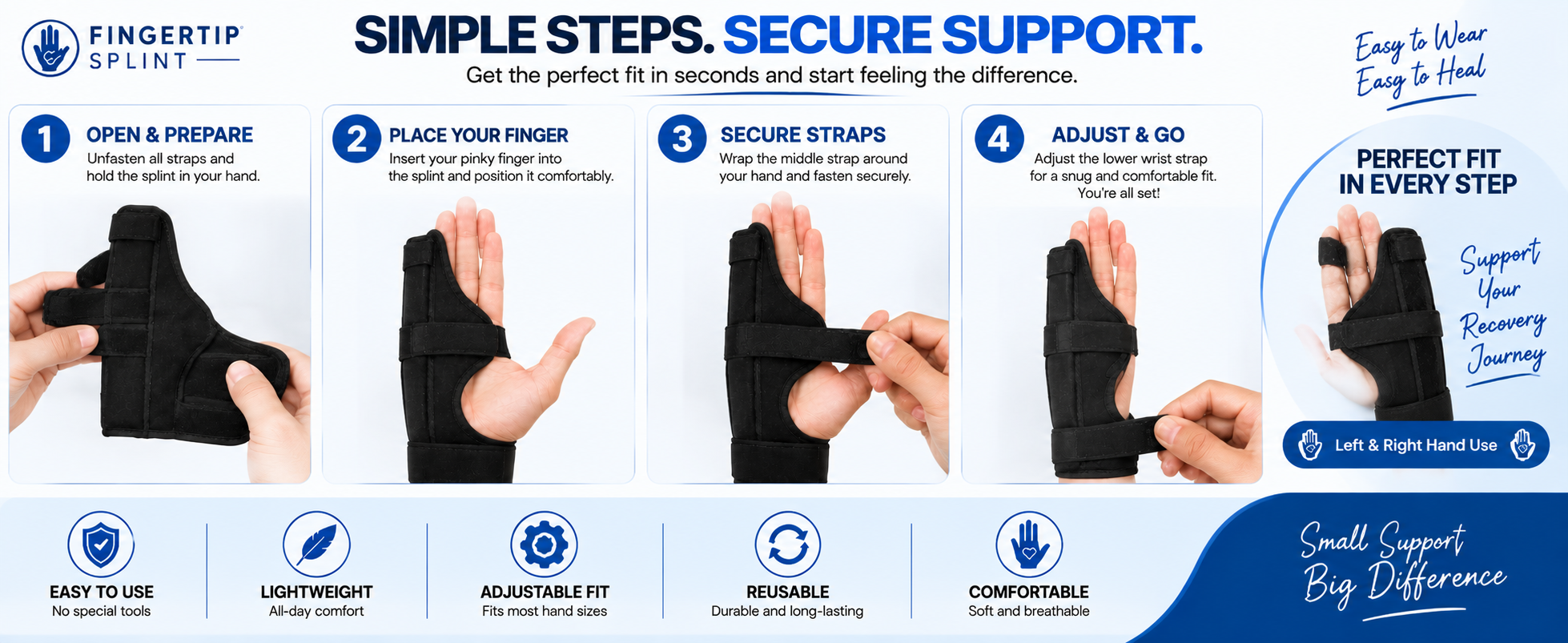
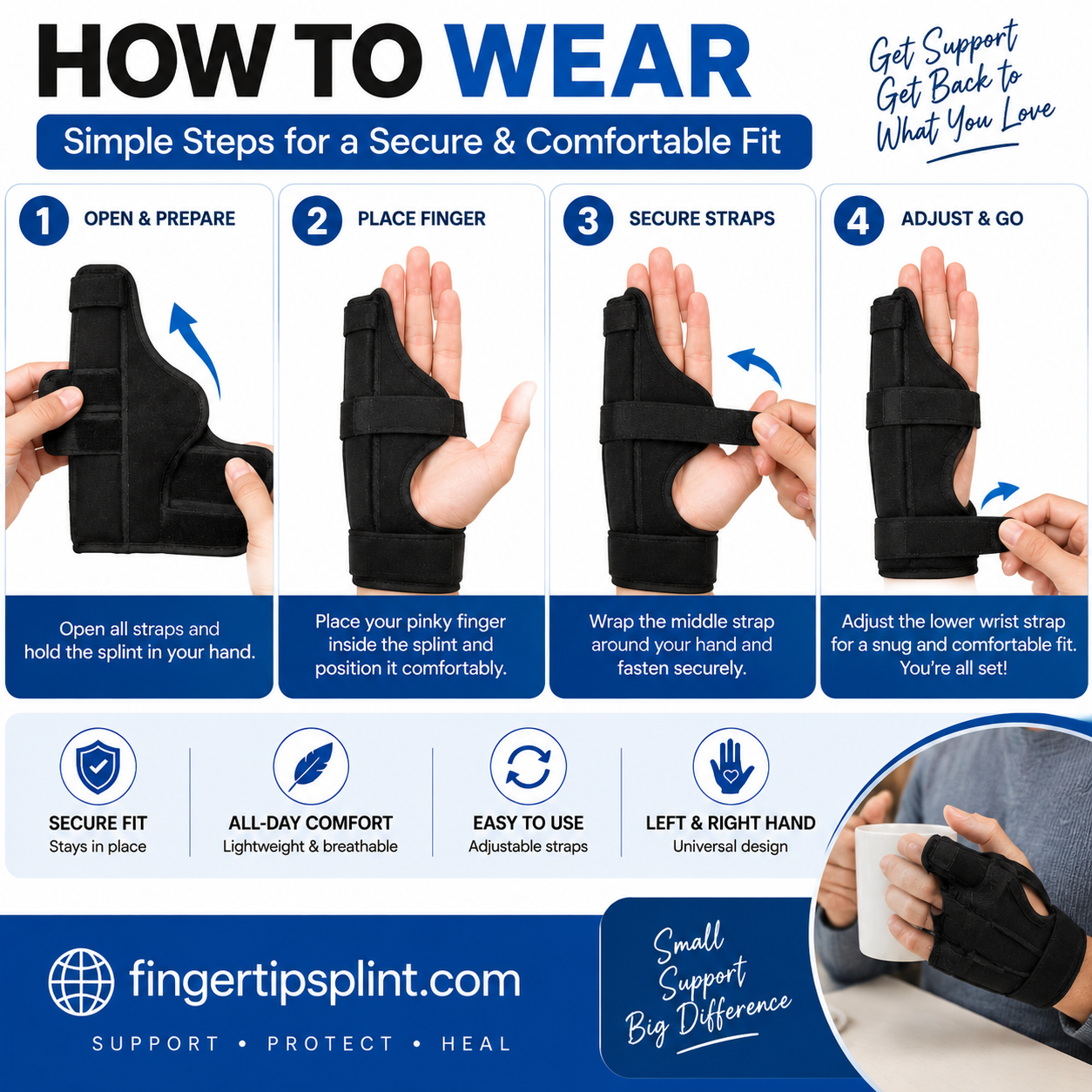
Step-by-Step Guide: How to Wear a Pinky Splint Correctly
Wearing a pinky splint correctly matters. A splint that is too loose may not support the finger. A splint that is too tight may cause discomfort, numbness, or circulation problems.
- Clean and dry your hand. Make sure the finger is dry before applying the splint.
- Position the pinky gently. Do not force it straight if straightening causes sharp pain.
- Place the splint along the painful finger. The support should stabilize the area without twisting the finger.
- Secure the strap. It should feel snug but not tight.
- Check circulation. Your fingertip should not turn blue, cold, numb, or tingly.
- Remove only as advised. If a doctor gave instructions, follow them first.
For more general splint options, see the splint for hand and fingers guide. If your injury is closer to the fingertip or nail area, the distal phalanx fracture splint guide may also help.
Recovery Timeline: What to Expect Week by Week
First 24–72 hours
This is the protection phase. Pain, swelling, and stiffness may be strongest. Rest the finger, avoid painful movement, and consider ice if swelling is present. If the finger looks deformed, numb, severely bruised, or extremely painful, seek medical help.
Week 1
For mild sprains, pain may start improving. A splint on pinky finger can help protect the finger during daily movement. Do not keep testing the finger aggressively by bending it repeatedly.
Week 2
Some people feel much better, but stiffness can remain. If pain is still sharp or swelling is not improving, a medical check is smart. For related support guidance, read the Sprained Pinky Finger guide.
Weeks 3–4
Many mild injuries improve, but more serious sprains, tendon issues, or fractures can take longer. If your pinky still cannot bend or straighten properly, get professional advice.
After 4 weeks
Long-lasting pain, deformity, weakness, or repeated swelling should not be ignored. This may signal a deeper issue that needs assessment.
Common Mistakes That Make Pinky Finger Pain Worse
Mistake 1: Ignoring pain because the finger is small
The pinky is small, but it is important for grip strength. Ignoring pain can lead to repeated irritation and slower recovery.
Mistake 2: Bending the finger again and again to “test it”
Testing the finger every few minutes can keep the injury irritated. If bending hurts, protect it instead of provoking it.
Mistake 3: Wearing the wrong size support
A loose splint does not stabilize well. A tight splint can cause numbness. Choose a proper adjustable pinky finger splint for better comfort.
Mistake 4: Assuming every injury only needs tape
Buddy taping can help some minor injuries, but a structured splint may provide better protection for painful bending.
Mistake 5: Avoiding medical care when red flags appear
Severe swelling, deformity, numbness, open wounds, or intense pain after trauma should be checked. A splint can protect the finger, but it cannot confirm whether a fracture is present.
Who Should Use a Small Finger Splint?
A small finger splint may be useful for people with pinky pain from sports, work strain, mild sprain, jammed finger, accidental bending, or daily discomfort. Athletes may need protection after ball impact. Office workers may need support while typing. Manual workers may need protection while handling tools or packages. Parents may need support after accidentally twisting the finger during daily chores.
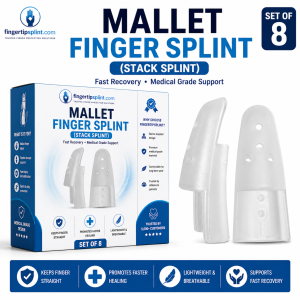
It may also help people who feel their pinky is unstable or painful during bending. If your pain is mainly from the fingertip, you may also compare options such as a stack splint or mallet finger splint, depending on the injury pattern.
Doctor-Style Advice: When to Get Medical Help
Use a splint for protection, but do not ignore serious symptoms. Get medical evaluation if your pinky is crooked, severely swollen, numb, blue, cold, bleeding, unable to move, or painful after a strong impact. Also seek care if pain does not improve after a few days of careful protection.
For safe general guidance, external resources from Mayo Clinic on sprain first aid, WebMD on broken fingers, and Healthline on jammed finger care can help you understand warning signs and basic care.
Best Product Recommendation: Pinky Finger Splint for Daily Support
The best product for this topic is a comfortable, adjustable pinky finger splint designed to support the small finger while reducing painful movement. A buyer should look for stability, comfort, easy straps, lightweight feel, and daily usability.
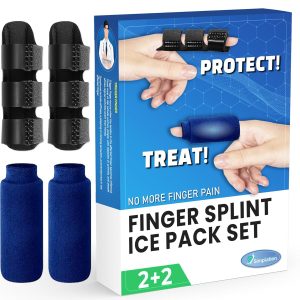
Recommended option: Finger Splint for Pinky Finger. For a stronger ecommerce choice, also feature the 2-pack adjustable pinky finger splint.
Bundle Strategy: What to Buy With a Pinky Splint
For better recovery support, pair your pinky splint with related hand protection products. If the skin is irritated or you have a small wound, latex finger cots for protection can help cover the finger during light tasks. If weakness remains after pain improves, a finger exerciser may support gentle strengthening when movement is safe again.
You can also read the cluster blog on best splint for broken pinky finger and the detailed small finger splint guide for deeper comparison.
Quick Tips for Pinky Finger Pain While Bending
- Stop activities that make pain sharper.
- Use a splint if bending triggers pain.
- Do not force the finger straight.
- Check swelling and color daily.
- Remove rings early if swelling starts.
- Seek care for deformity, numbness, or severe pain.
- Return to movement gradually when pain improves.
Protect Your Pinky Before Pain Gets Worse
If bending your pinky hurts, do not keep forcing it. Choose a supportive splint, protect the finger, and give your hand the stability it needs.
Buy Best Pinky Finger Splint Shop Broken & Fractured Pinky SplintFAQ: Splint on Pinky Finger
Conclusion: Protect the Finger, Reduce Fear, Recover Smarter
Pinky finger pain while bending is a warning sign. It may be a mild sprain, jammed finger, tendon irritation, or a more serious injury like a fracture. The smart approach is to protect the finger early, avoid painful bending, monitor swelling, and seek medical care if symptoms are severe.
A splint on pinky finger gives your small finger the support it needs during daily life. It can reduce painful motion, protect the joint, and help you feel more confident while your finger recovers.
Ready to protect your pinky? Visit the Best Pinky Finger Splint product page for daily support, or choose the Pinky Finger Splint for Broken & Fractured Fingers if your injury needs stronger protection.