
Your wrist hurts or feels stiff. You have seen multiple wrist braces online, and almost every product claims to provide support. The problem is that a brace can look supportive but still be uncomfortable, too restrictive, poorly fitted, or unsuitable for your daily activities. This guide helps you choose based on the three factors that matter most: support, fit, and comfort. For a broader view of the FingerTipSplint range, start with arthritis wrist support solutions.
Table of Contents
- What Arthritis Means for Wrist and Thumb
- What a Wrist Brace Should Do
- Support Levels Explained
- Fit Is Just as Important as Support
- Comfort Features That Matter
- Wrist-Only vs Wrist-and-Thumb
- Brace vs Sleeve vs Splint
- Interactive Brace Type Selector
- 3D Wrist Brace Infographic
- Step-by-Step Selection
- Recovery and Reassessment
- 10 Common Mistakes
- When to Consider a Brace
- When a Brace May Not Be Enough
- Doctor Advice
- Product Guide
- Final Buyer Checklist
- How to Wear It Correctly
- Using It During Everyday Activities
- Care and Maintenance
- Quick Tips for Confused Buyers
- FAQ
The best wrist brace for arthritis depends on your symptoms, activity, the joint involved, and the support level you need. Look for appropriate support, correct fit, comfortable materials, and enough mobility for your daily activities. Do not assume that the stiffest or most expensive brace is automatically the best choice for you.
What Arthritis Can Mean for the Wrist and Thumb
Arthritis can affect how the wrist and thumb feel and function during everyday activities. Understanding this context helps you evaluate what a brace can and cannot do. The Mayo Clinic arthritis overview describes arthritis as a condition involving joint inflammation that can cause pain, stiffness, and reduced movement.
Why Arthritis Can Make Everyday Wrist Movement Uncomfortable
Arthritis can be associated with pain, stiffness, reduced comfortable movement, tenderness, difficulty with gripping, and discomfort during repetitive activities. Everyday examples include opening jars, typing, holding a phone, lifting objects, writing, cooking, and carrying bags.
Wrist Arthritis vs Thumb Arthritis
Some people may primarily need wrist support, while others may have symptoms around the thumb or base of the thumb. The Mayo Clinic thumb arthritis overview explains that thumb arthritis commonly affects the joint at the base of the thumb and can cause pain with gripping or pinching. This distinction matters because it influences what type of brace may be appropriate.
Why the Location of Discomfort Matters When Choosing a Brace
Before choosing a brace, ask yourself: where do I need support? Is it the wrist only, the wrist and thumb, or a broader hand area? Your answer should guide your product selection.
What Should the Best Wrist Brace for Arthritis Actually Do?
Provide Appropriate Wrist Support
A brace should provide support without automatically maximizing immobilization. Appropriate support means the brace helps stabilize the wrist in a way that matches your needs.
Reduce Unnecessary Wrist Movement
Limiting certain movements may make some everyday activities more comfortable, while excessive restriction can make normal tasks harder. The right balance depends on your situation.
Provide a Secure but Comfortable Fit
The brace should stay positioned without requiring excessive tightening. A brace that is too loose will not support; one that is too tight will create new problems.
Allow Necessary Finger Movement
Depending on the design, you should still be able to perform appropriate everyday tasks. A brace that immobilizes the fingers will not be practical for daily use.
Work With the Person’s Actual Routine
A brace for computer work may need different characteristics from one intended for rest or sleep. Match the design to your routine.
Wrist Brace Support Levels Explained
Light Support
Flexible materials, greater mobility, less restrictive feel, everyday comfort. Light support is often appropriate for mild discomfort or general support during daily activities.
Moderate Support
Greater stabilization, adjustable fastening, useful when more structure is desired. Moderate support is often appropriate for repetitive activities or mild arthritis symptoms.
Firmer Support
A more structured design may be appropriate when greater stabilization is needed. However, do not automatically select the stiffest brace. The appropriate level depends on your situation and professional guidance.
Is More Support Always Better?
Fit Is Just as Important as Support
Fit is one of the most common sources of buyer frustration. This section explains what to aim for.
How a Properly Fitted Wrist Brace Should Feel
Secure
Stays in place without sliding excessively.
Stable
Provides consistent support without shifting.
Comfortable
Can be worn for the intended period without pain.
No excessive pressure
No persistent pressure points.
No painful rubbing
Edges do not dig into the skin.
No numbness or tingling
Normal sensation is maintained.
How Tight Should an Arthritis Wrist Brace Be?
Secure is not the same as painfully tight. A brace that is too tight can cause numbness, tingling, or discoloration. A brace that is too loose will not provide consistent support.
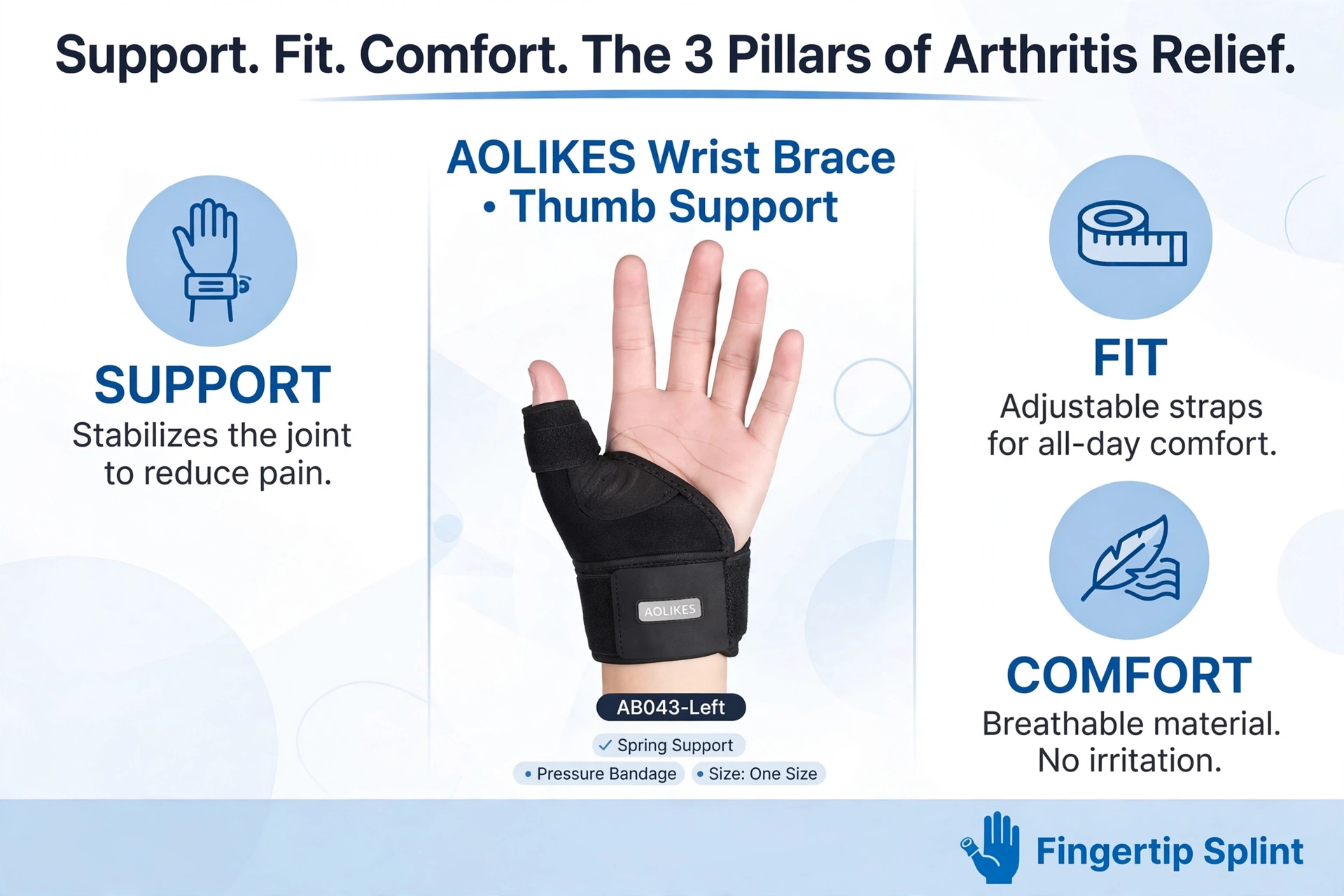
Comfort Features That Matter in an Arthritis Wrist Brace
Breathable Material
Heat and moisture can build up under a brace, especially during extended wear. A breathable material allows some airflow, reducing discomfort.
Soft Contact Surfaces
Irritation and pressure points develop when the contact surface is rough or poorly designed. Look for smooth, soft materials against the skin.
Adjustable Closures
Adjustability matters because hand and wrist comfort can change during the day. A brace that can be adjusted allows you to modify the fit as needed.
Low-Bulk Construction
Useful for clothing, desk work, phone use, and everyday activities. A bulky brace may interfere with normal tasks.
Thumb Opening and Thumb Coverage
Thumb coverage can dramatically change mobility and support. A brace that covers the thumb provides more support but may restrict thumb movement.
Edge Design
Poorly positioned edges can create rubbing or pressure. Smooth edges prevent new pressure points from forming.
Wrist-Only Brace vs Wrist-and-Thumb Brace
| Feature | Wrist-Only | Wrist + Thumb |
|---|---|---|
| Wrist support | Yes | Yes |
| Thumb support | Limited | More coverage |
| Thumb mobility | Usually greater | May be more restricted |
| Coverage | Lower | Higher |
| Best consideration | Wrist-focused needs | Wrist and thumb-area support needs |
This is a design comparison, not a diagnosis. The right choice depends on where you need support.
Arthritis Wrist Brace vs Sleeve vs Splint
Wrist Sleeve
A sleeve typically provides flexible compression and light support. It is a low-profile option for mild discomfort, but it does not provide the structural support of a brace.
Wrist Brace
A brace provides adjustable, structured support. It is usually appropriate when more support is needed than a sleeve can provide.
Wrist Splint
A splint generally provides more stabilization and may restrict movement more. The Cleveland Clinic finger splint resource explains that different splints serve different purposes.
Which One Should You Consider?
Use a decision framework rather than assuming one category is universally best. Match the product category to your support need. For a detailed look at tendon-focused support, see our guide on wrist brace for tendon support.
Interactive “Find Your Wrist Brace Type” Selector
Answer four questions to see what type of brace to consider. This is a buyer-selection tool, not a medical diagnosis.
Answer the four questions above to see what type of brace to consider.
3D Interactive Wrist Brace Infographic
The interactive 3D component explorer below shows the parts of an arthritis wrist brace. Click each component to see what it does and why it matters.
Arthritis Wrist Brace Component Explorer
Click a component to learn what it does and why it matters when you are choosing a brace.
How to Choose the Right Wrist Brace for Arthritis

Recovery and Reassessment Timeline
This is a wearing and reassessment framework, not a promised healing schedule. Arthritis is not a single injury with one predictable recovery path.
First Use — Initial Fit Check
Check comfort, pressure, movement, skin, and positioning. If the brace does not fit or causes discomfort, address that before extended wear.
First Few Uses — Activity Check
Evaluate whether the brace interferes with typing, gripping, phone use, or household activities. Adjust or change the brace if it does.
Ongoing Use — Reassess Comfort
Ask whether the brace is still comfortable, staying positioned, or causing pressure. Reassess whether it is helping with the intended support goal.
When to Reassess With a Healthcare Professional
Persistent or worsening symptoms, significant swelling, loss of function, numbness or tingling, discoloration, or severe pain should be professionally evaluated.
10 Common Mistakes When Buying an Arthritis Wrist Brace
Tighter is not automatically better. Excessive pressure can cause new problems.
What to do instead: secure and comfortable, not tight.
Sizing varies by brand. A brace that is too loose or too tight will not provide consistent support.
What to do instead: measure and compare with the specific product’s chart.
A brace that restricts too much interferes with daily activities.
What to do instead: balance support with the movement you need.
Thumb coverage dramatically affects support and mobility.
What to do instead: choose thumb coverage based on whether thumb symptoms are part of your situation.
Price does not tell you whether the brace fits or provides the right support.
What to do instead: check fit, coverage, and support level.
A brace that traps heat and moisture will not be worn consistently.
What to do instead: consider breathability for extended wear.
Different designs serve different purposes.
What to do instead: match the design to your specific need.
A brace for rest may not be right for computer work.
What to do instead: reassess whether the brace is appropriate for each activity.
These are warning signs, not signs that the brace is working.
What to do instead: remove the brace and seek advice if symptoms persist.
A brace is a support tool, not a diagnosis or cure.
What to do instead: seek professional assessment for significant symptoms.
When Should You Consider an Arthritis Wrist Brace?
A wrist brace may be considered in situations such as everyday wrist discomfort, activities that aggravate symptoms, needing additional support, wanting a more stable wrist position, or thumb and wrist discomfort where an appropriate design covers both areas.
A brace is not medically required in every case. It is a support option that may help during specific activities or periods.
When a Wrist Brace May Not Be Enough
- Severe or worsening pain
- Major swelling
- Visible deformity
- Persistent numbness or tingling
- Significant loss of movement
- Symptoms that do not improve or keep returning
The underlying cause needs professional assessment rather than simply switching braces repeatedly. Additional trusted resources include the AAOS arthritis of the wrist resource, the NHS arthritis page, and the MedlinePlus arthritis resource.
Doctor Advice: What Should You Look for in an Arthritis Wrist Brace?
This section is written in the tone of a practical professional checklist. It is not a diagnosis and does not replace an in-person assessment.
Appropriate support
Support should match the situation, not be maximum by default.
Correct sizing
Fit is essential for both comfort and function.
Comfort
A brace that is uncomfortable will not be worn consistently.
Activity compatibility
The brace should allow the activities you need to do.
Avoiding excessive restriction
More restriction is not always better.
Monitoring skin and sensation
Check the skin and sensation during wear.
Additional trusted resources include the Cleveland Clinic thumb arthritis page, the WebMD arthritis overview, and the Healthline arthritis resource.
Product Guide — Arthritis Wrist & Thumb Support Brace
Use this section as a worked example of how to evaluate a wrist and thumb brace against the criteria in this guide. The product being evaluated is the arthritis wrist and thumb support brace from FingerTipSplint.
Arthritis Wrist & Thumb Support Brace
- Wrist coverage: Designed to provide wrist support
- Thumb coverage: Extends support to the thumb area
- Adjustability: Check the product page for adjustment details
- Support structure: Intended to provide structured support
- Comfort: Designed for extended wear
- Everyday usability: Intended for daily activities
- Fit: Check the product page for sizing information
What to Evaluate
Check wrist coverage, thumb coverage, adjustability, support structure, comfort, everyday usability, and fit. For a broader look at the selection process, see our guide on arthritis wrist support features and daily use.
Who May Prefer This Design?
People specifically looking for combined wrist and thumb coverage may find this design relevant to compare. It is not automatically appropriate for everyone with arthritis.
What It Does Not Replace
A consumer brace is not a substitute for professional diagnosis or prescribed treatment where required. If symptoms are significant or worsening, seek professional assessment.
Final Buyer Checklist
Click each item to confirm. Aim to check all 8 before buying.
How to Wear an Arthritis Wrist Brace Correctly
How to Use a Wrist Brace During Everyday Activities
Computer and keyboard work
A low-profile brace that allows finger movement is usually more practical. Check that the brace does not interfere with typing.
Phone use
Thumb and finger movement for scrolling, tapping, and swiping. A brace that restricts thumb movement may make phone use difficult.
Cooking
Grip and handling of tools. A brace that stays secure and handles moisture is more practical.
Household tasks
Cleaning, folding, and lifting involve repeated hand use. Choose a brace that does not interfere with these tasks.
Driving
Ensure you can safely operate controls while wearing the brace. Follow applicable safety and product guidance.
Rest and sleep
Suitability varies. Follow product and clinical advice on whether the brace is appropriate for overnight wear.
Care and Maintenance
Follow the manufacturer’s cleaning and care instructions. Wash according to guidance, dry properly, check fastening components, inspect material condition, check edges, and replace damaged or excessively worn support.
Quick Tips for Confused Buyers
Frequently Asked Questions
There is no universal best brace. Selection depends on the location of discomfort, support needs, fit, and activity. A brace that works well for one person may not work for another.
Focus on the criteria in this guide: support, fit, comfort, coverage, and mobility. For a deeper look at support needs, see our guide on support, fit, and comfort for arthritis wrist braces.
It should be secure and comfortable, not excessively tight. You should be able to wear it without numbness, tingling, significant discoloration, or increasing pain.
If concerning symptoms occur, remove the brace and seek appropriate advice rather than tightening it further.
Some wrist and thumb designs may be relevant for thumb arthritis, but the appropriate design depends on which joint or area is involved. A wrist-only brace may not provide sufficient thumb support.
Confirm that the brace covers the area you need supported. If thumb symptoms are significant, professional assessment may be appropriate.
Wearing schedules vary. Some people may benefit from wearing a brace during certain activities, while others may wear it for rest. Follow product and professional guidance rather than assuming a universal all-day recommendation.
Monitor skin and sensation during wear.
Suitability depends on the brace design, your comfort, and professional guidance. Some braces are designed for overnight wear; others are not.
Follow the product instructions and your clinician’s advice. If the brace interferes with sleep or causes discomfort, reconsider the design.
A brace can potentially cause problems if it is poorly fitted, excessively tight, or worn for too long. Excessive pressure can cause skin irritation, numbness, or circulation problems.
Follow professional guidance on the appropriate brace, fit, and wearing schedule. If symptoms worsen, remove the brace and seek assessment.
A correct fit is secure, comfortable, and stable. You should be able to move your fingers normally, the brace should stay in place, there should be no painful pressure, and there should be no numbness or tingling.
Check the skin after removal. Redness, pressure marks, or irritation suggest the brace is too tight or not suitable.
Seek professional assessment if you have severe or worsening pain, major swelling, visible deformity, persistent numbness or tingling, significant loss of movement, or symptoms that do not improve or keep returning.
Do not use a brace to delay needed care. Professional evaluation provides the correct diagnosis and treatment plan.
Choose Support Without Sacrificing Comfort
The best wrist brace for arthritis is not simply the one offering the most support. It is the one that provides an appropriate level of support, fits correctly, remains comfortable, and matches your actual routine. Evaluate the Arthritis Wrist & Thumb Support Brace against the criteria in this guide before deciding.
Explore the shop for wrist and hand support products, check the FingerTipSplint frequently asked questions, or use the request-a-quote page for bulk or business purchasing. For medical finger and wrist support supply, see the medical finger and wrist support supplier page.
View the Product Explore Wrist SupportFinal Takeaway: The Best Brace Matches Your Needs, Not the Maximum Level of Support
The best wrist brace for arthritis is not automatically the stiffest or most expensive option. It is the one that provides appropriate support, fits correctly, remains comfortable, and matches your daily routine. Before you buy, identify where you need support, decide how much mobility you need, measure accurately, and check adjustability, materials, and activity compatibility.
If symptoms persist, worsen, or involve severe pain, major swelling, deformity, numbness, or significant loss of movement, do not simply buy another brace. Seek appropriate medical evaluation. For medical finger and wrist support supply and distribution, see the medical finger and wrist support supplier page and the finger splint distributor page. For the full FingerTipSplint range, visit the FingerTipSplint homepage.