
You have a silicone finger support ring. Maybe you just ordered one. Maybe you are still deciding. Your finger joint feels uncomfortable, and you want support without pressure. But you are worried the ring might slip, press against the joint, restrict movement, or irritate your skin. Fit is not just about keeping the product in place. The support must also suit the intended joint and purpose. This guide explains how a silicone finger support ring should fit, what comfortable support feels like, and how to recognize warning signs. Start with our silicone finger support ring to explore the full range.
Table of Contents
- Quick Answer
- What Is a Silicone Ring Designed to Do?
- How Should It Fit?
- Comfort vs Excessive Pressure
- Can You Wear It During Daily Activities?
- Ring vs Sleeve vs Rigid Splint
- Skin Protection & Hygiene
- Product Spotlight
- Common Fit and Comfort Mistakes
- When It May Not Be Enough
- Cleaning & Long-Term Comfort
- Interactive Fit and Comfort Checker
- 3D Infographic
- FAQ
- CTA
How Should a Silicone Finger Support Ring Fit?
A silicone finger support ring should sit where the product instructions specify, stay secure without excessive pressure, and allow normal finger movement. It should not cause numbness, tingling, swelling, or skin irritation. Remove the ring if warning signs develop, and seek medical advice if circulation appears impaired or symptoms persist.
What Is a Silicone Finger Support Ring Designed to Do?
A silicone finger support ring is a flexible device designed to sit around a finger joint and provide localized support or cushioning. It differs from a sleeve, which usually covers a longer portion of the finger, and from a rigid splint, which is designed to restrict movement more significantly.
Support and Protection as Design-Dependent Functions
The exact function of a support ring depends on its design. Some rings provide light compression. Others cushion a specific area. Some are shaped to sit around a particular joint. The product listing should describe the intended use.
Identify the Intended Joint
Before choosing a ring, identify which joint needs support. The knuckle near the hand (MCP joint), the middle joint (PIP joint), and the joint nearest the fingertip (DIP joint) are different locations. A ring designed for one may not fit another.
For a broader comparison of options, see our best adjustable silicone finger splint for joint support article.
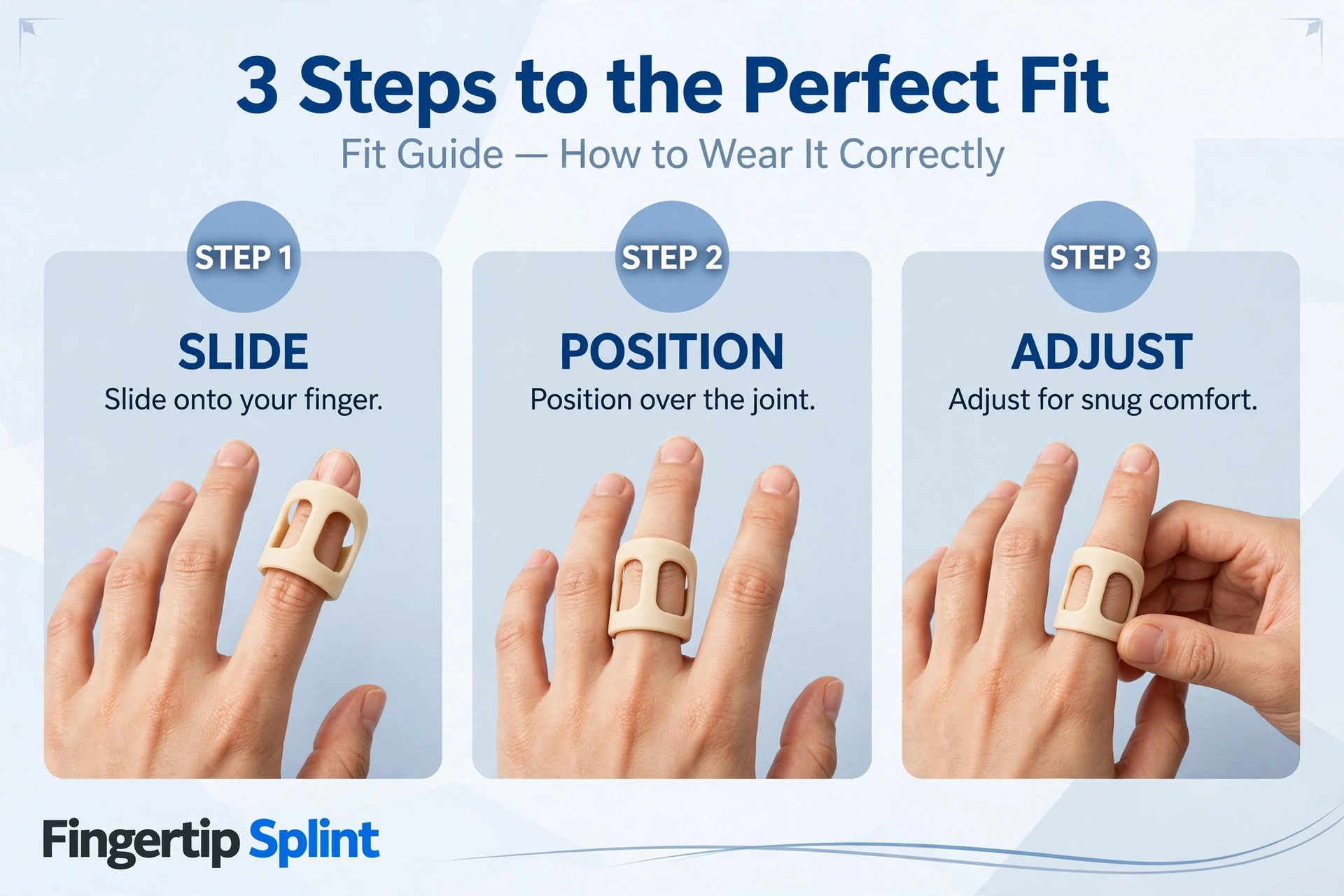
How Should a Silicone Finger Support Ring Fit?
Fit is the most important factor determining whether a support ring will be comfortable and effective. A ring should not be judged by how tightly it grips. Fit, design, individual anatomy, and the manufacturer’s intended use all matter.
Correct Position
The ring should sit in its intended position. Follow the product instructions for placement. If the ring does not sit correctly, it may not provide the intended support.
Secure but Not Constricting
The ring should stay in place without requiring excessive pressure. A secure fit is not the same as a tight fit. If the ring leaves deep marks, it is too tight.
Normal Finger Movement
You should be able to move your finger naturally. The ring should not restrict movement more than the design intends.
Comfort During Ordinary Movement
You may be aware of the ring while wearing it. That is normal. But awareness is different from pain, numbness, or tingling.
- Numbness or tingling
- Increasing pain
- Swelling
- Persistent redness
- Finger becomes pale, blue, or unusually cold
Step-by-Step Fit Check
- Read the manufacturer’s fitting instructions.
- Identify the affected joint.
- Position the ring as directed.
- Check that it stays in place without pressure.
- Move your finger gently to confirm comfort.
- Remove the ring if any warning signs develop.
Comfort vs Excessive Pressure: Know the Difference
A product can feel secure without squeezing the finger. Understanding the difference between a secure fit and excessive pressure helps you avoid skin problems and discomfort.
Pressure Points
A pressure point develops when the ring concentrates force on a small area. This can happen if the ring is too tight or if its shape does not match your finger.
Rubbing and Friction
Friction can develop if the ring moves against the skin. This may occur if the ring is too loose or if the material is not smooth.
Heat and Moisture
Silicone can retain heat and moisture. If your finger becomes damp under the ring, it may be more vulnerable to irritation.
Skin Sensitivity
Some people may be sensitive to certain materials. If you notice irritation, remove the ring and check the product description for material information.
- Increasing pain
- Numbness or tingling
- Swelling
- Persistent redness
- Finger becomes pale, blue, or unusually cold
Can You Wear a Finger Support Ring During Everyday Activities?
Many people want to wear finger support during everyday tasks. Suitability depends on the ring’s design, the location of symptoms, the task, and the person’s condition.
Typing and Writing
A flexible silicone ring may allow enough movement for typing and writing. Check that it does not interfere with your grip or cause fatigue.
Light Household Tasks
Light activities may be possible depending on the product design. Avoid activities that could cause impact or strain if you have an injury.
Handling Objects
A support should not interfere with circulation, grip, or safe movement. If it does, remove it.
Silicone Ring vs Finger Sleeve vs Rigid Splint
Different designs serve different purposes. The right choice depends on your needs.
| Feature | Silicone Support Ring | Finger Sleeve | Rigid Splint |
|---|---|---|---|
| Coverage | Limited area (around a joint) | Larger portion of finger | Depends on design |
| Flexibility | Usually flexible | Usually flexible | Often more rigid |
| Movement restriction | Minimal | Minimal to moderate | More controlled restriction |
| Fit considerations | Ring position and pressure | Sleeve length and compression | Joint alignment and secure positioning |
| Likely user priority | Light support and comfort | Broader coverage | Stability and immobilization |
A flexible ring may be convenient for some purposes. A rigid splint may be required for a different clinical need. These designs are not interchangeable.
Skin Protection, Hygiene, and Moisture Control
Regular skin checks matter when a product contacts the finger for extended periods.
Skin Checks
Check the skin before and after wearing the ring. Look for redness, irritation, or pressure marks.
Cleaning and Drying
Clean the ring according to its instructions. Dry it completely before wearing it again.
Avoid Use Over Broken Skin
Do not wear the ring over broken skin unless specifically advised by a clinician.
Inspect the Material
Check the ring for damage, cracks, or changes in texture. A damaged ring may not provide adequate support.
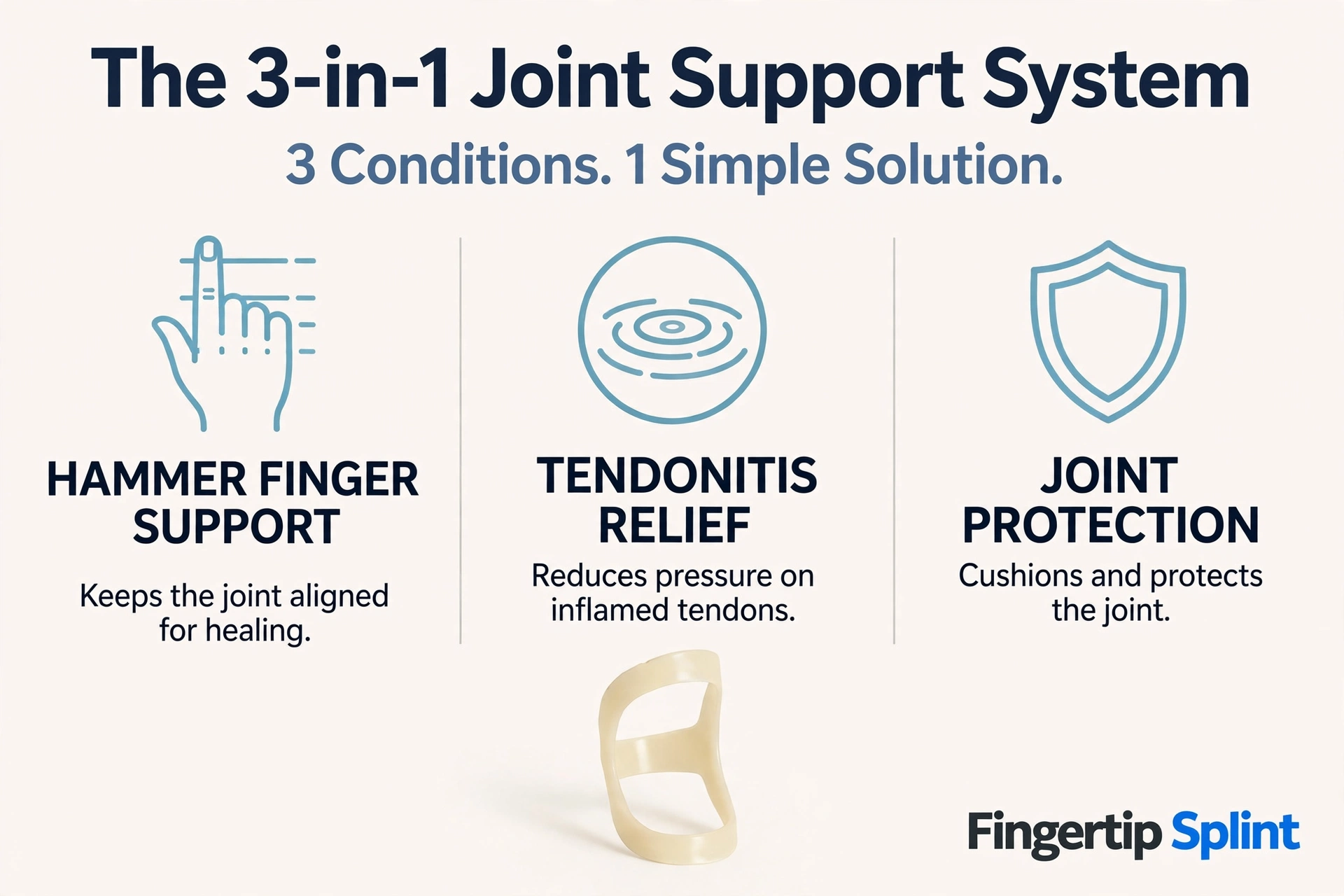
Product Spotlight: FingertipsSplint Silicone Finger Support Ring
Silicone Finger Support Ring
This product is designed to provide localized support around a finger joint. It is an option to evaluate based on your specific joint concern and comfort needs.
- Soft silicone material for comfort
- Designed for localized joint support
- Flexible design for daily activities
- Low-profile for minimal interference
- Reusable with proper care
Is This the Right Kind of Product for Your Needs?
Readers looking for localized support around a finger joint may find this product relevant. It may be appropriate for people who want light support without significant movement restriction.
What to Verify Before Ordering
- Material and construction
- Available sizing options
- Intended use and wear period
- Care instructions
- Whether the design matches your affected joint
Common Fit and Comfort Mistakes to Avoid
Avoid these common errors to get the most benefit from your finger support ring.
1. Buying Without Checking Sizing
Size affects fit and comfort. Check the sizing guide before ordering.
2. Placing the Ring Incorrectly
The ring should sit where the product instructions specify. Incorrect placement may reduce usefulness.
3. Assuming Tightness Means Better Support
A tight fit is not evidence of better support. Excessive pressure can cause numbness, tingling, and skin damage.
4. Ignoring Skin Changes
Persistent redness, irritation, or pressure marks mean the ring is not fitting correctly. Remove it and reassess.
5. Wearing It Longer Than Instructed
Follow the manufacturer’s guidance on wear time. Do not extend wear beyond what the product is intended for.
6. Cleaning It Incorrectly
Follow the cleaning instructions. Do not use harsh chemicals or high temperatures unless the manufacturer allows them.
7. Using a Ring When an Injury Needs Assessment
A suspected fracture, dislocation, or significant injury requires prompt medical assessment. Do not rely on a support ring alone.
When Is a Finger Support Ring Not Enough?
Some situations require medical assessment rather than self-selected support.
- Suspected fracture
- Significant injury-related swelling
- Visible deformity
- Severe pain
- Open wound
- Loss of movement
- Possible tendon damage
A support ring is not a diagnostic tool. It may not provide the immobilization needed for certain injuries or conditions.
For authoritative background, see the NHS, the AAOS OrthoInfo, the Arthritis Foundation, and the American Society for Surgery of the Hand. For information on joint pain and arthritis, see the Mayo Clinic and Cleveland Clinic. For finger fractures and sprains, see MedlinePlus. For skin irritation and dermatitis, see the American Academy of Dermatology. WebMD and Healthline provide additional consumer education. The NIDDK provides information on diabetes and reduced sensation considerations.
Cleaning, Care, and Long-Term Comfort
Proper care helps maintain the product and protect your skin.
Cleaning
Clean the ring according to the manufacturer’s instructions. Use mild soap and water unless otherwise directed.
Drying
Dry the ring completely before storing or wearing it again.
Inspection
Check the ring regularly for cracks, deterioration, or changes in texture. Replace it if it is damaged.
Storage
Store the ring in a clean, dry place. Avoid storing it in a way that deforms its shape.
Check Your Finger Support Ring
Interactive Fit and Comfort Checker
Choose the closest answers to see the next sensible step.
How does the ring feel?
Are you experiencing any unusual symptoms?
How does the skin look?
Select your answers above to see the next sensible step.
Is Your Silicone Finger Support Ring Fitting Correctly?
Interactive 3D Finger and Joint View
Click each part to learn about position, fit, skin protection, and warning signs.
Illustration for understanding device placement and comfort checks. Actual fit and coverage vary by product.
Frequently Asked Questions
It should sit where the product instructions specify, stay secure without excessive pressure, and allow normal finger movement. It should not cause numbness, tingling, or skin irritation.
No. Tightness is not proof of better support. A ring that causes numbness, tingling, or deep marks is too tight. Remove it and reassess.
There is no universal duration. Follow the manufacturer’s guidance, check the skin regularly, and consider the underlying condition. Remove the ring if warning signs develop.
Yes, friction, moisture, poor fit, or material sensitivity can cause irritation. Remove the ring if you notice persistent redness, rash, or broken skin.
Suitability depends on the design, the activity, and your symptoms. A flexible silicone ring may allow enough movement. If it interferes with grip or causes discomfort, remove it.
Follow the manufacturer-approved cleaning and drying instructions. Do not use harsh chemicals or high temperatures unless the manufacturer allows them.
A silicone ring may provide general support while worn. It does not treat the underlying cause of arthritis. Suitability depends on the joint and individual diagnosis. Seek professional advice for persistent symptoms.
Slipping and pressure marks require reassessing the fit. Check the sizing, position, and instructions. Persistent marks or discomfort should not be ignored.
Stop wearing the ring if you notice pain, numbness, tingling, swelling, persistent redness, color changes, or signs of impaired circulation. Seek medical advice if symptoms continue.
Check the Fit Before You Rely on Your Ring
Review the Product Details Before Ordering
Check the fit, compare your options, and review the product details before ordering. The Silicone Finger Support Ring is designed for localized joint support. Verify that the design matches your specific joint and comfort needs.
Explore the full explore silicone finger support options collection to compare products, read our best adjustable silicone finger splint for joint support article for broader guidance, or request a product quote for business or wholesale inquiries. For answers to common questions, visit the finger support FAQs page.
View Silicone Finger Support Ring Explore Finger Support OptionsMake an Informed Decision About Your Finger Support
A silicone finger support ring should fit securely but not tightly, sit in its intended position, and allow normal movement. Understanding what comfortable support feels like helps you recognize when a ring is working and when it is not. If you notice numbness, tingling, swelling, or skin changes, remove the ring and reassess.
A support ring can provide localized comfort while it is worn. It cannot replace medical assessment when symptoms persist. If you have a significant injury or a diagnosed condition, follow professional guidance.
For more detailed guidance, see our best adjustable silicone finger splint for joint support and our adjustable finger splint buying guide for daily use. For general information, visit FingertipsSplint finger support resources.