
Your thumb hurts. Maybe it started gradually, and now opening a jar or turning a key sends a sharp reminder through your hand. You have heard that arthritis or tendon inflammation might be the cause, but you are not sure which. You want support that helps without making things worse. A breathable thumb splint may be worth considering when its design matches the area that needs support. But the right choice depends on the diagnosis, the fit, the movement restriction, and your daily activities. Start with our Breathable Thumb Spica Wrist Support Brace to explore the range.
Table of Contents
- Quick Answer
- What Is a Breathable Thumb Splint?
- Arthritis vs Tendonitis
- Why Breathability Matters
- How to Choose the Right Splint
- Support Type Comparison
- Featured Product
- Fit, Comfort & Safe Positioning
- Using a Splint During Daily Activities
- Common Mistakes to Avoid
- When to Seek Medical Advice
- Interactive Buyer Guide
- 3D Infographic
- FAQ
- CTA
Can a Breathable Thumb Splint Help with Arthritis or Tendonitis?
A breathable thumb splint may help support selected thumb movements when its design matches the problem being treated. For arthritis or tendon-related conditions, compare the support area, fit, adjustability, and material. Breathability may improve comfort, but the right splint and wearing schedule depend on the condition and may require professional guidance.
What Is a Breathable Thumb Splint?
A breathable thumb splint is a support device designed to stabilize selected thumb movements while allowing air to circulate around the skin. Many designs use a thumb-spica style that supports the thumb and often part of the wrist.
Support and Breathability as Separate Features
Breathable fabrics, ventilation, closures, and structural support are separate product features. A splint can be breathable and still provide inadequate support for your condition. Conversely, a supportive splint may not be breathable. Consider both factors when choosing.
What “Breathable” Actually Means
“Breathable” describes a comfort-related characteristic. It does not guarantee clinical effectiveness, and it does not mean the splint eliminates sweating or skin irritation entirely. Check the product description for specific material details.
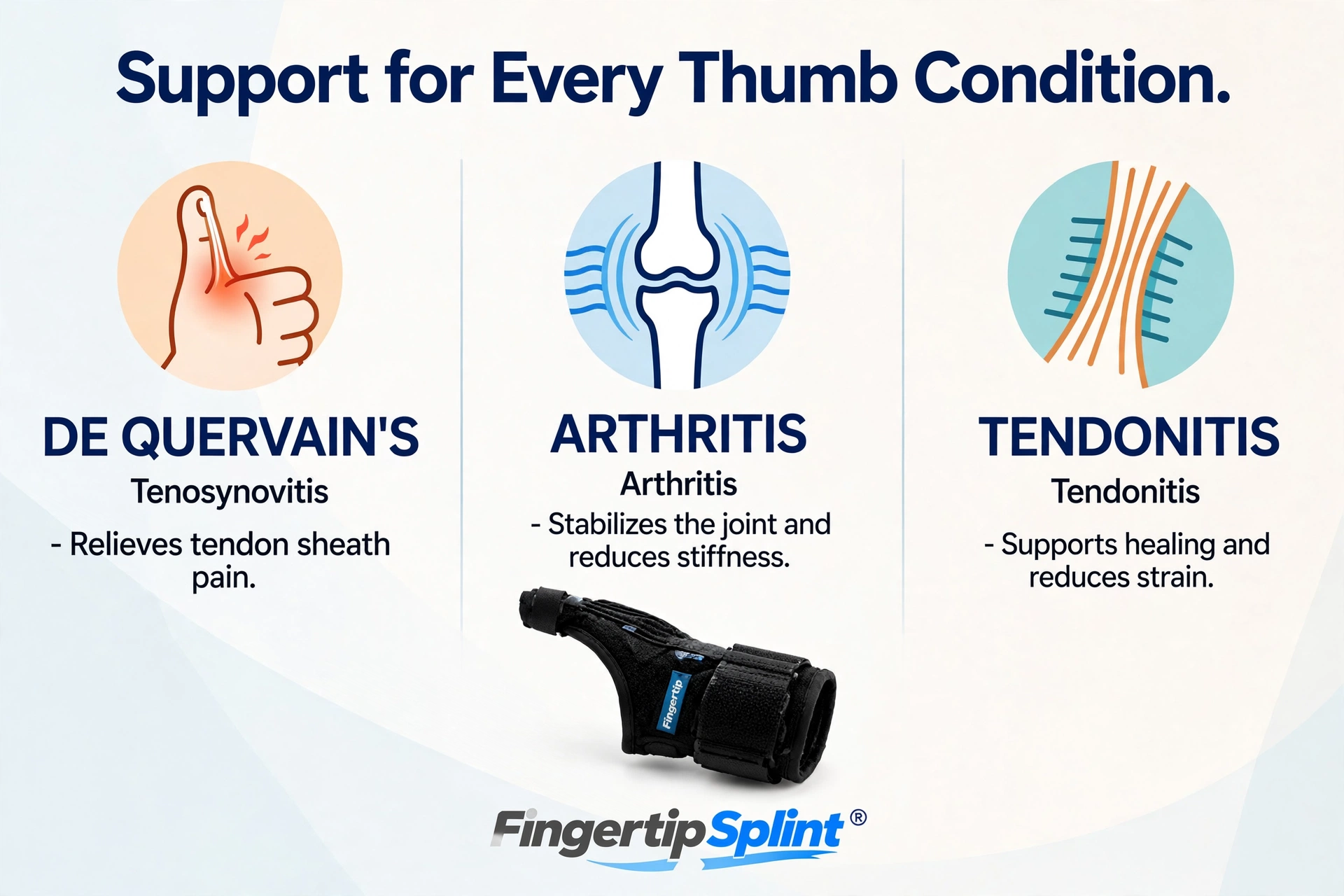
Thumb Arthritis vs. Tendonitis: Understanding the Difference
Arthritis and tendonitis are different conditions. Understanding the difference helps you choose the right support and know what questions to ask a healthcare professional.
Thumb-Base Arthritis
Thumb-base arthritis affects the joint where the thumb meets the wrist. This joint is called the carpometacarpal joint. Arthritis involves wear and inflammation of the joint surfaces. Symptoms may include pain, stiffness, and reduced grip strength.
Tendon-Related Conditions
Tendon-related conditions involve the tendons and the structures around them. De Quervain’s tenosynovitis is one example. It affects the tendons on the thumb side of the wrist. Symptoms may include pain near the wrist and thumb, swelling, and pain with certain movements.
Why Breathability Matters in a Thumb Splint
Comfort is an important factor when wearing a splint for extended periods. Breathability may improve comfort for some users.
Comfort During Longer Wear
A splint that allows air to circulate may feel cooler and more comfortable during longer periods of wear. This can be particularly relevant if you need to wear the splint for hours at a time.
Material Contact with the Skin
The material that touches your skin affects comfort. Breathable materials may reduce heat and moisture buildup. Check the product description for material details.
Cleaning and Maintenance
Regular cleaning helps maintain the product and protect your skin. Follow the manufacturer’s care instructions.
How to Choose the Right Thumb Splint for Arthritis or Tendonitis
Different conditions can require different designs. Consider these factors when choosing.
Affected Area
Identify whether you need support mainly for the thumb, mainly for the wrist, or both. A thumb splint designed for one area may not support another adequately.
Desired Movement Restriction
Some splints provide light support. Others are more rigid. Consider how much restriction you need based on your symptoms and any professional advice.
Adjustability
Adjustable straps allow you to customize the fit. Check whether the adjustment system suits your needs.
Sizing
Follow the manufacturer’s sizing instructions. A splint that is too tight can cause skin irritation; one that is too loose may not provide adequate support.
Hand Dominance
Some splints are designed for the left or right hand. Check the product description before ordering.
Professional Recommendations
If you have a diagnosed condition, follow your clinician’s guidance on the type of support that is appropriate.
Support Type Comparison: Which Design Fits Your Needs?
Different designs serve different purposes. Compare them by the area they support and their intended function.
| Support Type | General Purpose | Main Consideration |
|---|---|---|
| Breathable thumb splint | Supports selected thumb movements, depending on design | Confirm which area it stabilizes |
| Thumb spica brace | May support the thumb and part of the wrist | Support and rigidity vary by model |
| Wrist-only brace | Primarily supports the wrist | May not provide sufficient thumb stabilization |
| Rigid or custom-fitted splint | Provides more specific movement restriction when indicated | Professional assessment or fitting may be appropriate |
A buyer with thumb-base arthritis may have different support needs from someone with tendon-related pain near the wrist. The right choice depends on the specific condition and location of symptoms.
Featured Product: Breathable Thumb Spica Wrist Support Brace
Breathable Thumb Spica Wrist Support Brace
This product is designed to provide support for the thumb and part of the wrist. It is an option to evaluate based on your specific condition and support needs.
- Designed for thumb and wrist support
- Breathable material for comfort
- Adjustable straps for a custom fit
- Spica-style design for thumb stabilization
- Suitable for daily wear with proper care
Who May Want to Consider This Product
Readers looking for support around the thumb and wrist may find this product relevant. It may be appropriate for people with thumb-base discomfort, tendon irritation, or a diagnosed condition where support has been recommended.
What to Verify Before Ordering
- Material and construction
- Available sizing options
- Intended use and wear period
- Care instructions
- Whether the design matches your affected area
What It Should Not Be Expected to Do
This product is not designed to diagnose a condition, replace medical assessment, or treat every thumb or wrist problem. If you have a significant injury, seek professional advice.
Fit, Comfort, and Safe Positioning
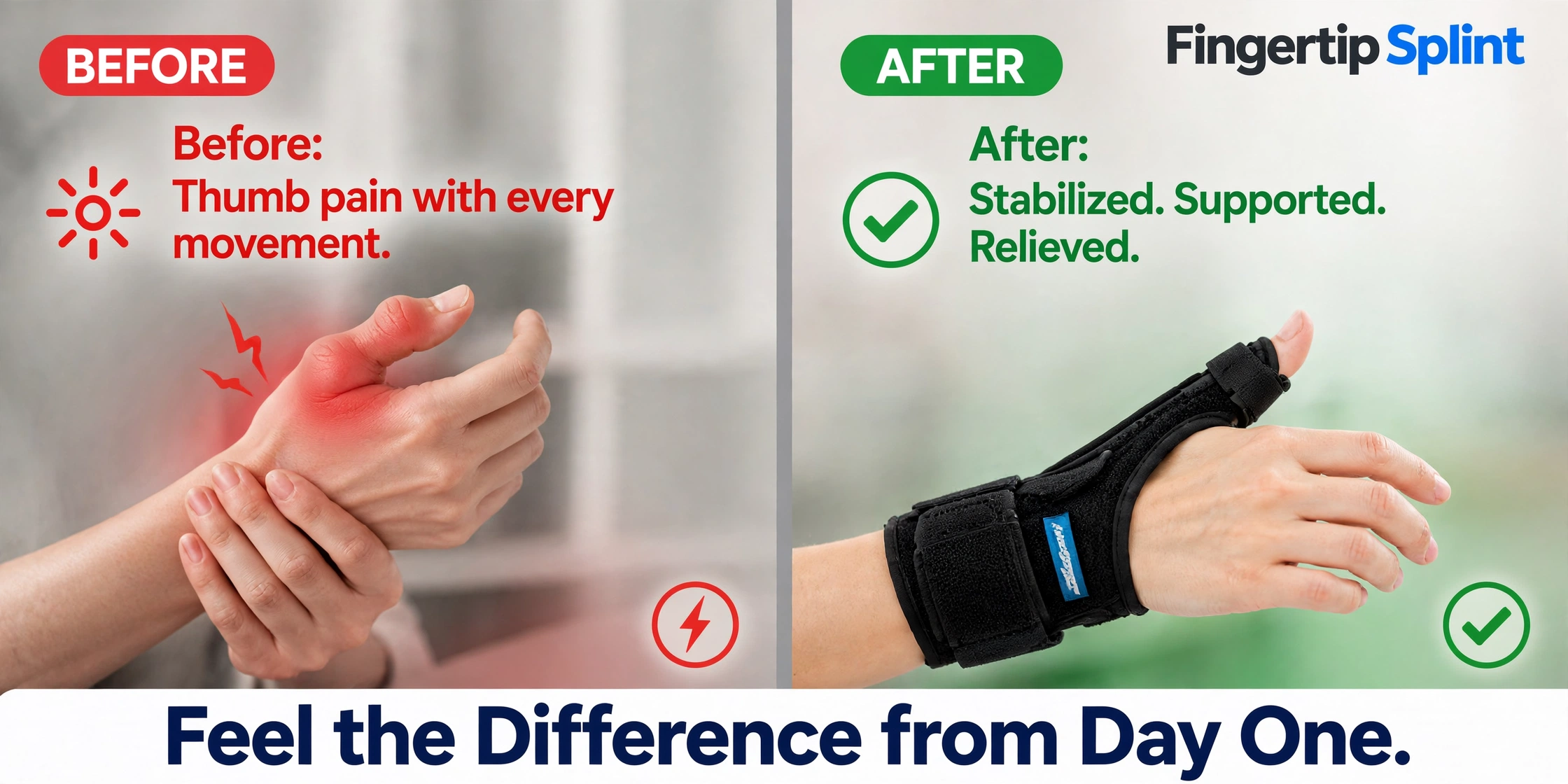
Proper fit is essential for comfort and effectiveness. A splint that is too tight can cause skin irritation; one that is too loose may not provide adequate support.
Following Manufacturer Instructions
Follow the manufacturer’s fitting instructions. The thumb should sit in the intended position, and the straps should be adjusted for a secure but comfortable fit.
Avoiding Overtightening
Do not overtighten the straps. A secure fit is not the same as a tight fit. If the splint causes numbness, tingling, or skin irritation, remove it and reassess.
Checking Skin Contact
Check the skin for redness, irritation, or pressure marks. If you notice skin changes, remove the splint and reassess.
Monitoring Finger Sensation and Circulation
Check that your fingers feel normal and that their color is normal. If you notice numbness, tingling, or color changes, remove the splint and seek advice.
- New numbness or tingling
- Worsening pain
- Swelling
- Persistent redness
- Skin breakdown
- Fingers becoming pale, blue, or unusually cold
Using a Thumb Splint During Everyday Activities
A splint may affect how you perform everyday tasks. Consider these practical points.
Typing and Using a Phone
A splint may limit some thumb movements. You may need to adjust your typing technique or use voice input. Check whether the splint allows the movements you need.
Cooking and Household Tasks
Some tasks may be more difficult while wearing a splint. Avoid activities that could cause impact or strain if you have an injury.
Work Activities
Your work tasks may require modification while wearing a splint. Discuss with your employer or clinician if you have concerns about work-related activities.
Common Mistakes When Buying or Wearing a Thumb Splint
Avoid these common errors to get the most benefit from your thumb splint.
1. Choosing the Wrong Support Area
Different conditions require different types of support. Match the splint to the affected area.
2. Selecting the Wrong Size
Size affects fit and comfort. Check the sizing guide before ordering.
3. Tightening Straps Too Much
Over-tightening can cause numbness, tingling, and skin damage. A secure fit is not the same as a tight fit.
4. Ignoring Skin Changes
If you notice redness, irritation, or pressure marks, remove the splint and reassess.
5. Assuming Breathability Means Unlimited Wear
Breathability may improve comfort, but it does not mean you can wear the splint indefinitely. Follow the manufacturer’s guidance on wear time.
6. Relying on a Brace Instead of Seeking Assessment
If symptoms persist or worsen, seek professional advice. A brace is not a substitute for medical assessment.
When to Seek Medical Advice
Some situations require professional assessment rather than self-selected support.
- Persistent or worsening pain
- Reduced function
- Significant swelling
- Pain after injury
- Deformity
- Severe pain
- An open injury
- A cold, pale, or blue finger
People with reduced sensation, circulation problems, or skin wounds should seek individualized advice before using a potentially constricting splint.
For authoritative background, see the Mayo Clinic, the American Society for Surgery of the Hand, the Arthritis Foundation, and the AAOS OrthoInfo. The NHS provides relevant guidance on thumb pain, tendon conditions, and seeking medical advice. For accessible explanations of arthritis and related health topics, see MedlinePlus. For supporting information about tendon disorders and clinical assessment, see Cleveland Clinic. For skin-care guidance relevant to irritation under supportive devices, see the American Academy of Dermatology. WebMD and Healthline provide additional consumer education.
Check What Matters Before Choosing a Thumb Splint
Interactive Buyer Guide
An educational buying aid — not a diagnosis or prescription.
Has a healthcare professional identified the condition?
Where do you mainly need support?
What is your main buying priority?
Do you have a recent significant injury, severe pain, deformity, or concerning circulation changes?
Select your answers above to see guidance.
Arthritis or Tendonitis? Understand Thumb Support and Fit
Interactive 3D Thumb and Wrist View
Click each part to learn about joint support, tendon conditions, and fit.
Illustration for understanding brace placement and support. Actual fit and coverage vary by product.
Frequently Asked Questions
A breathable thumb splint may provide support and stabilization for selected thumb movements. Suitability depends on the design, the joint affected, and your specific symptoms. Consult your clinician for guidance on the appropriate type of support.
A splint may help limit the movements that aggravate the tendons. Follow your clinician’s guidance on the appropriate type of support for your condition. A brace does not cure tendonitis.
Thumb-base arthritis affects a joint where the thumb meets the wrist. De Quervain’s tenosynovitis affects the tendons on the thumb side of the wrist. Symptoms alone cannot confirm a diagnosis. A clinician can assess your condition and recommend appropriate support.
Breathable materials may reduce heat and moisture buildup. However, no material eliminates sweating entirely. Check the skin regularly and follow the manufacturer’s care instructions.
It should be secure without causing numbness, tingling, or color changes. A tight fit is not evidence of better support. Remove the splint if any warning signs occur.
It depends on the design and your task. A splint may limit some thumb movements. You may need to adjust your technique. Do not continue an activity that worsens symptoms.
Wear duration depends on the condition, product instructions, and clinician guidance. Follow professional advice on how long to wear the splint. Do not assume overnight wear is appropriate unless the product instructions permit it.
Follow the manufacturer’s cleaning and drying instructions. Inspect the splint regularly for damage and replace it if it no longer functions properly.
Stop using the splint if you notice new numbness, tingling, worsening pain, swelling, persistent redness, skin changes, or a finger that becomes pale, blue, or unusually cold. Seek medical advice if symptoms continue.
Compare Support Options and Decide What Fits Your Needs
Review the Product Details Before Deciding
Compare your options, check the product’s intended use, and choose support that matches your needs. The Breathable Thumb Spica Wrist Support Brace is designed for thumb and wrist support. Review the product details to decide whether it suits your situation. If you are unsure which type of splint is appropriate, ask a healthcare professional.
Explore the full compare available support products collection to compare options, read our thumb and wrist brace buying guide for fit and comfort article for broader guidance, or request a product quote for business or wholesale inquiries. For answers to common questions, visit the FingertipsSplint frequently asked questions page.
Explore the Breathable Thumb Support More Finger and Thumb ArticlesMake an Informed Decision About Thumb Support
The right breathable thumb splint depends on the diagnosis, the area that needs support, the level of movement restriction, fit, and your daily activities. Compare device types, check sizing, evaluate comfort, and understand when professional assessment should come before a purchase.
A splint can provide support while it is worn. It cannot replace medical assessment when symptoms persist. Choose support that matches your needs—and ask a healthcare professional if you are unsure which type of splint is appropriate.
For more detailed guidance, see our best thumb spica brace for wrist and thumb support and our thumb and wrist brace buying guide for fit and comfort articles. For general information, visit FingertipsSplint.