
You are comparing silicone toe separators online. They look similar in the photos. But softness, thickness, shape, and fit can feel different in actual use. The best choice is not necessarily the largest, thickest, or most expensive separator. It is the one that suits your foot, your intended use, and your comfort needs. This buying guide helps you evaluate fit, softness, design, and safety so you can make a confident purchase decision. Start with our FingerTipSplint foot-care range to explore the full selection.
Table of Contents
How Do You Choose a Silicone Toe Separator That Fits Comfortably?
A silicone toe separator should fit comfortably between the toes without forcing them apart or creating excessive pressure. Consider the material’s softness, separator thickness, toe spacing, and intended use. Start with a short wear period, check your skin afterward, and remove the separator if you notice pain, numbness, irritation, or unusual discoloration.
What Is a Silicone Toe Separator?
A silicone toe separator sits between adjacent toes. It creates a small space. For some people, this may help reduce direct skin-to-skin rubbing.
Common Reasons People Consider Them
- Toe crowding
- Friction or rubbing between toes
- General foot-care routines
- Comfort while relaxing at home
Comfort Products vs Corrective Devices
Comfort products do not guarantee correction of structural toe deformities. A silicone separator creates temporary spacing while it is worn. It does not permanently realign toes or correct a bunion. If you have a significant deformity, seek professional advice.
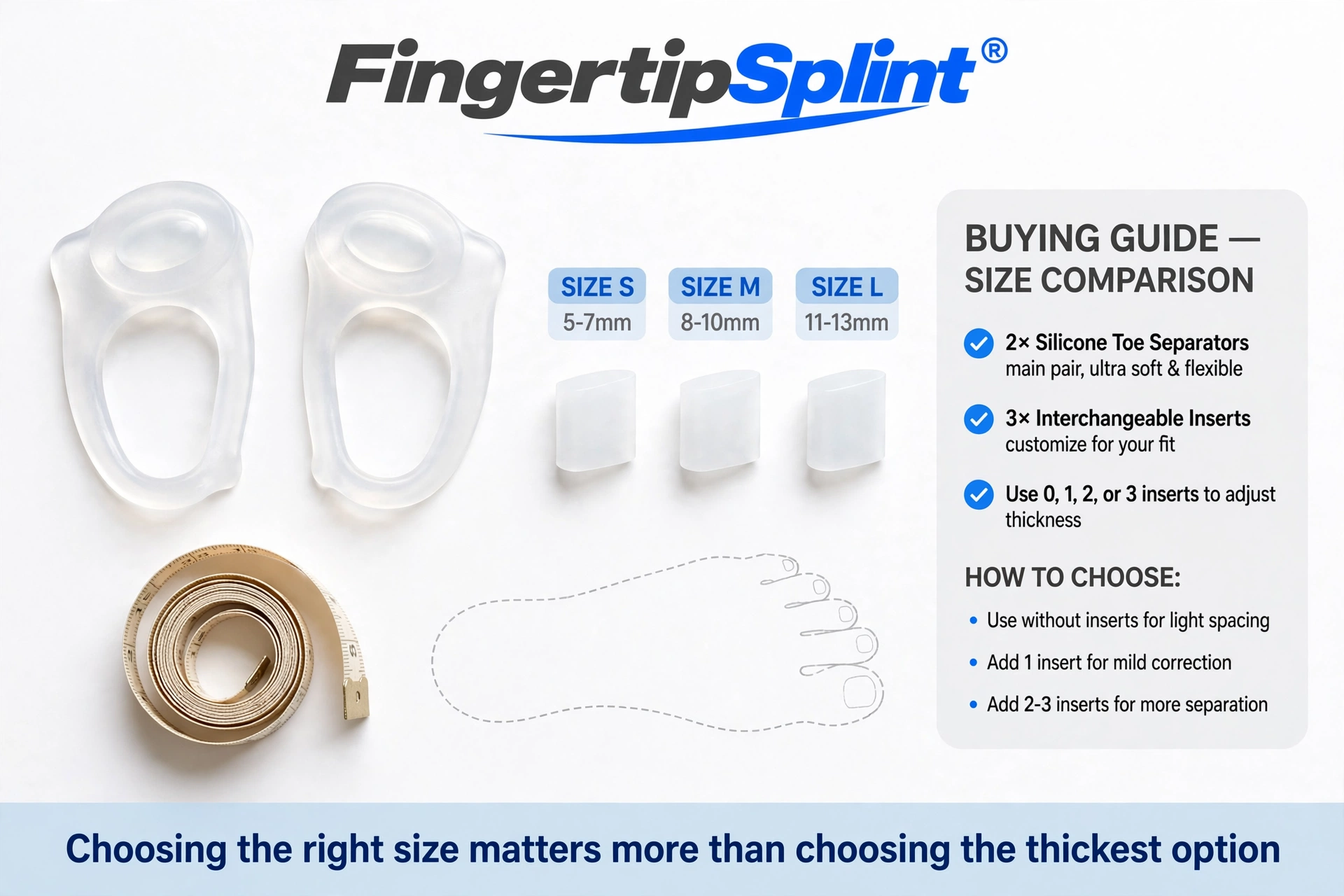
Material Matters — Softness, Flexibility and Skin Comfort
Different materials offer different trade-offs. Compare soft silicone, firmer silicone or gel-style products, and designs with multiple toe spacers.
Soft Silicone
Soft silicone may feel more forgiving against the skin. However, material softness alone cannot guarantee a proper fit or prevent irritation.
Firmer Silicone or Gel-Style Products
Firmer materials may maintain their shape better. However, they may create more pressure if the fit is not correct.
Designs with Multiple Toe Spacers
Multi-toe designs separate several toes at once. They may be useful for some people, but they can also be more cumbersome.
How to Choose the Right Fit and Thickness
This is the core of the buying guide. Fit determines comfort and effectiveness. Consider these factors before choosing a separator.
Shape
The separator should sit in the intended position. Different shapes may suit different toe arrangements. Check the product description for specific design details.
Spacing
The separator should create gentle space. Do not force the toes apart. Excessive separation can cause pain and skin irritation.
Thickness
Thicker separators may provide more space. Thinner separators may feel less noticeable. Choose the thickness that matches your needs.
Contact Points
Check where the separator contacts the skin. The contact points should be smooth and comfortable.
Compatibility with Your Toes
Different toes may require different sizes or shapes. Check the product sizing guidance before ordering.
Signs of a Reasonable Fit
- The separator stays in place
- It feels comfortable
- No numbness, tingling, or color changes
- No significant pressure points
Signs of Excessive Pressure
- Pain or pinching
- Numbness or tingling
- Changes in skin color
- Persistent redness
- Increasing discomfort
A separator should not need to be forced into place. For more detailed fit guidance, see our best silicone toe separators for nighttime foot care article.

Which Toe Separator Design Should You Buy?
Different designs serve different purposes. Compare them by their intended role and fit considerations.
| Feature | Soft Silicone Separator | Firmer Separator | Multi-Toe Design |
|---|---|---|---|
| Main consideration | Flexibility and contact comfort | Shape retention and spacing | Separating several toes |
| Potential advantage | May feel more forgiving | May maintain its shape better | Can address more than one gap |
| What to check | Thickness and skin contact | Pressure and toe alignment | Overall fit and toe compatibility |
| Best selection approach | Prioritize comfortable contact | Avoid excessive pressure | Confirm the design suits your foot |
These are general design differences. Actual comfort and suitability depend on the specific product and the user’s feet. Product descriptions and sizing details matter more than appearance alone.
Product Spotlight: 1 Pair Ultra-Soft Silicone Toe Separator
1 Pair Ultra-Soft Silicone Toe Separator
This product is an ultra-soft silicone separator. It may interest readers seeking a soft, simple design for comfortable foot care.
- Ultra-soft silicone material
- Designed for gentle toe spacing
- Suitable for home foot care with proper use
- Reusable with proper care
- Easy to clean with proper care
Who May Want to Consider This Product
Readers looking for a soft toe-spacing accessory for home foot care may find this product relevant. It may be appropriate for people who want gentle separation between adjacent toes.
What to Verify Before Ordering
- Product dimensions and sizing
- Material description
- Care instructions
- Intended use
- Whether the design matches your needs
What It Should Not Be Expected to Do
This product is not designed to correct a structural deformity, cure a foot condition, or replace medical assessment. If you have persistent pain, a significant toe deformity, or other concerning symptoms, seek professional advice.
How to Test Comfort Before Regular Use
Follow these steps when trying a toe separator for the first time.
Step 1 — Begin with Clean, Dry Feet
Wash and dry your feet before applying the separator.
Step 2 — Follow the Manufacturer’s Instructions
Read the product instructions before use. Follow the guidance on positioning and wear time.
Step 3 — Try a Short Period of Use
Wear the separator for a short period. Check for comfort and pressure.
Step 4 — Remove the Separator
Remove the separator after the trial period.
Step 5 — Inspect the Skin
Check for redness, irritation, or pressure marks. If you notice problems, discontinue use and reassess.
Cleaning, Reuse and Everyday Care
Proper care helps maintain the product and protect your skin.
Follow the Product’s Cleaning Instructions
Clean the separator according to the manufacturer’s instructions. Do not use harsh chemicals unless the manufacturer allows them.
Dry the Separator Completely
Allow the separator to dry completely before storing or wearing it again.
Inspect the Material
Check the separator for tears, stickiness, or changes that could affect comfort. Replace it if it is damaged.
Store Appropriately
Store the separator in a clean, dry place. Avoid storing it in a way that deforms its shape.
Common Buying Mistakes and Safety Considerations
Avoid these common errors when choosing a silicone toe separator.
1. Choosing Based on Price Alone
A lower price does not necessarily mean better value. Evaluate the product’s fit, material, and intended use.
2. Assuming One Size Suits Everyone
Different people have different toe sizes and shapes. Check the sizing guidance before ordering.
3. Buying a Separator That Spreads Toes Aggressively
Excessive separation can cause pain and skin irritation. Choose a design that provides gentle spacing.
4. Overlooking Product Instructions
Follow the manufacturer’s instructions on positioning, wear time, and care.
- Diabetes with reduced sensation
- Poor circulation
- Open wounds
- Skin infections
- Persistent foot pain
For authoritative background on bunions, toe conditions, and foot pain, see the Mayo Clinic, Cleveland Clinic, and NHS. For orthopaedic guidance, see the AAOS OrthoInfo. For general foot health and footwear guidance, see the American Podiatric Medical Association. For accessible information on foot injuries and conditions, see MedlinePlus. For diabetes foot-care precautions, see the NIDDK and CDC. WebMD and Healthline provide supplementary consumer education.
What Should You Check Before Choosing a Toe Separator?
Interactive Buyer Guide
This guide helps you identify what to compare. It does not diagnose a condition.
What is your main reason for looking at toe separators?
What matters most to you?
Do you have any of these concerns?
Select your answers above to see guidance.
Find Your Fit: Interactive 3D Toe Separator Guide
Interactive 3D Toe Separator View
Click each part to learn about material, fit, spacing, and safety.
Illustration for understanding toe separator placement. Actual fit and coverage vary by product.
Frequently Asked Questions
Check the product’s sizing guidance and dimensions. The separator should fit comfortably between the toes without forcing them apart. If you are between sizes, consider the product’s adjustability or try a different design.
Softness may improve comfort for some users. However, softness alone does not guarantee a proper fit or prevent irritation. The fit and thickness matter just as much.
The separator should feel secure without causing pain, numbness, tingling, or color changes. It should not need to be forced into place. Remove the separator if any warning signs occur.
It depends on the product’s instructions and your individual needs. Follow the manufacturer’s guidance on wear time. Start with a short trial and monitor the skin.
A single toe spacer sits between two toes. A multi-toe separator separates several toes at once. The right choice depends on your needs and foot shape.
Follow the manufacturer’s cleaning and storage instructions. Dry the separator completely before storing or wearing it again. Inspect it for damage.
People with diabetes, reduced sensation, poor circulation, wounds, infections, persistent foot pain, or a significant foot deformity should seek professional advice before using a toe separator.
Choose a Toe Separator That Fits Your Comfort Needs
Compare Support Options Before You Buy
Compare your options, check the product’s intended use, and choose support that matches your needs. The 1 Pair Ultra-Soft Silicone Toe Separator is a soft toe-spacing accessory for comfortable foot care. Review the product details and sizing information to decide whether it suits your situation.
Explore the full browse available foot-care products collection to compare options, read our best silicone toe separators for nighttime foot care article for broader guidance, or frequently asked questions for additional product and purchasing questions. For business or wholesale inquiries, request a product quote.
Choose a Toe Separator That Fits Your Comfort Needs Explore the FingerTipSplint StoreMake an Informed Decision About Toe Separator Fit and Comfort
The right silicone toe separator depends on fit, softness, thickness, toe spacing, and skin tolerance. A soft separator can provide gentle space while it is worn, but it cannot correct a structural deformity or replace medical assessment.
If you have persistent pain, a progressive deformity, or other concerning symptoms, seek professional advice. For mild discomfort or general foot care, a properly fitted separator may be part of your routine.
For more detailed guidance, see our ultra-soft toe separators for comfortable at-home use and our best silicone toe separators for nighttime foot care articles. For general information, visit FingerTipSplint’s foot-care range.