
Your hands feel uncomfortable during everyday household activities. Maybe you notice pressure while holding items. Maybe friction against firm surfaces bothers you. You are not sure which hand-protection accessory to buy. Ergonomic hand cushion protectors are products worth considering when their coverage and cushioning match your needs. The right fit and design matter more than choosing the thickest or most expensive option. This guide helps you compare features and choose a suitable product. Start with our FingerTipSplint homepage to explore the full range.
Table of Contents
- Quick Answer
- Everyday Activities & Hand Discomfort
- What Makes a Hand Cushion Ergonomic?
- Finger Protectors vs Palm Cushions vs Wrist Supports
- How to Choose for Home Use
- Product Spotlight
- How to Use Safely
- Cleaning, Maintenance & Common Mistakes
- When Cushioning May Not Be Enough
- Interactive Buyer Guide
- 3D Infographic
- FAQ
- CTA
What Are Ergonomic Hand Cushion Protectors Used For?
Ergonomic hand cushion protectors are designed to add coverage or cushioning to selected areas of the hand during everyday activities. Choose one by checking its intended use, fit, material, cushion placement, and flexibility. A suitable protector should not cause pinching, numbness, irritation, or increased discomfort.
Everyday Home Activities That May Create Hand Discomfort
Everyday household activities can create hand discomfort. Understanding which activities cause the problem helps you choose the right product.
Common Activities
- Handling cleaning tools
- Carrying light objects
- Gripping kitchen utensils
- Gardening
- Completing repetitive household tasks
What Causes the Discomfort
Repeated contact, friction, awkward positioning, and prolonged gripping can affect comfort. The discomfort may come from pressure at a contact point, friction against the skin, or a position that strains the hand.
Real-Life Examples
A person may feel pressure while holding a heavy object. Another may notice friction during repetitive tasks. A third may experience discomfort when gripping utensils for extended periods. Hand discomfort can have many causes. A cushion is not automatically the right solution for every symptom.
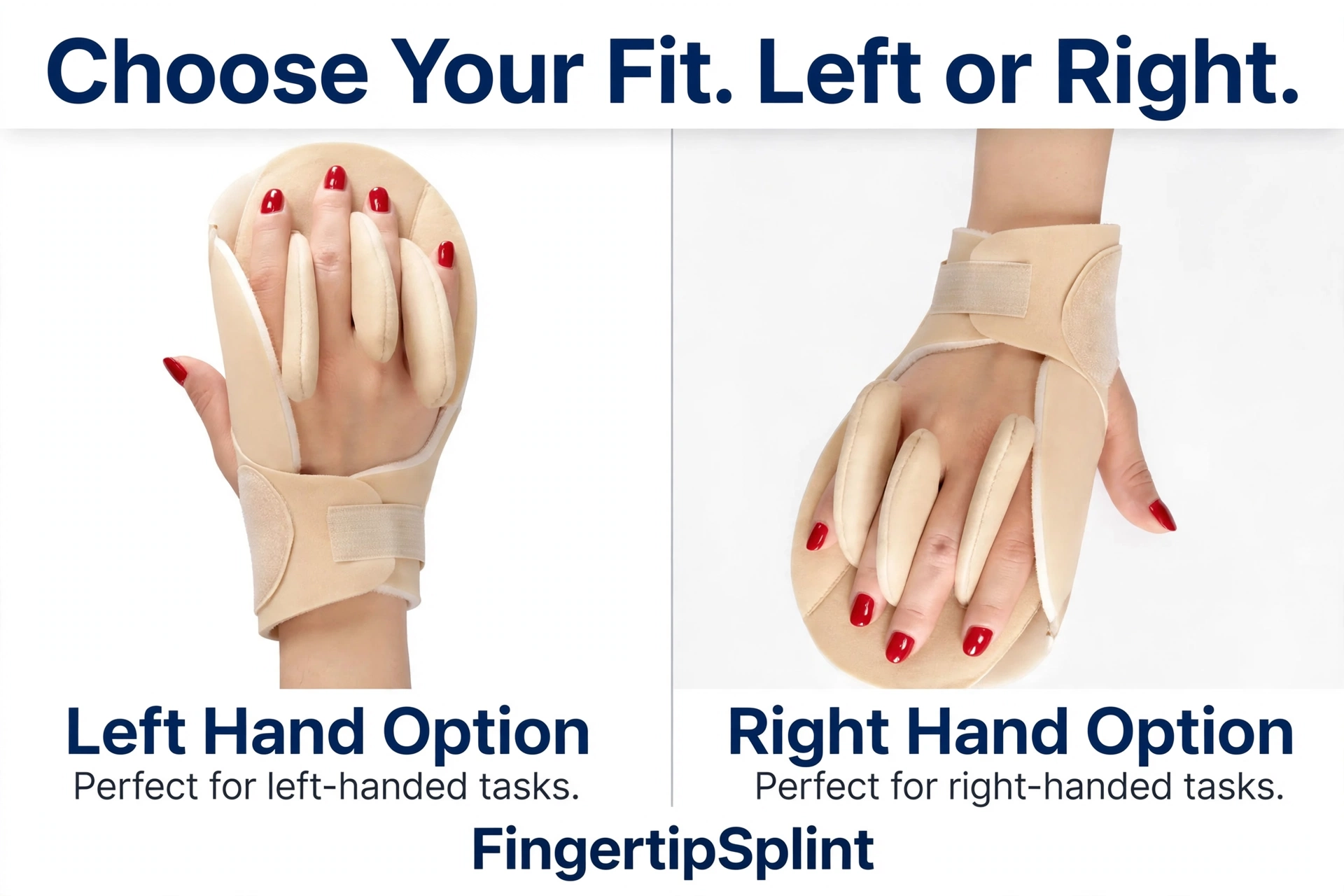
What Makes a Hand Cushion Protector Ergonomic?
A product is not necessarily ergonomic just because its packaging uses the word. Its shape and coverage must suit the intended task and user.
Features Buyers Should Evaluate
- Cushioning location
- Material flexibility
- Finger coverage
- Fit
- Ease of movement
- Secure positioning
Distinguishing Functional Design
Genuine functional design considers how the product performs during the intended activity. Marketing language alone does not make a product ergonomic. Look for details about how the product is intended to be used and how it fits the hand.
Finger Protectors vs Palm Cushions vs Wrist Supports
Different products serve different purposes. They should not be treated as interchangeable.
| Product Type | Potential Purpose | What to Check |
|---|---|---|
| Finger protector | Covers a particular finger area | Fit, coverage, flexibility |
| Palm cushion | Adds a cushioning layer at a contact area | Placement, thickness, retention |
| Wrist support | Supports the wrist, depending on design | Fit, compression, intended use |
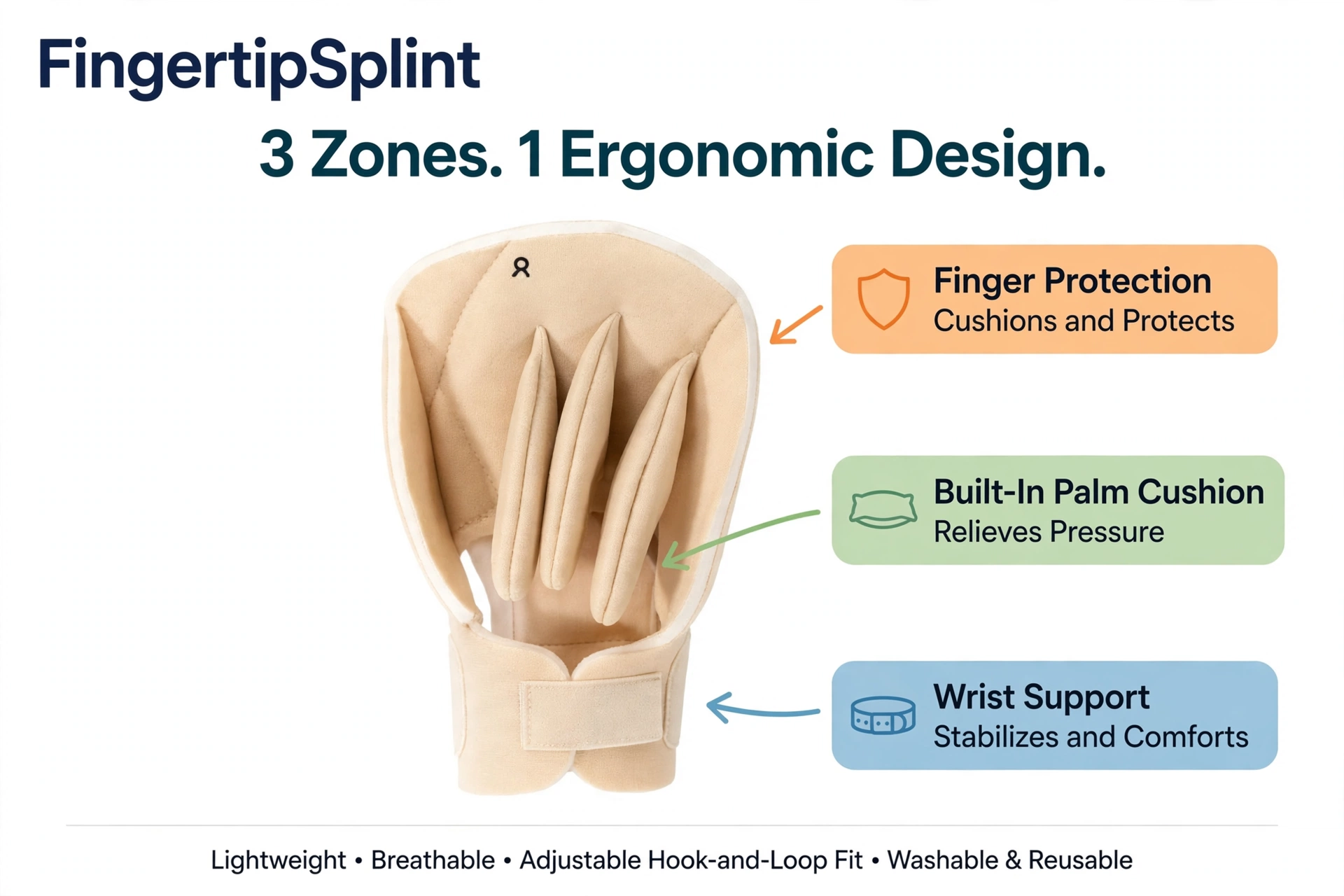
| Combined finger-and-palm protector | Combines finger coverage with a palm-contact cushion | Overall fit, movement, pressure points |
The best choice depends on the task, the area needing coverage, and the product’s intended function—not simply the number of features it includes. For a broader comparison, see our best finger protectors with built-in palm cushion article.
How to Choose a Hand Cushion Protector for Home Use
This is the central buying-guide section. Consider these factors before choosing a product.
Material
Consider the material’s feel, flexibility, and breathability. Check the product description for specific details.
Cushion Placement
Check where the cushion contacts the hand. It should sit where you need extra comfort.
Size
Follow the manufacturer’s sizing guidance. A product that is too tight can cause skin irritation; one that is too loose may not stay in place.
Finger Coverage
Check which part of the finger the protector covers. Match the coverage to your needs.
Flexibility
The product should allow the movement you need for your activities. If it restricts movement excessively, it may not be suitable.
Grip Compatibility
Consider whether the product affects your ability to grip objects. It should not interfere with the tasks you plan to do.
Cleaning
Follow the manufacturer’s care instructions. Regular cleaning helps maintain the product and protect your skin.
Durability
Check the product description for information about durability. Inspect the product regularly for damage.
Manufacturer’s Intended Use
Follow the manufacturer’s guidance on intended use. Do not use the product for purposes it was not designed for.
Checking for a Suitable Fit
- The product stays in place
- It feels comfortable
- No pinching or numbness
- No restricted movement
- No new pressure points
Quick Buyer Checklist
Product Spotlight: Finger Protector with Palm Cushion
Finger Protector with Palm Cushion & Wrist Support
This product is designed to combine finger coverage with a palm cushion and wrist support. It is an option to evaluate based on your specific needs.
- Finger protector with built-in palm cushion
- Provides wrist support
- Cushioned palm-contact area
- Suitable for everyday use with proper care
- Reusable with proper care
Who May Want to Consider This Product
Readers looking for combined finger coverage and palm cushioning may find this product relevant. It may be appropriate for people who want a more comfortable contact surface during everyday home activities.
What to Verify Before Ordering
- Product dimensions and sizing
- Material description
- Care instructions
- Intended use
- Whether the design matches your needs
What It Should Not Be Expected to Do
This product is not designed to diagnose a condition, treat a medical problem, or guarantee pain relief. If you have persistent pain, swelling, loss of sensation, or reduced hand function, seek professional advice.
How to Use a Hand Cushion Protector Safely
Follow these steps when using a hand cushion protector.
Step 1 — Inspect the Skin
Check the skin for cuts, blisters, redness, or irritation before applying the product.
Step 2 — Follow the Product Instructions
Read the product instructions before use. Follow the guidance on positioning and wear time.
Step 3 — Position the Protector Correctly
Place the protector as directed. Ensure the cushioning contacts the area that needs protection.
Step 4 — Test Comfortable Movement
Move your hand gently to confirm that the product stays in place and allows the movement you need.
Step 5 — Inspect the Hand After Removing It
Remove the product and check the skin for redness, irritation, or pressure marks. If you notice problems, discontinue use and reassess.
Cleaning, Maintenance and Common Buying Mistakes
Proper care helps maintain the product and protect your skin.
Cleaning
Follow the manufacturer’s cleaning instructions. Do not use harsh chemicals unless the manufacturer allows them.
Drying
Allow the product to dry appropriately before storing or wearing it again.
Inspection
Check the product for damage, rough edges, or signs of wear. Replace it if it no longer functions properly.
Storage
Store the product in a clean, dry place. Avoid storing it in a way that deforms its shape.
Common Buying Mistakes
- Choosing by appearance alone
- Assuming thicker padding is always better
- Ignoring sizing
- Using a protective accessory for a problem it was not designed to address
When Cushioning May Not Be Enough
Some situations require professional assessment rather than self-selected support.
- Ongoing hand pain
- Swelling
- Weakness
- Loss of sensation
- Reduced movement
- Symptoms following an injury
People with reduced sensation, circulation problems, wounds, or medical conditions affecting their hands should seek professional advice before using a product that may apply pressure or conceal changes to the skin.
For authoritative background on hand pain, injuries, and situations that require professional assessment, see the Mayo Clinic, Cleveland Clinic, and NHS. For orthopaedic guidance, see the AAOS OrthoInfo. For hand-specific information, see the American Society for Surgery of the Hand. For accessible information on hand conditions, see MedlinePlus. Johns Hopkins Medicine and Healthdirect Australia provide additional patient education. For diabetes-related precautions, see the NIDDK and CDC.
What Should You Check Before Choosing a Hand Protector?
Interactive Buyer Guide
This guide helps you identify what to compare. It does not diagnose a condition.
What is your main concern?
What matters most to you?
Do you have any of these concerns?
Select your answers above to see guidance.
Explore Everyday Hand Protection: Cushion, Coverage, and Fit
Interactive 3D Hand and Finger View
Click each part to learn about cushion placement, coverage, and fit.
Illustration for understanding product placement. Actual fit and coverage vary by product.
Frequently Asked Questions
They add coverage or cushioning to selected areas of the hand during everyday activities. They may be used for comfort during light household tasks or when a softer contact surface is preferred. Suitability depends on the product design and your needs.
A cushioned layer may change the contact between the hand and an object or surface. This may reduce friction or pressure for some users. Actual results depend on the product design and the individual’s needs.
Check the manufacturer’s sizing guidance and measure as directed. The product should fit securely without causing numbness, tingling, or skin irritation.
A palm cushion provides a soft contact area on the palm. A finger protector covers part of a finger. They serve different purposes and are not interchangeable.
Wear duration depends on the product instructions and your individual needs. Follow the manufacturer’s guidance. Check the skin regularly and remove the product if you notice problems.
Follow the manufacturer’s cleaning and drying instructions. Inspect the product regularly for damage and replace it if it no longer functions properly.
Stop using the product if you notice new numbness, tingling, skin irritation, discoloration, or increased discomfort. Seek medical advice for ongoing hand pain, swelling, weakness, loss of sensation, reduced movement, or symptoms following an injury.
Explore the Finger Protector with Palm Cushion
Compare Options Before You Buy
Compare your options, check the product’s intended use, and choose support that matches your needs. The Finger Protector with Palm Cushion & Wrist Support is designed to combine finger coverage with a cushioned palm-contact area. Review the product details to decide whether it suits your situation.
Explore the full shop hand and finger support products collection to compare options, read our finger and wrist support pads: comfort and pressure relief article for broader guidance, or request a product quote for business or wholesale inquiries. For answers to common questions, visit the frequently asked questions page.
Explore the Finger Protector with Palm Cushion Read More Hand-Support ArticlesMake an Informed Decision About Everyday Hand Protection
The right ergonomic hand cushion protector depends on the area you want to protect, the intended activity, fit, material, and cushioning. A protector may improve contact comfort for some users, but it does not prevent every injury, eliminate pain, or treat an underlying condition.
If you have ongoing hand pain, swelling, weakness, loss of sensation, reduced movement, or symptoms following an injury, seek professional advice. For light everyday comfort, a properly fitted product may be part of your routine.
For more detailed guidance, see our finger and wrist support pads: comfort and pressure relief and our best finger protectors with built-in palm cushion articles. For general information, visit FingerTipSplint.