
Choosing a thumb and wrist brace is not as simple as finding a product labeled “waterproof.” If you are living with arthritis-related discomfort or tendon pain, the right support must match your condition, fit safely, and meet the manufacturer’s stated usage requirements. This guide explains how to evaluate waterproof thumb wrist braces for arthritis and tendon support, what to look for, and when to seek medical advice. For a broader overview of hand support solutions, start with FingerTipSplint hand support products.
Table of Contents
- Why Thumb and Wrist Support Matters
- What Is a Waterproof Thumb Wrist Brace?
- How Arthritis Affects the Thumb and Wrist
- Understanding Tendon-Related Pain
- How to Choose the Right Brace
- Gel Support vs. Rigid Thumb Splint
- Introducing the Gel Thumb Wrist Support Brace
- How to Wear and Care for Your Brace Safely
- When Should You Seek Medical Advice?
- How Long Should You Use a Brace?
- Is a Waterproof Brace Right for You?
- Frequently Asked Questions
A waterproof thumb wrist brace may be convenient for people who need thumb and wrist support during daily routines, but the right design depends on the underlying condition, required movement restriction, fit, and manufacturer instructions. People with arthritis or tendon-related symptoms should confirm that the brace suits their needs and verify exactly what “waterproof” means before wearing it in water.
Why Thumb and Wrist Support Matters for Arthritis and Tendon Problems
Your thumb is involved in nearly everything you do with your hands. Gripping a cup, turning a key, opening a jar, typing, texting, holding a book, buttoning a shirt — the thumb and wrist work together in almost every daily task. When either structure becomes painful or unstable, the impact ripples through your entire routine.
Arthritis and tendon problems are not the same condition, and they do not respond to the same type of support. Arthritis involves inflammation and structural changes in the joints themselves. Tendon problems involve the soft tissues that connect muscle to bone. A brace that helps one may not help the other — and in some cases, the wrong brace can make things worse.
According to Versus Arthritis, living with arthritis-related discomfort can affect nearly every aspect of daily life, from work to sleep to social activities. This is why the location of your discomfort matters. Pain at the base of the thumb (the CMC joint) is different from pain in the wrist, and different again from pain along the thumb tendon. Each area has its own biomechanics and its own support requirements.
If you are also dealing with finger or hand pain alongside thumb and wrist discomfort, exploring the full range of hand support products can help you understand what options exist and how different designs address different problems.
What Is a Waterproof Thumb Wrist Brace?
A thumb and wrist support is a device designed to hold the thumb and wrist in a selected position, restrict unwanted movement, and provide compression or cushioning. The “waterproof” label adds another dimension: the ability to resist water exposure without degrading or causing skin problems.
But “waterproof” is not a standardized term in the medical brace industry. It can mean several different things:
- Resistance to splashes: The brace can handle minor water contact, such as washing hands, without damage.
- Easy surface cleaning: The material can be wiped clean and does not absorb water readily.
- Suitability for immersion: The brace can be worn during showers, swimming, or prolonged water exposure without compromising its structure or your skin.
These are not the same thing. A brace described as waterproof may only be splash-resistant. Do not assume that a product can be worn during showers, swimming, or prolonged water exposure unless the manufacturer explicitly confirms it.
For readers who want to understand how waterproof features fit into a broader buying decision, the gel thumb brace buying guide covers fit, cooling, and protection considerations in detail.
How Arthritis Can Affect the Thumb and Wrist
Arthritis is a broad term for conditions that cause joint inflammation. According to NIAMS, arthritis is one of the most common causes of disability in the United States, affecting millions of adults. In the thumb and wrist, the most common forms are osteoarthritis (wear-and-tear changes) and rheumatoid arthritis (an autoimmune condition). Both can cause pain, stiffness, swelling, and reduced function, but their underlying mechanisms differ.
Osteoarthritis at the base of the thumb — the CMC joint — is particularly common. According to AAOS OrthoInfo, thumb arthritis can make it difficult to pinch, grasp, or grip objects, and it often progresses over time. The pain may be most noticeable when you are doing activities that require a firm pinch, such as turning a doorknob or opening a jar.
Rheumatoid arthritis, by contrast, is a systemic condition that can affect multiple joints, including the wrist and the small joints of the hand. It often causes symmetrical symptoms — both hands affected — and can lead to joint deformity if not managed appropriately. As the Mayo Clinic explains, thumb arthritis is a common condition that can significantly impact hand function and quality of life.
A brace may help support or limit movement in selected situations, but not every brace is suitable for every form of arthritis. A flexible gel support may provide comfortable compression and gentle positioning for mild osteoarthritis. A rigid splint may be more appropriate for post-surgical recovery or severe instability. The choice depends on the diagnosis, the affected joint, and the treatment plan.
For a closer look at how gel-based supports compare for daily comfort and arthritis management, the article on best gel thumb wrist support for daily comfort provides practical guidance.
Understanding Tendon-Related Thumb and Wrist Pain
As MedlinePlus explains, tendons are the fibrous cords that connect muscle to bone. When you move your thumb or wrist, tendons glide through smooth sheaths and transmit force from muscle to bone. When a tendon becomes inflamed, irritated, or mechanically overloaded, movement becomes painful.
Two common tendon-related conditions affecting the thumb and wrist are De Quervain’s tenosynovitis and thumb extensor or flexor tendinopathy. De Quervain’s specifically affects the tendons on the thumb side of the wrist and causes pain with thumb movement and wrist deviation. It is often associated with repetitive gripping, lifting, or twisting activities.
The Cleveland Clinic notes that De Quervain’s tenosynovitis can cause pain and swelling at the base of the thumb, and that treatment often includes activity modification, anti-inflammatory measures, and in some cases, immobilization with a splint.
But tendon conditions differ. De Quervain’s affects a specific tendon compartment. A flexor tendon injury affects the tendon that bends the thumb. A wrist extensor tendon problem affects a different area entirely. Because the affected structures vary, the appropriate brace and duration of use also vary. A brace that immobilizes the thumb and wrist completely may be appropriate for one condition and counterproductive for another.
Explore the Brace Selection Factors
Select a factor below to see what to consider for each.
How to Choose the Right Waterproof Thumb Wrist Brace
Choosing the right brace requires more than matching a product description to your symptoms. You need to evaluate several factors together: coverage, movement restriction, fit, material, care requirements, and intended activities.
Thumb and Wrist Coverage
Some braces support only the thumb. Others support the thumb and wrist together. Still others extend further up the forearm. The right coverage depends on where your pain is and what movement you need to restrict. A brace that supports the thumb but leaves the wrist free may be appropriate for isolated thumb pain. A combined thumb and wrist support may be better for conditions that affect both structures.
Movement Restriction
Braces exist on a spectrum from flexible compression to rigid immobilization. Flexible gel supports allow more movement and are often more comfortable for daily wear. Rigid splints restrict movement more completely and may be appropriate for acute injuries or post-surgical recovery. The goal is to match the level of restriction to the clinical need.
Sizing and Secure Positioning
Correct sizing is essential. A brace that is too small can compress nerves and blood vessels. A brace that is too large will not provide effective support and may shift during use. Measure your wrist and thumb circumference according to the manufacturer’s sizing guide, and check the fit before relying on the brace for support.
Material and Skin Compatibility
Gel, neoprene, elastic, and foam materials all have different properties. Gel is soft, conforming, and generally well-tolerated. Neoprene provides warmth and compression but can trap moisture. If you have sensitive skin or a history of contact dermatitis, choose a material that minimizes irritation risk.
Cleaning and Drying Instructions
Follow the manufacturer’s cleaning instructions exactly. Most gel braces can be washed with mild soap and warm water, then air-dried completely before reuse. Do not use harsh chemicals, alcohol-based cleaners, or high heat, which can degrade the material.
Confirmed Waterproof Capabilities
Check the product listing and packaging for specific language about water exposure. If the manufacturer does not explicitly state that the brace can be worn during showers, swimming, or prolonged water exposure, do not assume it can.
Compatibility with Intended Activities
Consider what you will be doing while wearing the brace. If you need support during workouts, cooking, gardening, or work tasks, the brace must be comfortable and secure during those activities. A brace that works well for typing may not work well for lifting.
Gel Thumb Support vs. Rigid Thumb Splint
The choice between a flexible gel support and a rigid thumb splint is not about which is better in general — it is about which is better for your specific situation. Both designs have legitimate roles in hand and wrist care.
| Feature | Flexible Gel Support | Rigid Thumb Splint |
|---|---|---|
| Movement | Often allows more movement | Usually restricts more movement |
| Main consideration | Comfort and fit | Appropriate stabilization |
| Best choice | Depends on the need | Depends on the diagnosis |
| Water use | Check exact product instructions | Check exact product instructions |
A flexible gel support may be appropriate for mild arthritis pain, for providing gentle compression during daily activities, or for people who need some support without full immobilization. A rigid thumb splint is typically used for more severe instability, post-surgical recovery, or conditions where complete immobilization is required for healing.
Introducing the Gel Thumb Wrist Support Brace
If you are looking for a flexible, gel-based option to evaluate, the 1Pc Gel Thumb Wrist Support – Waterproof Wrist Brace from FingerTipSplint is one product to consider. This guide does not claim that it treats arthritis, heals tendons, or is suitable for all diagnoses. What it offers is a design that uses gel construction to distribute pressure and provide support during daily activities.
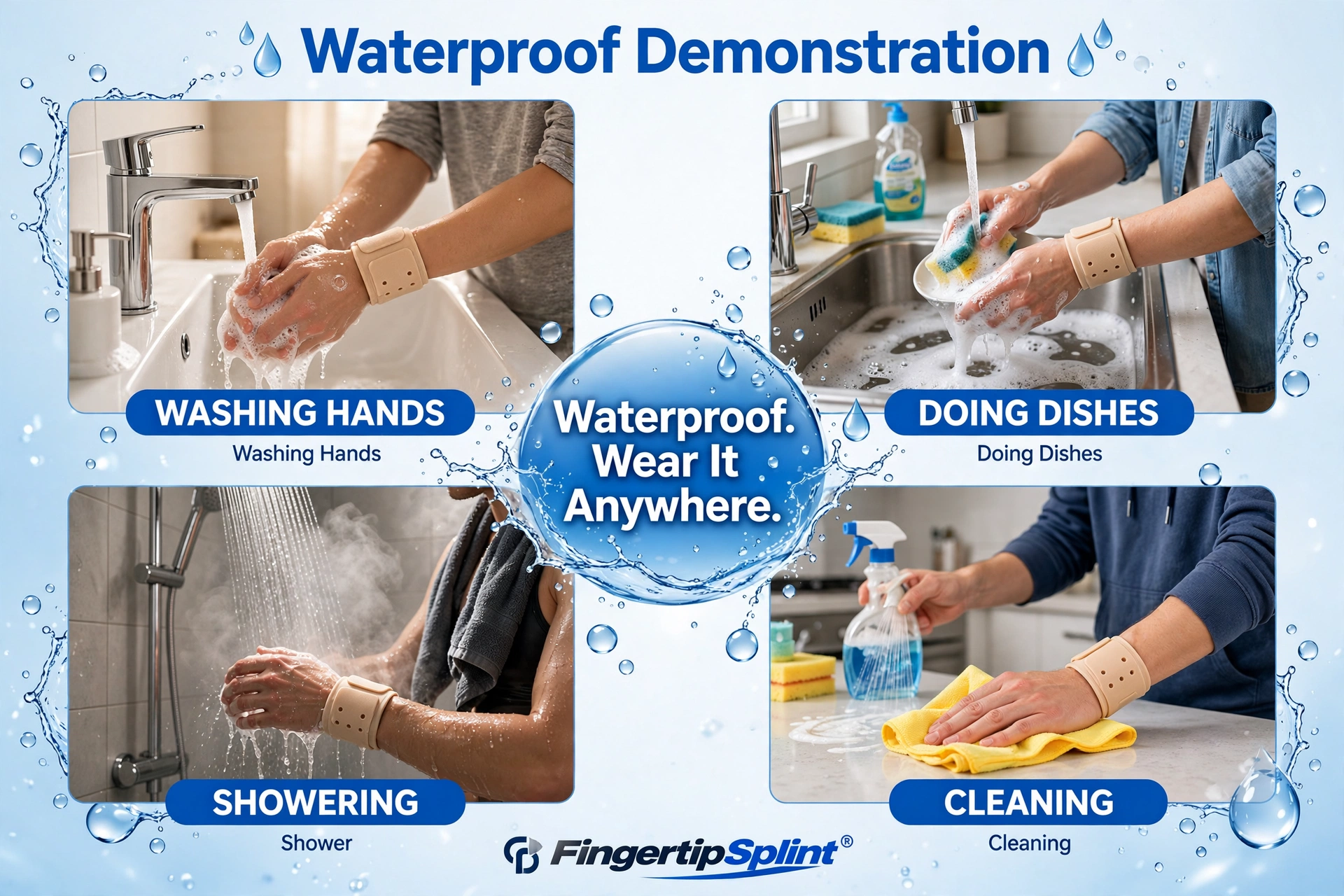
Before purchasing, review the product listing for:
- Materials and construction
- Sizing and fit guidance
- Waterproof claims and exact usage instructions
- Care and cleaning requirements
- Intended use and any limitations
For readers who want to explore related products and support options, the FingerTipSplint shop provides a full overview. Healthcare providers and distributors can find additional information through the medical finger splint supplier page.
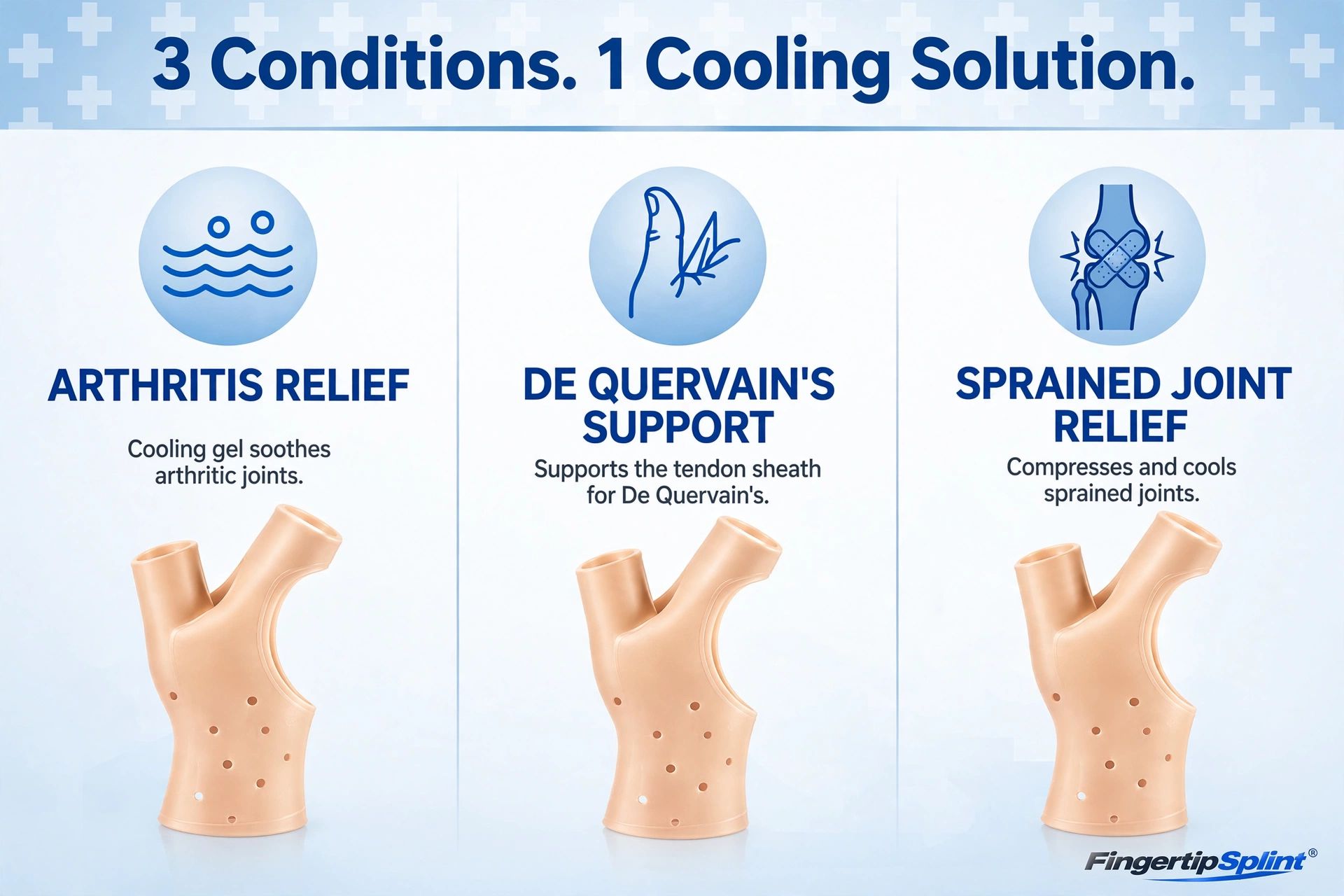
How to Wear and Care for Your Brace Safely
Proper wear and care are essential for safety and effectiveness. Follow these steps based on the product’s design and the manufacturer’s instructions.
Step 1: Check the fit. The brace should be secure without excessive pressure. You should be able to move your thumb and wrist through the range the brace allows without the brace shifting significantly.
Step 2: Avoid excessive tightness. A brace that is too tight can compress nerves and blood vessels. If you feel numbness, tingling, or throbbing, loosen or remove the brace.
Step 3: Inspect the skin. Check your skin before and after wearing the brace. Look for redness, indentations, irritation, or signs of moisture buildup. Persistent redness or skin breakdown requires stopping use and seeking advice.
Step 4: Clean the brace correctly. Follow the manufacturer’s cleaning instructions. Most gel braces can be washed with mild soap and warm water. Rinse thoroughly.
Step 5: Allow it to dry. Air-dry the brace completely before reuse. Do not use high heat or direct sunlight, which can degrade the material.
When Should You Seek Medical Advice?
Not every thumb or wrist pain requires a doctor’s visit. But some symptoms warrant professional assessment.
Seek assessment for:
- Persistent pain that does not improve with rest and conservative measures
- Worsening symptoms over time
- Reduced hand function that affects daily activities
- Swelling that is new or increasing
- Pain after an injury
- Uncertainty about the diagnosis
Seek urgent evaluation for:
- Severe pain
- Deformity after injury
- A cold, pale, or blue hand
- Signs of impaired circulation
- Fever with joint pain and swelling
How Long Should You Use a Thumb Wrist Brace?
There is no single answer to this question. Wearing schedules depend on the diagnosis, brace design, symptoms, and clinician guidance. Some people wear a brace only during activities that provoke symptoms. Others wear it for a specified period during recovery. Still others use it intermittently for long-term management.
Avoid universal wear-time recommendations. What works for one person may not work for another. If you are unsure how long to wear your brace, ask your healthcare provider. They can provide guidance based on your specific condition and treatment plan.
Is a Waterproof Thumb Wrist Brace Right for Your Needs?
To decide whether a waterproof thumb wrist brace is right for you, consider these factors together:
- Condition: What is your diagnosis? Arthritis and tendon problems may require different support approaches.
- Required stabilization: How much movement restriction do you need? Flexible support and rigid immobilization serve different purposes.
- Fit: Does the brace fit securely and comfortably? Poor fit undermines effectiveness and safety.
- Water exposure: What does “waterproof” mean for this specific product? Check the manufacturer’s instructions.
- Skin tolerance: Does the material agree with your skin? Irritation is a sign to reassess.
- Product instructions: Have you read and understood the usage and care guidelines?
If you need a thumb and wrist support for your daily routine, explore the FingerTipSplint Gel Thumb Wrist Support Brace, review its fit and care instructions, and check whether its design matches your support needs. For personalized assistance, you can also request a quote or review the frequently asked questions.
Need a Thumb and Wrist Support for Your Daily Routine?
Explore the FingerTipSplint Gel Thumb Wrist Support Brace, review its fit and care instructions, and check whether its design matches your support needs.
View the Product Browse All ProductsFrequently Asked Questions
An appropriate brace may provide support in selected situations, but suitability depends on the affected joint, symptoms, and brace design. Waterproofing alone does not make a brace medically suitable. If you have arthritis in the thumb or wrist, discuss brace options with your healthcare provider to ensure the design matches your condition and treatment plan.
The best design depends on the specific tendon condition, affected area, and movement that needs restriction. A healthcare professional can help determine the appropriate support. Some tendon conditions benefit from flexible support and activity modification, while others may require more rigid immobilization for a period of time.
Check the exact manufacturer’s instructions. The word “waterproof” should not be treated as proof that a brace can safely be worn during showers or immersion. If the product listing does not explicitly state that the brace is suitable for water immersion, assume it is not and remove it before showering.
Neither design is universally better. Gel supports are flexible, comfortable, and allow more movement, which may be suitable for mild symptoms or daily wear. Rigid splints restrict movement more completely and may be appropriate for acute injuries, post-surgical recovery, or severe instability. The choice depends on the condition and intended use.
It should be secure without excessive pressure. You should be able to wear the brace comfortably without numbness, tingling, increasing pain, swelling, or changes in colour or temperature. If you experience any of these warning signs, loosen or remove the brace and consult a healthcare provider if symptoms persist.
Wearing time varies with the condition, product, and treatment plan. There is no single schedule that applies to everyone. Follow the guidance of your healthcare provider and the product’s intended use instructions. If symptoms change or do not improve, reassess with a professional.
Seek assessment for persistent, worsening, or function-limiting symptoms. Urgent evaluation is warranted for severe pain, significant injury, deformity, or signs of impaired circulation such as a cold, pale, or blue hand. Early assessment can help identify the cause and guide appropriate treatment.
Conclusion: Choose Support That Matches Your Condition
Choosing a thumb and wrist brace for arthritis or tendon-related symptoms requires more than finding a waterproof product. The right support must suit the condition, fit safely, and meet the manufacturer’s stated usage requirements.
Arthritis and tendon problems are different. They affect different structures, cause different symptoms, and respond to different support approaches. A brace that helps one person may not help another — and the wrong brace can delay appropriate care.
Use this guide as a framework for evaluating your options. Consider your diagnosis, the level of support you need, fit, material, care requirements, and intended activities. Verify waterproof claims before wearing any brace in water. And if your symptoms are persistent, worsening, or affecting your function, seek professional advice.
For readers who want to explore support products, the FingerTipSplint shop offers a range of options. For healthcare providers and distributors, the medical finger splint supplier page provides additional information. And for personalized assistance, you can request a quote.
Your hands are involved in almost everything you do. Choosing the right support is an investment in your daily comfort and function.