
Choosing a gel thumb brace is not just about finding a product that looks comfortable. It is about understanding how fit, material, cooling claims, and protective features work together — and whether the brace actually suits your needs. This practical buying guide explains how to evaluate a gel thumb brace before you purchase, what to check on the product listing, and how to avoid common mistakes. For a broader overview of hand support and splint options, start with FingerTipSplint.
Table of Contents
- What Is a Gel Thumb Brace and Who Might Need One?
- How to Find the Right Gel Thumb Brace Fit
- Do Gel Thumb Braces Provide a Cooling Effect?
- What Protection Should You Look For?
- Gel Thumb Brace vs. Other Support Options
- Material, Skin Comfort, and Everyday Wear
- Introducing the Gel Thumb Wrist Support Brace
- How to Put On, Clean, and Maintain
- Common Buying Mistakes to Avoid
- When Is a Gel Thumb Brace Not Enough?
- How to Choose the Best Gel Thumb Brace
- Frequently Asked Questions
When choosing a gel thumb brace, check the sizing instructions, thumb coverage, material, flexibility, and care requirements. A comfortable brace should fit securely without excessive pressure or irritation. If a product advertises cooling or protective benefits, verify what those claims mean and whether its design suits your intended use. Persistent thumb pain may require professional assessment.
What Is a Gel Thumb Brace and Who Might Need One?
A gel thumb brace is a supportive device made from soft, flexible gel material. It is designed to cushion, position, or gently support the thumb during daily activities. Unlike rigid splints, which are typically made from hard plastic or metal, gel braces prioritize comfort and conformability over strict immobilization.
Products vary considerably. Some gel braces are simple sleeves that wrap around the base of the thumb. Others extend to cover the thumb and wrist. Still others are designed to work with cold packs or offer specific cooling features. Not every gel support is designed to immobilize a joint.
People explore gel thumb braces for a range of reasons. According to NHS guidance on arthritis, persistent hand and thumb pain is a common reason adults seek support options. Some people want cushioning during repetitive tasks. Others want gentle support after a minor strain. Still others are looking for a comfortable alternative to a rigid splint for mild symptoms.
The underlying cause of your discomfort matters. A gel brace may be suitable for mild, activity-related discomfort. It may not be suitable for acute injuries, significant instability, or conditions that require immobilization. If you are unsure, professional assessment is the right next step.
For a closer look at how gel supports compare for daily comfort, the article on best gel thumb wrist support for daily comfort provides practical guidance.
How to Find the Right Gel Thumb Brace Fit
Fit is the single most important factor in whether a gel thumb brace works for you. A brace that fits poorly will not provide effective support, and it may cause new problems such as skin irritation or restricted circulation. Getting the fit right starts with reading the manufacturer’s sizing instructions carefully.
Measure Only as Instructed
Different manufacturers use different measurement methods. Some ask for thumb circumference. Others ask for wrist circumference or hand length. Follow the specific instructions provided — do not guess based on what worked for another product.
Confirm Whether the Brace Is Universal-Size or Size-Specific
Some gel braces are designed as one-size-fits-most. Others come in specific sizes such as small, medium, and large. Universal-size braces may be more convenient, but they may not fit as securely as size-specific options. Check the product description before purchasing.
Check Thumb and Wrist Coverage
Decide whether you need thumb-only coverage or thumb and wrist coverage. A brace that covers only the thumb may be sufficient for isolated thumb discomfort. A brace that covers the thumb and wrist may be better if you also experience wrist symptoms.
Ensure It Stays in Place Without Excessive Pressure
The brace should stay in place during your activities without requiring constant readjustment. It should not leave deep marks, cause numbness or tingling, or restrict circulation. If you feel pressure points, the fit is wrong.
Follow Return and Sizing Policies
Before purchasing, check the return and exchange policy. If the brace does not fit, you want the option to return or exchange it. Some manufacturers provide detailed sizing charts; others may offer guidance by phone or email.
Gel Thumb Brace Fit Checklist
Do Gel Thumb Braces Provide a Cooling Effect?
The word “gel” is often associated with cooling. But not every gel thumb brace provides a cooling effect. It is important to understand the difference between four distinct concepts:
- A material that feels cool to the touch: Some gel materials naturally feel cooler than fabric or plastic. This is a surface sensation, not active cooling.
- A breathable design: A brace with ventilation or moisture-wicking properties may feel cooler during wear, but this is not the same as therapeutic cooling.
- A product intended for use with a cold pack: Some braces are designed to hold a cold pack against the thumb. The cooling comes from the pack, not the brace itself.
- A brace with a verified cooling function: This is the most specific claim. A product that claims active cooling should have clear instructions and evidence supporting that claim.
According to the Cleveland Clinic, cold therapy can be part of a conservative management approach for certain thumb and wrist conditions, but the method and duration should be appropriate for the specific situation. If you are considering a gel brace specifically for cooling, verify what the product actually offers.
For readers who want to understand how waterproof claims and condition-specific use interact with cooling considerations, the article on waterproof thumb wrist brace for arthritis and tendon support covers those topics in detail.
What Protection Should You Look For in a Thumb Brace?
Protection is another term that can mean different things. In the context of a gel thumb brace, protection typically refers to:
- Cushioning: The brace absorbs pressure and reduces friction between the thumb and surrounding surfaces.
- Coverage: The brace covers the area of the thumb that needs support.
- Secure positioning: The brace stays in place and maintains the intended position during activity.
- Movement restriction: The brace limits certain movements that may provoke discomfort.
Protective performance depends on the design and intended use of the brace. A soft gel sleeve may provide cushioning but may not offer the stabilization required for a particular injury or joint condition. A more structured brace may provide more stability but may be less comfortable for extended wear.
The AAOS OrthoInfo notes that treatment for thumb arthritis should be tailored to the individual, and that supportive devices may be part of a conservative management approach. The right level of protection depends on your specific diagnosis and needs.
Gel Thumb Brace vs. Other Support Options
Gel braces are one option among many. Understanding how they compare to other designs can help you choose the right one.
| Feature | Gel Support | Adjustable Brace | Rigid Splint |
|---|---|---|---|
| Flexibility | Depends on design | Often adjustable | Usually more restrictive |
| Main consideration | Fit and cushioning | Fit and support level | Required stabilization |
| Care | Check label | Check label | Check label |
| Suitability | Depends on need | Depends on need | Depends on need |
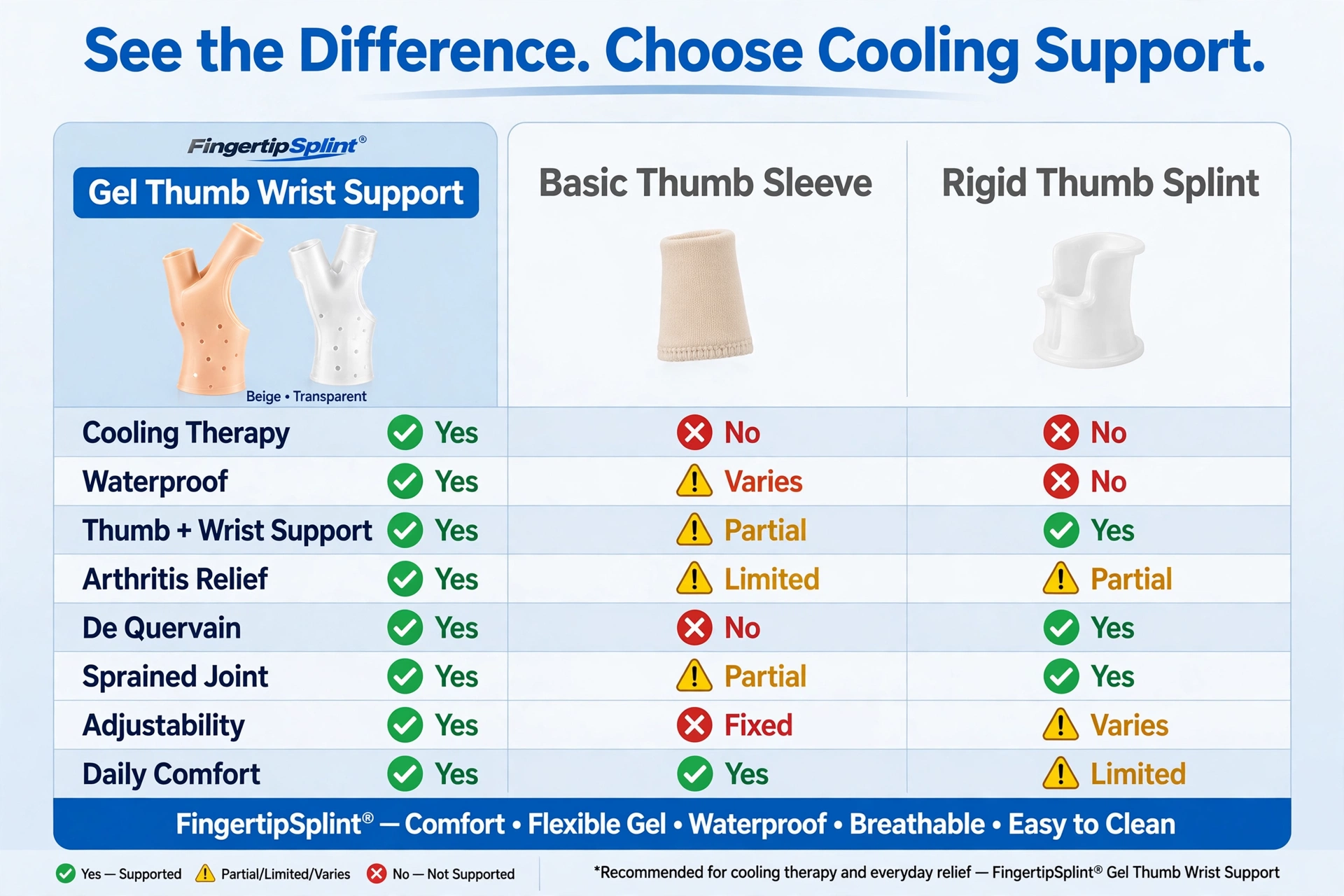
No single design is universally best. A gel support may be ideal for someone who wants comfortable, low-profile support during daily activities. An adjustable brace may suit someone who needs variable support for different tasks. A rigid splint is typically reserved for more significant instability, acute injury, or post-surgical recovery.
For readers who want to explore the full range of support options, browsing available support products can help you understand what is available.
Material, Skin Comfort, and Everyday Wear
Material composition affects how a gel thumb brace feels, how it performs, and how well it tolerates daily wear. When evaluating a product, consider:
- Material composition: Gel, silicone, neoprene, and fabric blends all have different properties. Gel and silicone are generally soft and conforming. Neoprene provides warmth and compression but can trap moisture.
- Seams and surface texture: Rough seams or textured surfaces can cause friction and irritation during extended wear.
- Moisture management: A brace that traps moisture can cause skin maceration (softening and breakdown). Breathable designs reduce this risk.
- Cleaning requirements: Follow the manufacturer’s instructions. Most gel braces can be washed with mild soap and warm water, then air-dried completely.
Introducing the Gel Thumb Wrist Support Brace
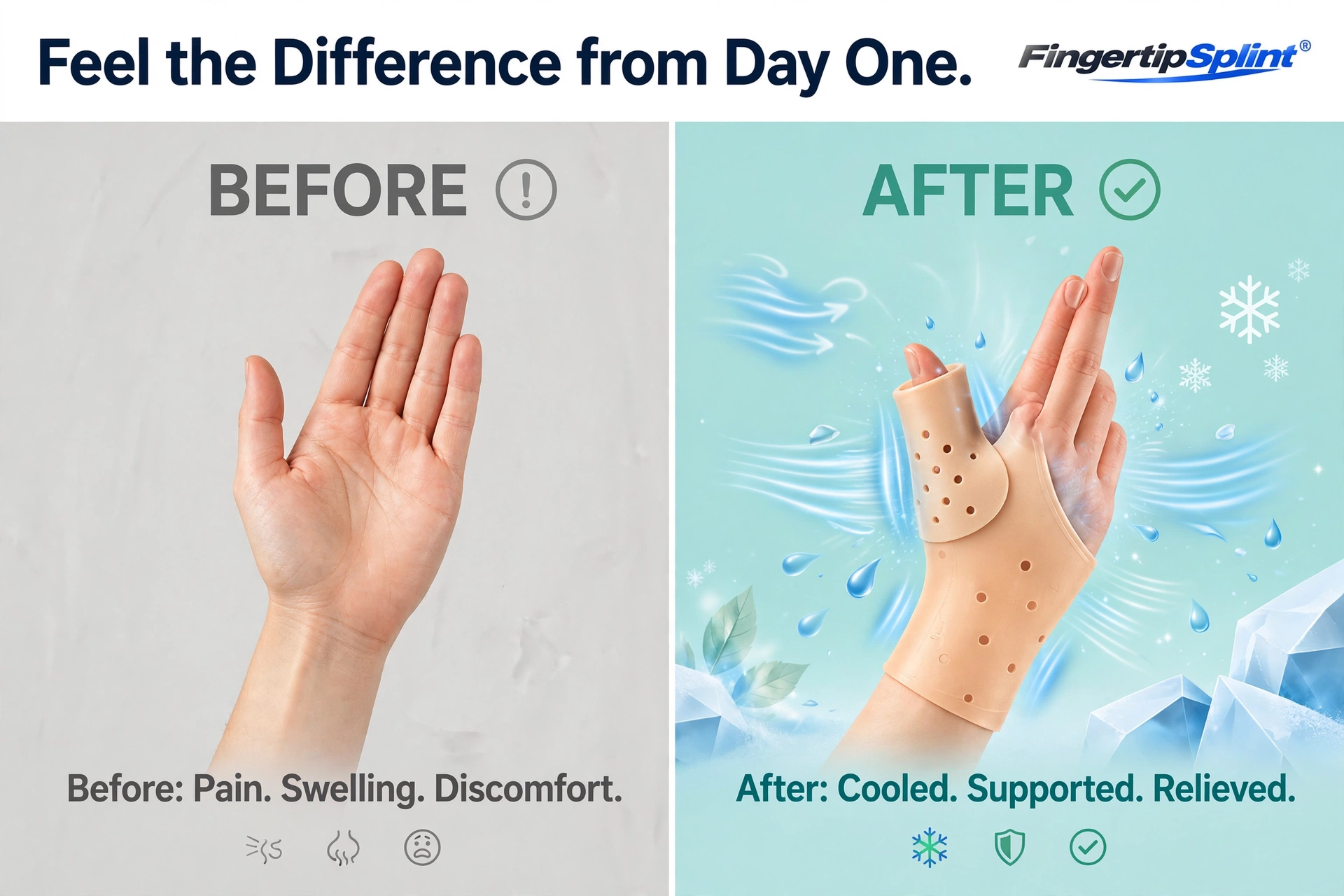
If you are evaluating gel thumb braces against the criteria in this guide, the 1Pc Gel Thumb Wrist Support – Waterproof Wrist Brace from FingerTipSplint is one product to consider. This guide does not claim that it treats arthritis, heals tendons, or is suitable for all conditions. What it offers is a gel-based design intended to provide comfortable support during daily activities.
Before purchasing, review the product listing for:
- Materials and construction
- Sizing and fit guidance
- Thumb and wrist coverage
- Cooling or protective claims (verify what they mean)
- Care and cleaning requirements
- Intended use and any limitations
For personalized assistance, you can request a quote or review the frequently asked questions for additional guidance.
How to Put On, Clean, and Maintain Your Gel Thumb Brace
Proper wear and care are essential for comfort and safety. Follow these steps based on the product’s design and the manufacturer’s instructions.
Step 1: Read the product instructions. Before putting on the brace, read the manufacturer’s instructions. This will tell you how to position the brace, how tight to make it, and how to care for it.
Step 2: Position the brace correctly. Follow the design of the brace. If it is a thumb-only support, position it at the base of the thumb. If it covers the wrist, ensure it sits comfortably around the wrist joint.
Step 3: Check comfort and fit. The brace should feel secure but not tight. You should be able to move your fingers freely. If you feel numbness, tingling, or throbbing, loosen or remove the brace.
Step 4: Clean according to instructions. Follow the manufacturer’s cleaning instructions. Most gel braces can be washed with mild soap and warm water, then air-dried completely before reuse. Do not assume that every gel brace is washable or suitable for immersion.
Step 5: Store properly. When not in use, store the brace in a clean, dry place. Avoid high heat or direct sunlight, which can degrade the material.
Common Buying Mistakes to Avoid
Many people choose a gel thumb brace without understanding what to look for. Here are the most common mistakes and how to avoid them.
Price does not always reflect quality or suitability. A cheaper brace may not fit well or may be made from materials that cause irritation.
Solution: Evaluate fit, material, and features before price.
A brace that is too small can compress nerves and blood vessels. One that is too large will not provide effective support.
Solution: Measure according to the manufacturer’s size guide.
Not every gel brace provides active cooling. The word “gel” does not automatically mean therapeutic temperature control.
Solution: Verify what the product actually offers.
A soft gel sleeve may provide cushioning but not the stabilization required for a particular injury or condition.
Solution: Match the support level to your needs.
Material composition affects comfort, skin tolerance, and care requirements. Ignoring it can lead to irritation or poor performance.
Solution: Read the material and care specifications carefully.
A brace can mask symptoms, but it does not address the underlying cause. Persistent pain needs professional assessment.
Solution: Seek medical advice for ongoing symptoms.
When Is a Gel Thumb Brace Not Enough?
A gel thumb brace is a support tool, not a treatment. There are situations where it is not enough — and where professional assessment is necessary.
Seek medical advice if you experience:
- Persistent pain that does not improve with rest and conservative measures
- Significant swelling
- Reduced thumb function that affects daily activities
- Pain after an injury
- Numbness or tingling that does not resolve
- Uncertainty about the cause of your symptoms
Seek urgent medical evaluation for:
- Severe pain
- Visible deformity after injury
- A cold, pale, or blue hand
- Signs of impaired circulation
- Fever with joint pain and swelling
According to NIAMS, early diagnosis and appropriate management of arthritis and related conditions can make a significant difference in long-term outcomes. Do not delay assessment if your symptoms are persistent or worsening.
How to Choose the Best Gel Thumb Brace for Your Needs
Choosing the best gel thumb brace for your needs comes down to matching the product to your requirements. Use this summary checklist:
- Fit: Does the brace fit securely without excessive pressure? Have you followed the manufacturer’s sizing guide?
- Coverage: Does it cover the area you need supported — thumb only, or thumb and wrist?
- Flexibility: Does the brace allow the movement you need while limiting movements that provoke discomfort?
- Verified cooling claims: If cooling is important to you, does the product actually offer it?
- Material: Is the material comfortable and compatible with your skin?
- Care: Can you follow the cleaning and maintenance instructions easily?
- Suitability: Is the support level appropriate for your condition and activities?
If you are looking for a gel thumb brace to evaluate, review the FingerTipSplint Gel Thumb Wrist Support Brace, check its specifications against your needs, and decide whether its design suits your everyday support requirements.
Choosing a Gel Thumb Brace Starts With the Right Fit and Features
Explore the FingerTipSplint Gel Thumb Wrist Support Brace, review its material and care instructions, and decide whether its design suits your everyday support needs.
View Gel Thumb Wrist Support Browse All ProductsFrequently Asked Questions
Use the manufacturer’s size guide to measure correctly. The brace should feel secure but not tight, and it should stay in place without causing excessive pressure, numbness, tingling, or circulation changes. If you experience any of these warning signs, adjust the fit or discontinue use.
Not necessarily. The word “gel” does not automatically mean active cooling. Some gel materials feel cool to the touch, while others are simply soft and conforming. If cooling is important to you, check the product’s specifications to see whether it offers a verified cooling feature or is designed for use with a cold pack.
The level of protection depends on the design, coverage, and intended use. A soft gel sleeve may provide cushioning and light positioning, but it is not the same as rigid stabilization. If you need significant movement restriction, a gel brace may not be enough.
Some people may benefit from an appropriate support, but the right design depends on the affected joint, symptoms, and professional guidance. Arthritis affects different joints in different ways, so the support should be matched to the specific diagnosis and needs.
Follow the exact product’s care instructions. Do not assume every gel brace is washable or suitable for immersion. If the manufacturer does not explicitly state that the brace is waterproof or suitable for water exposure, assume it is not and remove it before washing or swimming.
Warning signs include numbness, tingling, increased pain, swelling, or changes in hand colour or temperature. If you experience any of these, stop using the brace and seek appropriate advice. A brace should feel secure but never cause these symptoms.
Seek assessment for persistent or worsening pain, significant swelling, reduced function, or pain after an injury. Urgent evaluation is warranted for severe pain, visible deformity, or a cold, pale, or blue hand.
Conclusion: Make a Better Buying Decision
A good gel thumb brace is not defined by its material alone. Fit, verified cooling claims, appropriate protection, skin comfort, and correct use all matter. Before purchasing, evaluate the product against the checklist in this guide and decide whether its design suits your needs.
Remember that a gel brace is a support tool, not a treatment. It can provide comfort and cushioning, but it does not replace appropriate medical assessment for persistent or worsening symptoms. If you are unsure whether a brace is right for you, seek professional guidance.
For readers who want to explore support options, the FingerTipSplint shop offers a range of products. For personalized assistance, you can request a quote or review the frequently asked questions.
Your hands are involved in almost everything you do. Choosing the right support is an investment in your daily comfort and function.