
Crowded toes, rubbing between toes, and pressure after long hours in tight shoes are common complaints — and they can make even ordinary walking uncomfortable. If you have been scrolling through online claims about toe alignment, bunions, and instant relief, you are probably feeling confused about what actually works. This guide explains what 2PCS silicone toe separators are, what they can and cannot do, how to use them safely, and how to decide whether they fit your everyday foot-care routine. To explore a wider range of products, start with FingerTipSplint foot and hand care.
Table of Contents
- Why Everyday Foot Care Starts With Toe Comfort
- What Are 2PCS Silicone Toe Separators?
- How Silicone Toe Separators May Help
- Who May Consider Them for Daily Foot Care?
- How to Use Them Correctly
- Cleaning, Reuse, and Everyday Care
- Silicone Toe Separators vs. Other Options
- Common Everyday Problems They Address
- What They Can and Cannot Do
- Introducing Them Into a Foot-Care Routine
- When Foot Discomfort Needs More Than a Separator
- Are 2PCS Silicone Toe Separators Right for You?
- Frequently Asked Questions
Silicone toe separators fit between selected toes to create space and may help reduce rubbing or pressure for some people. For everyday foot care, choose a comfortable design, ensure your footwear has enough room, and begin with a short trial. Stop using the separators if they cause pain, numbness, redness, or skin irritation.
Why Everyday Foot Care Starts With Toe Comfort
Your feet carry you through every day. When your toes are crowded, rubbing against each other, or squeezed into tight footwear, the result is more than an occasional ache. It can be a persistent discomfort that builds throughout the day and makes even simple walking feel like a chore.
According to NHS guidance on foot pain, foot discomfort is one of the most common reasons adults seek medical advice. The causes are varied: footwear fit, toe shape, activity level, skin condition, and existing foot problems all contribute. This overlap is why self-diagnosis is risky. Not every uncomfortable foot needs a separator — and some foot problems need professional assessment, not another accessory.
Everyday foot care begins with understanding what is actually causing your discomfort. Is it the width of your shoes? Is it friction between adjacent toes? Is it a structural issue such as a bunion or hammertoe? Each of these may require a different approach. The Cleveland Clinic’s explanation of toe separators and spacers emphasizes that these devices can be helpful in selected situations but should not be viewed as a permanent fix for every foot condition.
For readers who want to explore foot-care and hand-support products more broadly, the FingerTipSplint shop provides a full overview of options designed for different everyday needs.
What Are 2PCS Silicone Toe Separators?
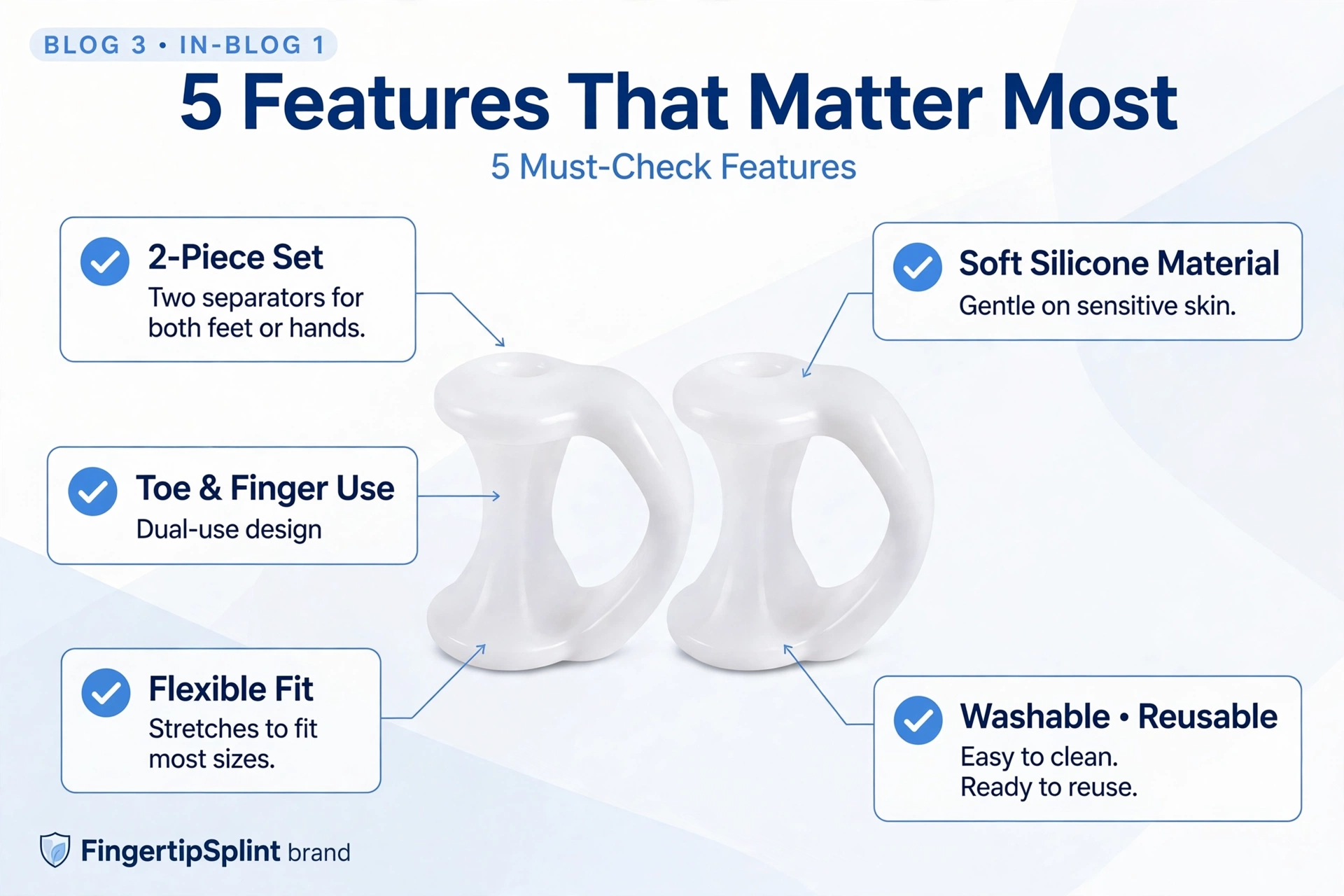
A two-piece silicone toe separator set consists of two separate silicone pieces designed to fit between selected toes. The material is soft, flexible, and generally well-tolerated by the skin. The purpose is to create a physical barrier between adjacent toes, reduce direct toe-to-toe contact, and provide gentle spacing.
Unlike a full-toe divider (which covers all five toes), a two-piece set is typically designed for a specific pair of toes — usually the big toe and second toe, or another pair where friction is most noticeable. The exact design depends on the product listing.
Material and Flexibility
Silicone is soft, conforming, and washable. It tends to be more durable than foam alternatives and generally holds its shape better over repeated use. Silicone is also non-porous, which makes it easier to clean.
How the Set Is Used
Each piece is placed between two toes. The two pieces in the set are typically used on different pairs of toes, or on the same pair of toes on the left and right foot. Always check the product listing for the exact intended placement.
Before purchasing, review the product listing for:
- Material and construction
- Size and shape
- Intended toe placement (which toes the pieces go between)
- Care and cleaning instructions
- Any stated limitations
For readers who want a more detailed guide to choosing a toe separator set, the article on choosing a two-piece toe separator set for home foot care covers sizing, comparison, and buyer criteria.
How Silicone Toe Separators May Help With Everyday Foot Discomfort
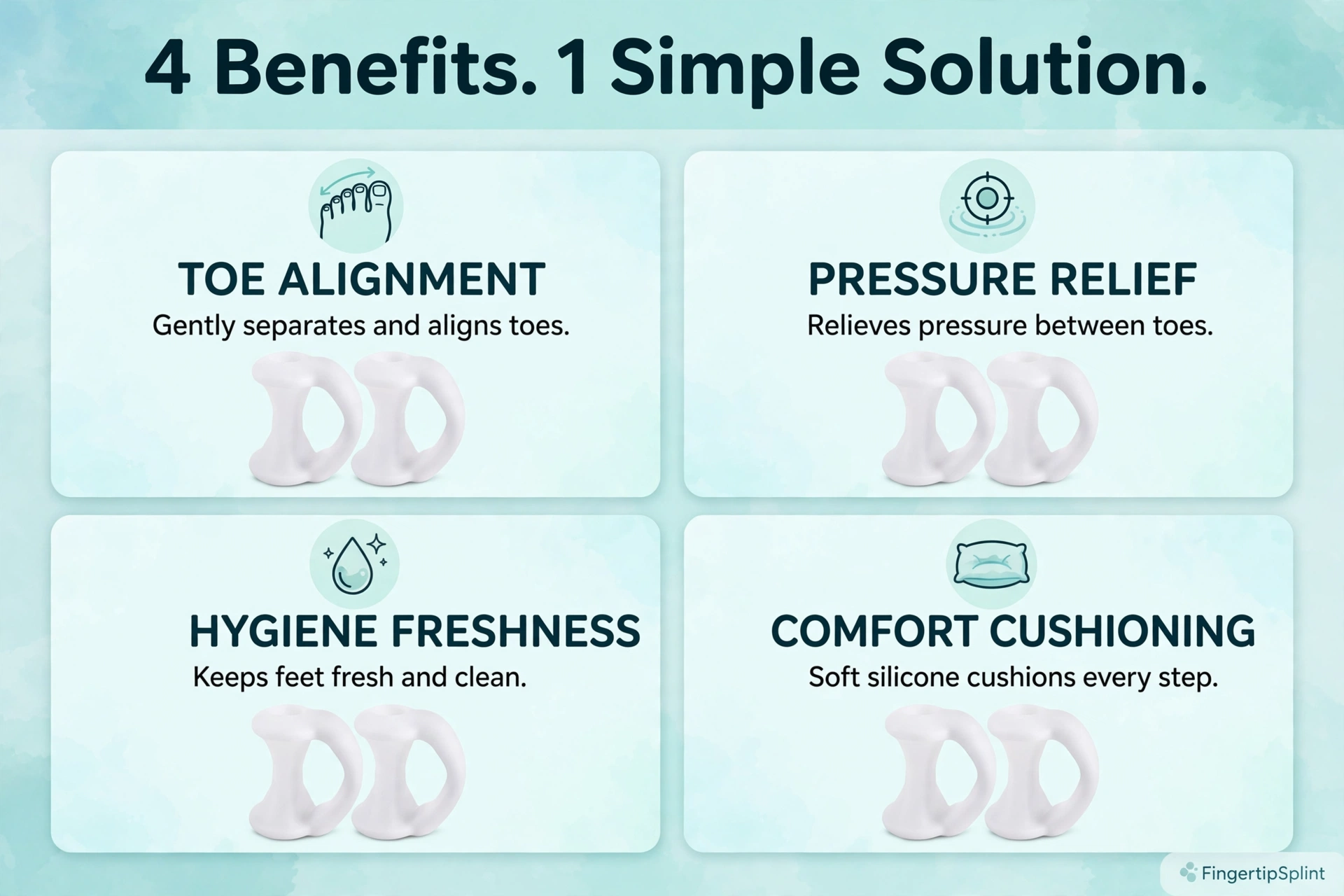
Silicone toe separators may help in several specific ways. Each of these is a potential benefit — not a guarantee — and depends on the separator’s shape, placement, fit, and the actual cause of your discomfort.
- Reducing direct contact between selected toes: By creating a soft barrier, a separator may reduce friction that occurs when two toes rub against each other.
- Providing a soft cushion: Silicone compresses under pressure, which may reduce the intensity of pressure points between toes.
- Creating additional space: Where toes feel crowded, a separator may provide a small amount of extra space.
- Providing a consistent barrier during activity: During walking or standing, a separator that stays in place may provide ongoing protection between selected toes.
However, temporary comfort does not prove that a toe deformity has been corrected. According to Cleveland Clinic’s information on bunions, structural changes to the foot often require medical management beyond a soft spacer. A separator may help you feel more comfortable, but it does not correct the underlying alignment.
For readers whose focus is specifically on friction and skin comfort, the article on silicone toe and finger separators for comfort and protection covers cushioning, skin care, and protective use in greater detail.
Who May Consider Silicone Toe Separators for Daily Foot Care?
Silicone toe separators may be suitable for a range of adults who experience mild to moderate toe discomfort. They are not a one-size-fits-all solution, and suitability depends on the underlying cause.
People who may find a toe separator helpful include:
- Adults who experience toe-to-toe rubbing during walking or standing
- People whose toes feel crowded or pinched in certain shoes
- People who want a simple, non-invasive foot-care accessory for everyday use
- People looking for gentle spacing support during low-demand activities
However, this list should be read alongside an important distinction. Ordinary comfort concerns — mild rubbing, occasional crowding — are different from bunions, hammertoes, persistent pain, wounds, or altered sensation. The latter may require professional assessment before using a spacer. According to the American Academy of Orthopaedic Surgeons, bunions are a structural condition in which the big toe deviates toward the second toe, and treatment decisions may involve more than a soft accessory.
How to Use 2PCS Silicone Toe Separators Correctly
Proper use is essential for comfort and safety. Follow this step-by-step process:
Step 1: Clean, dry feet. Wash and dry your feet thoroughly before applying the separator. Moisture can cause slipping and skin maceration.
Step 2: Place gently. Position the separator between the intended toes. It should sit comfortably without forcing the toes apart.
Step 3: Short trial. Start with a short period while resting or doing low-demand activity. Do not wear it for hours the first time.
Step 4: Inspect the skin. After removing the separator, check the skin between and around the toes for redness, irritation, or tenderness.
Step 5: Increase use only if comfortable. If the separator is comfortable and does not cause irritation, you may gradually increase use according to the product instructions or professional advice.
According to RDaSH NHS podiatry guidance on silicone toe devices, correct placement, daily skin checks, appropriate footwear, and stopping use if the device causes discomfort are all essential. Note that clinician-provided silicone devices may differ from an off-the-shelf two-piece consumer product.
Cleaning, Reuse, and Everyday Care
Silicone toe separators are reusable, but they require routine cleaning and inspection. Here is how to care for them:
- Follow the manufacturer’s cleaning instructions. Most silicone separators can be washed with mild soap and warm water.
- Rinse thoroughly. Residual soap can cause skin irritation.
- Dry completely. Air-dry the separator before reuse. Moisture trapped between the toes can cause skin problems.
- Inspect for damage. Check for cracks, tears, or discoloration. Replace the separator if it shows signs of wear.
- Store hygienically. Keep the separator in a clean, dry container when not in use.
According to Herefordshire and Worcestershire NHS guidance on silicone devices, monitoring for redness, irritation, and blistering is important when using any silicone device. This guidance concerns prescribed silicone devices, but the same principles apply to consumer silicone separators.
Silicone Toe Separators vs. Other Foot-Care Options
Silicone toe separators are one option among many. Understanding how they compare to other foot-care choices helps you decide whether they are the right fit.
| Option | Designed For | Key Consideration |
|---|---|---|
| Silicone toe separators | Gentle spacing and cushioning between selected toes | Should be soft, well-fitted, and combined with suitable footwear |
| Foam pedicure dividers | Temporary separation during pedicure or short-term use | Often firmer; may not be suitable for extended daily wear |
| Protective toe sleeves | Cushioning a single toe against friction | Focus on protecting one toe rather than spacing two |
| Cushioned pads | Reducing pressure under the ball of the foot | Addresses a different area than toe-to-toe friction |
| Footwear changes | Addressing shoe-related pressure and crowding | Often the most effective first step for toe discomfort |
No single option is universally best. A silicone separator may suit someone with mild toe-to-toe friction. A foam divider may be adequate for short-term use. A protective sleeve may be more appropriate for isolated toe friction. Footwear changes may be the most effective solution if shoes are the primary cause of discomfort.
Common Everyday Problems That May Make Toe Separators Worth Considering
Everyday toe problems come in several forms. Understanding the specific problem helps you decide whether a separator is likely to help.
Toes Rubbing Together
When two toes rub against each other during walking, the friction can cause discomfort, corns, or skin irritation. A silicone separator may create a soft barrier that reduces friction. However, persistent corns, blisters, or skin breakdown need proper assessment.
Tight Footwear
Narrow toe boxes crowd the toes and increase pressure between them. A separator adds volume, so switching to footwear with adequate width and depth may matter more than adding another accessory.
Discomfort After Standing or Walking
Foot fatigue after standing or walking may be caused by footwear, activity, joint problems, or other conditions. A separator is not a universal solution for foot fatigue — it addresses specific toe-to-toe issues, not general foot pain.
Overlapping or Changing Toe Position
If one toe is slowly moving out of alignment, a separator may provide temporary spacing. However, it does not correct an underlying structural deformity. Progressive toe deformity requires professional assessment.
How Silicone Toe Separators Work
Select a factor below to see what to consider for each.
What Silicone Toe Separators Can — and Cannot — Do
Honest expectations are essential when considering any foot-care product. Here is a balanced look at what silicone toe separators can and cannot do.
| Potential Role | Important Limitation |
|---|---|
| Create space between selected toes | The amount of separation depends on the design and fit |
| Reduce toe-to-toe rubbing for some users | They may not prevent rubbing from shoes or other sources |
| Provide cushioning between adjacent toes | Excess pressure or poor fit can cause irritation |
| Offer a non-invasive foot-care accessory | They do not diagnose or treat every underlying foot problem |
| Help some users feel more comfortable during selected activities | Comfort varies; they are not guaranteed to relieve pain |
| Temporarily influence toe positioning while worn | They should not be marketed as permanently correcting every deformity |
According to MedlinePlus’s overview of bunions, bunions are a structural condition that may require more than a soft spacer. A silicone toe separator is a comfort and spacing accessory — not a medical treatment for bunions or other deformities.
How to Introduce Toe Separators Into a Foot-Care Routine
Introducing toe separators gradually is safer than jumping straight to all-day use. Here is a cautious starting routine:
- Check the packaging to understand the device’s intended placement and use.
- Start with clean, dry feet and place the separator gently as instructed.
- Begin with a short trial while resting or doing a low-demand activity.
- Remove it and inspect the skin between and around the toes.
- Stop if you notice pain, persistent redness, tenderness, numbness, or irritation.
- Increase use only if comfortable and consistent with the manufacturer’s instructions or advice from a healthcare professional.
For readers who want to know how to choose a two-piece set with the right features, the guide on choosing a two-piece toe separator set covers sizing, comparison, and buyer criteria in detail.
When Everyday Foot Discomfort Needs More Than a Separator
Not every foot problem can be managed with a soft spacer. Some situations require professional assessment and treatment rather than another accessory.
Seek professional advice if you experience:
- Persistent or worsening foot pain
- Progressive toe deformity
- Significant swelling
- Open sores or signs of infection
- Difficulty walking
- Numbness or altered sensation in the feet
For broader clinical guidance on foot pain, Healthdirect Australia’s foot pain guide provides useful context on when persistent symptoms warrant assessment. And for a detailed explanation of bunion development and treatment, Johns Hopkins Medicine’s bunion overview explains the difference between a toe-position concern and an underlying joint deformity.
According to Mayo Clinic’s bunion diagnosis and treatment guidance, bunion symptoms and treatment decisions may involve more than a toe spacer. Persistent pain or progressive deformity deserves medical assessment.
Are 2PCS Silicone Toe Separators Right for Your Everyday Routine?
If you are exploring toe spacing for everyday foot care, the 2PCS Silicone Toe Separators from FingerTipSplint is one product to evaluate. This guide does not claim that it cures bunions, permanently corrects toe deformities, or guarantees pain relief. What it offers is a silicone design intended to provide gentle spacing and cushioning between selected toes.
Evaluate the product against four questions:
- Where do you need spacing? Identify the specific toes involved and check whether the product’s shape is suitable.
- What footwear will you use? Consider whether the toe box has enough room to accommodate the separator without squeezing the toes.
- What is your main concern? Separate friction and comfort needs from persistent pain, bunions, or changing toe position.
- Can you use it comfortably and safely? Consider skin condition, sensation, circulation, cleaning, and the manufacturer’s instructions.
For product selection or usage questions, you can review the FingerTipSplint FAQs, explore the blog for related foot-care education, or request a quote for personalised assistance.
Explore the 2PCS Silicone Toe Separators
If crowded toes or toe-to-toe rubbing are making everyday foot care uncomfortable, start by checking your footwear, understanding what is causing the problem, and choosing support that fits comfortably. The 2PCS Silicone Toe Separator Set is one option to explore if its design matches your needs.
View the Product Browse All ProductsFrequently Asked Questions
They fit between selected toes to create space and may help reduce toe-to-toe rubbing for some users. The exact purpose depends on the design and placement. They are typically used for everyday foot comfort, not as a medical treatment for bunions or other structural conditions.
Use depends on comfort, the product instructions, foot health, and the reason for wearing them. Begin cautiously with short trials rather than assuming all-day use is appropriate. Increase use only if the separator remains comfortable and does not cause skin irritation.
No. Silicone toe separators may provide temporary spacing while worn, but they do not correct an underlying structural deformity. Persistent or progressive toe deformity should be assessed by a healthcare professional.
This depends on the separator’s design and whether your shoes have sufficient width and depth. Never force a separator into tight footwear — this increases pressure instead of relieving it. If your shoes cannot accommodate the separator comfortably, consider footwear with a wider toe box.
Follow the manufacturer’s cleaning instructions. Most silicone separators can be washed with mild soap and warm water. Rinse thoroughly, dry completely before reuse, and inspect for wear or damage. Replace the separator if it shows signs of cracking or deterioration.
Some people may find selected designs comfortable, but suitability depends on the condition and fit. Persistent pain or progressive deformity deserves professional assessment. A separator may provide temporary comfort, but it does not correct the underlying condition.
People with diabetes, reduced sensation, poor circulation, open wounds, recurring foot sores, or persistent pain should consult a healthcare professional before using toe separators. Pressure-applying devices may not be appropriate without individual guidance in these situations.
Conclusion: Realistic Support for Everyday Foot Care
Silicone toe separators may support comfort in selected situations, but the right fit, suitable footwear, realistic expectations, and foot health come first. A two-piece silicone set is not a cure for bunions, a replacement for medical assessment, or a universal solution for every foot problem.
If crowded toes or toe-to-toe rubbing are making everyday foot care uncomfortable, start by checking your footwear, understanding what is causing the problem, and choosing support that fits comfortably. Use the separator cautiously, inspect your skin regularly, and stop using it if it causes pain or irritation.
For readers who want to explore foot-care and hand-support products more broadly, the FingerTipSplint shop offers a range of options. For healthcare providers and distributors, the medical finger splint supplier page provides additional information. And for more foot-care education, visit the FingerTipSplint blog.
Your feet carry you through everything. Choosing the right support — and knowing when to seek professional advice — is part of caring for them well.