
When toes rub together during long walks, or fingers press against each other during repetitive tasks, the friction can turn ordinary routines into daily irritations. Blisters, corns, calluses, and sore spots do not happen overnight — they build through repeated contact and pressure. This guide explains how silicone toe and finger separators work, when they may help, when they may not, and how to choose a design that actually suits your needs. To explore the wider range of foot-care and support products from FingerTipSplint, start with the homepage.
Table of Contents
- Why Comfort and Protection Matter for Toes and Fingers
- What Are Silicone Toe and Finger Separators?
- How Silicone Separators May Improve Comfort
- Toe Separators vs. Finger Separators: Which Do You Need?
- How to Choose the Right Silicone Separator
- How to Use and Care for Silicone Separators Safely
- Silicone Separators vs. Other Protection Options
- Is a Silicone Toe or Finger Separator Right for You?
- Frequently Asked Questions
Silicone toe and finger separators fit between selected digits to create space and may reduce direct rubbing or pressure for some users. Choosing the right design depends on the area needing protection, the fit, and the activity. Use separators according to their instructions, and stop if they cause pain, numbness, skin irritation, or unusual pressure.
Why Comfort and Protection Matter for Toes and Fingers
Every day, your toes and fingers experience friction. Shoes press against toes, toes press against each other, and fingers rub together during typing, gripping, or manual work. When this friction is occasional, the skin recovers. When it is repeated, hour after hour, the skin begins to break down.
According to Mayo Clinic’s guidance on corns and calluses, these skin problems develop when the body tries to protect itself from friction and pressure. Over time, the skin thickens, and the thickened area can become painful. Shoes that do not fit well, deformities that shift pressure, and repetitive activities all contribute.
Think about a nurse who stands for twelve-hour shifts, a golfer who grips a club hundreds of times per round, an office worker who types for hours, or someone whose toes rub together because of a naturally narrow foot. These are not dramatic medical scenarios — they are everyday situations. But each of them can produce enough friction to cause discomfort.
According to Mayo Clinic News Network, home treatment for friction-related skin problems often begins with changing footwear and using protective padding. A silicone separator is one option within that broader approach, not a standalone solution.
If you are exploring a broader range of options for everyday foot care, the article on 2PCS silicone toe separators for everyday foot care provides additional context.
What Are Silicone Toe and Finger Separators?
A silicone separator is a small, soft piece of silicone designed to sit between selected digits. Depending on its shape, it can create space, reduce direct contact, or provide a cushioning barrier.
Toe Separators
Toe separators sit between the toes — most commonly between the big toe and second toe, or between other pairs that rub together. They may be single-piece, two-piece, or full-five-toe designs. The material is soft and flexible so it can conform to the shape of the foot.
Finger Separators
Finger separators are designed for the hand. They are typically smaller in size and shaped for the narrower space between fingers. They may be used between adjacent fingers to reduce friction during repetitive tasks or to separate fingers after an injury (only when the manufacturer confirms this use).
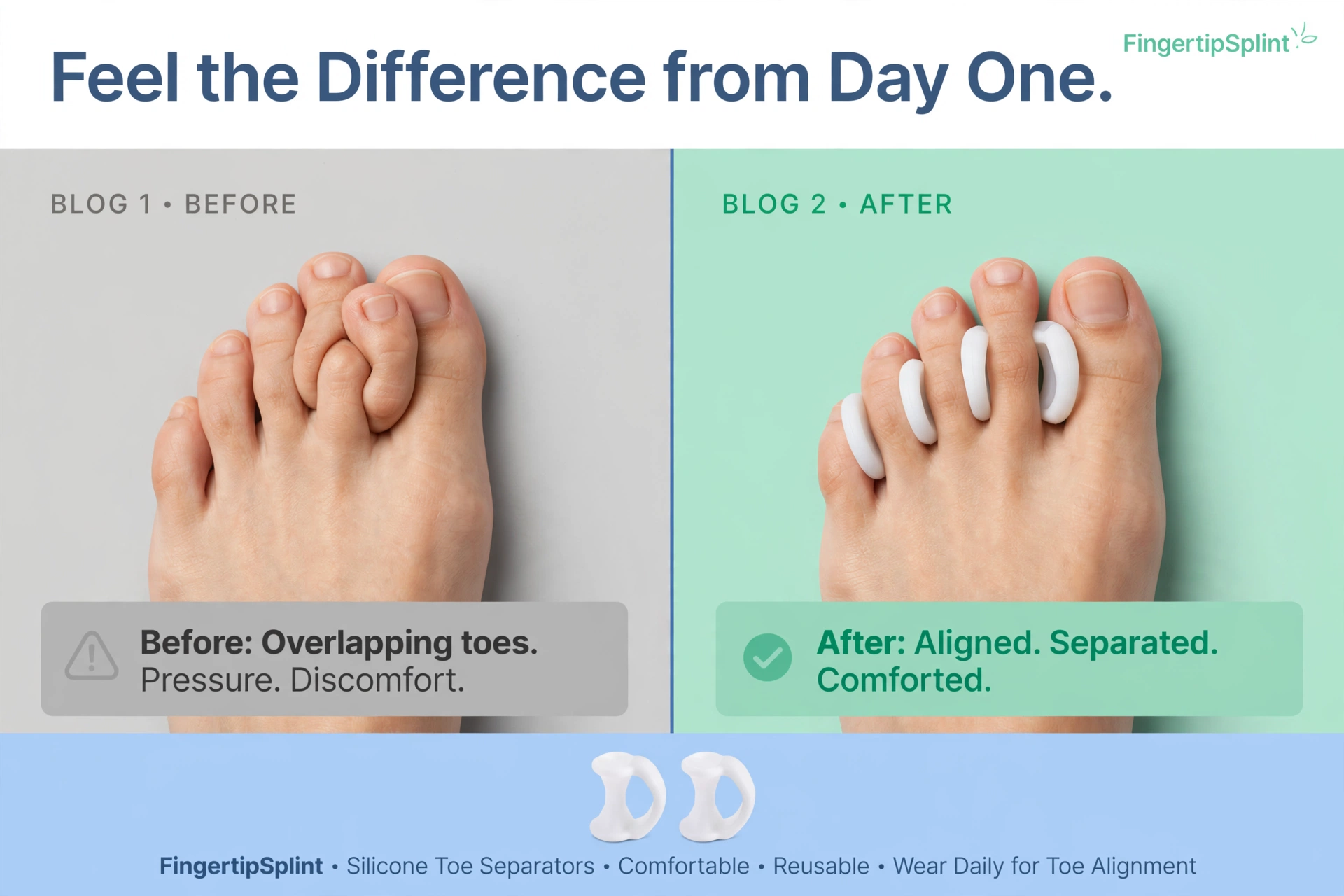
The Cleveland Clinic notes that toe separators and spacers can provide cushioning and space in selected situations, but they are not a permanent correction for structural foot conditions.
How Silicone Separators May Improve Comfort and Protection
Silicone separators may help in several ways. Each of these depends on fit, device design, footwear, and the underlying cause of your discomfort.
- Reducing direct skin contact: By placing a soft barrier between two toes or fingers, a separator may reduce friction that occurs when the skin of one digit presses against the skin of another.
- Creating temporary spacing: A separator can gently hold two digits apart, reducing pressure between them.
- Cushioning selected areas: Silicone compresses under pressure, which may reduce the intensity of pressure points.
- Providing consistent protection during activity: A separator that stays in place may help reduce friction during walking, standing, or repetitive hand use.
However, separators do not guarantee permanent correction. They do not straighten every toe, cure bunions, or treat every cause of finger pain. Persistent corns, blisters, or structural deformities require professional assessment.
According to Johns Hopkins Medicine’s bunion overview, bunions are a structural condition in which the big toe deviates toward the second toe. A separator may provide temporary comfort, but it does not correct the underlying alignment.
For readers whose priority is friction and cushioning rather than general everyday foot care, this same distinction applies: a silicone separator is one tool, not a substitute for appropriate footwear or medical care.
Toe Separators vs. Finger Separators: Which Do You Need?
Choosing between a toe separator and a finger separator depends on where you need protection. The two devices serve similar functions but are designed for different areas of the body.
Toe Separators
Toe separators are typically used for:
- Toe-to-toe rubbing that causes friction or skin irritation
- Crowding between the toes in narrow footwear
- Gentle spacing to reduce pressure between adjacent toes
- Everyday comfort during walking or standing
Finger Separators
Finger separators are typically used for:
- Reducing friction between fingers during repetitive tasks
- Gentle spacing where fingers press together (only if the device is designed for this use)
- Temporary comfort after minor finger irritation, when appropriate
If you have persistent finger pain, MedlinePlus’s overview of finger pain outlines possible causes and when further assessment is needed.
How to Choose the Right Silicone Separator
Choosing the right separator requires more than picking the first product you find online. Here are the factors that matter most.
Shape and Size
Separators come in different shapes: some are wedge-shaped, some are round, and some are designed for specific toe or finger pairs. The right shape depends on where you need spacing and how much space is required.
Softness
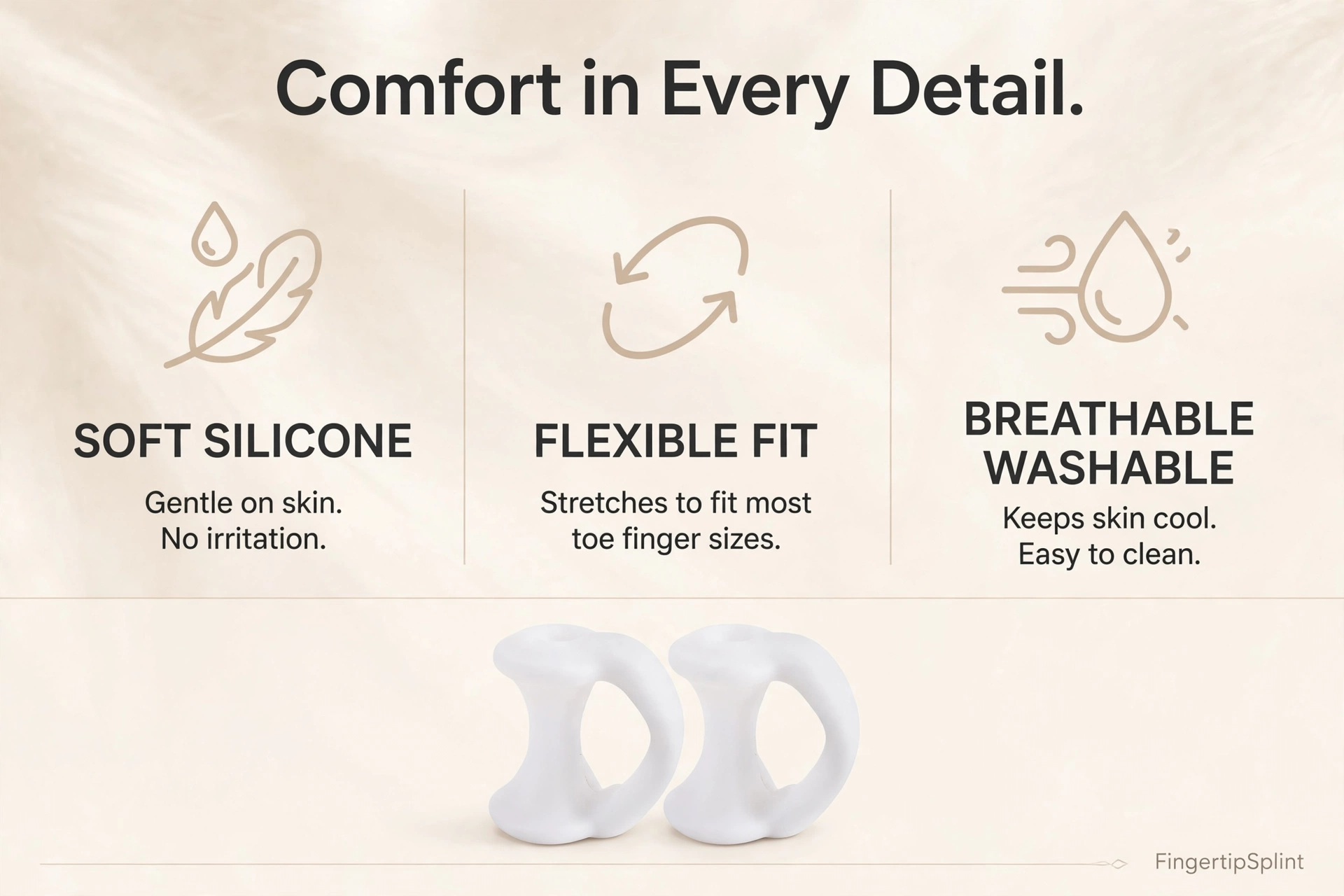
Softer silicone conforms more easily to the shape of the digits and is generally more comfortable for extended wear. Firmer silicone provides more structure but may create pressure points.
Intended Body Area
Always check whether the product is designed for toes, fingers, or both. A device designed for the foot may be too large or too small for the hand.
Ease of Cleaning
Silicone is generally easy to clean, but check the manufacturer’s specific cleaning instructions.
Footwear Compatibility
If you plan to wear a toe separator inside shoes, make sure the footwear has enough width and depth to accommodate the extra volume. Forcing a separator into tight shoes increases pressure instead of relieving it.
Skin Sensitivity
If you have sensitive skin, look for smooth, soft silicone and avoid devices with rough edges or seams.
How to Use and Care for Silicone Separators Safely
Proper use and care are essential for comfort and safety. Follow these steps based on the product’s design and the manufacturer’s instructions.
Step 1: Clean and dry the digits. Wash and dry your toes or fingers before applying the separator. Moisture can cause slipping and skin maceration.
Step 2: Place gently. Position the separator between the intended digits. It should sit comfortably without forcing them apart.
Step 3: Short trial. Begin with a short period of use while resting or doing low-demand activity.
Step 4: Check the skin. After removing the separator, check the skin between and around the digits for redness, irritation, or tenderness.
Step 5: Clean and inspect. Follow the manufacturer’s cleaning instructions. Most silicone separators can be washed with mild soap and warm water, rinsed thoroughly, and air-dried. Inspect for cracks, tears, or discoloration, and replace the separator if it shows signs of wear.
According to RDaSH NHS podiatry guidance on silicone toe devices, correct positioning, daily skin checks, and stopping use if discomfort occurs are all essential. Note that clinician-provided silicone devices may differ from consumer products.
Where Separators Help — and What to Check
Select a factor below to see what to consider for each.
Silicone Separators vs. Other Comfort and Protection Options
Silicone separators are one option among many. Understanding how they compare to other products helps you choose the right one.
| Option | Main Purpose | What Buyers Should Know |
|---|---|---|
| Silicone toe separator | Separates selected toes and may reduce direct rubbing | Must fit comfortably and work with the footwear |
| Silicone finger separator | Creates space between selected fingers when designed for that use | Check intended placement, dimensions, and finger mobility |
| Protective toe sleeve | Covers and cushions an individual toe | May not create space between adjacent toes |
| Foam toe divider | Commonly separates toes during pedicures | A cosmetic divider may not be designed for prolonged walking |
| Protective pad | Cushions a specific pressure or friction point | Placement and material matter |
| Wider, properly fitting footwear | Reduces crowding and shoe-related pressure | Often an essential first step for foot discomfort |
| Finger splint | Restricts movement for certain injuries or conditions | Not interchangeable with a simple separator |
No single option is universally best. A separator may be a reasonable choice for selected friction concerns, but it should never be presented as the best protection option for every person or every condition.
Is a Silicone Toe or Finger Separator Right for You?
If you are exploring silicone separators for comfort and protection, the 2PCS Silicone Toe/Finger Separator from FingerTipSplint is one product to evaluate. This guide does not claim that it corrects bunions, permanently straightens toes, or treats any specific medical condition. What it offers is a silicone design intended to provide gentle spacing and protection between selected digits.
Use these questions to guide your decision:
- If your main issue is toe-to-toe rubbing: Consider whether a correctly sized toe separator or protective pad may suit the problem, alongside suitable footwear.
- If your fingers are rubbing or uncomfortable: Check whether the product is explicitly designed for finger use and whether movement needs to remain unrestricted.
- If you have a painful deformity or recent injury: A simple separator may be unsuitable. Consider professional assessment before using a device that changes positioning or applies pressure.
- If your skin is fragile or sensation is reduced: Get individualised advice before trying a pressure-applying product.
For product selection or usage questions, you can review the FingerTipSplint FAQs, explore the blog for related foot-care education, or browse the full range of foot-care products.
For clinical context on foot pain and when it may need more than a separator, NHS foot pain guidance and Healthdirect Australia’s foot pain overview provide useful direction.
Explore the 2PCS Silicone Toe/Finger Separator
If rubbing or pressure between your toes or fingers is affecting your comfort, start by identifying the cause and choosing a product designed for the area you want to protect. Silicone separators may be useful for selected friction and spacing concerns, but fit and safe use matter more than bold product promises.
View the Product Browse All ProductsFrequently Asked Questions
Silicone toe and finger separators fit between selected digits to create space and may reduce direct rubbing or pressure. Depending on the design and fit, they may provide cushioning, temporary spacing, and a barrier against friction. They are typically used for everyday comfort rather than as a medical treatment for structural conditions.
Not necessarily. Toe separators and finger separators may look similar but are designed for different areas of the body. Always check the manufacturer’s intended use rather than assuming all designs fit both areas. Using a device on an area it was not designed for may cause discomfort or injury.
They may help reduce some friction that contributes to these problems, but they are not a complete solution. Suitable footwear, activity changes, and other protective measures may also be needed. Persistent blisters, corns, or calluses should be assessed by a healthcare professional.
Follow the product instructions and start cautiously with short trials rather than assuming a universal duration. There is no single answer that applies to every device or user. Increase use only if the separator remains comfortable and does not cause skin irritation or other warning signs.
No. Silicone separators may provide temporary spacing while worn, but they do not correct underlying structural deformities. Persistent pain or progressive deformity should be assessed by a healthcare professional.
Follow the manufacturer’s cleaning instructions. Most silicone separators can be washed with mild soap and warm water, rinsed thoroughly, and air-dried completely before reuse. Inspect regularly for cracks, tears, or discoloration, and replace the separator if it shows signs of wear.
People with diabetes, poor circulation, reduced sensation, wounds, persistent pain, or a recent finger or toe injury should consult a healthcare professional before using any pressure-applying device. In these situations, a separator may not be appropriate without individual guidance.
Conclusion: Comfort and Protection With Realistic Expectations
Silicone toe and finger separators can be useful tools for reducing friction and providing gentle spacing in selected situations. But they are not a cure for bunions, a permanent fix for structural deformities, or a substitute for medical care.
If rubbing or pressure between your toes or fingers is affecting your comfort, start by identifying the cause. Choose a product designed for the area you want to protect, use it according to the manufacturer’s instructions, and stop using it if it causes pain, irritation, or any warning signs.
For readers who want to explore the full range of support products, the FingerTipSplint shop offers a selection of foot-care and hand-support options. For healthcare providers and distributors, the medical finger splint supplier page provides additional information. And for more foot-care education, visit the FingerTipSplint blog.
Your feet and hands carry you through everything. Choosing the right support — and knowing when to seek professional advice — is part of caring for them well.