
Choosing a toe separator can seem simple — until you start comparing materials, shapes, sizes, and online claims. Some products promise permanent toe correction. Others look comfortable in photos but slip or cause irritation in real life. If crowded toes or toe-to-toe rubbing are making your daily walks uncomfortable, the best 2-piece toe separator set for at-home foot care should match your fit, comfort, and skin needs, not just the number of pieces in the package. For a broader range of foot-care and support products, explore the full FingerTipSplint range.
Table of Contents
- What Is a 2-Piece Toe Separator Set?
- Who May Benefit From Toe Separators at Home?
- How to Choose the Best 2-Piece Toe Separator Set
- How to Use Toe Separators at Home
- Cleaning and Maintaining Your Toe Separator Set
- Toe Separators Compared With Other Foot-Care Options
- Safety Tips and Common Mistakes to Avoid
- Is This 2-Piece Toe Separator Set Right for Your Routine?
- Frequently Asked Questions
A 2-piece toe separator set can be a convenient option for people who want to include gentle toe spacing in their at-home foot-care routine. Before choosing one, check the material, fit, cleaning instructions, and intended use. Start with short periods, inspect your skin regularly, and stop using the separators if they cause pain or irritation.
What Is a 2-Piece Toe Separator Set?
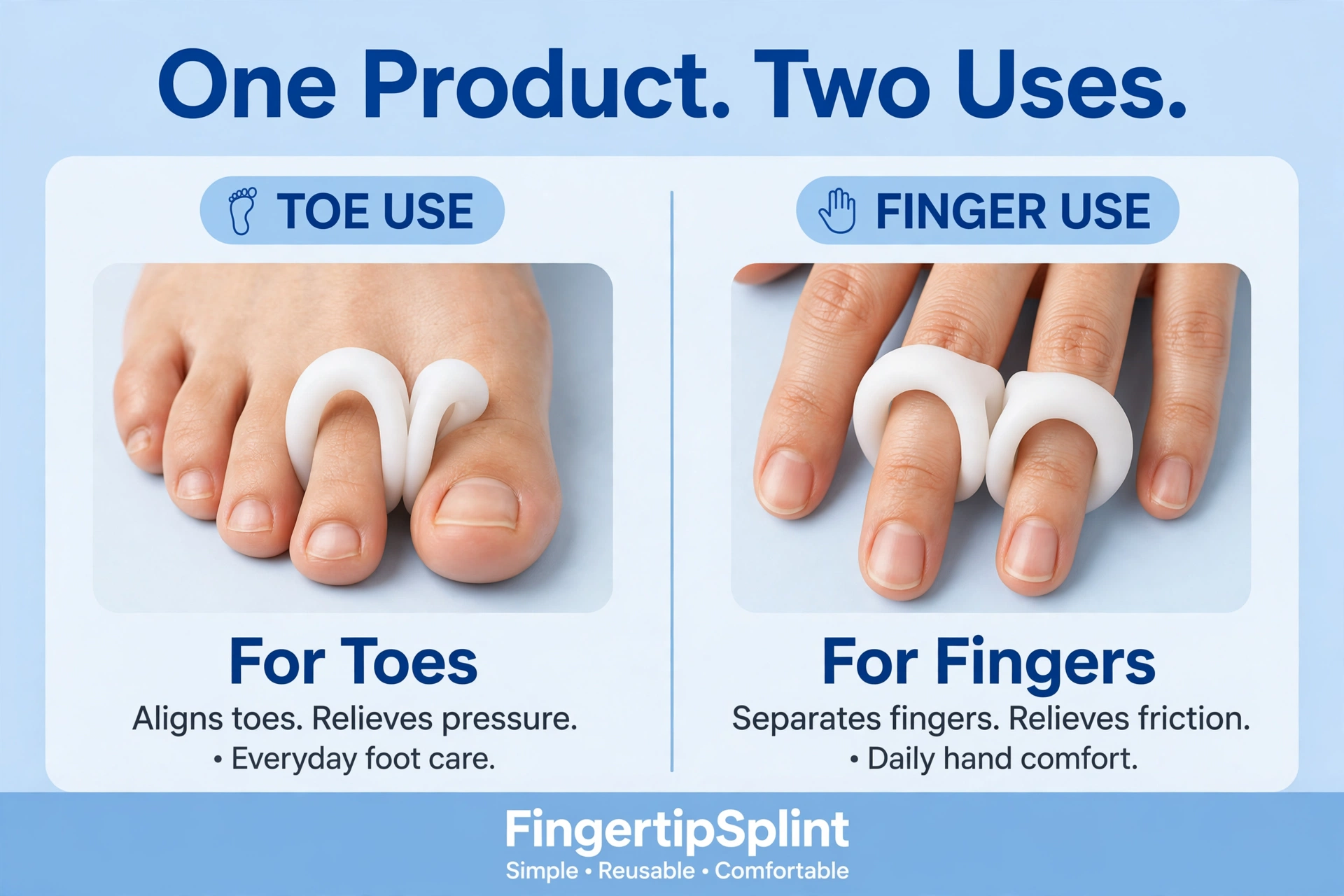
A toe separator is a small device designed to sit between selected toes. Its purpose is to reduce direct toe-to-toe contact, provide cushioning, and create gentle spacing. A 2-piece set typically includes two separate silicone pieces — enough to space a pair of toes on one foot or one specific pair on each foot, depending on the design.
How Toe Separators Work
The separator sits between two toes and gently holds them apart. Unlike a full-toe divider that wraps around all five toes, a two-piece set is focused. This can be an advantage if your discomfort is limited to one pair of toes.
What to Check in a Two-Piece Set
Not all two-piece sets are designed the same way. Before buying, check:
- Material (silicone, gel, or foam)
- Shape and size (wedge, round, or anatomical)
- Intended placement (which toes the pieces go between)
- Cleaning instructions
- Whether it is intended for daily wear or short-term use
Toe Spacing Versus Medical Treatment
This is critical. A toe separator is a comfort accessory — not a medical treatment. According to the Cleveland Clinic, toe spacers can help cushion and separate toes in selected situations, but they do not permanently correct bunions or structural deformities. If you have persistent pain, progressive deformity, or open wounds, professional assessment is essential.
For a broader discussion of comfort and skin protection, the article on silicone toe and finger separators for comfort and protection covers material choice and friction reduction in detail.
Who May Benefit From Toe Separators at Home?
A toe separator is not for everyone, but there are specific situations where it can be a useful addition to an at-home foot-care routine.
Toe Rubbing and Pressure From Footwear
When two toes rub against each other — either because of a naturally narrow foot or because of tight shoes — the friction can cause irritation, corns, or sore spots. A toe separator may create a soft barrier that reduces direct contact. According to the Mayo Clinic, corns and calluses develop when the skin tries to protect itself from friction and pressure, and protective padding can be part of a conservative approach.
Comfort During Rest or a Home-Care Routine
Some people use toe separators while resting, reading, or doing a foot-care routine at home. This gives the toes gentle spacing without the pressure of walking. This may be especially useful after a long day in tight shoes.
When a Different Solution May Be Needed
If your discomfort comes from a bunion, hammertoe, or other structural change, a soft separator may not be enough. As Johns Hopkins Medicine explains, bunions are a structural condition in which the big toe deviates toward the second toe. A separator may provide temporary comfort, but it does not correct the alignment.
How to Choose the Best 2-Piece Toe Separator Set
The best 2-piece toe separator set for your at-home routine depends on several factors. This section walks through the main selection criteria.
Material and Flexibility
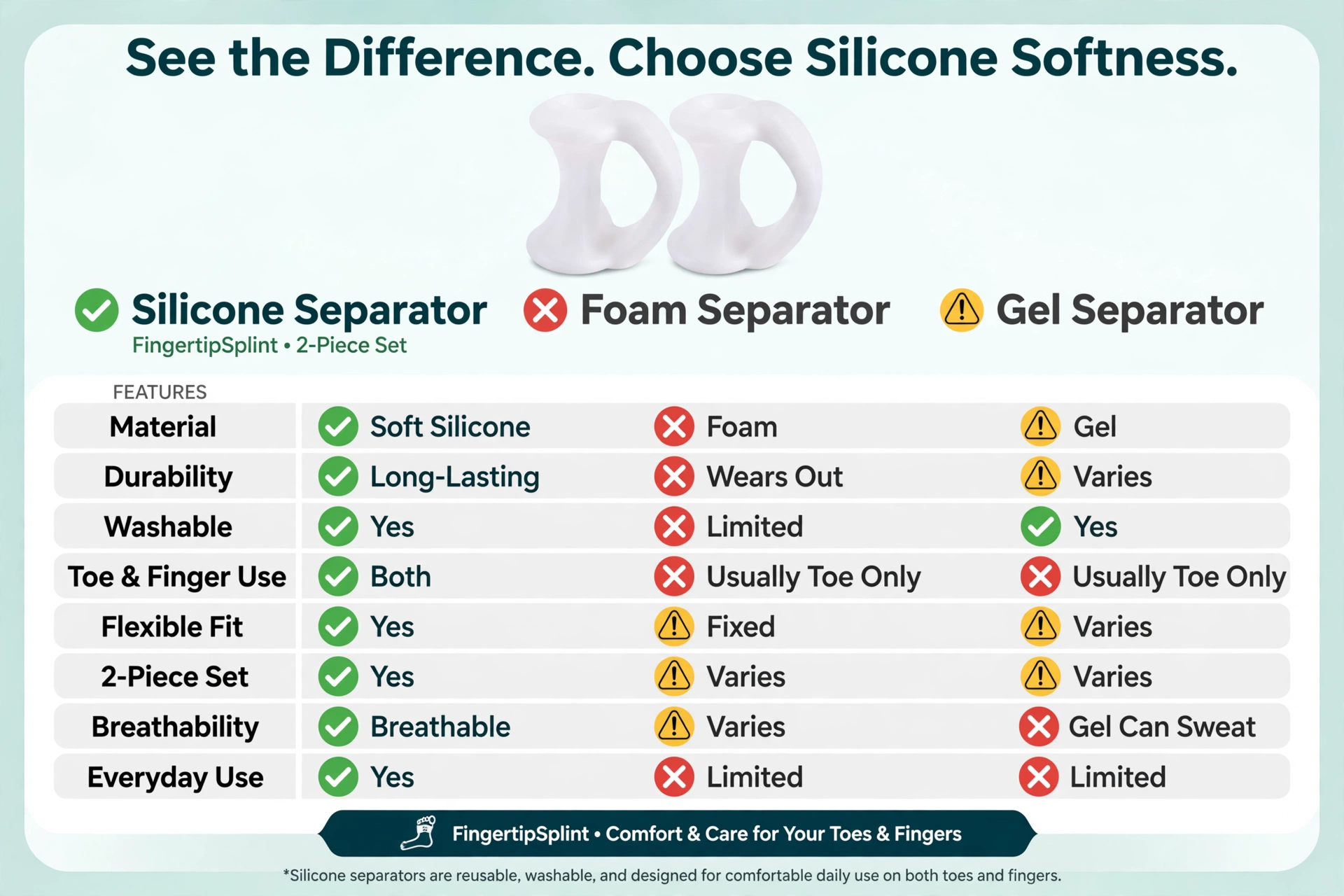
Silicone is the most common material for toe separators because it is soft, flexible, and generally well-tolerated by the skin. Firmer silicones provide more structured spacing but can create pressure points. Softer silicones conform more easily but may not hold their shape as firmly. Avoid claiming a material is hypoallergenic or medical-grade unless the manufacturer explicitly states it.
Fit, Shape, and Toe Spacing
The separator should sit comfortably between the intended toes. If it feels too tight or too loose, the fit is wrong. Wedge-shaped separators often work well for big-toe/second-toe spacing, while smaller round separators may suit other pairs.
Comfort and Skin Contact
Smooth edges and a soft surface reduce friction. If the separator has rough seams or a sticky surface, it may cause irritation during extended wear.
Cleaning, Durability, and Reuse
Follow the manufacturer’s cleaning instructions. Most silicone separators can be washed with mild soap and warm water, then air-dried. Inspect regularly for cracks, discoloration, or stickiness. Replace the separator if it shows signs of wear.
Matching the Product to Your Needs
Consider where your discomfort is, whether you plan to wear the separator with or without shoes, and whether your skin is sensitive. The product that fits one person well may not fit another.
How to Use Toe Separators at Home
Using toe separators safely at home is straightforward, but a few habits make a big difference.
Inspect and Clean Your Feet Before Use
Wash and dry your feet thoroughly. Look for any cuts, blisters, or irritated skin. Do not apply a separator over broken skin.
Position the Separator Without Forcing It
Place the separator between the intended toes. It should sit comfortably at the base of the toes, not pushed up toward the tips. If the toes have to be forced apart, the separator is too large.
Start With a Short Period and Reassess Comfort
Begin with a short period of use — 15 to 30 minutes at rest — and check how it feels. Do not assume overnight or all-day wear is appropriate without following the product’s instructions.
Remove It and Inspect the Skin
After each use, remove the separator and check the skin between and around the toes for redness, tenderness, or irritation. Stop using it if any warning signs appear.
Cleaning and Maintaining Your Toe Separator Set
Cleaning matters for two reasons: it keeps the separator hygienic, and it protects your skin from irritation. Follow the manufacturer’s cleaning instructions exactly.
Most silicone separators can be washed with mild soap and warm water, rinsed thoroughly, and air-dried completely before reuse. Do not use harsh chemicals, alcohol-based cleaners, or high heat — these can degrade the material.
Before each use, inspect the separator for tears, stickiness, discoloration, or other signs of damage. Replace the separator if it shows signs of wear. A damaged separator may no longer provide consistent spacing and could cause skin irritation.
According to the Herefordshire and Worcestershire NHS guidance on silicone devices, monitoring for redness, irritation, and blistering is important when using any silicone device. This guidance concerns prescribed silicone devices, but the same monitoring principles apply to consumer separators.
Toe Separators Compared With Other Foot-Care Options
Toe separators are one option among many. Understanding how they compare to other foot-care products helps you decide whether they are the right choice.
| Foot-Care Option | Main Purpose | Important Consideration |
|---|---|---|
| Two-piece toe separator set | Separates selected toes, depending on design | Confirm the shape and intended use |
| Individual gel spacer | Adds cushioning between specific toes | Fit and material can affect comfort |
| Foam toe divider | Often used for short-term separation, including pedicures | May not be designed for repeated everyday use |
| Toe sleeve or protective pad | Cushions a specific pressure or rubbing point | Choose based on the location of discomfort |
| Wide toe-box footwear | Reduces squeezing from shoes | Check that the footwear fits the whole foot properly |
| Clinician-fitted orthosis or splint | Addresses selected foot conditions or injuries | May be needed when a simple separator is unsuitable |
These products are not interchangeable. Toe separators may temporarily create space or reduce friction, but they do not permanently correct structural foot changes. Footwear fit and pressure reduction can be as important as accessories.
For readers who want a broader comparison of toe and finger separators, the article on silicone toe and finger separators: comfort and protection covers material choice and friction protection in greater depth.
Your At-Home Toe Separator Checklist
Select a priority below to see what to check.
Safety Tips and Common Mistakes to Avoid
Toe separators are generally low-risk, but common mistakes can undermine their usefulness or cause new problems.
Forcing the toes apart or using a separator that is too large can cause pressure points.
Solution: Choose the correct size and let the separator sit gently.
Extended wear beyond the product’s instructions can cause skin irritation or swelling.
Solution: Follow the manufacturer’s recommended wear time.
Tight footwear plus a separator equals more pressure, not less.
Solution: Ensure shoes have adequate toe-box width and depth.
Redness, tenderness, or blistering are warning signs that the separator is not suitable.
Solution: Stop using the separator and reassess.
A separator does not diagnose or treat structural foot conditions.
Solution: Seek professional assessment for persistent symptoms.
Footwear is often the main source of toe pressure and crowding.
Solution: Address shoe fit alongside any separator use.
For general guidance on foot pain and when symptoms may need assessment, NHS foot pain information and Healthdirect Australia’s foot pain overview provide useful direction.
Is This 2-Piece Toe Separator Set Right for Your Routine?
If you are exploring a two-piece silicone set for at-home foot care, the 2-Piece Silicone Toe Separator Set from FingerTipSplint is one option to consider. This guide does not claim that it is universally the best separator, or that it treats bunions or other structural conditions. What it offers is a silicone design intended to provide gentle spacing between selected toes.
Check before you buy:
- Does the product description state the exact material and size?
- Does it specify which toes the pieces are designed for?
- Are cleaning and care instructions clearly provided?
- Is the design suited for the type of spacing you need?
- Do you have any conditions (diabetes, poor circulation, open wounds) that require professional advice first?
For additional product options, explore the FingerTipSplint shop. For product selection questions, review the FingerTipSplint FAQs or browse the blog for related foot-care education.
Looking for a Simple Addition to Your At-Home Foot-Care Routine?
Explore the 2-Piece Silicone Toe Separator Set, review its intended use and care instructions, and check whether its design is suitable for your needs before ordering.
View the Product Browse All ProductsFrequently Asked Questions
A 2-piece toe separator set is used for gentle toe spacing and may help reduce direct rubbing between selected toes. Use depends on the separator’s design and fit. It is typically used as a comfort accessory in an at-home foot-care routine, not as a treatment for bunions or other structural foot conditions.
Check the material, intended placement, size, and cleaning instructions. Read the manufacturer’s product description carefully rather than assuming the set will fit. If a claim is not explicitly stated, do not assume it is true. If you have sensitive skin or a foot condition, consult a healthcare professional before buying.
Follow the product’s instructions and begin with a short trial. There is no universal duration that suits everyone. Increase use only if the separator remains comfortable and does not cause skin irritation or other warning signs. Do not assume overnight or all-day wear is appropriate.
No. Toe separators may offer temporary comfort for some people, but they do not correct structural deformities like bunions or hammertoes. Persistent pain or progressive deformity should be assessed by a healthcare professional.
This depends on the product design and whether the footwear has sufficient width and depth. Never force a separator into tight shoes — doing so increases pressure instead of relieving it. If your shoes cannot accommodate the separator comfortably, consider footwear with a wider toe box.
Follow the manufacturer’s cleaning instructions. Most silicone separators can be washed with mild soap and warm water, rinsed thoroughly, and air-dried completely before reuse. Inspect them regularly for cracks, tears, or discoloration, and replace them if they show signs of wear.
People with diabetes, reduced sensation, poor circulation, open sores, significant pain, or persistent skin changes should consult a healthcare professional before using toe separators. Pressure-applying devices may not be appropriate without individual guidance in these situations.
Conclusion: A Practical Choice for Home Foot Care
The best 2-piece toe separator set for your at-home foot care is the one that fits well, feels comfortable, and matches the specific problem you are trying to address. It is not necessarily the product with the boldest claims or the most pieces.
Use this guide as a framework: identify the source of your discomfort, review the product’s actual specifications, choose a size and shape that suits your toes, and follow the manufacturer’s instructions for use and cleaning. Stop using the separator if it causes pain, irritation, or any warning signs, and seek professional advice if symptoms persist.
For readers who want to explore support products further, the FingerTipSplint shop offers a selection. For healthcare providers and distributors, the medical finger splint supplier page provides additional information. And for more foot-care education, visit the FingerTipSplint blog.
Your feet carry you through everything. A small, well-chosen addition to your foot-care routine can make a meaningful difference — as long as it fits and suits your needs.