
If one toe keeps pressing against another, or if your toes feel crowded inside your shoes, even a short walk can become uncomfortable. You have probably seen different shapes of toe spacers online and wondered which one is right for your problem. Bridge-style toe separators are one option — but they are not the same as every other spacer, cover, or pad. This guide explains what they are designed to do, when they may help with rubbing and pressure, how to use them safely, and when a different solution or professional advice may be needed. For a broader view of foot-care products and support options, start with the full FingerTipSplint range.
Table of Contents
- What Are Bridge-Style Toe Separators?
- Bridge-Style Toe Separators: Uses and Benefits
- Why Toe Rubbing and Pressure Occur
- Bridge-Style vs. Other Toe Separators
- Product Guide: 2-Piece Ultra-Soft Bridge-Style Separators
- How to Use Toe Separators Safely
- How Soon Might You Notice a Difference?
- Common Mistakes That Make Discomfort Worse
- Who May Benefit, and Who Should Seek Advice First?
- Choosing the Right Option and Buying Confidently
- Frequently Asked Questions
Bridge-style toe separators are designed to create space between selected toes and may help reduce rubbing or pressure when toe contact contributes to discomfort. Their usefulness depends on the separator’s shape, fit, footwear, and the reason for the symptoms. They are a comfort aid, not a guaranteed cure for bunions or other foot conditions.
What Are Bridge-Style Toe Separators?
A bridge-style toe separator is a type of silicone spacer designed to sit between two toes and maintain gentle separation while it is worn. The “bridge” shape typically refers to a raised or contoured section that helps the device fit snugly between toes without slipping. The exact contact points and amount of separation depend on the product’s shape and size.
Bridge-style separators are one option within a larger family of foot-care accessories. They are different from:
- Toe sleeves and caps: These cover a single toe to protect against friction.
- Toe pads: These cushion a specific pressure point but do not necessarily separate toes.
- Full-toe dividers: These separate all five toes rather than a selected pair.
The distinction matters because choosing the wrong product may not help. According to the Cleveland Clinic, toe spacers are designed to create space, while covers and sleeves are designed to protect against friction. A product that does one may not do the other.
For a broader look at foot-care and support products, browse the FingerTipSplint shop.
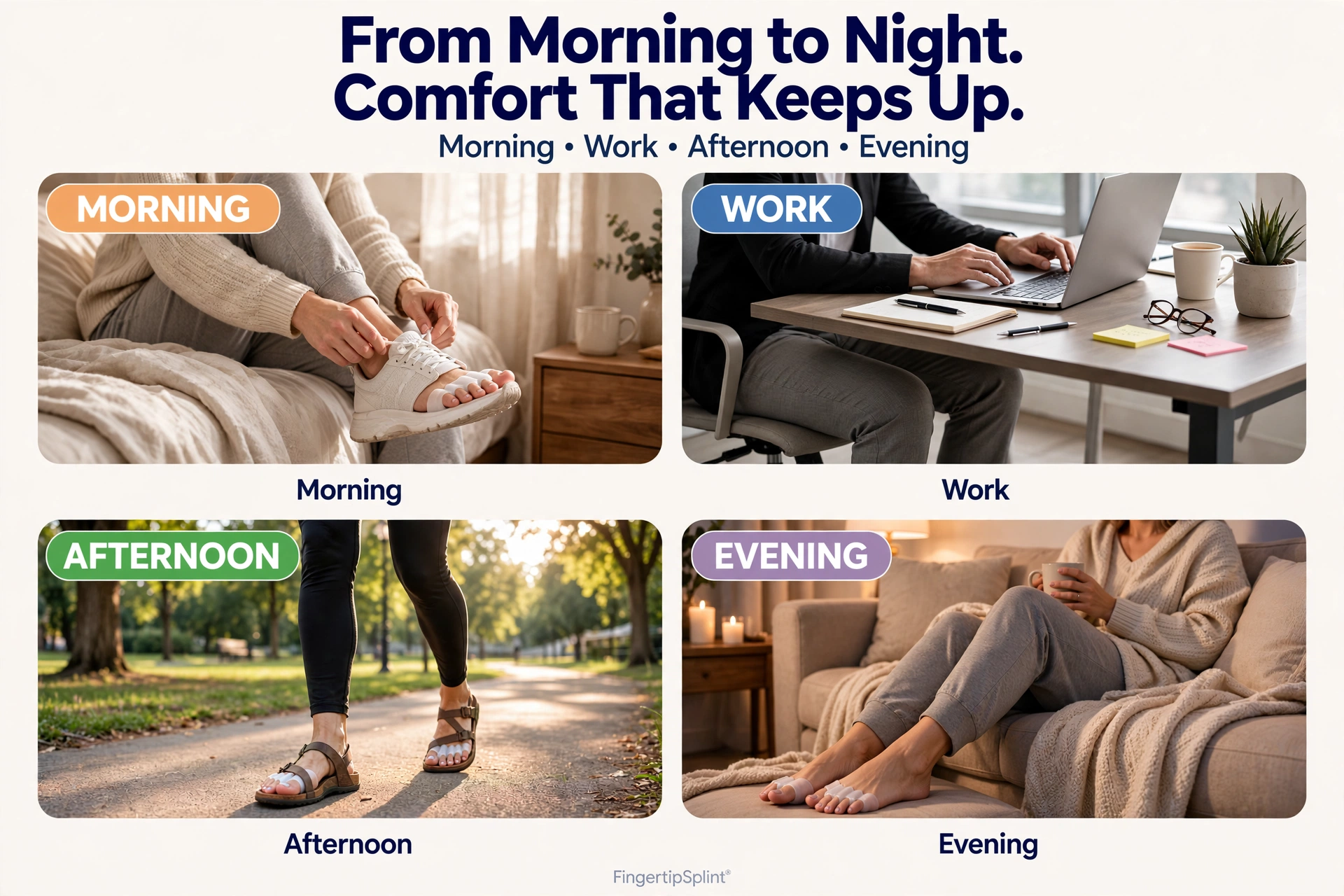
Bridge-Style Toe Separators: Uses and Benefits
The practical uses of bridge-style toe separators center on spacing and friction reduction. Understanding them clearly prevents unrealistic expectations.
Creating Space Between Toes That Touch or Crowd
The most direct use is to create space between toes that naturally press against each other. This is common in people with narrow feet, overlapping toes, or shoes that compress the front of the foot.
Reducing Direct Rubbing Where Toe-to-Toe Contact Contributes
When toes rub together during walking, the friction can cause irritation and skin problems. A separator may reduce this direct contact, potentially reducing the friction that contributes to discomfort.
Providing a Soft Interface Between Adjacent Toes
Silicone is soft and cushioning. When toes press against the separator, the material absorbs some of the pressure, reducing the intensity of contact.
Supporting a Daily Foot-Care Routine
When the separator fits comfortably, it can be part of a home foot-care routine. However, the benefits depend on consistent use and appropriate footwear.
An Option for Buyers Comparing Different Designs
Bridge-style separators are one of several designs available. For some people, the bridge shape provides better retention than a simple wedge. For others, a different design may fit better.
According to the Cleveland Clinic, bunions and other structural deformities require medical management beyond a soft spacer. A separator may provide temporary comfort, but it does not correct the alignment.
Why Toe Rubbing and Pressure Occur
Toe rubbing and pressure do not happen randomly. They develop when the space inside a shoe is inadequate for the toes’ natural position, or when a toe has shifted into a position where it presses against its neighbour.
Common contributing factors include:
- Narrow footwear: Shoes with a narrow toe box squeeze the toes together, forcing contact between them.
- Repeated friction: Walking or standing for long periods applies repeated friction to the same contact points.
- Toe positioning: Some people naturally have toes that press against each other.
- Prolonged standing or walking: Extended activity increases the cumulative load on the toes.
According to the Mayo Clinic’s guidance on corns and calluses, repeated friction and pressure are the primary causes of these skin problems. Shoes that fit poorly, deformities that shift pressure, and repetitive activities all contribute.
Occasional friction is different from persistent pain, swelling, skin breakdown, corns, or an underlying toe deformity. These problems may require different approaches. If you notice persistent symptoms, professional assessment is the right next step.
Explore How a Toe Separator Works
Select an area below to learn about its purpose and safety considerations.
Bridge-Style vs. Other Toe Separators
There is no universal “best” toe separator. The right design depends on the specific problem, the shape of your toes, and the footwear you use. Here is how bridge-style separators compare to other common options.
| Option | Main Purpose | Consider It When |
|---|---|---|
| Bridge-style toe separator | Separates selected toes according to its design | Toe contact or crowding is the main concern |
| Simple wedge separator | Creates space between adjacent toes | A basic spacing design matches the need |
| Toe sleeve or cap | Covers an individual toe or area | Localized rubbing or contact needs cushioning |
| Toe pad | Cushions a particular area | The problem is localized pressure |
| Roomier footwear | Reduces crowding caused by shoes | The toe box is too narrow or restrictive |
| Professional assessment | Identifies the cause and appropriate care | Pain persists, deformity progresses, or skin is damaged |
A design that creates space may not offer the coverage someone needs to protect a particular skin area. A thicker separator may also make a close-fitting shoe more restrictive. For a closer look at how soft toe spacer cushions may reduce friction, the article on how soft toe spacer cushions help reduce friction covers the mechanism in detail.
Product Guide: The 2-Piece Ultra-Soft Bridge-Style Toe Separators
If you are exploring bridge-style separators, the 2-Piece Ultra-Soft Bridge-Style Toe Separators from FingerTipSplint is one option to evaluate. This guide does not claim that it cures bunions, permanently reshapes toes, or guarantees pain relief. What it offers is a soft silicone design intended to provide gentle spacing between selected toes.
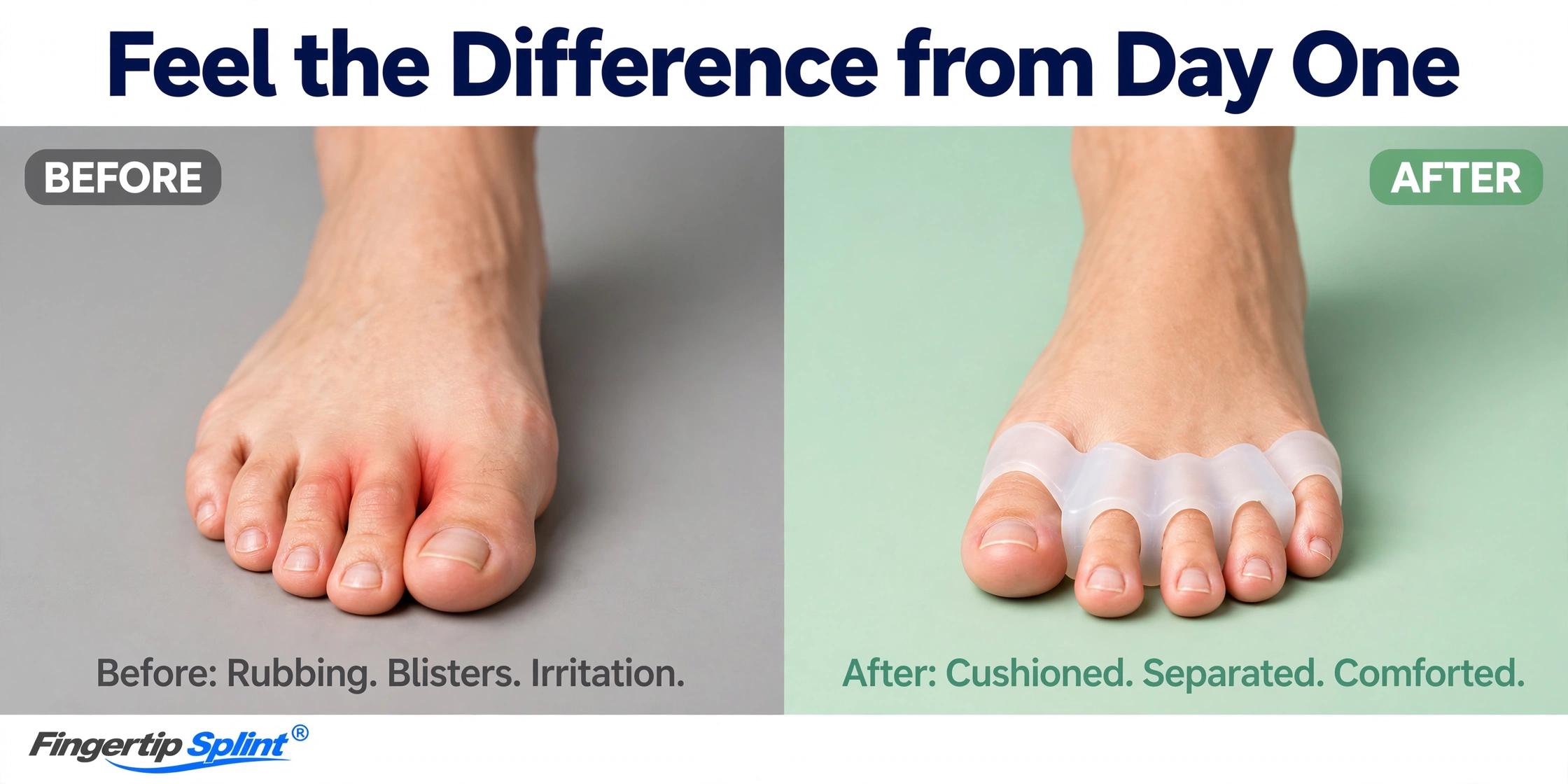
What to verify on the product page before buying:
- Intended toe placement: Which toes is the separator designed to sit between?
- Actual shape and size: Does the bridge design match your toes’ natural spacing?
- Material information: Is the silicone soft and compatible with your skin?
- Fit guidance: Are there sizing instructions or fit notes?
- Cleaning instructions: Can you follow the care requirements?
- Stated wear limitations: Are there any time or activity restrictions?
Suitability depends on your individual foot and the cause of your discomfort. A separator that fits one person may not fit another. If you are unsure whether a bridge-style separator is right for your feet, professional advice can help.
For related products, browse the full foot-care range or explore the guide on 2-piece toe separators for comfortable daily foot care.
How to Use Toe Separators Safely
Proper use and care are essential for comfort and safety. Follow this step-by-step process based on the product’s design and the manufacturer’s instructions.
Step 1: Inspect the toes and surrounding skin. Look for cuts, blisters, redness, or irritation. Do not apply a separator over broken skin.
Step 2: Follow placement instructions. Position the separator as directed. It should sit comfortably between the intended toes without forcing them apart.
Step 3: Begin with a short trial. Wear the separator for a short period while at rest or doing a low-demand activity. Do not assume prolonged wear is suitable without testing.
Step 4: Check for squeezing or discomfort. If the separator feels tight, causes pressure points, or makes the toes feel squeezed, it is either the wrong size or not appropriate for your footwear.
Step 5: Remove and inspect the skin. After use, remove the separator and check for redness, indentations, or irritation.
Step 6: Clean and dry. Follow the manufacturer’s cleaning instructions. Most silicone separators can be washed with mild soap and warm water, then air-dried completely.
If you experience persistent symptoms, NHS guidance on toe pain explains when symptoms deserve professional assessment.
How Soon Might You Notice a Difference?
There is no guaranteed timeline for comfort improvement from a toe separator. What matters is whether the separator fits comfortably, stays in place, and reduces the specific friction or pressure you are trying to address. Here is a practical way to assess your experience — not a week-by-week medical recovery forecast.
First Use: Check Fit and Placement
When you first use the separator, check whether it fits comfortably and stays in place. Does it feel like it is helping, or does it create new pressure? Adjust the position or try a different design if it does not feel right.
After Removal: Inspect the Skin
After removing the separator, inspect the skin between and around the toes. Notice whether any new pressure or irritation occurred. If the skin looks worse, the separator may not be suitable.
Over Subsequent Uses: Review the Original Problem
Over subsequent uses, check whether the original rubbing is less bothersome and whether your footwear remains comfortable. If the separator is helping, the original problem should become less noticeable.
If Symptoms Persist or Worsen: Reassess
If symptoms do not improve or worsen, reassess the product choice and consider whether professional assessment may be more appropriate. A separator is not a substitute for medical care when the underlying problem requires it.
Common Mistakes That Can Make Toe Discomfort Worse
Some mistakes can turn a helpful product into a source of additional discomfort. Here are the most common ones.
A separator that does not fit your toes properly may cause pressure or slip out of place.
Solution: Review the product’s size guidance and fit information.
Adding a separator to a shoe that is already too tight increases pressure instead of relieving it.
Solution: Ensure shoes have adequate toe-box width and depth.
Pain is a signal that the separator is not suitable or not correctly positioned.
Solution: Stop using it and reassess the fit or product choice.
Not cleaning the separator or checking the skin can lead to irritation or infection.
Solution: Clean the separator and inspect the skin after each use.
A separator may provide temporary comfort but does not correct a bunion or hammertoe.
Solution: Consult a healthcare professional for structural concerns.
A shoe with more toe-box room may be a better first step than adding a spacer to a tight shoe.
Solution: Consider footwear changes before or alongside using a separator.
According to the American Academy of Orthopaedic Surgeons’ bunion guide, managing symptoms is different from correcting an underlying deformity. Persistent or progressive deformity should be assessed by a healthcare professional.
Who May Benefit, and Who Should Seek Advice First?
A bridge-style toe separator may be helpful for people whose discomfort comes primarily from toe-to-toe contact. It is not automatically appropriate for every type of foot pain.
Who May Benefit
- People with mild toe-to-toe rubbing that causes irritation
- People whose toes feel crowded inside shoes
- People looking for a simple spacing accessory for daily foot care
- People whose footwear provides enough room to accommodate a separator comfortably
Who Should Seek Advice First
People with the following conditions should consult a healthcare professional before using a toe separator:
- Diabetes: Reduced sensation increases the risk of skin injury from pressure devices.
- Reduced sensation: Inability to feel pressure points may lead to unrecognized injury.
- Poor circulation: Compromised blood flow increases the risk of skin breakdown.
- Recurring blisters or sores: These may indicate a deeper problem that requires assessment.
- Open wounds: Do not cover wounds with a silicone separator.
- Significant pain or deformity: These require medical assessment, not just a spacer.
Choosing the Right Option and Making a Confident Purchase
Choosing a toe separator is about matching the product to your specific problem — not picking the most heavily marketed option. Use this buyer checklist:
- Identify the problem: Is your discomfort from toe-to-toe rubbing, shoe pressure, or something else?
- Match the design to the affected toes: A separator for the big toe and second toe is different from one for the smaller toes.
- Check the fit: Does the product fit your toes comfortably without forcing them apart?
- Confirm care instructions: Can you clean and maintain the separator easily?
- Assess footwear space: Do your shoes have enough room to accommodate the separator comfortably?
- Understand the product’s limits: Does it match the actual cause of your discomfort?
If the 2-Piece Ultra-Soft Bridge-Style Toe Separators match your needs, review the design, fit information, and care instructions before deciding. For readers who are still comparing products, browse the FingerTipSplint shop or explore the guide to 2-piece toe separators for comfortable daily foot care.
Compare the Design, Fit, and Support That Suits Your Needs
Review the 2-Piece Ultra-Soft Bridge-Style Toe Separators, check the fit information, and decide whether this style matches your daily foot-care needs. For additional options, browse our full foot-care range.
View the Product Browse All ProductsFrequently Asked Questions
Bridge-style toe separators are used to create space between selected toes and may help reduce direct rubbing or pressure when toe-to-toe contact contributes to discomfort. They are a comfort accessory, not a treatment for bunions or structural deformities.
They may reduce direct contact between toes while worn, which can reduce friction that contributes to irritation. However, they do not address the underlying cause of the rubbing — such as tight footwear or a structural deformity. Footwear changes may be necessary alongside the separator.
This depends on the separator’s design and whether your shoes have enough room. Never force a separator into tight footwear — doing so increases pressure instead of relieving it. If your shoes cannot accommodate the separator comfortably, consider footwear with a wider toe box.
Follow the actual product instructions and start cautiously. There is no universal schedule that suits everyone. If the separator is comfortable and does not cause irritation, you may gradually increase wear. Stop if you experience pain, numbness, or skin irritation.
No. Ordinary toe separators may provide temporary spacing and comfort, but they do not correct the underlying structural deformity. Bunions and hammertoes require medical assessment if they are progressive or painful.
Follow the manufacturer’s cleaning and storage instructions. Most silicone separators can be washed with mild soap and warm water, rinsed thoroughly, and air-dried completely. Inspect regularly for wear and replace if damaged.
People with diabetes, reduced sensation, poor circulation, recurring sores, significant pain, or damaged skin should consult a healthcare professional before using toe separators. Pressure-applying devices may not be appropriate without individual guidance in these situations.
Conclusion: A Practical Guide to Bridge-Style Toe Separators
Bridge-style toe separators can be useful accessories for reducing friction and providing gentle spacing in selected situations. But they are not a cure for bunions, a permanent fix for structural deformities, or a substitute for medical care.
Use this guide as a framework: identify the source of your discomfort, review the product’s actual specifications, choose a size and shape that suits your toes, and follow the manufacturer’s instructions for use and cleaning. Stop using the separator if it causes pain or irritation, and seek professional advice if symptoms persist.
For readers who want to explore support products, the FingerTipSplint shop offers a selection. For more foot-care education and buying guides, visit the FingerTipSplint blog. For personalized assistance, you can request a quote or review the frequently asked questions.
Your feet carry you through everything. Choosing the right support — and knowing when to seek professional advice — is part of caring for them well.