
You have been walking or standing for hours. Between two of your toes, a familiar irritation has started again — the kind that gets worse with every step. You search online for relief and find toe spacers, gel cushions, sleeves, and toe caps, but you are not sure which one is designed to solve your specific problem. This guide explains how soft toe spacer cushions may reduce friction, what they can and cannot do, and how to choose and use them safely. For a broader view of foot-care products and support options, start with the full FingerTipSplint range.
Table of Contents
- What Are Soft Toe Spacer Cushions?
- How Soft Toe Spacer Cushions Help Reduce Friction
- Common Causes of Friction Between Toes
- Benefits and Limitations
- Soft Toe Spacer Cushions vs. Toe Protectors and Pads
- How to Choose the Right Toe Spacer Cushion
- How to Use Soft Toe Spacer Cushions Safely
- Common Mistakes That Make Toe Friction Worse
- When to Seek Professional Foot-Care Advice
- A Simple Buyer Checklist and Product Recommendation
- Frequently Asked Questions
Soft toe spacer cushions are designed to create space or provide a cushioning barrier between selected toes. When toe-to-toe contact contributes to rubbing, a properly fitted spacer may help reduce direct friction and improve comfort. The right design depends on the location of the irritation, footwear fit, and the underlying cause of the discomfort.
What Are Soft Toe Spacer Cushions?
A soft toe spacer cushion is a small silicone or gel device designed to sit between selected toes. Its purpose is to create space, provide a cushioning barrier, or both — depending on the design. The material is soft and flexible so it can conform to the shape of the toes without causing pressure.
These products are different from other foot-care accessories:
- A toe spacer or separator creates space between two toes.
- A toe sleeve covers a single toe along its length.
- A toe cap covers the tip of a toe.
- A metatarsal or plantar pad cushions the ball or sole of the foot.
These products are not interchangeable simply because they are all marketed for foot comfort. According to the Cleveland Clinic, toe spacers are designed to create space, while covers and sleeves are designed to protect against friction. A product that does one may not do the other.
For a broader look at how toe separators compare to other options, the article on 2-piece toe separators for comfortable daily foot care covers common designs.
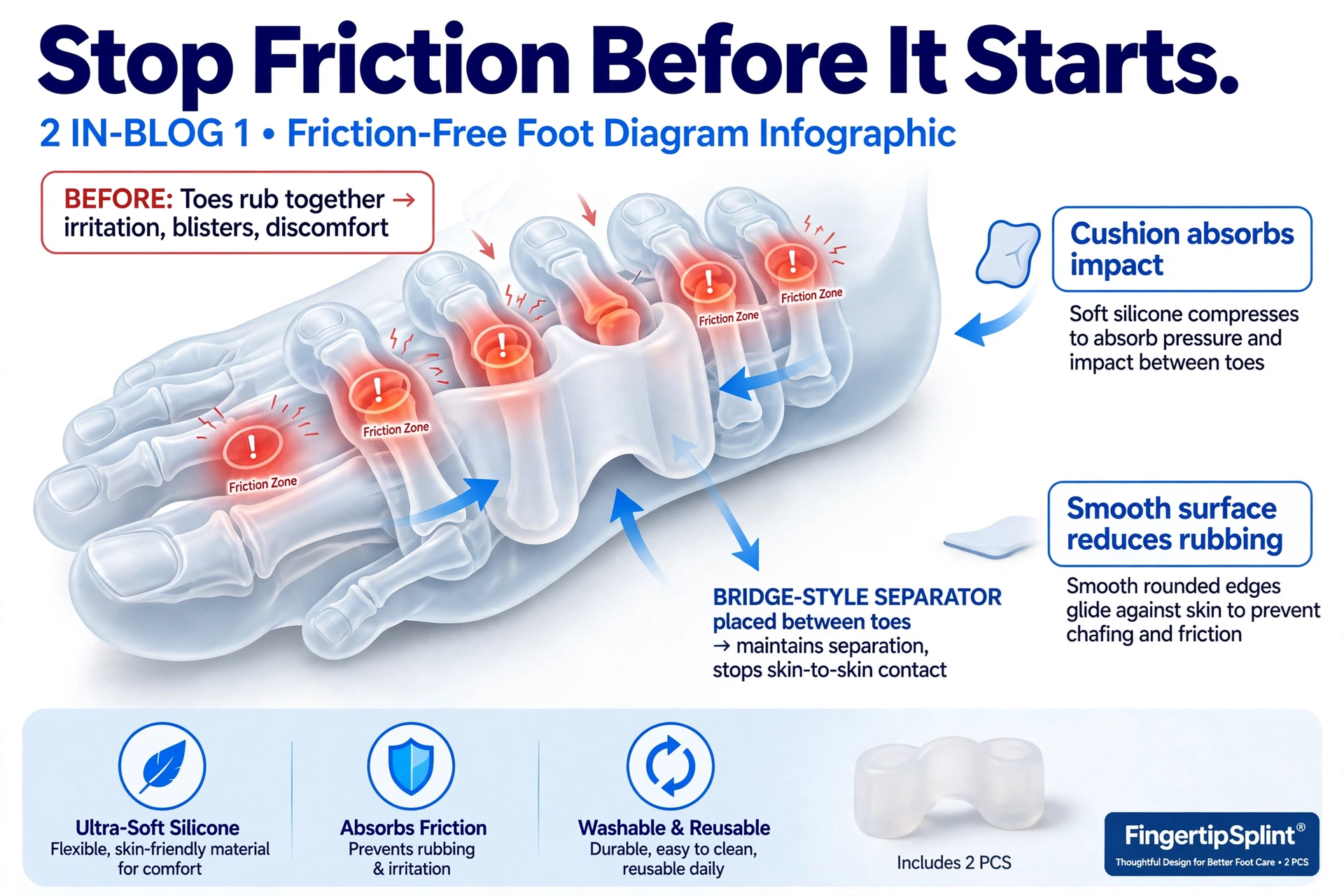
How Soft Toe Spacer Cushions Help Reduce Friction
The mechanism of friction reduction involves several steps. Understanding them helps you evaluate whether a spacer is likely to help your specific problem.
Toe Contact
Adjacent toes may repeatedly touch during movement or inside footwear. In people with naturally crowded toes, narrow shoes, or overlapping toes, this contact is more frequent.
Repeated Rubbing
Contact and movement can irritate the skin, especially when pressure, moisture, or poorly fitting footwear contributes. Over time, the skin may become red, sore, or thickened.
Creating Space
A suitably shaped spacer can change how closely the toes contact one another. By holding them apart, the spacer may reduce the direct friction that contributes to irritation.
Cushioning the Interface
Some designs provide a soft barrier between the toes. When the toes press against the spacer, the material absorbs some of the pressure, reducing the intensity of contact.
Fit Matters
A device that is too large, too tight, or poorly positioned may increase pressure rather than improve comfort. Fit is more important than cushion thickness or marketing claims.
According to the Mayo Clinic, treating corns and calluses often begins with footwear changes and protective padding. A spacer is one tool within a broader approach — not a standalone solution.
Common Causes of Friction Between Toes
Toe friction does not happen randomly. It develops when the space inside a shoe is inadequate for the toes’ natural position, or when a toe has shifted into a position where it presses against its neighbour.
Common contributing factors include:
- Narrow toe boxes: Shoes that squeeze the toes together increase contact.
- Prolonged walking or standing: Extended activity increases cumulative load on the toes.
- Repeated movement: Friction is more likely when there is repeated motion, not just pressure.
- Toe crowding: Some people naturally have toes that press against each other.
- Moisture: Softened skin breaks down more easily under friction.
According to the Mayo Clinic’s guidance on corns and calluses, repeated friction and pressure are the primary causes of these skin problems. Shoes that fit poorly, deformities that shift pressure, and repetitive activities all contribute.
Corns and calluses may develop as a consequence of repeated friction or pressure. If you notice persistent skin changes, professional assessment is recommended.
Explore Toe Friction and Cushioning
Select an area below to see a short explanation.
Benefits and Limitations of Soft Toe Spacer Cushions
Honest expectations are essential. Here is a balanced view of what soft toe spacer cushions can and cannot do.
| What It Can Do | What It Cannot Do |
|---|---|
| Reduce direct contact between selected toes when contact is the source of rubbing | Prevent all blisters or eliminate pain permanently |
| Provide a cushioning barrier where the design supports it | Permanently straighten toes or correct a bunion |
| Potentially improve comfort during appropriate daily activities | Compensate for footwear that is too tight |
| Serve as a simple accessory alongside better-fitting footwear | Replace medical assessment for persistent symptoms |
According to the American Academy of Orthopaedic Surgeons, bunions are a structural condition that may require more than a soft accessory. A spacer may provide temporary comfort, but it does not correct the alignment.
Soft Toe Spacer Cushions vs. Toe Protectors and Pads
Many people are confused about which foot-care product to buy. Understanding how these products differ helps you choose the right one.
| Product or Option | Primary Purpose | When It May Be Appropriate |
|---|---|---|
| Soft toe spacer cushion | Creates space or cushions contact between selected toes | Toe-to-toe rubbing |
| Bridge-style toe separator | Separates toes according to its particular design | When the bridge shape fits the affected area |
| Silicone toe sleeve | Covers an individual toe | Localized rubbing on a toe |
| Toe cap | Covers and cushions a toe tip or selected area | Toe-tip contact or pressure |
| Cushioning pad | Cushions a particular pressure point | Localized pressure requiring a pad |
| Roomier footwear | Reduces shoe-related crowding | When a narrow toe box contributes to discomfort |
No single option is universally best. The right choice depends on where the friction occurs and what is causing it. For a closer look at bridge-style designs, the article on bridge-style toe separators: uses and benefits explains how the bridge shape may fit different toe pairs.
How to Choose the Right Toe Spacer Cushion
Choosing the right cushion requires more than picking the first product you find. Here are the factors that matter most.
The Toes and Contact Area
Which toes are rubbing? A spacer designed for the big toe and second toe may not fit the smaller toes. Check the product’s intended placement.
Size and Fit Instructions
Choose a size that matches your toes. A spacer that is too large forces the toes apart; one that is too small may slip or not provide adequate cushioning.
Cushion Thickness and Footwear Room
A thicker cushion provides more protection but takes up more room in the shoe. Check that your footwear has enough space to accommodate the spacer without squeezing the toes.
Material and Care Instructions
Silicone is soft and generally well-tolerated. Check the cleaning instructions and whether the product is designed for reuse.
Cautions for Sensitive Skin or Foot Conditions
If you have sensitive skin or a foot condition, consult a healthcare professional before using a pressure-applying device.
For additional options, browse the FingerTipSplint shop.
How to Use Soft Toe Spacer Cushions Safely
Proper use and care are essential for comfort and safety. Follow this step-by-step routine.
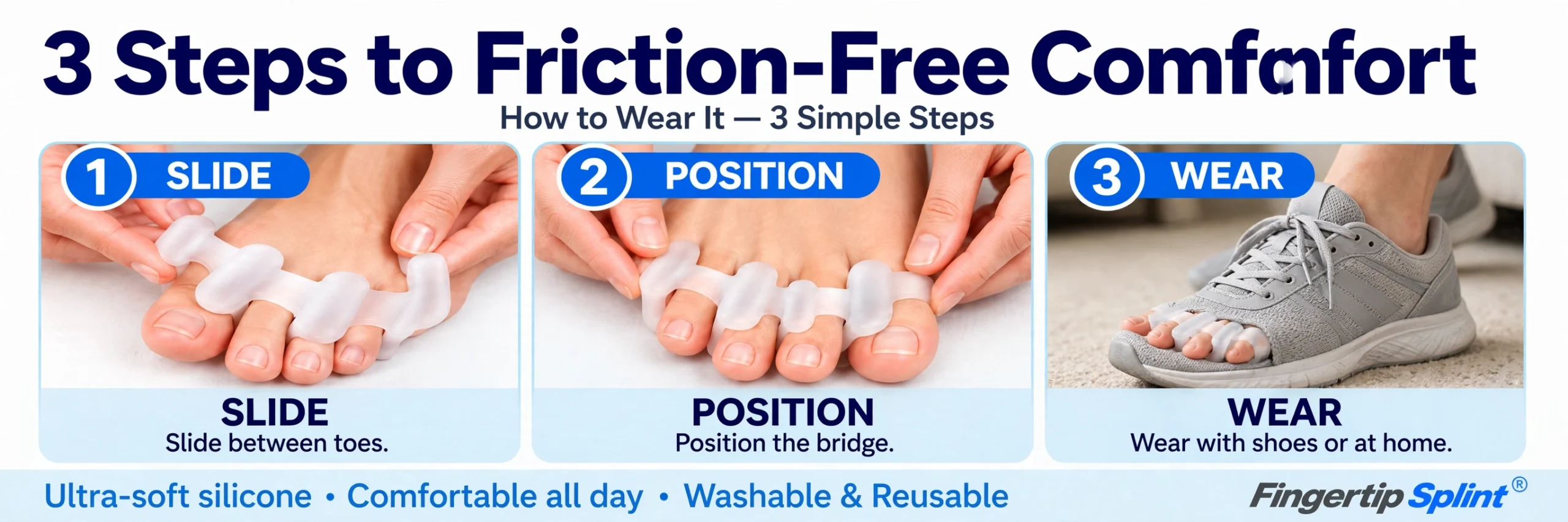
Step 1: Inspect the skin. Look for cuts, blisters, redness, or irritation. Do not apply a spacer over broken skin.
Step 2: Clean and dry. Wash and dry your feet thoroughly. Moisture under a spacer can cause skin maceration.
Step 3: Position the spacer. Follow the manufacturer’s instructions. It should sit comfortably between the intended toes without forcing them apart.
Step 4: Check that it does not squeeze the toes. If the spacer feels tight or makes the toes feel squeezed, it is either the wrong size or not compatible with your footwear.
Step 5: Remove and inspect the skin. After use, check for redness, indentations, or irritation.
Step 6: Clean and store. Follow the manufacturer’s cleaning instructions. Most silicone spacers can be washed with mild soap and warm water, then air-dried completely.
If you experience persistent symptoms, NHS guidance on toe pain explains when symptoms deserve professional assessment.
Common Mistakes That Make Toe Friction Worse
Some mistakes can turn a helpful product into a source of additional discomfort. Here are the most common ones.
Adding a spacer to a tight shoe increases pressure instead of reducing friction.
Solution: Ensure shoes have adequate toe-box width and depth.
A spacer addresses toe-to-toe friction, not friction from the shoe rubbing against the top of a toe.
Solution: Match the product to the location of the friction.
Pain is a signal that the spacer is not suitable or not correctly positioned.
Solution: Stop using it and reassess the fit or product choice.
Trapped moisture can cause skin breakdown, and irritation that is ignored may worsen.
Solution: Keep the toes dry and inspect the skin regularly.
A spacer may provide temporary comfort but does not correct a bunion or hammertoe.
Solution: Consult a healthcare professional for structural concerns.
Persistent symptoms may indicate a problem that requires professional assessment.
Solution: Seek medical advice if symptoms do not improve.
A shoe with more toe-box room may be a better first adjustment than inserting a spacer into a shoe that already squeezes the toes.
When to Seek Professional Foot-Care Advice
Not every toe problem can be managed with a spacer. Some situations require professional assessment.
Seek professional advice if you experience:
- Persistent or worsening pain
- An open sore or non-healing wound
- Spreading redness, swelling, or warmth
- Discharge or signs of infection
- Progressive change in the shape of the toe
- Numbness or altered sensation
For broader context on toe pain and when it may need assessment, Healthdirect Australia’s foot pain overview provides useful guidance. If you notice pain around the nail edge, MedlinePlus’s overview of ingrown toenail explains when this symptom may need specific treatment.
A Simple Buyer Checklist and Product Recommendation
Before purchasing a soft toe spacer cushion, use this buyer checklist:
- Identify the friction location: Is the rubbing between two toes, or is it from the shoe rubbing against a toe?
- Review product fit: Does the spacer match the specific toes involved?
- Check the shoe’s toe-box space: Will the spacer fit inside your shoe without squeezing the toes?
- Read care instructions: Can you clean and maintain the spacer easily?
- Consider whether symptoms require professional advice: Persistent pain or skin changes should be assessed.
If your needs match the design of the 2-Piece Ultra-Soft Bridge-Style Toe Separators, review the design and fit details to see whether these toe separators suit your everyday foot-care needs.
For readers who are still comparing products, browse the FingerTipSplint shop, explore the bridge-style toe separators guide, or review the frequently asked questions.
Explore the Design and Fit Details
If toe-to-toe friction is affecting your daily comfort, review the 2-Piece Ultra-Soft Bridge-Style Toe Separators, check the fit information, and decide whether they suit your needs. For additional options, browse our full foot-care range.
View the Product Browse All ProductsFrequently Asked Questions
Soft toe spacer cushions create space between adjacent toes and may provide a cushioning barrier. This can reduce the direct contact and rubbing that contribute to irritation. The effect depends on proper fit, suitable footwear, and the cause of the discomfort.
They may help reduce direct friction between toes during walking, provided the spacer fits well and the footwear has enough room. If the shoe is too tight, the spacer may increase pressure instead of reducing it.
A toe spacer creates space or provides a cushioning barrier between two toes. A toe protector covers or cushions a single toe to protect against friction from the shoe. They serve different purposes and are not interchangeable.
This depends on the spacer’s design and whether your shoes have enough room in the toe box. Never force a spacer into tight footwear — doing so increases pressure instead of relieving it.
Follow the product instructions and start cautiously. There is no universal schedule that suits everyone. If the spacer is comfortable and does not cause irritation, you may gradually increase wear. Stop if you experience pain, numbness, or skin irritation.
No. Silicone toe spacers may provide temporary comfort, but they do not correct the underlying structural deformity. Bunions and hammertoes require medical assessment if they are progressive or painful.
Stop using the spacer and seek advice if you experience persistent or worsening pain, redness, swelling, warmth, discharge, or signs of infection. People with diabetes, reduced sensation, or poor circulation should seek advice before using any pressure-applying device.
Conclusion: A Practical Way to Reduce Toe Friction
Soft toe spacer cushions can be a useful option for reducing direct friction between toes when the problem is toe-to-toe contact. But they are not a cure for bunions, a treatment for infections, or a substitute for properly fitting footwear or medical care.
Use this guide as a framework: identify the source of your friction, review the product’s actual specifications, choose a spacer that fits your toes, and follow the manufacturer’s instructions for use and cleaning. Stop using the spacer if it causes pain or irritation, and seek professional advice if symptoms persist.
For readers who want to explore support products, the FingerTipSplint shop offers a selection. For more practical foot-care guides, visit the FingerTipSplint blog. For personalized assistance, you can request a quote or review the frequently asked questions.
Your feet carry you through everything. Choosing the right support — and knowing when to seek professional advice — is part of caring for them well.