
Walking should feel natural. But if you have flat feet, every step can sometimes feel like work. Your arches may ache after a short walk, your shoes may feel unsupportive, and you may be unsure whether an insole would actually help — or just add bulk. This guide explains how orthotic insoles for flat feet may support walking comfort, what they can and cannot do, and how to choose a suitable option without wasting money on the wrong product. For a broader view of foot-support and comfort products, explore the full FingerTipSplint range.
Table of Contents
- How Orthotic Insoles for Flat Feet Support Walking
- What Happens to Your Feet When You Walk With Flat Feet?
- How Orthotic Insoles Help Support Flat Feet During Walking
- Types of Orthotic Insoles and Arch Supports
- How to Choose Orthotic Insoles for Walking Comfort
- How to Wear Orthotic Insoles During Daily Walking
- Common Mistakes When Buying Flat-Foot Insoles
- When to Seek Professional Advice
- Explore Foot Support Options
- Frequently Asked Questions
Orthotic insoles for flat feet provide additional support beneath the foot’s arch and may help improve comfort during walking. Depending on their design and fit, they can influence pressure distribution and foot movement inside the shoe. They do not permanently correct every type of flat foot, and the right option depends on symptoms, footwear, and individual needs.
How Orthotic Insoles for Flat Feet Support Walking
Flat feet — also called pes planus — is a condition where the arch of the foot is lower than typical or disappears entirely when standing. Not everyone with flat feet experiences discomfort, but some people notice fatigue or aching during walking.
According to the Mayo Clinic’s flat feet symptoms and causes guide, flat feet can be flexible (the arch reappears when not bearing weight) or rigid (the arch is always flat). Symptoms vary widely.
Why Some People Experience Discomfort
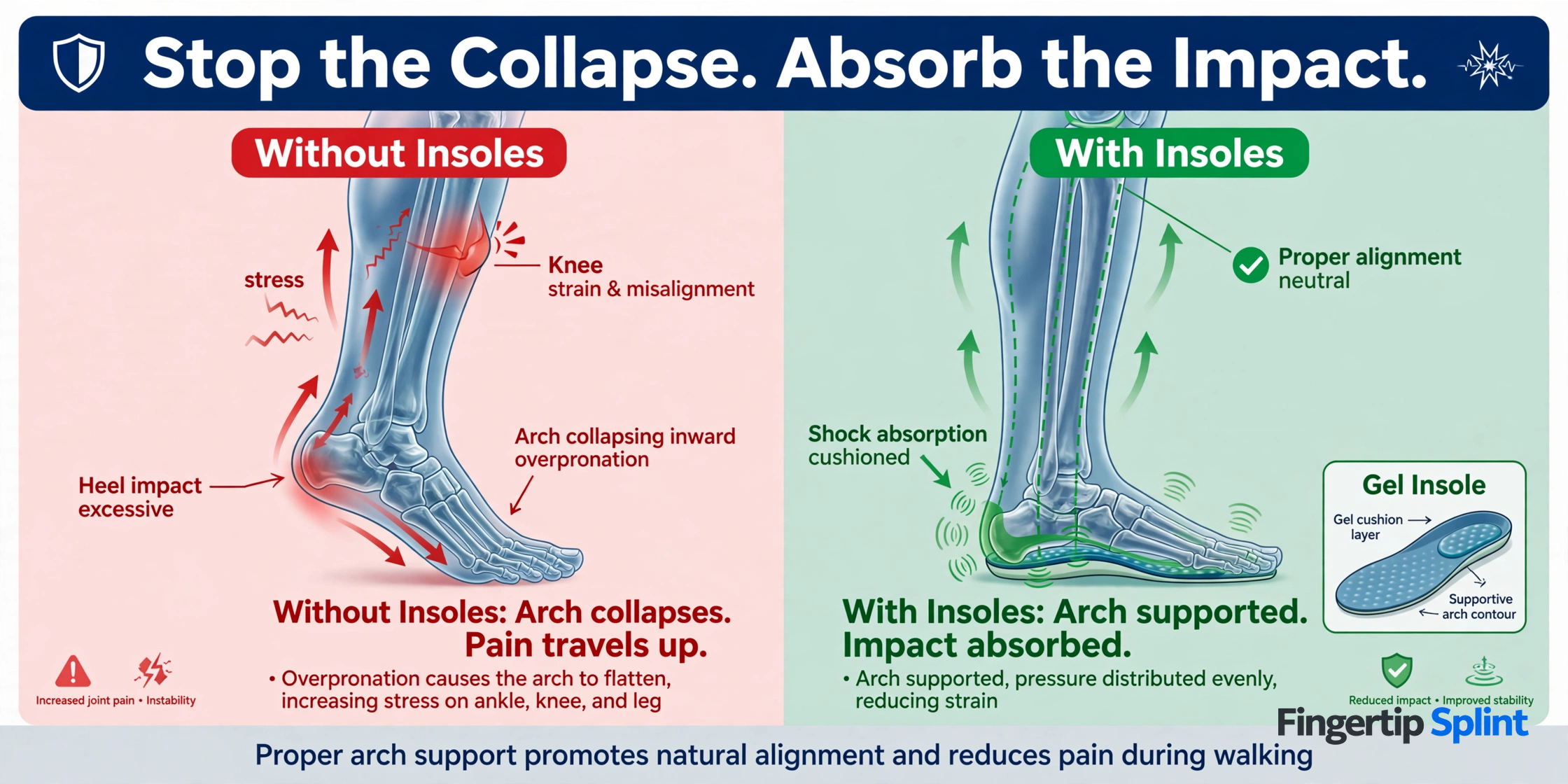
During walking, the foot absorbs and transfers forces. When the arch is low or absent, the foot may not distribute pressure as evenly. This can lead to fatigue, discomfort, or a feeling that the shoes are not providing adequate support.
What Happens to Your Feet When You Walk With Flat Feet?
Walking is a complex process that involves absorbing and transferring forces with every step. The arch of the foot plays a role in this process, and when the arch is low, the forces may be distributed differently.
The Role of the Arch During Each Step
The arch acts as a natural shock absorber and spring. During each step, it flattens slightly to absorb impact and then recoils to help propel the foot forward. When the arch is low, this mechanism may work differently.
Foot Fatigue, Pressure, and Overpronation
Some people with flat feet experience foot fatigue, pressure, or overpronation (inward rolling of the foot). However, not everyone with flat feet overpronates. According to the Cleveland Clinic’s overview of overpronation, this is a separate concept that should not be assumed for every person with flat feet.
Why Symptoms Differ Between Individuals
Some people with flat feet have no symptoms. Others experience discomfort in the feet, ankles, or legs. The difference depends on foot structure, activity level, footwear, and other factors. According to the Cleveland Clinic’s flat feet overview, symptoms and management vary.
How Orthotic Insoles Help Support Flat Feet During Walking
Orthotic insoles are designed to provide support beneath the foot. They may help improve comfort during walking through several mechanisms.
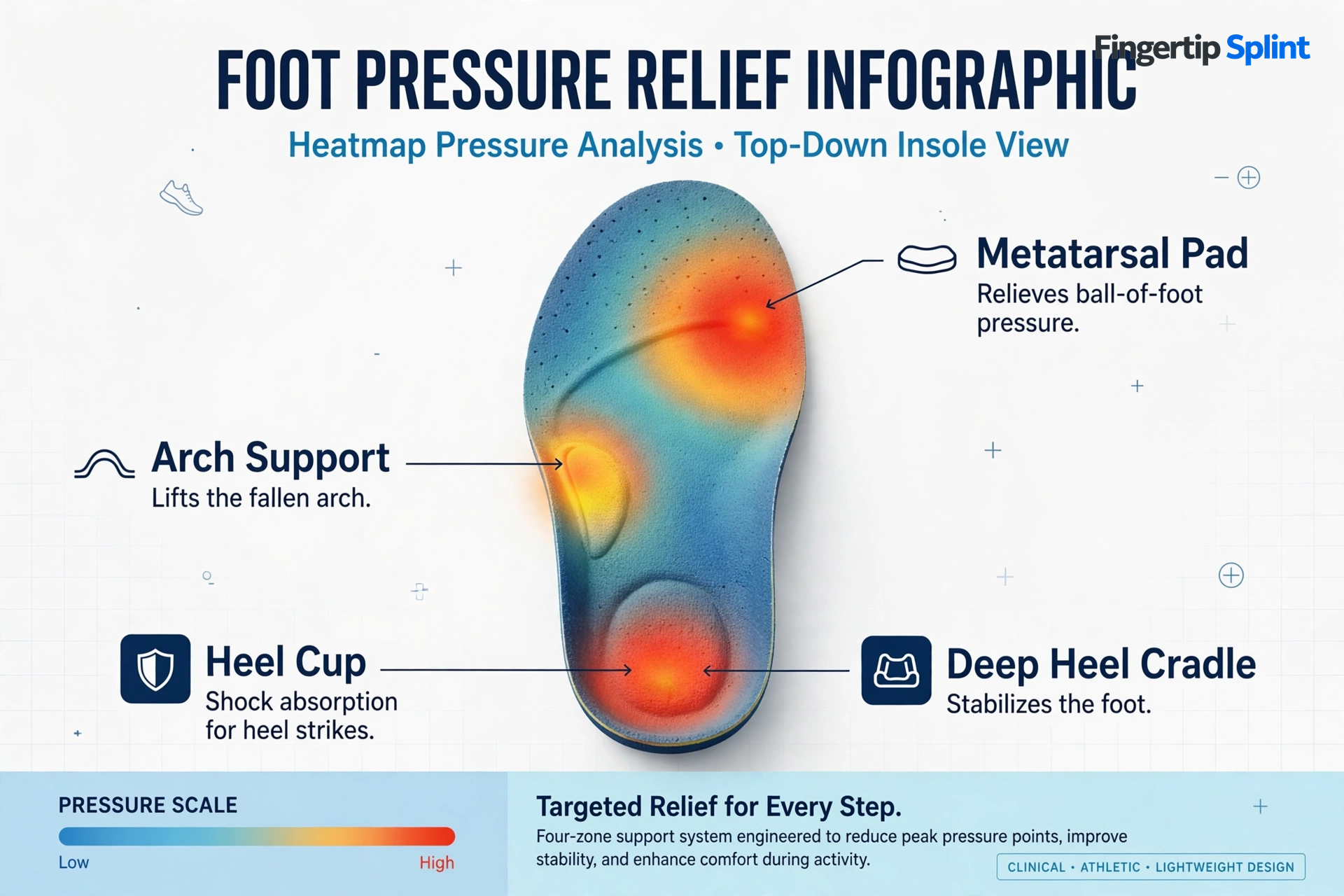
Providing Contact Beneath the Arch
A suitable insole can provide contact beneath the arch, which may help reduce strain and improve comfort. The goal is tolerable support, not forcing the foot into a painful position.
Helping Manage Pressure Inside the Shoe
Insoles can influence how pressure is distributed inside the shoe. This may help reduce focal pressure points.
Supporting the Heel and Midfoot
Depending on the design, an insole may provide support for the heel and midfoot, which can improve stability during walking.
Improving Comfort During Standing and Walking
Some people find that a properly fitted insole improves comfort during standing and walking. According to the Cleveland Clinic’s guide to orthotics, different types of support products serve different purposes.
Why Support Does Not Mean Permanent Correction
An insole provides support while worn. It does not permanently change the structure of the foot or rebuild the arch. A support that feels comfortable does not mean the foot has been corrected.
How Orthotic Insoles Support Your Feet During a Walking Step
Select a feature below to learn more about it.
Types of Orthotic Insoles and Arch Supports for Flat Feet
Different types of support products serve different purposes. Here is how they compare.
| Type | Intended Use | Trade-offs |
|---|---|---|
| Full-length insoles | Support across the entire foot | May take up more room in the shoe |
| Prefabricated arch supports | Targeted support beneath the arch | Fit varies by product and shoe |
| Custom orthoses | Tailored to individual foot shape | Requires professional assessment |
| Cushioned insoles | Comfort and shock absorption | May provide less structural support |
| Arch support sleeves | Focused support around the arch | Different format from insoles |
The right choice depends on your symptoms, footwear, and needs. For a related support option, the FingerTipSplint Gel Arch Support Sleeves provide focused cushioning around the arch. They are a different format from full-length insoles.
How to Choose Orthotic Insoles for Walking Comfort
Choosing the right insole requires matching the product to your needs. Here are the factors to consider.
Arch Height
A higher arch is not automatically better. Choose a support that feels comfortable and provides tolerable contact.
Cushioning
The insole should provide adequate cushioning for your activities. Softer materials may feel more comfortable but may provide less structural support.
Heel Fit
The insole should support the heel and sit correctly inside the shoe.
Shoe Depth
The shoe must have enough depth to accommodate the insole without pressing the foot.
Removable Factory Insoles
Some shoes have removable liners that can be taken out to make room for the insole.
Daily Walking Distance
Consider how much walking you do. A support that works for short walks may not be suitable for long distances.
Tolerable Support
The arch contact should feel supportive, not painful. If it causes discomfort, reassess the fit.
My Insole Fit Check
Use this checklist to review fit. If an insole causes persistent or worsening discomfort, stop using it and seek appropriate advice.
How to Wear Orthotic Insoles During Daily Walking
Wearing orthotic insoles correctly is essential for comfort and effectiveness.
Check the Fit
Make sure the insole sits correctly and does not slip or curl. Follow the product’s wear-in instructions.
Inspect the Skin
Check the skin after use for redness, irritation, or pressure marks.
Reassess Discomfort
New support may feel different at first. However, persistent or worsening discomfort is not normal. Stop using the insole and reassess.
Common Mistakes When Buying Flat-Foot Insoles
Some mistakes can make the insole uncomfortable or ineffective. Here are the most common ones.
A cheap product may not fit well or provide adequate support.
Solution: Evaluate fit, material, and intended use before price.
The insole must fit inside the shoe without making it too tight.
Solution: Ensure the shoe has enough room.
Pain is not evidence of effectiveness.
Solution: Stop using the insole and reassess the fit.
A wrong-size insole may slip or not provide adequate coverage.
Solution: Follow the manufacturer’s sizing guidance.
Insoles provide support while worn but do not correct the structure.
Solution: Use insoles for comfort with realistic expectations.
When Should You Seek Professional Advice for Flat Feet?
Some symptoms should not be ignored. Seek medical advice if you experience:
- New or worsening pain
- Swelling
- Sudden change in arch shape
- Difficulty walking
- Symptoms mainly affecting one foot
Explore Foot Support Options
If you are looking for foot support, the FingerTipSplint Gel Arch Support Sleeves are one option to evaluate. This guide does not claim that they cure flat feet or guarantee pain relief. What they offer is a design intended to provide cushioning and support around the arch.
Before purchasing, review the product listing for:
- Whether the product is a sleeve or an insole
- Material and construction
- Sizing and fit guidance
- Intended placement
- Care and cleaning instructions
- Compatibility with your footwear
For additional options, browse the FingerTipSplint shop or review the frequently asked questions.
Find the Foot Support That Fits Your Walking Routine
Choosing support starts with understanding your foot, your shoes, and the type of discomfort you experience. Review the FingerTipSplint Gel Arch Support Sleeves, check sizing guidance and compatibility, and seek professional advice if you have persistent pain or a changing foot shape.
View the Product Browse All ProductsFrequently Asked Questions
They may improve comfort and provide additional arch or heel support for some people. Results depend on the cause of symptoms, the insole design, shoe fit, and individual needs.
No. Orthotic insoles provide support while worn, but they do not permanently change the structure of the foot or rebuild the arch.
Custom orthotics are tailored to an individual’s foot shape, while store-bought insoles are prefabricated. Custom orthotics may be more appropriate for complex foot conditions, but they require professional assessment. Store-bought insoles may be suitable for milder symptoms.
This depends on the product and your comfort. Follow the manufacturer’s instructions and start with short periods if you are uncertain. Stop using the insole if it causes discomfort or pain.
This depends on the shoe’s depth and whether it has a removable liner. The insole must fit inside the shoe without making it too tight. Check compatibility before purchasing.
New support may feel different at first as your foot adapts. However, sharp or increasing pain is not normal. If discomfort persists or worsens, remove the insole and reassess the fit.
Seek medical advice for new or worsening pain, swelling, a sudden change in arch shape, difficulty walking, or symptoms mainly affecting one foot. Prompt assessment is needed for severe pain or inability to bear weight.
Make a More Informed Decision About Walking Support
Orthotic insoles for flat feet may provide additional support and improve comfort during walking. But the right fit, suitable footwear, and realistic expectations are essential.
Use this guide as a framework: check the fit carefully, assess comfort during your actual walking activities, follow the product instructions, and seek professional advice for persistent or worsening symptoms. The insole may provide comfort, but it does not correct the structure of your foot.
For readers who want to explore support products, the FingerTipSplint shop offers a selection. For more foot and hand care education, visit the FingerTipSplint blog. For personalized assistance, you can request a quote or review the frequently asked questions.
Your feet carry you through everything. Choosing the right support — and knowing when to seek professional advice — is part of caring for them well.