
Description
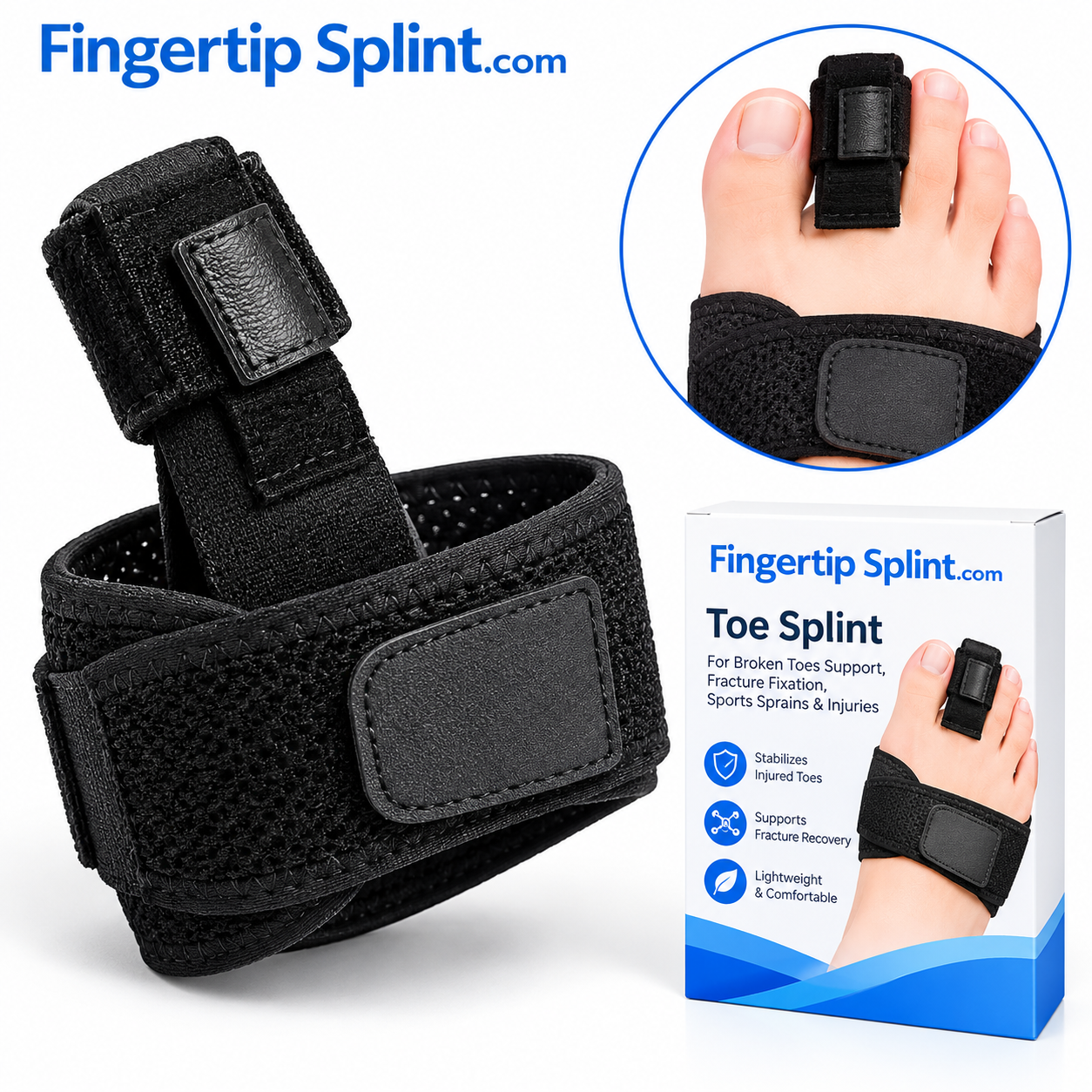
Broken Toe Splint – Adjustable Toe Support Brace for Injured Toes and Forefoot Positioning
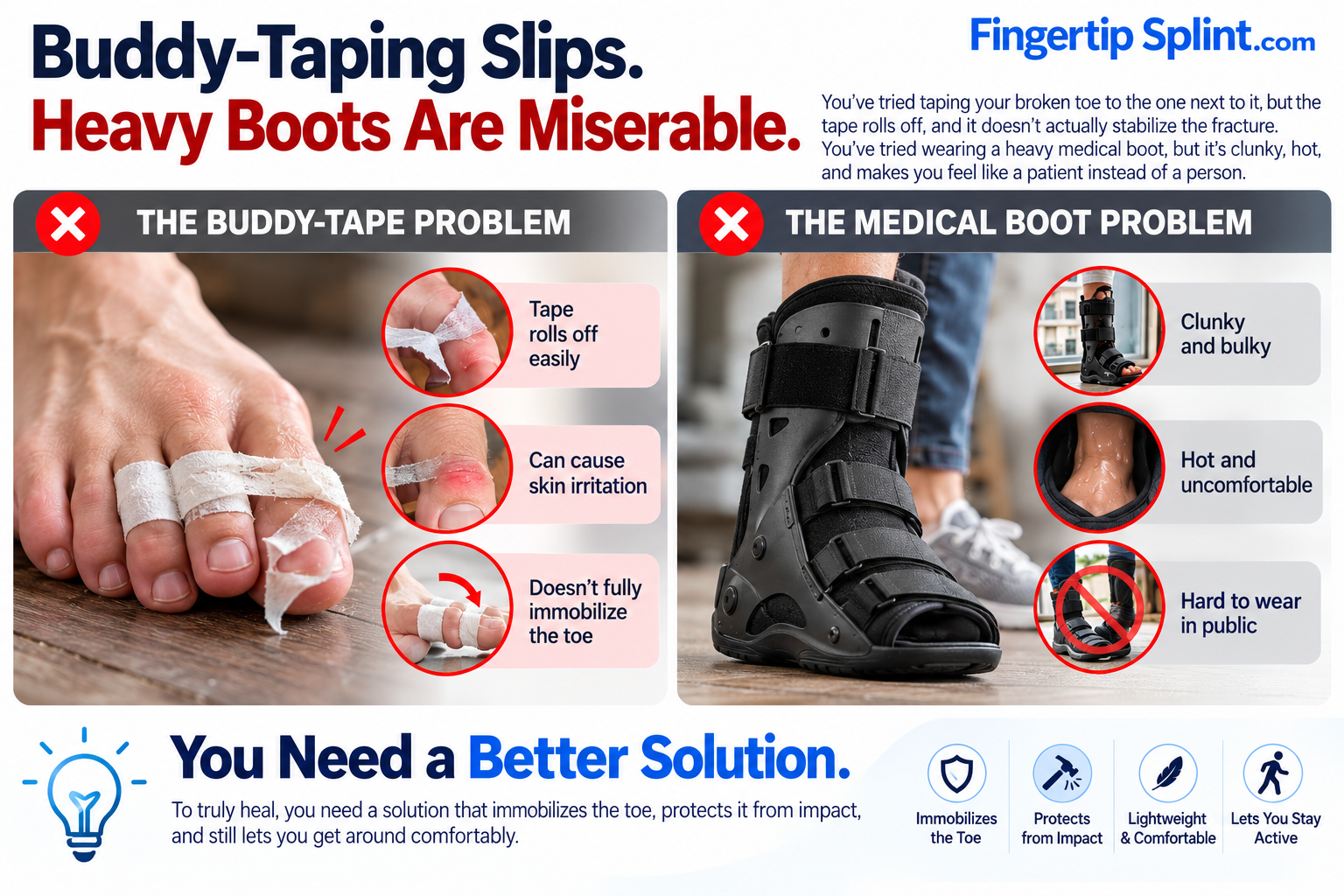
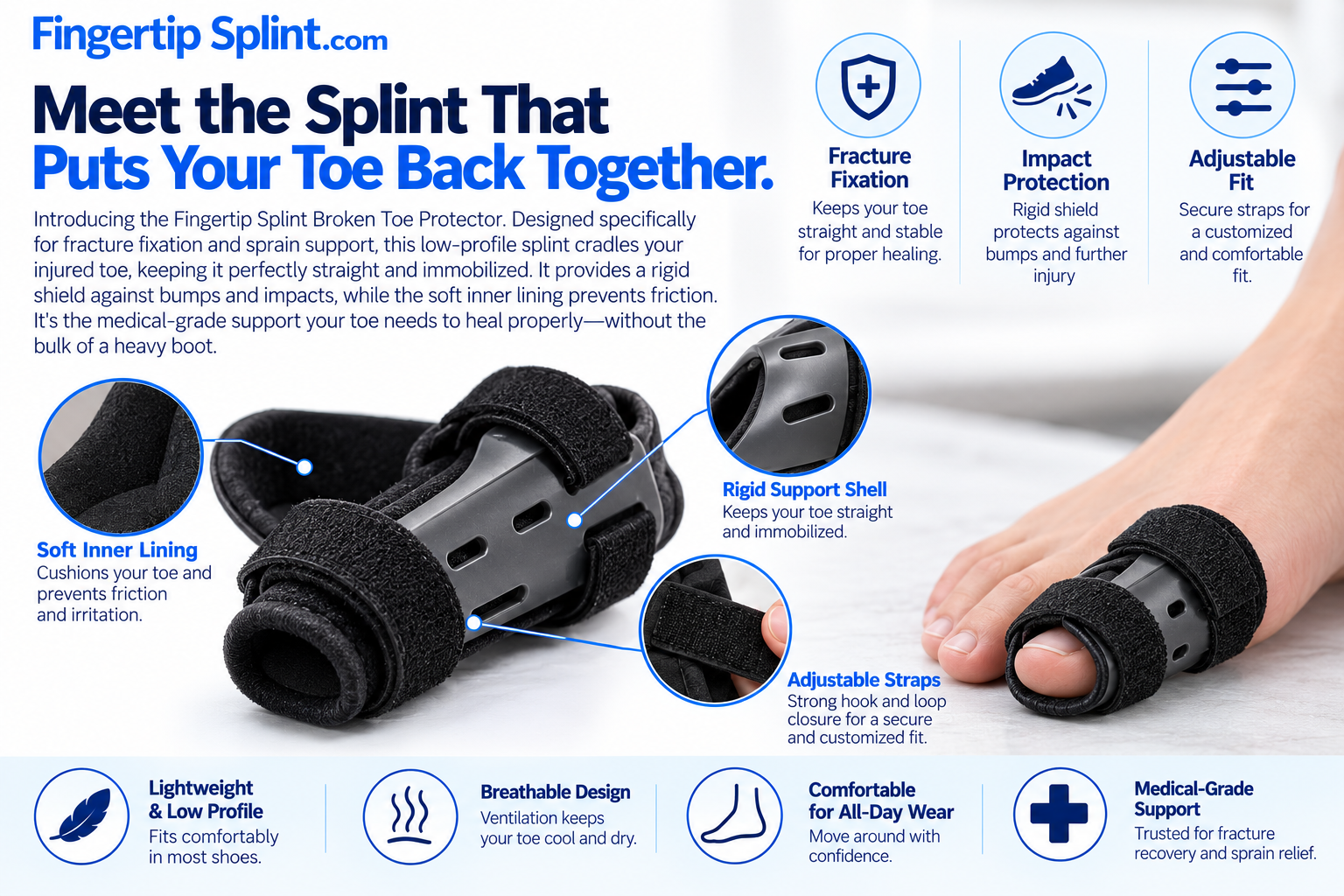
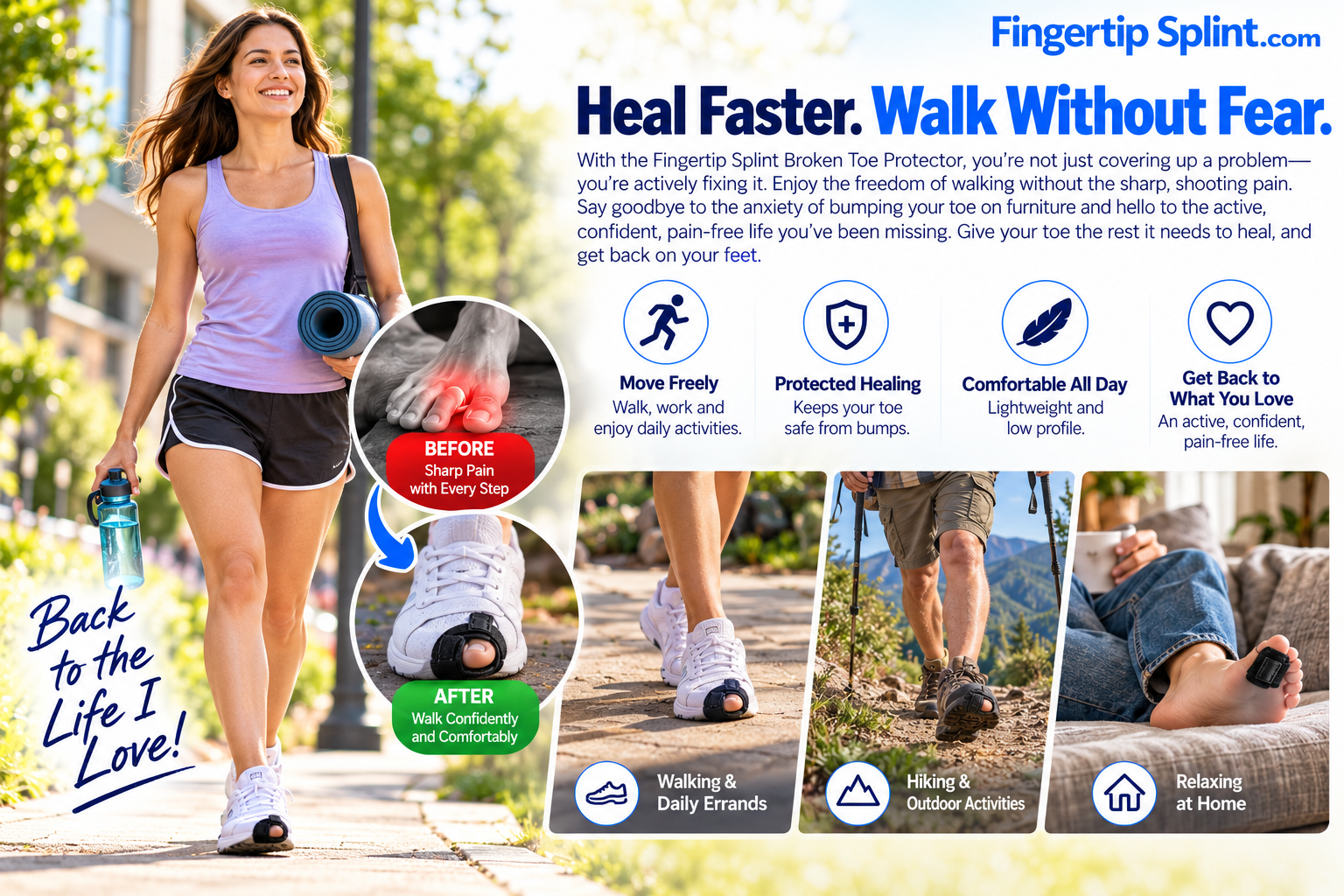
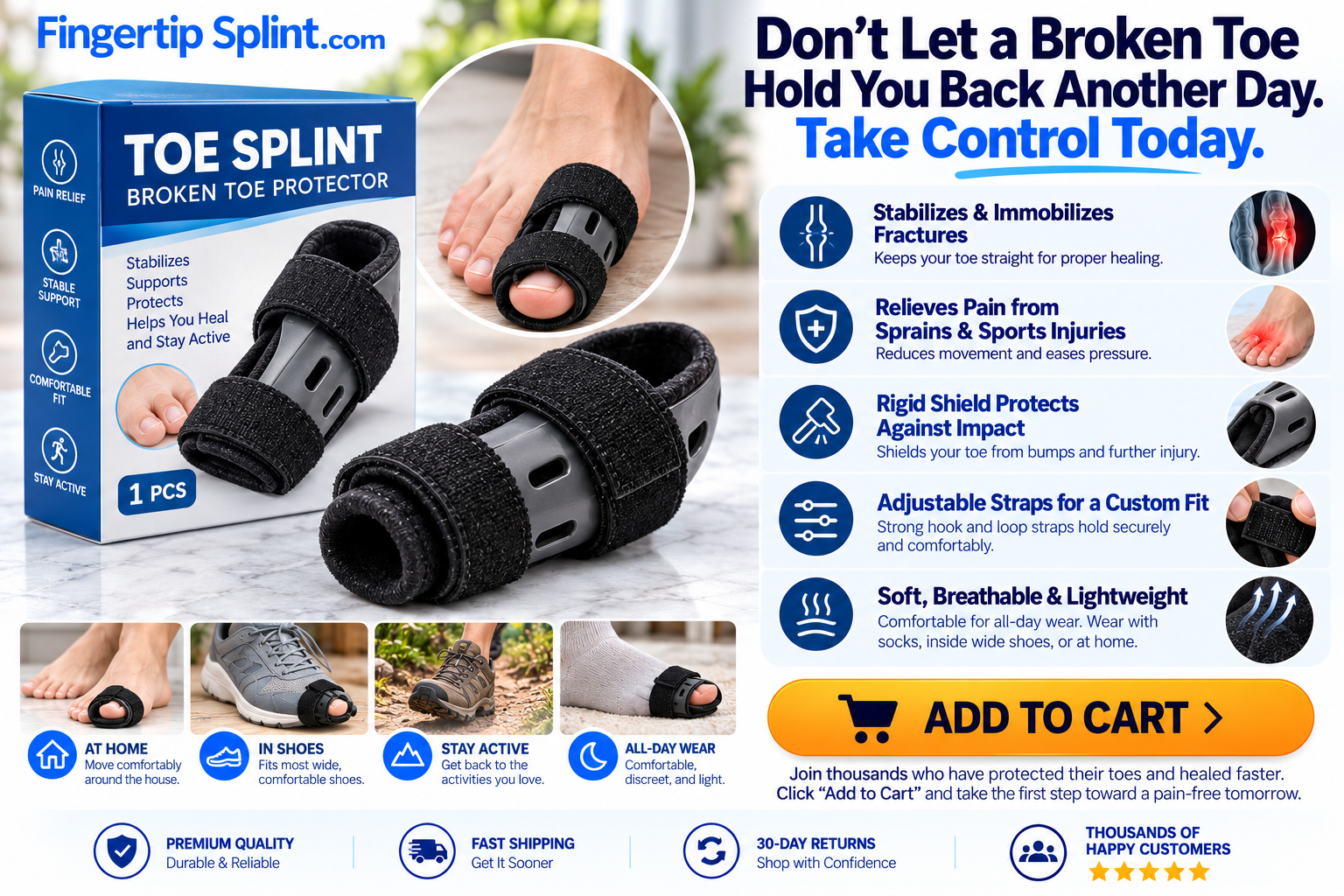
Broken Toe Splint Comparison: Adjustable Toe Brace vs. Other Toe Support Options
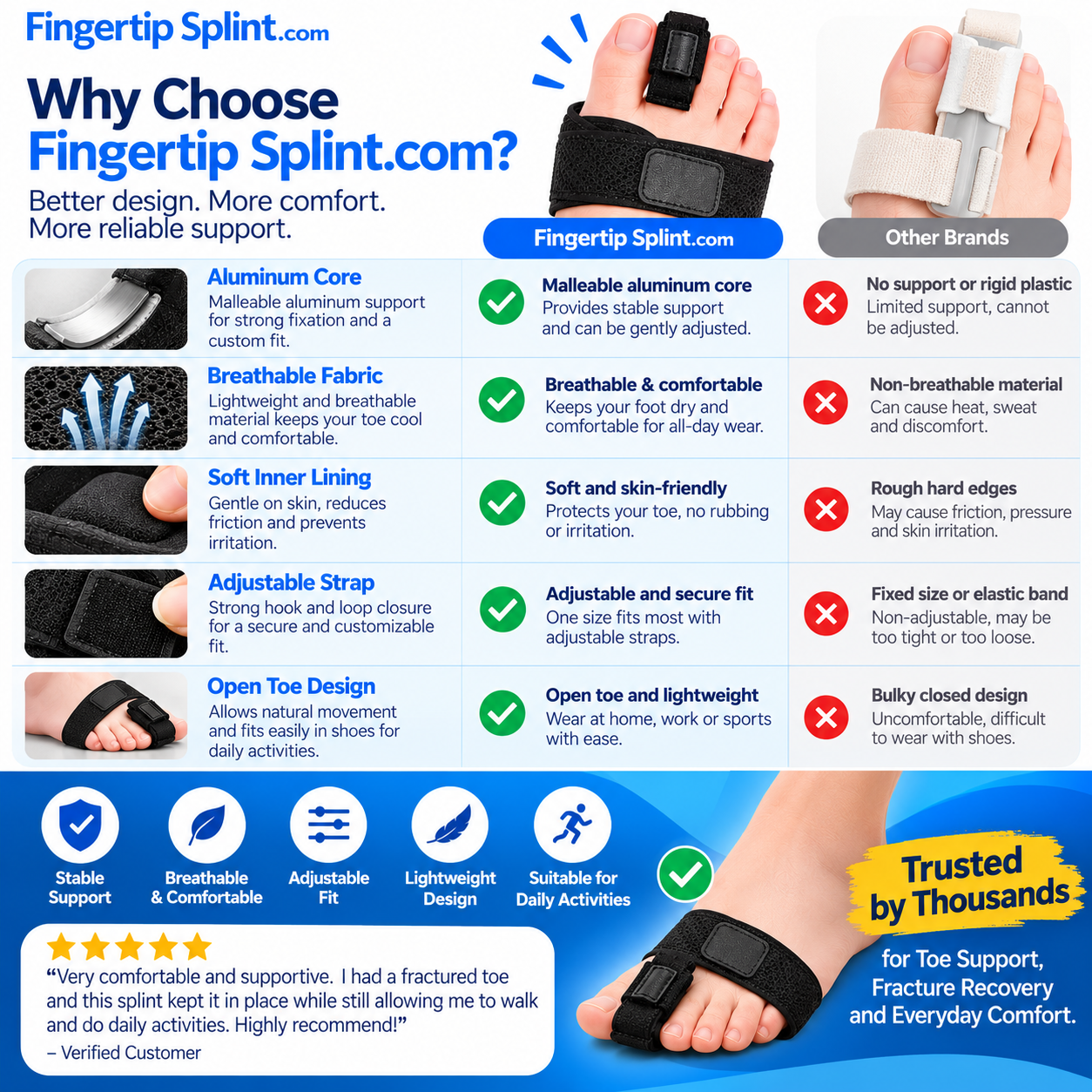
Toe injuries may require different levels of protection, stabilization or immobilization. The following table compares general support categories rather than making unverified claims about a specific competing brand.
| Feature | Fingertip Splint.com Adjustable Toe Brace | Generic Buddy Taping | Generic Medical Walking Boot |
|---|---|---|---|
| Support Style | Toe support attached to a forefoot band | Adjacent toes secured together with tape | Larger foot and ankle support device |
| Adjustment | Adjustable fastening components | Adjusted by rewrapping tape | Usually adjustable straps |
| Forefoot Anchor | Yes | No separate forefoot band | Encloses a larger area of the foot |
| Toe Coverage | Localized toe support section | Tape around adjacent toes | Foot-wide protective enclosure |
| Construction | Textile band and visible reinforcing elements | Adhesive medical tape and optional padding | Rigid or semi-rigid shell with padding |
| Reusability | Reusable when maintained appropriately | Tape usually replaced after use | Usually reusable |
| Immobilization | Degree not clinically verified | Depends on injury and application | Depends on boot design |
| Shoe Compatibility | Depends on brace size and available shoe space | Depends on swelling and footwear | Often replaces ordinary footwear |
| Best Use | Only where the device is appropriate for the intended toe support | Selected injuries when recommended by a clinician | Conditions requiring more extensive protection |
Important: Buddy taping and walking boots are established options for certain injuries. They should not be described as ineffective or replaced without medical guidance.
Adjustable Toe Splint Product Specifications
| Specification | Details |
|---|---|
| Brand | Fingertip Splint.com |
| Product Type | Adjustable toe support brace |
| Quantity | 1 piece |
| Available Colors Shown | Black and beige |
| Main Components | Forefoot band, toe support section and fastenings |
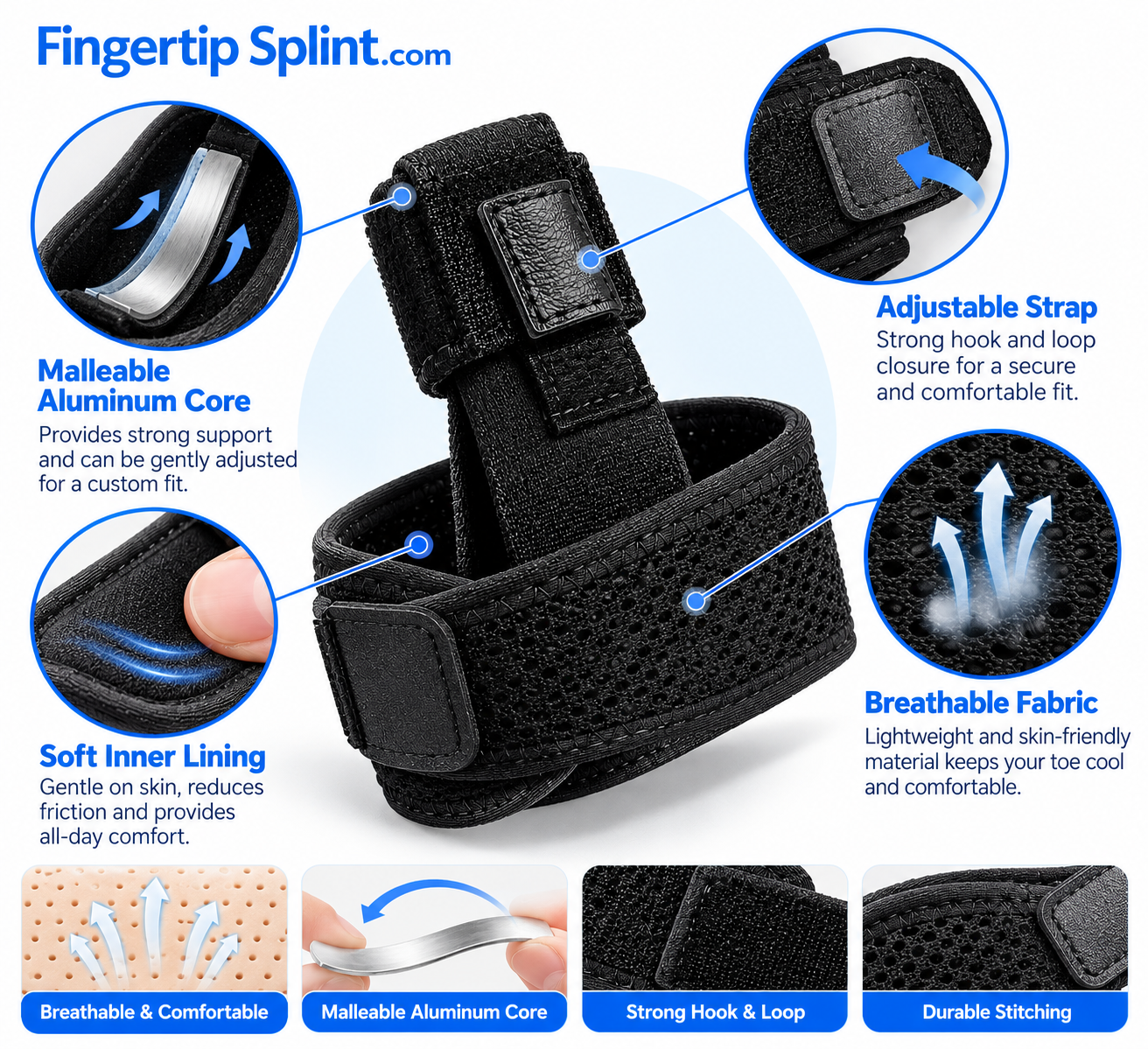
| Support Structure | Supplier images describe dual aluminum strips |
| Forefoot Band | Textile construction |
| Fastening | Adjustable strap closure |
| Size | One-size design indicated by supplier |
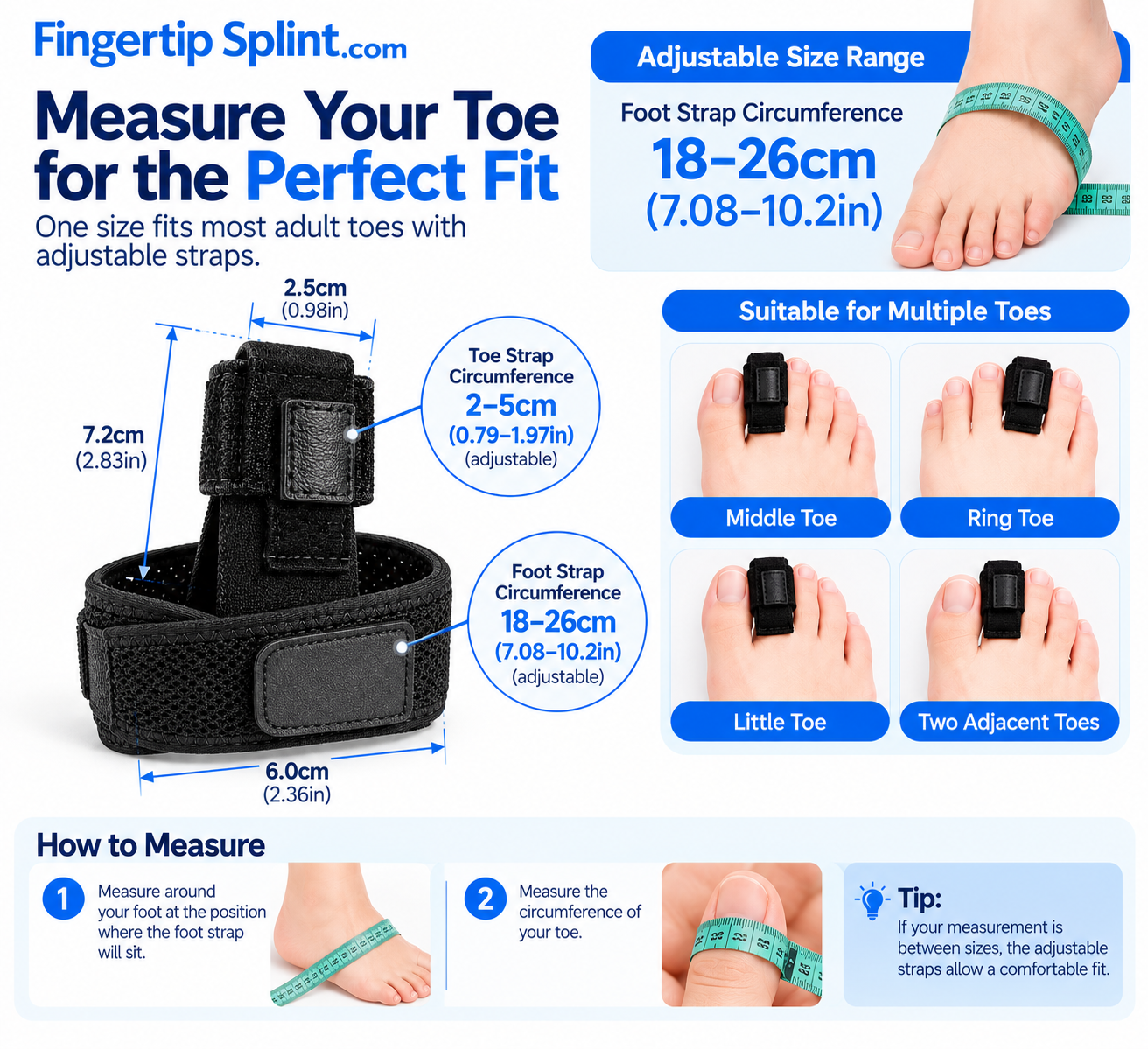
| Forefoot Circumference | 18–26 cm shown in supplier size image; verify before publication |
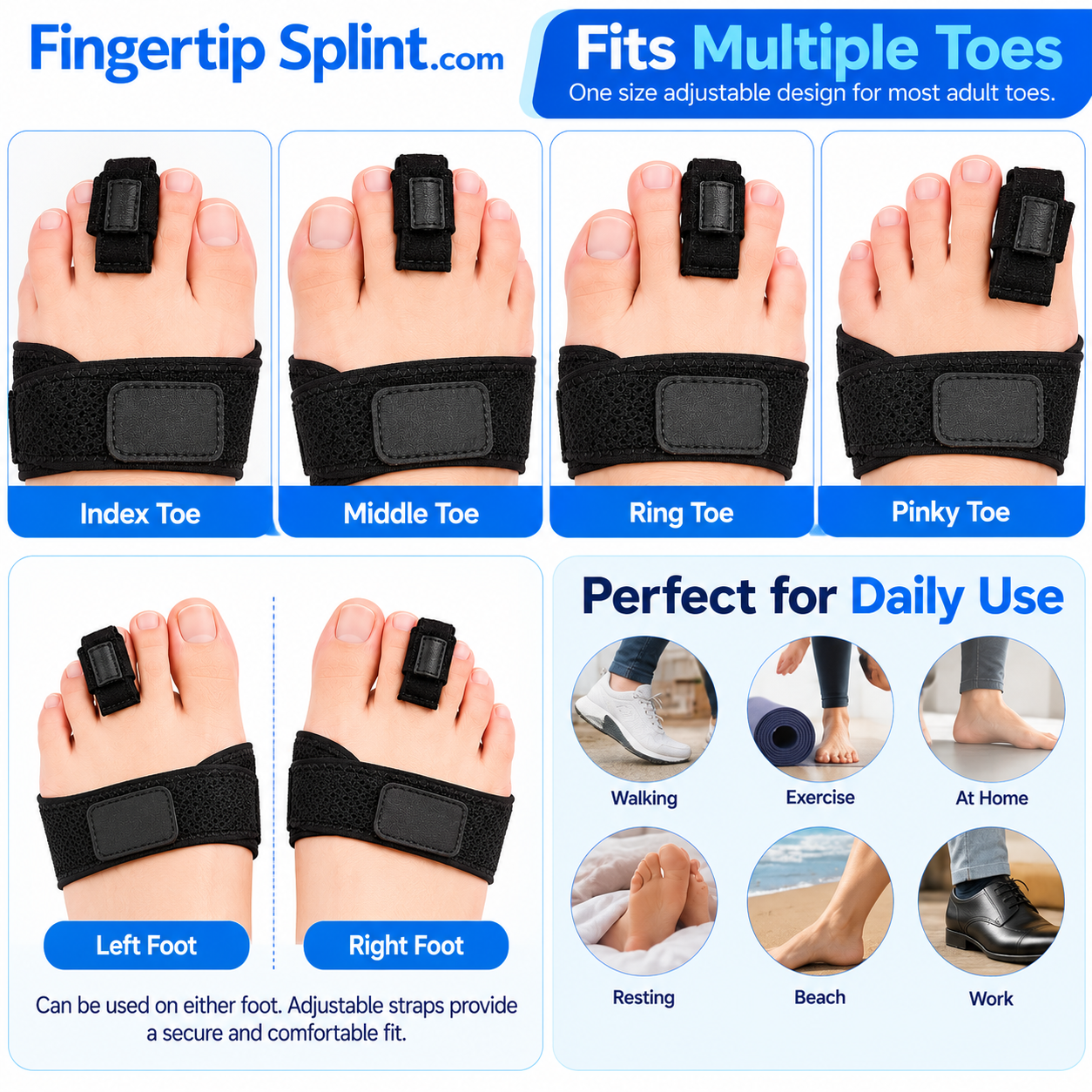
| Toe Compatibility | Supplier illustrates middle, ring, little and two adjacent toe positions |
| Left/Right Compatibility | Confirm with supplier |
| Exact Material Composition | Not provided |
| Weight | Not provided |
| Medical Certification | Not verified |
| Cleaning Method | Follow manufacturer care instructions |
| Intended Application | Toe positioning and support, subject to medical suitability |
Product Details: Features of the Adjustable Broken Toe Splint
1. Forefoot Anchor Band
The wide band wraps around the forefoot and provides a base for the attached toe support section.
2. Adjustable Toe Fastening
The toe support section can be secured around an appropriately sized toe according to the supplier’s application instructions.
3. Dual Support Strips
Supplier images describe two aluminum strips integrated into the support structure. Their exact composition and mechanical performance should be verified before making technical claims.
4. Black and Beige Options
The supplier photographs show black and beige designs. Confirm which color variants are currently available before enabling customer selection.
5. Localized Toe Support
Unlike full-foot walking boots, this product is designed around the forefoot and a selected toe or toe grouping.
6. Textile Forefoot Construction
The band is made with a textile-style material. The beige version is shown with perforations, while the black version has a different visible fabric finish.
7. Reusable Fastening System
The adjustable closures allow the brace to be opened and reapplied, provided the product remains in suitable condition.
8. Multiple Illustrated Toe Positions
Supplier diagrams show different placements for middle, ring and little toes, as well as two adjacent toes. These examples do not establish clinical suitability for every injury.
9. One-Piece Package
Each package contains one toe support brace as specified in the product listing.
10. Forefoot Measurement Guidance
The supplier’s size image shows an 18–26 cm forefoot circumference range. Measure the intended area and confirm the current size chart before purchasing.
11. Compact Support Design
The product uses a smaller support structure than a full walking boot, although its suitability for footwear depends on fit and the injury.
12. Adjustable Rather Than Adhesive-Only
The brace relies on its fastening system rather than disposable tape alone.
13. Toe Positioning Accessory
The device is intended to support a selected toe position. It should not be assumed to provide complete fracture immobilization.
14. Color-Specific Construction
The beige and black variants have different visible fabric finishes. Check that their dimensions and structural features match the supplier’s specifications.
15. Support for Appropriate Daily Use
Use during daily activities depends on the injury, brace fit, footwear and any restrictions advised by a clinician.
16. Easy-to-Inspect Components
Before each use, inspect the band, toe support and fasteners for wear or damage.
17. Fit Adjustment
Adjust the straps to maintain positioning without causing pressure, tingling, numbness or changes in skin color.
18. Product Care
Keep the brace clean and dry according to manufacturer guidance, particularly after exposure to moisture or perspiration.
19. Not a Substitute for Medical Treatment
Suspected fractures, dislocations, serious sprains and injuries involving the big toe require appropriate professional assessment.
20. Part of the Fingertip Splint.com Collection
Discover more foot and finger support accessories in the Fingertip Splint.com online shop.
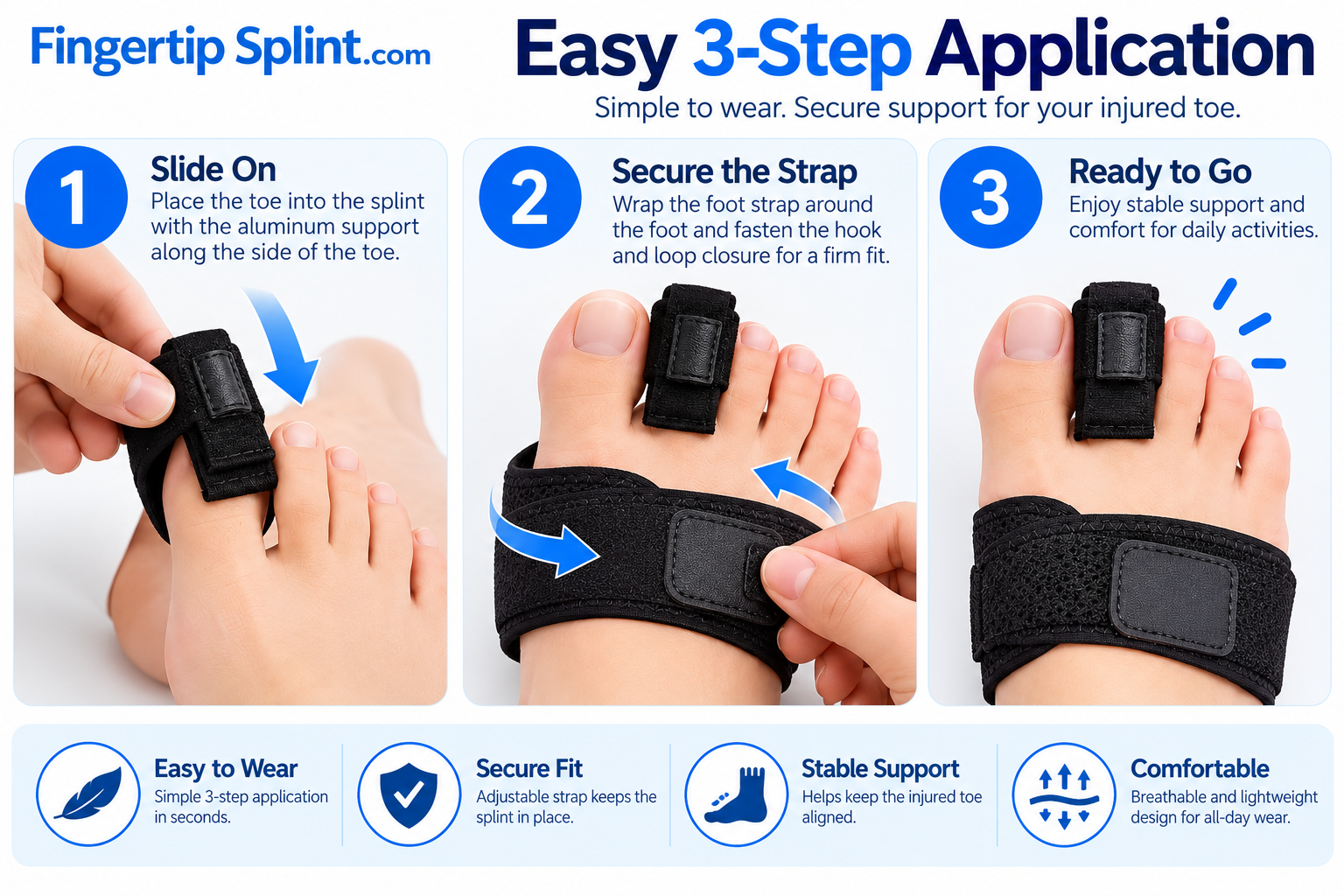
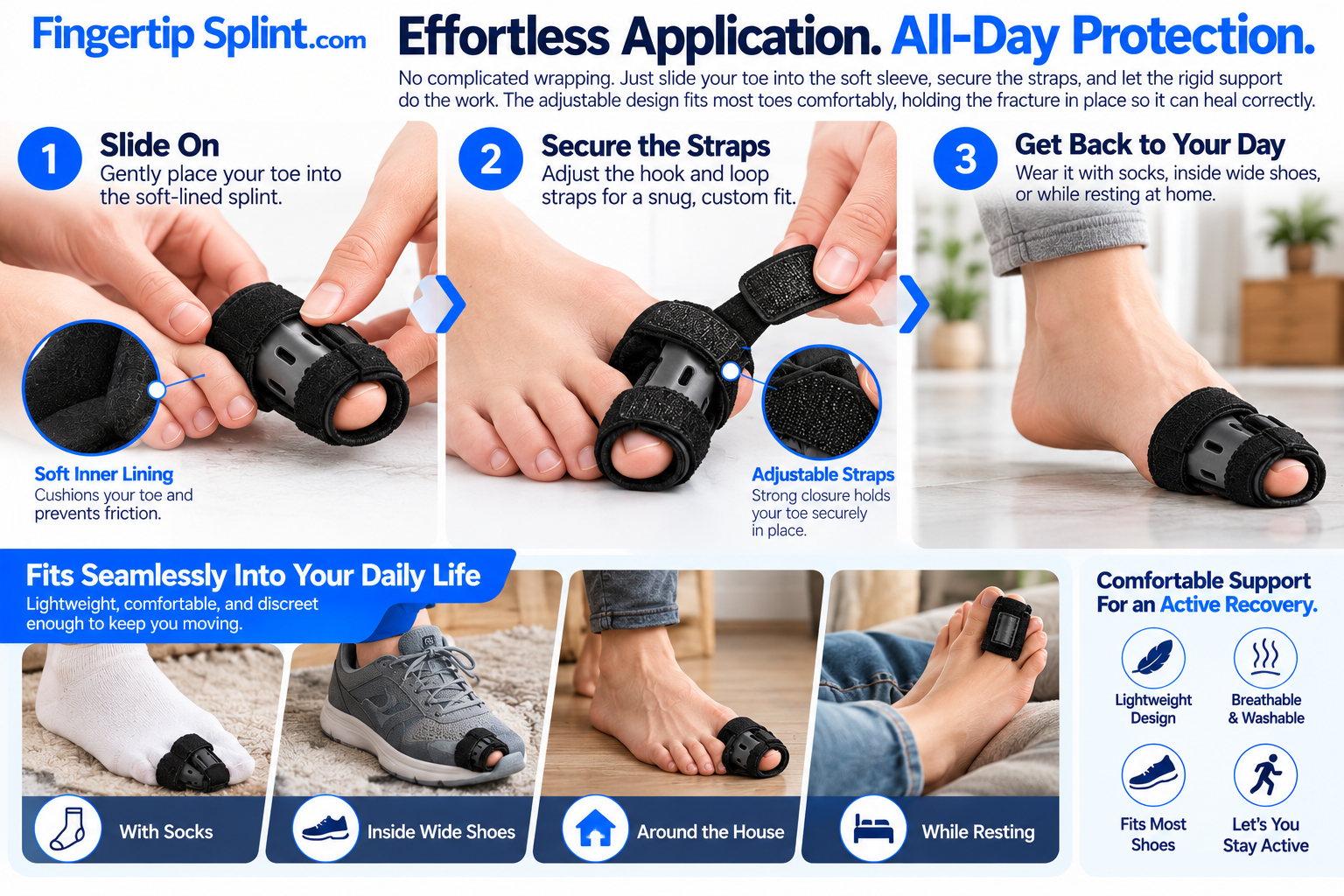
How to Wear an Adjustable Toe Splint: User Manual
Step 1: Check Whether the Brace Is Appropriate
Do not self-treat a suspected fracture or dislocation with this product. Seek medical advice to determine the correct support method.
Step 2: Inspect the Product
Check the textile band, toe support section, reinforcing components and fastening straps.
Step 3: Measure Your Forefoot
Use a flexible measuring tape around the intended forefoot area and compare the result with the verified supplier size chart.
Step 4: Confirm Toe Placement
Check the supplier’s fitting illustrations and ensure the selected toe position is appropriate for your condition.
Step 5: Open the Fasteners
Release the adjustable closures before placing the brace on your foot.
Step 6: Position the Forefoot Band
Place the wider band around the forefoot in the orientation shown by the manufacturer.
Step 7: Align the Toe Support
Position the toe support section alongside the intended toe without forcing the toe into an uncomfortable position.
Step 8: Secure the Toe Fastening
Close the toe fastening gently. Avoid excessive pressure.
Step 9: Adjust the Forefoot Band
Secure the forefoot band so that the brace stays positioned without squeezing the foot.
Step 10: Check Skin Color and Sensation
Ensure that the toe remains normally colored and that you do not experience numbness, tingling or increased swelling.
Step 11: Check for Pressure Points
Inspect the edges of the brace and the areas beneath the fasteners for rubbing or discomfort.
Step 12: Follow Activity Restrictions
Do not walk, run or play sports merely because the brace is fitted. Follow the activity and weight-bearing restrictions recommended for your injury.
Step 13: Use Suitable Footwear if Permitted
If your clinician allows footwear, choose a shoe that accommodates the brace without compressing the injured toe.
Step 14: Remove Carefully
Release the fasteners before removing the brace. Avoid pulling or twisting an injured toe.
Step 15: Clean According to Manufacturer Instructions
Use only the approved cleaning method. Do not assume machine washing or heat drying is safe.
Step 16: Allow the Brace to Dry
Dry the product using the supplier’s recommended method before reuse.
Step 17: Store Properly
Keep the brace in a clean, dry place away from excessive heat and damage.
Step 18: Replace if Damaged
Stop using the product if the fasteners fail, reinforcing components become exposed or the support loses its intended shape.
Broken Toe Splint: Uses, Toe Support and Injury Care Information
What Is a Broken Toe Splint?
A broken toe splint is a support device intended to help position or protect a toe. Different designs provide different degrees of stabilization, so the appropriate device depends on the injury.
What Causes a Broken Toe?
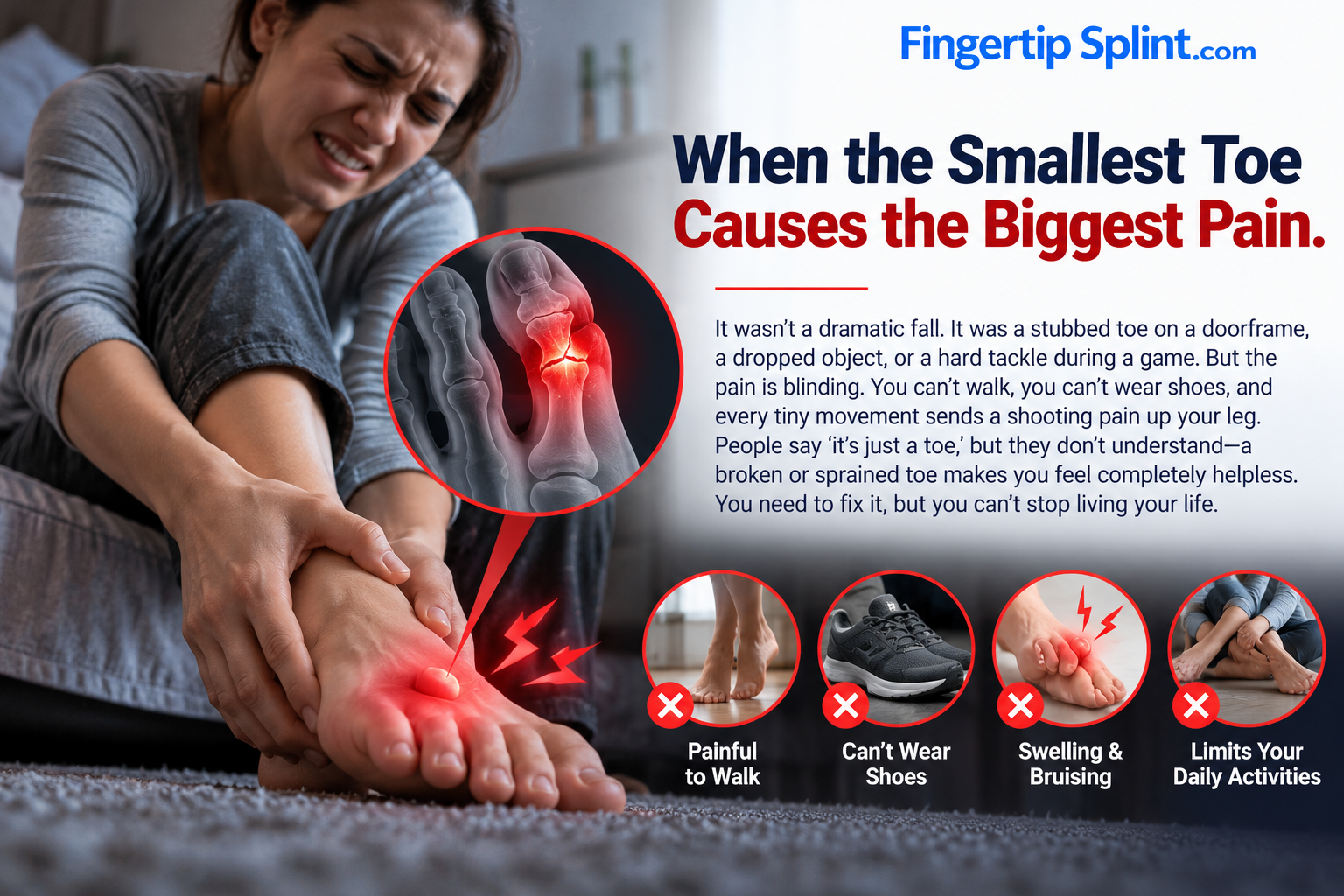
Toe fractures may result from stubbing a toe, dropping a heavy object on the foot, direct impact or sports-related trauma.
Common Symptoms of a Toe Fracture
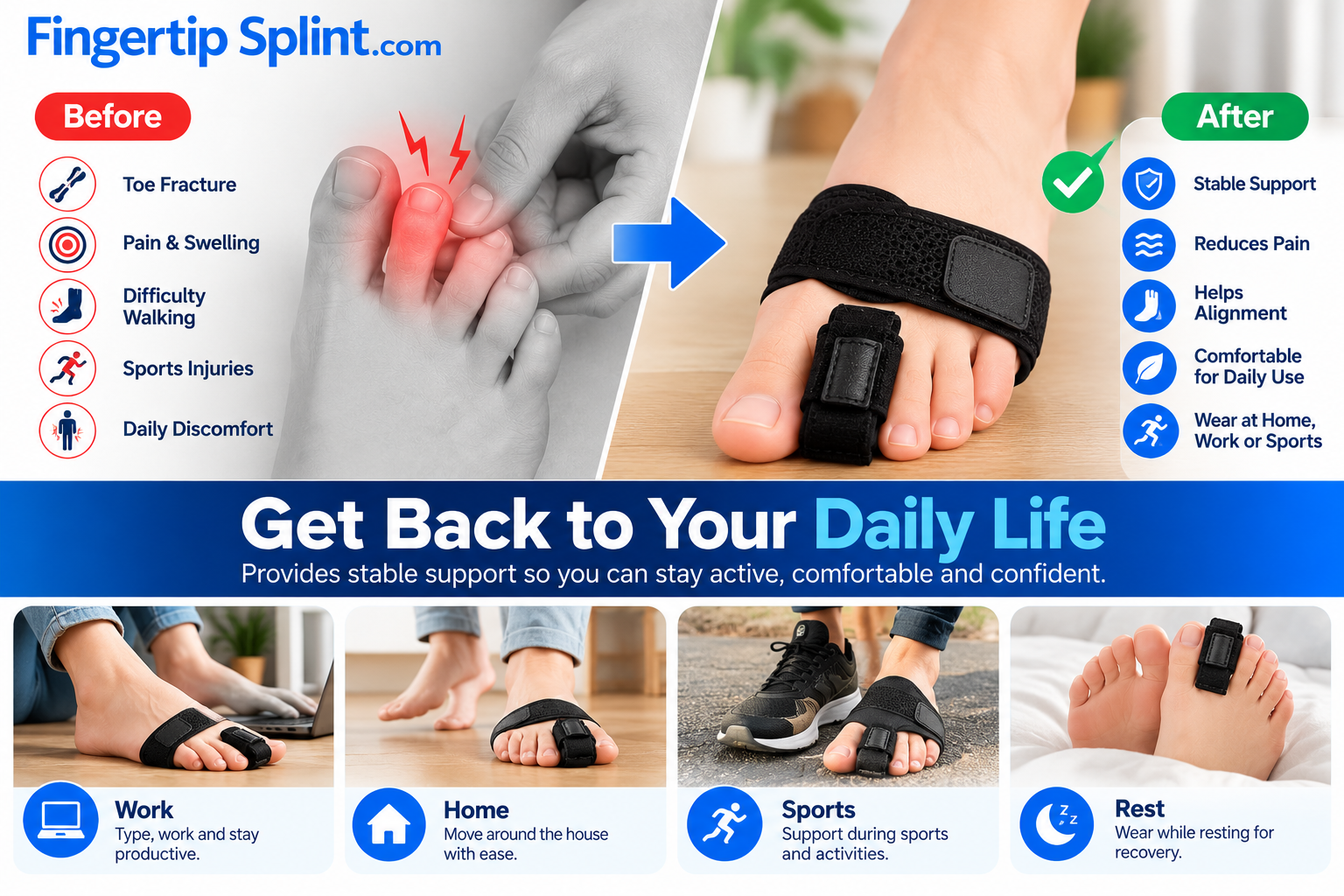
Possible symptoms include pain, swelling, bruising, tenderness and difficulty walking. These symptoms can also occur with other injuries, so assessment may be necessary.
Does Every Broken Toe Need a Splint?
No. Management depends on the affected toe, fracture location, alignment, stability and other clinical factors. Some injuries may be managed with buddy taping and appropriate footwear, while others need different treatment.
Can a Toe Splint Heal a Fracture Faster?
Faster healing should not be promised. Appropriate protection and activity management may be part of fracture care, but the device itself has not been shown to accelerate bone healing.
What Is the Difference Between a Toe Splint and Buddy Taping?
Buddy taping uses an adjacent toe as support, usually with padding between the toes. A separate toe brace uses its own structure and fastening components.
Can This Brace Replace a Medical Walking Boot?
Not necessarily. A walking boot may be prescribed to protect a larger area of the foot or restrict movement more extensively.
Is This Product Suitable for a Broken Big Toe?
Do not assume it is suitable. Big-toe injuries may require more careful assessment because of the toe’s role in walking and balance.
Can It Be Used for a Sprained Toe?
The suitability of this brace depends on the injured structures and the support required.
Can It Be Used for Sports Injuries?
It may be considered as a support accessory where appropriate, but wearing a brace does not establish that an injured person is ready to return to sport.
What Is Toe Immobilization?
Immobilization means restricting movement to protect a body part. Different injuries require different levels and positions of immobilization.
Does This Product Fully Immobilize the Toe?
Full immobilization has not been verified through product-specific testing.
Why Does the Brace Have a Forefoot Band?
The forefoot band helps anchor the toe support assembly and provides a point for fit adjustment.
What Do the Support Strips Do?
The supplier describes dual aluminum strips intended to reinforce the brace. The degree of support they provide has not been independently verified.
Can I Walk While Wearing the Toe Brace?
Walking should follow the restrictions appropriate for your injury. Do not increase weight-bearing without medical guidance after a suspected fracture.
Can I Wear It Inside Shoes?
Footwear compatibility depends on the brace, swelling and available shoe space. Avoid shoes that compress the injured area.
Can I Sleep in the Brace?
Overnight use should follow the manufacturer’s instructions and any clinical advice.
How Tight Should the Toe Support Be?
The support should remain positioned without causing numbness, tingling, discoloration, swelling or increased discomfort.
How Long Does a Broken Toe Take to Heal?
Healing time varies by the type of fracture, affected toe and individual circumstances. A healthcare professional can advise on expected recovery and follow-up.
When Should I Seek Urgent Medical Attention?
Seek urgent assessment for severe deformity, an open wound, loss of sensation, impaired circulation, significant injury to the big toe or other concerning symptoms.
Where Can I Learn More About Broken Toes?
Read the NHS broken toe guidance for general information about symptoms, self-care and when to seek help.
Frequently Asked Questions About the Adjustable Toe Splint
1. What is included in the package?
One adjustable toe support brace.
2. Is this a pair?
No. The product listing specifies one piece.
3. What colors are available?
The supplier photographs show black and beige. Confirm current availability before ordering.
4. Is the toe splint adjustable?
Yes, it has adjustable fastening components.
5. What size is the brace?
The supplier describes a one-size design and shows a forefoot circumference range of 18–26 cm. Verify this range against the current product specification.
6. How do I measure my foot?
Measure around the forefoot at the location indicated in the supplier’s sizing guide.
7. Is it suitable for men and women?
Suitability depends on individual foot measurements rather than gender.
8. Does it fit the big toe?
Big-toe compatibility is not established by the supplied fitting illustrations. Confirm before use.
9. Can it fit the middle toe?
The supplier illustrates a middle-toe position, but correct fit must still be checked.
10. Can it fit the ring toe?
A ring-toe position is shown in the supplier illustrations.
11. Can it fit the little toe?
The supplier illustrates little-toe placement, subject to appropriate sizing.
12. Can it support two adjacent toes?
A two-toe position is illustrated, but suitability for a specific injury must be confirmed.
13. Is it suitable for either foot?
Left- and right-foot compatibility should be confirmed with the supplier.
14. Does it contain aluminum strips?
Supplier images describe dual aluminum strips.
15. Is the brace made from medical-grade materials?
Medical-grade certification has not been provided.
16. Is it breathable?
The beige version has visible perforations. Formal breathability testing has not been supplied.
17. Is the brace reusable?
Yes, when it is properly maintained and remains functional.
18. Can it be washed?
Follow the manufacturer-approved cleaning instructions.
19. Can it be machine-washed?
Machine-washing compatibility has not been confirmed.
20. Does it immobilize a broken toe?
The degree of immobilization has not been clinically verified for this model.
21. Can it replace buddy taping?
Only when an appropriate healthcare professional confirms that this brace is suitable for the injury.
22. Can it replace a walking boot?
Not automatically. A walking boot may provide a different level of protection.
23. Can I wear it after a sports injury?
That depends on the injury and the required support.
24. Can I play sports while wearing it?
Do not return to sport without appropriate clearance after an injury.
25. Can I walk while wearing it?
Follow the weight-bearing advice appropriate for your condition.
26. Can I wear shoes over the brace?
Only if the footwear fits without creating pressure and its use is appropriate for your injury.
27. Can I wear socks with it?
Compatibility depends on the brace fit, sock thickness and skin comfort.
28. Can I sleep while wearing it?
Follow manufacturer guidance and medical instructions.
29. Will it reduce swelling?
Swelling reduction has not been established through product-specific evidence.
30. Will it relieve pain?
Pain relief cannot be guaranteed.
31. Will it make a fracture heal faster?
No faster-healing claim has been verified.
32. Can it prevent further injury?
No protective device can guarantee prevention of further injury.
33. Can it straighten a crooked toe?
It should not be used to force a deformed or injured toe straight.
34. How tight should the strap be?
Secure but comfortable, without impairing circulation.
35. What if my toe becomes numb?
Remove the brace immediately and seek medical advice if symptoms persist.
36. What if the brace rubs against my skin?
Stop use and reassess the fit. Persistent irritation warrants advice.
37. What if my foot is outside the size range?
Choose a different size or support design rather than forcing the brace to fit.
38. Is it suitable for children?
Children’s sizing and suitability have not been verified.
39. Can I order several pieces?
Yes, subject to stock availability and ordering arrangements.
40. Can I request a wholesale quote?
Yes. Visit the Fingertip Splint.com Request a Quote page.
Related Articles and Toe Support Education
Learn more about foot care, support accessories and practical fitting considerations through the Fingertip Splint.com Blog.
Broken Toe Symptoms and Treatment Information
For independent information about broken toes, see the NHS broken toe information page.
Toe Injuries and Foot Health
Explore additional general health information through the NHS website.
Browse More Support Accessories
Find related products in the Fingertip Splint.com shop and explore more educational articles on our foot and finger support blog.
Explore More Fingertip Splint.com Products and Resources
Visit the Fingertip Splint.com homepage to learn about our range of finger and toe support accessories.
Browse the online product collection to compare different support designs.
For questions about ordering, sizing and general product information, visit our Frequently Asked Questions page.
Wholesale Toe Splints and Support Brace Inquiries
Are you sourcing adjustable toe splints in bulk for retail, distribution or business purchasing?
Contact Fingertip Splint.com to inquire about quantities, product options, packaging requirements and delivery destinations.
Supplier Information
Explore our medical finger splint supplier information for related product sourcing inquiries.
Distributor Information
Visit our finger splint distributor page to learn more about business purchasing inquiries.
Request a Quote for Bulk Orders
Share your requested quantity, preferred color, destination and any packaging requirements.
Important Toe Injury Safety Information
This product is a toe support accessory. It is not guaranteed to stabilize every fracture, replace prescribed immobilization, eliminate pain, prevent further injury or accelerate healing.
Suspected fractures, dislocations, severe swelling, open wounds, visible deformity, numbness and circulation changes require appropriate medical assessment.
Do not force an injured toe into alignment or return to sports solely because a brace has been applied.
For independent medical information, visit the NHS broken toe guide.
Reviews
There are no reviews yet.