





Description
What Is a Cricket Pad Splint?
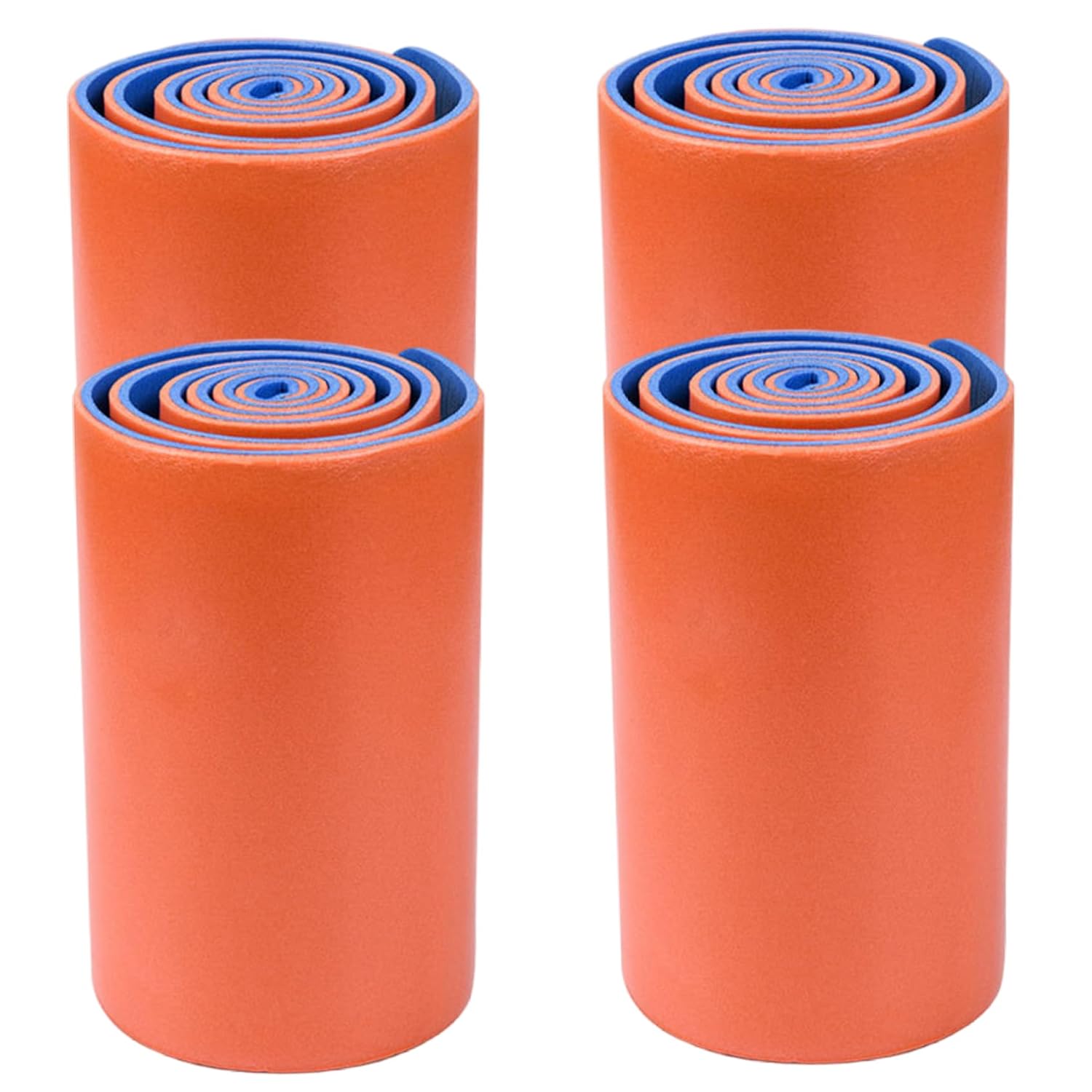
A cricket pad splint is a lightweight support device used to immobilize an injured finger or hand after impact. It features a flexible aluminum core that can be shaped to follow the natural contour of the affected area, combined with a soft foam inner layer that sits comfortably against the skin.
It is commonly used as a first-aid measure for finger jams, hairline fractures, and soft-tissue injuries that occur during cricket, baseball, and other ball sports. It is not a replacement for a clinical assessment, but it may help limit further movement and protect the injured area while you arrange professional care.
Cricket Pad Splint Designed For?
This product is suitable for cricket players, baseball players, and other athletes who experience finger or hand injuries during play. It may also be useful for anyone who needs a temporary, adjustable support following a minor hand injury in daily life or a sporting context.
If you are unsure whether your injury is serious, please consult a healthcare professional before relying on a splint alone. This product is suitable for cricket players, baseball players, and other athletes who experience finger or hand injuries during play. If you play multiple ball sports, our baseball finger splint is designed for similar impact injuries and may be worth comparing. For anyone who needs a more rigid option for ongoing support beyond the acute phase, a finger brace may provide a better long-term fit.
Key Features
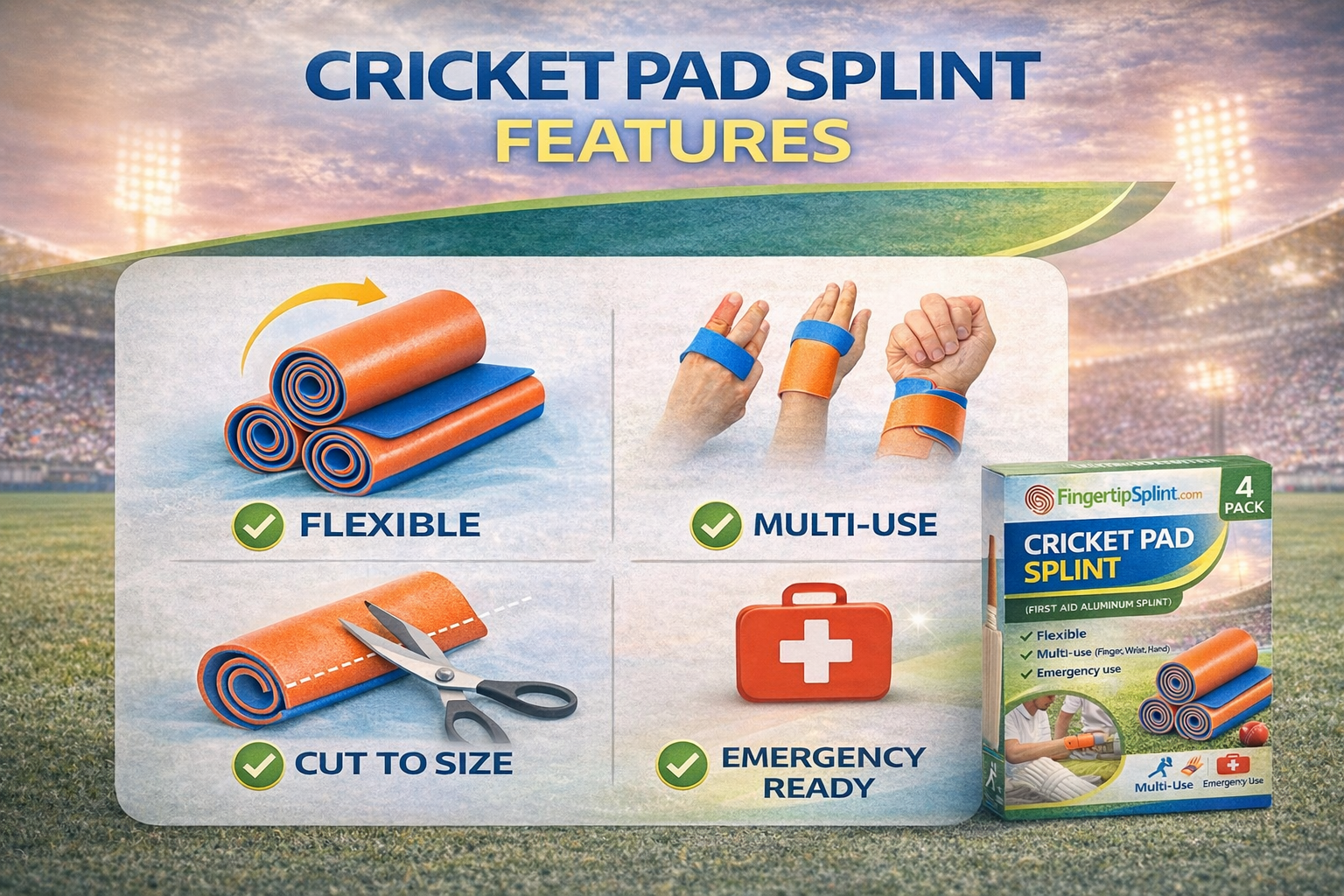
- Flexible aluminum core that can be gently shaped to match the injured finger or hand
- Soft foam padding on the interior for comfort against the skin
- Reusable and easy to clean
- Waterproof construction, suitable for wear during light activity
- Lightweight design that does not add unnecessary bulk
- Can be secured with medical tape or a bandage for a customized fit
What Injuries May It Help Support?
This splint is primarily designed for finger and hand injuries. It may provide supportive stabilization for:
- Jammed fingers from ball impact
- Suspected finger fractures pending a clinical assessment
- Finger or hand sprains where immobilization may help reduce discomfort
- General finger protection during the early stages of recovery
For wrist injuries, a dedicated wrist brace is likely to provide more appropriate support. If you are unsure which product fits your injury, feel free to contact us.
How to Apply It
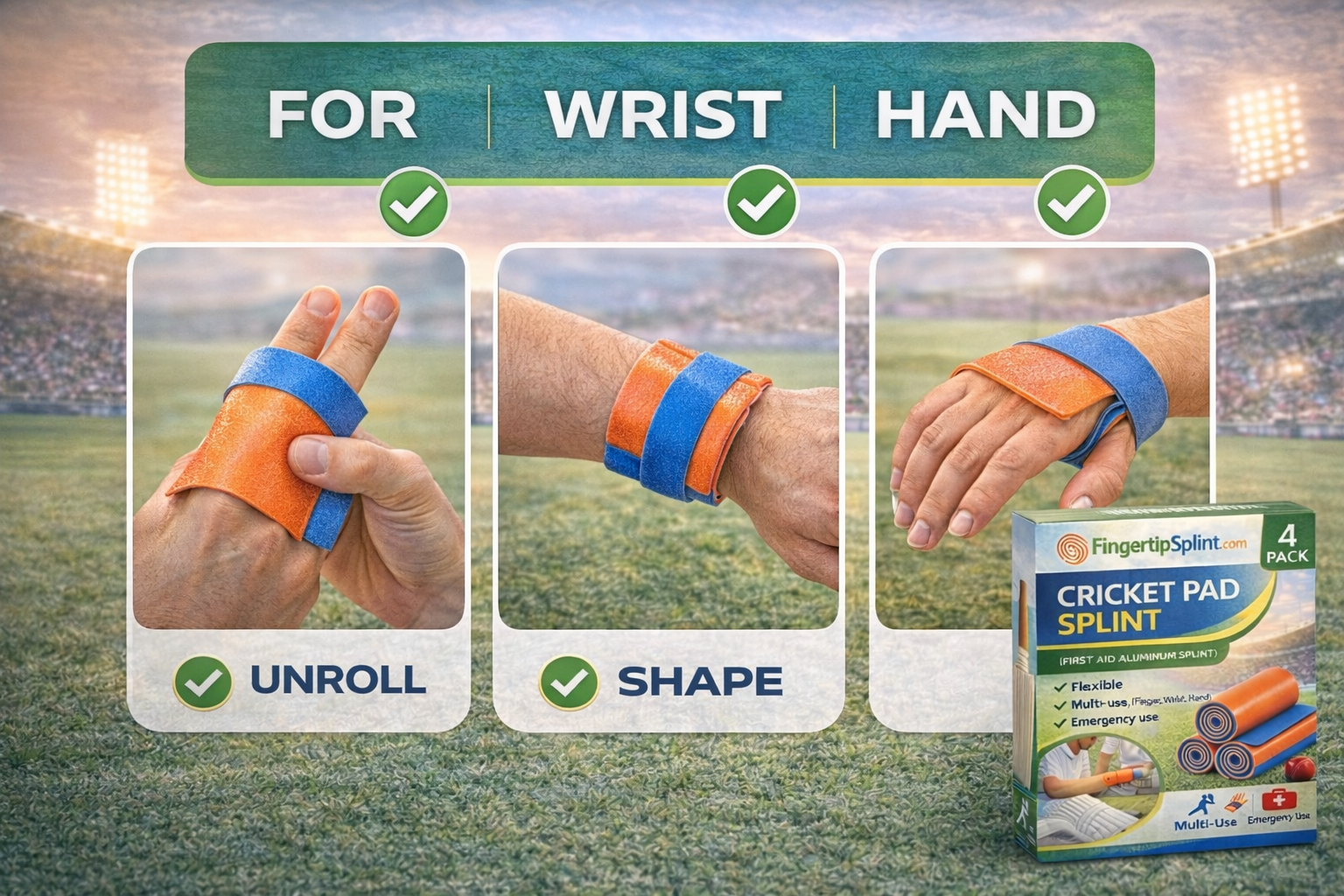
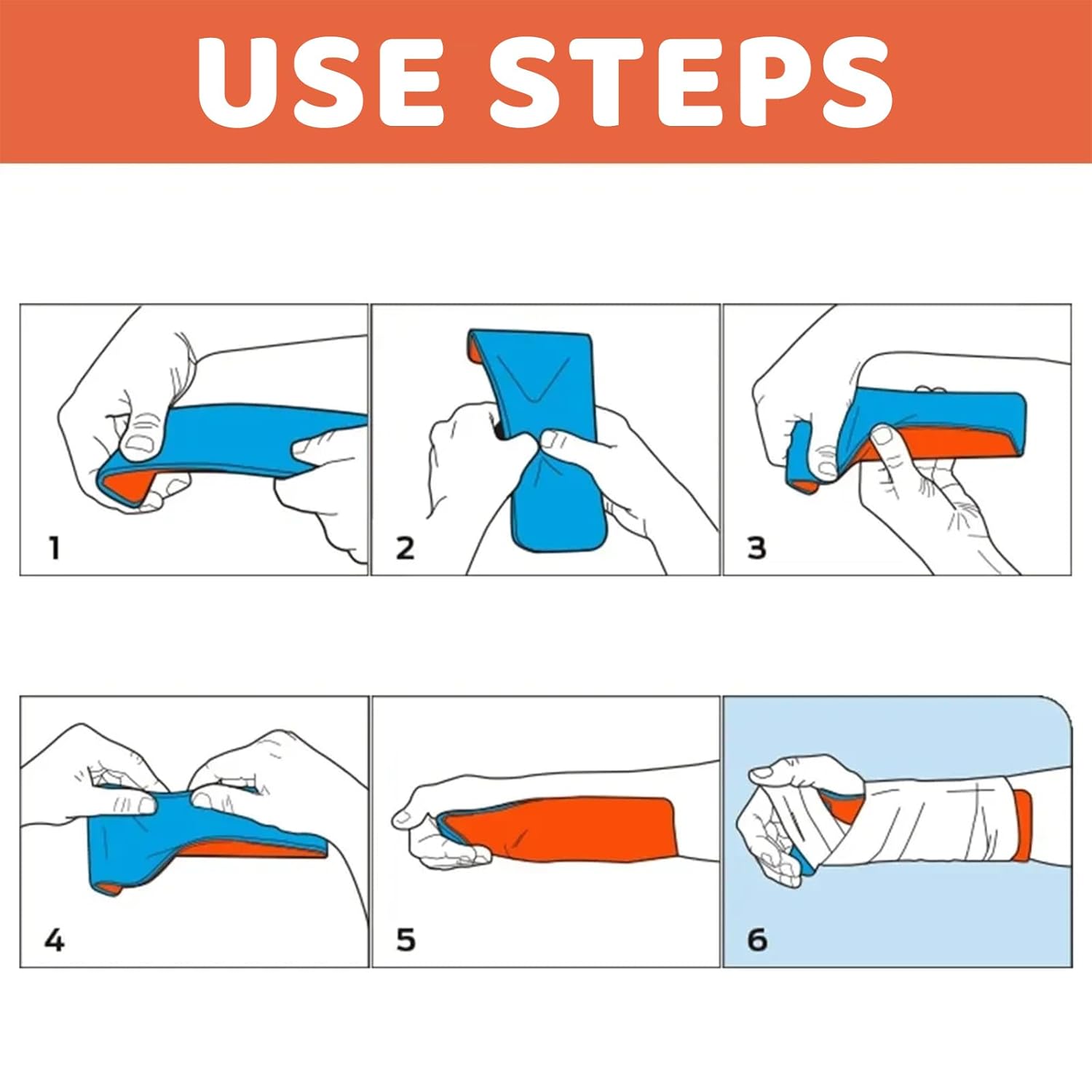
Start by gently shaping the aluminum core to match the natural position of your injured finger or hand. Position the padded side against the skin and secure the splint in place using medical tape or a bandage. The fit should feel firm and supportive without cutting off circulation. If you notice numbness, tingling, or increased pain after application, remove the splint and seek medical advice.
For finger injuries, aim to keep the injured joint in a neutral, comfortable position. Your clinician or hand therapist can advise on the correct angle and wearing schedule for your specific injury.
With and Without Splint Support
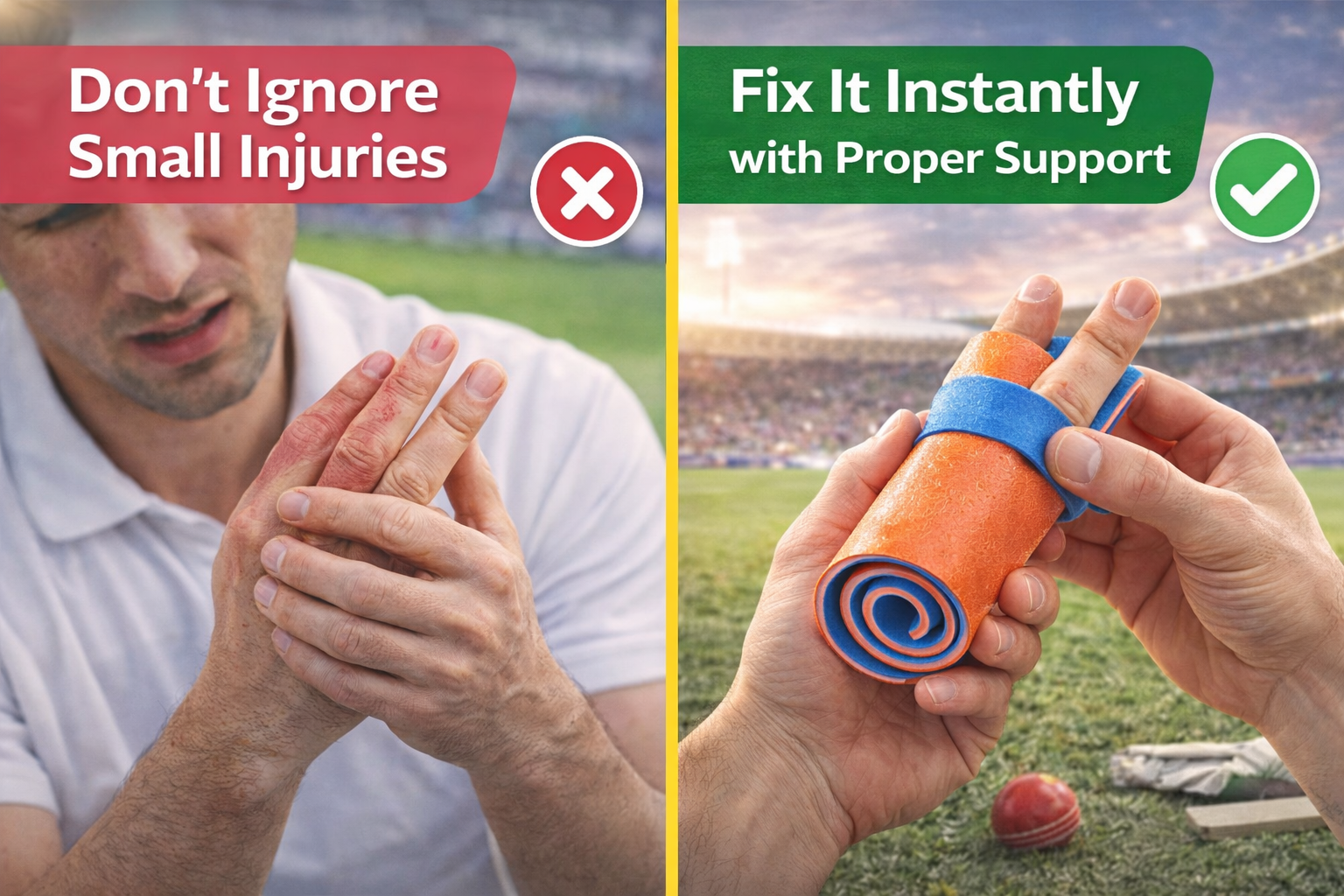
Leaving a finger or hand injury unsupported after a significant impact can allow the injured area to move freely, which may increase swelling and discomfort in the short term. Applying a supportive splint shortly after injury may help reduce unnecessary movement while you arrange a proper assessment. That said, a splint is a supportive tool, not a treatment. Severe pain, visible deformity, or loss of movement should always be assessed by a healthcare professional promptly.
Important Note
This splint is intended for first-aid and temporary supportive use. It is not a medical device and is not designed to replace professional diagnosis or treatment. For any injury that involves significant swelling, deformity, loss of sensation, or an inability to move the finger, please seek medical attention as soon as possible.
A cricket pad splint is a flexible, moldable support designed to stabilize finger and hand injuries sustained during play. Whether you are dealing with a jammed finger, a suspected fracture, or soft-tissue swelling after a ball impact, this splint may help reduce movement at the injured site while you seek proper assessment and begin recovery. If you are looking for a broader range of options, browse our full collection of cricket finger splints to find the support that best matches your injury.
What Injuries May It Help Support?
This splint is primarily designed for finger and hand injuries. It may provide supportive stabilization for jammed fingers from ball impact, suspected finger fractures pending a clinical assessment, and general finger protection during the early stages of recovery. For confirmed fingertip fractures, a dedicated distal phalanx fracture splint may offer more targeted immobilization. For a detailed clinical overview of finger fractures and how they are typically managed, the American Academy of Orthopaedic Surgeons provides a reliable and thorough patient reference.
How to Apply It
Start by gently shaping the aluminum core to match the natural position of your injured finger or hand. Position the padded side against the skin and secure the splint in place using medical tape or a bandage. The fit should feel firm and supportive without cutting off circulation. If you are unsure whether the injury is a fracture or a sprain before applying support, the NHS guide on broken and dislocated fingers explains the key warning signs clearly and is a helpful first reference.
Important Note
This splint is intended for first-aid and temporary supportive use. It is not a medical device and is not designed to replace professional diagnosis or treatment. For injuries that require more structured immobilization, explore our range of orthopedic splints for more rigid support options. For any injury involving significant swelling, deformity, or loss of sensation, please seek medical attention promptly. The American Society for Surgery of the Hand provides clear guidance on when a finger injury requires professional care.
Recovery Support Paragraph
Once the acute phase has passed and your clinician has cleared you for rehabilitation, rebuilding grip strength and restoring range of motion is an important next step. Our finger exerciser is designed to support that recovery phase, helping you work gradually back toward full hand function at a pace that suits your injury.
Frequently Asked Questions
What is a cricket pad splint used for? A cricket pad splint is used to stabilize and protect finger and hand injuries that occur during sports. It provides temporary immobilization following impact injuries such as finger jams or suspected fractures, and is typically used as a first-aid measure while a clinician assessment is arranged. This splint may be used as a temporary first-aid support for a suspected finger fracture, but a proper clinical assessment and X-ray are necessary to confirm the injury and determine the correct treatment. If the ball impact has caused your fingertip to droop and you cannot lift it on its own, a mallet finger splint is likely to be more appropriate for that specific injury. Do not rely on a splint alone if you suspect a fracture
Can I use this splint for a fractured finger? It may be used as a temporary first-aid support for a suspected finger fracture, but a proper X-ray and clinical assessment are necessary to confirm the injury and determine the correct treatment. Do not rely on a splint alone if you suspect a fracture.
Is this splint reusable? Yes. The aluminum and foam construction is designed to be cleaned and reused. Wipe the foam surface with a damp cloth and allow it to dry fully before storing or reapplying.
How do I know which size to choose? Measure the length of the injured finger from the base of the palm to just past the fingertip. Choose the size that covers the injured joint or joints comfortably without extending unnecessarily beyond the fingertip. If you are between sizes, the larger size generally allows a more comfortable fit.
How long should I wear a splint after a cricket injury? Wearing duration depends entirely on the nature and severity of the injury. A hand therapist or physician is best placed to advise on how long to keep the injured area immobilized. As a general guide, minor soft-tissue injuries may require a few days of support, while fractures typically need several weeks of proper immobilization under clinical guidance.
Medical Disclaimer: This product description is for general informational purposes only and does not constitute medical advice. Fingertip Splint does not diagnose, treat, or prescribe. For any serious, worsening, or persistent injury, please consult a qualified healthcare professional.


Reviews
There are no reviews yet.