
EMS Microcurrent Wrist Brace Explained: Features, Benefits and Everyday Use
An EMS microcurrent wrist device combines a wearable wrist format with an electronic stimulation system, so buyers need to understand both the physical construction and the electronic features. This guide explains what features an EMS microcurrent wrist brace has, what those features are supposed to do, what practical benefits they may offer, and how the device fits into everyday life — without making unsupported medical claims.
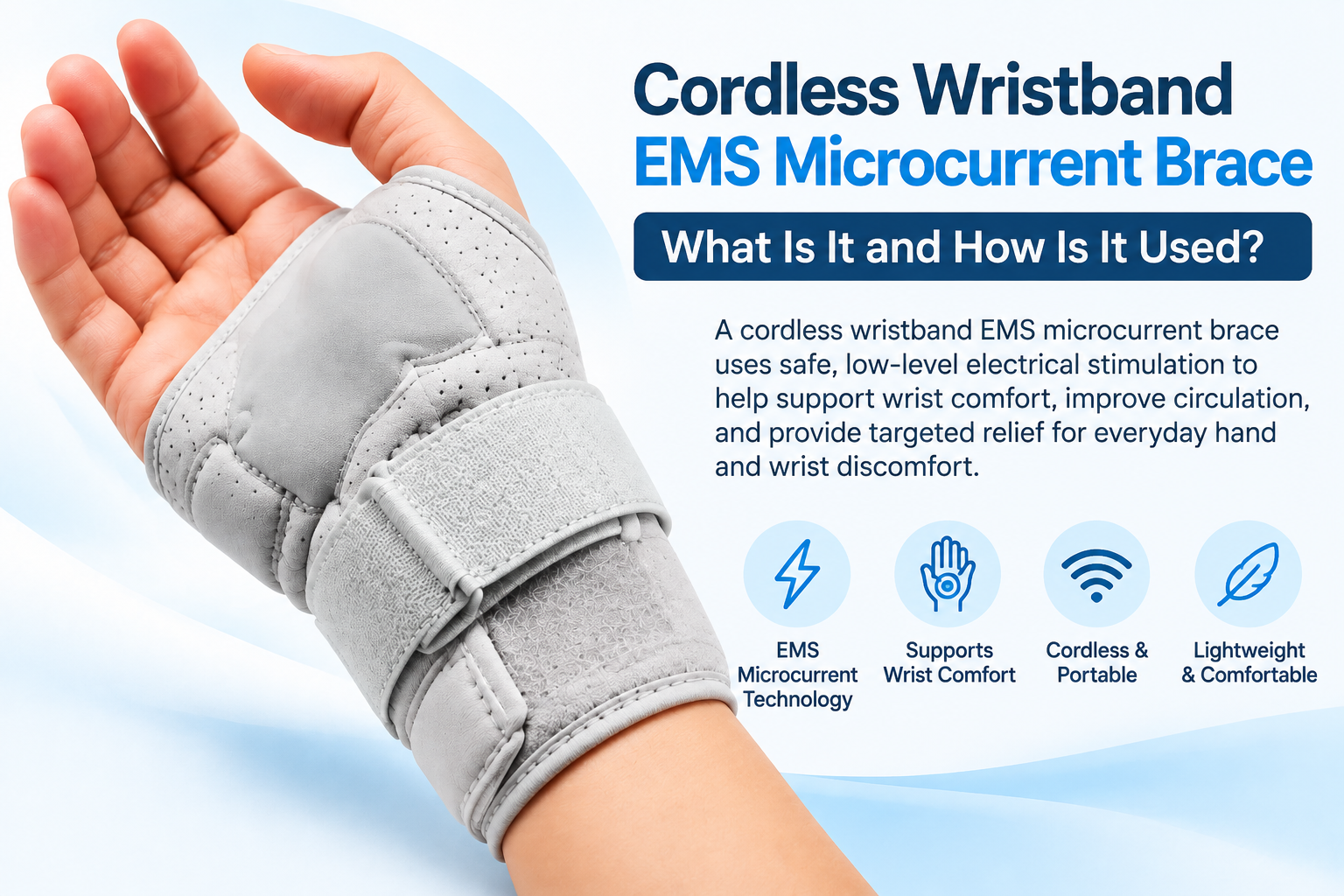
An EMS microcurrent wrist brace combines a wearable wristband format with an electronic stimulation system for targeted wrist support
What This Feature Guide Covers
- Quick Answer
- What Is an EMS Microcurrent Wrist Brace?
- EMS vs Microcurrent vs TENS
- 3D Interactive: Anatomy of the Device
- 10 Key Features Buyers Should Understand
- Interactive: Explore the Features
- Potential Benefits of the Design
- Benefits vs Claims Box
- Physical Wrist Support vs Electrical Stimulation
- Comfort, Fit and Skin Contact
- Everyday Activities
- Interactive: Is This Activity Compatible?
- Who May Be Researching This Type of Device?
- What It Cannot Automatically Do
- Benefits vs Limitations Table
- Common Mistakes
- Product Evaluation
- Doctor / Professional Advice
- Buyer Checklist
- FAQ
- Conclusion
Quick Answer: What Is an EMS Microcurrent Wrist Brace?
An EMS microcurrent wrist brace combines a wearable wristband with an electrical stimulation system. Buyers should examine its stimulation technology, controls, contact areas, fit, power system, adjustability, materials, and intended use. Everyday suitability depends on the device’s instructions, activity, and individual circumstances rather than the product name alone.
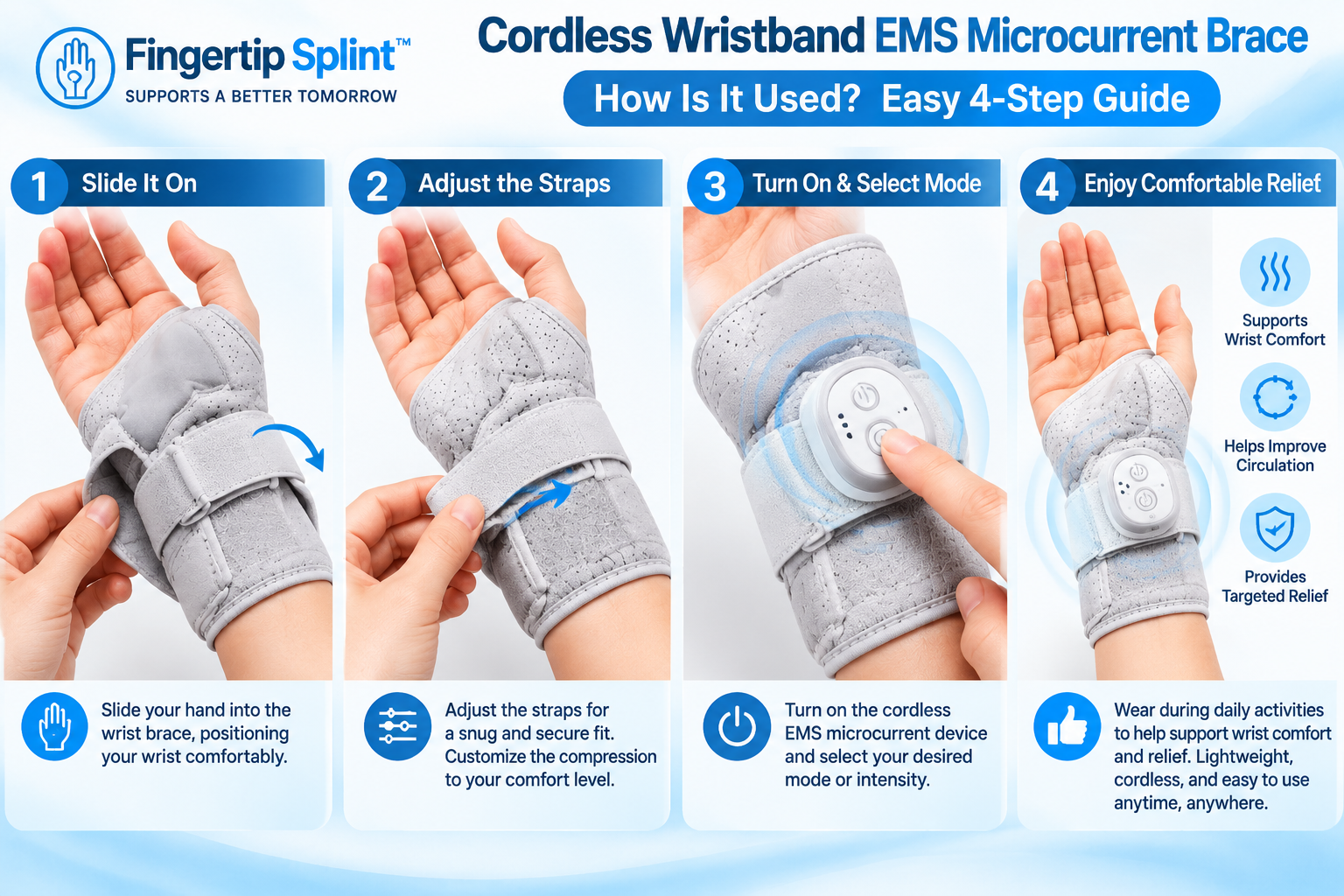
If you want the foundational product-use explanation first, the reference Cordless Wristband EMS Microcurrent Brace: What Is It and How Is It Used? covers setup and operation in detail. This article focuses specifically on features, potential practical benefits, and everyday-use experience.
What Is an EMS Microcurrent Wrist Brace?
This is a foundational section. The term combines several concepts, and understanding each one clarifies what the product actually is.
EMS
Electrical muscle stimulation generally refers to electrical impulses used to stimulate muscles. The FDA recognizes EMS within the category of nerve and muscle stimulators, with specific intended uses and applicable regulatory requirements.
Microcurrent
“Microcurrent” generally describes very low-level electrical current. However, the exact technology, waveform, and intended use depend on the specific device. Do not assume that every device marketed as “microcurrent” is technically identical.
Wrist Brace
The physical wearable component. The brace provides the platform that holds the electronic components in position around the wrist. The physical construction varies between designs.
Combined Product
The key concept: the brace is the physical platform; the electronic system provides the stimulation function. Both components matter for evaluation — the physical fit and the electronic specifications.
EMS vs Microcurrent vs TENS
This is a common source of buyer confusion. Understanding the general differences between these terms helps you interpret what a specific product actually uses. These terms are not automatically interchangeable.
| Term | General Meaning | What Buyers Should Check |
|---|---|---|
| EMS | Electrical muscle stimulation | What stimulation function does the manufacturer specify? |
| Microcurrent | Very low-level electrical current | What output or current does the product specify? |
| TENS | Transcutaneous electrical nerve stimulation | Is the device actually intended or cleared for TENS? |
| Wrist brace | Physical wearable support | Does it provide structural support or mainly hold the device? |
Important: The FDA recognizes TENS and EMS as different categories within nerve and muscle stimulation standards. Product terminology should always be checked against the manufacturer’s specifications rather than inferred from the marketing name. For a deeper look at how the technology works, the reference how a cordless EMS wrist brace works covers the mechanism in detail.
Anatomy of an EMS Microcurrent Wrist Brace: 3D Interactive
This interactive shows the key components of the device. Tap each callout to see what it contributes.
Interactive 3D: Anatomy of an EMS Microcurrent Wrist Brace
Tap each component to explore its role
1. Wristband
The physical wearable structure that wraps around the wrist. The wristband determines fit, positioning, and skin contact. Its construction affects how the device stays in place during use.
Verify all components against the specific product’s specifications.
10 Key Features Buyers Should Understand
This is one of the longest sections. Each feature contributes to how the device functions and how it fits into daily life. Understanding each feature helps you evaluate a specific product.
Feature 1: Electrical Stimulation Technology
The electrical stimulation technology is the core function that distinguishes an EMS microcurrent wrist brace from a conventional support brace. Check what technology the manufacturer identifies — is it EMS, microcurrent, TENS, or a combination? Do not judge the device by the word “microcurrent” alone. Different devices may use different technologies even if they use the same descriptive terms.
Feature 2: Stimulation Settings
Settings may include modes, intensity levels, programs, and session controls. Greater control may allow users to adjust the device according to its instructions. However, more settings don’t automatically mean better results. The purpose of adjustable settings is to allow comfortable and appropriate use — not to serve as a measure of effectiveness.
Feature 3: Cordless Design
A cordless design eliminates the external cable during use, offering practical benefits like easier portability and less cable management. However, cordless is a convenience characteristic — not proof of greater therapeutic effectiveness.
Feature 4: Adjustable Wristband
Fit matters significantly. A wearable device must stay positioned correctly for the intended contact and function. Adjustment systems may include straps, closures, or elastic elements. The wristband should fit securely without excessive pressure. Check the product’s sizing instructions.
Feature 5: Contact / Electrode System
The contact or electrode areas deliver the stimulation. Correct placement matters — the contacts need to sit where the manufacturer intends. Skin condition matters for both comfort and function. Always follow the manufacturer’s specific instructions for electrode placement. Do not improvise electrode placement.
Feature 6: Control Interface
Controls may include power buttons, mode selection, intensity controls, and display indicators. The specific controls depend on the product. Verify the actual controls before use. A well-designed interface makes the device easier to operate appropriately.
Feature 7: Battery / Power
Cordless operation requires an integrated power source. This may include rechargeable batteries or other power systems. Check how the device is powered or charged, and understand the practical implications for session preparation and storage. Don’t assume a specific battery runtime without checking the product’s specifications.
Feature 8: Materials
Materials affect comfort, skin contact, breathability, and durability. Consider what touches the skin, how the materials breathe, whether padding is present, and how the device should be cleaned. Moisture management matters for extended wear.
Feature 9: Physical Support
This is an important question: does the product actually provide structural wrist support, or is the “brace” primarily the wearable platform for the electronic system? The physical support characteristics depend on the specific construction. Not every device marketed as a “wrist brace” provides the same level of structural support.
Feature 10: Portability
The compact wearable format may be convenient for travel, storage, home use, and desk use. However, do not assume the device is appropriate for use during every activity. Follow the manufacturer’s intended-use instructions for what activities are appropriate.
Interactive: Explore the Features
Click each feature to understand what it is, why it matters, what to check, and a common mistake. This is an educational tool, not a product recommendation.
Explore the Features
Click each feature to see what it is and what to check.
Potential Benefits of the Design
This section describes potential practical advantages of the design — not medical outcomes. Each benefit is structured as feature, practical advantage, real-life example, and limitation.
Benefit 1: Portability
A cordless format can simplify moving the device between locations. For example, a buyer working at a desk may prefer a compact wearable format over a larger wired system. However, portability doesn’t automatically mean the device is appropriate for use during every activity.
Benefit 2: User Control
If the device provides adjustable settings, the user may have more control over the session. The ability to adjust settings according to the manufacturer’s instructions allows the device to be used appropriately. However, control should remain within the manufacturer’s instructions — settings are not a measure of effectiveness.
Benefit 3: Wearable Convenience
A wristband format can be easier to integrate into a normal routine than a larger device. The wearable design means the device stays in position without requiring the user to hold or manage a separate unit.
Benefit 4: Combined Wearable Format
The user doesn’t need to separately manage a wristband and a large stimulation unit if the product integrates them. The integrated design may simplify setup and use compared to devices with separate components.
Benefit 5: Easy Storage and Transport
A compact device can be useful for people moving between home, office, and travel. The smaller form factor may be easier to store and transport than larger equipment.
Benefit 6: Adjustable Fit
A properly fitted band may help maintain positioning and comfort. Adjustability allows the fit to be modified to accommodate different wrist dimensions. However, proper fit still depends on correct sizing and appropriate adjustment.
Benefits vs Claims
This is an important distinction for buyers. Understanding the difference between a product feature, a practical benefit, and an unsupported claim helps evaluate product marketing responsibly.
Feature → Reasonable Benefit → Unsupported Leap
Cordless design
Less cable management
Therefore it provides better medical results
Adjustable settings
User control over intensity
Therefore more intensity is better
Wearable wristband format
Compact, integrated design
Therefore it treats every wrist problem
Physical Wrist Support vs Electrical Stimulation
This is a major comparison section. A conventional wrist brace and an EMS microcurrent device approach wrist support differently. Understanding the difference helps you evaluate which type of device matches what you are looking for.
Conventional Wrist Brace
Primarily works through physical structure, coverage, compression, positioning, and movement control. The brace’s function is mechanical — it provides structural support through its shape and materials.
EMS / Microcurrent Device
May involve electronic stimulation, contact or electrode areas, controls, and a power source. The device adds an electronic function to the wearable format. Whether it also provides structural support depends on the specific design.
| Characteristic | Traditional Wrist Brace | EMS / Microcurrent Device |
|---|---|---|
| Physical support | Design-dependent | Design-dependent |
| Electrical stimulation | No | Yes, if specified |
| Power required | No | Yes |
| Controls | Usually none | Usually present |
| Contact areas | Fabric or support surface | Device-specific contact areas |
| Portability | Usually high | Usually high if cordless |
| Fit | Important | Important |
| Instructions | Fit and use instructions | Fit and electrical-use instructions |
An EMS microcurrent wrist brace combines physical wearable structure with electronic stimulation components for integrated wrist support
Comfort, Fit and Skin Contact
A feature is only useful if the device fits properly. This section covers the practical considerations for comfort, fit, and skin contact.
Fit Considerations
Too Loose
- Device movement
- Poor positioning
- Reduced contact
- Inconsistent comfort
Too Tight
- Pressure
- Skin irritation
- Discomfort
- Numbness or tingling
Appropriate Fit
- Based on manufacturer sizing
- Correct positioning
- Secure fastening
- Comfortable skin contact
Skin and Contact Area
Because this is an electrical stimulation device, skin and contact area care is especially important. Clean and dry skin according to the manufacturer’s instructions. Inspect the skin before use. Don’t place electrodes over areas excluded by manufacturer instructions. Don’t ignore irritation. Don’t improvise electrode placement. FDA guidance specifically warns about stimulation over swollen, infected, or inflamed areas and notes possible skin irritation or hypersensitivity.
Important: Follow the manufacturer’s instructions for skin preparation and electrode placement. Do not use the device over areas that the manufacturer excludes. If skin irritation develops, stop using the device and seek appropriate guidance if it persists.
Everyday Activities
This section answers the question: where does this device actually fit into daily life? The considerations vary by activity and depend on the specific device’s intended use.
Working at a Desk
Consider sitting position, wrist placement, device comfort, and whether controls are accessible. Some devices may be appropriate for desk use; others may not, depending on the manufacturer’s instructions.
Studying
Consider writing, keyboard use, long sitting periods, and whether the device interferes with these activities. Follow the manufacturer’s guidance for appropriate use.
Traveling
Consider portability, charging, storage, and whether a carrying case is provided. The cordless format may be convenient for travel, but check the product’s instructions for any travel-specific considerations.
Resting
Intended use should follow the manufacturer’s instructions rather than assuming the device should be worn continuously. Do not assume overnight use is appropriate unless explicitly instructed.
Household Tasks
Consider whether the device interferes with gripping, lifting, or repetitive movements. Also consider whether the activity is appropriate for the device’s intended use.
Important Safety Section: FDA guidance for powered muscle stimulators states that portable stimulators should not be used while driving, operating machinery, or during activities where involuntary muscle contractions could create injury risk. The following situations require particular caution:
- Driving: Do not use while driving.
- Machinery: Do not use where involuntary contractions could create a hazard.
- Water: Only use around water if the manufacturer explicitly says the device is designed for it.
- Exercise: Do not assume the device is appropriate during strenuous activity.
- Sleeping: Do not assume overnight use is appropriate unless explicitly instructed.
Interactive: Is This Activity Compatible?
Select an activity to see what to check. This tool provides a checklist, not a safety clearance.
Is This Activity Compatible?
Choose an activity to see what to check.
- Manufacturer instructions: Check whether the device’s instructions describe typing as an appropriate activity.
- Movement requirements: Consider whether the device allows the finger and wrist movements needed for typing.
- Electrical stimulation: Consider whether the device is intended to deliver stimulation during this activity.
- Device positioning: Check whether the device stays positioned during typing.
- Risk of involuntary movement: Consider whether stimulation could create unwanted movement.
- Skin contact: Check for any skin changes during extended use.
Who May Be Researching This Type of Device?
This section describes potential buyer audiences — not medical recommendations. Different people come to this product category for different reasons.
People Researching Wearable Wrist Devices
Some people are interested in understanding what a wearable electronic wrist device is and what features it offers.
Buyers Comparing Traditional Braces With Electronic Devices
Others are comparing conventional wrist support with electronic devices and want to understand the differences.
People Interested in Cordless Technology
Some readers are specifically interested in portable, cordless formats that don’t require external cables or controllers during use.
People Looking for a Portable Format
Others want a device that is easy to store, transport, and use between different locations.
General Consumers Researching EMS / Microcurrent Terminology
Some readers want to understand what EMS, microcurrent, and TENS actually mean and how the terminology applies to specific products.
Important: Whether an electrical stimulation device is medically appropriate for a particular condition is a separate question that may require professional guidance. This article does not recommend the device for any specific medical condition.
What It Cannot Automatically Do
This section makes the article more trustworthy by explaining what the device cannot do. Understanding limitations helps set appropriate expectations.
It Is Not a Diagnosis
The device does not tell you what underlying problem you have. Understanding the underlying cause is separate from selecting a device.
It Is Not Automatically Appropriate for Every Wrist Problem
Different wrist problems may require different approaches. A product category alone does not establish medical suitability.
It Does Not Replace Professional Assessment
When professional evaluation is needed, a device does not replace appropriate medical assessment or treatment.
It Does Not Guarantee a Specific Outcome
The device is a product with specific features. It does not guarantee pain relief, recovery, or any other specific medical outcome.
It Is Not Automatically Protective
A wearable device is not automatically protective against impact, water, heat, chemicals, or other hazards unless the product is specifically rated for those conditions.
It Is Not a Substitute for Appropriate Use Instructions
The manufacturer’s instructions describe how the device should be used. Following them is essential.
Benefits vs Limitations Table
This table balances practical advantages with limitations. It helps buyers evaluate the device realistically.
| Feature / Benefit | Practical Advantage | Limitation |
|---|---|---|
| Cordless | Portable | Requires power or battery |
| Adjustable | More control over fit | Adjustment doesn’t guarantee perfect fit |
| Electrical stimulation | Adds electronic functionality | Not appropriate for everyone |
| Wristband format | Compact wearable design | May not provide rigid structural support |
| Multiple settings | User control | More settings can create confusion |
| Portable | Easy to transport | Still requires appropriate use conditions |
Common Mistakes
These mistakes come up frequently when people use EMS microcurrent wrist braces. Avoiding them improves the experience and reduces risk.
Technology and output specifications can differ between products.
Check: the specific product’s technology specifications.
Intensity should be handled according to the manufacturer’s instructions.
Check: the manufacturer’s recommended settings.
A product category doesn’t diagnose the underlying problem.
Check: whether professional assessment is appropriate.
Poor positioning can affect comfort and contact.
Check: the manufacturer’s sizing and fit instructions.
Use only the manufacturer’s intended placement.
Check: the specific instructions for electrode or contact placement.
Electrical stimulation can cause skin irritation in some circumstances.
Check: skin condition before and after use.
FDA guidance specifically warns against use during driving, machinery operation, or activities where involuntary contractions create risk.
Check: follow the manufacturer’s activity restrictions.
Look for actual specifications rather than descriptive terms.
Check: the product’s documented specifications and instructions.
Product Evaluation: How to Apply the Feature Framework
After understanding the features and benefits framework, here is a specific product to examine. The Cordless Wristband EMS Microcurrent Brace is one example of a cordless wristband device. Evaluate it using the 10-feature framework above — not by its name alone.
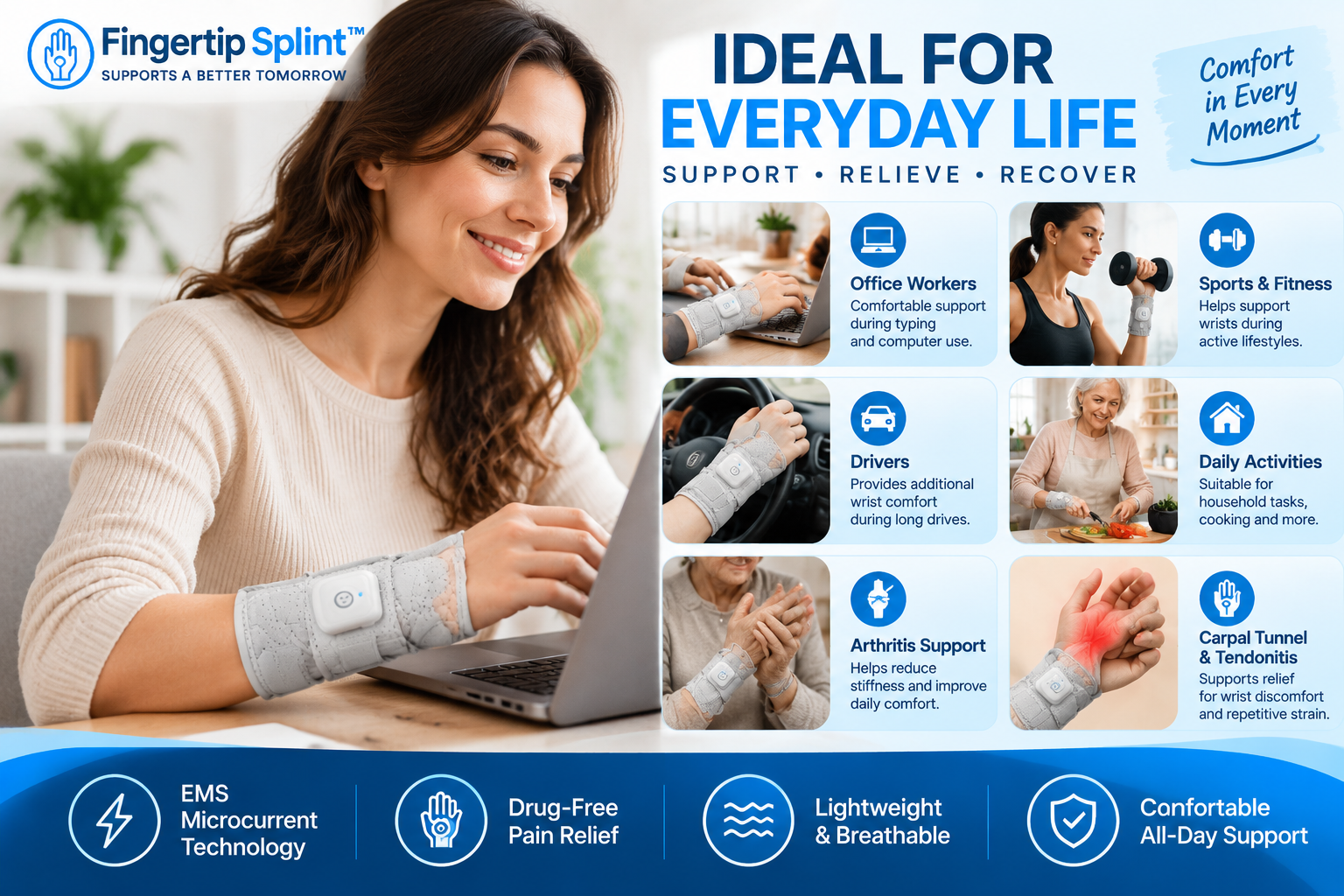
Cordless Wristband EMS Microcurrent Brace
- Cordless wearable format
- Wristband-style design
- Electronic stimulation system
- Adjustable fit
- Compact and portable
Evaluation Framework
Technology
Check what the product specifically identifies about its technology. Review the product page for specific information about EMS, microcurrent, or the electrical stimulation approach.
Form Factor
Review how the device is worn. The cordless wristband format integrates the components around the wrist.
Controls
Review what settings are documented. Check what the user can adjust according to the manufacturer’s instructions.
Power
Review how the device is powered. Check the product specifications for the power system.
Fit
Review what sizing and adjustment information is provided. Follow the manufacturer’s sizing instructions.
Contact
Review how stimulation is delivered. Check the product page for information about contact or electrode placement.
Everyday Use
Review what activities might interact with the device. Follow the manufacturer’s intended-use instructions.
Care and Safety
Review what maintenance is specified and what warnings or instructions are supplied. Follow the manufacturer’s care instructions.
For readers who want to understand the broader category of wrist and hand support products, the FingerTipSplint wrist-support articles provide additional educational content. For B2B readers, the medical finger splint supplier page provides bulk purchasing information.
What Would a Healthcare Professional Want You to Check?
This section is written with an EEAT (Experience, Expertise, Authoritativeness, Trustworthiness) perspective. It does not provide individualized medical advice, but it explains what a healthcare professional might want you to consider.
1. What Are You Actually Trying to Address?
Understanding the reason for considering a device helps clarify whether it is appropriate.
2. Has the Underlying Problem Been Evaluated?
A device should not substitute for understanding the underlying issue.
3. Is Electrical Stimulation Appropriate?
A professional can help determine whether electrical stimulation is appropriate for a specific situation.
4. Does the Device Match Its Intended Use?
Check whether the device’s intended use matches the reason you are considering it.
5. Are There Any Personal Factors That Make Electrical Stimulation Unsuitable?
Some people may not be appropriate candidates for electrical stimulation devices. The FDA’s powered-muscle-stimulator guidance identifies several precautions and contraindication-related considerations. Follow the specific device’s current instructions and obtain professional advice where appropriate.
Who Should Be Cautious? Potential considerations include implanted electronic devices, certain heart conditions, epilepsy, pregnancy, reduced skin sensation, recent surgery, acute injury, and inflamed or infected skin. The FDA’s powered-muscle-stimulator guidance identifies several precautions and contraindication-related considerations. The final decision about whether electrical stimulation is appropriate for a specific situation should follow the specific device’s current instructions and professional advice where appropriate.
Warning Signs That Warrant Professional Assessment
- Unexpected or concerning pain during or after use
- Skin injury or marked irritation
- Unusual swelling
- Concerning numbness or tingling
- Device malfunction
- Symptoms that are not improving
- Symptoms that worsen with use
For general information about wrist and hand conditions, see the Mayo Clinic overview of carpal tunnel syndrome. For broader hand and wrist anatomy information, the Cleveland Clinic hand anatomy resource provides useful context. For an orthopedic perspective, the AAOS hand and wrist conditions library is a widely referenced resource. For general public health information about wrist and hand symptoms, the NHS hand pain guidance offers a practical overview. Additional medical reference information is available through MedlinePlus hand injuries and disorders. For clinical and anatomy-focused context, Johns Hopkins Medicine hand conditions provides further reading. General educational context is also available through WebMD’s overview of carpal tunnel syndrome and Healthline’s general wrist and hand information. For peer-reviewed literature, NCBI PubMed Central hosts open-access research where appropriate. For regulatory information about medical devices, see the FDA medical devices overview.
Important: This article does not provide individualized medical advice. Always consult an appropriate healthcare professional regarding your specific situation, and always follow the manufacturer’s contraindications and instructions.
Buyer Checklist
Use this checklist before purchasing an EMS microcurrent wrist brace. Click each item as you review it.
Before Buying
Frequently Asked Questions
An EMS microcurrent wrist brace combines a wearable wristband with an electrical stimulation system. EMS generally refers to electrical muscle stimulation, and microcurrent generally refers to very low-level electrical current. However, product terminology varies, so buyers should check the manufacturer’s specifications rather than inferring the technology from the name. The device includes both a physical wearable structure and electronic components.
No — the terms are not automatically interchangeable. EMS (electrical muscle stimulation) generally refers to electrical impulses used to stimulate muscles. Microcurrent generally refers to very low-level electrical current. TENS generally refers to electrical stimulation used in pain-management devices. The FDA recognizes TENS and EMS as different categories within nerve and muscle stimulation standards. Product terminology should be checked against the manufacturer’s specifications rather than inferred from the marketing name.
Look for the stimulation technology (what the manufacturer actually specifies), controls and settings, contact or electrode system (how stimulation is delivered), fit and sizing, power system, materials, adjustability, care instructions, and safety information. Also check whether the product provides physical wrist support or is primarily the wearable platform for the electronic system. Evaluate these features against documented specifications rather than marketing terms.
Practical benefits of a cordless format may include portability, less cable management, easier setup, a compact wearable design, and convenience for moving between locations. These are practical advantages of the format — not medical claims. Cordless is a convenience characteristic; it does not automatically mean more effective. Always distinguish product features from medical outcomes.
Suitability depends on the product’s instructions, the activity, and the individual situation. Some activities may be compatible; others may not. FDA guidance for powered muscle stimulators specifically warns against use while driving, operating machinery, or during activities where involuntary muscle contractions could create injury risk. Follow the manufacturer’s intended-use instructions for what activities are appropriate. Do not assume the device is suitable for every activity.
No — stronger stimulation is not automatically better. Sensation depends on the device technology, setting, contact quality, individual sensitivity, and the product design. Follow the manufacturer’s guidance for appropriate settings. Do not increase intensity simply to experience a stronger sensation. If the sensation is uncomfortable, painful, or concerning, reduce the setting or stop using the device according to the manufacturer’s instructions.
Stop using the device and seek appropriate professional advice if use causes unexpected or persistent pain, skin injury, marked irritation, unusual swelling, concerning numbness or tingling, or other unexpected symptoms. Also stop if the device malfunctions. Do not continue using a device that is causing concerning symptoms, and do not use the device to delay appropriate medical assessment when symptoms are significant. Always follow the manufacturer’s instructions and seek professional guidance where appropriate.
Conclusion: Features and Benefits Depend on the Specific Device
An EMS microcurrent wrist brace is defined by its features — the electrical stimulation technology, controls, contact system, fit, power system, materials, and physical support characteristics. These features may offer practical benefits such as portability, user control, and wearable convenience. However, a convenient feature isn’t automatically a medical benefit, and the appropriate use of the device depends on its documented specifications and instructions.
This guide has covered what an EMS microcurrent wrist brace is, the difference between EMS, microcurrent, and TENS, ten key features buyers should understand, potential practical benefits, the difference between physical support and electrical stimulation, comfort and fit considerations, everyday activities, common mistakes, and what a healthcare professional might want you to check. The goal has been to help buyers evaluate features and benefits accurately — not to make unsupported medical claims.
Ready to Compare an EMS Microcurrent Wrist Brace?
Before choosing an EMS microcurrent wrist brace, compare its actual technology, fit, stimulation controls, contact system, power requirements, safety information, and intended use. A product should be evaluated by its documented specifications rather than by the strongest marketing claim. The Cordless Wristband EMS Microcurrent Brace is one example to evaluate using the feature framework in this guide.
View the Cordless Wristband EMS Microcurrent BraceFor business or wholesale inquiries, you can request a product quote. For broader product questions, see the FingerTipSplint FAQ, and for additional educational content, explore the FingerTipSplint blog.