
A brace can look excellent on a product page but become frustrating during everyday life if it slips, feels too tight, restricts necessary movement, becomes hot, rubs the skin, is difficult to adjust, or interferes with normal tasks. A wrist brace intended for daily use needs a balance of support, fit, mobility, and comfort — not simply maximum compression. For a broader view of the FingerTipSplint range, start with adjustable wrist support options.
Table of Contents
- What Is an Adjustable Wrist Brace for Daily Use?
- 10 Features That Matter
- Brace for Different Daily Activities
- How to Adjust for Daily Comfort
- How Tight Should It Be?
- How Long Can You Wear It?
- Daily Comfort Test
- Daily-Use Brace vs Other Supports
- Interactive Daily-Use Selector
- 3D Activity Infographic
- Product Spotlight
- How to Wear It During the Day
- Common Problems and Solutions
- 10 Mistakes to Avoid
- When Daily Support May Not Be Enough
- Doctor Advice
- Daily-Use Reassessment Timeline
- Daily-Use Buyer Checklist
- Quick Tips
- FAQ
A daily-use adjustable wrist brace should fit securely, provide appropriate support, allow necessary hand movement, remain comfortable, be easy to adjust, and work with your normal activities. Daily wear is not appropriate for everyone — match the brace to your specific situation.
What Is an Adjustable Wrist Brace for Daily Use?
What Makes a Brace “Adjustable”?
An adjustable wrist brace typically uses straps, hook-and-loop closures, or tension adjustment to customize the fit. Adjustability lets you modify the brace as your needs change during the day.
What Does “Daily Use” Actually Mean?
Computer work
Typing, mouse use, and desk tasks.
Writing and studying
Pen grip and extended writing sessions.
Phone use
Scrolling, tapping, and gripping.
Household tasks
Cleaning, cooking, and organizing.
Commuting
Carrying bags and using transit.
Light activities
Selected repetitive tasks and everyday motion.
Compression vs Support
A compression-oriented support and a structured wrist brace can provide different characteristics. Compression focuses on pressure around the wrist. Support focuses on stabilization. Some products combine both.
10 Features That Matter for Daily Wrist Brace Use
1. Comfortable Fit
The brace needs to stay positioned without creating unnecessary pressure. Fit determines whether the brace can be worn for extended periods.
2. Adjustable Fastening
Useful when you need to modify the fit during the day. Adjustable fastening lets you loosen or tighten the brace as needed.
3. Appropriate Support
More support is not automatically better for every task. Match the support level to your activity.
4. Finger Mobility
Important for typing, writing, phone use, and handling objects. A brace that restricts finger movement will not be practical for daily tasks.
5. Breathable Material
Especially relevant during extended wear. A breathable material reduces heat buildup and moisture.
6. Low-Profile Construction
Useful underneath sleeves or around desks and keyboards. A low-profile design interferes less with daily activities.
7. Comfortable Edges
Helps reduce rubbing and pressure points. Smooth edges prevent new irritation from forming.
8. Secure Positioning
The brace should not repeatedly slide or bunch. If it moves during activity, the fit or size may be wrong.
9. Easy Application
Important if you need to remove and reapply the brace during the day. Simple fastening systems make this easier.
10. Easy Care
Consider washing, drying, and maintaining fastening components. Follow the manufacturer’s instructions.
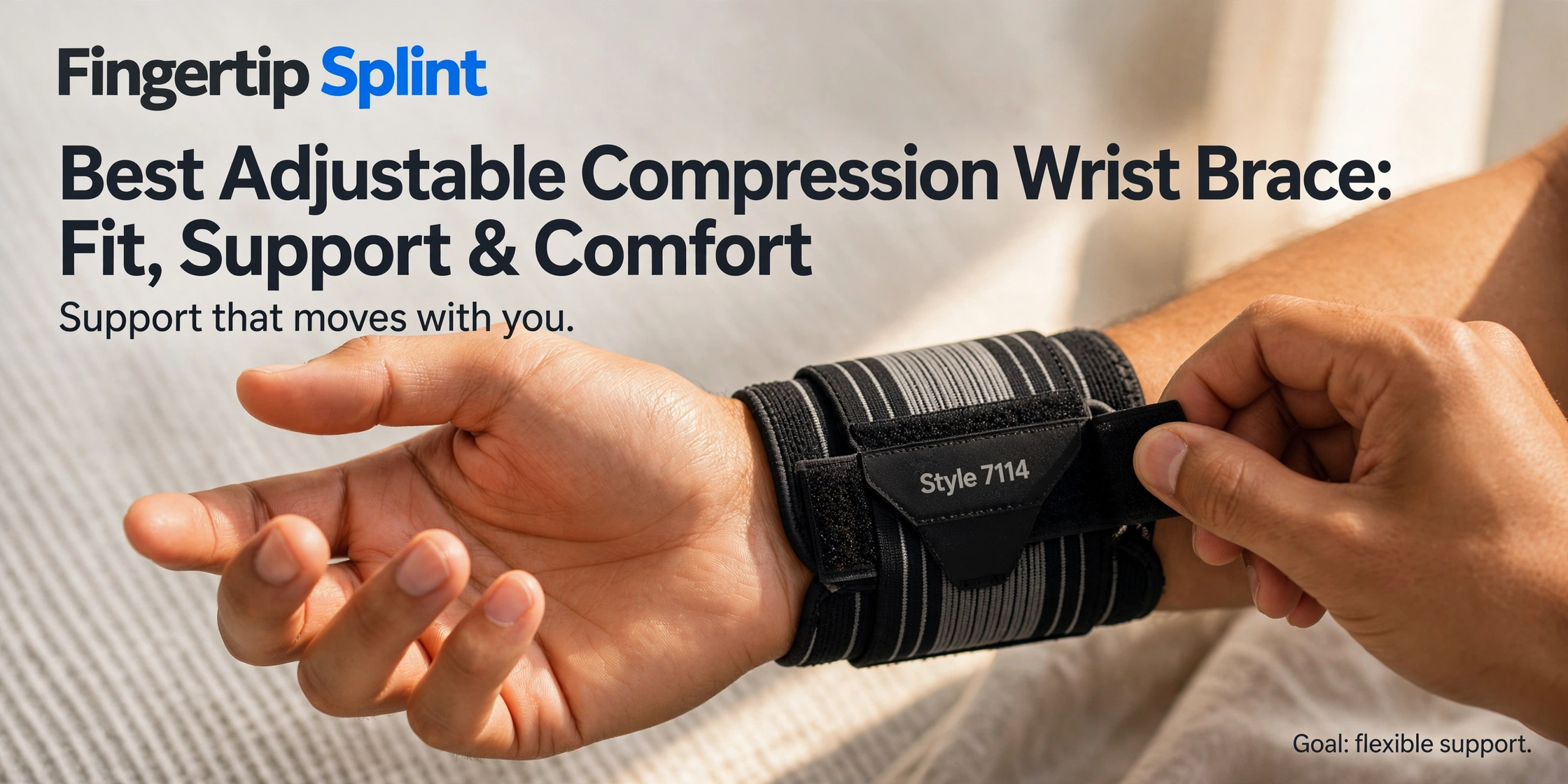
Adjustable Wrist Brace for Different Daily Activities
Computer and Keyboard Work
Consider finger mobility, low profile, wrist positioning, mouse use, and avoiding unnecessary bulk. A low-profile brace that allows finger movement is usually more practical. A brace does not prevent computer-related conditions on its own.
Writing and Studying
Focus on finger movement, comfortable wrist positioning, and low-profile design. A brace that interferes with pen grip will not be worn consistently.
Phone and Tablet Use
Consider thumb movement, gripping, flexibility, and brace bulk. A brace that restricts thumb movement may make phone use difficult.
Household Tasks
Consider secure fit, movement requirements, and easy adjustment. A brace that stays in place during repeated movement is more practical.
Driving or Commuting
The brace should not interfere with safe steering or vehicle controls. If a product restricts necessary movement, it may not be appropriate for driving. Always prioritize safety.
Light Exercise
Activity compatibility matters. Do not rely on a brace to push through significant pain or injury.
General Daily Activities
The support should work around normal hand use. A brace that interferes with everyday tasks will not be worn consistently.
How to Adjust a Wrist Brace for Daily Comfort
How Tight Should a Daily-Use Wrist Brace Be?
Signs of a Comfortable Fit
Secure
Stays in place without sliding.
Stable
Provides consistent support without shifting.
Comfortable
Can be worn without pain or pressure points.
Appropriate movement
Allows the finger and hand movement you need.
Signs It May Be Too Tight
- Numbness
- Tingling
- Unusual discoloration
- Significant pressure
- Increasing discomfort
What to Do If It Feels Too Tight
Loosen the brace, check the positioning, check the sizing, and reassess the product. Do not simply continue through discomfort.
How Long Can You Wear an Adjustable Wrist Brace?
There Isn’t One Universal Wear Schedule
Appropriate wear time depends on the product instructions, the purpose of wear, individual circumstances, comfort, and the underlying issue.
Start by Evaluating Shorter Periods
Focus on how the brace feels during intended activities. Start with shorter periods and extend as needed.
Reassess Comfort During the Day
Check for pressure, skin irritation, movement restriction, slipping, and discomfort. Adjust or remove the brace if needed.
Follow Product and Professional Guidance
Avoid assuming a universal “8 hours per day” schedule. Follow the manufacturer’s instructions and professional advice.
Daily Comfort Test
Use this five-point test to evaluate whether the brace is appropriate for daily use.
Position
Does it remain in place during movement?
Pressure
Does it feel comfortable without pain or pressure points?
Mobility
Can you perform necessary movements?
Skin
Any rubbing or irritation?
Activity
Can you perform the intended activity safely?
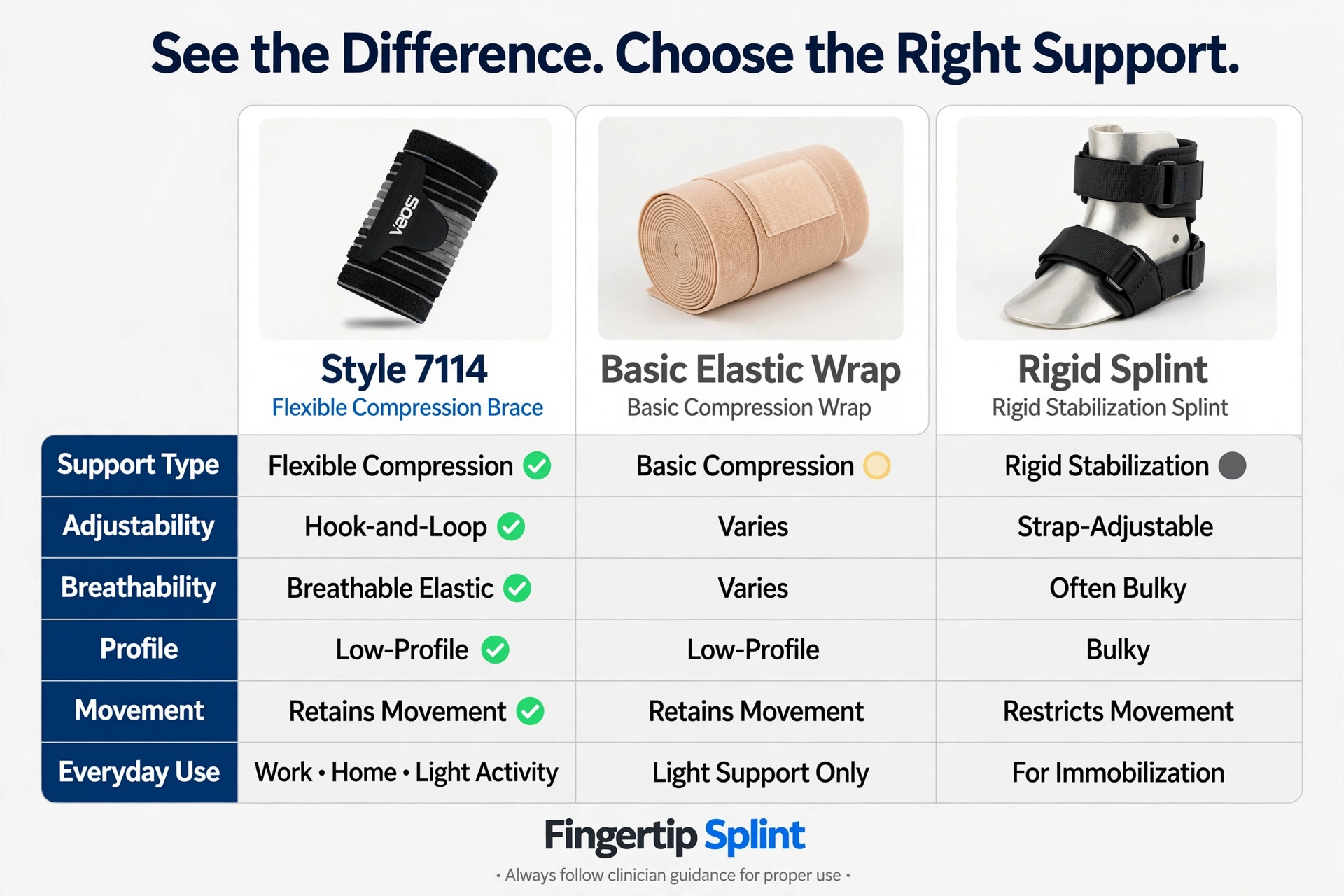
Daily-Use Wrist Brace vs Other Wrist Supports
| Type | Flexibility | Adjustability | Structure | Typical Use Focus |
|---|---|---|---|---|
| Compression sleeve | High | Low | Low | Light compression |
| Adjustable wrist support | Moderate to high | High | Moderate | Everyday support |
| Wrist brace | Moderate | Variable | Moderate | More structured support |
| Rigid splint | Lower | Variable | High | Greater restriction |
Actual products vary. For a comparison of specific designs, see our guide on the best adjustable compression wrist brace.
Interactive Daily-Use Wrist Brace Selector
Answer five questions to see your daily-use priority. This is a product-selection tool, not medical advice.
Answer the five questions above to see your daily-use priority.
3D Interactive Infographic — A Wrist Brace During Everyday Activities
The interactive 3D component explorer below shows how a wrist brace interacts with different everyday activities. Click each component to see what it does and why it matters.
Wrist Brace Daily Activity Explorer
Click a component to learn what it does and why it matters during daily use.
Product Spotlight — 1Pc Adjustable Compression Wrist Support Brace, Style 7114
Use this section as a worked example of how to evaluate an adjustable wrist brace against the criteria in this guide. The product being evaluated is the 1Pc Adjustable Compression Wrist Support Brace, Style 7114 from FingerTipSplint.
1Pc Adjustable Compression Wrist Support Brace, Style 7114
- Adjustability: Adjustable fastening for personalized fit
- Compression: Designed to provide compression support
- Wrist coverage: Covers the wrist area
- Fastening: Adjustable closure for convenience
- Material: Check the product page for material details
- Flexibility: Intended to preserve useful hand movement
- Comfort: Designed for extended wear
- Profile: Check the product page for profile details
Features Relevant to Daily Use
Evaluate only verified product characteristics such as adjustability, compression, wrist coverage, fastening, material, flexibility, comfort, and profile. For a broader look at daily-use support options, see our guide on the compression wrist support buying guide.
Daily Activities to Consider
Evaluate whether the actual design characteristics are compatible with computer use, writing, phone use, household tasks, and general daily activities. Do not assume suitability for every activity without verifying the product design.
What Buyers Should Check Before Ordering
Check size, product specifications, material, care instructions, and intended use. For buyers comparing wrist support options, explore the wrist support products in the shop.
How to Wear an Adjustable Wrist Brace During the Day
Common Daily-Use Problems and Solutions
The brace keeps sliding
Possible factors: incorrect size, positioning, or insufficient adjustment. Check the fit and reapply.
The brace feels too tight
Check tension, position, and size. Loosen the brace and reassess the fit.
The wrist gets hot
Consider material, breathability, and duration of use. A breathable material reduces heat buildup.
It interferes with typing
Check profile, wrist position, and finger mobility. A low-profile brace is usually more practical for computer work.
It gets in the way during phone use
Check thumb mobility, bulk, and positioning. A brace that restricts thumb movement may make phone use difficult.
The edge rubs the skin
Check position, material, sizing, and pressure. Smooth edges prevent irritation.
10 Mistakes to Avoid With Daily Wrist Brace Use
Excessive pressure can cause numbness, tingling, or discoloration.
Better approach: secure and comfortable, not tight.
These are warning signs, not signs the brace is working.
Better approach: remove the brace and reassess the fit.
A brace that is too loose or too tight will not provide consistent support.
Better approach: measure and compare with the product’s chart.
Skin irritation can develop without immediate awareness.
Better approach: inspect skin after each wear.
A brace for rest may not be right for typing or phone use.
Better approach: match the brace to the activity.
A brace that restricts necessary movement can affect safe driving.
Better approach: prioritize safety and follow applicable guidance.
More restriction is not automatically better support.
Better approach: match the support level to your needs.
Incorrect application reduces effectiveness and comfort.
Better approach: read and follow the manufacturer’s guidance.
A worn or damaged brace may not provide the same support.
Better approach: inspect before use and replace when needed.
Symptoms that persist or worsen deserve professional assessment.
Better approach: seek evaluation rather than relying on the brace alone.
When Daily Wrist Support May Not Be Enough
- Severe or worsening pain
- Significant swelling
- Visible deformity
- Persistent numbness or tingling
- Major loss of movement
- Symptoms that don’t improve
A wrist brace is a support product and is not a substitute for appropriate evaluation when symptoms are significant or persistent.
Doctor Advice for Daily Wrist Brace Use
This section is written in the tone of a practical professional checklist. It is not a diagnosis and does not replace an in-person assessment.
Support should match the situation
Support should not be maximum by default.
Comfort matters during repeated use
A brace that is uncomfortable will not be worn consistently.
Avoid excessive compression
Excessive compression can cause new problems.
Don’t ignore concerning symptoms
Persistent or worsening symptoms deserve professional assessment.
Follow product instructions
The manufacturer’s guidance should take priority over generic advice.
A brace is not a diagnosis
A brace is a tool, not a diagnostic device.
Additional trusted resources include the Mayo Clinic sprains guidance, the Cleveland Clinic finger splint resource, the AAOS sprained wrist resource, the MedlinePlus wrist injuries page, the NHS hand pain guidance, the WebMD wrist splints overview, and the Healthline wrist brace resource.
Daily-Use Reassessment Timeline
This is a product-fit reassessment framework, not a medical healing timeline.
First Use
Check fit. The brace should align with the area that needs support.
First Few Uses
Evaluate comfort and mobility. Look for pressure points or discomfort.
During Different Activities
See whether the design interferes with specific tasks. Match the brace to your activity.
Ongoing Use
Review fit, material, fastening, skin, and comfort. Reassess whether the brace remains appropriate.
When to Stop and Reassess
If the brace causes numbness, tingling, discoloration, persistent irritation, or worsening symptoms, stop using it and seek appropriate advice.
Daily-Use Buyer Checklist
Click each item to confirm. Aim to check all 10 before buying.
Quick Tips for Daily Wrist Brace Use
Frequently Asked Questions
Daily use depends on the product, your comfort, your activity, and professional guidance where appropriate. A low-profile adjustable brace may be comfortable for daily use, but regular skin checks are important.
Follow the manufacturer’s instructions and reassess if symptoms change.
It should be secure and comfortable, not excessively tight. You should be able to move your fingers normally, with no persistent numbness, tingling, unusual discoloration, or significant discomfort.
If the brace feels too tight, loosen it and reassess the fit rather than tightening further.
Yes, provided the brace allows finger mobility and does not interfere with typing. A low-profile support is usually more practical for desk work.
Check that the brace does not create pressure points during extended keyboard use.
Yes, if the brace allows finger movement and does not interfere with pen grip. A brace that restricts finger movement may make writing difficult.
Test the brace during a short writing session before using it for extended periods.
Suitability depends on the brace design and individual circumstances. Some braces are designed for overnight wear; others are not. Follow the product instructions and professional guidance.
If the brace interferes with sleep or causes discomfort, reconsider the design.
A correct fit is secure, comfortable, and stable. You should be able to move your fingers normally, the brace should stay in place, there should be no painful pressure, and there should be no numbness or tingling.
Check the skin after removal. Redness, pressure marks, or irritation suggest the brace is too tight or not suitable.
A wrist brace typically should not restrict finger movement unless specifically designed to do so. You should be able to move your fingers normally to perform daily activities.
If the brace restricts necessary finger movement, it may be the wrong design or fit for your needs.
Stop using the brace if you experience numbness, tingling, unusual discoloration, increasing pain, or other concerning symptoms. These are warning signs that the brace may not be appropriate or that the fit needs adjustment.
If symptoms persist after removing the brace, seek professional assessment.
Make Daily Wrist Support More Practical
If you want an adjustable wrist support for everyday activities, review the 1Pc Adjustable Compression Wrist Support Brace, Style 7114 and compare its actual features with your daily-use requirements for fit, support, mobility, and comfort.
Explore wrist support products, check the frequently asked questions, or use the request-a-quote page for bulk or business purchasing. For medical support products, see the medical finger and wrist support supplier page.
View the Product Explore Wrist SupportFinal Takeaway: Work With Your Routine, Not Against It
A wrist brace designed for daily use needs to work with your routine — not against it. The most useful choice is one that fits securely, provides appropriate support, allows the movement your activities require, and remains comfortable throughout intended use.
If symptoms persist, worsen, or involve severe pain, significant swelling, deformity, numbness, or loss of function, do not simply change braces. Seek appropriate medical evaluation. For medical support supply and distribution, see the medical finger and wrist support supplier page and the finger splint distributor page. For the full FingerTipSplint range, visit the adjustable wrist support options.