
Finding a toe separator that feels comfortable while you are awake is one thing. Choosing one for nighttime use is different. During sleep, you cannot constantly readjust a strap, check whether the separator has shifted, or notice an uncomfortable pressure point immediately. The right nighttime design needs to balance positioning, comfort, fit, and practical overnight wear. For a broader view of the FingerTipSplint range, start with toe and foot support solutions.
Table of Contents
- Why Nighttime Use Is Different
- How a Toe Separator Works at Night
- Separator vs Splint vs Wrap
- 10 Features to Look For
- Interactive Buyer Selector
- 3D Infographic
- How Should It Fit
- 60-Second Fit Check
- How to Use Before Bed
- Can You Wear It All Night
- Sleeping Positions
- Product Spotlight
- Nighttime Comparison
- Recovery Timeline
- Common Nighttime Problems
- 10 Mistakes to Avoid
- Who Should Consider It
- When to Seek Advice
- Doctor Advice
- Bundle Strategy
- 7 Quick Tips
- FAQ
- CTA
What Is the Best Toe Separator Splint for Nighttime Use?
The best toe separator splint for nighttime use should fit securely without excessive pressure, provide the intended toe separation or support, remain comfortable during rest, and follow the manufacturer’s wear instructions. Look for adjustable fit, soft or skin-friendly contact areas, appropriate sizing, and a design that does not cause numbness, tingling, significant discomfort, or skin irritation.
Why Choosing a Toe Separator for Nighttime Is Different
Most people who search for a toe separator start with daytime comfort in mind. They test it for a few minutes while sitting or walking around the house, adjust the strap, and decide whether it feels acceptable. Nighttime use introduces a completely different set of variables. When you are asleep, you cannot monitor the device. You cannot feel a pressure point developing. You cannot loosen a strap that has become too tight. This means the initial fit, material choice, and design stability matter far more than they do during short daytime trials.
You Move Differently While Sleeping
During a typical night, adults change position dozens of times. You may start on your back, roll onto your side, pull your knees up, or stretch your legs. Each movement puts different pressure on the foot and the device. A separator that sits perfectly while you are still may shift when you roll onto your side. If your feet touch each other during side sleeping, the device may press against the opposite foot. Bedding can also push against the toes or the strap. A nighttime toe separator needs to tolerate these movements without creating excessive pressure or sliding out of position completely.
You Cannot Monitor the Fit Constantly
During the day, if a toe separator starts to feel uncomfortable, you notice it within minutes. You can reach down, adjust the strap, or take it off entirely. At night, the feedback loop is broken. You may sleep through mild discomfort and wake up with skin irritation, a red pressure mark, or numbness. In more serious cases, prolonged pressure without awareness can lead to skin breakdown or nerve irritation. This is why the initial fitting process for nighttime use deserves more attention than a casual daytime trial. You need to check the device thoroughly before sleep, not after waking up with a problem.
Comfort Matters More During Long Rest Periods
A device that feels fine for thirty minutes may become unbearable after three hours. The materials that touch your skin need to remain comfortable over long periods. Straps that feel snug when you first put them on may feel restrictive after several hours of wear. Rigid separators that provide strong positioning may create pressure points when your foot rests against a mattress or blanket. This is why nighttime buyers should prioritize comfort, low bulk, breathability, and adjustability over maximum separation force. The goal is not to create the strongest possible correction. The goal is to maintain a beneficial position while allowing you to rest without pain or irritation.
How Does a Toe Separator Splint Work During Nighttime Use?
A toe separator splint works by placing a soft or structured material between adjacent toes. This creates space, reduces direct contact between toes, and can help hold the toes in a particular position while the device is worn. Some designs focus purely on separation. Others add a wrap or strap that provides a degree of alignment support. The exact mechanism depends on the product design, but the basic principle is consistent: the device intervenes physically between the toes and the surrounding structures.
At night, this intervention happens while the foot is relatively still and unloaded. You are not walking or standing, so there is no body weight pressing down through the forefoot. This can make nighttime a more comfortable time to wear a separator for some people. However, the lack of movement also means that if the device is positioned poorly, the pressure stays concentrated in one spot for hours rather than being redistributed by activity.
What a Nighttime Toe Separator Can and Cannot Do
It is important to be clear about what these products can realistically achieve. A toe separator can hold toes apart while it is worn. It can reduce rubbing between toes. It can provide a reminder of a desired position. What it cannot do is permanently restructure the bones or joints of the foot. Long-term changes in toe alignment depend on the underlying condition, the severity of that condition, how long the device is used, and many individual factors that a wearable alone cannot control.
Toe Separator vs Toe Splint vs Toe Separator Wrap
These terms are often used interchangeably, but they describe different design approaches. Understanding the differences helps you choose the right product for nighttime use.
| Design | Main Function | Flexibility | Nighttime Consideration |
|---|---|---|---|
| Toe separator | Separates adjacent toes | Usually flexible | Comfort and stability during movement |
| Toe splint | Provides more structured positioning | Varies by design | Check pressure points and mobility |
| Toe separator wrap | Adjustable separation and support | Usually adjustable | Fit, strap comfort, and skin contact |
| Rigid device | Greater structural support | Lower flexibility | May be less comfortable for some users overnight |
For nighttime use, many people find that adjustable wraps or soft separators provide a better balance of comfort and positioning than rigid splints. However, the right choice depends on your specific needs and the advice you have received from a healthcare professional. A rigid splint that works well for a specific structural issue during the day may not be appropriate for eight hours of sleep.
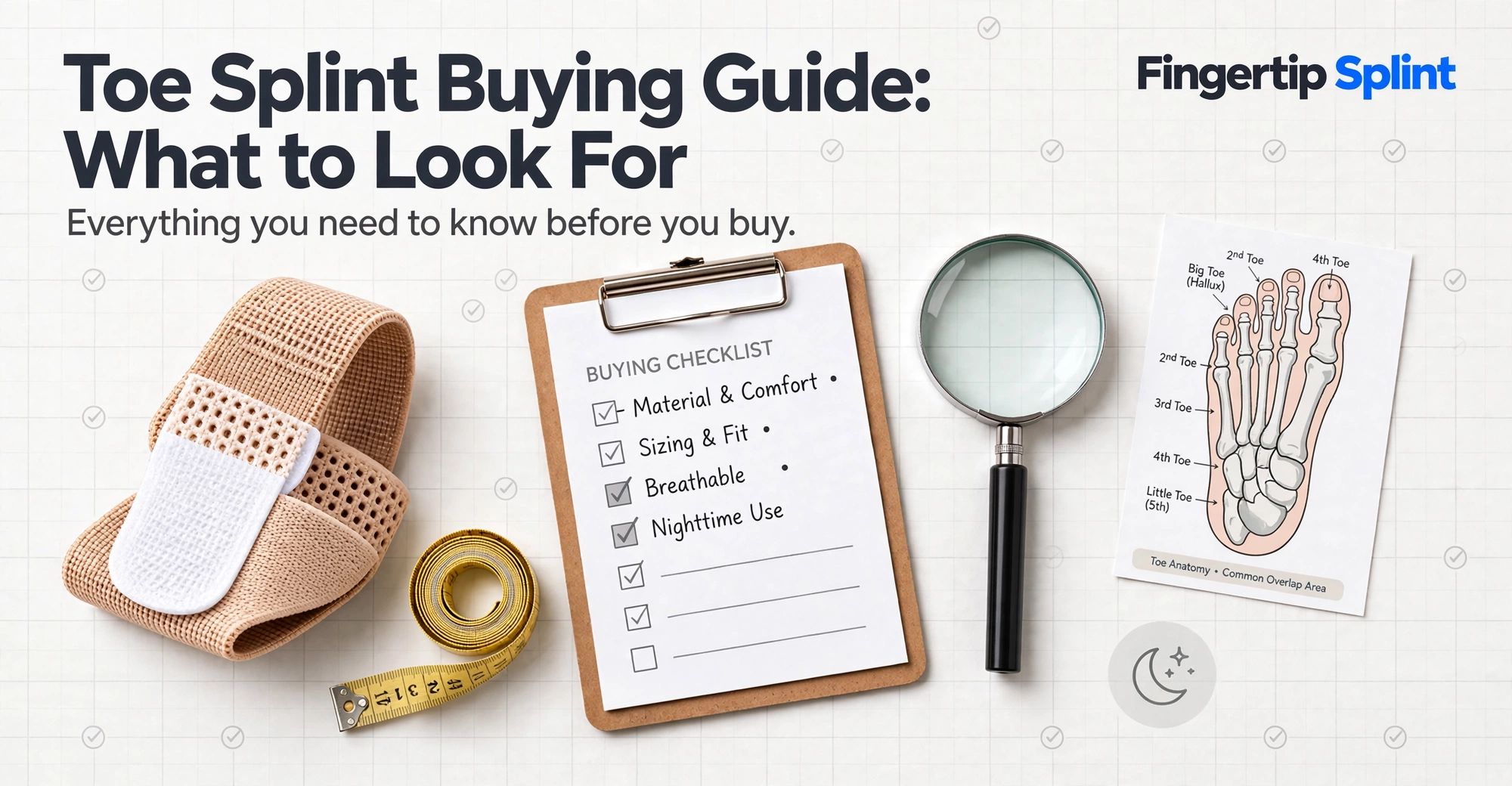
10 Features of a Good Nighttime Toe Separator Splint
When you evaluate a toe separator for nighttime use, these are the features that matter most. Each one affects how the device performs over several hours of rest.
1. Correct Size
Sizing becomes especially important when the device will remain on for extended periods. A separator that is slightly too large may slide around and lose its positioning. One that is slightly too small may create excessive pressure. Check the manufacturer’s sizing guide carefully and measure your foot if needed. If you are between sizes, consider whether the design allows adjustment.
2. Adjustable Fit
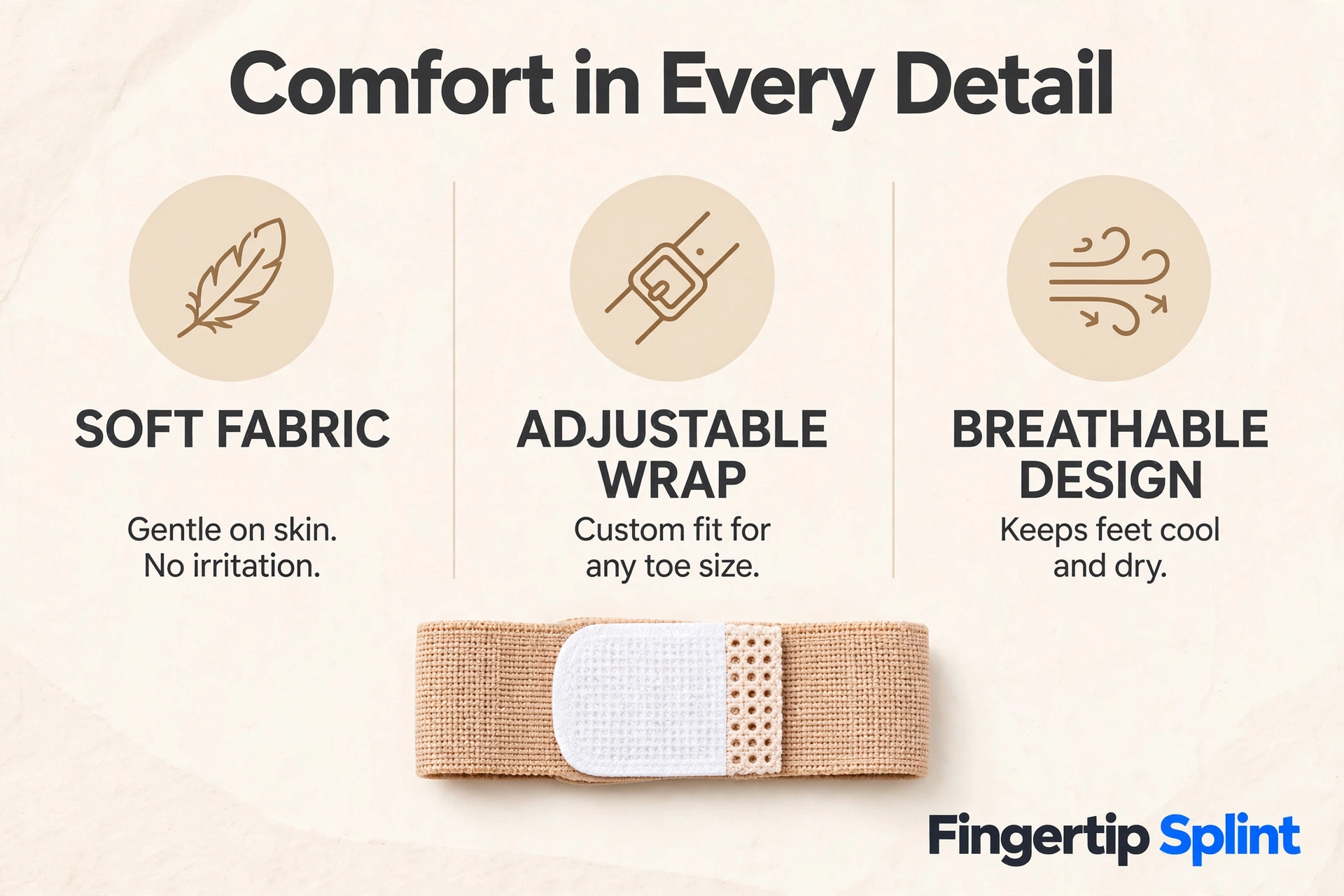
Adjustability allows you to customize the fit to your foot shape and comfort level. Straps, wraps, or hook-and-loop closures that can be tightened or loosened give you more control. This is particularly useful for nighttime use because you can fine-tune the fit before sleep rather than accepting a one-size-fits-all approach.
3. Soft Contact Areas
The material that touches your skin matters during prolonged wear. Soft, smooth, skin-friendly materials reduce the risk of friction, irritation, and pressure marks. Avoid products with rough edges, hard seams, or abrasive textures that could become uncomfortable after a few hours.
4. Stable Toe Separation
The device should remain reasonably positioned without constantly slipping. If the separator shifts every time you move your foot, it will not provide consistent support and may create new pressure points. Look for designs that grip gently or wrap around the toes to maintain position.
5. Low-Pressure Design
More pressure is not automatically better. A device that creates strong pressure may feel like it is doing more, but it can also cause numbness, tingling, and skin damage. The goal is gentle, consistent positioning — not maximum force.
6. Breathability
Feet can become warm during sleep, especially under blankets. Materials that trap heat and moisture can lead to discomfort, maceration, or skin irritation. Breathable fabrics and open designs help keep the skin dry and comfortable.
7. Low Bulk
A bulky device can become noticeable when you turn in bed, sleep on your side, or wear loose socks. Low-profile designs are less likely to create pressure against bedding or the opposite foot. They are also easier to wear under socks if you prefer that at night.
8. Secure Fastening
The fastening system should keep the device in position without requiring excessive tightening. Hook-and-loop straps, elastic bands, or snug wraps can all work well if they are designed for the intended use. Test the fastening before bed to make sure it holds without being too tight.
9. Skin Comfort
Friction, moisture, and pressure points are the main causes of skin problems from wearable devices. A good nighttime toe separator minimizes all three. If you have sensitive skin or diabetes, pay extra attention to how the device feels and check your skin regularly.
10. Easy Cleaning
Nighttime products have repeated skin contact, so cleaning and care instructions matter. Choose a product that is easy to clean and maintain according to the manufacturer’s guidance. This helps prevent odor, bacterial growth, and material breakdown.
Which Toe Separator Is Right for Your Nighttime Routine?
Nighttime Buyer Selector
Answer a few questions to understand which features matter most for your situation.
What is your priority?
How long do you expect to wear it?
What sleeping position do you usually use?
Select your preferences above to see tailored guidance.
Explore a Toe Separator Splint Before You Buy
Interactive 3D Anatomy View
Click each part to learn what it does during nighttime use.
How Should a Toe Separator Splint Fit at Night?
Fit is the single most important factor for nighttime comfort and safety. A well-fitting device stays in position, distributes pressure evenly, and does not interfere with circulation or sensation. Here is how to evaluate the fit.
What a Good Fit Feels Like
- Secure: The device stays in place when you move your foot gently.
- Comfortable: You are aware of it, but it does not cause pain or throbbing.
- Properly positioned: The separator sits between the intended toes without migrating.
- No excessive pressure: You can feel your toes normally, without numbness or tingling.
- No slipping: The device does not slide off or rotate when you flex your toes.
Signs It May Be Too Tight
- Numbness or loss of sensation in the toes
- Tingling or a “pins and needles” feeling
- Significant discoloration (white, blue, or dark red toes)
- Increasing pain or throbbing
- Strong pressure that does not ease
- Skin irritation, redness, or marking that persists
Signs It May Be Too Loose
- The device slides out of position when you move
- Your toes move out of the intended position
- The separator repeatedly shifts or rotates
- The strap needs constant adjustment
60-Second Nighttime Fit Check
Before You Sleep: Toe Separator Checklist
How to Use a Toe Separator Splint at Night
Using a toe separator at night is not complicated, but following a consistent routine helps ensure comfort and safety. Here are the steps to follow before sleep.
Step 1 — Clean and Dry Your Feet
Wash your feet and dry them thoroughly, especially between the toes. Moisture can contribute to skin irritation and reduce the effectiveness of the device’s grip.
Step 2 — Inspect the Product
Check the device for damage, rough edges, dirt, or moisture. Replace it if the material is cracked, the strap is worn out, or the shape has deformed.
Step 3 — Position the Separator
Follow the manufacturer’s instructions for positioning. The separator should sit comfortably between the intended toes without forcing them apart excessively.
Step 4 — Adjust the Fit
Secure the device so it stays in place, but do not over-tighten. You should be able to feel your toes normally and move them gently without the device shifting.
Step 5 — Walk Briefly Before Bed
Take a few steps around the room. This is a useful practical test. If the device shifts immediately, the fit needs checking before you commit to overnight use.
Step 6 — Check Skin and Sensation
Before you sleep, check that the skin looks normal and that you can feel your toes. If anything feels wrong, remove the device and reassess.
Can You Sleep With a Toe Separator Splint All Night?
This is one of the most common questions from nighttime buyers, and the honest answer is: it depends. Not every toe separator is designed for overnight use. Some products are intended for short periods of wear during the day. Others are specifically designed for extended nighttime wear. The manufacturer’s instructions are your first and most important guide.
Why There Is No Universal Overnight Schedule
Appropriate wear time depends on several factors: the product design, how it fits, your underlying foot condition, your individual tolerance, and any advice you have received from a healthcare professional. A device that is comfortable and safe for one person may not be appropriate for another. This is why you should not assume that wearing a toe separator for eight hours every night is right for you simply because someone else does it.
Starting Conservatively
If the product instructions allow, start with a shorter wear time and gradually increase as you become more comfortable with the device. Check your skin and sensation regularly. If you notice any problems, stop and reassess.
Warning Signs to Stop
- Numbness or tingling that does not resolve quickly after removal
- Significant discoloration of the toes
- Increasing pain or swelling
- Skin breakdown, blisters, or open wounds
- Symptoms that worsen over time
Does Sleeping Position Affect Toe Separator Comfort?
Your sleeping position can significantly affect how a toe separator feels overnight. Understanding the interaction between your position and the device helps you anticipate problems and adjust accordingly.
Side Sleeping
Side sleeping is common, but it can create challenges for toe separator comfort. If your feet touch each other, the device may press against the opposite foot. Bedding may also push against the toes or the strap. Some people find that a low-profile design works better for side sleeping because it reduces the chance of pressure from the opposite foot or mattress.
Back Sleeping
Back sleeping usually keeps the feet relatively free from external pressure. This can be more comfortable for toe separator use because the device is not pressed against bedding or the other foot. However, comfort still varies depending on the device and the individual.
Stomach Sleeping
Stomach sleeping can put the feet in a variety of positions, sometimes with the toes pointed or the feet turned outward. Depending on your foot position, the device may press against the mattress or create pressure on the top of the toes. If you sleep on your stomach, check the fit carefully before bed and consider whether a lower-profile design would be more comfortable.
If the Device Keeps Moving
If the device shifts repeatedly during the night, check the following: Is the size correct? Is the position correct? Is the fastening secure without being too tight? Would a different design be more stable for your sleeping position?
Product Spotlight: Toe Separator Wraps 12PCS Adjustable Toe Alignment Support
Toe Separator Wraps 12PCS Adjustable Toe Alignment Support
This product is designed with adjustability and toe separation in mind. It is worth evaluating against the nighttime features discussed in this guide — fit, comfort, stability, and intended use.
- Adjustable design for customized fit
- Toe separation support
- Soft contact areas for comfort
- Low-profile for nighttime wear
- 12-piece set for multiple toes or backup use
- Suitable for repeated use with proper care
Why Adjustable Wraps Are Relevant for Nighttime Buyers
Adjustable wraps offer a combination of features that many nighttime users find helpful. The ability to customize the fit means you can tighten or loosen the device based on your comfort level. The wrap design can provide gentle separation without the rigid pressure of a structured splint. For people who are new to nighttime toe separators, an adjustable wrap is often a practical starting point.
When evaluating this product for your needs, compare it against the ten features discussed earlier. Consider whether the adjustability, material, and design align with your priorities. If you have a specific medical condition, discuss the product with your healthcare professional before use.
Which Toe Separator Design Is Best for Sleeping?
Different designs offer different trade-offs for nighttime use. This table summarizes the general characteristics of each type.
| Feature | Soft Separator | Adjustable Wrap | Structured Splint |
|---|---|---|---|
| Comfort | High potential | High potential | Depends on design |
| Adjustability | Low–moderate | High | Varies |
| Separation | Moderate | Adjustable | Moderate–high |
| Bulk | Low | Low–moderate | Moderate–high |
| Nighttime practicality | Often good | Often good | Depends on design |
| Fit control | Limited | High | Varies |
Actual characteristics vary by product. Use this table as a general guide, not a substitute for reading the manufacturer’s specifications.
Nighttime Toe Separator Recovery and Adaptation Timeline
This timeline is about adaptation and reassessment, not guaranteed correction. Everyone’s experience is different, and the underlying condition matters.
First Few Nights — Fit and Comfort
Focus on getting the position right, checking your skin, and learning how the device feels. You may need to adjust the fit several times before you find the right balance. Do not assume the first fit is the final fit.
Early Use — Reassessment
Ask yourself: Is the device comfortable? Does it stay in position? Is there irritation? Are symptoms improving, unchanged, or worsening? If you notice problems, address them before continuing.
Continued Use — Monitor Progress
Any changes in symptoms or alignment depend on the underlying problem. Keep track of how your feet feel and whether the device is helping. If you are not seeing any benefit, or if symptoms are worsening, reassess.
Longer-Term — Reassess the Need
If the issue persists or worsens, seek appropriate professional advice. A wearable device may be part of a broader management plan, but it is not a substitute for proper evaluation and treatment.
Why Does My Toe Separator Hurt While Sleeping?
Pain from a nighttime toe separator usually has an identifiable cause. Here are the most common ones and what to do about them.
The device is too tight or creates concentrated pressure.
Action: Loosen the fit or try a different size.
The separator is too large or too small for your toes.
Action: Check the sizing guide and measure carefully.
The device is not sitting where it should.
Action: Reposition according to instructions.
The toes are being forced apart more than is comfortable.
Action: Choose a lower-profile or less aggressive design.
The material is rubbing against the skin.
Action: Try a softer material or use a skin barrier if appropriate.
The separator moves during sleep and creates new pressure points.
Action: Recheck size, position, and fastening.
An underlying condition is causing pain independent of the device.
Action: Seek professional advice.
10 Mistakes to Avoid When Using a Toe Separator at Night
These are the most common errors that lead to discomfort, skin problems, or disappointment with nighttime toe separators.
1. Choosing Based Only on “Maximum Correction”
The strongest device is not always the best device. Maximum pressure can cause numbness, tingling, and skin damage. Comfort and safety matter more.
2. Buying Without Checking Size
Size affects fit, stability, and comfort. Do not guess. Measure and follow the manufacturer’s sizing guide.
3. Tightening the Device Too Much
A secure fit is not the same as a tight fit. Over-tightening can restrict circulation and cause nerve compression.
4. Sleeping With Significant Pain
Pain is a signal that something is wrong. Do not try to “tough it out” overnight. Remove the device and reassess.
5. Ignoring Numbness or Tingling
Numbness or tingling means nerves are being affected. This is not normal and should not be ignored.
6. Wearing It Without Testing the Fit First
Always test the fit before bed. Walk around briefly, check the position, and make sure everything feels right.
7. Ignoring Skin Irritation
Redness, itching, or irritation can worsen over time. Address skin problems early.
8. Assuming Every Toe Separator Is Designed for Overnight Use
Not all products are intended for extended wear. Check the manufacturer’s instructions.
9. Expecting Permanent Correction From a Wearable Alone
A toe separator can hold a position while worn, but it cannot guarantee permanent structural changes.
10. Ignoring Persistent or Worsening Symptoms
If your symptoms are not improving or are getting worse, seek professional advice. A wearable device is not a substitute for proper evaluation.
Who May Consider a Toe Separator for Nighttime Use?
A nighttime toe separator may be appropriate for people who are looking for toe separation during rest, interested in adjustable toe support, seeking a nighttime-oriented support product, comparing soft versus adjustable designs, or looking for a low-profile rest-time option.
When Should You Talk to a Doctor or Foot Specialist?
Some situations require professional evaluation rather than self-treatment with a wearable device. Seek assessment if you have severe or increasing pain, significant swelling, visible deformity, numbness, tingling, significant discoloration, open wounds, difficulty walking, a recent significant injury, or symptoms that persist or worsen.
Why the Underlying Problem Matters
Different causes of toe pain or misalignment require different approaches. A bunion, for example, involves changes around the big-toe joint that a simple separator cannot correct. Hammertoes, arthritis, and nerve conditions also have specific treatment pathways. Understanding the underlying problem helps you choose the right support and avoid making things worse. For authoritative background on bunions, see the Mayo Clinic’s bunion overview. For general foot pain information, the Mayo Clinic foot pain guide is a useful starting point. The Cleveland Clinic’s bunion resource also explains the condition clearly. For hammertoes, the Cleveland Clinic hammertoe page provides helpful context. The AAOS bunion information is another reliable source. The NHS bunion guide offers a UK perspective. For broader foot health education, WebMD’s foot pain overview and Healthline’s bunion article are also useful. The American College of Foot and Ankle Surgeons provides professional-level information on bunions.
What a Healthcare Professional May Consider
If you consult a healthcare professional about nighttime toe support, they will likely consider several factors: your toe position, pain level, mobility, skin condition, foot mechanics, injury history, activity level, and any underlying condition. They may ask questions such as:
- Is nighttime support appropriate for my situation?
- How much separation is appropriate?
- Should I limit wear time?
- Is there anything I should avoid?
- When should I stop using it?
- Do I need a more structured device?
Bring your questions to the appointment. A healthcare professional can help you understand whether a toe separator is a reasonable part of your management plan and how to use it safely.
Building a Practical Toe Support Routine
A nighttime toe separator is one part of a broader approach to foot comfort. Here is how to think about building a routine.
Nighttime Support
Choose a product intended for rest or sleep. Prioritize comfort, stability, and skin safety.
Daytime Support
A separate design may be more practical for walking, shoes, or activity. What works at night may not work during the day, and vice versa.
Backup
A spare can be useful when the primary device is being cleaned, provided both products are appropriate for your needs.
7 Quick Tips for Nighttime Toe Separator Use
Frequently Asked Questions About Toe Separators for Nighttime Use
It depends on the product design, instructions, fit, and your individual circumstances. Not every toe separator is intended for overnight use. Check the manufacturer’s guidance and test the fit before bed. If you have a specific foot condition, ask a healthcare professional whether nighttime use is appropriate for you.
There is no universal answer. Safety depends on the product, the fit, and your individual tolerance. Start conservatively if the instructions allow, monitor your skin and sensation, and stop if you experience numbness, tingling, significant discoloration, increasing pain, or skin irritation.
The best one for you will depend on your needs. In general, look for comfort, secure fit, low bulk, appropriate separation, and manufacturer instructions that support overnight use. Adjustable wraps and soft separators are often good starting points for nighttime wear.
No. Significant pain is not something to simply tolerate. If the device hurts, it is not fitting correctly or it may not be appropriate for your situation. Remove it and reassess. If pain persists, seek professional advice.
It should be secure but not excessively tight. You should be able to feel your toes normally, without numbness or tingling. If the device leaves deep marks, causes pain, or restricts sensation, it is too tight.
A wearable can hold or separate toes while it is worn, but permanent structural correction cannot be promised. Long-term changes depend on the underlying condition, severity, duration of use, and individual factors. A toe separator is not a substitute for professional treatment of a structural foot condition.
Follow the product instructions and any guidance from your healthcare professional. There is no universal schedule. Start conservatively if the instructions allow and increase wear time only if you remain comfortable and symptom-free.
Stop using the device if you experience numbness, tingling, significant discoloration, increasing pain, skin injury, or worsening symptoms. If problems persist after removing the device, seek professional advice.
Ready to Choose a Toe Separator for Nighttime Use?
Find the Right Nighttime Support for Your Feet
If you are tired of comparing toe separators without knowing which features actually matter at night, start with the basics: fit, comfort, stability, adjustability, and intended use. A nighttime support should feel secure without creating unnecessary pressure or disrupting rest.
The Toe Separator Wraps 12PCS Adjustable Toe Alignment Support is designed with these priorities in mind. Explore the full toe and foot support collection to compare options.
View Toe Separator Wraps Explore Toe & Foot SupportChoose Nighttime Support for Comfort, Not Maximum Pressure
The best nighttime toe separator is not necessarily the one that creates the strongest sensation of correction. It is the one whose design, fit, and intended use make sense for your needs while remaining comfortable and safe to wear. Prioritize comfort, secure positioning, appropriate separation, correct fit, manufacturer instructions, and safety. If you have persistent or worsening symptoms, seek professional advice.
For more detailed guidance on related topics, see our toe splint buying guide for a broader feature-selection framework, and our toe separator wraps fit and comfort guide for sizing and positioning advice. You can also visit the medical splint and support resources page for professional purchasing information, or request a product quote for bulk or clinical needs.