
A finger rubs against a tool. A toe rubs against a shoe seam. A standard sleeve is too long, bunches up, or slips away from the spot that needs protection. You are frustrated because the product you bought does not fit the way you expected. Cut-to-size finger and toe sleeves are designed to be adjusted, but trimming them correctly and choosing the right product matters. This guide explains how to measure, trim, fit, and care for cuttable sleeves so you get targeted anti-chafing coverage without creating new problems. Start with our finger and toe support solutions to explore the full range.
Table of Contents
- Quick Answer
- What Is Anti-Chafing Support?
- How Cut-to-Size Sleeves Work
- Finger Sleeves vs Toe Sleeves
- How to Measure and Choose Length
- How to Cut Sleeves Correctly
- Common Trimming Mistakes
- How to Check Fit After Trimming
- Choosing Material
- How to Care for Sleeves
- When a Sleeve Is Not Enough
- Product Spotlight
- Interactive Fit Selector
- 3D Infographic
- Potential Benefits
- What Sleeves Cannot Guarantee
- FAQ
- CTA
What Are Cut-to-Size Finger and Toe Sleeves?
Cut-to-size finger and toe sleeves are protective coverings designed to fit around a finger or toe, with certain designs permitting length adjustment. Appropriate sizing can help position coverage around a friction-prone area, but trimming must follow the manufacturer’s instructions. Not every sleeve is designed to be cut.
What Is Anti-Chafing Support?
Chafing happens when repeated rubbing between skin and another surface causes irritation, tenderness, and sometimes damaged skin. The friction can come from footwear, tools, equipment, or even adjacent body parts. When the rubbing continues, the skin becomes raw, painful, and vulnerable to further damage.
Anti-chafing support means reducing that friction. A protective sleeve creates a barrier between your skin and the surface that is rubbing against it. Instead of your skin taking the full force of the friction, the sleeve absorbs some of it. This can help protect the area and give irritated skin a chance to begin healing.
Common Sources of Friction
- Footwear rubbing against toes: Shoe seams, tight toe boxes, and rough interior surfaces can create ongoing friction.
- Adjacent toes rubbing together: When toes overlap or press against each other, friction develops even without shoe pressure.
- Repetitive contact between fingers and equipment: Tools, sports equipment, and repetitive tasks can cause friction on fingers.
- Poorly fitting protective coverings: A sleeve that bunches, folds, or slips can create new friction points.
- Seams, folds, and rough edges: These can rub against skin and cause irritation.
How Cut-to-Size Finger and Toe Sleeves Work
Cut-to-size sleeves work on a simple principle: cover the area that needs protection, and adjust the length so the coverage matches the friction point. Here is how each element contributes to the overall function.
Targeted Coverage
A sleeve can cover the area exposed to rubbing when its length and position are suitable. If the friction is at the tip of a toe, a closed-toe sleeve covers that area. If the friction is on the side of a finger, a shorter sleeve positioned over that spot provides the necessary protection.
Length Adjustment
Permitted trimming can help adapt sleeve length to the intended coverage area. This is useful when a standard length is too long and bunches up, or when it extends beyond the friction point and creates unnecessary bulk.
Protective Barrier
The material separates the skin from an external rubbing surface. Depending on the sleeve’s construction, this barrier can reduce direct contact and absorb some of the friction that would otherwise damage the skin.
Fit Without Excess Bulk
The goal is suitable coverage, not maximum material. Excess length can bunch up and create new pressure points. Excessive tightness can cause discomfort, numbness, or tingling. A well-fitted sleeve covers the intended area without adding unnecessary bulk or pressure.
Finger Sleeves vs Toe Sleeves — What Should You Consider?
Finger sleeves and toe sleeves serve similar purposes but have different design considerations. They are not automatically interchangeable.
| Consideration | Finger Sleeves | Toe Sleeves |
|---|---|---|
| Main friction source | Objects, equipment, repetitive contact | Footwear or neighboring toes |
| Movement needs | Bending and gripping | Walking and toe movement |
| Fit considerations | Finger length, width, and movement | Toe length, width, and shoe space |
| Common concern | Slipping or restricted movement | Bunching or pressure inside footwear |
| Key selection factor | Suitable coverage without interfering with function | Suitable coverage without crowding the toes |
Confirm that the particular product is designed for the intended body area and use. Do not assume that a toe sleeve is suitable for fingers or vice versa without manufacturer confirmation.
How to Measure and Choose the Right Sleeve Length
Getting the length right is essential for effective anti-chafing support. Here is how to measure and choose.
Identify the Area That Needs Protection
Distinguish the exact friction point from the surrounding skin. The sleeve should cover the intended area without unnecessarily extending into a position that causes discomfort or interferes with movement.
Check Width and Fit
A sleeve should stay in position without squeezing the finger or toe. If it is too loose, it will slip. If it is too tight, it can restrict circulation and cause numbness or tingling.
Review Product Dimensions
Check the manufacturer’s sizing guidance rather than guessing from photographs or assuming one size fits everyone. Product dimensions and sizing charts provide the information you need to make an informed choice.
Consider Movement and Footwear
For fingers, assess whether the sleeve interferes with normal movement or gripping. For toes, assess whether it adds uncomfortable bulk inside the shoe. A sleeve that works well for one application may not work for another.
How to Cut Finger and Toe Sleeves Correctly
Trimming a sleeve requires care and attention to the manufacturer’s instructions. Not every sleeve is designed to be cut. Follow this process carefully.
Step 1 — Read the Manufacturer’s Trimming Instructions
Before cutting anything, read the instructions provided by the manufacturer. They will tell you whether the product can be trimmed and where.
Step 2 — Confirm Whether the Sleeve Is Designed to Be Cut
Not every tubular protector can be safely trimmed. Cutting may damage certain materials or cause them to unravel. Never assume that all sleeves can be cut.
Step 3 — Identify the Required Coverage Area
Determine exactly how much length you need to cover the friction point without excess material.
Step 4 — Determine the Permitted Length Adjustment
Use the manufacturer’s guidance to determine how much you can trim. Cutting beyond the permitted area may damage the product or affect its performance.
Step 5 — Use Clean Scissors If Cutting Is Allowed
If trimming is permitted, use clean, sharp scissors to make a smooth cut. Avoid jagged edges that could cause irritation.
Step 6 — Avoid Cutting Through Reinforced Areas or Seams
Unless the instructions explicitly permit it, do not cut through reinforced areas, seams, or closed ends. These areas are designed for specific functions.
Step 7 — Inspect the Trimmed Edge
After trimming, inspect the cut edge for damage, roughness, or loose material. A damaged edge can rub against the skin and cause irritation.
Step 8 — Position the Sleeve and Check Comfort
Position the sleeve smoothly over the intended area and check that it feels comfortable before continued use. If it bunches, slips, or causes pressure, reassess.
Common Trimming Mistakes and How to Avoid Them
These are the most common errors people make when trimming finger and toe sleeves.
1. Cutting Too Much Material at Once
It is easier to trim more later than to add material back. Cut in small increments and check the fit after each cut.
2. Trimming a Product That Is Not Designed for Cutting
Some sleeves are not designed to be trimmed. Cutting them may damage the material or affect their function.
3. Creating an Uneven or Rough Edge
A rough edge can rub against the skin and cause new irritation. Use sharp scissors and inspect the edge after cutting.
4. Leaving Insufficient Coverage Over the Friction Point
If you cut too much, the sleeve may not cover the area that needs protection. Measure carefully before cutting.
5. Making the Sleeve Too Tight
A sleeve that is too tight can restrict circulation and cause numbness or tingling. The fit should be secure but not constricting.
6. Ignoring Instructions About Seams or Reinforced Ends
Seams and reinforced areas serve specific purposes. Cutting through them may damage the product.
7. Failing to Inspect the Sleeve After Trimming
Always inspect the trimmed edge for damage or roughness before use.
8. Continuing to Use a Sleeve That Bunches, Slips, or Irritates
These are signs that the fit needs adjustment or the product is not suitable. Remove it and reassess.
How to Check Fit After Trimming
After trimming, check the fit carefully before extended use. The checks differ slightly for fingers and toes.
For Finger Sleeves
Finger Sleeve Fit Checklist
For Toe Sleeves
Toe Sleeve Fit Checklist
Choosing Material for Anti-Chafing Support
The material of the sleeve affects comfort, durability, and how well it performs. Compare these features when choosing a product.
- Softness and surface texture: Softer materials are generally more comfortable against the skin.
- Flexibility: Flexible materials allow natural movement without restriction.
- Thickness and bulk: Thicker materials provide more cushioning but may add bulk inside shoes.
- Edge finish after permitted trimming: Some materials cut cleanly; others may fray.
- Ease of application and removal: Consider how easy the sleeve is to put on and take off.
- Care and cleaning instructions: Check how the product should be cleaned and maintained.
- Suitability for the intended application: Confirm that the product is designed for finger or toe use.
Use verified product specifications when describing actual materials. Avoid unsupported claims such as “medical-grade,” “hypoallergenic,” “antibacterial,” or “guaranteed blister prevention.”
How to Care for Finger and Toe Sleeves
Proper care helps maintain the product and protect your skin.
Inspection
Check the sleeve regularly for damage, stretching, or wear. A damaged sleeve may not provide adequate protection.
Cleaning
Follow the manufacturer’s cleaning instructions. Some sleeves are hand-wash only; others may be machine washable.
Drying
Allow the sleeve to dry completely before storing or wearing it again.
Storage
Store the sleeve in a clean, dry place. Avoid storing it in a way that deforms the shape or damages the material.
Replacement
Replace the sleeve when it is damaged, stretched, contaminated, or no longer fits properly. Do not rely on a fixed replacement schedule unless the manufacturer specifies one.
When Is a Sleeve Not Enough?
Persistent friction may indicate a deeper issue with footwear, equipment, repetitive movement, or the underlying skin condition. A sleeve can provide protection, but it cannot solve every problem.
Seek professional advice for severe or worsening pain, suspected infection, non-healing wounds, or recurring problems. People with diabetes, poor circulation, or reduced sensation should take particular care before self-managing foot problems.
For authoritative information on friction-related skin conditions, see the Mayo Clinic’s overview of corns and calluses and their treatment guide. The Cleveland Clinic’s blister resource explains friction and prevention. The NHS guide to corns and calluses provides care advice. For blister first aid, see the Mayo Clinic blister first aid page. The NHS blister guidance and WebMD’s corns and calluses overview also provide useful information. For professional-level foot care information, see the American College of Foot and Ankle Surgeons. MedlinePlus and Healthline offer additional consumer education.
Choosing a Cuttable Toe Protector for Friction Protection
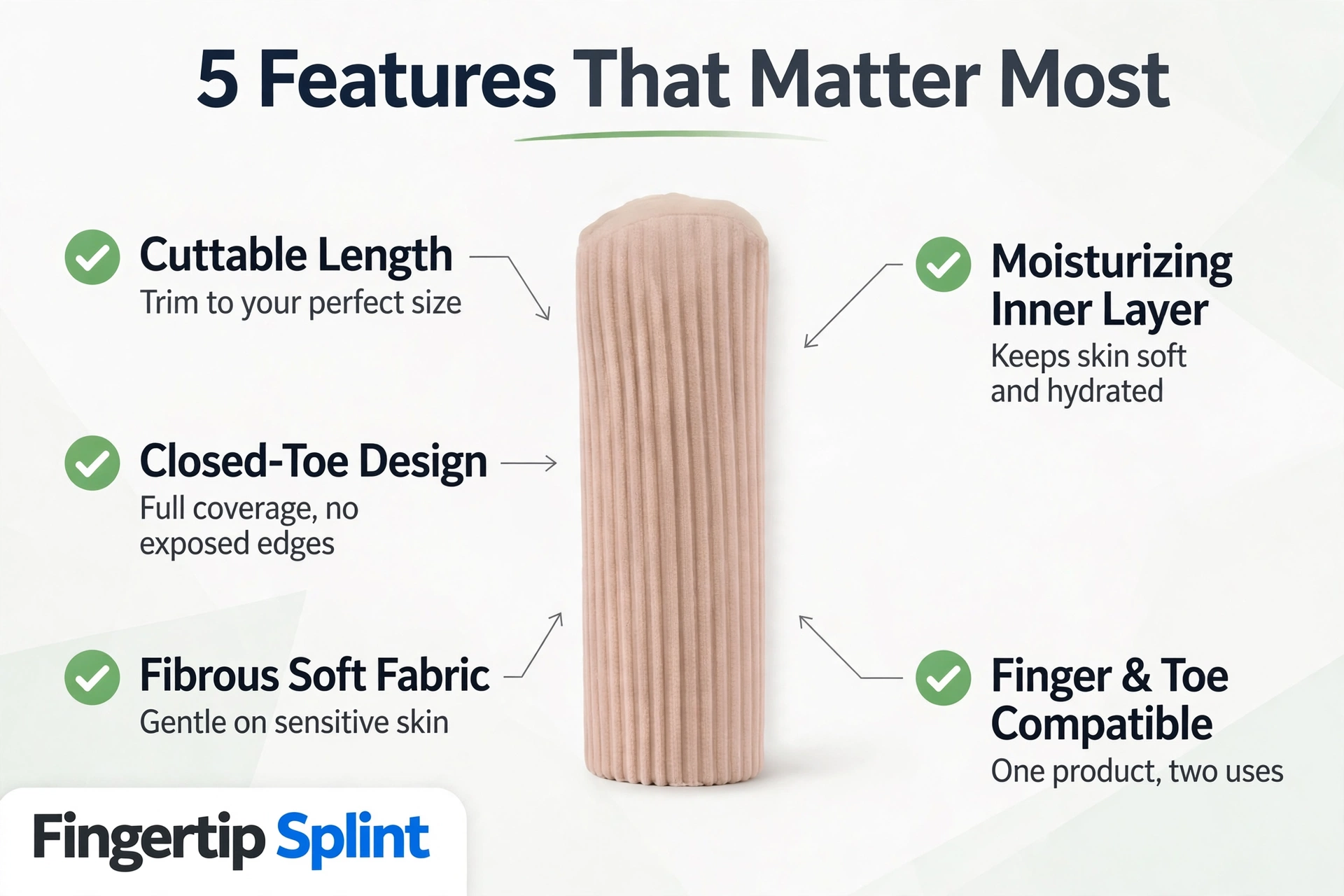
Closed-Toe Fibrous Cuttable Toe Protectors
This product is designed with closed-toe coverage and cuttable length, making it an option to evaluate for toe friction protection. Compare it against the criteria discussed throughout this guide.
- Closed-toe design for coverage around the toe tip
- Cuttable length for customized coverage
- Fibrous material for skin-friendly contact
- Low-profile design for shoe compatibility
- Suitable for repeated use with proper care
What to Check Before Buying
- Material composition and thickness
- Available dimensions and sizing
- Whether and where trimming is permitted
- Intended use (toe vs finger)
- Care instructions
- Compatibility with your footwear or activity
How to Evaluate the Fit
Check that the sleeve covers the intended area, sits smoothly, stays in place, and does not create pressure. If the product is intended for toes, confirm that it fits comfortably inside your shoes.
Is This the Right Product for Your Needs?
Compare the verified design with your particular friction problem. If your issue is finger-related, confirm that a finger-specific product is available and suitable. For more detailed guidance on choosing cuttable toe protectors, see our choosing cuttable toe protectors for blisters and corns guide. For closed-toe sleeve fit, see our closed-toe protector sleeve fit and comfort article.
Find Your Finger or Toe Sleeve Fit Issue
Fit Issue Selector
Select the issue you are experiencing to see a practical next step.
Select an issue above to see guidance.
3D Infographic — From Sleeve Length to Suitable Coverage
Interactive 3D Anatomy View
Click each part to learn how it affects fit, coverage, and protection.
Potential Benefits of Cut-to-Size Sleeves
When chosen and fitted correctly, cut-to-size sleeves can provide several practical benefits.
Flexible Length Adjustment
A suitable cuttable design may provide more flexibility in adjusting the length to match your specific coverage needs.
Targeted Coverage
Trimming allows you to position the coverage exactly where the friction is occurring, rather than accepting a one-size-fits-all length.
Convenience
Being able to adjust the length can make it easier to find a comfortable fit without needing multiple sizes.
Practical Barrier Against Friction
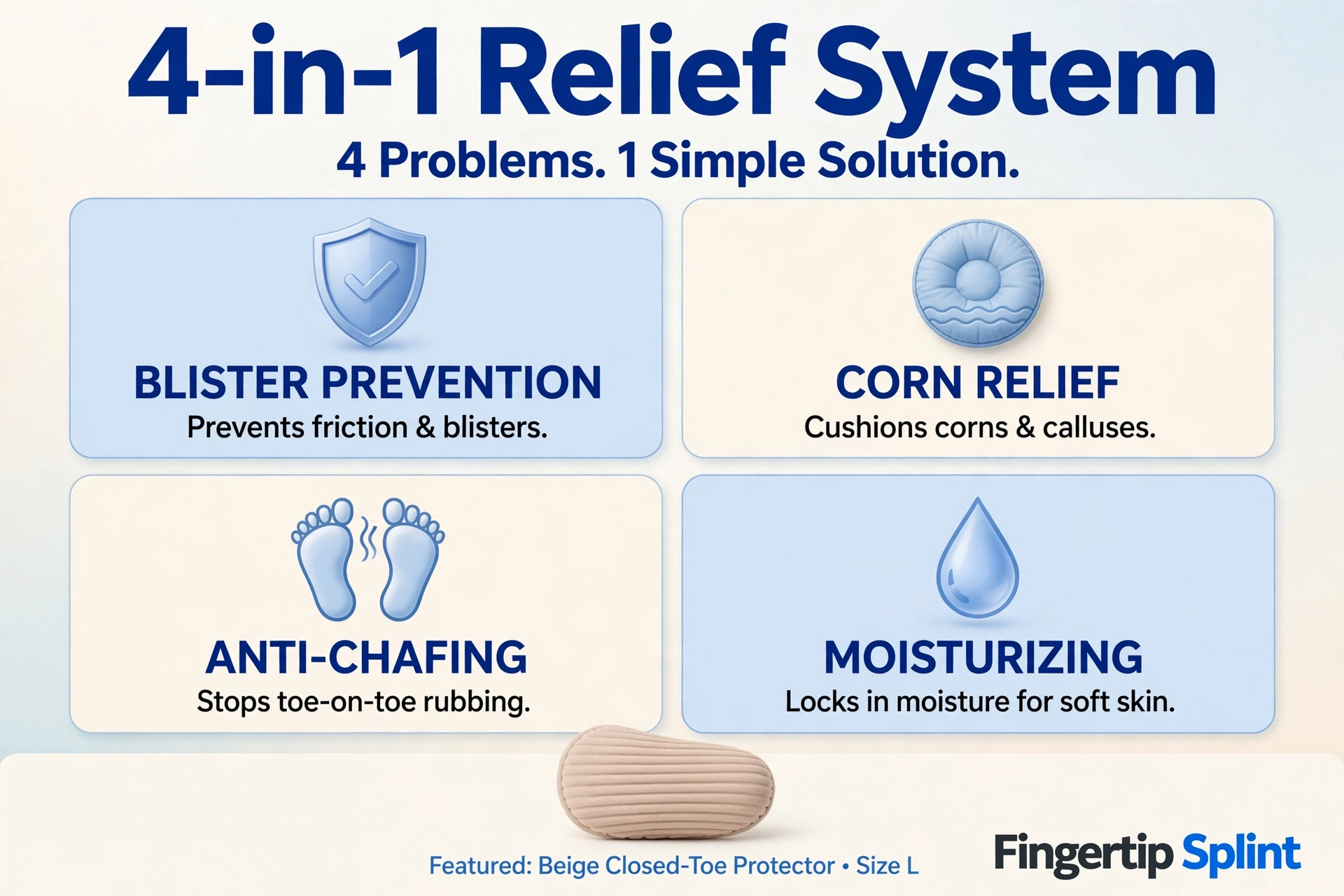
A sleeve can create a protective layer between your skin and the rubbing surface, reducing direct contact and irritation.
What Cut-to-Size Sleeves Cannot Guarantee
Being clear about limitations helps you set realistic expectations.
- They cannot guarantee the prevention of chafing or blisters.
- They cannot correct poorly fitting footwear or equipment.
- They cannot cure existing skin conditions.
- They cannot solve every source of repetitive friction.
If your symptoms persist or worsen, seek professional advice.
Frequently Asked Questions About Cut-to-Size Finger and Toe Sleeves
Cut-to-size finger and toe sleeves are used to provide targeted coverage and reduce friction between the skin and a rubbing surface. They can be trimmed to match the area that needs protection when the product design permits it. They do not treat the underlying cause of chafing or skin damage.
No. Not every sleeve is designed to be trimmed. Cutting may damage certain materials or cause them to unravel. Always check the manufacturer’s instructions before cutting.
Start by identifying the area that needs protection. Then use the manufacturer’s guidance to determine how much length you can trim. Cut in small increments and check the fit after each cut.
Yes, if trimming is not permitted or if the material is not designed to be cut. Cutting may cause fraying, weaken the material, or damage reinforced areas. Always follow the manufacturer’s instructions.
No, not automatically. Finger sleeves and toe sleeves are designed for different body areas and movement patterns. Confirm that the product is intended for the application you need.
It should stay in place without squeezing the finger or toe. There should be no numbness, tingling, or excessive pressure. If the sleeve causes these sensations, remove it and reassess.
Yes, if your shoes have enough room in the toe box. A sleeve can add bulk, so check that it does not create additional pressure. If the shoe is too tight, the sleeve may make things worse.
Stop using the sleeve if you experience numbness, tingling, significant discoloration, increasing pain, skin damage, or persistent irritation. Seek medical advice if you notice signs of infection, a blister that appears infected, open or non-healing wounds, severe pain, difficulty walking, or recurring problems. People with diabetes, poor circulation, or reduced sensation should seek advice for any foot wound.
Find the Right Sleeve for Targeted Friction Protection
Cover the Area That Needs Protection
The right protective sleeve should cover the area that needs protection without adding uncomfortable pressure. Before choosing a cuttable design, check whether trimming is permitted, confirm the intended application, and assess the fit after any adjustment.
The Closed-Toe Fibrous Cuttable Toe Protectors are designed with closed-toe coverage and cuttable length. Explore the full shop finger and toe support products collection to compare options, or read our choosing cuttable toe protectors for blisters and corns guide for product comparison guidance.
Explore Cuttable Toe Protectors Explore More Support ProductsTargeted Protection Starts With the Right Fit
Cut-to-size finger and toe sleeves can provide valuable anti-chafing support when they are chosen and adjusted correctly. The key is to confirm that trimming is permitted, measure carefully, cut in small increments, and check the fit after any adjustment. If the sleeve causes pressure, numbness, or irritation, remove it and reassess.
For more detailed guidance, see our best cuttable toe protectors for blisters and corns and our closed-toe protector sleeve fit and comfort articles. For professional purchasing information, visit the medical finger splint supplier page, or check the frequently asked questions for additional support.