
You have probably seen toe protectors online that look comfortable in the photos. Then you order them, and they feel too bulky, slip around, or fail to address the actual source of rubbing. You are not alone. The right toe protector depends on where the problem is, how much coverage you need, what material suits your skin, and how much room your shoes have. This buying guide helps you make a more informed choice in less time. Start with our toe protectors for walking to explore the full range.
Table of Contents
- Quick Answer
- What Is a Toe Protector?
- Which Type Should You Buy?
- Fit and Sizing
- Materials: Silicone, Gel, Foam, Fabric
- Shoe Compatibility
- Choose Based on Your Problem
- Product Spotlight
- Common Buying Mistakes
- How to Use and Care
- When a Protector May Not Be Enough
- Interactive Buying Assistant
- 3D Fit Infographic
- FAQ
- CTA
How Do You Choose the Right Toe Protector?
The right toe protector depends on where rubbing or pressure occurs, the coverage you need, the material, and the available space inside your shoe. Compare product dimensions and intended use, then test the fit briefly. A protector should not cause additional pressure, numbness, or irritation.
What Is a Toe Protector, and What Should It Do?
A toe protector is a product designed to cover, cushion, or reduce direct contact around some part of a toe. Products differ in shape, material, thickness, coverage, and intended use. Understanding what a toe protector can and cannot do helps you choose a product that actually solves your problem.
Protection: A Barrier Against Rubbing
Protection means creating a barrier that reduces direct rubbing or contact. A sleeve, cap, or cushion may provide this type of barrier depending on its design.
Cushioning: Padding at a Contact Point
Cushioning means adding padding at a particular contact point. A targeted cushion or pad is designed for this purpose. Placement and thickness matter because too much padding can reduce the space inside the shoe.
Separation: Creating Space Between Toes
Separation means creating space between neighboring toes. A separator is designed for this purpose. It is a different function from covering or cushioning a single toe.
Support or Immobilization: A Different Purpose
Support or immobilization means restricting movement. This may require a specific splint rather than a general-purpose toe protector. If you have a significant injury, seek professional advice about the appropriate level of support.
Explore the wider FingertipsSplint foot-protection range to see the different product categories available.
Which Type of Toe Protector Should You Buy?
This is the first major decision point. Different designs serve different purposes. Compare the trade-offs instead of assuming one design is best for everyone.
Soft Toe Sleeves
Sleeves cover part or all of a toe, depending on the design. They may suit certain friction concerns, but you must check circumference, length, thickness, and moisture management. A sleeve that is too tight can cause pressure; one that is too loose may slip.
Toe Caps
Caps cover the tip of the toe. They may be unsuitable when the front of the shoe is already tight or shallow. Check the available space before choosing a cap.
Targeted Cushions and Pads
Cushions and pads add padding at a specific contact point. Placement and extra bulk can affect comfort. A pad that is too thick can make a tight shoe even tighter.
Toe Separators
Separators create space between toes. They should not be treated as equivalent to a sleeve or protective cap. If your toes rub against each other, a separator may help. If the problem is friction against the shoe, a sleeve or cushion is usually more appropriate.
| Type | Typical Purpose | Key Buying Consideration |
|---|---|---|
| Toe sleeve | Coverage around a toe | Length, fit, material, moisture |
| Toe cap | Protection around the tip | Shoe depth and available space |
| Cushion or pad | Localized padding | Position, thickness, secure fit |
| Toe separator | Space between toes | Comfortable spacing and pressure |
For a broader problem-based comparison, see our best toe protectors for walking, corns, and blisters.
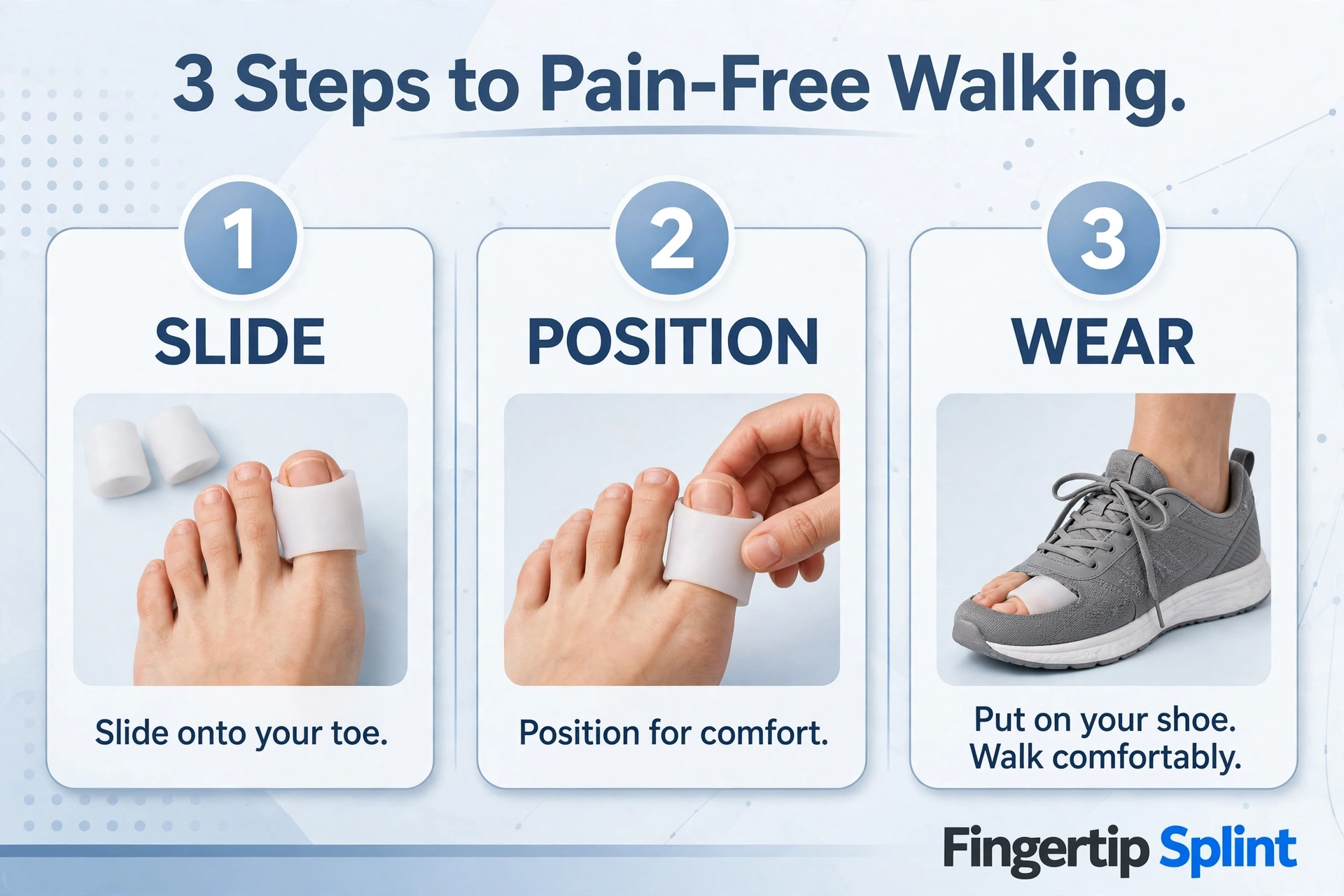
Fit and Sizing: How Should a Toe Protector Fit?
Fit is the most important factor determining whether a toe protector will be comfortable and effective. A protector can be made from a soft material and still be uncomfortable if it is too short, too narrow, too loose, or too thick for the shoe.
Length
The protector should provide the intended coverage without bunching at the end. If it is too short, it will not cover the friction point. If it is too long, it may fold or bunch, creating new pressure.
Circumference
It should sit securely without squeezing the toe. A protector that is too tight can restrict circulation and cause numbness or tingling.
Thickness
It should leave sufficient space inside the shoe. A thick protector can make a tight shoe even tighter, increasing pressure rather than reducing it.
Position
The protector should remain where intended rather than rolling or shifting. If it moves away from the friction point, it will not provide the intended protection.
Movement
You should be able to move naturally without the protector forcing the toe into an uncomfortable position.
- New pressure or deep marks
- Numbness or tingling
- Discoloration
- Slipping or bunching
- Worsening irritation
Step-by-Step Fit Check
- Review the manufacturer’s dimensions and fitting instructions.
- Inspect the toe and identify the contact point.
- Apply the product as directed.
- Wear the socks and shoes normally used.
- Walk briefly on a safe, level surface.
- Remove the shoe and check for new pressure marks or irritation.
- Stop using the product if it causes discomfort.
Materials: Silicone, Gel, Foam, and Fabric
The material of a toe protector affects comfort, durability, and how well it performs. Compare materials based on their actual construction, not just the material name.
Silicone
Check flexibility, thickness, surface feel, and cleaning instructions. Silicone can be soft and flexible, but it may add bulk or retain moisture depending on the design.
Gel-Based Designs
Products marketed as gel can vary in construction and cushioning. Check the actual product description for coverage, dimensions, and care requirements.
Foam
Consider thickness, compression, shape, and whether the material changes the shoe fit. Foam may change shape or shift during wear.
Fabric or Fabric-Lined Designs
Consider comfort and breathability while checking product-specific care requirements. Fabric may bunch or become damp.
| Material or Design | What to Check | Potential Drawback |
|---|---|---|
| Silicone | Thickness, flexibility, care instructions | May add bulk or retain moisture |
| Gel-based | Construction, coverage, dimensions | Can still be too thick for some shoes |
| Foam | Density, compression, shape | May change shape or shift |
| Fabric-lined | Fit, lining, wash instructions | May bunch or become damp |
The material name alone cannot determine comfort, durability, or suitability. The finished product’s shape, dimensions, and intended use matter just as much.
Shoe Compatibility: Sneakers, High Heels, and Everyday Footwear
A toe protector must fit both the toe and the shoe. A design that works in a roomy sneaker may be uncomfortable in a shallow dress shoe. Match the protector to the footwear you actually wear.
Sneakers and Walking Shoes
Check fit with normal socks and the shoe’s existing cushioning. A protector that slides around will not stay over the friction point.
High Heels and Dress Shoes
Prioritize available toe-box space and avoid adding excessive bulk. A thin protector is usually more appropriate than a thick one.
Everyday Flats
Check for slipping, rubbing against seams, and pressure near the shoe opening.
Work Shoes
Consider the duration of wear, secure positioning, and the ability to inspect the skin. A stable fit is more important than extra padding.
Roomy Footwear
Ensure the protector stays in place and does not bunch during movement. A protector that shifts in a roomy shoe may not provide consistent protection.
For a deeper footwear-specific discussion, see our toe cushions for high heels, sneakers, and everyday shoes.
Choose Based on Your Actual Problem
Translating your symptoms into practical shopping considerations helps you avoid buying the wrong product.
If the Main Issue Is Rubbing
Compare designs that cover the precise area of contact. Check whether the material shifts during walking. A sleeve or low-profile cushion may be appropriate.
If the Issue Is a Pressure Point
Check shoe fit first. A cushion may increase pressure if there is insufficient space. If the shoe is the problem, the shoe may need to change.
If the Issue Is a Corn or Thickened Skin
Reducing repeated pressure may be helpful, but persistent or painful corns may require professional advice. For authoritative background, see the Mayo Clinic’s corns and calluses guidance.
If the Issue Is a Blister
Distinguish between reducing friction on intact skin and caring for an existing blister. A standard protector may not be appropriate over damaged skin. For blister care guidance, see the NHS guidance on blisters.
If the Problem Is Between Toes
Compare the intended coverage of a sleeve with the different purpose of a separator. A separator creates space; a sleeve covers the skin.
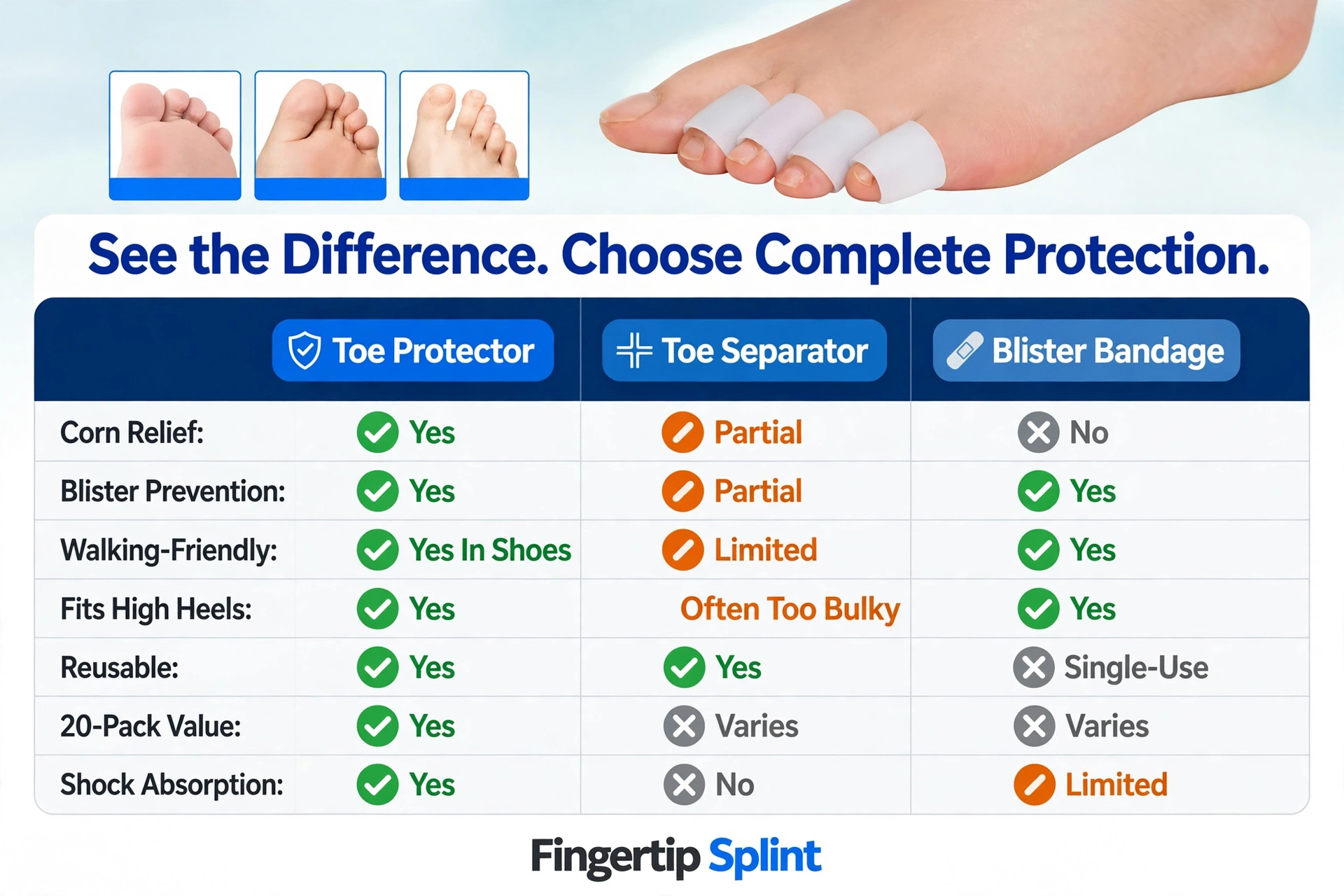
Product Spotlight: 20-Piece Toe Protectors for Walking
20Pcs Toe Protectors for Walking
This multi-piece pack is designed for toe protection during walking and everyday activity. It is an option to evaluate based on your specific needs and shoe fit.
- 20-piece pack for multiple toes or replacement
- Soft material for cushioning and friction reduction
- Suitable for walking and everyday shoes
- Low-profile design for shoe compatibility
- Reusable with proper care
Who May Want to Consider This Product
Readers who need protection for multiple toes, who want a supply for replacement, or who are comparing soft protectors for walking may find this product relevant. The multi-piece pack offers flexibility if you have more than one toe that needs protection.
How to Evaluate the Fit
Check that the protector covers the intended area, sits smoothly, stays in place, and does not create pressure. Test it inside your actual shoes before extended wear. If it bunches, slips, or causes discomfort, reassess the size or design.
Details to Check Before Ordering
Review the material, care instructions, and product measurements if provided. Do not assume that every piece fits every toe or shoe. Verify the information on the product page.
Common Toe Protector Buying Mistakes
Avoid these common errors to get the most benefit from your toe protector.
1. Choosing by Appearance Alone
A soft-looking protector can still be too bulky. Evaluate the actual dimensions and intended use.
2. Ignoring Measurements
Product dimensions are more useful than relying on the words “small” or “large.” Check the specific measurements.
3. Buying Extra-Thick Cushioning
More material may reduce available toe space. Choose the thinnest protector that provides adequate cushioning.
4. Ignoring the Location of Discomfort
A toe sleeve may not suit pain behind the toes. Match the product design to the location of the problem.
5. Assuming All Materials Perform Alike
Construction and thickness influence fit. Compare design, not just material name.
6. Ignoring Footwear
The same product may feel different in sneakers and dress shoes. Test the fit with your actual footwear.
7. Skipping a Short Fit Test
Slippage or pressure can become noticeable during movement. Walk briefly before extended wear.
8. Continuing Despite Warning Signs
New numbness, tingling, discoloration, or increasing pain are reasons to stop. Do not ignore these signals.
9. Expecting a Protector to Fix an Underlying Condition
Footwear accessories are not a substitute for appropriate assessment when symptoms persist.
How to Use and Care for a Toe Protector
Care instructions vary by material and product construction. Follow the manufacturer’s guidance instead of assuming every toe protector can be washed or reused in the same way.
Inspecting the Product Before Use
Check for damage, rough edges, or signs of wear. A damaged protector may not provide adequate protection.
Following Fitting Instructions
Follow the manufacturer’s fitting instructions. Proper positioning helps ensure comfort and effectiveness.
Testing the Fit With Intended Footwear
Test the protector with the shoes and socks you intend to wear. This is the real test of fit.
Checking Skin Condition After Wearing
Check the skin after wearing the protector. Look for pressure marks, redness, or irritation.
Cleaning Only as Directed
Clean only as directed by the manufacturer. Some products are hand-wash only; others may not be washable at all.
Replacing Damaged or Poorly Fitting Products
Replace a product that is damaged, deteriorating, or no longer fits properly. Do not continue using a protector that causes discomfort.
When a Toe Protector May Not Be Enough
A toe protector is a footwear accessory. It does not diagnose or treat every cause of pain.
- Severe or persistent pain
- Significant swelling
- Spreading redness or warmth
- Pus or discharge
- Fever
- A wound that is not improving
- Difficulty walking
- Sudden deformity or suspected fracture
People with diabetes, reduced circulation, reduced sensation, or other conditions that increase foot-wound risk should obtain individualized advice before self-treating foot lesions. For authoritative guidance, see the NHS guidance on blisters. The MedlinePlus foot injury and disorder resources provide general foot-care context. The National Institute of Diabetes and Digestive and Kidney Diseases and the CDC diabetes resources explain why people with diabetes need to be particularly careful with foot wounds. For skin-care context, see the American Academy of Dermatology. Cleveland Clinic, WebMD, Healthline, and OrthoInfo offer additional consumer education.
Build Your Toe Protector Checklist
Interactive Buying Assistant
Choose the options that best describe your situation.
What is your main concern?
What coverage are you looking for?
Select your options above to see a checklist of features to compare.
Check Your Toe Protector Fit: Interactive 3D Guide
Interactive 3D Foot and Toe View
Click each part to learn what to inspect before ordering.
Illustration for understanding fit. Actual fit and coverage vary by product.
Frequently Asked Questions
Selection depends on the location of rubbing, desired coverage, material, dimensions, and available shoe space. Compare the product’s actual design with your needs.
It should provide the intended coverage without squeezing the toe, slipping, bunching, or causing new pressure. Test it briefly in your normal footwear and stop if symptoms develop.
Silicone, gel-based, foam, and fabric designs have different constructions and trade-offs. The material name alone cannot establish which product is most suitable.
Compatibility depends on the protector’s thickness, the shoe’s shape, and available room. A product that works in one shoe may not fit another.
Some designs may reduce direct rubbing or pressure, but they do not treat every underlying cause. Damaged skin, infection signs, or persistent symptoms need appropriate care.
Warning signs include numbness, tingling, discoloration, new pain, deep pressure marks, or worsening irritation. Remove it rather than trying to tolerate the discomfort.
Reuse and cleaning depend on the manufacturer’s instructions and the product’s materials. Do not assume that all products are washable or suitable for repeated use.
Seek medical advice for severe or persistent pain, significant swelling, spreading redness, pus, fever, difficulty walking, or higher-risk medical conditions. New numbness or a change in toe color also means the product should be removed immediately.
Choose Toe Protection That Fits Your Needs
Start With the Location of the Rubbing
Check the space available inside your footwear, and compare product dimensions and care instructions before ordering. The 20-piece toe protectors for walking are designed for walking and everyday activity.
Explore the full browse toe-protection products collection to compare options, read our best toe protectors for walking, corns, and blisters article for broader guidance, or request product information or a quote for bulk or clinical needs.
Explore 20-Piece Toe Protectors Shop Toe-Protection ProductsMake an Informed Decision About Toe Protection
Choosing the right toe protector is about matching the product to your problem, your footwear, and your comfort needs. Understanding the difference between protection, cushioning, separation, and support helps you choose a design that actually solves your problem.
If you have persistent or worsening symptoms, a toe protector is not a substitute for professional assessment. Seek medical advice when needed.
For more detailed guidance, see our best toe protectors for walking, corns, and blisters and our toe cushions for high heels, sneakers, and everyday shoes. For more foot-protection articles, visit the FingertipsSplint blog.