
You have been staring at toe separators online for what feels like hours. Several products look similar, but their shapes, materials, and intended uses are different. You do not want to waste money on a device that does not work for your feet. This buying guide helps you compare designs, materials, sizing, and suitability so you can make a fast, informed decision. Start with our explore foot-care products collection to compare the full range.
Table of Contents
- Quick Answer
- What Is a Toe Separator?
- Compare Toe Separator Types
- Material Comparison
- Fit and Sizing
- Daytime, Footwear, or Overnight?
- Evaluating Quality and Value
- Featured Product
- Common Buying Mistakes
- When It May Not Be Right
- Cleaning & Replacement
- Interactive Buying Assistant
- 3D Infographic
- FAQ
- CTA
How Do You Choose the Right Toe Separator?
Choose a toe separator by matching the design to your specific concern, checking the material and fit, verifying the intended wear period, and reviewing the manufacturer’s instructions. A soft product can still be a poor fit. Choose by purpose, not by appearance or by the strength of the separation it provides.
What Is a Toe Separator, and What Is It Designed to Do?
A toe separator is a device designed to create space between selected toes. It may also cushion an area, reduce direct contact between toes, or help maintain a particular position. Different designs serve different purposes.
Temporary Separation
Most toe separators are designed to create temporary separation while the device is worn. This can reduce direct contact between adjacent toes and reduce friction.
Cushioning Against Rubbing
Some designs also provide a cushioning layer. A sleeve or cushion may be intended to reduce rubbing at a specific area.
Supporting a Specific Alignment Goal
More structured splints may be designed to support a specific alignment goal. This type of device may require professional guidance for appropriate use.
Compare Toe Separator Types Before Buying
Different designs serve different purposes. Compare them by function, not by appearance.
| Design | Intended Purpose | What to Check |
|---|---|---|
| Simple toe spacer | Separation between adjacent toes | Position, size, and pressure |
| Toe sleeve or cushion | Cushioning or reducing contact at a specific area | Coverage, thickness, and shoe fit |
| Multi-toe separator | Separating several toes | Anatomical fit and stability |
| Structured toe splint | Supporting a particular alignment goal | Intended use and professional guidance where appropriate |
A spacer designed for one space between two toes may not help with a different pressure point. Choose by function rather than appearance alone. For nighttime-specific guidance, see our best toe separator for nighttime foot care article.
Material Comparison: Silicone, Gel, Foam, and Fabric
Material characteristics affect comfort, durability, and how well the device performs. No single material is universally best.
Silicone
Silicone can be flexible and easy to clean. Check the thickness, shape, and skin contact for the specific product. Silicone may retain moisture depending on the design.
Gel-Like Materials
Products marketed as gel can vary in construction and cushioning. Check whether the device can be cleaned as directed and whether it provides the coverage you need.
Foam
Foam can provide lightweight cushioning. Check the product-specific durability and moisture instructions. Foam may change shape over time.
Fabric-Based Designs
Fabric-based designs can provide coverage and fit. Consider moisture and whether the product stays in its intended position during use.
| Material | Comfort Consideration | Cleaning | Durability | Question to Ask |
|---|---|---|---|---|
| Silicone | Flexible; may retain moisture | Check manufacturer instructions | Depends on thickness and care | Is the shape suitable for my toe? |
| Gel-like | Cushioning varies by design | Check if washable | Varies | Does it provide the coverage I need? |
| Foam | Lightweight; may compress | Depends on product | May change shape | Will it stay in position? |
| Fabric-based | May bunch or become damp | Check wash instructions | Varies | Does it suit my foot shape? |
Actual performance depends on the product’s construction, not just the material name.
Fit and Sizing: What Buyers Should Check
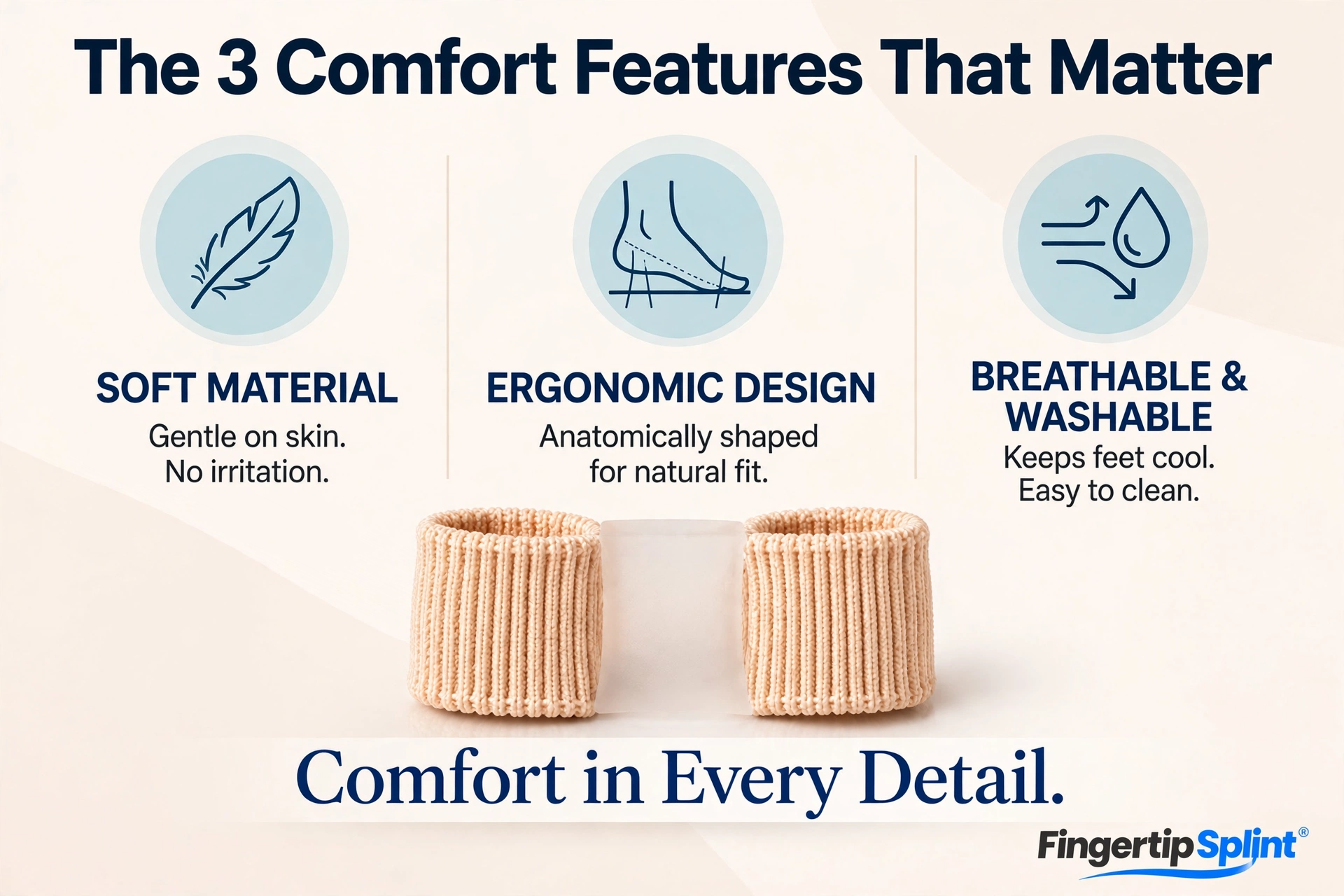
A product can be soft and still be a poor fit. Fit is about more than material.
Toe Spacing
The device should create the intended space without forcing the toes apart. Excessive separation can cause pain and skin irritation.
Device Thickness
Thicker devices may provide more separation but can also be uncomfortable. Choose the thickness that matches your needs.
Placement
The device should sit in its intended position. If it slips or rotates, it may not provide consistent separation.
Slipping and Pinching
A device that slips or pinches does not fit correctly. Reassess the size, design, or position.
Contact with Surrounding Skin
The device should contact the skin gently. It should not create pressure points or irritation.
Compatibility with Your Foot Shape
Foot shapes vary. A device that fits one person may not fit another. Follow the manufacturer’s sizing instructions.
- Pain or pinching
- Numbness or tingling
- Swelling
- Persistent redness
- Color changes
For a detailed fit and comfort discussion, see our toe separator splint: fit, comfort, and overnight use article.
Daytime, Footwear, or Overnight Use?
The intended wear environment matters. A device that fits comfortably at home may not fit inside a narrow shoe.
Footwear Clearance
A device that adds bulk may create pressure inside a shoe. Check that your shoes have enough room for the device.
Pressure from Shoe Uppers
Shoe uppers can press down on the device and the toes. This can create new pressure points.
Movement During Walking
A device that shifts during walking may not stay in position. Check stability during a short walk.
Special Concern for Overnight Use
A sleeping person may not notice irritation quickly. Do not assume all separators can be worn while sleeping or during exercise. Check whether the exact product is intended for daytime, nighttime, or both.
How to Evaluate Product Quality and Value
Before purchasing, examine the product listing for the following details.
Clear Photographs
Photographs should show the product’s actual design. If the images are unclear or look different from the description, be cautious.
Transparent Sizing and Intended-Use Instructions
The listing should clearly state the product’s dimensions, sizing, and intended use.
Material and Cleaning Details
The listing should describe the material and provide cleaning instructions.
Accurate Quantity and Included-Item Information
Check how many pieces are included and what they are. A multi-piece pack may offer flexibility if the quantity and design support that use.
Return Policy and Seller Contact Information
A clear return policy and seller contact information are signs of a reputable listing.
Realistic Medical Claims
Medical claims should be realistic and appropriately supported. Be cautious of dramatic promises.
Featured Product: 1PCS Toe Separator for Nighttime Use
1PCS Toe Separator for Nighttime Use
This product is designed for nighttime foot care. It is an option to evaluate based on your specific toe problem and comfort needs.
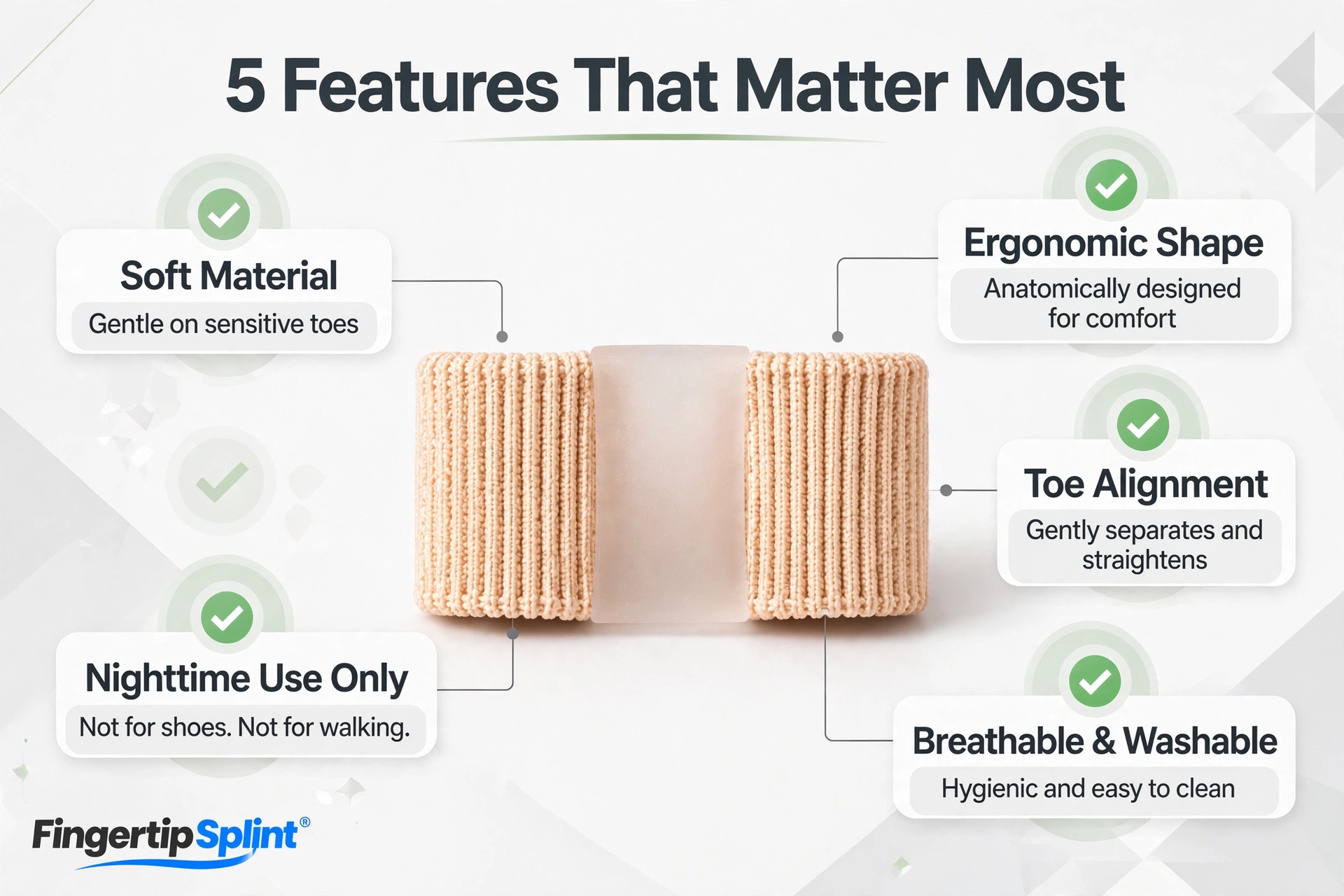
- Designed for nighttime use
- Soft material for comfort
- Creates space between adjacent toes
- Low-profile design for sleeping
- Reusable with proper care
Buying Checklist for This Product
Product Evaluation Checklist
Common Buying Mistakes to Avoid
Avoid these common errors when choosing a toe separator.
1. Selecting Based Only on Appearance
A device that looks soft may still be too bulky or unsuitable for your anatomy. Evaluate the actual dimensions and intended use.
2. Assuming All Materials Behave the Same
Construction and thickness influence fit. Compare design, not just material name.
3. Choosing a Size Without Checking Instructions
Follow the manufacturer’s sizing instructions. Do not guess.
4. Ignoring Shoe Compatibility
A device that works barefoot may not fit inside a shoe. Check shoe clearance.
5. Believing Stronger Separation Is Better
Excessive separation can cause pain and skin irritation. Gentle, consistent fit matters more than force.
When a Toe Separator May Not Be the Right Choice
A toe separator cannot necessarily address the underlying cause of persistent pain or a structural toe deformity.
- Diabetes
- Reduced sensation
- Poor circulation
- Open wounds
- Infection
- Significant swelling
- Persistent pain
Seek assessment for severe or sudden pain, injury-related deformity, or symptoms such as numbness and color change. Product suitability matters more than pushing every reader toward a purchase.
For authoritative background on bunions, see the Mayo Clinic’s bunion guidance, the NHS bunion guidance, and the Cleveland Clinic’s bunion resource. For general foot-care information, see the MedlinePlus foot injury and disorder resources and the AAOS OrthoInfo. The NIDDK’s guidance on diabetes and foot problems and the CDC diabetes resources explain why people with diabetes need extra care. For skin-care context, see the American Academy of Dermatology. WebMD and Healthline provide additional consumer education.
Cleaning, Maintenance, and Replacement
Care instructions are part of choosing a reusable device.
Why Care Matters
A device that is not cleaned regularly can harbor bacteria and cause skin irritation. Follow the manufacturer’s instructions.
Complete Drying
Allow the device to dry completely before storing or wearing it again.
Inspection for Damage
Check the device regularly for cracks, deterioration, or changes in texture. A damaged device may not provide adequate protection.
Appropriate Storage
Store the device in a clean, dry place. Avoid storing it in a way that deforms the shape.
What Should You Look For in a Toe Separator?
Interactive Buying Assistant
Select your preferences to get a practical checklist for comparing products.
What is your main concern?
When do you expect to use it?
Do you have a material preference?
Select your preferences above to build a checklist.
Choose Your Toe Separator: Interactive 3D Buying Guide
Interactive 3D Foot and Toe View
Click each part to learn about placement, material, fit, and intended wear.
Illustration for understanding device placement and buying criteria. Actual fit and coverage vary by product.
Frequently Asked Questions
Start with the concern, intended function, fit, and manufacturer instructions. Match the design to your specific toe position and confirm the product is intended for your desired wear period.
The practical differences matter more than the material name. Shape and construction affect fit as much as material. Compare design, thickness, coverage, and care instructions.
It should not cause pain, pinching, numbness, tingling, or color changes. These are warning signs, not signs of effectiveness. Remove the device if any of these occur.
It depends on the shoe clearance and the product’s intended use. Check that the shoe has enough room for the device without creating new pressure.
Only if the exact product permits overnight use. Check the manufacturer’s instructions and test the fit while awake first. For broader guidance, see our nighttime article.
A separator creates temporary spacing while worn. It does not correct an established structural deformity. If you have significant overlap or a painful bunion, seek professional advice.
Follow the verified product-specific cleaning instructions. Do not use harsh chemicals or high temperatures unless the manufacturer explicitly allows them.
Avoid using a separator over damaged skin, wounds, or infection. People with reduced sensation, circulation problems, or persistent or severe symptoms should seek professional advice before use.
Look for unclear instructions, missing sizing information, vague material claims, and unsupported medical promises. A product with clear details is easier to evaluate.
Make an Informed Buying Decision
Choose by Purpose, Fit, and Material
Choose by purpose, fit, material, intended wear, and individual foot-health needs — not by unsupported promises. Review the product details and confirm that the design matches your needs before purchasing. The 1PCS Toe Separator for Nighttime Use is designed for nighttime foot care.
Explore the full explore foot-care products collection to compare options, read our best toe separator for nighttime foot care article for broader guidance, or request a product quote for business or wholesale inquiries. For answers to common questions, visit the FAQ page.
Review the Nighttime Toe Separator Explore FingertipsSplintBuy the Right Design, Not Just Any Separator
The strongest version of this buying guide helps you compare separator types, assess material and fit, check suitability for your intended wear, recognize misleading product claims, and understand when professional advice is more appropriate than self-treatment.
A toe separator can help while it is worn. It cannot replace appropriate assessment when symptoms persist. Choose by purpose, fit, material, and intended wear — not by the strength of the separation it provides or by dramatic claims.
For more detailed guidance, see our best toe separator for nighttime foot care and our toe separator splint: fit, comfort, and overnight use articles. For answers to common questions, visit the frequently asked questions page.