
A thumb injury is frightening. If you suspect a dislocation, your first instinct may be to search for a splint. But a dislocated thumb needs prompt medical assessment before any support product is chosen. Do not try to force the joint back into position. Do not rely on a retail brace instead of professional care. This guide explains what to look for in a thumb splint after a dislocation has been assessed, how to compare support options, and when to seek urgent help. Start with our FingertipsSplint hand-support resources to explore the range.
Table of Contents
- Quick Answer
- What Is a Thumb Dislocation?
- Why Medical Assessment Comes First
- What to Look For in a Splint
- Spica Splint vs Sleeve vs Fixation Strap
- Fit, Pressure, and Comfort
- Recovery After a Dislocation
- Common Mistakes to Avoid
- Questions to Ask Your Clinician
- Interactive Buyer & Safety Guide
- 3D Infographic
- FAQ
- CTA
What Should You Look For in a Thumb Splint After a Dislocation?
When choosing a thumb splint after a dislocation, prioritize the support prescribed for the injured joint, appropriate coverage, secure fit, and clear wearing instructions. A suspected dislocation needs prompt medical assessment. Do not try to reposition the joint yourself or rely on a retail brace instead of professional treatment.
What Is a Thumb Dislocation?
A thumb dislocation happens when the bones that form a joint move out of their normal alignment. This can affect the joint surfaces and the surrounding soft tissues, including ligaments and tendons.
Common Injury Mechanisms
Thumb dislocations often result from falls, direct impacts, or awkward twisting injuries. The thumb may be forced into an unnatural position during a fall or sports activity.
Symptoms
Symptoms may include pain, swelling, bruising, deformity, and difficulty moving the thumb. In some cases, the joint may appear visibly out of position.
Why Symptoms Alone Cannot Confirm the Injury
A fracture or significant ligament injury may occur alongside a dislocation. Symptoms alone cannot reliably determine the exact injury. Imaging or clinical examination may be necessary. A clinician can assess your thumb and recommend appropriate treatment.
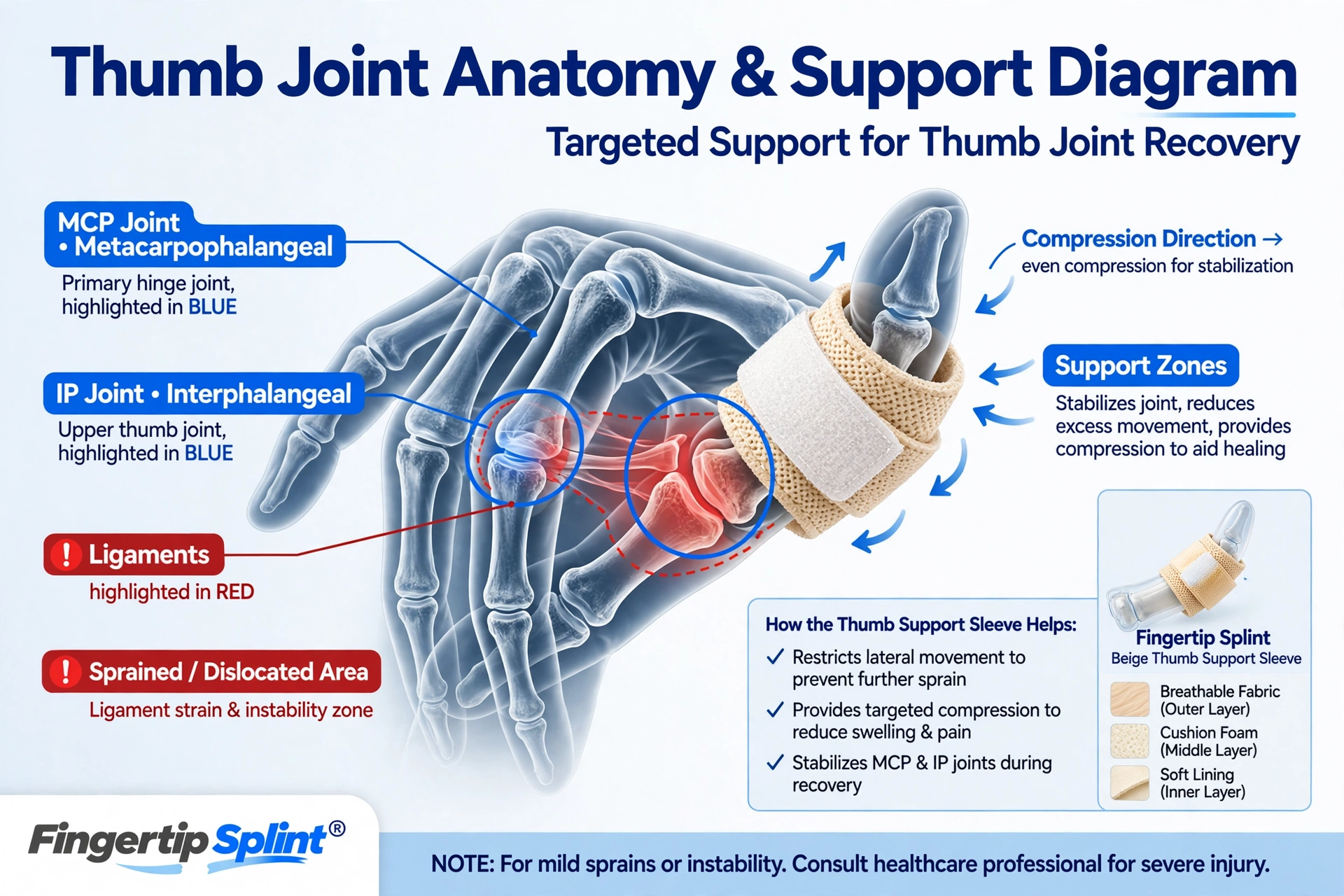
Why Medical Assessment Must Come Before Splint Selection
A suspected dislocation needs prompt medical attention. A clinician can assess bone alignment, check for fractures, evaluate ligament damage, and confirm that sensation and circulation are intact.
What a Clinician May Evaluate
- Bone alignment and joint position
- Associated fractures
- Ligament damage
- Sensation and circulation
- Soft tissue involvement
Why a Retail Brace Cannot Replace Assessment
A healthcare professional should manage any necessary reduction and determine the appropriate immobilization. A retail brace should not be used to force the joint into position or delay urgent care.
- An open injury
- Severe pain
- Obvious deformity
- A pale, blue, cold, or numb thumb
- Suspected dislocation or fracture
For general injury symptoms and guidance on when to seek medical attention, see the NHS sprains and strains guidance. For condition-specific guidance on symptoms and professional evaluation, see the Mayo Clinic and Cleveland Clinic health library.
What to Look For in a Thumb Splint After a Dislocation
When a splint has been recommended by a clinician, evaluate these features before choosing a product.
Appropriate Thumb Coverage
The splint should cover the area that needs support. Confirm which joint is injured and whether the splint is designed for that joint.
Structural Support
Consider the level of structural support the splint provides. Some injuries require more substantial immobilization than others.
Secure Fastening
The fastening system should keep the splint in position without requiring excessive tightening. Follow the manufacturer’s instructions.
Correct Sizing
Follow the manufacturer’s sizing instructions. A splint that is too tight can cause skin irritation; one that is too loose may not provide adequate support.
Skin Comfort
Consider the material and how it contacts the skin. Check the product description for specific details.
Compatibility with the Prescribed Plan
The splint should be compatible with the clinician’s prescribed immobilization plan. Do not substitute a different type of support without professional advice.
Thumb Spica Splint vs Thumb Sleeve vs Fixation Strap
Different designs serve different purposes. Compare them by coverage, rigidity, and typical role.
| Support Type | Coverage | Rigidity | Typical Role |
|---|---|---|---|
| Thumb spica splint | Thumb and often part of wrist | More structured | Immobilization after injury |
| Thumb sleeve | Thumb only | Soft, flexible | Light support or protection |
| Fixation strap | Adjustable | Varies | Securing a support or positioning |
These devices are not automatically interchangeable, particularly after a dislocation. A soft sleeve does not provide the same immobilization as a structured splint. For a deeper discussion of fastening and fit, see our thumb fixation strap buying guide for fit and protection.
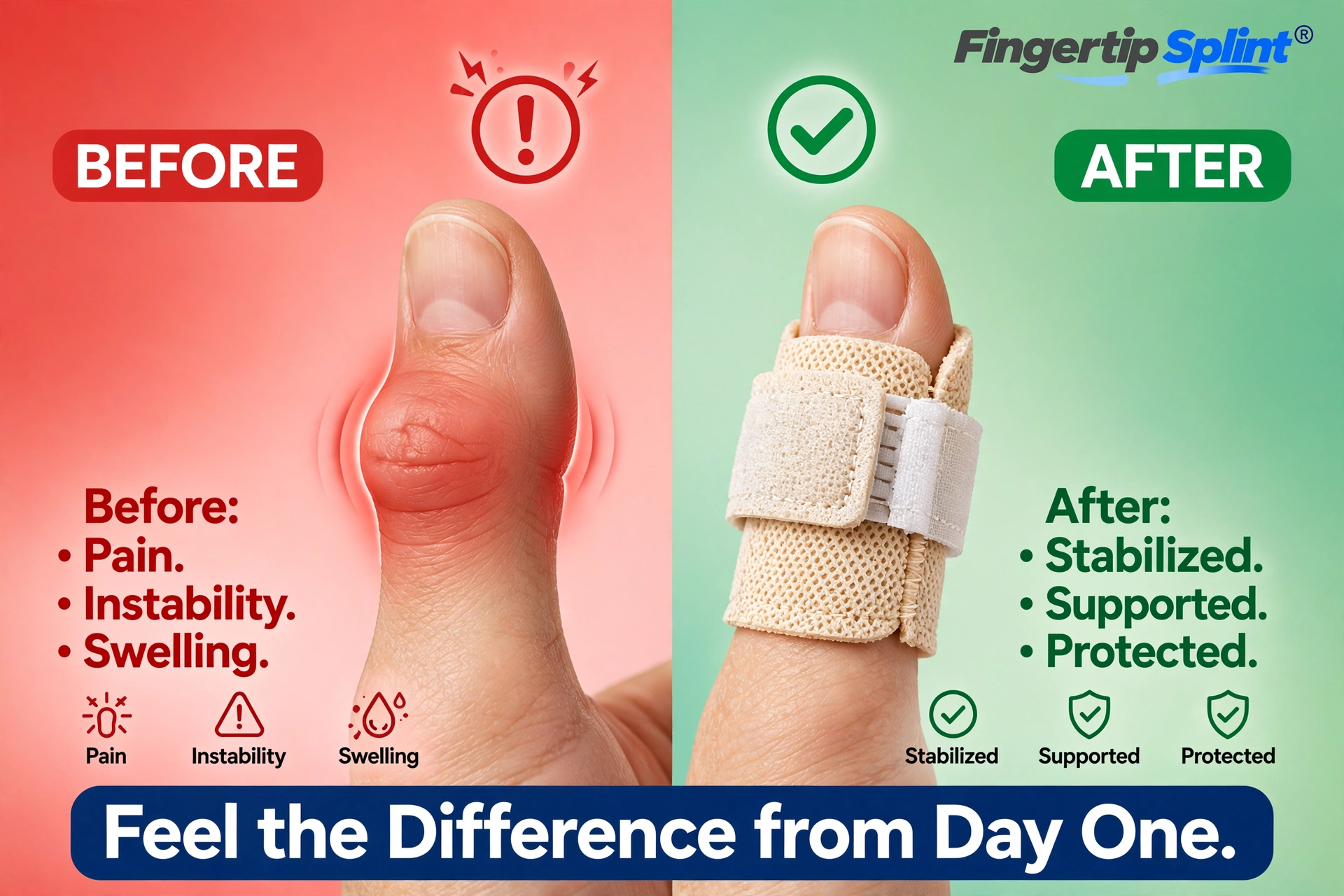
Fit, Pressure, and Comfort: How to Evaluate a Splint
Proper fit and positioning are essential for comfort and safety. Follow these steps while respecting the clinician’s prescribed position and wear schedule.
Follow Product Instructions
Read the product’s sizing and fitting instructions. Position the splint as directed.
Avoid Excessive Pressure
The splint should be secure without causing excessive pressure. A secure fit is not the same as a tight fit.
Check for Pressure Points
Check for redness, irritation, or pressure marks. If you notice skin changes, remove the splint and reassess.
Monitor for Warning Signs
If the splint causes new numbness, tingling, increased pain, swelling, or color and temperature changes, remove it and seek advice.
Recovery After a Thumb Dislocation: What to Expect
Recovery is a process guided by the injury’s severity, joint stability, associated fractures or ligament damage, and the treatment plan.
Immobilization
Immobilization may be part of care, depending on the injury. Follow the clinician’s instructions on the type of support and how long to wear it.
Follow-Up Appointments
Follow-up appointments help monitor healing and adjust treatment as needed. Attend scheduled appointments.
Rehabilitation
Rehabilitation may be part of care to help restore movement and strength. Follow the clinician’s guidance on exercises and activity.
Common Mistakes When Buying or Using a Thumb Splint
Avoid these common errors to protect your thumb and support recovery.
1. Attempting to Treat a Suspected Dislocation at Home
A suspected dislocation needs prompt medical assessment. Do not try to reposition the joint yourself.
2. Selecting a Brace by Appearance Alone
A brace that looks supportive may not provide the support you need. Evaluate the actual design and intended use.
3. Over-Tightening Straps
Over-tightening can cause numbness, tingling, and skin damage. Follow the fitting instructions.
4. Substituting a Soft Sleeve for Prescribed Immobilization
A soft sleeve does not provide the same immobilization as a structured splint. Follow the clinician’s guidance on the type of support.
5. Skipping Follow-Up Care
Follow-up appointments help monitor healing. Attend scheduled appointments.
6. Returning to Activity Too Early
Return to activity should be guided by a clinician. Do not rush back to gripping, lifting, or sports.
Questions to Ask Your Healthcare Professional
Preparing questions helps you understand your injury and the appropriate support.
- Which joint is injured?
- Is there an associated fracture or ligament injury?
- Which type of splint is appropriate?
- How long should it be worn?
- When should fit be reviewed?
- When can hand movement and rehabilitation begin?
Interactive Buyer and Safety Guide
What Is Your Current Situation?
This guide helps you distinguish between an urgent injury and a product-comparison question. It does not diagnose the injury.
What is your current situation?
What do you need to understand?
Are there urgent warning signs?
Select your answers above to see guidance.
Explore Thumb Splint Support: Coverage, Fit and Safety
Interactive 3D Hand and Thumb View
Click each part to learn about support, coverage, and safety checks.
Illustration for understanding thumb support options. Actual fit and coverage vary by product.
Frequently Asked Questions
The appropriate type depends on the injured joint and any associated injuries. A thumb spica splint may be used for immobilization. Follow the treating clinician’s recommendation.
No. A suspected dislocation requires prompt medical assessment before choosing any support product. Do not use a retail brace to force the joint into position or delay urgent care.
A thumb spica splint provides more structured support and often covers part of the wrist. A soft sleeve provides light support only. They are not interchangeable, particularly after a dislocation.
It should fit securely without causing numbness, tingling, or color changes. Follow the manufacturer’s sizing and fitting instructions. Do not independently change a prescribed immobilization plan.
Wear duration depends on the injury and treatment plan. Follow your clinician’s guidance. Do not remove the splint or resume activity based solely on elapsed time.
Yes. A fracture or significant ligament injury may occur alongside a dislocation. Imaging or clinical examination may be necessary to determine the exact injury.
Remove the splint and seek medical advice immediately. Numbness, color changes, or a cold thumb may indicate a problem requiring prompt attention.
Return to activity should be guided by your clinician. Do not resume activity based solely on wearing a splint. Follow professional advice on return to function.
No. A soft sleeve does not provide the same immobilization as a structured splint. Follow the clinician’s guidance on the type of support.
Seek urgent attention for an open injury, severe pain, obvious deformity, or a pale, blue, cold, or numb thumb. A suspected dislocation also requires prompt assessment.
Choose Support Based on Professional Guidance
Review the Product Details After Assessment
If a clinician has recommended a splint after a thumb dislocation, compare the product’s verified specifications with the treating professional’s instructions. The Adjustable Thumb Finger Support Sleeve is a related support option, but it is not a treatment for a dislocation. Review the product details and sizing information before choosing your thumb support.
Explore the full browse available hand-support products collection to compare options, read our best thumb support sleeve for sprains and joint support article for broader guidance, or request a product quote for business or wholesale inquiries. For answers to common questions, visit the FingertipsSplint frequently asked questions page.
Review the Product Details and Sizing Read More Hand-Support ArticlesMake an Informed Decision About Thumb Support After a Dislocation
The right thumb splint after a dislocation depends on the injured joint, associated injuries, and the treating clinician’s recommendations. A splint can provide support while it is worn, but it cannot replace medical assessment or prescribed treatment.
If you suspect a dislocation, seek prompt medical assessment. Do not try to reposition the joint yourself or rely on a retail brace instead of professional care. After assessment, follow the clinician’s guidance on the type of support and wear schedule.
For more detailed guidance, see our thumb fixation strap buying guide for fit and protection and our best thumb support sleeve for sprains and joint support articles. For general information, visit FingertipsSplint hand-support resources.