
Even a small area of rubbing on the big toe can make walking, standing, or wearing shoes uncomfortable. If you have been searching for a simple protective accessory but are not sure what works, this guide explains what silicone big toe covers are, how they may help, what they cannot do, and how to choose one that fits properly. For a broader overview of foot-care products, explore FingerTipSplint’s full range.
Table of Contents
- What Are Silicone Big Toe Covers?
- Common Uses of Silicone Big Toe Covers
- Key Benefits of Silicone Big Toe Covers
- Silicone Big Toe Covers vs Other Options
- How to Use Silicone Big Toe Covers Safely
- Cleaning, Reuse, and Daily Maintenance
- Mistakes to Avoid When Using Big Toe Covers
- When to Seek Advice From a Healthcare Professional
- Is the FingerTipSplint Big Toe Cover Right for You?
- Frequently Asked Questions
Silicone big toe covers are protective sleeves or caps designed to cushion the big toe and reduce friction or pressure in selected situations. Depending on their shape and fit, they may help improve comfort inside footwear. Choose a cover suited to your needs, follow its care instructions, and stop using it if irritation or discomfort develops.
What Are Silicone Big Toe Covers?
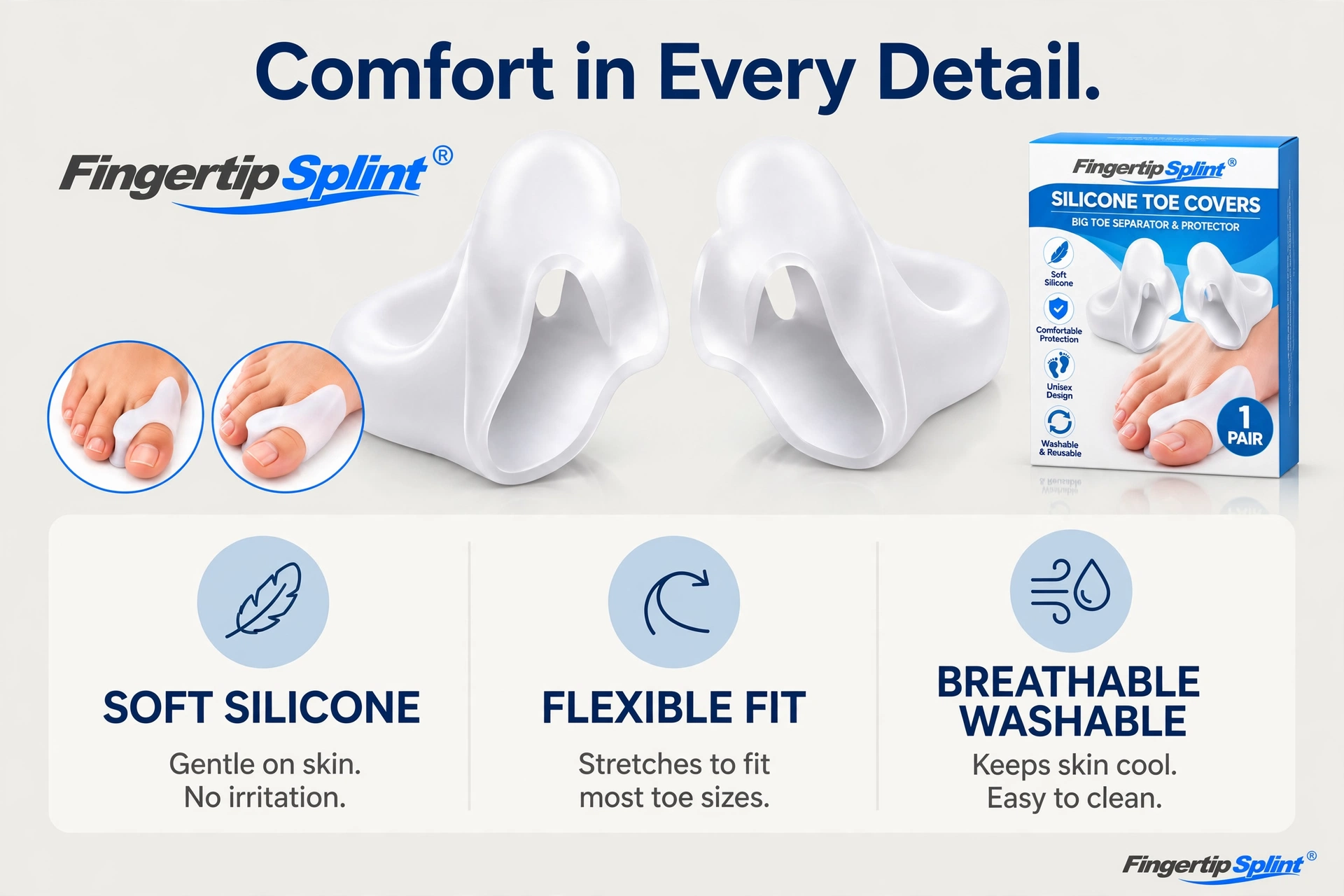
A silicone big toe cover is a soft sleeve or cap designed to sit over part or all of the big toe. Its purpose is to cushion the toe, reduce direct friction against shoes or adjacent toes, and provide a protective layer where pressure is a problem. The material is typically soft silicone, which conforms to the shape of the toe and is generally well-tolerated by the skin.
How Silicone Toe Covers Work
A cover sits directly over the toe, unlike a separator that sits between toes. The silicone creates a soft barrier between the skin and the source of friction. Depending on the design, the cover may be a full cap (covering the whole toe tip), a sleeve (covering part of the toe), or a shaped piece (covering the tip and one side).
Big Toe Covers Versus Toe Separators
These two products serve different purposes and are not interchangeable:
- A toe cover cushions or protects a single toe.
- A toe separator creates space between two adjacent toes.
According to the Cleveland Clinic, toe spacers and separators are designed to create space, whereas covers and sleeves protect against direct friction. Choosing the wrong device for your problem may not help.
Which Design Matches Your Concern?
If your concern is rubbing over the top or tip of the big toe, a cap or sleeve style may be appropriate. If the problem is pressure between the big toe and second toe, a separator may be more suitable. If you have a bunion, a bunion shield is a different design entirely.
Common Uses of Silicone Big Toe Covers
Big toe covers are used for several different purposes, each with its own considerations. Understanding the specific problem helps determine whether a cover is likely to help.
Reducing Friction From Footwear
When the top or side of the big toe rubs against the inside of a shoe, the resulting friction can cause irritation, redness, and even blisters. According to the Mayo Clinic’s guidance on corns and calluses, repeated friction and pressure are the primary causes of these skin problems. A silicone cover may reduce direct contact with the shoe, though proper footwear fit is essential.
Cushioning a Sensitive Area
Some people have a sensitive area on the big toe — perhaps from a previous injury, a small corn, or a naturally prominent area. A silicone cover may provide cushioning that makes walking or standing more comfortable. However, a cover does not treat the underlying cause of the sensitivity.
Supporting Everyday Foot Comfort
For people who spend long hours on their feet, a soft toe cover can be a simple addition to an everyday foot-care routine. It may help during specific activities such as walking, standing, or wearing a particular pair of shoes. Comfort depends on fit, the shape of the cover, and the footwear.
When a Cover Is Not the Right Solution
A cover is not a treatment for bunions, ingrown toenails, fungal infections, wounds, or structural deformities. According to AAOS OrthoInfo, bunions are a structural condition where the big toe deviates toward the second toe. A silicone cover may cushion a painful contact area, but it does not correct the alignment.
For readers who want to understand how silicone toe products improve foot comfort more broadly, the article on how silicone toe separators improve foot comfort provides useful background.
Key Benefits of Silicone Big Toe Covers
The practical benefits of a silicone big toe cover come down to a few specific functions. Each is worth understanding clearly.
A Protective Layer Between the Toe and Footwear
The most direct benefit is a soft, protective barrier between the toe and the shoe. This may reduce direct rubbing against the shoe surface and cushion against repeated pressure.
Comfort During Selected Daily Activities
A cover may help during activities where the big toe experiences repetitive pressure. Examples include walking long distances, standing for hours at work, or wearing a shoe that presses against the toe. However, if the shoe continues to apply excessive pressure, the cover may only provide temporary relief.
Convenient At-Home Use and Care
Silicone covers are generally easy to apply and remove. Most can be washed with mild soap and warm water and air-dried. This makes them convenient for daily foot-care routines.
Why Correct Fit Matters More Than Exaggerated Claims
A cover that is too tight can restrict circulation or cause pressure points. One that is too loose may shift or fall off. Correct fit — and realistic expectations — matter more than marketing language about pain relief or correction.
For readers who want more detail on soft silicone protectors used in daily foot care, the article on soft silicone toe protectors for daily foot care covers material choice and use.
Silicone Big Toe Covers vs Other Foot-Care Products
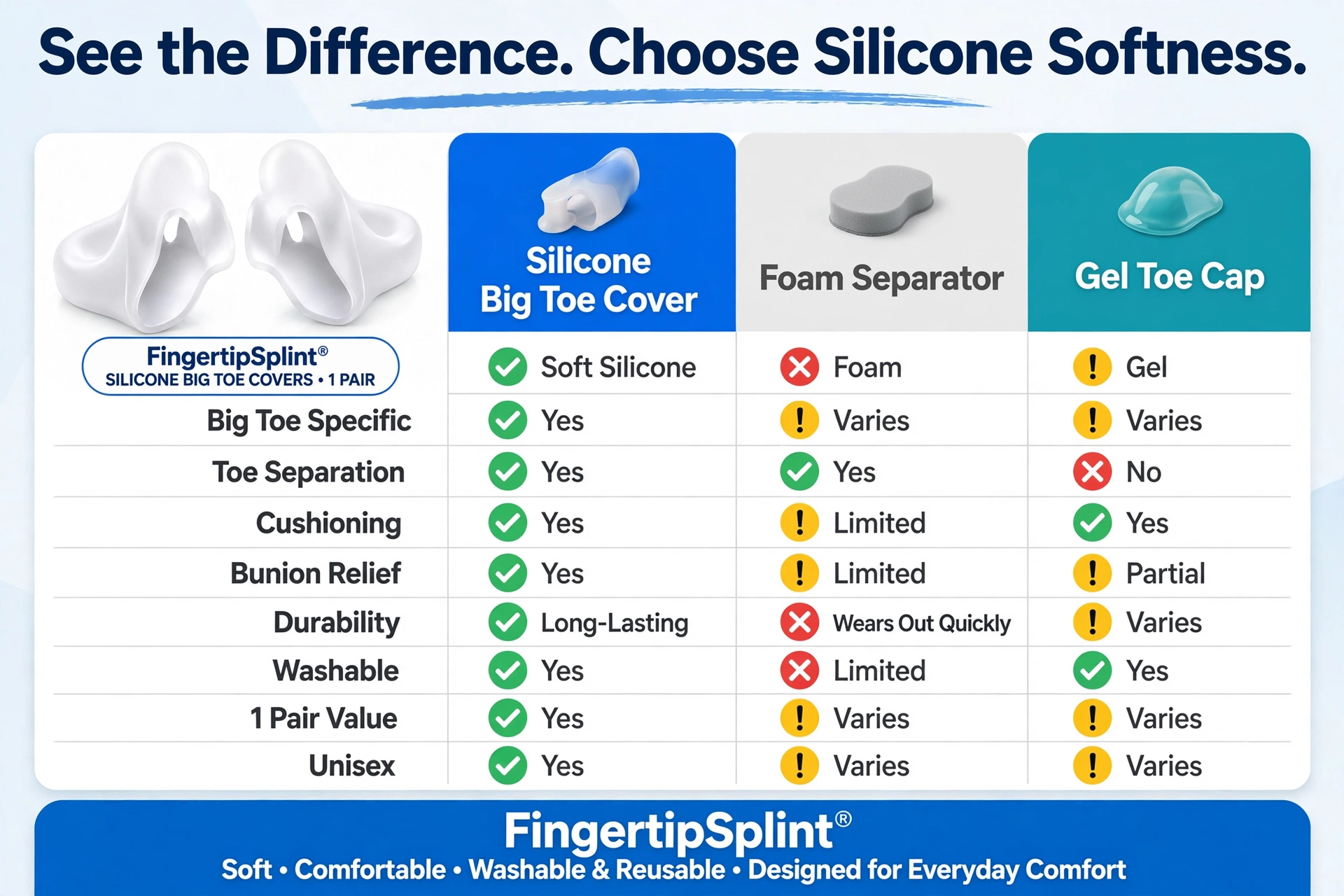
Choosing the right product depends on the source of your discomfort. Here is how a silicone big toe cover compares with other common options.
| Product or Approach | Primary Purpose | Best Consideration |
|---|---|---|
| Silicone big toe cover | Covers and cushions the toe, depending on design | Check coverage, fit, and material |
| Silicone toe separator | Creates space between adjacent toes | Useful only if separation matches the problem |
| Bunion pad or shield | Cushions a prominent area near the big toe joint | Ensure it does not add pressure to the bump |
| Protective dressing | Covers a wound or damaged skin when appropriate | Choose based on wound-care guidance |
| Wide toe-box footwear | Reduces squeezing and contact from shoes | Address footwear pressure at its source |
| Clinician-recommended orthosis | Helps manage selected foot mechanics or pressure concerns | Requires appropriate assessment and fit |
A cover may help with rubbing over the toe, while a shoe that is too narrow may continue causing pressure even after a cover is added. According to the Mayo Clinic, treating corns and calluses often begins with footwear changes and protective padding — and if self-care is not enough, professional assessment may be needed.
Find the Right Protection for Your Big Toe
Select a concern below to see what to consider.
How to Use Silicone Big Toe Covers Safely
Proper use and care are essential. Follow this step-by-step process based on the product’s design and the manufacturer’s instructions.
Step 1: Inspect the Toe Before Use
Wash and dry your feet thoroughly. Look for any cuts, blisters, redness, or irritated skin. Do not apply a silicone cover over broken or irritated skin.
Step 2: Check the Cover’s Position and Fit
Position the cover as directed. It should sit comfortably over the toe without forcing the toe into an unnatural position. If the cover is too tight or too loose, the fit is wrong.
Step 3: Test Comfort During Short Initial Use
Wear the cover for a short period — while resting, walking indoors, or doing a low-demand activity. Check for any discomfort, pressure points, or numbness.
Step 4: Remove, Inspect, and Clean as Directed
After each use, remove the cover and inspect the skin. Look for redness, indentations, or irritation. Clean the cover according to the manufacturer’s instructions and allow it to dry completely.
Cleaning, Reuse, and Daily Maintenance
Because a silicone toe cover sits against your skin for extended periods, hygiene matters. Follow the manufacturer’s care label and cleaning instructions exactly.
Most silicone covers can be washed with mild soap and warm water, rinsed thoroughly, and air-dried completely before reuse. Do not use harsh chemicals or high heat, which can degrade the silicone.
Inspect the cover regularly for tears, cracks, or discoloration. Replace the cover if it shows signs of wear. Do not share personal foot-care accessories with others, as this can spread skin conditions.
According to the East Sussex Healthcare NHS Trust’s advice on silicone devices, silicone devices must be used according to their intended purpose and instructions. This applies to consumer products as much as to prescribed devices.
Mistakes to Avoid When Using Big Toe Covers
Common mistakes can turn a helpful product into a source of discomfort. Here are the ones to watch for.
A cover that is too small or the wrong shape can cause pressure points or slip off.
Solution: Choose a size and design that matches your toe shape and concern.
Tight footwear plus a cover equals more pressure, not less.
Solution: Ensure shoes have enough room to accommodate the cover.
Moisture trapped under a cover can cause skin maceration and irritation.
Solution: Keep the toe dry, and inspect skin after each use.
Broken skin, blisters, or open wounds need appropriate care, not a cover.
Solution: Seek medical advice if you have damaged skin.
A cover may cushion contact but does not correct structural alignment.
Solution: If you have a bunion, consider professional assessment.
If shoes are the cause of pressure, a cover alone will not solve the problem.
Solution: Address footwear fit alongside any cover use.
For readers with diabetes, reduced sensation, or poor circulation, extra caution is required. According to the NIDDK’s guidance on diabetes and foot problems, these populations require careful foot monitoring and should not rely on ordinary accessories to manage wounds or discomfort.
When to Seek Advice From a Healthcare Professional
Persistent or worsening symptoms should not be managed by relying on a toe cover alone. Seek professional advice if you experience:
- Persistent or increasing pain around the big toe
- Significant swelling or warmth
- Redness, discharge, or signs of infection
- An open wound or non-healing sore
- A progressive change in the shape of the toe
- Symptoms around the nail edge (possible ingrown toenail)
According to MedlinePlus’s overview of ingrown toenail, pain, redness, or swelling around the nail edge may require medical assessment rather than a protective cover.
People with diabetes, reduced sensation, or poor circulation should seek advice before using any pressure-applying device. For general foot-care guidance, the NHS guidance on diabetes foot complications provides important context.
For readers who want more information on foot corns and pressure-related symptoms, Healthline’s overview of foot corns is a useful reader-friendly source.
Is the FingerTipSplint Silicone Big Toe Cover Right for You?
If you are looking for a protective option for big-toe discomfort, the Silicone Big Toe Separator Covers from FingerTipSplint is one product to evaluate. This guide does not claim that it cures bunions, treats ingrown toenails, or guarantees pain relief. What it offers is a silicone design intended to provide cushioning and protection for the big toe in selected situations.
What to Check Before Ordering
Before purchasing, review the product listing for:
- Material and construction
- Size and fit guidance
- Coverage (full cap, sleeve, or partial)
- Intended use
- Care and cleaning instructions
Who May Find a Protective Cover Useful
A silicone big toe cover may be useful for adults who experience friction or pressure on the big toe during walking or wearing shoes. It is not a substitute for appropriate footwear or medical assessment.
When a Different Product or Professional Advice Is More Appropriate
If your discomfort comes from a bunion, an ingrown toenail, or a wound, a toe cover may not be the right solution. Professional assessment is the safer choice in these cases.
For readers who want to explore the full range of foot-care products, browse the FingerTipSplint shop. For a broader look at uses and benefits, the article on silicone big toe covers: uses and benefits provides additional context.
Is Rubbing Around Your Big Toe Making Footwear Uncomfortable?
Explore the FingerTipSplint Silicone Big Toe Cover, review its design and instructions, and check whether it suits your needs before ordering. For more education, read more foot-care guides.
View the Product Browse All ProductsFrequently Asked Questions
Silicone big toe covers are used for protective cushioning and possible friction reduction, depending on the cover’s design and fit. They may help reduce direct rubbing against shoes or cushion a sensitive area of the toe. They are not a treatment for bunions, ingrown toenails, or infections.
In selected cases, yes. A cover may provide a soft barrier between the toe and the shoe. However, proper footwear fit is essential. If the shoe is too narrow or too tight, a cover alone may not solve the problem and could even increase pressure.
No. A big toe cover is a protective sleeve or cap designed to cushion or protect a single toe. A toe separator is designed to create space between two adjacent toes. These are different functions and are not interchangeable.
No. A cover may cushion a painful contact area near the bunion, but it does not correct the underlying bone alignment. Bunions are a structural condition that may require medical assessment.
Wearing time depends on the product instructions and your skin condition. Start with a short trial and inspect the skin regularly. Avoid assuming all-day wear is appropriate without following the manufacturer’s guidance.
Follow the manufacturer’s cleaning instructions. Most silicone covers can be washed with mild soap and warm water, rinsed thoroughly, and air-dried completely before reuse. Inspect regularly for wear and replace if damaged.
Avoid using a cover on open wounds, infected skin, or unexplained redness and swelling. Seek medical advice if you have persistent or worsening pain, significant swelling, discharge, diabetes, reduced sensation, or poor circulation.
Conclusion: Practical Protection With Realistic Expectations
Silicone big toe covers can be useful protective accessories for reducing friction and cushioning the big toe in selected situations. But they are not a cure for bunions, a treatment for ingrown toenails, or a substitute for appropriate footwear or medical care.
Use this guide as a framework: identify the source of your discomfort, review the product’s actual specifications, choose a size and design that suits your toe, and follow the manufacturer’s instructions for use and cleaning. Stop using the cover if it causes pain, irritation, or warning signs, and seek professional advice if symptoms persist.
For readers who want to explore support products, the FingerTipSplint shop offers a selection. For personalized assistance, you can request a quote or review the frequently asked questions.
Your feet carry you through everything. Choosing the right protection — and knowing when to seek professional advice — is part of caring for them well.