
Waking up with stiff, curled, or uncomfortable fingers can leave you wondering whether a night hand splint could help. The answer depends on why your fingers are bending and which joints need support. A correctly selected splint may help maintain a prescribed position while you rest, but not every bent finger responds to the same treatment. This guide explains how nighttime positioning works, what results are realistic, and when a splint alone may not be enough. For a broader range of hand support options, explore the full FingerTipSplint range.
Table of Contents
- Why Do Fingers Become Bent or Curled at Rest?
- How a Night Hand Splint Supports Finger Straightening
- Which Conditions May Benefit From Night Splinting?
- Choosing Between a Night Hand Splint and a Finger Splint
- How to Wear a Night Hand Splint Safely
- How Long Does It Take to See Results?
- Night Splinting Mistakes That Can Delay Progress
- When Should You See a Doctor or Hand Therapist?
- Is a 5-Finger Resting Hand Splint the Right Choice?
- Frequently Asked Questions
A night hand splint can support finger positioning during sleep or rest when it is appropriate for the underlying condition. It may help manage symptoms or protect a healing structure in selected cases, but the correct design, joint position, and wearing schedule depend on the diagnosis and professional guidance.
Why Do Fingers Become Bent or Curled at Rest?
Fingers do not curl without a reason. The cause can be structural, neurological, or related to injury and inflammation. Understanding the source matters before choosing a splint.
Common Causes
- Trigger finger: A tendon becomes inflamed and catches or locks as the finger bends. According to NHS inform, night splinting may be recommended in some cases.
- Tendon injury: A mallet finger or other tendon injury can cause a finger to droop or stay bent.
- Joint stiffness: Arthritis or joint conditions can make it difficult to fully straighten a finger.
- Neurological conditions: Conditions that affect muscle tone may cause fingers to curl, especially during rest.
- Contractures: Long-standing changes in tissue can fix a finger in a bent position.
Why Identifying the Cause Matters
A finger that suddenly droops after an injury needs a different approach from longstanding stiffness. A splint designed for one condition may not be suitable for another. According to NHS guidance on mallet finger, this injury may require a specific splint worn continuously under clinical instructions.
For readers whose primary concern is nighttime positioning for curled fingers, the article on resting hand brace for curled fingers: comfort and nighttime support covers that topic in more detail.
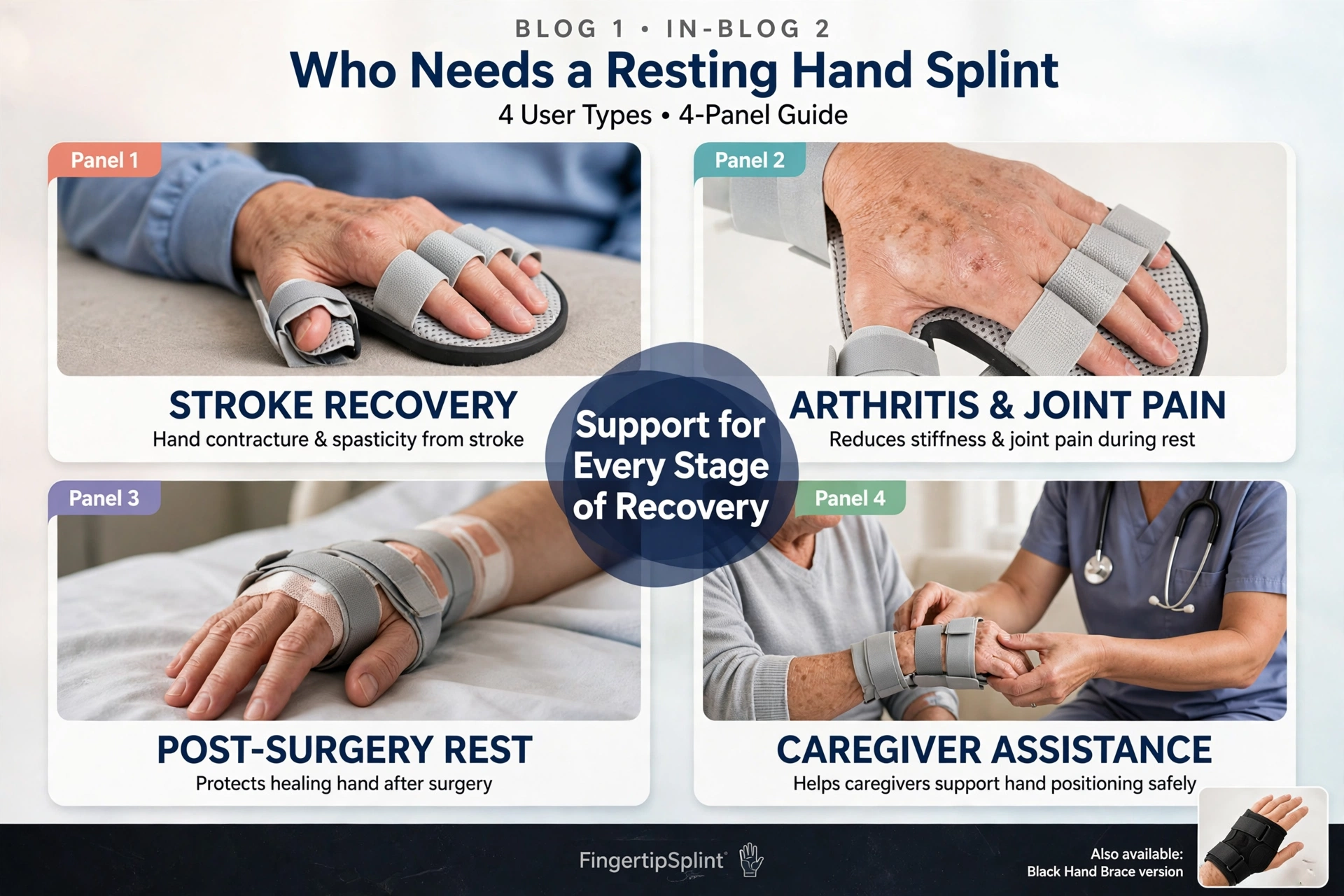
How a Night Hand Splint Supports Finger Straightening
A night hand splint is designed to hold a finger or the hand in a specific position while you rest. This may help maintain a position that supports healing or reduces unwanted movement.
Holding a Prescribed Position
The primary function of a night splint is to hold the fingers in a position that has been selected for the underlying condition. This can help protect a healing structure or reduce movements that aggravate symptoms.
Limiting Unwanted Movement
Depending on the design, the splint may limit certain movements during rest. This is different from forcing the finger straight — the goal is to support a position, not force change.
Supporting a Condition-Specific Plan
A night splint is one part of a broader treatment plan. According to Northamptonshire Healthcare NHS Foundation Trust hand therapy guidance, the appropriate splint and wearing schedule depend on the individual’s diagnosis and needs.
Different splints do different jobs. A full resting hand splint and an individual finger splint do not serve the same purpose. For a comparison of full-hand support options, see the article on 5-finger resting hand splint uses and benefits.
Explore How Nighttime Hand Support Works
Select an area below to learn about its role and safety considerations.
Which Conditions May Benefit From Night Splinting?
Night splinting may be recommended for selected conditions, but the type of splint and wearing schedule vary by diagnosis. Here are common examples.
Trigger Finger
According to NHS inform, night splinting may be recommended in some cases of trigger finger to limit certain movements and help manage symptoms. However, treatment choices vary, and a splint is not always the only approach.
Selected Tendon Injuries
Some tendon injuries require specific splinting under clinical guidance. For example, a mallet finger may need continuous splinting of a specific joint — not simply a generic full-hand brace. Cambridge University Hospitals guidance on mallet finger explains the importance of following a specific splinting schedule.
Hand Positioning Difficulties
Neurological conditions that affect muscle tone may benefit from nighttime positioning support. Berkshire Healthcare NHS Foundation Trust guidance on hand contractures explains how positioning splints may be used to support the hand, but outcomes depend on the individual’s condition.
Choosing Between a Night Hand Splint and a Finger Splint
Choosing the right splint depends on which joints need support and what condition is being managed. Here is how the designs compare.
| Support Type | Main Purpose | Consider It When |
|---|---|---|
| 5-finger resting hand splint | Supports wrist, palm, thumb, and fingers in a resting position | Broad hand positioning is needed; multiple fingers need support |
| Individual finger splint | Supports a specific finger or joint | Isolated finger injury or condition requiring targeted support |
| Night hand splint | Provides support during sleep or rest | Clinician has recommended nighttime positioning |
| Custom-fitted resting orthosis | Tailored positioning for an individual hand | Standard designs do not fit or position the hand properly |
Buyers should not assume a five-finger splint is the correct choice for an isolated finger injury. The right design depends on the diagnosis, the joints involved, and professional guidance.
How to Wear a Night Hand Splint Safely
Safe use is essential to prevent skin problems and other complications. Follow this step-by-step process based on the product’s design and the manufacturer’s instructions.
Step 1: Check the skin. Look for cuts, redness, or irritation. Do not apply the splint over damaged skin.
Step 2: Position the hand. Follow the manufacturer’s or clinician’s guidance for wrist and finger position.
Step 3: Secure the straps. Fasten the straps so the splint stays in place without causing excessive pressure.
Step 4: Inspect for pressure areas. Check for redness, indentations, or irritation at the edges of the splint.
Step 5: Remove and check the skin. After use, inspect the skin for any signs of irritation or breakdown.
Step 6: Clean the device. Follow the manufacturer’s cleaning instructions and allow the splint to dry completely.
Do not prescribe one universal overnight schedule. Some conditions have specific prescribed splinting periods, while others require reassessment and adjustments. Follow your clinician’s guidance.
How Long Does It Take to See Results?
There is no universal recovery timeline for nighttime splinting. Results depend on the diagnosis, tissue flexibility, injury severity, fit, and the broader treatment plan.
First Fitting: Check Comfort and Position
The first fitting is about checking whether the splint fits comfortably and positions the hand as intended. Adjustments may be needed.
Early Comfort Checks: Monitor Skin and Symptoms
After several nights, check whether the splint is comfortable and whether any skin irritation has developed. Adjust or seek advice if needed.
Planned Follow-Up: Reassess With a Clinician
For some conditions, the splint may be part of a longer-term plan. Periodic review with a clinician can help determine whether the splint continues to be appropriate.
According to North Tees and Hartlepool NHS Foundation Trust hand therapy advice, the appropriate wearing schedule depends on the specific condition and should be followed as prescribed.
Night Splinting Mistakes That Can Delay Progress
Some mistakes can turn a helpful splint into a source of additional problems. Here are the most common ones.
A splint designed for a different purpose may not provide the support you need.
Solution: Match the splint to the specific diagnosis and joints involved.
Never force a stiff or painful finger into a straighter position. This can cause injury.
Solution: Follow the prescribed position and seek advice if the hand cannot be comfortably positioned.
Extended wear without professional guidance may cause problems.
Solution: Follow the recommended wearing schedule.
Pressure marks can develop into skin breakdown if ignored.
Solution: Inspect the skin after each use and seek advice if irritation persists.
Follow-up is important to check whether the splint is helping and adjust if needed.
Solution: Attend scheduled reviews with your clinician.
Different conditions require different approaches. A splint that helps one may not help another.
Solution: Follow professional guidance for your specific condition.
If symptoms persist or worsen, professional assessment is the right next step. According to NHS guidance on finger pain, persistent symptoms should be evaluated by a healthcare professional.
When Should You See a Doctor or Hand Therapist?
Some situations require professional assessment rather than self-selection of a splint.
Seek medical advice if you experience:
- Persistent curling or worsening stiffness
- A finger that catches or locks
- New deformity
- Symptoms that interfere with everyday activities
- Recent injury
- Severe pain or major swelling
For readers with questions about splint fitting or ongoing hand therapy, a hand therapist can provide individualized guidance. According to Frimley Health NHS Foundation Trust guidance on passive finger exercises, professional guidance can help support finger mobility alongside splinting.
Is a 5-Finger Resting Hand Splint the Right Choice?
If you are exploring a 5-finger resting hand splint, the 5-Finger Resting Hand Splint from FingerTipSplint is one option to evaluate. This guide does not claim that it permanently straightens fingers or cures any condition. What it offers is a design intended to support the wrist, palm, thumb, and fingers in a resting position.
Use these questions to guide your decision:
- Has a clinician recommended a specific resting hand position?
- Do you need support for the wrist, palm, thumb, and multiple fingers?
- Does the splint fit your hand size comfortably?
- Can you follow the manufacturer’s wearing and care instructions?
- Are your symptoms appropriate for a resting splint, or do they need professional assessment first?
If a single-finger or custom-fitted orthosis may be more appropriate for your needs, professional guidance can help you decide. For additional product questions, review the FingerTipSplint FAQs or browse the full hand-support range.
Looking for the Right Support for Curled or Stiff Fingers?
Start by identifying which fingers and joints need support and whether your condition calls for a full resting hand splint or a more targeted design. Review the 5-Finger Resting Hand Splint product details and check that they match your requirements.
View the Product Browse All ProductsFrequently Asked Questions
A night hand splint may support a prescribed position, but the outcome depends on the underlying cause and whether the joint is flexible or fixed. A splint does not guarantee permanent straightening, and professional assessment is important before trying to change the position of curled fingers.
A suitable finger splint may limit particular movements and help manage symptoms in some cases of trigger finger. However, treatment choices vary, and a splint is not always the only or best approach. Follow the guidance of your healthcare professional.
Suitability depends on the design, fit, your condition, and professional instructions. Some resting splints are prescribed for nighttime use, but the correct schedule should be confirmed with your clinician or the manufacturer’s guidance.
There is no single timeline that applies to all conditions. Results depend on the diagnosis, tissue flexibility, injury severity, fit, and treatment plan. Some conditions have specific prescribed splinting periods, while others require reassessment and adjustments.
A night splint should feel secure but not tight. If you experience numbness, tingling, increasing pain, changes in finger colour or temperature, or skin irritation, remove the splint and seek advice. Do not tighten the splint further to compensate for a poor fit.
The right choice depends on the diagnosis, not the number of fingers covered. A full resting hand splint supports multiple areas of the hand, while an individual finger splint supports a specific joint. Professional guidance can help determine which is more appropriate.
Seek medical assessment for persistent or worsening symptoms, new deformity, recent injury, severe pain, colour changes, or altered sensation. Early assessment can help identify the cause and guide appropriate treatment.
Conclusion: Support With Realistic Expectations
A night hand splint can support a prescribed finger position during rest, but it does not guarantee permanent straightening or reverse a fixed deformity. The right splint, wearing schedule, and treatment plan depend on the underlying cause.
Use this guide as a framework: understand why your fingers are bending, review the product’s actual specifications, choose a splint that fits your hand and meets your needs, and follow professional guidance for fitting and wear. Stop using the splint if it causes pain or irritation, and seek professional advice if symptoms persist.
For readers who want to explore support products, the FingerTipSplint shop offers a selection. For more hand-care education, visit the FingerTipSplint blog. For personalized assistance, you can request a quote or review the frequently asked questions.
Your hands carry you through everything. Choosing the right support — and knowing when to seek professional advice — is part of caring for them well.