
Three people, three different wrist problems. One has fallen on an outstretched hand and now has a swollen, painful wrist. Another wakes up with stiff, aching joints and struggles to grip a cup. A third keeps waking at night with numb, tingling fingers. All three might consider a wrist brace — but the same brace will not suit all of them. The condition determines the support strategy, and choosing the wrong brace can delay relief. This guide explains how wrist braces may help with sprains, arthritis, and carpal tunnel syndrome, and how to decide which type of support is right for your situation. For a broader view of wrist support options, explore the FingerTipSplint range.
Table of Contents
- How a Wrist Brace Works
- Wrist Braces for Sprains
- Wrist Braces for Arthritis
- Wrist Braces for Carpal Tunnel Syndrome
- Sprain vs Arthritis vs Carpal Tunnel: Which Support?
- How to Choose the Right Wrist Brace
- How to Use a Wrist Brace Safely
- When a Wrist Brace Is Not Enough
- Is the Orthopedic Wrist Support Brace Right for You?
- Frequently Asked Questions
A wrist brace may help manage symptoms from certain wrist sprains, arthritis, and carpal tunnel syndrome by supporting the wrist or limiting specific movements. The appropriate brace depends on the condition, symptom pattern, and design. A brace can provide symptom relief for some people, but it does not repair every injury or treat every underlying cause.
How a Wrist Brace Works: Support, Positioning, and Movement Control
A wrist brace is designed to support the wrist, limit certain movements, and provide compression or stability. But not all braces are the same. The level of support and restriction varies by design.
Levels of Support
- Soft wrist wrap or belt: Provides gentle compression and light support. Allows most movement.
- Structured wrist brace: Provides moderate support and some movement restriction. May include straps or stays.
- Rigid wrist splint: Provides significant movement restriction. Used for more severe injuries or conditions requiring immobilization.
Support vs. Positioning
Some braces are designed to support an injured joint during recovery. Others are designed to hold the wrist in a specific position — for example, a neutral position to reduce nerve compression in carpal tunnel syndrome. These are different functions, and the right choice depends on your condition.
According to Mayo Clinic News Network guidance on choosing a brace, the decision to use a brace should be based on the specific condition and professional advice.

Wrist Braces for Sprains: Protecting an Injured Wrist
A wrist sprain is an injury to the ligaments that support the wrist joint. It commonly happens after a fall onto an outstretched hand. Symptoms include pain, swelling, tenderness, and difficulty gripping or twisting.
How a Brace May Help
During the early stages of recovery, a brace or splint may help limit painful movement and provide support. According to Mayo Clinic Orthopedics & Sports Medicine guidance on wrist sprains, treatment may include rest, ice, compression, elevation, and gradual return to movement.
Important Considerations
- Assessment: A severe sprain can resemble a fracture. A brace cannot rule out a broken bone. If you have significant pain, swelling, or deformity after an injury, seek medical assessment.
- Activity modification: Avoiding painful activities is important during recovery. A brace does not make it safe to continue activities that cause pain.
- Gradual return: As healing progresses, gentle movement and rehabilitation may be recommended. Follow professional guidance.
For initial sprain care, Mayo Clinic first aid guidance for sprains provides practical information on rest, ice, compression, and elevation.
Wrist Braces for Arthritis: Managing Stiffness and Painful Activities
Arthritis can affect the wrist joint, causing pain, stiffness, and reduced grip strength. There are different types of arthritis, and the appropriate support may vary.
How a Brace May Help
A suitably selected brace may support the wrist during tasks that cause pain. According to Arthritis UK guidance on hand and wrist splints, splints can be used for different purposes — some support the joint during activity (working splints), while others rest the joint (resting splints).
The Trade-Off Between Support and Stiffness
Wearing a brace constantly without guidance may limit normal movement and potentially contribute to stiffness. Arthritis management often includes a combination of approaches — activity modification, exercises, medication, and supportive devices. A brace is one part of the plan, not the whole solution.
For broader information on osteoarthritis treatment, NHS guidance on osteoarthritis treatment covers the range of management options.
Wrist Braces for Carpal Tunnel Syndrome: Why Wrist Position Matters
Carpal tunnel syndrome is caused by pressure on the median nerve as it passes through the carpal tunnel in the wrist. Symptoms include tingling, numbness, pain, and weakness in parts of the hand — often worse at night.
How a Splint May Help
A wrist splint that keeps the wrist in a neutral position — particularly at night — may help reduce symptoms for some people. According to Mayo Clinic treatment guidance for carpal tunnel syndrome, a wrist splint is often recommended as a first-line treatment.
Why a Generic Compression Wrap May Not Be Enough
A generic wrist support belt provides compression but may not hold the wrist in the specific neutral position needed to reduce nerve pressure. A splint designed for carpal tunnel syndrome is more likely to be appropriate.
For more detailed information, NHS guidance on carpal tunnel syndrome and Mayo Clinic’s overview of symptoms and causes provide useful context.
Explore Wrist Brace Support
Select a condition below to see the key support goal.
Sprain vs Arthritis vs Carpal Tunnel: Which Type of Support May Be Appropriate?
Different wrist conditions have different support goals. Here is how the types of braces compare.
| Condition | Support Goal | Appropriate Brace Type | Professional Fitting? |
|---|---|---|---|
| Wrist sprain | Protect the injured joint, limit painful movement | Supportive brace or splint | Recommended for severe sprains |
| Wrist arthritis | Support during activities, reduce pain | Working splint or resting splint | Recommended for tailored fit |
| Carpal tunnel syndrome | Maintain neutral wrist position, reduce nerve pressure | Wrist splint (often at night) | Recommended |
A symptom checklist cannot diagnose the underlying condition. If you are unsure about the cause of your symptoms, professional assessment is the right next step.
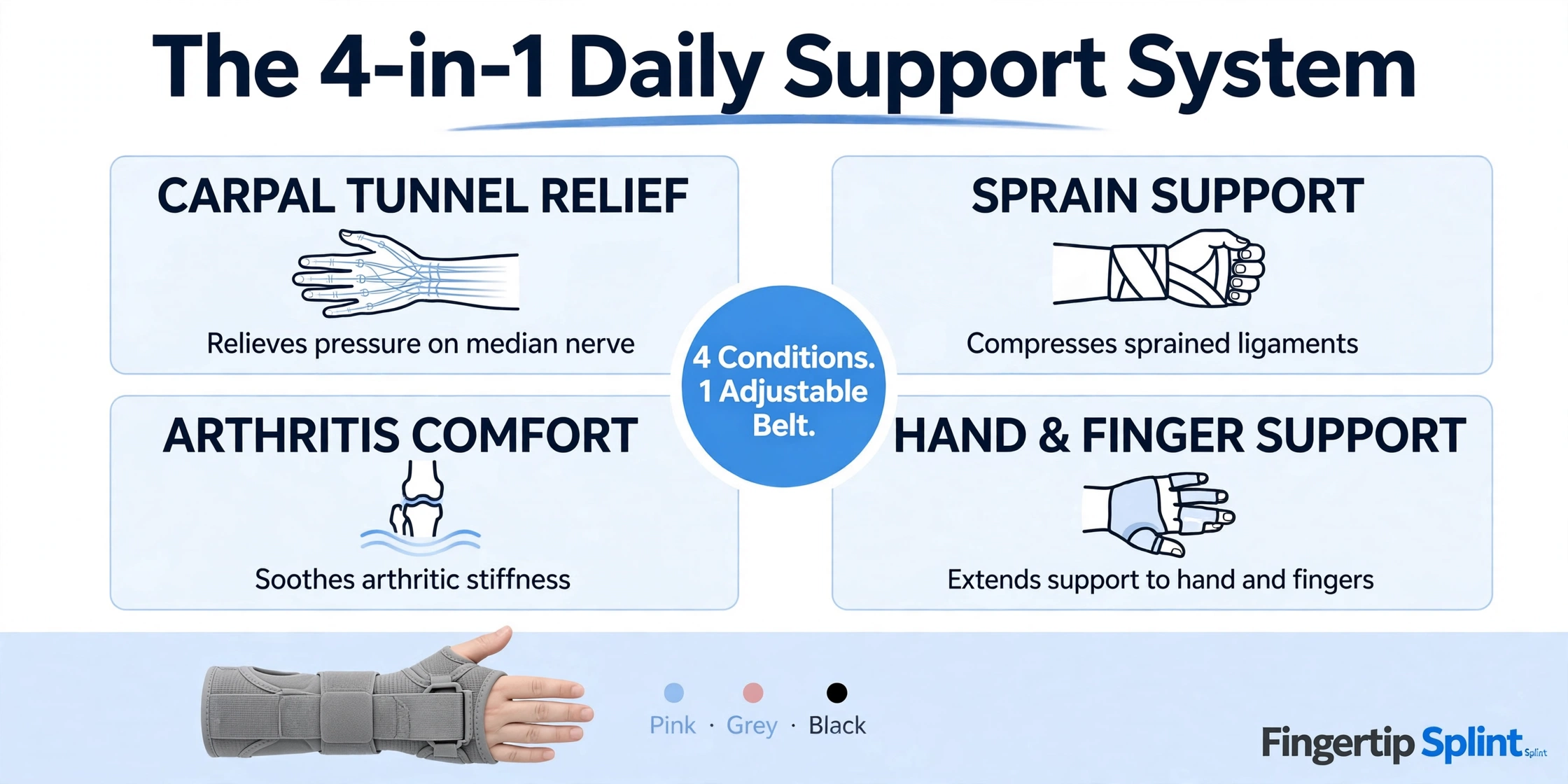
How to Choose the Right Wrist Brace
Choosing the right brace requires matching the design to your condition. Here are the factors to consider.
Level of Support
Does your condition require gentle support or significant movement restriction? A sprain may need more support than mild arthritis discomfort.
Sizing
Choose a size that matches your wrist measurements. Check the manufacturer’s size chart.
Left or Right Wrist
Confirm whether the brace is designed for the left wrist, right wrist, or both.
Thumb Coverage
Does the brace cover the thumb? Some designs include thumb support, which may be useful if you have thumb pain alongside wrist pain.
Strap Adjustment
Adjustable straps allow you to customise the fit. The straps should stay in place during activity.
Skin Comfort
If you have sensitive skin, check the materials for compatibility. Follow care instructions to keep the brace clean.
Cleaning Instructions
Can you follow the manufacturer’s cleaning instructions? Proper care affects hygiene and durability.
Daily Activities
Consider the activities you need to perform while wearing the brace. A brace that works well for typing may not be suitable for heavier gripping.
How to Use a Wrist Brace Safely
Safe use is essential for comfort and effectiveness. Follow this step-by-step process based on the product’s design and the manufacturer’s instructions.
Step 1: Position the brace. Follow the manufacturer’s placement instructions. The brace should sit over the wrist joint correctly.
Step 2: Fasten comfortably. The brace should feel secure but not tight. You should be able to move your fingers freely.
Step 3: Check the skin. Look for redness, irritation, or pressure marks. Do not apply the brace over damaged skin.
Step 4: Monitor sensation and finger colour. Look for numbness, tingling, or changes in colour or temperature. If any of these occur, loosen or remove the brace.
Step 5: Follow your wearing schedule. Different conditions require different schedules. Some braces are worn during activities, while others are worn at night. Follow your clinician’s or the manufacturer’s guidance.
When a Wrist Brace Is Not Enough: Medical Warning Signs
A wrist brace is supportive equipment, not a substitute for diagnosis or treatment. Some symptoms require professional assessment.
Seek urgent medical assessment for:
- A visibly deformed wrist
- Severe pain after an injury
- Inability to move the wrist or grip
- New loss of sensation
- A cold or discoloured hand
Seek medical advice for:
- Persistent or worsening numbness or weakness
- Persistent or worsening swelling
- Pain that does not improve with rest and support
- Symptoms that interfere with daily activities
For further evaluation of hand and wrist conditions, Mayo Clinic Orthopedics & Sports Medicine hand and wrist resources provide useful information. And for a broader look at wrist support for daily activities, the article on wrist support belt uses and benefits covers practical daily-use considerations.
Is the FingertipsSplint Orthopedic Wrist Support Brace Suitable for You?
If you are looking for a wrist brace to evaluate, the Orthopedic Wrist Support Brace from FingerTipSplint is one option to consider. This guide does not claim that it treats all three conditions — sprains, arthritis, and carpal tunnel syndrome — or guarantees pain relief. What it offers is a design intended to support the wrist during daily activities.
Before purchasing, verify the following details on the product listing:
- Coverage: Does the brace cover the wrist, thumb, or both?
- Sizing: Does the product provide sizing guidance or a size chart?
- Material and adjustability: Is the brace adjustable? What materials is it made of?
- Closure: How does the brace fasten, and is it easy to adjust?
- Cleaning and care: Can you follow the manufacturer’s cleaning instructions?
- Intended use: What activities or conditions is the brace designed for?
If your clinician has recommended a specific type of splint — such as a neutral-position splint for carpal tunnel syndrome or a rigid splint for a severe sprain — follow that guidance rather than selecting a brace independently.
For additional options, browse the FingerTipSplint shop or review the frequently asked questions.
Explore the Orthopedic Wrist Support Brace
If wrist discomfort is affecting your daily activities, review the FingerTipSplint Orthopedic Wrist Support Brace, check its fit and care details, and decide whether its design matches your support needs.
View the Product Browse All ProductsFrequently Asked Questions
A wrist brace does not heal a sprain on its own — it supports the wrist while the body heals. During early recovery, a brace or splint may help limit painful movement. Severe sprains may require professional assessment and a more rigid splint.
The appropriate brace depends on your needs. A working splint may support the wrist during activities, while a resting splint may suit other situations. Professional guidance can help determine the right type and wearing schedule. A brace does not cure arthritis.
A wrist splint that keeps the wrist in a neutral position may help reduce nighttime symptoms of carpal tunnel syndrome. However, the correct brace and wearing schedule should be confirmed with a healthcare professional. A generic compression wrap may not provide the necessary positioning.
No. A wrist wrap provides gentle compression and light support. A splint is designed to limit movement or hold the wrist in a specific position. The right choice depends on your condition and needs.
The brace should feel secure but not tight. You should be able to move your fingers freely, and you should not experience numbness, tingling, increasing pain, or changes in finger colour or temperature. If any of these occur, loosen or remove the brace.
Wearing schedules depend on the condition and the brace. Some braces are designed for use during activities, while others are worn at night. Follow your clinician’s or the manufacturer’s guidance rather than assuming all-day wear is appropriate.
Seek medical advice for persistent or worsening pain, swelling, numbness, or weakness. Seek urgent assessment for severe pain after injury, deformity, inability to move the wrist, new loss of sensation, or a cold or discoloured hand.
Conclusion: Match the Brace to the Condition
Wrist braces can support sprains, arthritis, and carpal tunnel syndrome — but the right brace depends on the condition. A soft wrap may help with mild discomfort during daily activities, while a rigid splint may be necessary for a sprain or carpal tunnel syndrome. The condition determines the support strategy.
Use this guide as a framework: identify your symptoms, understand what kind of support you need, review the product’s actual specifications, and choose a brace that matches your condition and activities. Stop using the brace if it causes pain or irritation, and seek professional advice if symptoms persist.
For readers who want to explore support products, the FingerTipSplint shop offers a selection. For more hand-care education, visit the FingerTipSplint blog. For personalized assistance, you can request a quote or review the frequently asked questions.
Your hands carry you through everything. Choosing the right support — and knowing when to seek professional advice — is part of caring for them well.