
If you have flat feet, you know the feeling: tired arches after a long shift, discomfort during walks, or that nagging uncertainty about whether a new insole is actually fitting correctly. You may have bought a gel insole expecting instant comfort, only to find it felt wrong, slipped, or made your shoes too tight. This guide focuses on the practical details that matter — how gel arch support insoles should fit, how to check comfort, and how to avoid common buying mistakes. For a broader view of foot support products, explore the full FingerTipSplint range.
Table of Contents
- What a Comfortable Fit Looks Like
- Why Insole Fit Matters for Flat Feet
- How to Check Insole Fit Step by Step
- Soft, Firm, or High? Understanding Arch Support
- Shoe Compatibility: Sneakers, Work Shoes & Everyday Footwear
- Everyday Comfort During Walking and Standing
- Gel Insoles vs. Gel Arch Support Sleeves
- Common Insole Fit Mistakes and How to Fix Them
- When to Stop Using Insoles and Seek Advice
- Choosing a Gel Arch Support Product
- Frequently Asked Questions
Gel arch support insoles should sit correctly inside compatible shoes, provide tolerable arch contact, and leave enough room for the heel and toes. They should not cause sharp pressure, rubbing, numbness, or increasing pain. Follow the product instructions and reassess the fit if walking becomes uncomfortable.
Gel Arch Support Insoles for Flat Feet: What a Comfortable Fit Looks Like
A comfortable gel arch support insole should feel supportive without being painful. It should sit correctly inside your shoe, provide tolerable contact with your arch, and leave enough room for your heel and toes.
Cushioning vs. Structural Support
Gel insoles provide cushioning and may offer some support, but they are different from custom orthotics. According to the Cleveland Clinic’s guide to orthotics, different types of support products serve different purposes. A gel insole is one option, not a universal solution.
What Comfort Should Feel Like
- The insole stays in place without sliding.
- Your heel feels secure and does not slip out of the shoe.
- Your toes have enough room and are not squeezed.
- Arch contact feels tolerable, not sharp or forceful.
- Walking does not create increasing pain, numbness, or tingling.
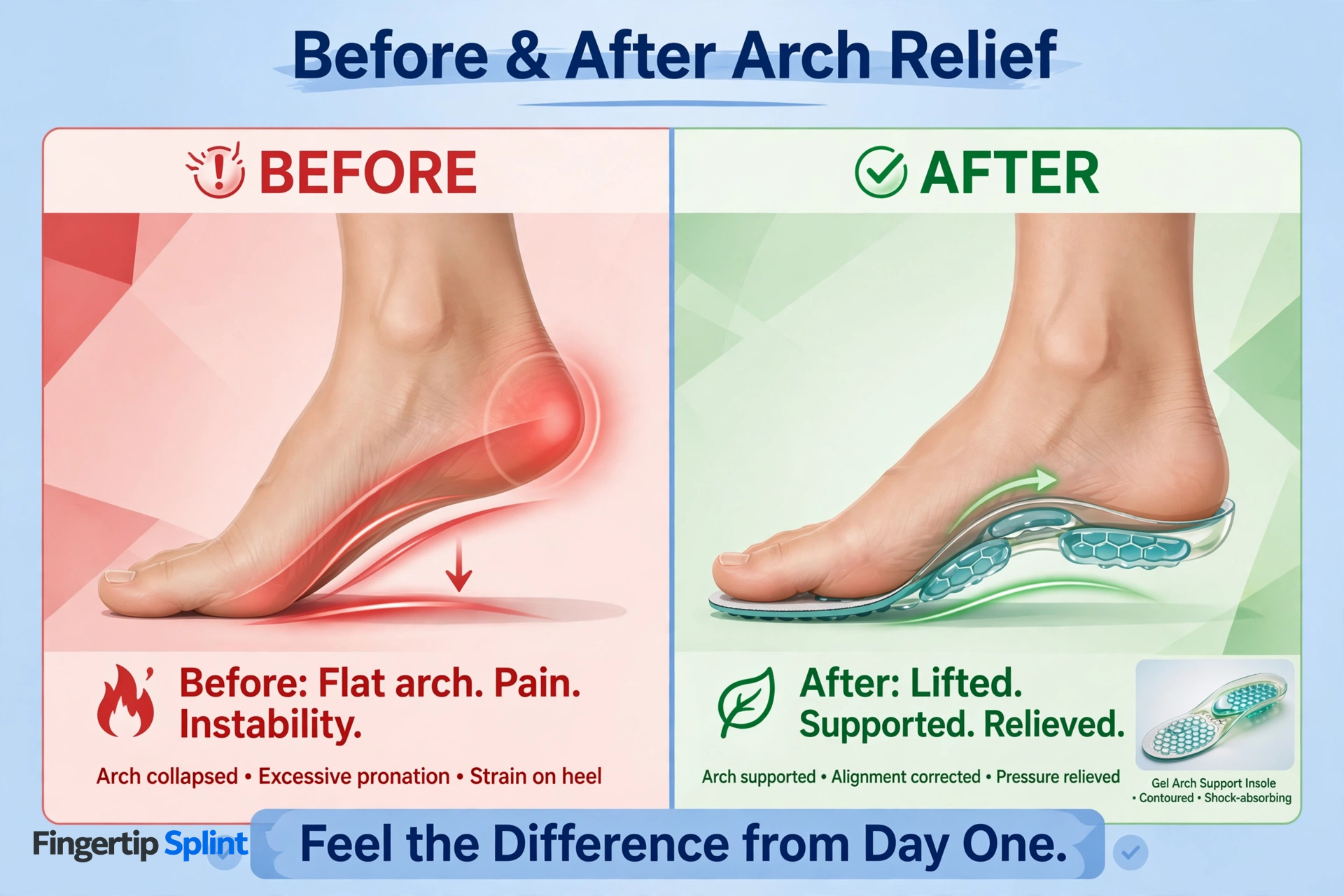
Why Insole Fit Matters for People With Flat Feet
An insole that is too large, too small, poorly positioned, or too prominent can create pressure or change how a shoe feels. Fit is not a minor detail — it is the difference between comfort and discomfort.
How Poor Fit Creates Problems
- Too large: The insole may slide, bunch, or push the toes against the front of the shoe.
- Too small: The insole may not provide adequate coverage or may shift during use.
- Poorly positioned: The arch support may sit in the wrong place, creating pressure points.
- Too prominent: A very high or firm arch may feel uncomfortable or create concentrated pressure.
According to the Mayo Clinic’s flat feet symptoms and causes guide, flat feet vary, and not everyone with a low arch needs an orthotic. Some people have no symptoms at all.
How to Check Gel Arch Support Insole Fit Step by Step
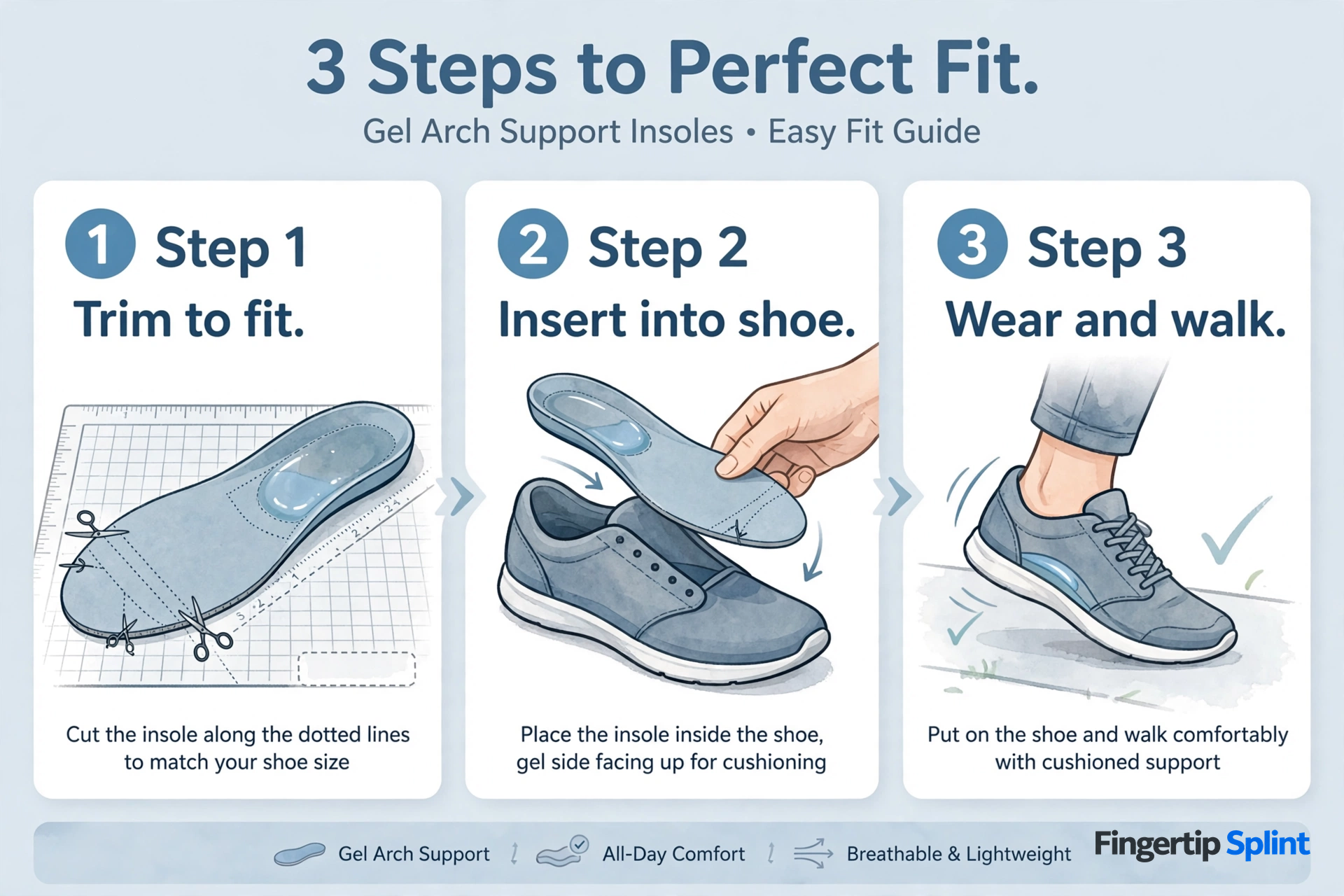
Checking the fit carefully is essential. Follow this step-by-step process based on the product’s instructions.
Step 1: Read the product instructions. Check whether the manufacturer recommends removing the original shoe liner.
Step 2: If instructed, remove the original liner to make room for the insole.
Step 3: Position the insole correctly. The arch support should sit under your arch, and the heel cup should align with your heel.
Step 4: Check heel and toe room. Your heel should not slip, and your toes should not feel squeezed.
Step 5: Fasten the shoe normally. The shoe should feel comfortable, not tight.
Step 6: Walk carefully on a safe surface. Check for pressure points, rubbing, or discomfort. If problems develop, remove the insole and reassess.
Insole Fit Self-Check
Find Your Comfortable Arch Support Fit
Select a fit zone below to learn more about it.
Should Gel Arch Support Insoles Feel Soft, Firm, or High?
The feel of a gel insole depends on the material and design. Understanding the difference between cushioning and support helps you choose appropriately.
Cushioned Feel
A soft gel surface may feel comfortable at first, but softness alone does not guarantee adequate support.
Amount of Arch Support
A higher or firmer arch is not automatically better. A support that creates concentrated pressure or pain is not suitable, even if it provides more “support” in theory.
Matching Support to Your Needs
The right level of support depends on your foot, your symptoms, and your activities. A person with mild arch fatigue may need less support than someone with more significant discomfort.
Shoe Compatibility: Sneakers, Work Shoes, and Everyday Footwear
Shoe compatibility is one of the most important factors in insole comfort. A support that fits one pair may feel cramped in another.
What to Check
- Shoe depth: The shoe must have enough depth to accommodate the insole without pressing the foot.
- Toe-box room: Your toes should not be squeezed after inserting the insole.
- Removable liners: Some shoes have removable liners that can be taken out to make room.
- Heel shape: The insole should fit the heel area without slipping.
- Fastening: The shoe should fasten comfortably, not tightly.
For a closer look at how insoles support flat feet during activity, the article on how orthotic insoles support flat feet during walking provides useful context.
Everyday Comfort During Walking and Standing
Comfort during walking and standing is the most important test of whether an insole is suitable for you.
Testing Comfort During Activity
- Commuting: Does the insole feel comfortable during your usual walk or commute?
- Shopping: Does the insole remain comfortable during extended walking?
- Working on your feet: Does the insole provide adequate support during long shifts?
- Short walks: Does the insole feel comfortable during brief walks?
Improvement is individual. Insoles cannot address every cause of foot pain. If your symptoms worsen or do not improve, reassess the fit and suitability of the insole.
Gel Insoles vs. Gel Arch Support Sleeves
Gel insoles and gel arch support sleeves are different product formats. They are not interchangeable.
| Feature | Gel Arch Support Insole | Gel Arch Support Sleeve |
|---|---|---|
| Placement | Inside footwear | Around the foot |
| Coverage | May support a broader area | Focused around the arch |
| Shoe compatibility | Depends on shoe depth and removable liners | Depends on thickness and shoe space |
| Ease of switching | Usually needs to be moved between shoes | May be convenient between shoes |
| Main limitation | Does not guarantee permanent arch correction | Does not provide the same coverage as an insole |
For a wider overview of arch support options, the article on flat feet arch supports: uses and benefits provides additional context.
Common Insole Fit Mistakes and How to Fix Them
Some mistakes can make the insole uncomfortable or ineffective. Here are the most common ones.
The insole may not fit correctly or may create pressure.
Solution: Follow the manufacturer’s instructions about removing the original liner.
The shoe may become too tight and uncomfortable.
Solution: Ensure the shoe has enough room for the insole.
A higher arch is not automatically better and may cause pressure.
Solution: Choose a support that feels comfortable and supportive.
Redness, blisters, or irritation indicate a problem.
Solution: Stop using the insole and reassess the fit.
Improvement is individual and not guaranteed.
Solution: Use the insole with realistic expectations and reassess if symptoms worsen.
Follow the product’s trimming and cleaning instructions. Do not modify the insole unless the manufacturer permits it.
When to Stop Using Insoles and Seek Professional Advice
Some symptoms should not be ignored. Seek medical advice if you experience:
- Increasing pain
- Numbness or tingling
- Skin damage or irritation
- Swelling
- Difficulty walking
Choosing a Gel Arch Support Product for Everyday Comfort
If you are looking for a gel arch support product, the FingerTipSplint Gel Arch Support Sleeves are one option to evaluate. This guide does not claim that they cure flat feet or guarantee pain relief. What they offer is a design intended to provide cushioning and support around the arch.
Before purchasing, review the product listing for:
- Whether the product is a sleeve or an insole
- Material and construction
- Sizing and fit guidance
- Intended placement
- Care and cleaning instructions
- Compatibility with your footwear
Review the product’s intended use, fit instructions, and compatibility with your footwear before deciding whether it is right for your daily routine. For a broader range of foot support options, browse the FingerTipSplint shop.
Choosing Foot Support Should Not Mean Guessing What Your Feet Need
Review the FingerTipSplint Gel Arch Support Sleeves, check the product’s intended use and fit instructions, and decide whether it matches your daily routine.
View the Product Browse All Products7 Quick Tips for Readers
Frequently Asked Questions
This depends on the insole’s thickness and your shoe’s depth. A thick insole may take up too much room. Check whether your shoe has a removable liner and ensure your toes are not squeezed after inserting the insole.
The right feel depends on your needs. A soft gel surface may feel comfortable, but softness alone does not guarantee adequate support. The arch contact should feel tolerable, not sharp or painful. If you experience persistent pressure or pain, the fit needs reassessment.
The arch support should sit under your arch, and the heel cup should align with your heel. Your heel should not slip, and your toes should not feel squeezed. Follow the product instructions for placement.
New support may feel different at first as your foot adapts. However, sharp or increasing pain is not normal. If discomfort increases or you develop numbness or tingling, remove the insole and reassess the fit.
This depends on the insole design and your comfort. Some people find gel insoles helpful during extended walking or standing. Others may need a different support product. Evaluate comfort during your actual activities.
Insoles sit inside footwear and may provide support across a broader area. Sleeves fit around the foot and provide support or cushioning according to their design. They are different product formats and are not interchangeable. The right choice depends on your needs and footwear.
Remove the insole and reassess the fit. Check whether the insole is positioned correctly and whether your shoe has enough room. If discomfort persists or worsens, stop using the insole and seek advice.
Make a More Informed Purchase
Gel arch support insoles can provide cushioning and support for some people with flat feet. But the right fit, suitable footwear, and realistic expectations are essential.
Use this guide as a framework: check the fit carefully, assess comfort during your actual activities, follow the product instructions, and seek professional advice for persistent or worsening symptoms. The insole may provide comfort, but it does not correct the structure of your foot or guarantee pain relief.
For readers who want to explore support products, the FingerTipSplint shop offers a selection. For more foot and hand care education, visit the FingerTipSplint blog. For personalized assistance, you can request a quote or review the frequently asked questions.
Your feet carry you through everything. Choosing the right support — and knowing when to seek professional advice — is part of caring for them well.