
A bunion can make even familiar shoes feel uncomfortable. If your big toe is crowding the next toe, a hallux valgus toe separator may be worth considering — but choosing the right design and understanding its limits matter. This guide explains what a hallux valgus toe separator does, what benefits you can realistically expect, how to choose and use one safely, and when professional advice is the right next step. For a broader view of foot and hand support products, explore the full FingerTipSplint range.
Table of Contents
- What Is Hallux Valgus?
- Hallux Valgus Toe Separator Uses
- Potential Benefits
- Featured Product — Hallux Valgus Toe Separator
- Toe Separator vs. Bunion Pad vs. Toe Splint
- How to Use a Toe Separator Safely
- What Results Can You Expect?
- Common Toe Separator Mistakes
- Who May Be a Suitable Candidate?
- Doctor Advice — When to Seek Professional Help
- What Buyers Should Check
- Can It Work Alongside Other Foot-Care Measures?
- Frequently Asked Questions
A hallux valgus toe separator is a device placed between the big toe and second toe to create space and reduce contact or pressure. It may improve comfort for some people with bunions, particularly when paired with suitable footwear. However, results vary, and a toe separator should not be expected to permanently correct a bunion.
What Is Hallux Valgus? Understanding Bunions and Toe Crowding
Hallux valgus is a condition in which the big toe angles toward the smaller toes, while the joint at its base becomes more prominent. This creates the characteristic bump that many people recognize as a bunion.
According to the Mayo Clinic’s bunion symptoms and causes guide, the visible bump is not just a cosmetic issue — it reflects an underlying change in alignment. Symptoms may include soreness, redness, stiffness, and difficulty finding shoes that fit.
What Causes Hallux Valgus?
Family history, foot structure, arthritis, and footwear may all play a role. Tight shoes are not the sole cause, but they can aggravate the condition and contribute to discomfort.
Why the Cause Matters
Someone who feels pressure at the base of the big toe in narrow work shoes may have a different problem from someone whose toe became painful suddenly after an injury. A separator is not a substitute for identifying the cause.
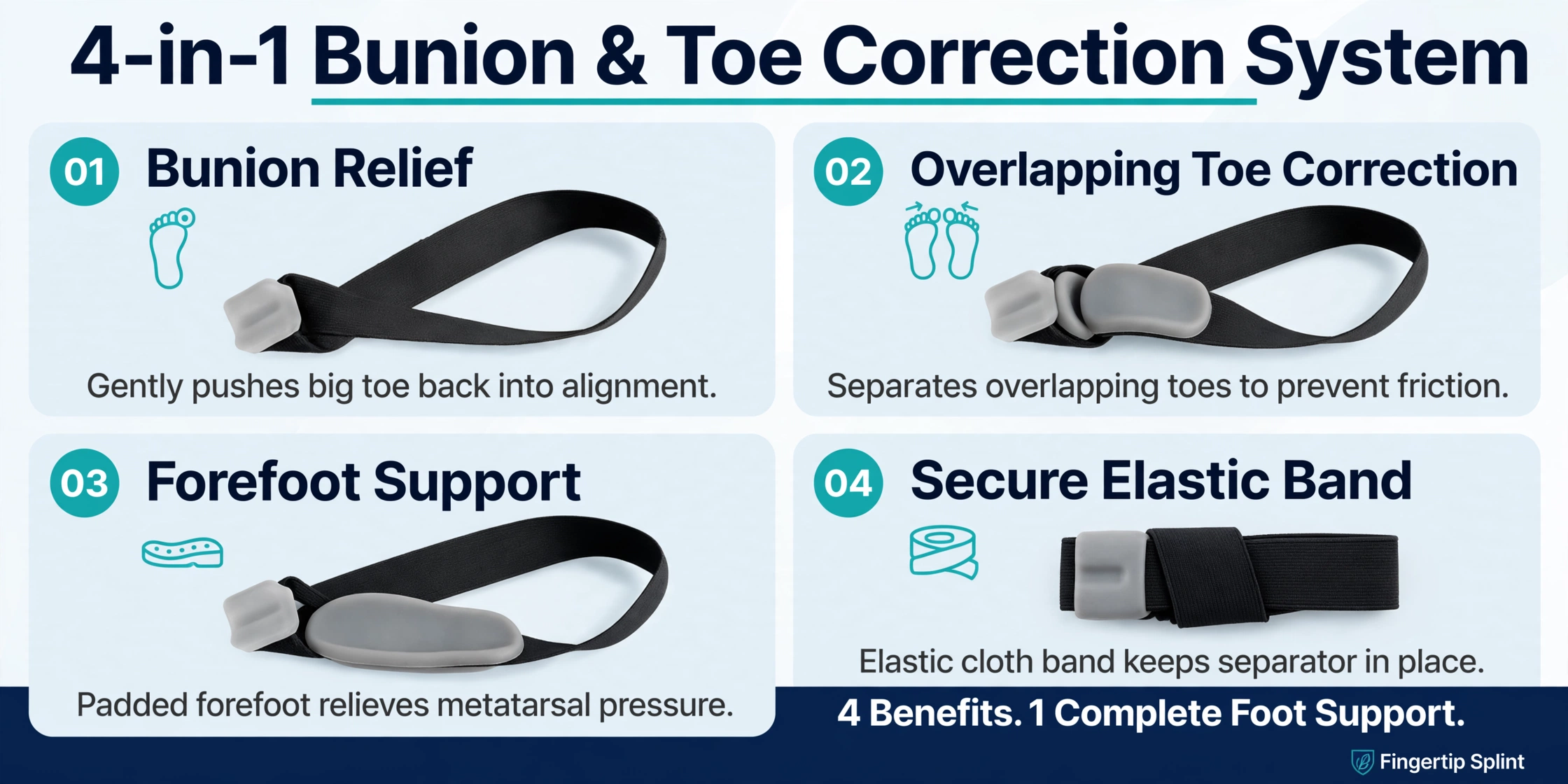
Hallux Valgus Toe Separator Uses
A hallux valgus toe separator is designed to create space between the big toe and the second toe. The main uses are practical and relate to comfort during daily activities.
Creating Space Between the Big Toe and Second Toe
The spacer physically separates the toes while worn, potentially reducing direct contact between them.
Reducing Rubbing Between Crowded Toes
When toes press against each other, the friction can contribute to irritation. A separator may reduce this contact. However, fit and footwear still matter — a separator that makes the shoe tighter may increase pressure instead of relieving it.
Supporting a More Comfortable Footwear Experience
Some people may find a separator useful with sufficiently roomy footwear. Others may find it too bulky inside shoes. The right design depends on the shape of your foot and the shoes you wear.
Providing an Option for Conservative Foot Care
Separators may be one component of a broader plan that includes appropriate shoes, padding, or professional advice. According to the American Podiatric Medical Association’s bunion guidance, toe spacers may be considered alongside other conservative measures.
Potential Benefits of a Hallux Valgus Toe Separator
The potential benefits of a toe separator are practical and conditional. They depend on the bunion’s severity, the device’s design, footwear, fit, and individual symptoms.
Less Toe-to-Toe Contact
The spacer creates a physical gap between the big toe and second toe while worn. This may reduce direct contact that contributes to rubbing.
Potential Reduction in Rubbing
Separating crowded toes may reduce contact in suitable cases. However, if the shoe is too narrow, the separator may increase pressure instead of reducing it.
A More Comfortable Daily Routine
Some users may find a properly fitting device helpful during selected activities. Comfort during one activity does not guarantee comfort during all activities.
A Non-Surgical Comfort Option
It can be considered alongside other conservative measures. According to the Cleveland Clinic’s guide to toe separators, toe separators can create space but are not a permanent fix.
Simple Product Format
A small separator may be easy to incorporate into a foot-care routine if it is comfortable and easy to clean.
Explore How a Toe Separator Works
Select an area below to learn more about it.
Featured Product — FingerTipsSplint Hallux Valgus Toe Separator
If you are considering a toe separator for bunion discomfort, the FingerTipsSplint Hallux Valgus Toe Separator is one option to evaluate. This guide does not claim that it cures bunions or permanently straightens the joint. What it offers is a design intended to create space between the toes.
What to Evaluate
- Fit: Does the separator sit comfortably between the intended toes?
- Material: Is the silicone soft and compatible with your skin?
- Intended placement: Is the design intended for the big toe and second toe?
- Ease of cleaning: Can you follow the manufacturer’s cleaning instructions?
- Footwear compatibility: Will the separator fit inside your shoes without crowding?
Review the product details to see whether this toe separator fits your needs. For a more detailed look at how the product compares to other options, the article on hallux valgus toe separator uses and benefits provides additional context.
Explore the Hallux Valgus Toe Separator
Review the FingerTipsSplint Hallux Valgus Toe Separator, check its design and fit details, and decide whether it matches your comfort needs.
View the Product Browse All ProductsToe Separator vs. Bunion Pad vs. Toe Splint
Different products serve different purposes. Here is how they compare.
| Product Type | Main Purpose | Important Limitation |
|---|---|---|
| Toe separator | Creates space between selected toes | May cause pressure if fit is unsuitable |
| Bunion pad or guard | Cushions the prominent joint against rubbing | Does not realign the underlying bones |
| Toe splint | Provides positioning or support, depending on design | May be unsuitable for some shoes or activities |
| Shoe insert or orthotic | Changes pressure distribution or supports foot mechanics | Fit and benefits vary by individual |
These products are not interchangeable. Someone whose main problem is shoe rubbing may need a different approach from someone who needs a clinician’s assessment of progressive deformity. According to the American Academy of Orthopaedic Surgeons’ guide to tight shoes and foot problems, roomy toe boxes, spacers, and other options may be considered.
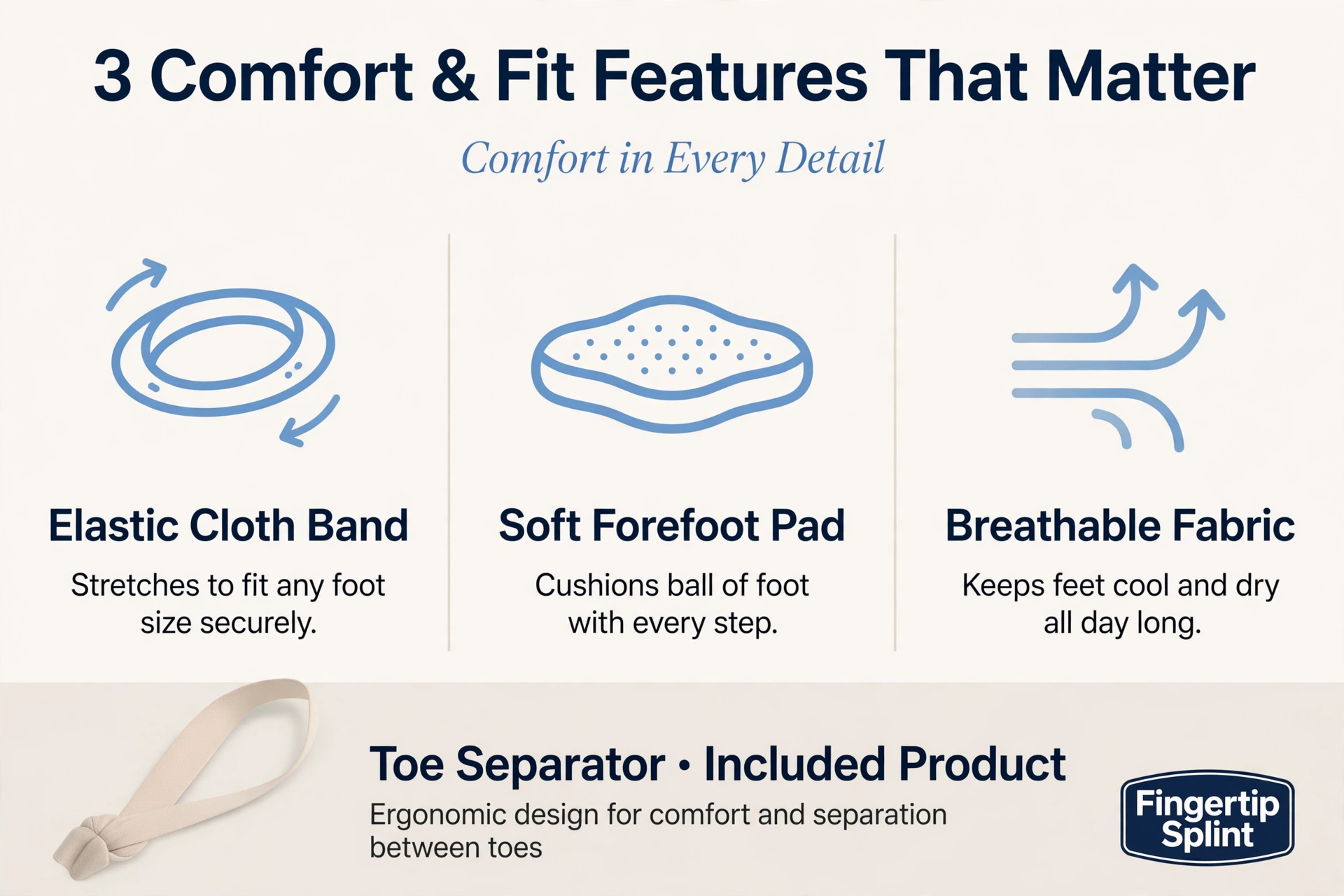
How to Use a Hallux Valgus Toe Separator Safely
Safe use is essential for comfort and to prevent skin problems. Follow this step-by-step guide based on the manufacturer’s instructions.
Step 1: Read the manufacturer’s instructions and check that the device is intended for the affected toes.
Step 2: Inspect the skin for blisters, sores, redness, or irritation.
Step 3: Position the separator according to its design, without forcing the toe into a painful position.
Step 4: Check that the device sits comfortably and does not create excessive pressure.
Step 5: Follow the product’s specific wear instructions and remove it if discomfort develops.
Step 6: Check the skin afterward and clean the device according to the manufacturer’s guidance.
What Results Can You Expect — and How Quickly?
Comfort, rubbing, and toe positioning while wearing the device are different outcomes. Some users may notice an immediate change in contact between toes; others may find little benefit or may not tolerate the spacer.
Realistic Timeline
- First use: Assess fit, pressure, and comfort — not bunion correction.
- Early use: Observe whether rubbing or contact changes during suitable activities.
- Ongoing use: Review comfort, skin condition, and whether the device remains practical.
- Persistent or worsening symptoms: Seek clinical assessment rather than increasing wear time or pressure.
Common Toe Separator Mistakes
Some mistakes can make the device less safe or less comfortable. Here are the most common ones.
More separation is not automatically better.
Solution: Choose a spacer that separates without forcing.
Forcing a painful position can cause injury.
Solution: Stop if the position creates pain or excessive pressure.
The shoe may squeeze the device against the toes.
Solution: Use footwear with enough room for the device.
Redness, blisters, or sores indicate the fit or use needs reassessment.
Solution: Stop using the device and inspect the skin.
A separator is not a guaranteed structural fix.
Solution: Use it for comfort with realistic expectations.
Pressure may worsen skin damage.
Solution: Do not use over broken skin; seek medical advice.
Delaying medical advice for persistent pain, worsening deformity, or difficulty walking is another common mistake. According to WebMD’s explanation of whether toe spacers work, unrealistic correction claims should be treated with caution.
Who May Be a Suitable Candidate?
A toe separator may be suitable for some adults, but not for everyone.
Who May Consider a Toe Separator
- Adults experiencing toe crowding or rubbing
- People who want to explore a non-invasive comfort accessory
- People who can use it without harmful pressure
Who Should Seek Guidance First
People with diabetes or reduced foot sensation, poor circulation, skin ulcers, recent foot surgery, significant swelling, severe pain, or an uncertain diagnosis should seek professional advice before using a toe separator.
Doctor Advice — When to Seek Professional Help
A product guide is not a substitute for professional assessment. Seek an appointment with a podiatrist or other qualified clinician if:
- Bunion pain persists or worsens
- Pain limits daily activity
- Walking is affected
- It is difficult to find suitable shoes
What Buyers Should Check
Before purchasing a hallux valgus toe separator, use this checklist to evaluate whether it matches your needs.
- Correct placement: Is the device intended for the big toe and adjacent toe?
- Comfortable separation: Does it separate without excessive force?
- Appropriate sizing: Does it fit your toes?
- Footwear compatibility: Will it work with your shoes or home use?
- Cleaning and maintenance: Can you follow the instructions easily?
- Clear product specifications: Are the details and support information available?
Review the FingerTipsSplint product page for the actual product details.
Can a Toe Separator Work Alongside Other Foot-Care Measures?
A separator may be only one part of a broader comfort plan. Roomy footwear, appropriate cushioning, and professional advice may matter just as much as the separator itself.
When discussing the difference between separating toes and cushioning the forefoot, the article on elastic forefoot pad for overlapping toes: fit and comfort provides useful context. And when explaining why device design and intended wear conditions matter, see bunion toe separator for day and night use.
Frequently Asked Questions
A hallux valgus toe separator is used to create space between the big toe and second toe. This may reduce contact or pressure for some people with bunions. It is a comfort accessory, not a treatment for the underlying deformity.
No. A toe separator may create space while worn, but it does not permanently correct the alignment of the bones. Surgery is the only way to correct the structural deformity.
Follow the manufacturer’s instructions. There is no universal wear schedule that suits everyone. Start with short periods and check the skin. Stop if you experience discomfort or irritation.
This depends on the device design and whether your shoes have enough room. Never force a separator into tight footwear. If your shoes cannot accommodate the device comfortably, consider footwear with a wider toe box.
Neither is universally better. A toe separator creates space between toes, while a bunion pad cushions the prominent joint. The right choice depends on your specific problem. Some people may benefit from both.
People with diabetes should seek professional advice before using a device that could create unnoticed pressure. Reduced sensation increases the risk of skin injury from a device that does not fit properly.
Stop using the separator and seek medical advice if you experience persistent or worsening pain, skin irritation, blisters, sores, or increasing deformity. Seek urgent assessment for severe pain, significant swelling, or signs of infection.
Make an Informed Decision About Toe Comfort
A toe separator may help create space and improve comfort for some people, but the right fit, suitable footwear, and realistic expectations are essential.
Use this guide as a framework: understand what a separator can and cannot do, check the specifications, follow safe-use instructions, and seek professional advice for persistent or worsening symptoms. The device may provide temporary comfort, but it does not correct the underlying deformity.
For readers who want to explore comfort products, the FingerTipSplint shop offers a selection. For more foot and hand care education, visit the FingerTipSplint blog. For personalized assistance, you can request a quote or review the frequently asked questions.
Your feet carry you through everything. Choosing the right support — and knowing when to seek professional advice — is part of caring for them well.