
Your finger will not straighten. Maybe it has been that way since a knock during a game, maybe it catches and locks when you try to move it, or maybe it has gradually stiffened over months. You have searched for answers, found dozens of splints, and now feel more confused than before. A finger splint for a bent finger may support straightening in some cases, but the right approach depends entirely on why the finger is bent. A mallet finger, a trigger finger, a fracture, and a longstanding joint contracture are not the same condition, and they do not respond to the same support. This guide explains the causes, the splint types, how to fit and wear a splint safely, realistic recovery expectations, and when professional medical care is necessary. For a broader view of available finger support products, explore the full FingertipsSplint range.
Table of Contents
- Can a Finger Splint Help Straighten a Bent Finger?
- Why Does a Finger Become Bent?
- How a Finger Splint Supports Straightening
- Which Finger Splint Is Right for a Bent Finger?
- How to Fit and Use a Finger Splint Safely
- How Long Does a Bent Finger Take to Straighten?
- Mistakes That Can Delay Proper Treatment
- When to Seek Medical Advice
- Choosing a Finger Splint: Product Guide
- Frequently Asked Questions
A finger splint for a bent finger supports the affected finger or joint in a selected position. Depending on the cause, it may limit movement, protect an injured tendon, or help maintain alignment during recovery. The correct splint and wearing schedule depend on the injury or condition, so a persistently bent or locked finger should be assessed before treatment.
Can a Finger Splint Help Straighten a Bent Finger?
The short answer is: sometimes, and only when the splint matches the cause. A finger splint does not pull a finger straight by force. It supports the finger in a selected position, limits movement that may interfere with healing, or protects an injured tendon from accidental bending. Whether that helps depends on why the finger is bent in the first place.
For a person with a mallet finger, a splint may be essential to hold the fingertip joint in a specific position while the tendon heals. For a person with a trigger finger, a different splinting approach may be appropriate. For a person with a fracture or a longstanding joint contracture, the treatment plan may be very different. Buying a splint without knowing the cause can waste money, delay proper care, and sometimes make things worse.
What a Finger Splint Does
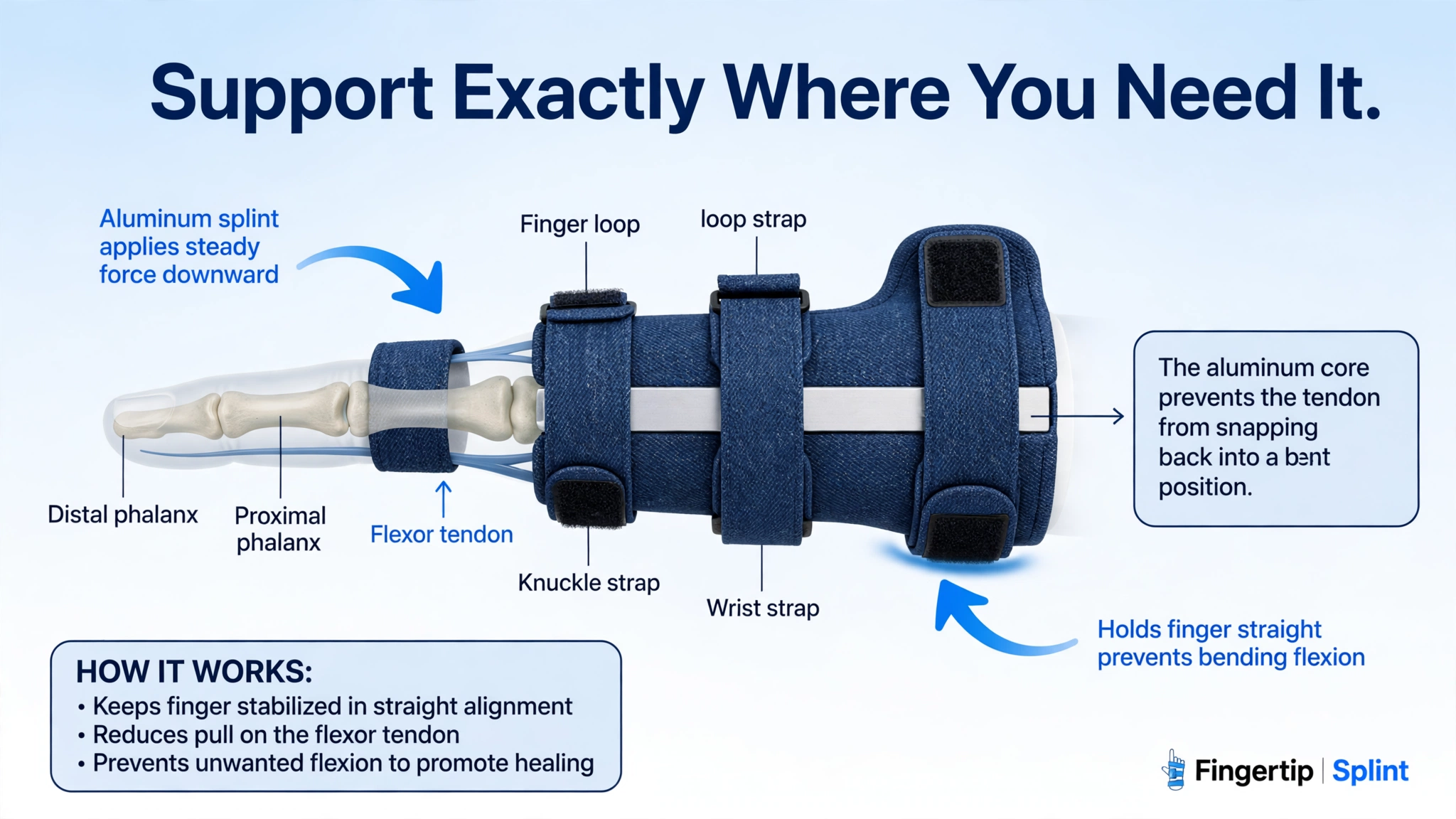
A finger splint supports the affected finger or joint in a selected position. Depending on the design, it may limit movement, protect the finger from accidental bending, or help maintain alignment during recovery. The adjustable finger splint is an example of a product readers can review, but its suitability depends on the specific condition being treated.
Why the Cause of the Bend Matters
A bent finger is a symptom, not a diagnosis. The cause could be a tendon injury, a joint problem, a fracture, or a longstanding stiffness. Each cause may require a different type of support and a different wearing schedule. A splint that works for one condition may be inappropriate for another. If you want to understand the difference between supporting a finger and forcing it straight, the guide to bent finger straightening is a useful starting point.
Why Does a Finger Become Bent?
Before choosing a splint, it helps to understand the possible causes. This section explains the main reasons a finger may stay bent, but it does not replace a clinical assessment.
Mallet Finger
Mallet finger is an injury to the tendon that straightens the fingertip. It often happens when a ball strikes the tip of an extended finger, forcing it to bend suddenly. The result is a fingertip that droops and cannot actively straighten. The AAOS OrthoInfo guide to mallet finger explains that the fingertip joint often needs to be held in a specific position during healing.
Trigger Finger
Trigger finger involves the flexor tendon becoming irritated or thickened, which can cause catching, clicking, or locking. The finger may stay bent after locking. The trigger finger brace uses and benefits article explains how a different type of splint may be appropriate for this condition.
Fracture or Dislocation
A fracture or dislocation can leave the finger bent and painful. These injuries need proper assessment and appropriate treatment. The NHS guidance on broken fingers explains when to seek care.
Tendon or Ligament Injury
Injuries to the tendons or ligaments that move or stabilise the finger can affect the ability to bend or straighten normally. The AAOS guide to sprained fingers describes how ligament injuries can cause swelling and instability.
Joint Contracture or Longstanding Stiffness
Over time, some fingers become stiff and difficult to straighten. This may be related to arthritis, previous injury, or other conditions. A longstanding contracture may respond differently from a recent injury and should be assessed.
How a Finger Splint Supports Straightening
A finger splint does not simply pull the finger straight. Its effect depends on its shape, the joint being supported, and the underlying condition. Understanding this principle helps you use a splint correctly and avoid expecting results it cannot deliver.
Supporting a Joint in a Selected Position
Some splints hold a joint in a specific position. This may be important for tendon healing, where the position of the joint affects how the tendon repairs. The correct position depends on the condition and should be guided by a clinician when the injury is significant.
Limiting Movement That May Interfere With Recovery
In some injuries, repeated movement can interfere with healing. A splint may limit that movement to protect the injured area. This is different from forcing the finger straight; it is about giving the finger a chance to heal in a controlled position.
Protecting the Finger From Accidental Bending
A splint can protect the finger from accidental knocks or bending during daily activities. This may be useful during recovery, especially for injuries that require continuous positioning.
Why the Correct Position and Wearing Schedule Matter
The correct position and wearing schedule are as important as the splint itself. A splint worn incorrectly, removed too early, or worn for too long may not support recovery and could cause problems. The Cleveland Clinic finger-splint guidance explains fitting considerations and potential problems.
Why Some Conditions Require Movement While Others Require Immobilisation
Some conditions benefit from controlled movement, while others require immobilisation. For example, a mallet finger often requires the fingertip joint to remain in a specific position, while a trigger finger involves a different problem and may require a different splinting approach. A generic brace that works for one condition may not work for another.
Which Finger Splint Is Right for a Bent Finger?
Choosing a splint should be based on purpose, not appearance alone. The table below compares common splint types.
| Splint Type | Typical Role | Important Consideration |
|---|---|---|
| Fingertip splint | Supports the end joint in selected injuries | The correct position is particularly important for mallet finger |
| Adjustable finger splint | May support or limit movement at a targeted area | Function depends on the specific design |
| Buddy tape | Supports an injured finger alongside a neighbouring finger in selected cases | Not appropriate for every injury |
| Trigger finger splint | May limit movement associated with triggering | Requires a design appropriate to the affected joint |
| Custom-made splint | Tailored to an individual’s condition and anatomy | May be recommended by a clinician or hand therapist |
If the cause of the bend is a trigger finger, the Trigger Finger Brace: Uses & Benefits guide explains why the cause of a bent or catching finger determines the support needed. If the thumb is affected, the adjustable finger brace for thumb and finger support article explains why thumb and finger splints are not interchangeable.
How to Fit and Use a Finger Splint Safely
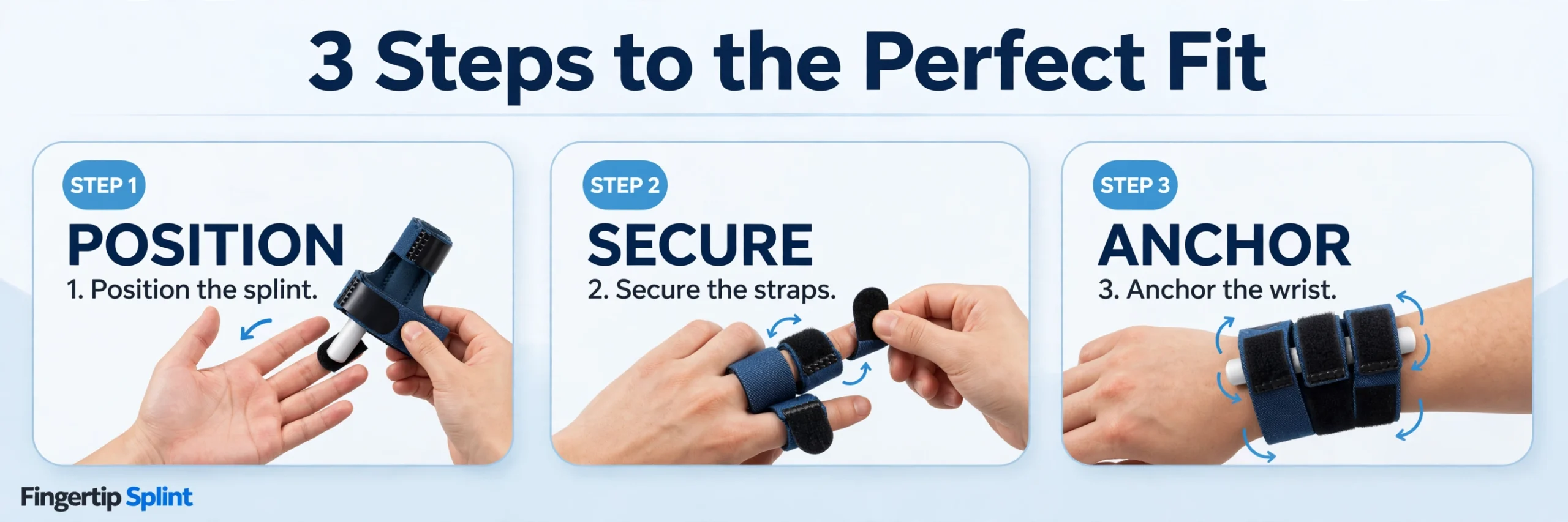
Fit and use matter as much as the choice of splint. Follow this checklist to reduce the risk of poor fit and inappropriate use.
A splint can cause problems if it is too tight, incorrectly positioned, or used for the wrong condition. For suspected fractures, tendon injuries, or significant deformity, professional assessment should come before relying on an over-the-counter product. The NHS guidance on finger pain lists symptoms that may need assessment.
Explore Finger Splint Support
Select a topic below to see what matters when choosing support.
How Long Does a Bent Finger Take to Straighten?
There is no single answer to this question, and anyone who promises a fixed recovery time is overstating certainty. Recovery depends on the diagnosis, the severity of the condition, the treatment used, and individual factors.
Why Recovery Differs
Some tendon injuries require a specific period of continuous splinting prescribed by a clinician. Others may need controlled movement at a certain stage. A longstanding stiffness or contracture may respond differently from a recent injury. The timeline must be guided by the condition being treated.
Monitoring Improvement
Improvement should be monitored through pain, movement, function, and clinical follow-up. A finger that remains bent or becomes more painful needs reassessment. Do not assume that the absence of pain means the injury has healed.
Follow-Up Matters
Follow-up appointments are an opportunity to review progress and adjust the plan. If the finger is not improving as expected, a clinician can reassess and consider other options. The MedlinePlus medical library is a useful resource for understanding hand and finger conditions more broadly.
Mistakes That Can Delay Proper Treatment
Some mistakes are common but correctable. Recognizing them early can help you avoid delays and discomfort.
Forcing the finger can worsen an injury or cause additional damage.
Correction: Seek medical assessment for persistent bending.
A splint for the wrong joint may not support recovery.
Correction: Match the splint to the affected finger and joint.
Excessive tightness can reduce circulation and cause numbness.
Correction: Follow the manufacturer’s fitting instructions.
Some tendon injuries require continuous splinting for a specific period.
Correction: Follow the clinician’s wearing schedule.
Redness, numbness, or colour changes are signs to stop and reassess.
Correction: Remove the splint and seek advice if symptoms persist.
Different causes require different treatment.
Correction: Seek diagnosis before buying a splint.
Some injuries need prompt care to avoid long-term problems.
Correction: Seek medical advice promptly after significant injury.
When to Seek Medical Advice
Self-care is not enough for every bent finger. Knowing when to seek help helps you avoid delays and potential complications.
Symptoms That Warrant Assessment
- A finger that becomes bent after an injury.
- A finger that cannot straighten actively.
- Significant swelling or bruising.
- Visible deformity.
- Restricted movement that does not improve.
Symptoms That Warrant Prompt Care
A cold, blue, pale, or numb finger, an open wound, or severe pain may require urgent care. The NHS guidance on broken fingers lists signs that may indicate a fracture.
What a Clinician May Assess
A clinician may assess tendon function, joint stability, and possible fractures. Imaging or referral may be needed depending on the findings. The American Society for Surgery of the Hand provides specialist guidance on finger conditions, and the Johns Hopkins Medicine resource offers additional context on hand and finger injuries.
Choosing a Finger Splint: Product Guide
The adjustable finger splint is one option readers can evaluate. It is a dedicated support, but buyers should verify the details before purchasing.
What to Check on the Product Page
- Which finger and joint the product supports.
- The adjustment mechanism and size range.
- Materials and skin-contact areas.
- The product’s stated intended use.
- Cleaning and wearing instructions.
- Whether it is appropriate for a diagnosed condition or a clinician’s advice.
The recommended solution is the support that matches the condition, not automatically the most rigid or expensive brace. If you are buying for a clinic or team, the medical finger splint supplier and finger splint distributor pages provide business purchasing context, and the request-a-quote option may be useful for bulk orders.
Bundle Strategy
Recovery often involves different stages. A more supportive splint may be appropriate early on, while a lighter option may suit later stages when movement is reintroduced. Having more than one option can help you adapt as your finger responds. Browse the finger support collection to compare designs.
Find Finger Support That Matches Your Needs
A finger splint should match the affected joint, the cause of the bend, and any advice from a healthcare provider. Review product details carefully before buying, and seek medical assessment if the finger becomes bent after injury, cannot straighten actively, or has significant swelling, deformity, or numbness. If you are ready to compare options, the collection is a good place to start.
View the Adjustable Finger Splint Browse All Finger SupportsFrequently Asked Questions
A splint can support a selected position or limit movement, but the outcome depends on the cause, severity, and treatment plan. Some conditions, such as mallet finger, may require a specific splinting approach, while others require different care. A splint should not be used as a substitute for diagnosis.
Wearing schedules vary. Some tendon injuries require strict positioning for a specific period, so readers should follow the clinician’s instructions. Do not adjust the schedule without guidance.
Do not force the finger, particularly after injury, with significant pain, or when it is locked. Forcing the finger can worsen an injury. A finger that is persistently bent or locked should be assessed by a clinician.
Trigger finger commonly involves catching or locking during movement, while mallet finger affects active straightening of the fingertip. They are different conditions and may require different treatment approaches. The Mayo Clinic and WebMD provide additional condition-specific information.
It should be secure as instructed, but numbness, tingling, unusual discolouration, or increasing pain are warning signs. If you notice these symptoms, reassess the fit and seek advice if they persist.
Longstanding stiffness or contracture may have a different outlook from a recent injury and should be assessed. An adjustable splint may be part of a plan, but the appropriate approach depends on the cause and the clinician’s recommendation.
Seek assessment for a finger that becomes bent after injury, cannot straighten actively, has significant swelling or bruising, appears deformed, or has restricted movement. A cold, blue, pale, or numb finger, an open wound, or severe pain may require urgent care. The Healthline resource is a useful starting point for understanding finger conditions, but it should not replace clinical advice.
Conclusion: Understand the Cause, Choose the Right Support
A finger splint for a bent finger can be a useful support when it matches the cause of the bend. It does not force a finger straight, and it is not a substitute for diagnosis. If your finger becomes bent after an injury, cannot straighten actively, or has significant swelling, deformity, or numbness, seek medical assessment before relying on self-treatment. For more guidance, explore more finger-support guidance in the blog library and review the frequently asked questions about finger supports.