
Choosing a sports thumb wrist protector is different from choosing everyday thumb support. During sports, your hand may need to grip, rotate, react quickly, and repeatedly change position. A protector that feels supportive while your hand is still may become uncomfortable or restrictive once you start moving. This guide focuses on product selection, fit, movement, comfort, and practical sports use. For a broader view of the FingerTipSplint range, start with CMC thumb and wrist support solutions.
Table of Contents
- Why Sports Protection Is Different
- Which Features Matter for Your Sport?
- 10 Things to Check Before Buying
- Sports Protection vs Support
- Flexible vs Structured Sports Supports
- 3D Sports Thumb Anatomy
- Sport-by-Sport Guide
- Product Spotlight
- How to Test Before Practice
- 60-Second Sports Fit Check
- 10 Buying Mistakes
- When a Protector May Not Be Enough
- Questions for a Healthcare Professional
- Returning to Sports With Thumb Support
- Sports Buyer Checklist
- Building a Practical Sports Setup
- 7 Quick Sports Buying Tips
- FAQ
When choosing a sports thumb wrist protector, prioritize secure fit, appropriate thumb and wrist coverage, comfortable materials, useful thumb mobility, grip compatibility, and adjustability. The right design should match the demands of your activity without unnecessarily restricting movement. Check sizing and product instructions carefully, and seek professional advice for significant or persistent injuries.
Why Sports Require a Different Type of Thumb Wrist Support
Sports Put Different Demands on the Hand
Repetitive gripping
Holding equipment, catching, and repeated hand movement.
Sudden direction changes
Quick hand repositioning during play.
Contact and impact
Ball contact, collisions, and falls.
Rapid thumb movement
Quick opposition and pinch strength demands.
Wrist rotation
Rotational movement for grip and equipment handling.
Forceful pinching
Pinch strength for catching, gripping, and controlling equipment.
A Protector Must Work With Movement
Protection Must Match the Activity
Racquet sports, basketball, volleyball, cycling, gym and strength training, outdoor activities, and general recreational sports all place different demands on the thumb and wrist. No single protector is suitable for every sport. For a broader look at CMC protector selection, see our guide on the best CMC thumb wrist protector support and fit guide.
Which Features Matter Most for Your Sport?
Select your sport and we will show you the features to prioritize. This is a shopping decision tool, not medical advice.
- Secure positioning during catching and dribbling
- Thumb mobility for ball handling and passing
- Grip compatibility for shooting and catching
- Low bulk that does not interfere with ball control
- Comfortable movement during rapid hand repositioning
10 Things to Check Before Buying a Sports Thumb Wrist Protector
1. Correct Thumb and Wrist Coverage
Coverage determines the area that receives support. Ask whether it covers the intended area, stays positioned during movement, extends too far, or interferes with grip. Coverage should match the support need.
2. Secure Fit
Sports movement can expose poor fitting. A loose support may shift, rotate, slide, or require repeated adjustment. Secure positioning matters during activity.
3. Adjustability
Adjustable straps and fastening systems allow you to personalize the fit. Adjustability is useful when wrist size or comfort needs change during activity.
4. Thumb Mobility
You may need grip, pinching, equipment handling, and rapid hand repositioning. A protector should not unnecessarily restrict movements that are important to the sport.
5. Wrist Mobility
Different sports require different amounts of wrist movement, including flexion, extension, and rotation. Consider how much wrist movement you need during play.
6. Grip Compatibility
Consider how the protector interacts with basketball, racquet, bicycle handlebar, gym equipment, and sports equipment. The key question: can you maintain a safe, controlled grip while wearing it?
7. Low Bulk
Excessive bulk can interfere with gloves, equipment, ball handling, racquet grips, and handlebar grips. A low-profile design is usually more practical for sports.
8. Material and Breathability
Sports can create more heat and perspiration than normal daily activities. Consider how the material handles sweat, heat, repeated movement, skin contact, and moisture.
9. Edge Comfort
Edges can become more noticeable during repetitive movement. Check the edges around the thumb, palm, wrist, and strap areas.
10. Intended Use and Manufacturer Instructions
Check the recommended activities, sizing, care instructions, wear instructions, and limitations. Do not assume a product is appropriate for every sport simply because it is marketed as sports.
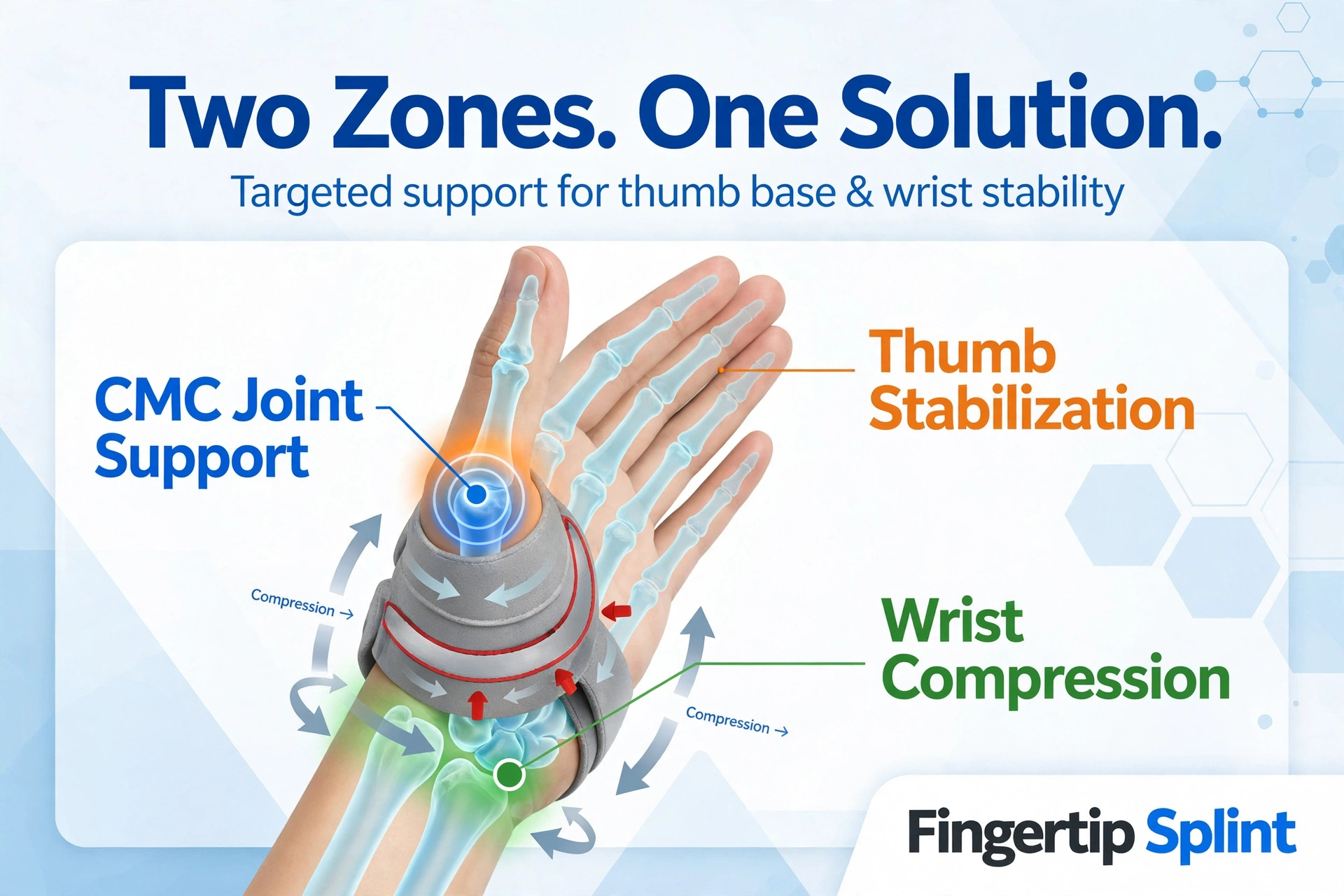
Sports Protection vs Support: What Is the Difference?
Support
Support is primarily about positioning and stabilization. A support helps maintain the thumb and wrist in a more stable position.
Protection
Protection can refer to physical coverage and reducing certain unwanted movement, depending on the design. It does not mean protection from every injury or hazard.
Compression
Compression primarily relates to pressure around the area. It does not provide the same level of structural support as a more rigid design.
Flexible or More Structured: Which Sports Thumb Support Should You Choose?
| Factor | Flexible Support | More Structured Support |
|---|---|---|
| Mobility | Usually higher | Usually lower |
| Restriction | Lower | Higher |
| Grip freedom | Often better | Depends on design |
| Stability | Lower to moderate | Moderate to high |
| Comfort | Often higher | Depends on fit |
| Everyday sports use | Often practical | Activity-dependent |
See How a Sports Thumb Wrist Protector Fits
The interactive 3D component explorer below shows how a sports thumb wrist protector interacts with the thumb, wrist, and sports equipment. Click each component to see what it does and why it matters.
Sports Thumb Wrist Protector Explorer
Click a component to learn what it does and why it matters during sports.
Choosing a Thumb Wrist Protector for Different Sports
Basketball
Consider ball handling, passing, dribbling, thumb movement, grip, and contact. A low-profile protector that preserves thumb mobility is usually more practical for basketball.
Tennis and Racquet Sports
Consider racquet grip, wrist movement, repeated gripping, and comfort. The protector should not interfere with grip or stroke mechanics.
Volleyball
Consider ball contact, hand positioning, thumb mobility, and secure fit. A protector that stays in place during repeated hand contact is more practical.
Cycling
Consider handlebar grip, wrist position, long-duration comfort, and secure fastening. A protector that stays secure during extended rides is more practical.
Gym and Strength Training
Consider grip, equipment, wrist movement, sweat, and bulk. A protector that interferes with lifting or equipment handling will not be worn consistently.
Outdoor and Recreational Activities
Consider variable movement, weather, sweat, repeated activity, and fit stability. A protector that stays secure during varied conditions is more practical.
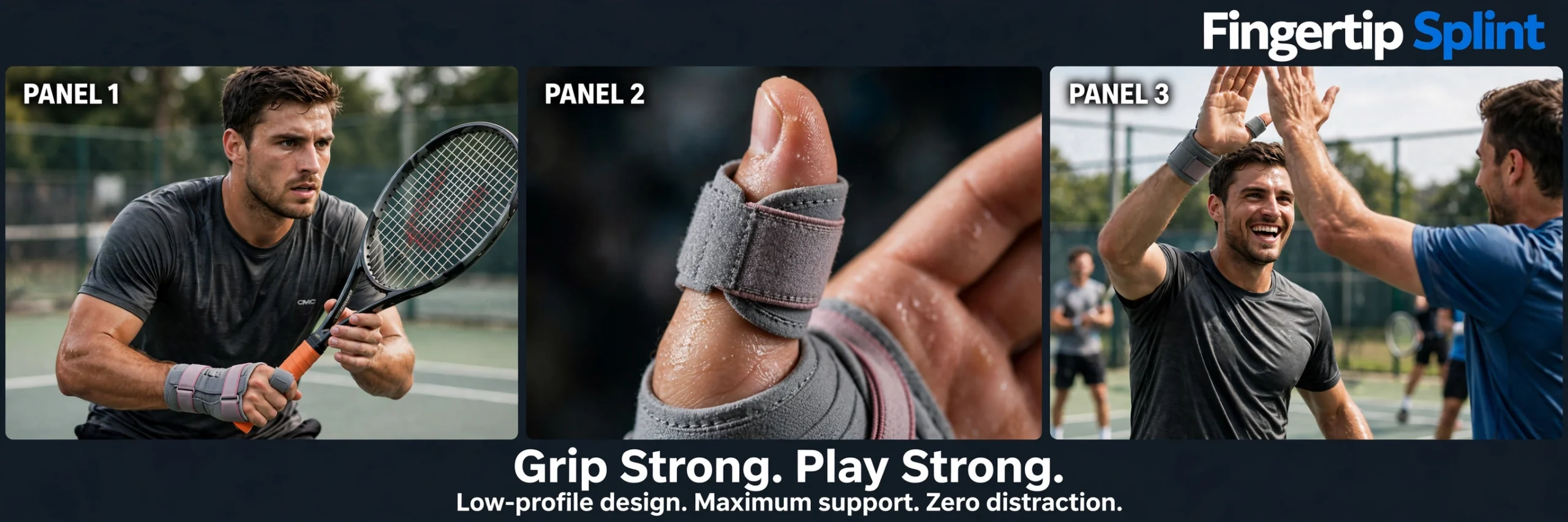
Sports CMC Thumb Wrist Protector: A Product to Evaluate
Use this section as a worked example of how to evaluate a sports thumb wrist protector against the criteria in this guide. The product being evaluated is the Sports CMC Thumb Wrist Protector from FingerTipSplint.
Sports CMC Thumb Wrist Protector
- Coverage: Thumb base and wrist coverage
- Adjustability: Check the product page for adjustment details
- Mobility: Designed to preserve useful thumb movement
- Sports compatibility: Designed for sports and activity use
- Comfort: Intended for use during activity
- Fit: Check the product page for sizing information
How to Evaluate It Against Your Priorities
Compare its coverage, adjustability, mobility, sports compatibility, comfort, and fit against the 10 features in this guide. Only verified product specifications should be relied on. For a broader look at features, see our guide on the CMC thumb support buying guide for features, fit, and everyday use.
How to Test Your Sports Thumb Wrist Protector Before Practice
60-Second Sports Fit Check
Click each item to confirm. This is not a medical clearance.
10 Sports Thumb Wrist Protector Buying Mistakes
Excessive tightness can restrict movement and create discomfort.
What to do instead: secure and comfortable, not tight.
A protector that interferes with grip will not be worn during sport.
What to do instead: test with your equipment before buying.
You need thumb movement for gripping and equipment handling.
What to do instead: check that the design preserves useful thumb movement.
A protector that is too loose or too tight will not work during sport.
What to do instead: measure and compare with the product’s chart.
A protector can look supportive without matching your sport.
What to do instead: check coverage, fit, and activity compatibility.
A protector that traps heat and moisture will not be worn consistently.
What to do instead: choose a breathable material for activity.
A protector that feels fine at home may not perform during play.
What to do instead: test during practice first.
Different sports place different demands on the hand.
What to do instead: match the protector to your specific activity.
Symptoms that persist or worsen deserve professional assessment.
What to do instead: do not simply change protectors repeatedly.
A protector is a support tool, not a diagnosis or cure.
What to do instead: seek professional assessment for significant injuries.
When a Sports Thumb Protector May Not Be Enough
- Severe pain
- Significant swelling
- Deformity
- Major loss of movement
- Significant bruising
- Numbness or tingling
- Suspected fracture
- Significant injury
- Persistent or worsening symptoms
The Cleveland Clinic sprained thumb resource explains that thumb sprain treatment varies with severity, and more significant injuries may require different approaches. Different injuries may require different levels of immobilization or treatment.
What Should You Ask a Healthcare Professional?
This section is written in the tone of a practical professional checklist. It is not a diagnosis and does not replace an in-person assessment.
What area should be supported?
The specific joint or region determines the appropriate support design.
How much movement should I maintain?
Restriction level should match the injury and activity demands.
Is sports participation appropriate right now?
Return-to-sport decisions should involve professional guidance.
What level of support is appropriate?
Light, moderate, or more structured support may be recommended.
How long should I use a support?
Duration depends on the injury and healing progress.
Are there movements I should avoid?
Specific movement restrictions may apply during recovery.
When should I return to activity?
Return-to-sport decisions should be based on assessment, not just comfort.
Should I use a support during sports?
Activity compatibility should be discussed with a professional.
Additional trusted resources include the Mayo Clinic thumb arthritis overview, the AAOS OrthoInfo thumb arthritis page, the NHS sprains and strains guidance, the MedlinePlus thumb injuries page, the WebMD splints overview, and the Healthline thumb brace resource.
Returning to Sports With Thumb Support
This is a sports return-to-activity framework, not a promised healing schedule. There is no universal week-by-week recovery timeline for all thumb injuries.
Stage 1 — Protect and Assess
Focus on determining what happened and reducing aggravating activity. If symptoms are significant, seek professional assessment before returning to sport.
Stage 2 — Comfortable Movement
Gradual movement according to the underlying issue and professional guidance. Do not push through pain.
Stage 3 — Controlled Practice
Low-intensity activity. Test the protector during light drills before intense practice.
Stage 4 — Sport-Specific Testing
Practice the actual grip and movements required for your sport. Confirm that the protector stays secure and does not interfere.
Stage 5 — Return to Normal Activity
Only when appropriate for the person’s condition and guidance. Comfort does not equal recovery.
Sports Thumb Wrist Protector Buying Checklist
Click each item to confirm. Aim to check all 13 before buying.
Building a Practical Sports Thumb Support Setup
Match the support to the activity instead of trying to make one product do everything.
Primary sports support
Choose the product appropriate for your sport and activity level.
Backup
A second support can be practical if the primary one needs washing or replacement. Explore thumb and finger support products.
General everyday support
If sports and everyday requirements are significantly different, a separate design may make more sense than forcing one product to perform every role.
7 Quick Sports Buying Tips
Sports Thumb Wrist Protector FAQs
Look for secure fit, appropriate thumb and wrist coverage, comfortable materials, useful thumb mobility, grip compatibility, and adjustability. The right design should match the demands of your activity without unnecessarily restricting movement.
For a broader look at features, see our guide on the CMC thumb support buying guide.
Suitability depends on the product design, the activity, and whether it interferes with safe movement. Some protectors are designed for sports and preserve movement; others are intended for rest or recovery.
Check applicable league or facility rules concerning protective equipment, and test the protector during practice before using it in competition.
It should be secure and comfortable, not excessively tight. You should be able to move your thumb and fingers without numbness, tingling, significant discoloration, or increasing discomfort.
If concerning symptoms occur, remove the protector and reassess the fit rather than tightening further.
It can, depending on the design. Bulk, positioning, and material all affect how the protector interacts with sports equipment. A low-profile protector is usually less likely to interfere with grip.
Test the protector with your actual equipment during practice before relying on it during competition.
Not necessarily. Different sports place different demands on the hand, including grip, thumb mobility, wrist movement, and equipment interaction. A protector designed for one activity may not be appropriate for another.
Match the protector to your specific sport and activity level.
It depends on the sport and the support needed. Flexible supports preserve more mobility, while more structured supports provide greater stabilization. More restriction is not automatically better.
Choose based on the balance of support and mobility your activity requires.
It depends on the injury type and severity. A protector may provide support during recovery for some injuries, but significant injuries may require professional assessment and different levels of immobilization.
Follow your healthcare professional’s guidance on support selection and return to sport.
Stop using the protector if you experience numbness, tingling, significant discoloration, increasing pain, skin problems, or worsening symptoms.
If symptoms persist after removing the protector, seek professional assessment.
Ready to Choose Your Sports Thumb Wrist Protector?
Before buying, check five things: fit, coverage, mobility, grip compatibility, and intended activity. If those five factors work together, you are much more likely to choose a support that fits your actual sports routine rather than one that only looks supportive on a product page.
Evaluate the Sports CMC Thumb Wrist Protector against the criteria in this guide. Explore the complete thumb and finger support collection, check the thumb and finger support FAQs, or use the request-a-product-quote page for professional or wholesale purchasing. For medical resources, see the medical finger splint and support resources.
View the Product Explore Thumb SupportFinal Takeaway: Choose Protection That Works With Your Sport
A sports thumb wrist protector should not simply feel strong. It should work with the movements your sport actually requires. Focus on protection, mobility, grip, fit, comfort, and activity compatibility rather than choosing based on maximum restriction or appearance alone.
If symptoms persist, worsen, or involve significant injury, severe pain, major swelling, deformity, numbness, or loss of function, do not simply change protectors. Seek appropriate medical evaluation. For medical finger splint supply and distribution, see the medical finger splint supplier page and the finger splint distributor page. For the full FingerTipSplint range, visit the CMC thumb and wrist support solutions.