
A toe separator may look simple, but the way it fits can determine whether it feels supportive or becomes annoying within minutes. A wrap-style separator adds another variable: the strap or wrap needs to secure the product without creating unnecessary pressure. Understanding positioning, fit, and comfort can help you evaluate whether a toe separator wrap is appropriate for your routine. For a broader view of toe and foot support products, explore our full range.
Table of Contents
- What Are Toe Separator Wraps?
- How Do Toe Separator Wraps Work?
- Where Should a Wrap Sit?
- How Should a Wrap Fit?
- Interactive Fit Checker
- What Comfort Feels Like
- Why Wraps Become Uncomfortable
- Separation vs Support vs Compression
- How to Wear Wraps Correctly
- How Tight Should It Be?
- Can You Wear Them During the Day?
- Can You Wear Them With Shoes?
- Footwear Checker
- Product Spotlight
- Wrap vs Traditional Separator
- Foot Support Routine
- When to Look for Support
- Cleaning & Care
- How Long to Wear Them
- Daytime vs Nighttime
- 10 Fit Mistakes to Avoid
- What’s Wrong With My Fit?
- Who Might Prefer Wraps
- When to Seek Advice
- Questions to Ask
- FAQ
- Fit Checklist
- 8 Quick Tips
- CTA
What Are Toe Separator Wraps?
Toe separator wraps are adjustable support products designed to sit around or between the toes and help maintain a particular toe position while worn. Their wrap-style construction can allow users to adjust the fit, but the correct tension matters: the wrap should remain secure without creating excessive pressure, numbness, tingling, significant discoloration, or increasing discomfort.
How Do Toe Separator Wraps Work?
A toe separator wrap combines two functions in one product. The separating component sits between adjacent toes to create space and reduce direct contact. The wrap or strap portion helps hold the product in position so the separation is maintained while you wear it. Unlike a fixed separator, an adjustable wrap can potentially accommodate differences in toe size, foot shape, desired positioning, and comfort preferences.
The Separator Creates Space
The separating component is the part that sits between your toes. Its job is to create a gap, reduce rubbing, and help maintain a position. The amount of separation depends on the thickness and shape of the material.
The Wrap Helps Hold Position
The wrap or strap wraps around the toes or forefoot to keep the separator in place. Without a secure wrap, the separator may slide out of position, especially during movement or when wearing shoes.
Adjustability Changes the Fit
Adjustable wraps allow you to customize the tension. This is useful because foot shapes and toe sizes vary. However, adjustable does not mean “tighten as much as possible.” The goal is a secure fit that maintains position without causing pressure, numbness, or discomfort.
Where Should a Toe Separator Wrap Sit?
Interactive 3D Anatomy View
Click each part to learn how it affects fit, comfort, and support.
How Should a Toe Separator Wrap Fit?
Fit is the most important factor determining whether a toe separator wrap feels supportive or becomes uncomfortable. A well-fitting wrap stays in position, distributes pressure evenly, and does not interfere with circulation or sensation.
It Should Feel Secure
The product should not constantly slide out of position. If you move your foot and the separator shifts, the wrap is either too loose, incorrectly positioned, or the wrong size.
It Should Not Feel Excessively Tight
A secure fit and a tight fit are not the same thing. Secure means the product stays where it should. Tight means it creates pressure, restricts sensation, or leaves deep marks. The right fit is secure without being tight.
Your Toes Should Retain Normal Sensation
- Numbness or loss of sensation
- Tingling or “pins and needles”
- Significant discoloration (white, blue, or dark red toes)
- Increasing pain or throbbing
The Separator Should Sit Where Intended
If the separator migrates between toes or rotates out of position, the issue could be incorrect sizing, incorrect positioning, incorrect strap tension, or a product design mismatch. Check each of these before assuming the product is faulty.
Is Your Toe Separator Wrap Fitted Correctly?
Interactive Fit Checker
Answer these basic questions to assess your current fit.
1. Does the wrap stay in place when you move your foot?
2. Does it feel secure without strong pressure?
3. Can you normally feel your toes?
4. Is there rubbing or skin irritation?
Answer all questions to see your result.
What Should a Comfortable Toe Separator Feel Like?
Comfort is subjective, but there are general characteristics that indicate a good fit. A comfortable toe separator wrap should feel secure without being tight, should not create significant pressure points, and should allow you to move your foot naturally.
Comfortable Pressure
The product should not be completely unnoticeable, but it should not create significant pain either. A mild awareness of the product is normal. Sharp pain, throbbing, or numbness is not.
Minimal Friction
Friction is a common cause of discomfort. Pay attention to areas where the material contacts your skin, especially the sides of the toes, between the toes, and the edges of the strap. If you feel rubbing, the fit or material may need adjustment.
No Significant Pressure Points
Pressure points develop when the product concentrates force on a small area. This can happen if the wrap is too tight, the material is too stiff, or the separator is positioned incorrectly.
Natural Foot Movement
If the product is intended for walking or everyday activity, excessive bulk can affect comfort and gait. A low-profile design is often more practical for use with shoes.
Why Does My Toe Separator Wrap Hurt or Feel Uncomfortable?
Discomfort from a toe separator wrap usually has an identifiable cause. Here are the most common ones.
The Wrap Is Too Tight
Over-tightening is the most common mistake. It can cause numbness, tingling, and skin irritation.
Wrong Size
A separator that is too large may slide around. One that is too small may create pressure. Check the sizing guide.
Separator Is Misaligned
If the separator is not sitting between the intended toes, it may press against the wrong area.
Excessive Friction
Rough materials or a poor fit can cause rubbing, especially during movement.
Foot Is Sweaty or Moist
Moisture increases friction and can lead to skin irritation. Keep your feet dry before applying the wrap.
The Device Doesn’t Match Your Foot Shape
Some products work better for certain foot shapes than others. If the design does not suit your foot, you may need a different style.
Existing Foot Problem
Persistent pain may indicate an underlying condition that requires professional assessment. A wrap can support but not diagnose or treat a medical problem.
Toe Separation, Support and Compression: What’s the Difference?
These terms are often used interchangeably, but they describe different functions. Understanding the difference helps you choose the right product.
| Term | What It Generally Means |
|---|---|
| Separation | Creates space between adjacent toes |
| Support | Helps hold a particular position |
| Compression | Applies pressure around an area |
| Alignment | Refers to positioning of body structures |
These terms describe different functions. A product that provides compression is not automatically a better separator, and more pressure is not automatically better support.
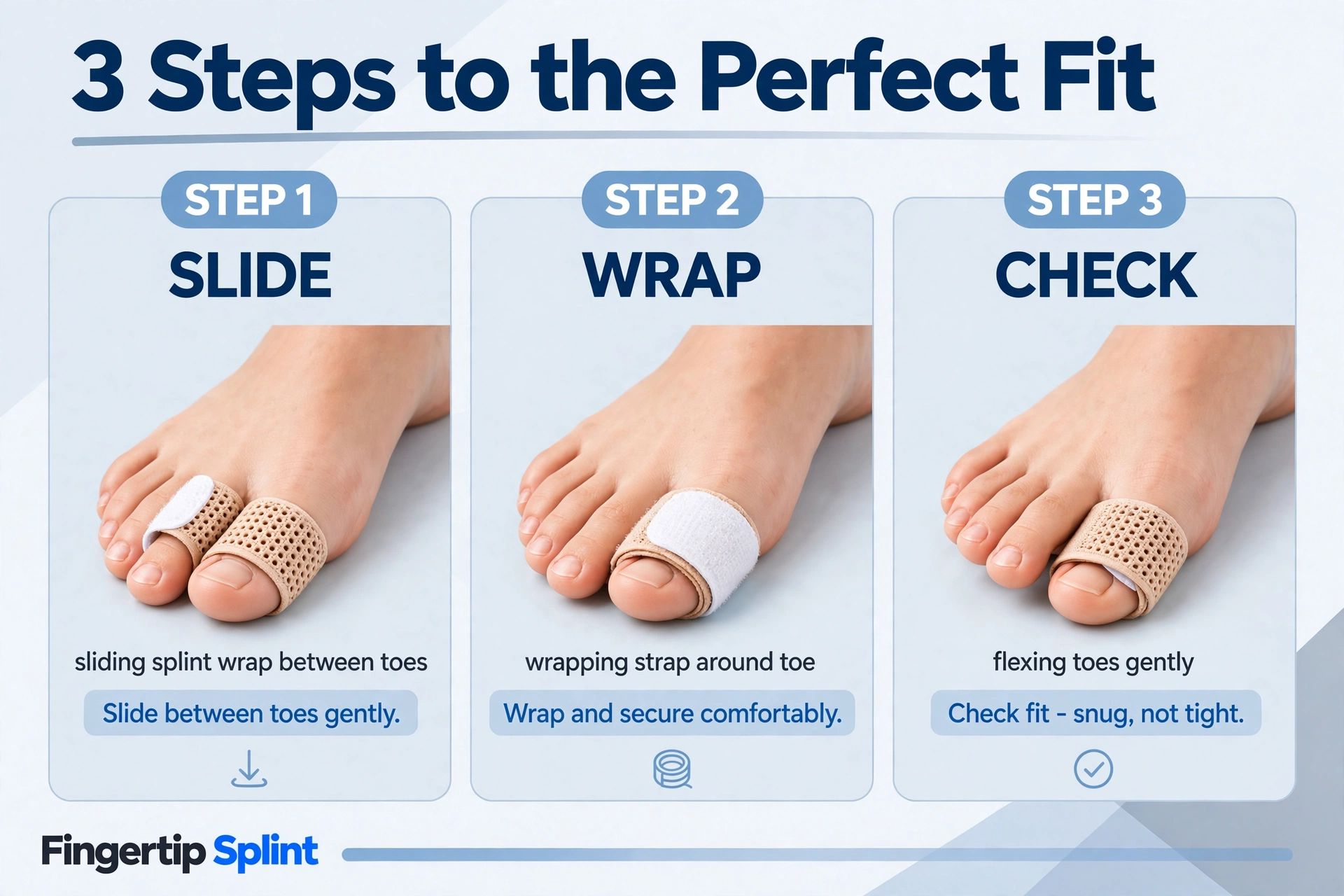
How to Wear Toe Separator Wraps Correctly
Following a consistent application routine helps ensure comfort and effectiveness.
Step 1 — Clean and Dry Your Foot
Wash your feet and dry them thoroughly, especially between the toes.
Step 2 — Identify the Separator Section
Locate the part of the wrap that sits between the toes.
Step 3 — Position Between the Intended Toes
Place the separator between the toes according to the manufacturer’s instructions.
Step 4 — Wrap or Fasten According to the Product Design
Follow the product’s specific application method.
Step 5 — Adjust the Tension
Secure the wrap so it stays in place, but do not over-tighten. You should be able to feel your toes normally.
Step 6 — Check Your Toes
Check sensation, color, comfort, and position before continuing.
Step 7 — Test Before Longer Use
Do not immediately assume the fit is correct for prolonged wear. Test it for a short period first.
How Tight Should a Toe Separator Wrap Be?
It should be tight enough to remain in its intended position but not so tight that it causes significant pressure, numbness, tingling, discoloration, or increasing discomfort.
Too Loose
Slides → Shifts → Poor positioning
Comfortable
Secure → Stable → Normal sensation
Too Tight
Pressure → Irritation → Numbness/tingling
Can You Wear Toe Separator Wraps During the Day?
Yes, but with considerations. Daytime use involves more movement than nighttime use, so the fit and stability of the wrap become even more important.
Sitting
Generally easier to tolerate because there is less movement. The wrap is less likely to shift or create pressure points.
Standing
Check whether the wrap remains comfortable when you are on your feet. Some designs work well for standing; others may create pressure.
Walking
Depends heavily on the product design, footwear, fit, and intended use. Some wraps are designed for walking; others are not.
Exercise
Do not automatically assume a toe separator wrap is appropriate for high-impact activity. Follow the manufacturer’s instructions and use your judgment.
Can You Wear Toe Separator Wraps With Shoes?
This depends on the shoe and the product. The key question is whether there is enough space in the toe box for the wrap without creating excessive pressure.
Open-Toe Footwear
Usually provides more room and is often the most compatible option.
Wide-Toe-Box Shoes
Potentially more compatible than narrow shoes, depending on the product.
Narrow Shoes
Can increase pressure if the separator adds bulk. If the shoe is already tight, adding a separator may make things worse.
Socks
Socks can affect product position, pressure, moisture, and friction. Some people find that socks help hold the wrap in place; others find that they increase pressure.
Will Your Shoes Work With a Toe Separator Wrap?
Footwear Compatibility Checker
Select your typical shoe type to see general guidance.
Product Spotlight: Toe Separator Wraps 12PCS Adjustable Toe Alignment Support
Toe Separator Wraps 12PCS Adjustable Toe Alignment Support
This product is an option to compare if you are specifically looking for an adjustable toe-separator wrap. It is designed with adjustability and toe separation in mind.
- Adjustable wrap design for customized fit
- Toe separation support
- 12-piece set for multiple toes or backup use
- Low-profile design for everyday wear
- Suitable for repeated use with proper care
Adjustable Wrap Design
Adjustability matters because it allows you to customize the fit. You can tighten or loosen the wrap based on your comfort level and the activity you are doing.
Toe Separation
The separator component is designed to sit between adjacent toes and help maintain a position while worn.
Fit Considerations
Connect this product to the fit checklist above. Check the size, positioning, and tension before committing to longer wear.
Comfort Considerations
Consider the material, contact areas, and whether the design is appropriate for your intended use. If you have sensitive skin, pay extra attention to how the product feels.
Who Should Compare This Option?
Users specifically evaluating adjustable wrap-style designs. If you want greater fit control or are comparing adjustable versus fixed separators, this product is worth evaluating against the features discussed in this guide.
Toe Separator Wrap vs Traditional Toe Separator
| Feature | Toe Separator Wrap | Traditional Separator |
|---|---|---|
| Adjustability | Usually higher | Often limited |
| Position control | Adjustable | More fixed |
| Fit customization | Higher potential | Depends on size |
| Application | Requires positioning/wrapping | Often simpler |
| Bulk | Varies | Usually lower |
| Everyday practicality | Depends on design | Depends on design |
Product characteristics vary by model, so always check the specific manufacturer’s design and instructions.
How Toe Separator Wraps Can Fit Into a Foot Support Routine
A toe separator wrap can be one part of a broader approach to foot comfort. It is not a standalone treatment for every foot condition.
Support Is Not the Same as Treatment
Support products can help manage symptoms or maintain a position, but they do not diagnose or cure medical conditions. If you have a persistent foot problem, professional assessment is important.
Building a Practical Routine
- Toe separator: For toe separation and positioning.
- Appropriate footwear: For adequate toe-box space.
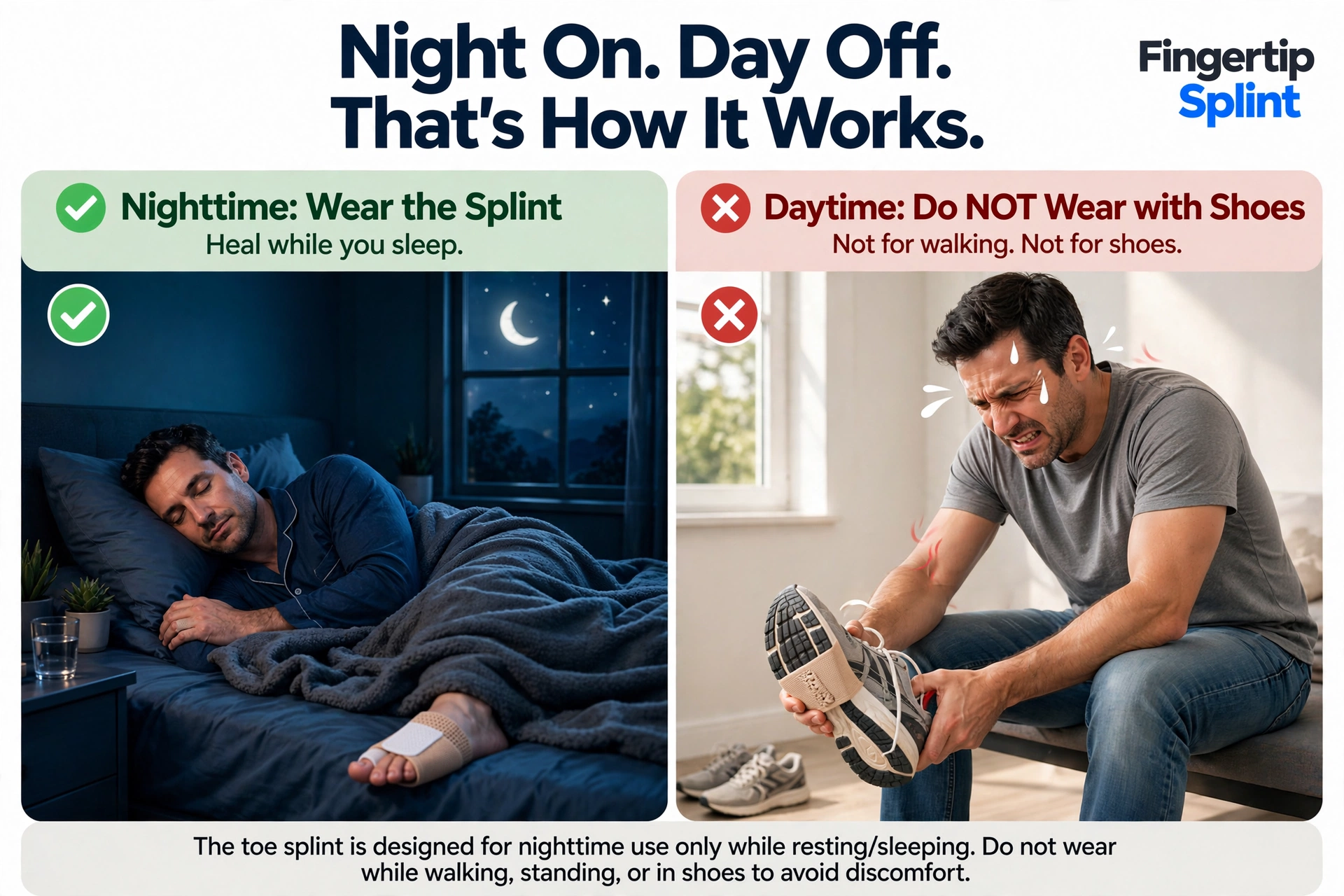
- Daytime vs nighttime products: Different situations may require different designs. For nighttime-specific guidance, see our best toe separator splint for nighttime use.
- Professional assessment: For persistent or significant problems.
When Might Someone Look for Toe Separation or Support?
People look for toe separation or support for a variety of reasons. These include toe crowding, friction between toes, a desire for toe positioning support, footwear-related discomfort, and existing foot conditions where a professional has recommended support.
How to Clean and Care for Toe Separator Wraps
Proper cleaning and care help maintain the product and protect your skin.
Follow Manufacturer Instructions
Always check the manufacturer’s cleaning instructions. Some products are hand-wash only; others can be machine washed.
Keep Skin and Product Dry
Moisture can lead to skin irritation and product deterioration. Dry your feet and the product thoroughly before use.
Inspect the Material
Look for tears, rough edges, deformation, or loss of elasticity. Replace the product if it is damaged.
Allow Appropriate Drying
Avoid storing damp support products. Let them dry completely before storing.
How Long Should You Wear Toe Separator Wraps?
There is no universal schedule. Product instructions come first. Individual tolerance varies. Longer wear is not automatically better. Start with appropriate, comfortable use according to the product guidance, and reassess if symptoms worsen.
When to Reduce or Stop Use
- Increasing pain
- Numbness
- Tingling
- Significant discoloration
- Skin damage
- Persistent irritation
Toe Separator Wraps for Daytime vs Nighttime
Daytime and nighttime use have different requirements. For a detailed guide on nighttime use, see our best toe separator splint for nighttime use.
| Consideration | Daytime | Nighttime |
|---|---|---|
| Movement | Higher | Lower |
| Footwear | Important | Usually less important |
| Stability | Important | Important |
| Bulk | Can matter significantly | Comfort still matters |
| Adjustability | Useful | Useful |
| Main concern | Mobility + comfort | Comfort + stability |
10 Toe Separator Wrap Mistakes to Avoid
These common mistakes can lead to discomfort, skin problems, or disappointment with your toe separator wrap.
1. Wrapping It Too Tightly
Over-tightening is the most common error. It can cause numbness, tingling, and skin damage.
2. Choosing the Wrong Size
Size affects fit, stability, and comfort. Check the sizing guide carefully.
3. Placing the Separator Incorrectly
If the separator is not between the intended toes, it will not function correctly.
4. Ignoring Footwear Pressure
If your shoes are too tight, adding a separator can increase pressure and discomfort.
5. Wearing It Through Significant Pain
Pain is a signal. Do not try to “tough it out.” Remove the product and reassess.
6. Ignoring Numbness or Tingling
These sensations mean nerves are being affected. Stop using the product and reassess.
7. Using a Damaged Product
Damaged materials can cause skin irritation or fail to function correctly.
8. Keeping the Product Wet
Moisture increases friction and can lead to skin problems. Keep the product dry.
9. Assuming More Separation Is Better
Excessive separation can be uncomfortable and may not be beneficial.
10. Expecting a Support Product to Fix Every Foot Problem
A support product can help manage symptoms but cannot diagnose or treat a medical condition.
Find the Most Likely Fit Problem
Check size, positioning, and wrap tension.
Action: Recheck each factor.
Reduce tension and reposition.
Action: Loosen the wrap slightly.
Check contact points, size, and positioning.
Action: Adjust or try a different material.
Remove it and reassess. Do not continue through numbness.
Action: Remove and check fit.
Check available toe-box space.
Action: Try wider shoes or remove the product.
Evaluate movement and footwear compatibility.
Action: Check product instructions for intended use.
Who Might Prefer Adjustable Toe Separator Wraps?
Adjustable toe separator wraps may appeal to people comparing adjustable versus fixed separators, people who want greater fit control, users looking for toe positioning support, people who want to evaluate different tension levels, and users who prefer a wrap-style design.
When Should Toe Discomfort Be Professionally Assessed?
Seek professional assessment if you have significant pain, a recent injury, visible deformity, significant swelling, open wounds, numbness, tingling, major discoloration, difficulty walking, or symptoms that persist or worsen.
A separator can change how toes are positioned while worn, but it cannot determine why the toes are painful or crowded. If you are unsure about the cause of your symptoms, seek appropriate advice. The AAOS bunion information and the Mayo Clinic foot pain guide provide useful background.
Questions to Ask Before Using Toe Support
Questions for Your Healthcare Professional
Frequently Asked Questions About Toe Separator Wraps
It should be tight enough to remain in position but not so tight that it causes significant pressure, numbness, tingling, discoloration, or increasing discomfort. A secure fit is not the same as a tight fit.
Slipping usually means the size is incorrect, the positioning is wrong, or the wrap tension is too loose. Check each of these factors before assuming the product is faulty.
It depends on the product design, your footwear, and the fit. Some wraps are designed for walking; others are intended for rest. Follow the manufacturer’s instructions and test the product before relying on it for activity.
Yes, if there is enough space in the toe box. Wide-toe-box shoes and open-toe footwear are generally more compatible. Narrow shoes may increase pressure. Do not force a separator into footwear that leaves insufficient space.
No. A toe separator wrap should feel secure but not painful. Significant pain is a sign that the fit is wrong or the product is not appropriate for your situation. Remove it and reassess.
Follow the product instructions and any guidance from your healthcare professional. There is no universal schedule. Start conservatively and reassess if symptoms worsen.
No. A wrap can hold or separate toes while worn, but permanent structural correction cannot be promised. Long-term changes depend on the underlying condition and individual factors.
Stop using the product if you experience numbness, tingling, significant discoloration, increasing pain, skin damage, or persistent irritation. If problems continue, seek professional advice.
Your Toe Separator Wrap Fit Checklist
Daily Fit Checklist
8 Quick Tips for Better Toe Separator Comfort
Looking for an Adjustable Toe Separator Wrap?
Find the Right Fit for Your Feet
If adjustable fit is your priority, compare the wrap design, sizing, contact areas, and intended use before choosing a product. A toe separator wrap should not need to be extremely tight to feel supportive.
The Toe Separator Wraps 12PCS Adjustable Toe Alignment Support is an option to compare if you are specifically looking for an adjustable wrap-style design. You can also explore the full toe and foot support collection or read our toe splint buying guide for broader feature-selection criteria.
View Toe Separator Wraps Explore Toe Support ProductsBetter Fit Starts With the Right Balance
A toe separator wrap shouldn’t need to be extremely tight to feel supportive. The goal is a secure, appropriately positioned fit that remains comfortable during the activity for which the product is intended. Fit leads to comfort, comfort supports position, and position enables support. If discomfort or abnormal sensation develops, remove the product and reassess.
For more detailed guidance, see our toe splint buying guide and our nighttime toe separator guide. For professional purchasing information, visit the medical splint and support resources page, or request a product quote for bulk or clinical needs.