
Your toe rubs against your shoe. The protector you bought feels too tight, slips down, or bunches after a few steps. You are not sure whether the problem is the sleeve, the size, or your footwear. You are frustrated and unsure what to try next. This guide explains how a closed-toe protector sleeve should fit, what comfort actually feels like, and how to wear one without creating new pressure points. Start with our toe and finger support solutions to explore the full range.
Table of Contents
- Quick Answer
- What Is a Closed-Toe Sleeve?
- Closed-Toe vs Open-Ended
- How Should It Fit?
- What Makes It Comfortable?
- How It Provides Protection
- How to Wear It Correctly
- Can You Wear It Inside Shoes?
- Common Fit Problems
- Comfort and Hygiene
- Who Should Take Extra Care
- Product Spotlight
- Interactive Fit Checker
- 3D Infographic
- Potential Benefits
- What It Cannot Guarantee
- FAQ
- CTA
What Makes a Closed-Toe Protector Sleeve Comfortable?
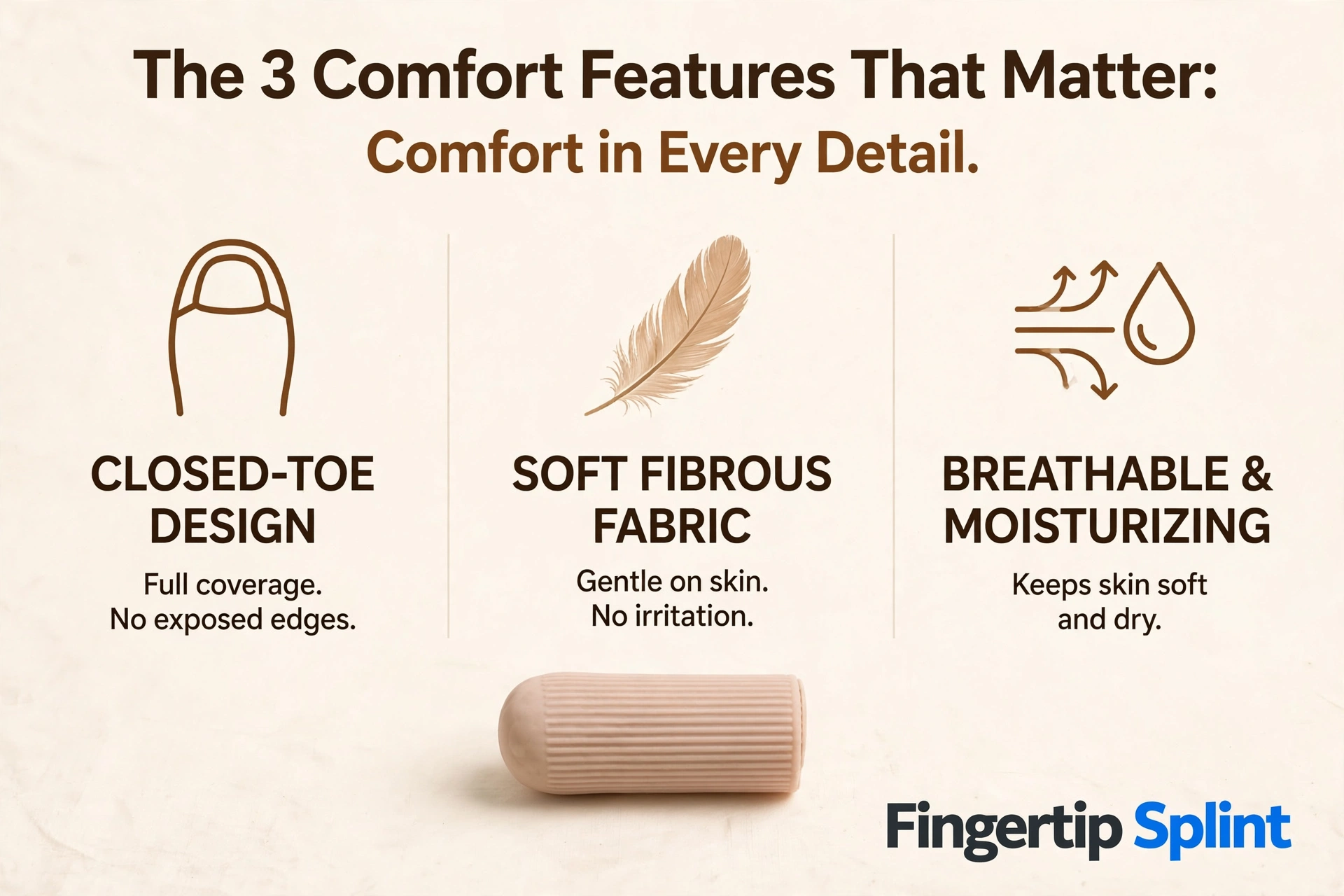
A comfortable closed-toe protector sleeve should cover the intended area, sit smoothly, and remain in place without excessive pressure or bunching. Its closed end provides toe-tip coverage, but suitability depends on the location of the rubbing, product construction, and footwear fit. More coverage does not automatically mean more comfort.
What Is a Closed-Toe Protector Sleeve?
A closed-toe protector sleeve is a tubular covering that fits over a toe and has a closed end at the tip. The closed end covers the front of the toe, while the sleeve body surrounds part or all of the toe depending on its length and design. The purpose is to create a barrier between the toe and whatever is rubbing against it, whether that is a shoe, a seam, or an adjacent toe.
How the Closed End Works
The closed end is the defining feature of this design. It sits over the tip of the toe, providing coverage that an open-ended sleeve cannot offer. This is particularly useful when friction occurs at the front of the toe, such as when a shoe is slightly too short or when the toe presses against the front of the shoe during walking.
Closed-Toe vs Open-Ended Sleeves
The choice between closed-toe and open-ended designs depends on where your friction problem is located and how much coverage you need. Neither design is universally better.
| Feature | Closed-Toe Sleeve | Open-Ended Sleeve |
|---|---|---|
| Toe-tip coverage | Covers the tip, depending on design | Leaves the tip exposed |
| Main fit consideration | End position and overall length | Position around the intended area |
| Shoe compatibility | Must allow room for the covered tip | Must allow room for the sleeve body |
| Potential limitation | May feel bulky in tight footwear | May not cover the toe-tip friction point |
How Should a Closed-Toe Protector Sleeve Fit?
Fit is the most important factor determining whether a closed-toe sleeve feels comfortable or becomes a source of new problems. A well-fitting sleeve covers the intended area, stays in position, and does not create pressure points.
Correct Length
The sleeve should cover the intended area without excessive bunching at the toe tip or leaving the problem area exposed. If the sleeve is too short, it will not protect the friction point. If it is too long, it may bunch or fold, creating new pressure areas.
Correct Width and Snugness
A sleeve should sit securely without squeezing the toe. There is a significant difference between a stable fit and excessive compression. A stable fit keeps the sleeve in place without restricting circulation or sensation. Excessive compression causes numbness, tingling, or discoloration.
Smooth Positioning
Twisting, folds, rolled edges, and uneven fabric distribution can create new rubbing points. After putting on the sleeve, smooth out any irregularities and check that the material lies flat against your skin.
Toe Shape and Individual Differences
Toe length, width, and shape vary from person to person and even between your own feet. A sleeve that fits one toe perfectly may not fit another. Avoid assuming that one size or style fits everyone.
Signs the Fit Needs Adjustment
- Slipping or bunching during movement
- Pinching or squeezing sensation
- Increasing discomfort
- Numbness or tingling
- Significant color changes in the toe
What Makes a Toe Protector Sleeve Comfortable?
Comfort depends on several factors working together. Understanding these factors helps you evaluate a sleeve before committing to extended wear.
Material Feel
Softness, flexibility, seams, and texture all affect how the sleeve feels against your skin. Rough seams or stiff materials can cause irritation, especially during longer wear periods.
Thickness and Bulk
A thick sleeve may provide more cushioning but can also take up too much space inside your shoe. A thin sleeve may be less noticeable but provide less protection. The right balance depends on your footwear and the location of the friction.
Skin Contact
The material that touches your skin should not cause irritation or uncomfortable moisture buildup. If you have sensitive skin, pay extra attention to how the sleeve feels after a few hours of wear.
Movement
A comfortable sleeve stays in position during normal activity. If it slips down or rotates, you will need to readjust it frequently, which is both inconvenient and a sign that the fit or size may be incorrect.
Ease of Use
Consider how easily the sleeve can be put on and removed. A sleeve that is difficult to apply may not be practical for daily use, especially if you have limited hand mobility or dexterity.
Care and Hygiene
Cleaning and drying according to the manufacturer’s instructions help maintain the product and protect your skin. A sleeve that is difficult to clean may harbor bacteria or deteriorate quickly.
How Closed-Toe Sleeves Provide Friction Protection
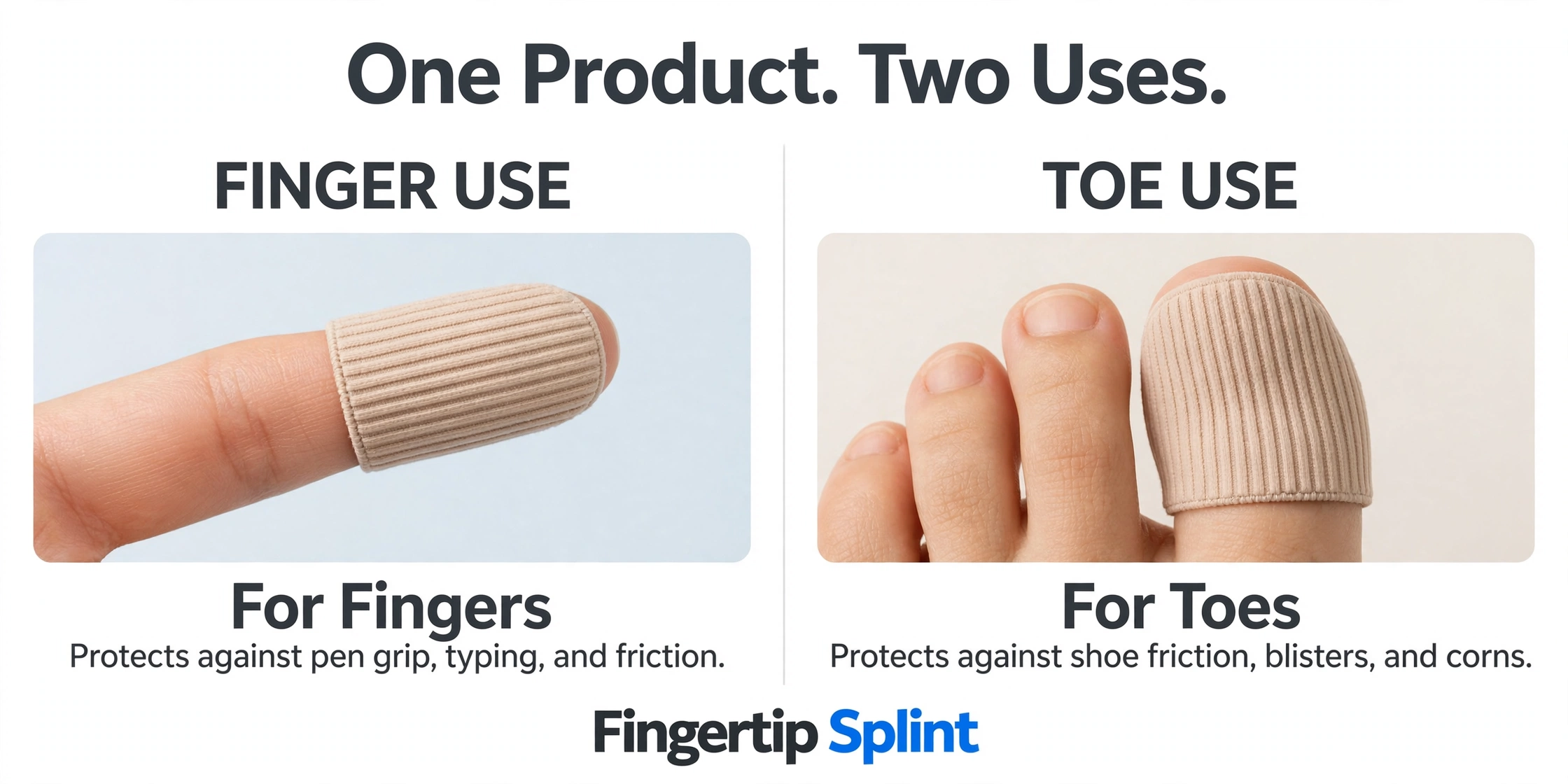
A closed-toe sleeve creates a barrier between your toe and the surface that is rubbing against it. This barrier reduces direct contact and can help protect the skin from further irritation.
Friction Protection
Friction protection means reducing direct rubbing. When your skin rubs against a shoe seam or an adjacent toe, the repeated motion causes damage. A sleeve absorbs some of that friction, reducing the stress on your skin.
Coverage
Coverage refers to the area protected by the sleeve. A closed-toe design covers the tip of the toe as well as the sides, depending on its length. The right coverage depends on where your friction problem is located.
Cushioning
Cushioning means absorbing or distributing pressure. This depends on the product’s actual construction. A thin sleeve provides minimal cushioning, while a thicker, padded design may offer more. Do not assume that a sleeve provides significant cushioning unless the product specifications confirm it.
How to Wear a Closed-Toe Protector Sleeve Correctly
Following a consistent application routine helps ensure comfort and effectiveness. Here are the steps to follow.
Step 1 — Read the Product Instructions
Check whether the sleeve is suitable for your intended use. Some products are designed for specific applications or have warnings about use on damaged skin.
Step 2 — Inspect the Skin
Before applying the sleeve, check your toe for any signs of irritation, blistering, or infection. If the skin is broken or looks infected, seek professional advice.
Step 3 — Position the Sleeve Gently
Slide the sleeve over the intended toe without forcing it. The material should glide into place without twisting or rolling.
Step 4 — Smooth Out Twists and Folds
After positioning, smooth out any twists, folds, or bunching. The material should lie flat against your skin.
Step 5 — Check the Closed End
Make sure the closed end sits correctly over the toe tip. If it is too far forward or too far back, adjust the position.
Step 6 — Put On Footwear
Put on your shoes and check that the toe still has adequate room. If the shoe feels tight or creates new pressure, remove the sleeve and reassess.
Step 7 — Reassess During Use
Check comfort and skin condition periodically during use. If you notice pressure, irritation, numbness, tingling, or worsening discomfort, remove the sleeve.
Can You Wear Closed-Toe Protector Sleeves Inside Shoes?
Yes, but compatibility depends on several factors. The sleeve’s dimensions, your shoe design, the available toe-box room, and the location of the friction all interact to determine whether the combination works.
A sleeve should not force your toes into a cramped position or create pressure that was not present before. If the shoe was already tight, adding a sleeve may increase pressure rather than reduce it.
Examples to Consider
A roomy walking shoe with a wide toe box is generally more compatible with a closed-toe sleeve than a narrow dress shoe. The extra room allows the sleeve to sit without creating additional pressure. In a narrow shoe, the sleeve may press against the sides of the toe, causing new discomfort.
If you are unsure whether your shoes have enough room, test the combination for a short period before committing to extended wear. Check for pressure points, redness, or changes in sensation.
Common Fit Problems and How to Address Them
These are the most common issues people experience with closed-toe protector sleeves, along with practical solutions.
| Problem | Possible Reason | Practical Response |
|---|---|---|
| Sleeve bunches at the toe tip | Excess length or unsuitable sizing | Recheck fit and manufacturer instructions |
| Sleeve slips during walking | Fit or material may not suit the toe | Reassess size and positioning |
| Toe feels squeezed | Sleeve or shoe may be too tight | Remove it and reassess |
| New rubbing develops | Folds, seams, or shoe pressure | Inspect placement and footwear |
| Toe feels damp or irritated | Moisture, friction, or material sensitivity | Remove, inspect the skin, and follow care instructions |
| Sleeve feels bulky | Limited shoe space | Consider a more suitable fit or footwear |
How to Maintain Comfort and Hygiene
Proper care helps maintain the product and protect your skin. Follow these guidelines.
Inspection
Check the sleeve regularly for damage, stretching, or wear. A damaged sleeve may not provide adequate protection and could cause irritation.
Cleaning
Follow the manufacturer’s cleaning instructions. Some sleeves are hand-wash only; others may be machine washable. Use mild soap and avoid harsh chemicals that could damage the material.
Drying
Allow the sleeve to dry completely before storing or wearing it again. Moisture can lead to skin problems and material deterioration.
Storage
Store the sleeve in a clean, dry place. Avoid storing it in a way that deforms the shape or damages the material.
Replacement
A damaged, contaminated, stretched, or poorly fitting sleeve may no longer provide suitable protection. Replace it when it no longer functions properly. Do not rely on a fixed replacement interval unless the manufacturer specifies one.
Who Should Take Extra Care?
Some people need to be especially cautious when using protective sleeves. If you have diabetes, poor circulation, reduced foot sensation, open wounds, or suspected infection, seek appropriate professional advice before self-managing a foot problem with a protective sleeve.
- Increasing redness, swelling, or warmth
- Pus or discharge
- Severe pain or difficulty walking
- Fever or chills
- Any foot wound in someone with diabetes or poor circulation
For authoritative information on foot conditions, see the Mayo Clinic’s overview of corns and calluses and their treatment guide. The Cleveland Clinic’s blister resource explains friction and prevention. The NHS guide to corns and calluses provides care advice. For blister first aid, see the Mayo Clinic blister first aid page. The NHS blister guidance and WebMD’s corns and calluses overview also provide useful information. For professional-level foot care information, see the American College of Foot and Ankle Surgeons. MedlinePlus and Healthline offer additional consumer education.
Choosing a Closed-Toe Protector for Everyday Comfort
Closed-Toe Fibrous Cuttable Toe Protectors
This product is designed with closed-toe coverage and cuttable length, making it an option to evaluate if you are looking for a comfortable closed-toe protector sleeve. Compare it against the fit and comfort criteria discussed throughout this guide.
- Closed-toe design for coverage around the toe tip
- Cuttable length for customized coverage
- Fibrous material for skin-friendly contact
- Low-profile design for shoe compatibility
- Suitable for repeated use with proper care
What to Check Before Buying
- Whether the closed end covers the area that rubs
- Available sizes and dimensions
- Whether and where trimming is permitted
- Material and thickness
- Instructions for wearing and care
- Compatibility with your intended footwear
- Manufacturer warnings and intended use
Product Fit Checklist
Interactive Fit and Comfort Checker
Fit and Comfort Checker
Select the issue you are experiencing to see a practical next step.
Select an issue above to see guidance.
3D Infographic — Understanding Closed-Toe Sleeve Fit
Interactive 3D Anatomy View
Click each part to learn how it affects fit, comfort, and coverage.
Potential Benefits of a Properly Fitting Closed-Toe Sleeve
When chosen and fitted correctly, a closed-toe protector sleeve can provide several practical benefits.
Targeted Toe-Tip Coverage
The closed end covers the tip of the toe, which is useful when friction occurs at the front. This is a key advantage over open-ended designs for certain friction locations.
Reduced Direct Rubbing
A sleeve creates a barrier between your skin and the rubbing surface. This can reduce the mechanical stress on your skin and help protect a healing area.
Convenient Coverage for Certain Friction Points
If your friction problem is at the toe tip or the front of the toe, a closed-toe design provides coverage that other designs may not offer.
Importance of Choosing a Suitable Size
A sleeve only works well if it fits properly. A size that is too small may cause pressure; a size that is too large may slip or bunch. Checking the size chart and measuring your toe are essential steps.
What a Closed-Toe Sleeve Cannot Guarantee
Being clear about limitations helps you set realistic expectations.
- It cannot guarantee blister prevention.
- It cannot cure a corn or eliminate its cause.
- It cannot correct an unsuitable shoe fit.
- It cannot guarantee comfort for every toe shape.
Its performance depends on the actual design and the conditions in which it is used. If your symptoms persist or worsen, seek professional advice.
Frequently Asked Questions About Closed-Toe Protector Sleeves
A closed-toe protector sleeve is a tubular covering with a closed end that fits over a toe. The closed end covers the tip of the toe, while the sleeve body surrounds part or all of the toe. It is designed to create a barrier between the toe and friction sources such as shoes or adjacent toes.
It should be snug enough to stay in place but not so tight that it causes excessive pressure, numbness, tingling, significant discoloration, or increasing discomfort. A secure fit is not the same as a tight fit.
It depends on the design and the location of the friction. Some sleeves cover the entire toe; others cover only part of it. The closed end covers the tip, but the sleeve body length varies. Choose based on where your friction problem is located.
Yes, if your shoes have enough room in the toe box. A sleeve can add bulk, so check that it does not create additional pressure. If the shoe was already tight, the sleeve may make things worse rather than better.
Slipping usually means the size is incorrect, the fit is not secure, or the material does not grip well on your toe. Check the sizing guide and try adjusting the position. If it continues to slip, a different size or design may be more suitable.
Yes, if it is too tight, too long, bunches, or creates pressure points. Discomfort is a sign that the fit needs adjustment or the product is not suitable for your toe. Remove it and reassess.
It depends on the product. Some sleeves are designed to be trimmed; others are not. Always follow the manufacturer’s instructions. For detailed trimming guidance, see our cut-to-size finger and toe sleeves for anti-chafing support.
Stop wearing the protector if you experience numbness, tingling, significant discoloration, increasing pain, skin damage, or persistent irritation. Seek medical advice if you notice signs of infection, a blister that appears infected, open or non-healing wounds, severe pain, difficulty walking, or repeated corns that keep returning. People with diabetes, poor circulation, or reduced sensation should seek advice for any foot wound.
Find a Comfortable Fit for Your Toes
Start With Fit, Not Force
A toe protector should help cover the intended friction area without creating additional pressure. Before choosing a closed-toe sleeve, consider its length, material, fit, and compatibility with your footwear.
The Closed-Toe Fibrous Cuttable Toe Protectors are designed with closed-toe coverage and cuttable length. Explore the full toe and finger support products collection to compare options, or read our choosing cuttable toe protectors for blisters and corns guide for product comparison guidance.
Explore Closed-Toe Toe Protectors Compare Toe Protection OptionsComfort Starts With the Right Fit
A closed-toe protector sleeve can provide valuable coverage and friction protection when it fits properly. The key is to choose a size that covers the intended area, sits smoothly, and remains comfortable during use. If the sleeve causes pressure, numbness, or irritation, remove it and reassess.
For more detailed guidance, see our best cuttable toe protectors for blisters and corns and our cut-to-size finger and toe sleeves for anti-chafing support. For professional purchasing information, visit the medical finger splint supplier page, or check the frequently asked questions for additional support.