
You buy a pair of shoes. They look great. After a few hours, pressure builds around your toes. By the end of the day, you are thinking about your feet instead of enjoying where you are. The problem might appear in high heels before an event, in sneakers during a long walk, or in everyday shoes during a work shift. The right toe cushion can reduce pressure and make your footwear more comfortable, but the same cushion does not work equally well in every shoe. This guide helps you match cushioning to your footwear and the location of your discomfort. Start with our 20-piece toe protectors for walking to explore the full range.
Table of Contents
- Quick Answer
- Why Shoes Create Discomfort
- Types of Toe Cushions
- Cushions for High Heels
- Cushions for Sneakers
- Cushions for Everyday Shoes
- How to Choose the Right Cushion
- Product Spotlight
- How to Use Without Pressure
- Common Mistakes
- When Cushions May Not Be Enough
- Interactive Footwear Selector
- 3D Infographic
- FAQ
- CTA
What Are the Best Toe Cushions for High Heels, Sneakers & Everyday Shoes?
The right toe cushion depends on where pressure occurs, the shape and depth of the shoe, and how much room is available. Thin, targeted cushions may suit close-fitting shoes, while roomier sneakers may accommodate other designs. Any cushion that increases pressure or causes numbness should be removed.
Why Shoes Create Pressure, Rubbing, and Toe Discomfort
Footwear discomfort is not a single problem. It is the result of several factors interacting: the shape of the shoe, the shape of your foot, the amount of movement inside the shoe, and how long you wear it. Understanding the cause helps you choose the right cushion and avoid making things worse.
Limited Toe-Box Space
The toe box is the front part of the shoe where your toes sit. If the toe box is too narrow, it squeezes the toes together. If it is too shallow, it presses down on top of the toes. If it is too short, it pushes the toes against the front of the shoe. Each of these situations creates pressure that a cushion may or may not be able to address.
Repeated Rubbing
Movement inside a shoe creates friction. Every step causes your foot to shift slightly, and if your skin rubs against the shoe lining, a seam, or another toe, irritation develops. Friction is often the cause of blisters and hot spots.
Forward Pressure in High Heels
High heels change the angle of your foot. The heel is elevated, which shifts your body weight forward. This increases pressure on the toes and the ball of the foot. If the shoe is narrow or pointed, the toes are compressed even more.
Long Periods of Wear
A shoe that feels fine for thirty minutes may become uncomfortable after several hours. Walking, standing, and the natural swelling of your feet throughout the day expose fit problems that are not obvious at first.
Consider three examples. A runner notices rubbing on the side of a toe after a long run. Someone wearing formal heels feels pressure at the front of the foot. A retail worker develops discomfort after several hours of standing. In each case, the location and cause of discomfort determine the right product. For authoritative background on how repeated pressure and friction affect the skin, see the Mayo Clinic’s guidance on corns and calluses.
Types of Toe Cushions and What Each One Does
Toe cushions come in several designs. Each one serves a different purpose, and understanding the differences helps you choose the right product for your situation.
Thin Silicone Cushions
Thin silicone cushions add a slim layer of padding. They are often used when the goal is to reduce pressure at a specific point without adding much bulk. Thickness and shoe clearance matter, particularly in close-fitting footwear. A cushion that is too thick can make a tight shoe even tighter.
Gel or Soft Toe Sleeves
Sleeves surround part or all of a toe, depending on the design. They may be worth comparing when rubbing affects the skin around a specific toe rather than the entire forefoot. Check the fit and consider whether the material traps moisture.
Forefoot Cushions
Forefoot cushions are designed for the area behind the toes, not the toes themselves. They are relevant when discomfort is located in that area and the product suits the footwear. They are not a substitute for a toe-specific protector.
Foam or Fabric Pads
Foam and fabric pads provide local padding. Compare their coverage, thickness, positioning, and potential movement during wear. The exact performance depends on the product construction.
| Cushion Type | Main Purpose | Potential Fit | Main Consideration |
|---|---|---|---|
| Thin silicone pad | Targeted cushioning | Some close-fitting shoes | Must not reduce toe space excessively |
| Toe sleeve | Coverage around the toe | Sneakers or roomier shoes | Check fit and moisture |
| Forefoot cushion | Cushioning behind the toes | Shoes with suitable interior space | Not a substitute for toe-specific protection |
| Foam or fabric pad | Local padding | Depends on shape and placement | May shift or bunch during wear |
These are general product categories, not guarantees about the performance of every item made from a particular material.
Toe Cushions for High Heels: What Matters Most?
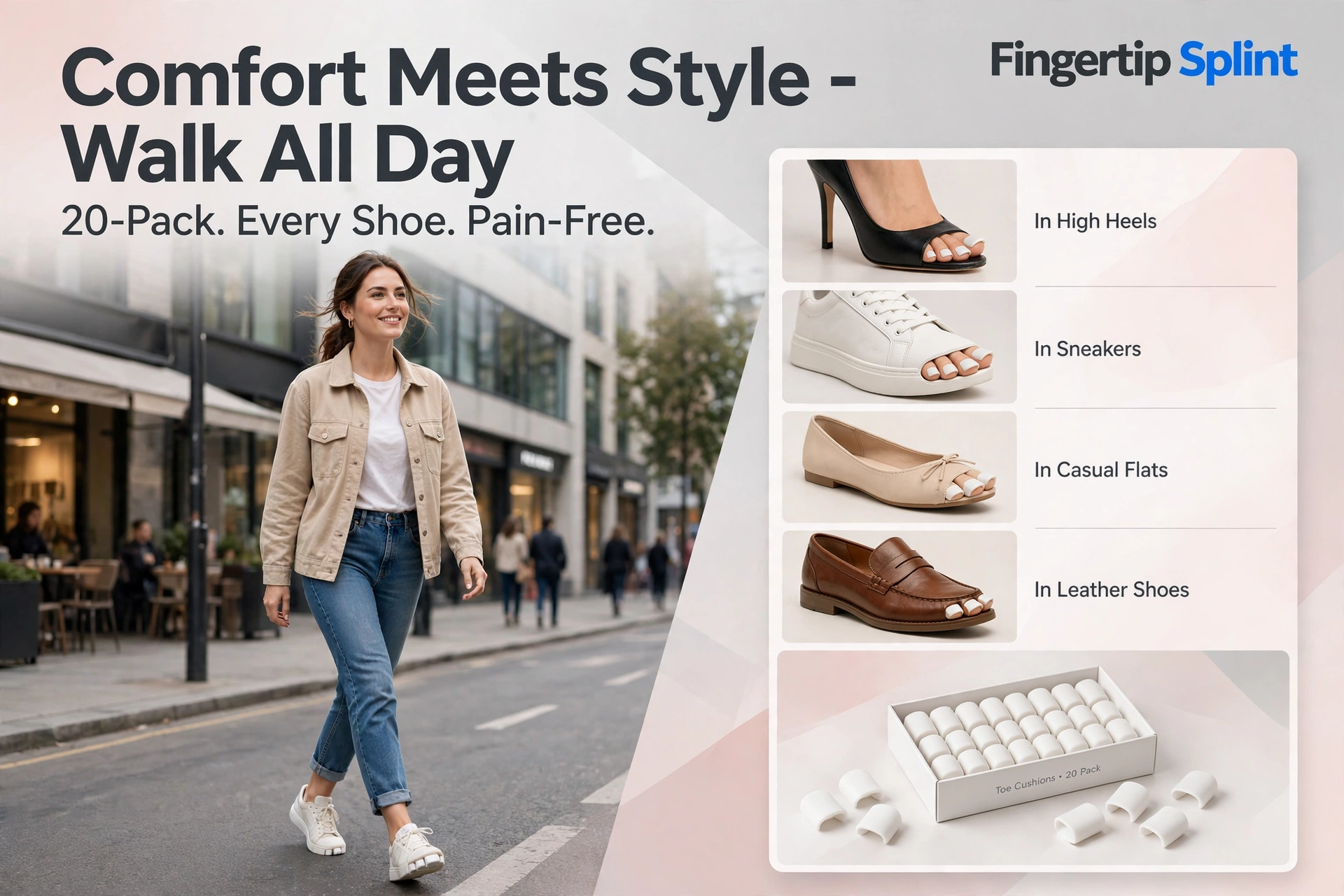
High heels present unique fit challenges. The sloping angle of the shoe shifts your foot forward, increasing pressure on the toes. A narrow or pointed toe box compresses the toes together. Adding a thick cushion may make a tight shoe even less comfortable.
Why High Heels Are Different
When you wear high heels, your foot slides forward. This means your toes take more pressure than they would in a flat shoe. If the shoe is already tight, there is very little room to add anything. A cushion needs to be thin and precisely placed to help without creating new problems.
What to Look For
- Low-profile design that does not add bulk
- Targeted cushioning at the specific pressure point
- Secure placement that stays in position
- Material that does not create friction
Before You Buy
- Identify the exact point of pressure.
- Check the shoe’s available interior space.
- Compare the cushion’s actual thickness and dimensions.
- Test the fit for a short period before wearing the shoes for an event.
- Stop if the cushion increases pain, numbness, or rubbing.
For more detailed buying guidance, see our toe protector buying guide for comfort, fit, and shoe protection.
Toe Cushions for Sneakers and Walking Shoes
Sneakers often provide more space than formal heels, but that does not mean they are automatically comfortable. The cushioning inside the shoe, the shape of the toe box, the socks you wear, and internal seams can all affect comfort.
Identifying Where the Problem Is
Before choosing a cushion, identify whether the rubbing occurs at the toe tip, the top of the toe, the side of the toe, or between toes. Each location suggests a different product type.
Checking the Fit With Your Socks
Always test the cushion with the socks you normally wear. Sock thickness affects how much room is available inside the shoe. A cushion that fits with thin socks may feel tight with thicker ones.
Movement During Activity
A protector or cushion may shift during repeated movement. If it slides away from the friction point, it will not provide the intended protection. Check that it stays in place during a short walk.
If the shoe itself has a rough lining, a protruding seam, or a structure that causes the problem, replacing the shoe may be more effective than adding a cushion. For walking-specific protection, see our 20-piece toe protectors for walking.
Toe Cushions for Everyday Shoes, Work, and Long Hours of Standing
Many people wear the same shoes for work, errands, and daily commuting. Comfort over several hours depends on more than the cushion itself. Footwear width, sole condition, fit, moisture, and time spent standing all affect the experience.
Office or Formal Shoes
Low-profile cushioning may be worth comparing if a particular contact point is the issue and the shoe has enough space. In formal shoes, the toe box is often shallower, so thin cushions are usually more appropriate.
Retail or Hospitality Work
A stable fit and appropriate footwear are more important than simply adding extra padding. If you stand for hours, the shoe itself needs to support your foot properly. A cushion can help with a specific pressure point, but it cannot compensate for a shoe that is fundamentally unsuitable.
Daily Errands
Ease of use, secure positioning, and the ability to inspect and clean the product may influence your decision. A cushion that is difficult to position or that requires constant adjustment is not practical for everyday use.
- Severe or persistent pain
- Significant swelling
- Spreading redness or warmth
- Pus or discharge
- A wound that is not improving
- Difficulty walking
Persistent or worsening pain should not be treated as an ordinary footwear inconvenience. If the source of discomfort is unclear, a qualified clinician can assess whether the problem involves skin, joints, nerves, or another cause. For general foot-care information, see the MedlinePlus foot injury and disorder resources.
How to Choose the Right Toe Cushion for Your Shoes
Choosing the right toe cushion requires understanding where the discomfort is, what is causing it, and how much room your shoes have. Follow this five-step process.
Step 1 — Locate the Discomfort
Identify whether the discomfort is at the toe tip, on top of the toe, on the side, between toes, or behind the toes. This determines the type of cushion you need.
Step 2 — Identify the Likely Trigger
Distinguish rubbing from shoe pressure or discomfort that may not be footwear-related. If the problem is pressure from a narrow shoe, a cushion may not help. If the problem is friction, a cushion may reduce it.
Step 3 — Check the Available Space
Measure or review the product’s thickness and dimensions where available. Check that there is enough room inside your shoe for the cushion without creating new pressure.
Step 4 — Compare the Material and Design
Review coverage, flexibility, cleaning instructions, and intended use. Consider whether the material is appropriate for the condition of your skin.
Step 5 — Test the Complete Setup
Check the cushion with your actual shoes and socks, then inspect the skin after a short trial. Adjust or discontinue if it causes discomfort.
| Footwear | Selection Priority |
|---|---|
| High heels | Low profile and sufficient toe room |
| Sneakers | Secure placement and compatibility with socks |
| Everyday flats | Fit, comfort, and minimal bulk |
| Work shoes | Stable fit and suitability for extended wear |
Product reviews can help with practical impressions, but a reviewer’s comfort does not guarantee the same result for your feet. Use reviews as one input among many.
Product Spotlight: 20-Piece Toe Protectors for Walking
20Pcs Toe Protectors for Walking
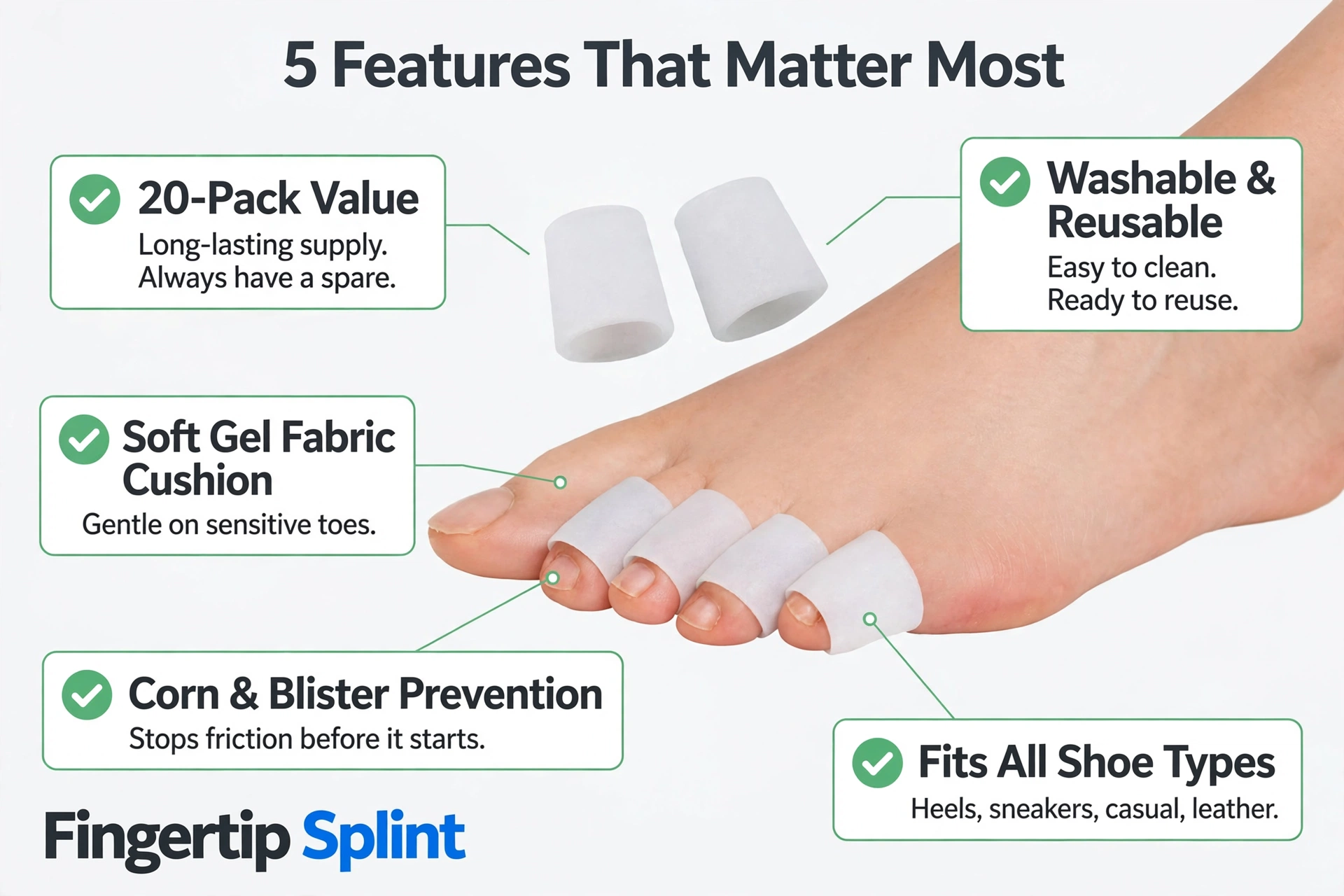
This multi-piece pack is designed for toe protection during walking and everyday activity. It is an option to evaluate based on your specific footwear and toe problem.
- 20-piece pack for multiple toes or replacement
- Soft material for cushioning and friction reduction
- Suitable for walking and everyday shoes
- Low-profile design for shoe compatibility
- Reusable with proper care
Who May Want to Consider This Product
Readers who need protection for multiple toes, who want a supply for replacement, or who are comparing soft protectors for walking may find this product relevant. The multi-piece pack offers flexibility if you have more than one toe that needs protection.
How to Evaluate the Fit
Check that the protector covers the intended area, sits smoothly, stays in place, and does not create pressure. Test it inside your actual shoes before extended wear. If it bunches, slips, or causes discomfort, reassess the size or design.
How to Use Toe Cushions Without Creating New Pressure
Proper fitting is essential for comfort and effectiveness. Follow these steps.
Step 1 — Inspect the Skin
Identify the pressure point and check the condition of the skin.
Step 2 — Read the Instructions
Read the manufacturer’s fitting and care instructions. Make sure the product is appropriate for your situation.
Step 3 — Position the Cushion
Position the cushion as directed without excessive stretching or compression.
Step 4 — Put On Shoes and Socks
Put on the shoes and socks you intend to wear. This is the real test of fit.
Step 5 — Stand and Walk Briefly
Stand and walk briefly on a safe surface. This reveals whether the cushion stays in place.
Step 6 — Inspect After Walking
Remove the shoe and inspect for marks, bunching, dampness, or irritation.
Step 7 — Adjust or Discontinue
Adjust or discontinue the product if it causes discomfort.
Common Mistakes When Buying Toe Cushions
Avoid these common errors to get the most benefit from your toe cushion.
1. Buying the Thickest Cushion Because It Looks Softer
A thick cushion can make a tight shoe even tighter. Choose the thinnest cushion that provides adequate padding.
2. Ignoring Shoe Width and Depth
The cushion must fit inside the shoe without creating new pressure. Check the available space before buying.
3. Using a Toe Sleeve When the Discomfort Is Behind the Toes
If the problem is in the forefoot area, a forefoot cushion may be more appropriate than a toe-specific product.
4. Assuming All Materials Perform Identically
Silicone, gel, foam, and fabric products have different properties. Compare design, thickness, flexibility, and coverage.
5. Buying Based Only on Reviews
Reviews can be helpful, but dimensions and fit matter more than someone else’s experience. Check the specifications.
6. Wearing the Cushion Over Damaged Skin Without Checking
Some products may be inappropriate for an open or infected area. Check the instructions and seek medical advice if needed.
7. Continuing to Wear a Cushion That Creates Numbness or New Pressure
Numbness, tingling, or new pain means the cushion is the wrong fit. Remove it and reassess.
8. Expecting Padding to Fix an Unsuitable Shoe
A cushion cannot correct a shoe that is the wrong size or shape. If the shoe is the problem, the shoe needs to change.
When Toe Cushions May Not Be Enough
Toe cushions are primarily footwear accessories. They do not diagnose or treat every cause of pain.
- Severe or persistent pain
- Significant swelling
- Spreading redness or warmth
- Pus or discharge
- Fever
- A wound that is not improving
- Difficulty walking
- Sudden deformity or suspected fracture
People with diabetes, poor circulation, reduced sensation, or other conditions that increase foot-wound risk should obtain individualized advice before self-treating blisters, corns, or damaged skin. For authoritative guidance, see the NHS guidance on blisters and the Mayo Clinic guidance on corns and calluses. The National Institute of Diabetes and Digestive and Kidney Diseases and the CDC diabetes resources also provide relevant guidance. For skin-care context, see the American Academy of Dermatology. Cleveland Clinic, WebMD, Healthline, and OrthoInfo offer additional consumer education.
Choose a Toe Cushion by Shoe Type
Interactive Footwear Selector
Select the closest options for general buying guidance.
Which shoes do you wear most?
Where is the discomfort?
Select your options above to see guidance.
Where Does Your Shoe Hurt? Interactive 3D Foot Guide
Interactive 3D Foot and Toe View
Click each part to learn how it affects cushion selection.
Illustration for understanding cushion selection. Actual fit and coverage vary by product.
Frequently Asked Questions
The right option depends on the source of pressure, the shape of the shoe, and the space available. A thin cushion may be worth considering in some cases, but a shoe that already compresses the toes may need a different fit rather than extra padding.
Yes, but check the cushion with your usual socks, the shoe’s toe box, and the location of the rubbing. Cushions should not slide, bunch, or push the toes together.
Suitable cushioning may reduce certain types of friction, but no product guarantees blister prevention. Shoe fit, moisture, activity, and individual skin sensitivity also matter.
It depends on design, thickness, flexibility, coverage, care requirements, and fit. Material alone does not establish which product is best for a particular wearer.
Appropriate cushioning may reduce direct pressure or friction, but it does not remove every corn or address all underlying causes. Persistent or painful corns may require professional care.
Wear time depends on the manufacturer’s instructions, skin condition, fit, and individual needs. Check the skin periodically and stop if the cushion causes numbness, tingling, discoloration, or irritation.
The cushion may be too thick, poorly positioned, or unsuitable for the shoe. It may also be revealing a problem unrelated to simple rubbing. Remove it and reassess the fit; seek medical advice for persistent or significant pain.
The terms can overlap. A cushion usually emphasizes padding at a specific contact point, while a protector may cover more of the toe, depending on its design. Compare the actual product shape, coverage, and intended use.
Choose Comfort That Fits Your Shoes
Start by Identifying Where the Pressure Is
Identify where pressure or rubbing occurs, check the space available in your footwear, and compare the product’s verified dimensions and care instructions before ordering. The 20-piece toe protectors for walking are designed for walking and everyday activity.
Explore the full browse available foot-protection products collection to compare options, read our best toe protectors for walking, corns, and blisters article for broader guidance, or request product information or a quote for bulk or clinical needs.
Explore 20-Piece Toe Protectors Read the Buying GuideMatch the Cushion to the Shoe You Actually Wear
The best toe cushion for you depends on the shoes you wear and where the discomfort occurs. A thin cushion may work in high heels where space is limited. A more substantial cushion may be appropriate in sneakers with a roomier toe box. Everyday shoes require a balance of comfort, fit, and minimal bulk.
Understanding the source of pressure, checking the available space, and testing the fit before extended wear will help you choose a product that works. If the problem is not improving, or if you have persistent or worsening symptoms, seek professional advice.
For more detailed guidance, see our best toe protectors for walking, corns, and blisters and our toe protector buying guide for comfort, fit, and shoe protection. For more foot-protection articles, visit the FingertipsSplint blog.