
If your toes rub together, feel crowded inside shoes, or become uncomfortable after a long day on your feet, you are not alone. Toe discomfort is one of the most common complaints that leads people to search for a simple solution. Silicone toe separators are often suggested as a first step — but how they actually work, and whether they will help your specific problem, is not always explained clearly. This guide breaks down the mechanism of comfort, what separators can and cannot do, and how to choose and use them responsibly. To explore related products, start with FingerTipSplint’s foot-care products.
Table of Contents
- Why Do Toes Become Uncomfortable?
- How Silicone Toe Separators Improve Foot Comfort
- Key Benefits of Silicone Toe Separators
- Silicone Toe Separators vs Other Options
- How to Use Them for Better Comfort
- Common Mistakes That Reduce Comfort
- When to Seek Professional Advice
- Choosing a Silicone Toe Separator for Your Needs
- Frequently Asked Questions
Silicone toe separators may improve foot comfort by creating space between adjacent toes and reducing direct rubbing in selected situations. Their effectiveness depends on fit, footwear, and the cause of discomfort. Choose a design suited to your needs, start cautiously according to its instructions, and stop using it if pain, numbness, or skin irritation develops.
Why Do Toes Become Uncomfortable?
Toe discomfort is not one problem — it is a group of problems with different causes. Understanding the source of your discomfort is the first step toward choosing the right solution.
Crowded Toes and Repeated Friction
When toes press against each other, the skin experiences friction. If that friction is repeated — during walking, standing, or wearing shoes — the skin begins to break down. According to the Mayo Clinic’s guidance on corns and calluses, repeated friction and pressure are the primary causes of these skin problems. A toe separator can create a soft barrier between toes, but it does not address the shoes that may be causing the pressure.
Tight Shoes and Pressure Points
Narrow toe boxes crowd the toes and increase pressure between them. The toes are forced into unnatural positions, and the friction between them increases. This is a common cause of toe discomfort in people who wear dress shoes, narrow athletic shoes, or any footwear that pinches the front of the foot.
Why the Location of Discomfort Matters
Not all toe discomfort comes from friction. Pain at the joint, under the nail, or in the ball of the foot may have different causes. A toe separator may help if your discomfort comes from toe-to-toe rubbing. It is unlikely to help if your discomfort comes from a structural issue like a bunion or an ingrown toenail.
For readers who want more background on everyday foot-care, the article on silicone toe separators for everyday foot care covers common uses in greater detail.
How Silicone Toe Separators Improve Foot Comfort
This is the central question. Silicone toe separators work through a specific physical mechanism: they create space between adjacent toes while they are worn.
Creating Space Between Adjacent Toes
When the separator sits between two toes, it physically holds them apart. The amount of space depends on the shape and size of the separator. A wedge-shaped separator may create more space near the base of the toes, while a round separator may create even space along the length.
Reducing Toe-to-Toe Rubbing
By creating space, the separator reduces the direct contact between toes. This may reduce friction that causes irritation, corns, or calluses. According to the Cleveland Clinic’s explanation of toe separators and spacers, these devices can help cushion and separate toes in selected situations, but they do not permanently correct structural deformities.
Adding a Cushioning Layer
Silicone is soft and compresses under pressure. When toes press against the separator, the material absorbs some of that pressure, reducing the intensity of the contact.
Why the Effect May Be Temporary
The benefit of a toe separator exists only while it is worn. Once removed, the toes return to their natural position, and if the underlying cause of the friction is still present (such as tight shoes), the discomfort may return. This is why choosing the right footwear is often more important than choosing the right separator.
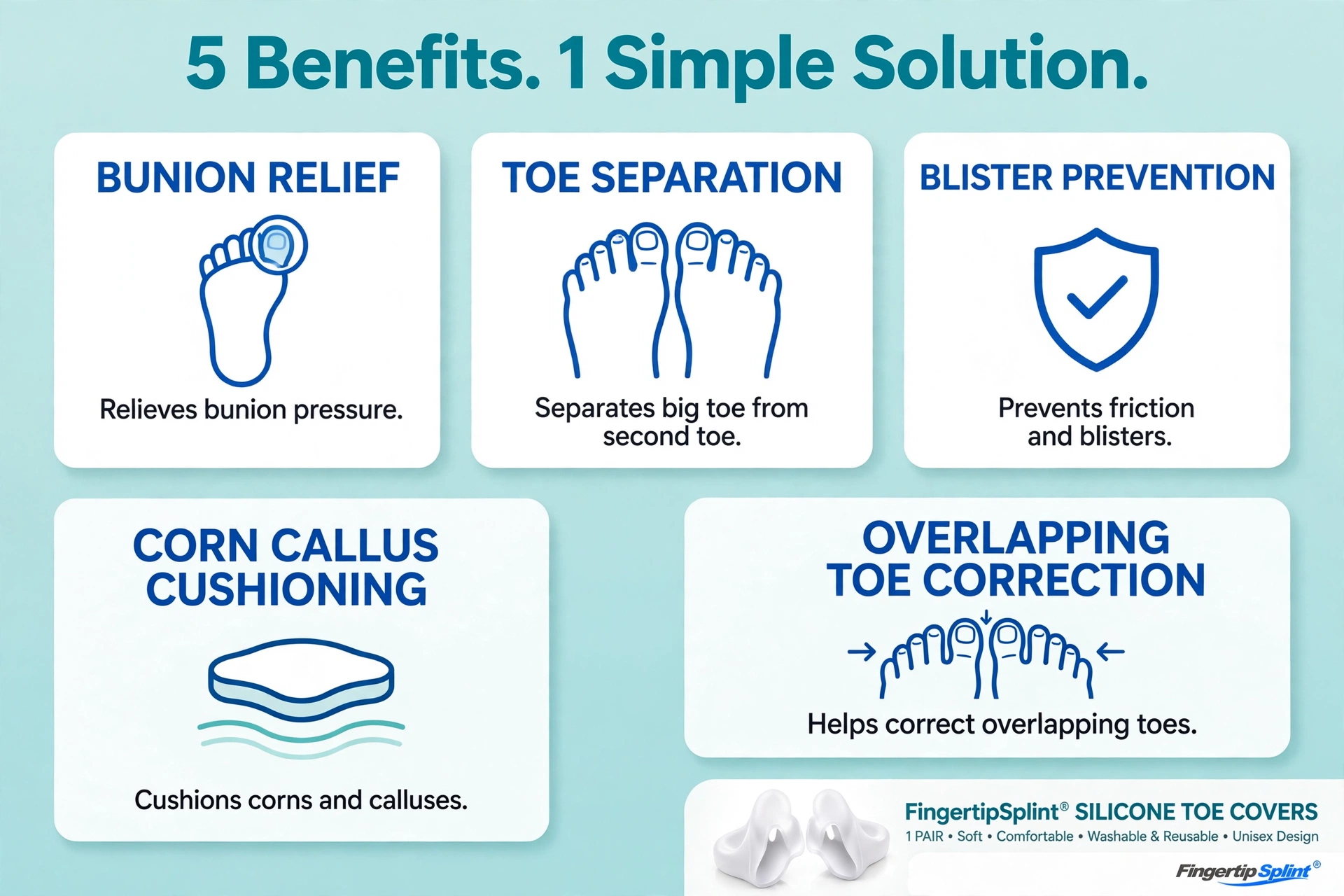
How Toe Separators May Improve Comfort
Select a factor below to see how it works.
Key Benefits of Silicone Toe Separators
The potential benefits of a silicone toe separator are practical and specific. Understanding them clearly prevents unrealistic expectations.
Comfort During Selected Daily Activities
A separator may improve comfort during activities where toes experience friction — walking, standing, or wearing particular shoes. However, comfort during one activity does not guarantee comfort during all activities.
Less Direct Contact Between Toes
By holding toes apart, the separator reduces direct toe-to-toe contact. This may reduce friction, which in turn may reduce the skin irritation that builds up over time.
A Simple Accessory for Home Use
Silicone separators are typically easy to apply and remove. Most can be washed with mild soap and warm water and air-dried. This makes them convenient for a home foot-care routine.
What Separators Cannot Promise
It is important to be clear about the limitations. A silicone toe separator:
- Does not permanently correct bunions or hammertoes
- Does not cure ingrown toenails or infections
- Does not guarantee pain relief
- Does not replace footwear that fits properly
For a broader discussion of how protective products differ from separators, the article on silicone big toe covers and their uses explains the distinction.
Silicone Toe Separators vs Other Foot-Comfort Options
Understanding how separators compare to other options helps you choose the right product for your specific problem.
| Option | Main Purpose | Important Limitation |
|---|---|---|
| Silicone toe separator | Creates space between selected toes | May not suit every toe shape or cause of pain |
| Silicone toe sleeve | Covers and cushions a specific toe | May not create space between toes |
| Protective toe pad | Cushions a particular rubbing or pressure point | Placement must match the affected area |
| Wide toe-box footwear | Reduces squeezing and crowding | May not resolve every structural problem |
| Clinician-recommended orthosis | Manages selected pressure or alignment problems | Requires an appropriate assessment and fit |
The right option depends on what is causing discomfort. According to the Mayo Clinic, footwear changes and protective padding can help reduce friction-related problems, but persistent or painful corns may need professional treatment.
If your concern is protecting the big toe specifically, the article on soft silicone toe protectors for daily foot care covers cushioning options.
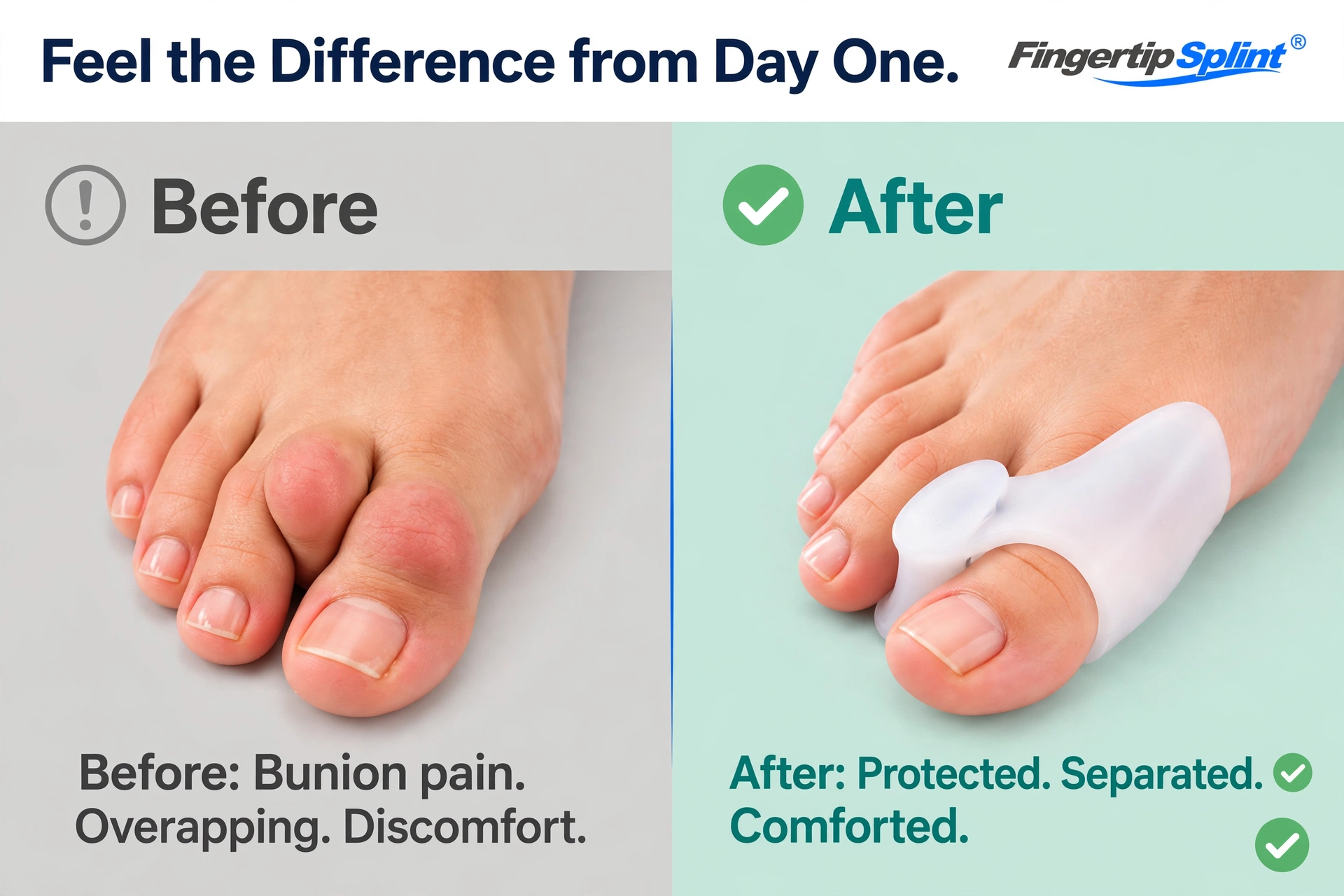
How to Use Silicone Toe Separators for Better Comfort
Using a toe separator correctly improves the chances of comfortable, safe results. Here is a beginner-friendly process.
Step 1: Check Your Feet Before Use
Wash and dry your feet. Inspect for cuts, blisters, or irritated skin. Do not apply a separator over broken skin.
Step 2: Choose the Correct Size and Placement
Place the separator between the intended toes. It should sit comfortably without forcing the toes apart. If you have to stretch the separator to fit, it is too small.
Step 3: Start Cautiously and Reassess Comfort
Begin with a short period — 15 to 30 minutes at rest. Check for discomfort, pressure points, or numbness. Do not assume all-day or overnight wear is appropriate without following the product instructions.
Step 4: Remove the Separator If Problems Develop
If you experience pain, numbness, tingling, or skin irritation, remove the separator immediately. Persistent symptoms need professional assessment.
Common Mistakes That Can Reduce Comfort
Some mistakes can turn a helpful product into a source of additional discomfort.
A separator that is too large forces toes apart unnaturally, causing pressure.
Solution: Choose a size that provides gentle separation, not force.
Tight shoes plus a separator equals more pressure, not less.
Solution: Ensure shoes have adequate room for the separator.
Extended wear beyond the product’s instructions can cause skin irritation.
Solution: Follow the manufacturer’s recommended wear time.
Not cleaning the separator regularly can cause skin irritation and odour.
Solution: Wash the separator after each use as instructed.
Pain is a signal that the separator is not suitable.
Solution: Stop using it and reassess with professional advice.
Additional pressure is not evidence that a separator is effective.
Solution: A separator should reduce discomfort, not increase it.
When Should You Seek Professional Advice?
Persistent or worsening symptoms should not be managed with a toe separator alone. Seek professional advice if you experience:
- Persistent or increasing pain in the toes
- Worsening swelling
- Skin breakdown, wounds, or non-healing sores
- Suspected infection (redness, warmth, discharge)
- An injury to the toe
- Progressive change in the shape of the toe
According to NHS guidance on toe pain, persistent symptoms should be assessed by a healthcare professional. For people with diabetes, reduced sensation, or poor circulation, extra caution is required. The NIDDK’s guidance on diabetes and foot problems recommends careful foot monitoring and professional advice before using any pressure-applying device.
For more information on foot pain and when to seek care, Healthdirect Australia’s foot pain overview provides useful guidance. If you notice pain around the nail edge, MedlinePlus’s overview of ingrown toenail explains when this specific symptom may need medical attention.
Choosing a Silicone Toe Separator for Your Needs
If you are exploring a toe separator for everyday comfort, the 2-Piece Silicone Toe Separator Set from FingerTipSplint is one option to evaluate. This guide does not claim that it cures bunions, permanently reshapes feet, or guarantees pain relief. What it offers is a silicone design intended to provide gentle spacing between selected toes.
Consider these factors before buying:
- Fit: Choose a size and shape that suits your toes without forcing them apart.
- Flexibility: Softer silicones conform more easily; firmer silicones provide more structure.
- Intended placement: Confirm which toes the pieces are designed for.
- Material: Check the product listing for material details and skin compatibility.
- Cleaning instructions: Ensure you can follow the care requirements.
- Footwear compatibility: Make sure your shoes have enough room to accommodate the separator.
For additional options, browse the FingerTipSplint shop. For product selection or usage questions, review the FingerTipSplint FAQs or browse the blog for related foot-care education.
If Crowded Toes or Repeated Rubbing Are Affecting Your Comfort
A suitably fitted toe separator may be worth considering. Explore the 2-Piece Silicone Toe Separator Set, check the product’s intended use and care instructions, and make sure your footwear has enough room before deciding whether it is right for your routine.
View the Product Browse All ProductsFrequently Asked Questions
Silicone toe separators create space between adjacent toes while worn, which may reduce direct rubbing and cushion contact points. The effect depends on fit, footwear, and the cause of discomfort. They work best when the problem is friction between toes, not when the problem is a structural issue or joint pain.
They may provide temporary comfort by creating space between toes while worn. However, they do not permanently correct alignment problems. If you have progressive toe deformity, professional assessment is recommended.
They may help reduce friction between toes, which is one contributing factor. However, footwear changes and professional assessment may also be necessary. If corns, calluses, or blisters persist, seek medical advice.
Follow the manufacturer’s instructions and begin cautiously with short trials. There is no universal schedule that suits everyone. Remove the separator if you experience discomfort, and increase use only if it remains comfortable.
This depends on the separator’s design and whether your shoes have enough room. Never force a separator into tight footwear — doing so increases pressure instead of relieving it. If your shoes cannot accommodate the separator, consider footwear with a wider toe box.
No. People with diabetes, reduced sensation, poor circulation, or recurring foot sores should consult a healthcare professional before using separators. Individual fit and skin tolerance also vary, so what works for one person may not work for another.
Stop using separators and seek advice if you experience worsening or persistent pain, swelling, skin damage, suspected infection, or symptoms following an injury. Early assessment can help identify the underlying problem and guide appropriate treatment.
Conclusion: A Practical Guide to Toe Comfort
Silicone toe separators can be useful accessories for reducing friction and improving comfort in selected situations. But the key is understanding whether your discomfort is caused by toe-to-toe rubbing or by something else.
Use this guide as a framework: identify the source of your discomfort, check the product’s actual specifications, choose a size and design that suits your toes, and follow the manufacturer’s instructions for use and cleaning. Stop using the separator if it causes pain or irritation, and seek professional advice if symptoms persist.
For readers who want to explore support products, the FingerTipSplint shop offers a selection. For personalized assistance, you can request a quote or review the frequently asked questions.
Your feet carry you through everything. Choosing the right support — and knowing when to seek professional advice — is part of caring for them well.