
When your fingers curl toward your palm and do not seem to relax, even resting can become uncomfortable. You may worry that your hand will become stiffer or wonder whether wearing a brace at night could help. The first step is understanding why your fingers are curling and which type of support, if any, is appropriate for your hand. This guide explains what a resting hand brace is designed to do, who may benefit, and how to choose and use one safely. For a broader range of hand-support options, explore the full FingerTipSplint range.
Table of Contents
- Why Do Fingers Curl Into the Palm?
- What Is a Resting Hand Brace for Curled Fingers?
- How Nighttime Support May Improve Comfort
- Who May Benefit From a Resting Hand Brace?
- Resting Hand Brace vs. Individual Finger Splint
- How to Choose the Right Resting Hand Brace
- How to Wear a Resting Hand Brace Safely at Night
- What Results Can You Realistically Expect?
- Mistakes to Avoid With a Resting Hand Brace
- When to Seek Medical Advice
- Is the 5-Finger Resting Hand Splint Right for You?
- Frequently Asked Questions
A resting hand brace for curled fingers is designed to support the hand in a selected resting position. Depending on the cause of finger curling and the brace design, it may help with positioning and comfort during rest. Correct fit, skin checks, and condition-specific wearing instructions are essential.
Why Do Fingers Curl Into the Palm?
Fingers can curl into the palm for different reasons. Understanding the cause matters before choosing a brace, because the same support may not help every condition.
Common Causes
- Trigger finger: A tendon becomes inflamed and catches or locks as the finger bends. According to NHS guidance on trigger finger, symptoms can include catching, locking, and pain during movement.
- Dupuytren’s contracture: A condition where tissue in the palm thickens and can pull one or more fingers toward the palm. NHS information on Dupuytren’s contracture explains that the ring finger and little finger are most commonly affected.
- Neurological conditions: Conditions affecting muscle tone may cause fingers to curl, especially during rest.
- Joint stiffness or arthritis: Joint changes can make it difficult to fully straighten a finger.
- Tendon injuries: A mallet finger or other tendon injury can leave a finger bent. According to NHS guidance on mallet finger, the fingertip drops and the finger cannot be actively straightened.
Why the Cause Matters
A general resting brace may not be the right treatment for every condition. A finger that suddenly droops after an injury needs a different approach from a longstanding contracture. According to Cambridge University Hospitals guidance on mallet finger treatment, specific splinting instructions must be followed for that condition.
What Is a Resting Hand Brace for Curled Fingers?
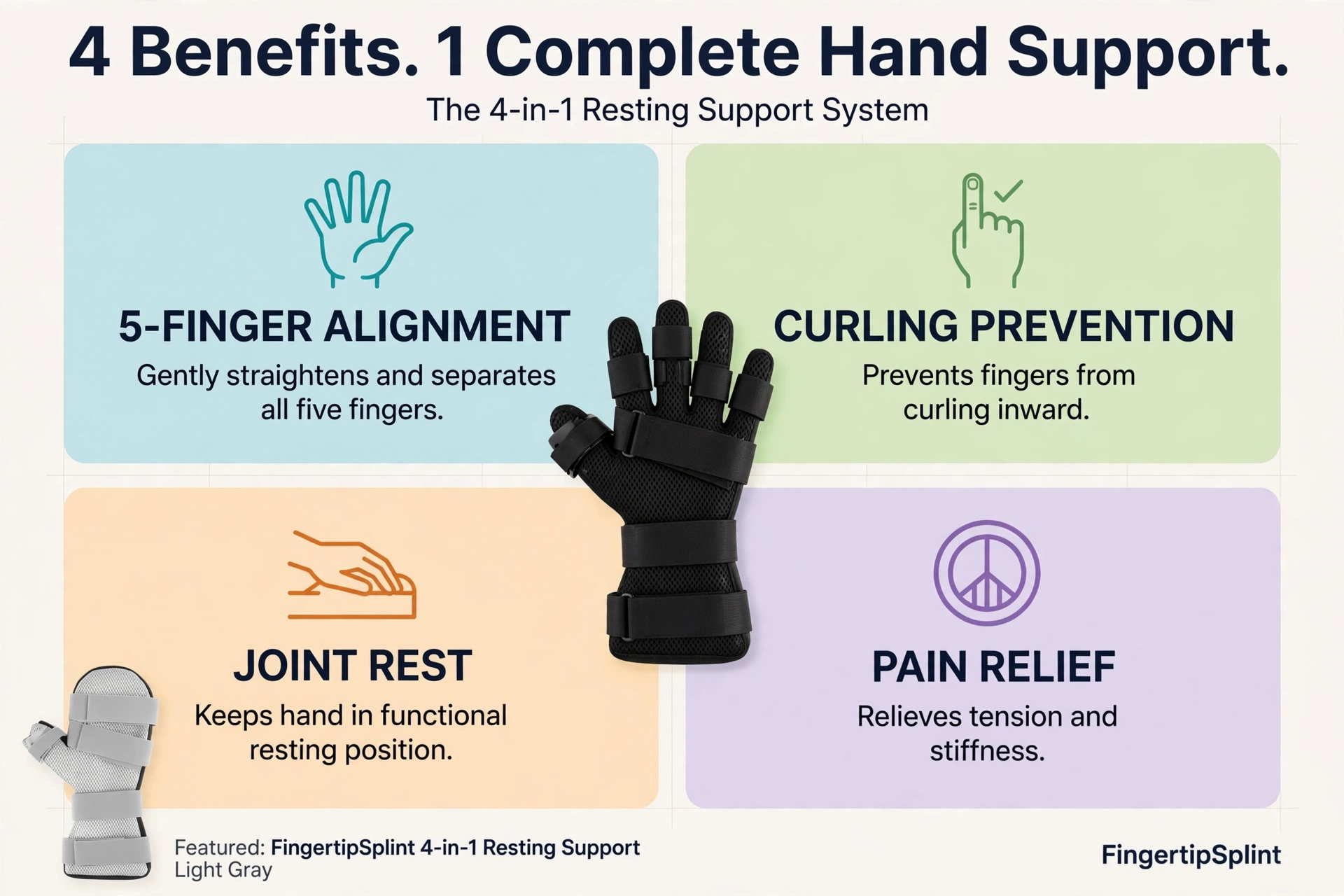
A resting hand brace — also called a resting hand orthosis — is a supportive device designed to hold the wrist, palm, thumb, and fingers in a prescribed resting position. It is different from a small finger splint that supports only one finger or joint.
Positioning, Not Activity
A resting hand brace is generally intended for positioning and support during rest, not for use during active tasks. It is designed to hold the hand in a selected position rather than to allow unrestricted movement.
Coverage Varies by Design
Not all resting braces cover the same joints. Some support the whole hand and wrist; others focus on selected areas. Check the product’s actual design and intended use before assuming coverage.
For a broader look at how a resting hand splint compares to other hand-support options, the article on 5-finger resting hand splint uses and benefits covers the topic in detail.
How Nighttime Support May Improve Comfort
A resting hand brace may help maintain a prescribed position during sleep or rest. This may reduce discomfort for some people, though results vary by condition and fit.
Maintaining a Prescribed Position
By holding the hand in a specific position, the brace may prevent the fingers from curling more deeply during rest. This can be especially helpful for people whose fingers curl more when they are relaxed.
Supporting Selected Areas
Depending on the design, the brace may support the wrist, palm, thumb, and fingers. This broader support may help the hand feel more comfortable during rest.
Limiting Unwanted Movement
Some designs limit certain movements during rest. This is different from forcing the fingers straight — the goal is to support a position that has been recommended.
For a closer look at how a night hand splint supports finger positioning, the article on how a night hand splint supports finger straightening covers the mechanism in greater detail.
Explore a Resting Hand Brace
Select an area below to learn about its role and safety considerations.
Who May Benefit From a Resting Hand Brace?
A resting hand brace may be considered in several situations. The right device depends on joint mobility, muscle tone, skin condition, sensation, and the underlying diagnosis.
Situations Where a Clinician May Recommend Resting Support
- Selected neurological conditions affecting hand position
- Difficulty maintaining a comfortable hand position during rest
- Certain rehabilitation plans where positioning is part of care
When Professional Assessment Is Needed First
If you have any of the following, obtain individual advice before using a ready-made brace:
- A newly bent finger after trauma
- A hand that cannot be positioned comfortably
- Open wounds or skin breakdown
- Numbness or altered sensation
- Rapidly changing symptoms
Resting Hand Brace vs. Individual Finger Splint
Resting hand braces and individual finger splints serve different purposes. Understanding the differences helps you choose the right design.
| Support Type | Coverage | Intended Use |
|---|---|---|
| 5-finger resting hand splint | Wrist, palm, thumb, and fingers | Multiple fingers need support in a resting position |
| Individual finger splint | Single finger or joint | Specific finger injury or condition |
| Night hand splint | Varies by design | Clinician has recommended nighttime positioning |
| Custom-fitted orthosis | Tailored to individual hand | Standard designs do not fit or position properly |
Buyers should not assume a five-finger brace is the correct choice for an isolated finger injury. The right design depends on the condition and the joints involved.
How to Choose the Right Resting Hand Brace
Choosing the right brace requires matching the design to your specific needs. Here are the factors to consider.
Intended Use
What does the brace need to support? Confirm whether the design matches the prescribed position and the joints that need support.
Hand Size and Fit
The brace should fit your hand comfortably. Check the sizing guidance and confirm whether it is one-size-fits-most or size-specific.
Support Coverage
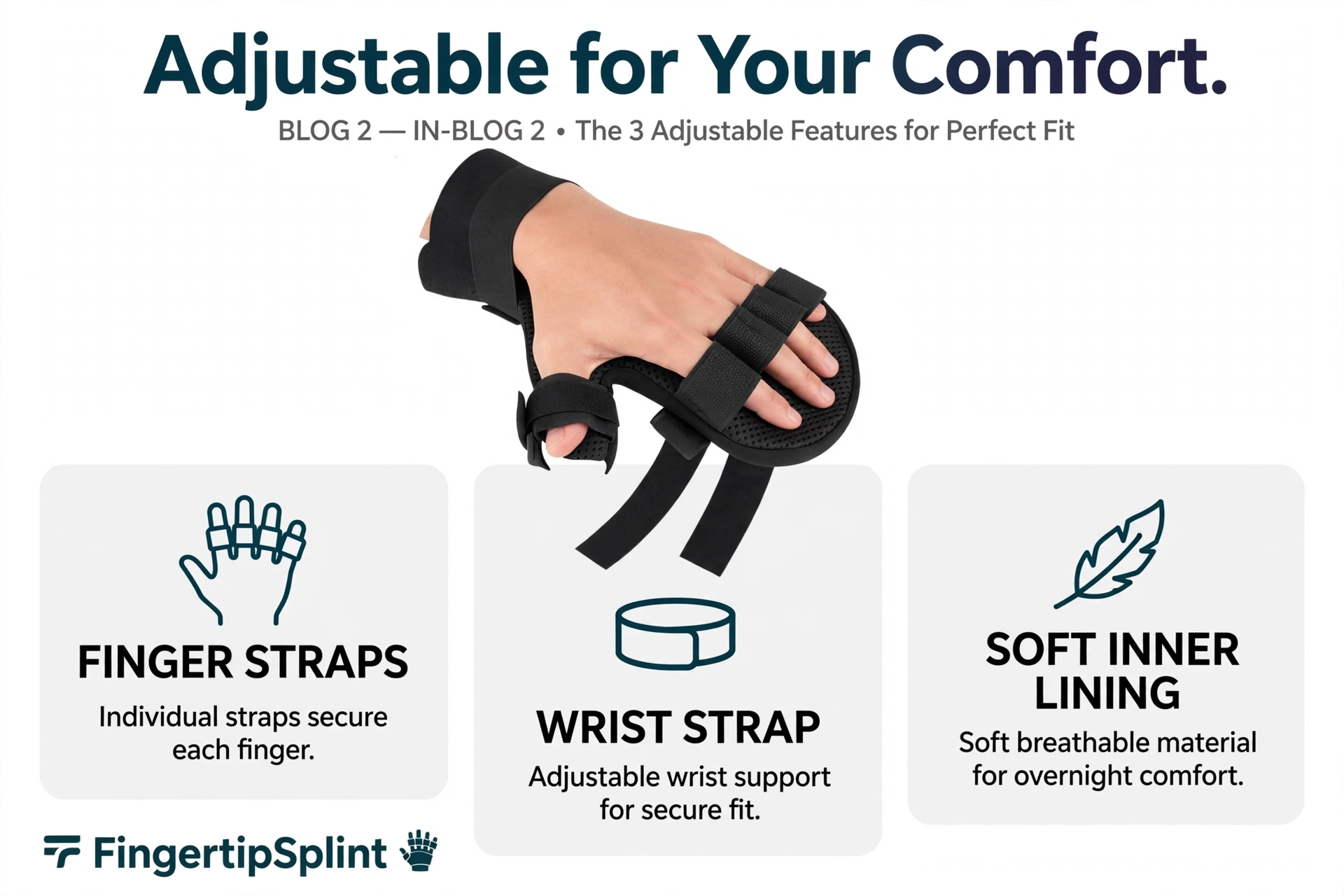
Does the brace cover the wrist, palm, thumb, and fingers as needed? Check the product description and images for coverage details.
Padding and Fastening
Look for adequate padding and adjustable straps. Padding reduces pressure points and improves comfort during extended wear.
Skin Sensitivity
If you have sensitive skin, check the materials for compatibility. Follow care instructions to keep the brace clean and dry.
Cleaning Instructions
Can you follow the manufacturer’s cleaning instructions? Proper care affects hygiene and durability.
How to Wear a Resting Hand Brace Safely at Night
Safe use is essential to prevent skin problems and other complications. Follow this step-by-step process based on the product’s design and the manufacturer’s instructions.
Step 1: Check the skin. Look for cuts, redness, or irritation. Do not apply the brace over damaged skin.
Step 2: Position the hand. Follow the manufacturer’s or clinician’s guidance for wrist and finger position.
Step 3: Secure the straps. Fasten the straps so the brace stays in place without causing excessive pressure.
Step 4: Inspect for pressure areas. Check for redness, indentations, or irritation at the edges of the brace.
Step 5: Remove and check the skin. After use, inspect the skin for any signs of irritation or breakdown.
Step 6: Clean the device. Follow the manufacturer’s cleaning instructions and allow the brace to dry completely.
Do not force the hand into a different position or tighten the brace further to compensate. Seek advice if the brace is not comfortable or does not fit properly.
What Results Can You Realistically Expect?
Comfort, positioning, and changes in finger movement are different outcomes. Some people may benefit from support as part of a wider care plan, while a fixed contracture may not straighten through nighttime use alone.
First Fitting: Check Comfort and Position
The first fitting is about checking whether the brace fits comfortably and positions the hand as intended. Adjustments may be needed.
Early Comfort Checks: Monitor Skin and Symptoms
After several nights, check whether the brace is comfortable and whether any skin irritation has developed. Adjust or seek advice if needed.
Reassessment: Review With a Clinician
For some conditions, the brace may be part of a longer-term plan. Periodic review with a clinician can help determine whether the brace continues to be appropriate.
According to clinical guidance on hand splinting, positioning, pressure risks, and monitoring are important considerations when using a resting hand splint.
Mistakes to Avoid With a Resting Hand Brace
Some mistakes can turn a helpful brace into a source of additional problems. Here are the most common ones.
A brace designed for a different condition may not help.
Solution: Understand why your fingers are curling before choosing a brace.
A finger splint and a resting hand brace serve different purposes.
Solution: Match the brace to the joints that need support.
Never force a stiff or painful finger into a straighter position.
Solution: Follow the prescribed position and seek advice if the hand cannot be comfortably positioned.
Excessive pressure can cause numbness, tingling, or changes in colour or temperature.
Solution: Straps should secure the brace without excessive tightness.
Extended wear without professional guidance may cause problems.
Solution: Follow the recommended wearing schedule.
Pressure marks can develop into skin breakdown if ignored.
Solution: Inspect the skin after each use and seek advice if irritation persists.
When to Seek Medical Advice
Some situations require professional assessment rather than self-selection of a brace.
Seek medical advice if you experience:
- Persistent curling or worsening stiffness
- Locking or catching of a finger
- Pain or loss of function
- Recent injury
- Changes in sensation
- Circulation concerns
For general guidance on hand pain and when to seek help, NHS advice on pain in the palm provides useful information. If you are unsure whether a resting brace is right for you, a hand therapist can help.
Is the 5-Finger Resting Hand Splint Right for You?
If you are exploring a resting hand brace for curled fingers, the 5-Finger Resting Hand Splint from FingerTipSplint is one option to evaluate. This guide does not claim that it permanently straightens fingers or cures any condition. What it offers is a design intended to support the wrist, palm, thumb, and fingers in a resting position.
Use these questions to guide your decision:
- Has a clinician recommended a specific resting hand position?
- Do you need support for the wrist, palm, thumb, and multiple fingers?
- Does the brace fit your hand size comfortably?
- Can you follow the manufacturer’s wearing and care instructions?
- Are your symptoms appropriate for a resting brace, or do they need professional assessment first?
If a single-finger or custom-fitted orthosis may be more appropriate for your needs, professional guidance can help you decide. For additional product questions, review the FingerTipSplint frequently asked questions or browse the full hand-support range.
Looking for a More Comfortable Resting Position for Your Hand?
Start by understanding why your fingers are curling and which joints need support. Then compare the intended use, fit, and instructions of an appropriate brace. If you are unsure whether a full-hand device is right for you, ask a qualified healthcare professional before wearing it overnight.
Explore the 5-Finger Resting Hand Splint Browse All ProductsFrequently Asked Questions
A resting hand brace may support a prescribed position during rest, which may help some people feel more comfortable. However, results depend on the cause of the finger curling and whether the joints are flexible or fixed. Professional assessment is important before relying on a brace.
Nighttime use depends on the device, your diagnosis, and prescribed wearing instructions. Some resting braces are designed for nighttime use, while others are not. Follow your clinician’s guidance and the manufacturer’s instructions.
A resting hand brace cannot guarantee permanent correction, particularly for fixed contractures. It may support a position during wear, but the underlying condition and tissue flexibility affect outcomes. Professional guidance is important.
A resting hand brace supports multiple areas of the hand — wrist, palm, thumb, and fingers — in a resting position. A finger splint supports a specific finger or joint. They serve different purposes and are not interchangeable.
The brace should feel secure but not tight. If you experience numbness, tingling, increasing pain, changes in finger colour or temperature, or skin irritation, remove the brace and seek advice. Do not tighten the brace further to compensate for a poor fit.
There is no single timeline that applies to all conditions. Some people may notice improvement within a few days, while others may require longer-term use and professional monitoring. If symptoms do not improve or worsen, seek advice.
Seek medical assessment for persistent or worsening curling, locking, recent injury, severe pain, and changes in sensation or circulation. Early assessment can help identify the cause and guide appropriate treatment.
Conclusion: Support With Realistic Expectations
A resting hand brace for curled fingers can support the hand in a comfortable, prescribed position during rest. But it does not guarantee permanent straightening or reverse a fixed contracture. The right brace and wearing schedule depend on the underlying cause.
Use this guide as a framework: understand why your fingers are curling, review the product’s actual specifications, choose a brace that fits your hand and meets your needs, and follow professional guidance for fitting and wear. Stop using the brace if it causes pain or irritation, and seek professional advice if symptoms persist.
For readers who want to explore support products, the FingerTipSplint shop offers a selection. For more hand-care education, visit the FingerTipSplint blog. For personalized assistance, you can request a quote or review the frequently asked questions.
Your hands carry you through everything. Choosing the right support — and knowing when to seek professional advice — is part of caring for them well.