
Description
5-Finger Resting Hand Splint – Adjustable Hand Brace for Curled Fingers and Comfortable Hand Positioning
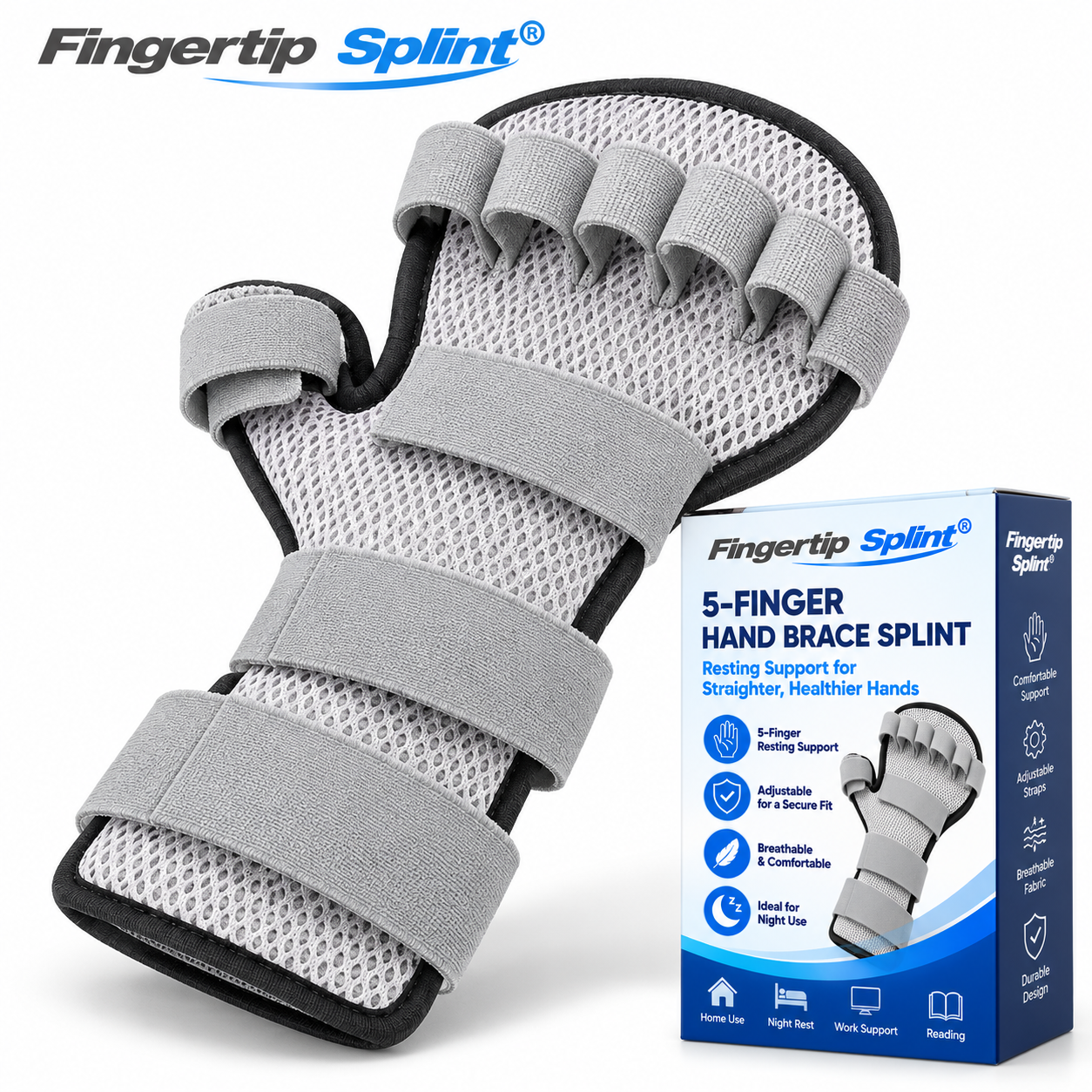
The Fingertip Splint 5-Finger Resting Hand Splint is a contoured hand support designed to help maintain an appropriate resting position for the fingers, thumb, palm and wrist. Featuring individual finger positioning areas, multiple adjustable straps, breathable mesh sections and a supportive hand plate, this brace offers a structured alternative to basic elastic hand sleeves.
Whether you are researching a resting hand splint for curled fingers, exploring nighttime hand-positioning options or looking for an adjustable hand orthosis, understanding the brace’s construction, fit and safe use is essential.
Resting hand splints may be used within professionally supervised care plans. Their suitability depends on the individual’s hand condition, available range of motion, skin integrity and therapeutic goals.
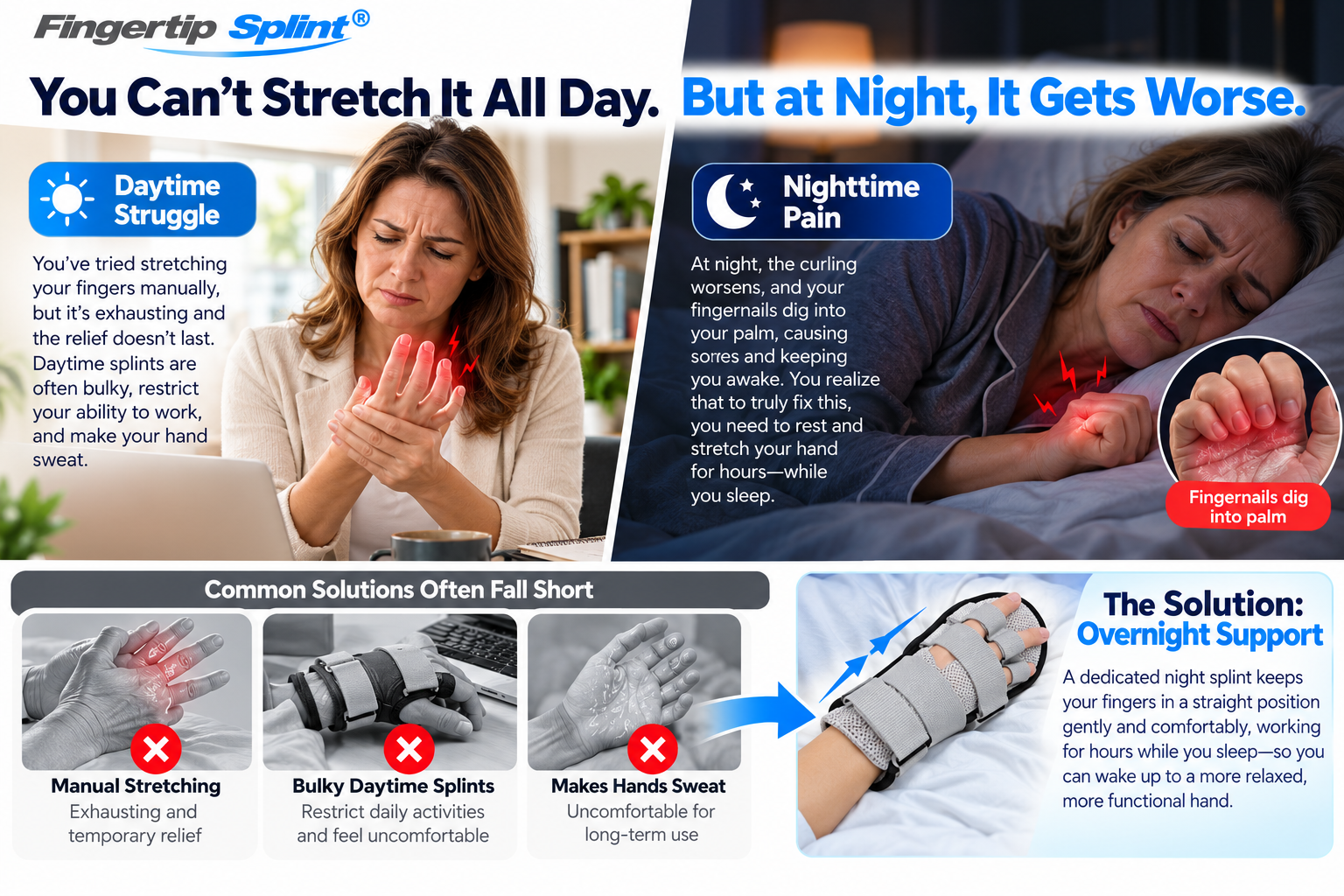
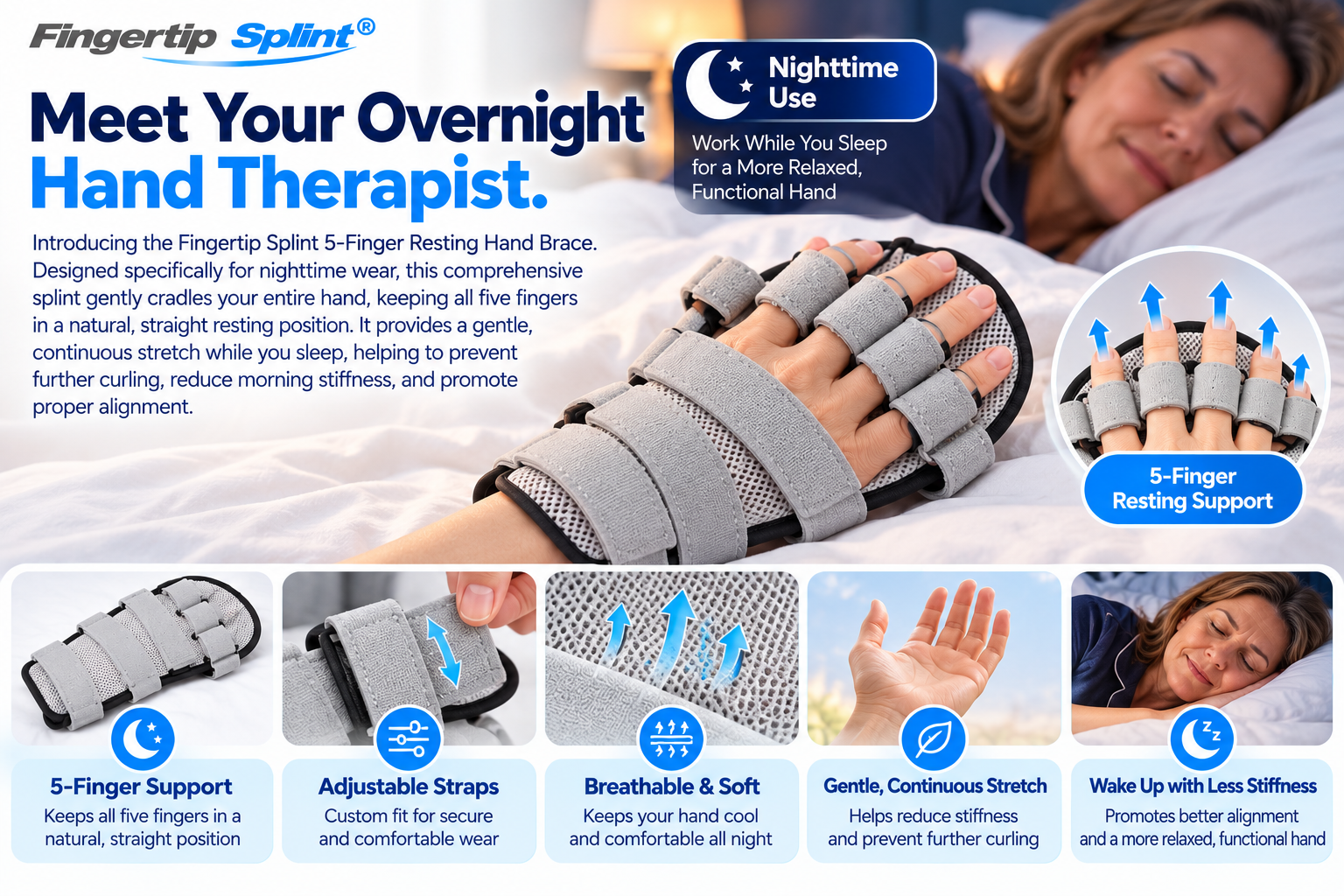
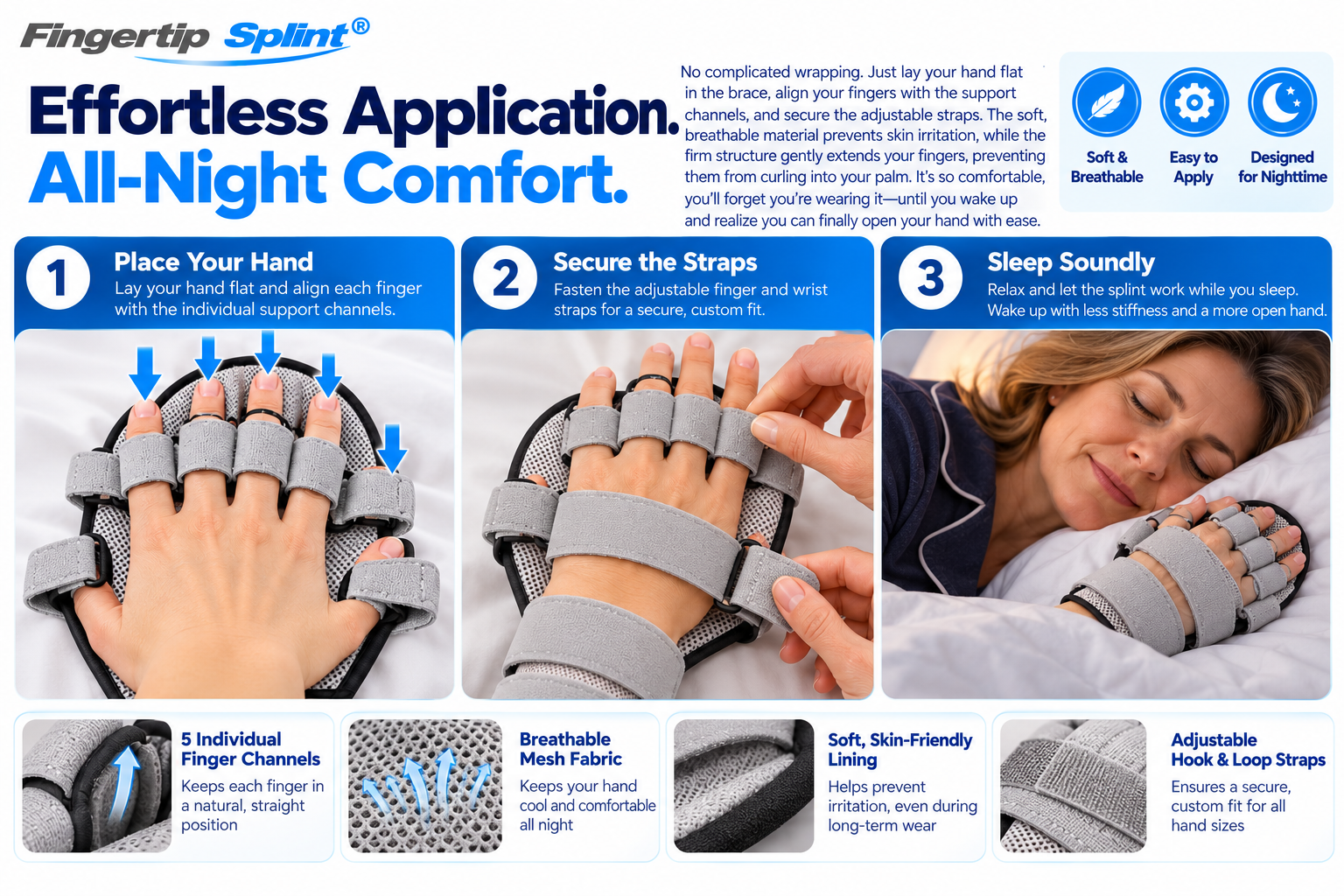

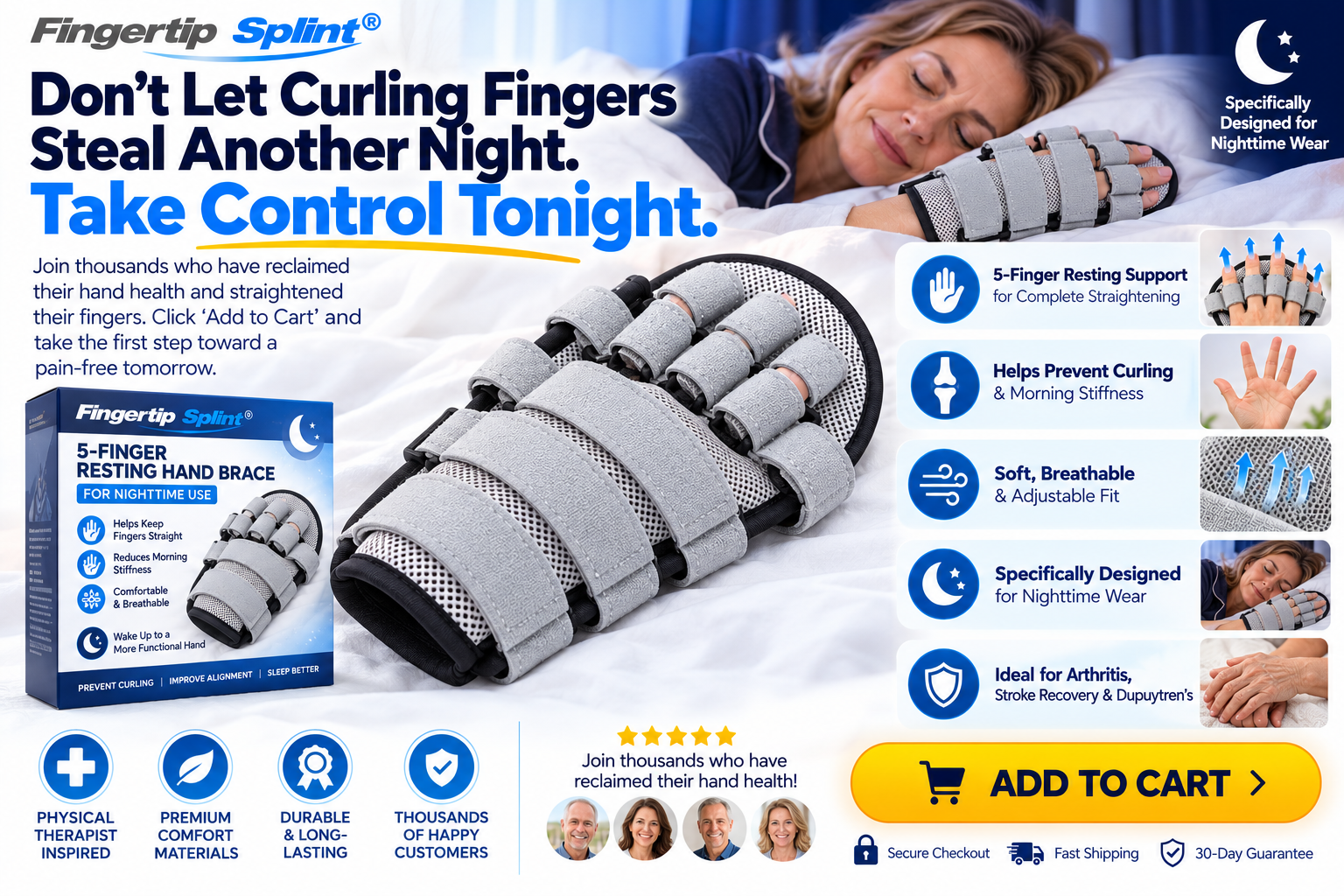
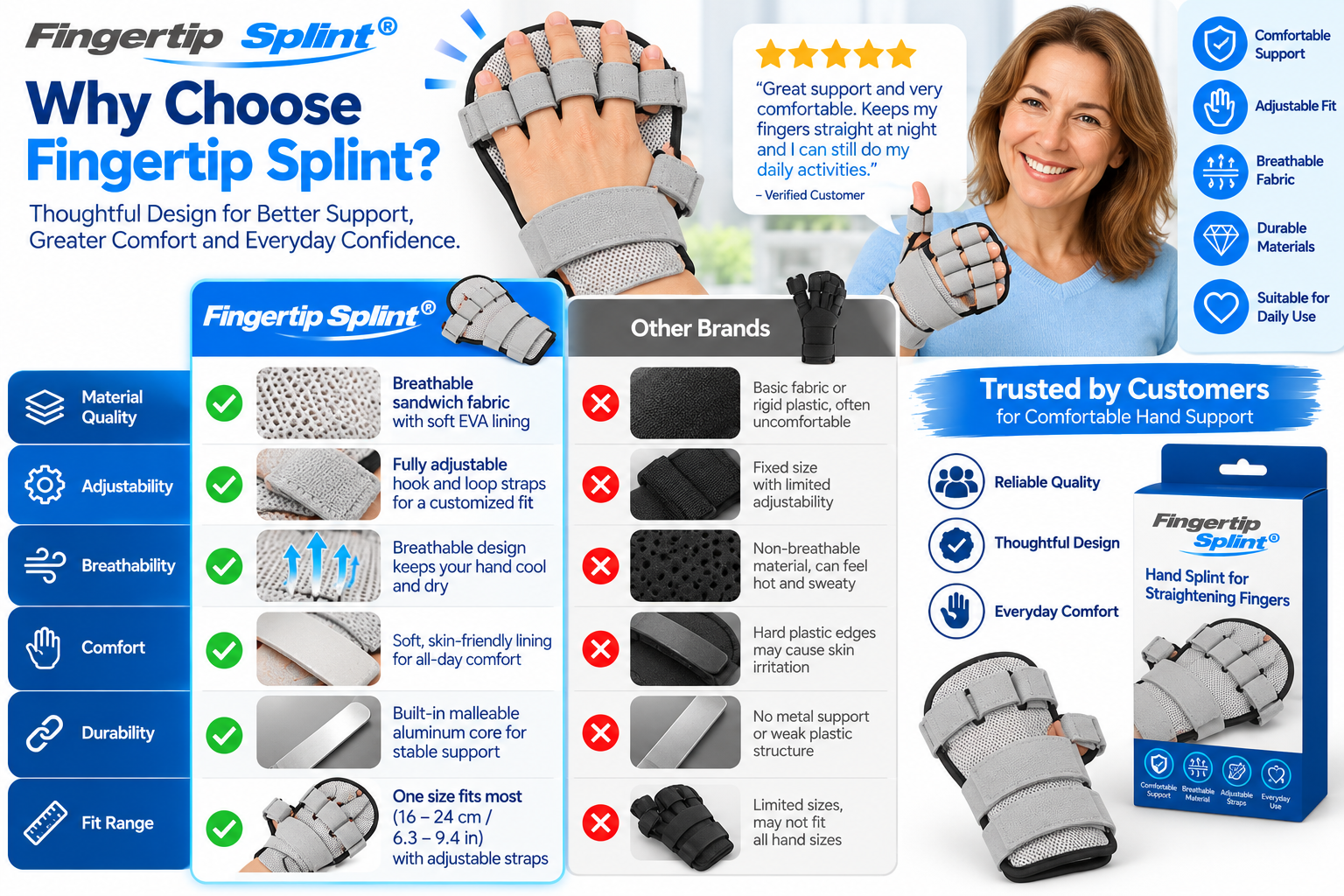
5-Finger Resting Hand Splint Comparison: Fingertip Splint vs. Other Hand Support Designs
Different hand braces are designed for different purposes. A basic compression glove, a wrist support and a resting hand splint do not provide identical positioning or movement restrictions.
The comparison below describes general product categories rather than making unverified claims about a particular competing brand.
| Feature | Fingertip Splint Resting Hand Brace | Basic Compression Glove | Wrist Support Brace | Custom-Made Resting Orthosis |
|---|---|---|---|---|
| Primary Purpose | Resting hand positioning | Hand compression | Wrist support | Individualized hand positioning |
| Finger Positioning | Individual finger support areas | Usually no rigid positioning | Usually limited | Configured for individual needs |
| Thumb Support | Dedicated thumb positioning area | Varies by design | Varies by model | Customized |
| Wrist Coverage | Integrated wrist support area | Usually minimal | Primary support area | As prescribed |
| Adjustable Straps | Multiple straps | Usually pull-on | Often adjustable | Depends on design |
| Hand Support Plate | Contoured support plate shown | Generally absent | May include wrist stays | Custom-shaped structure |
| Mesh Construction | Visible mesh sections | Varies | Varies | Varies |
| Finger Movement | Intentionally restricted while worn | Generally less restricted | Often largely available | Determined by treatment goals |
| Nighttime Use | Only with appropriate guidance | Depends on instructions | Depends on instructions | Based on prescribed schedule |
| Fit Customization | Adjustable fastening | Limited to sizing and elasticity | Strap adjustments | Professionally customized |
Important: A custom-made orthosis may be necessary when the hand has fixed contractures, unusual positioning requirements, fragile skin or complex neurological conditions. An off-the-shelf splint is not an equivalent replacement for a prescribed custom device.
5-Finger Resting Hand Splint Product Specifications
| Specification | Product Information |
|---|---|
| Brand | Fingertip Splint |
| Product Type | Resting hand splint / hand positioning brace |
| Support Coverage | Five digits, palm and wrist |
| Finger Support | Individual finger positioning straps |
| Thumb Support | Separate thumb support section |
| Fastening | Adjustable hook-and-loop style straps |
| Hand Support Structure | Contoured supportive plate |
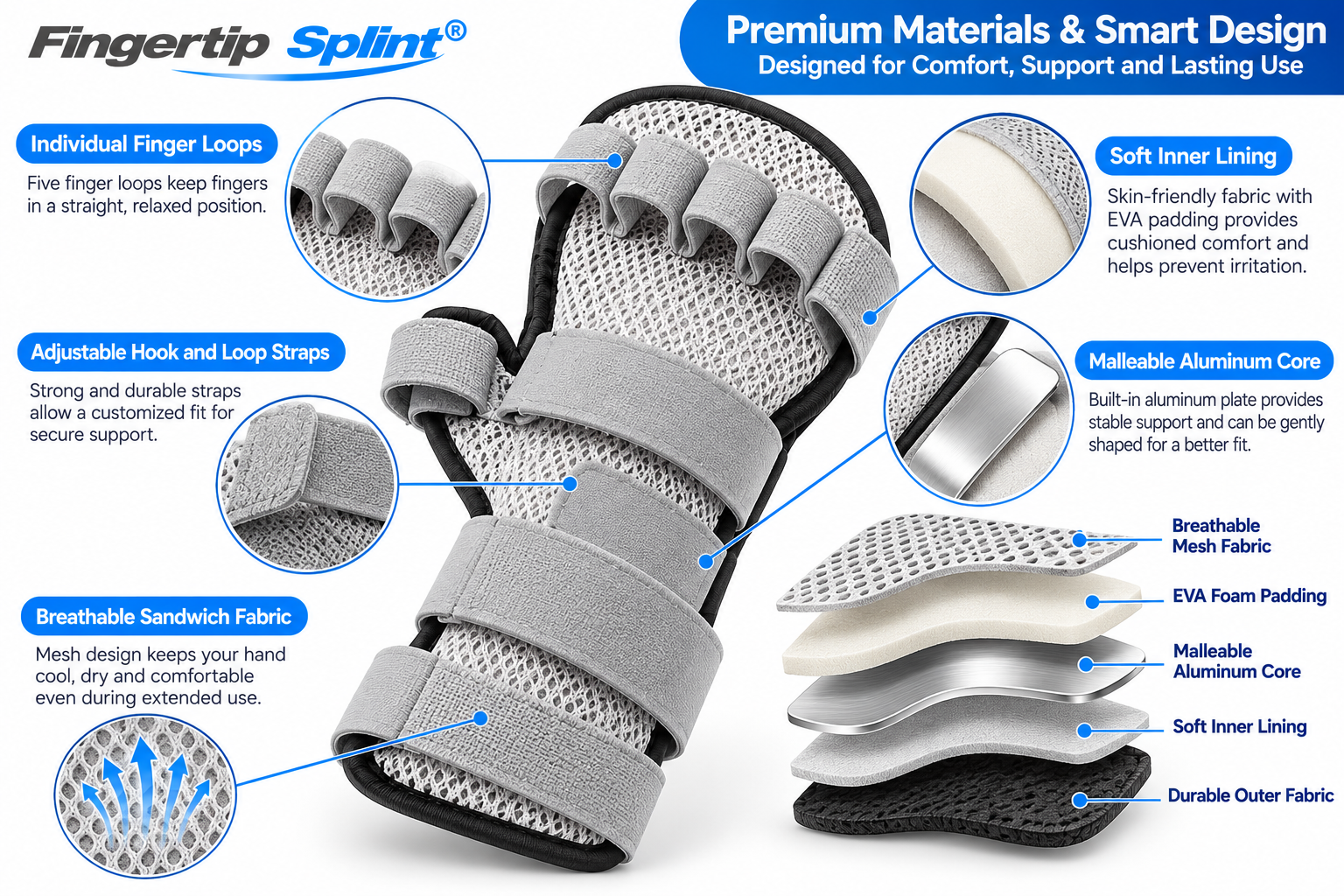
| Fabric | Mesh and fabric sections visible; supplier diagram identifies webbing and spandex components |
| Padding | Supplier diagram identifies an EVA component |
| Support Plate Material | Steel plate indicated in supplier diagram; exact grade not confirmed |
| Color Shown | Gray with black edging |
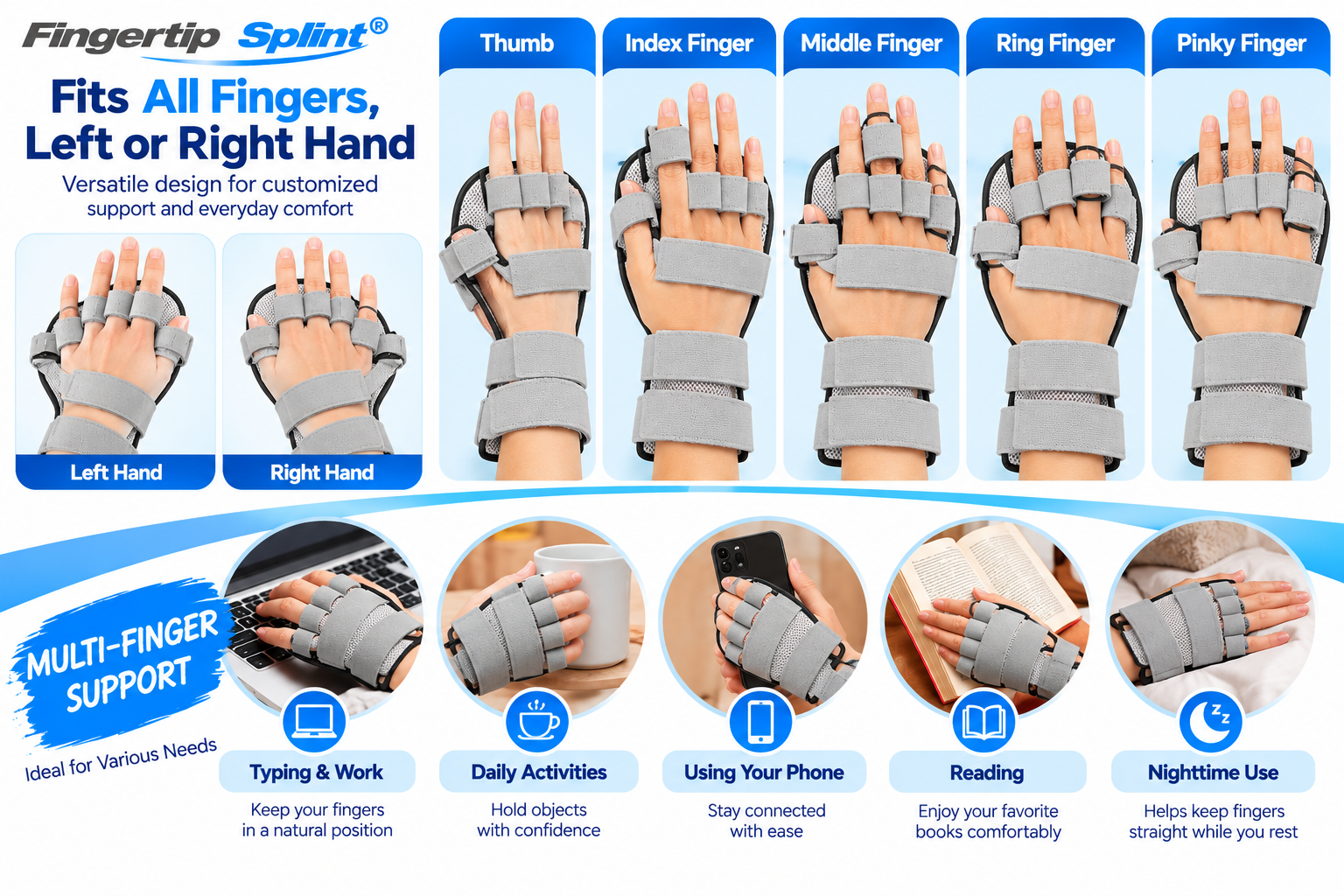
| Hand Orientation | Confirm left/right compatibility with supplier |
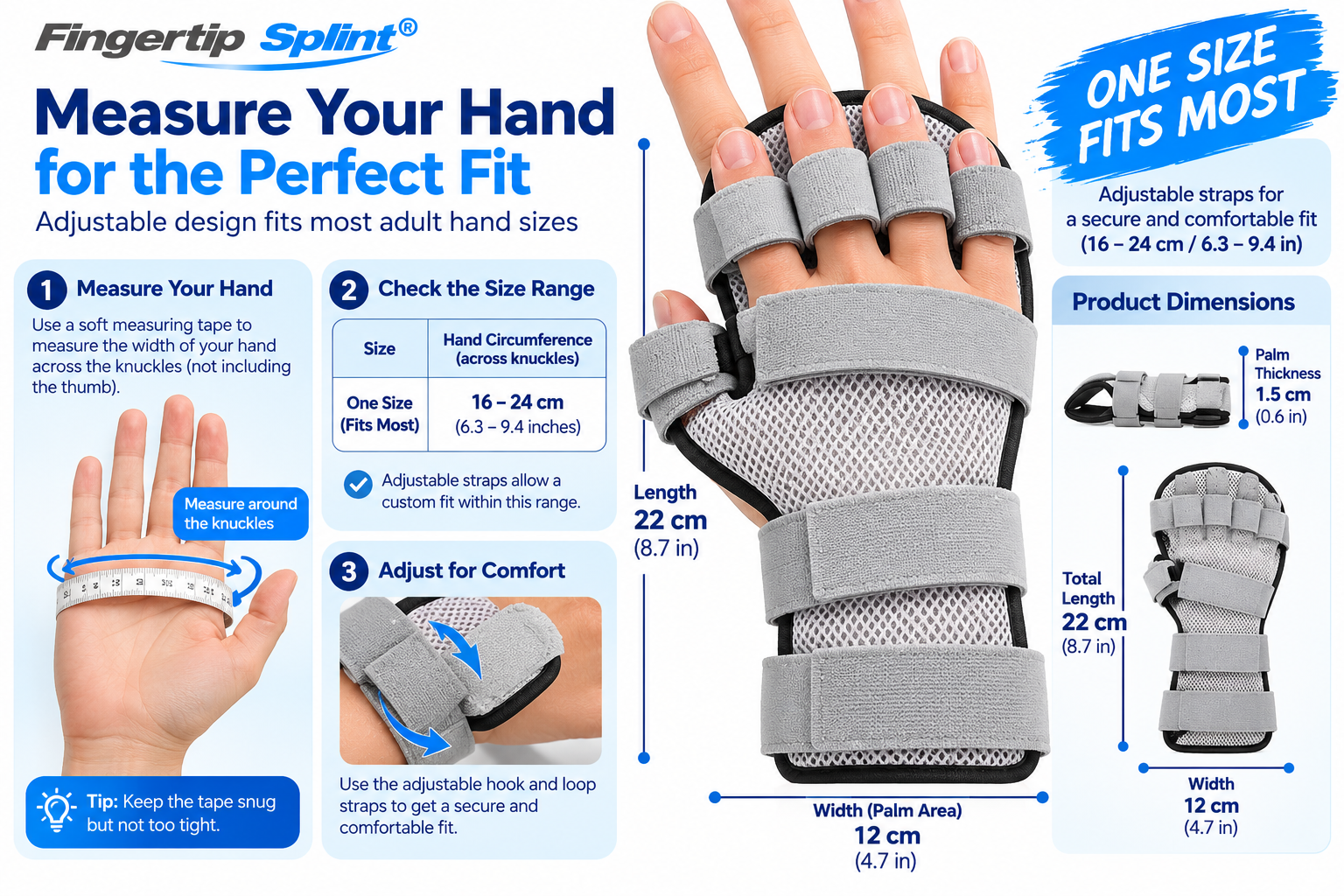
| Sizing | Exact size range not provided |
| Dimensions | Not confirmed |
| Weight | Not confirmed |
| Intended Use | Supported hand positioning during appropriate rest periods |
| Nighttime Wear | Subject to manufacturer instructions and professional assessment |
| Reusable | Designed for repeated use with suitable care |
| Package Quantity | Confirm with supplier before publication |
Specification note: Material labels are based on the supplied product diagrams, not independent testing. Confirm the support plate composition, sizing, package contents and approved care instructions before publishing final product variations.
Product Details and Key Features
1. Five-Digit Resting Hand Support
The splint provides separate positioning areas for the thumb and four fingers. This structure is intended to help maintain the hand in a selected resting position rather than leaving the digits unsupported.
2. Individual Finger Straps
Multiple adjustable straps cross the finger areas. These fasteners help hold each digit against its corresponding support section.
Finger positioning must remain within the wearer’s comfortable and clinically appropriate range of motion.
3. Dedicated Thumb Positioning Area
The thumb has a separate support section, allowing its position to be considered independently from the four fingers. Appropriate thumb positioning depends on the individual’s anatomy and therapeutic requirements.
4. Contoured Palm Support
A shaped support plate extends beneath the hand. Its purpose is to provide a stable resting surface for the palm and fingers.
5. Wrist Support Section
The splint extends toward the wrist and includes adjustable fastening in that area. Correct wrist positioning matters because wrist angle can influence finger tension and comfort.
6. Adjustable Hook-and-Loop Fastening
The visible straps allow the wearer or caregiver to adjust fastening pressure. Straps should hold the brace securely without causing excessive compression.
7. Breathable Mesh Sections
The supplied images show perforated mesh fabric across the hand-support surface. These openings may support airflow, although actual comfort depends on environmental conditions and wearing duration.
8. Soft Contact Materials
Fabric and padding sections help separate the hand from the supportive structure. Regular skin checks remain important, particularly for people with reduced sensation.
9. Reinforced Construction
The supplier diagram indicates a steel support plate. The brace should not be bent or reshaped unless the manufacturer specifically approves adjustment.
10. Multiple Adjustment Points
Separate finger, hand and wrist fastening areas make it possible to adjust different sections of the splint. This is useful when fitting a contoured support, but does not guarantee suitability for every hand shape.
11. Resting-Oriented Design
The brace is designed for supported positioning, not active gripping. It should generally be removed for activities requiring normal hand dexterity unless a clinician advises otherwise.
12. Potential Nighttime Application
Some resting hand orthoses are prescribed for nighttime wear. However, wearing a splint during sleep requires an appropriate fit, skin monitoring and a professionally recommended schedule.
13. Gray Product Finish
The product images show a gray brace with contrasting black edging. This neutral appearance is suitable for clear product photography and straightforward identification.
14. Reusable Support Accessory
With suitable maintenance, the brace can be reused. Check for damaged straps, loose stitching, exposed structural components and worn padding before each application.
15. Part of a Broader Hand-Care Plan
Resting hand positioning may form one component of a wider rehabilitation or hand management plan. Depending on the condition, this plan may include exercises, stretching prescribed by a clinician, skin care, adaptive equipment and follow-up assessments.
How to Choose the Correct Resting Hand Splint Size
Proper fit is especially important for a hand-positioning brace. A splint that is too small may create pressure, while one that is too large may allow the hand to shift into an unintended position.
Measure Hand Length
Measure from the wrist crease toward the tip of the middle finger using a flexible ruler or measuring tape. Compare the result with the manufacturer’s confirmed dimensions.
Measure Palm Width
Measure across the widest part of the palm, excluding the thumb. The support plate should accommodate the hand without pressing against its edges.
Measure Wrist Circumference
Measure around the wrist where the fastening section will sit. This helps determine whether the wrist straps provide adequate adjustment.
Check Finger Positioning
Confirm that each finger can rest within its intended support area without forced extension, twisting or excessive pressure.
Confirm Left or Right Hand Compatibility
Hand splints may have side-specific contours. Verify whether the selected model is intended for the left hand, right hand or both.
Before ordering: Request the supplier’s verified size chart. Do not rely on an unconfirmed “one size fits most” claim.
How to Wear a 5-Finger Resting Hand Splint: User Manual
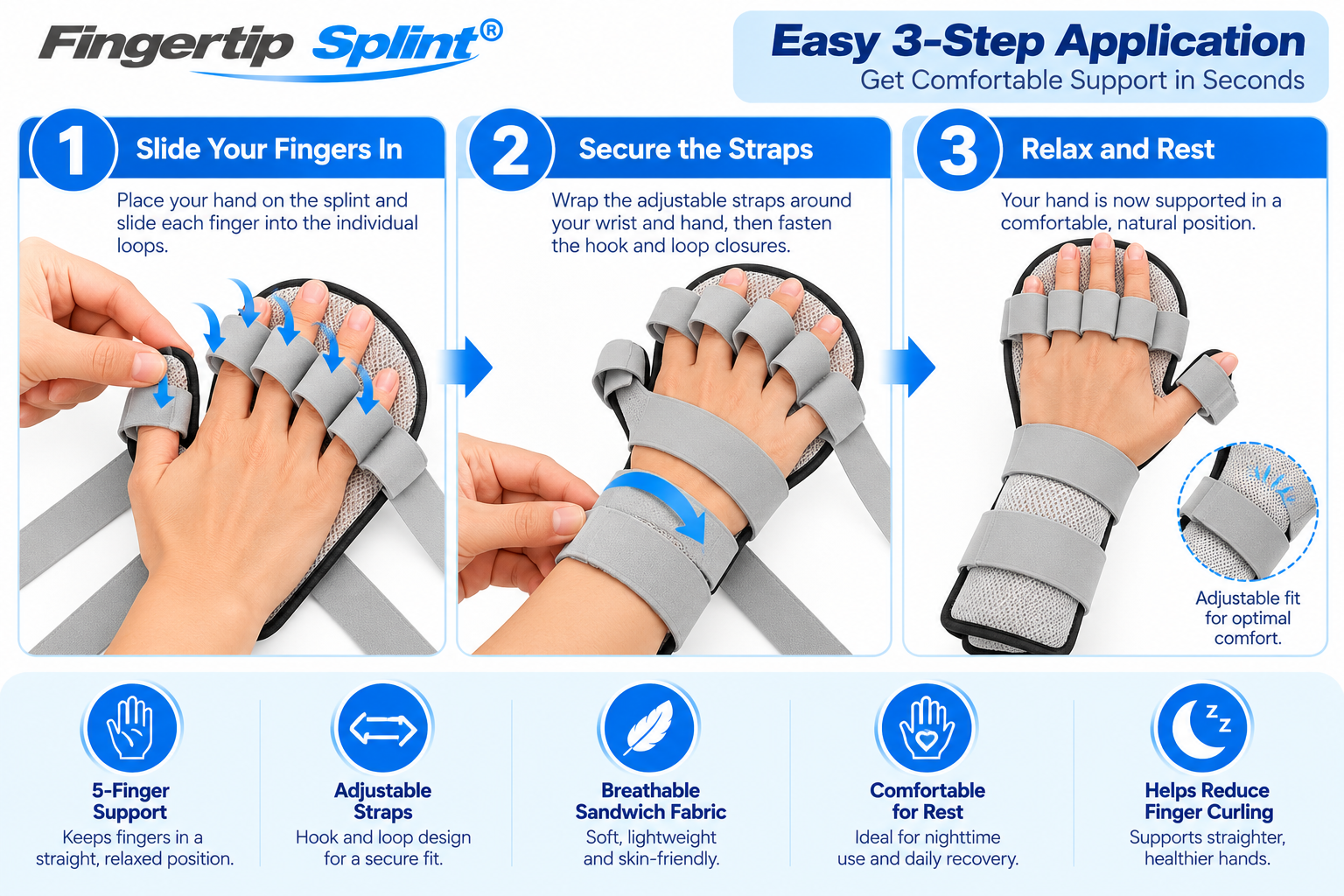
Step 1: Review Your Wearing Instructions
Confirm that a resting hand splint is appropriate for your condition. Follow the positioning and wearing schedule recommended by your treating clinician or hand therapist.
Step 2: Inspect the Brace
Check the support plate, straps, mesh, padding and edges for damage. Do not use a brace with exposed sharp components or defective fastening.
Step 3: Open All Adjustable Straps
Release the finger, hand and wrist straps before positioning the splint. This reduces the need to pull the hand through tight openings.
Step 4: Place the Hand on the Support
Rest the palm against the contoured plate. Position the wrist as directed, without forcing it into an uncomfortable angle.
Step 5: Align the Thumb
Position the thumb within its designated support area. Do not pull a stiff or contracted thumb beyond its comfortable available movement.
Step 6: Position the Four Fingers
Guide each finger toward its corresponding support section. If a finger cannot reach the intended position comfortably, stop rather than forcing it straight.
Step 7: Fasten the Finger Straps
Close the finger straps gently. Each strap should maintain the intended position without creating concentrated pressure across a joint or fingertip.
Step 8: Secure the Palm and Wrist Straps
Fasten the larger straps around the hand and wrist. Adjust them gradually until the brace is stable but not constricting.
Step 9: Check Circulation and Skin Comfort
Look for numbness, tingling, swelling, discoloration, unusual coldness or increased pain. Remove the brace if these symptoms occur.
Step 10: Begin With the Recommended Wear Duration
Follow your clinician’s instructions about how long to wear the splint. Do not immediately begin overnight use unless it has been recommended and the fit has been assessed.
Step 11: Monitor the Hand Regularly
Check the skin after removal, especially over the knuckles, fingertips, thumb, palm and wrist. Persistent redness, pressure marks or skin breakdown require professional review.
Step 12: Remove the Brace Carefully
Open the straps fully before lifting the hand away. Avoid pulling forcefully on stiff fingers.
Step 13: Clean According to Manufacturer Instructions
Use only approved cleaning methods. Do not immerse, machine wash, heat dry or reshape the brace unless these procedures are specifically permitted by the manufacturer.
Step 14: Store in a Clean, Dry Place
Keep the splint away from excessive heat, moisture and direct sunlight. Store it so that the support plate is not unintentionally bent or damaged.
Understanding Resting Hand Splints, Curled Fingers and Hand Positioning
What Is a Resting Hand Splint?
A resting hand splint is an external orthosis designed to hold the hand and wrist in a selected position during periods when active movement is not required.
Different resting splints support different hand positions. Some are intended to maintain comfortable alignment, while others are custom-designed for particular therapeutic goals.
What Is a 5-Finger Resting Hand Splint?
A five-finger resting hand splint provides support across the thumb and four fingers, usually alongside the palm and wrist. This differs from a single-finger splint or basic wrist brace, which covers a smaller area.
Why Do Fingers Curl Inward?
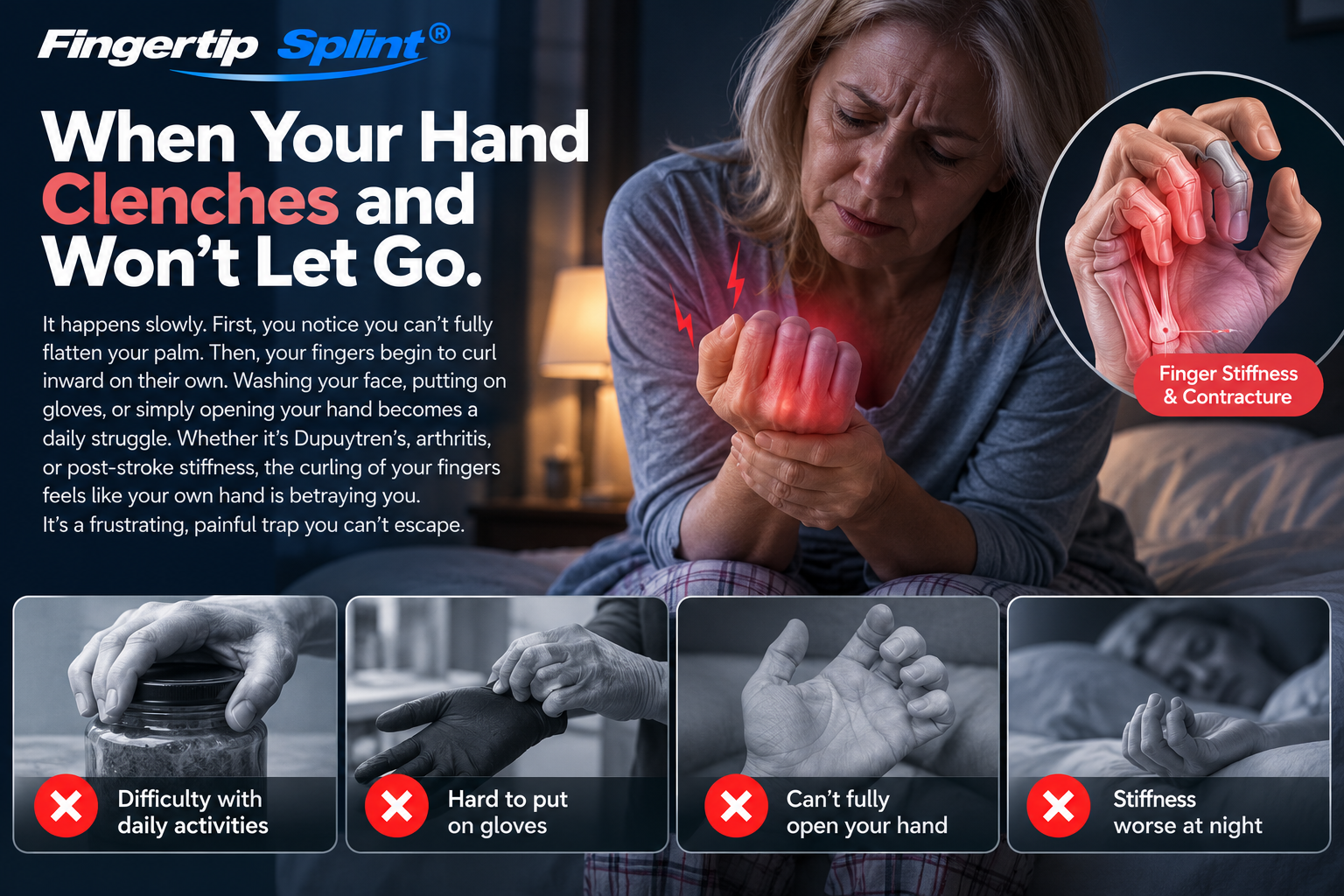
Finger curling may have several causes, including joint stiffness, tendon problems, neurological conditions, muscle tone changes or established contractures. The underlying cause determines which treatment or support approach is appropriate.
What Is a Finger Contracture?
A contracture is a limitation of joint movement that can occur when tissues become shortened or stiff. Some contractures cannot be safely corrected through an off-the-shelf brace.
A hand therapist can assess the available movement and determine whether positioning, exercises, custom orthoses or another approach is appropriate.
Can a Resting Hand Splint Straighten Curled Fingers?
A splint may help maintain a selected hand position when properly fitted, but it should not be assumed to permanently straighten curled fingers or reverse a fixed contracture.
Attempting to force the fingers into extension can cause pain, pressure injuries or other complications.
What About Stroke-Related Hand Spasticity?
Some people experience changes in muscle tone or involuntary hand positioning after a stroke. Whether a resting hand orthosis is appropriate depends on individual assessment and treatment goals.
Evidence does not support assuming that routine splinting will prevent contractures or improve function for every stroke survivor. Professional guidance is important.
For general information about stroke, visit the NHS stroke information page.
Can This Brace Treat Dupuytren’s Contracture?
Dupuytren’s contracture involves changes in tissue beneath the skin of the palm that may pull fingers into a bent position. A generic resting hand splint is not an established cure.
For general information about this condition, see the NHS guide to Dupuytren’s contracture.
Can People With Arthritis Use a Resting Hand Splint?
Some individuals with arthritis may benefit from particular hand support strategies, but the most suitable orthosis depends on the joints involved, symptoms and functional goals.
A five-finger resting splint should not automatically be substituted for a prescribed arthritis support.
Learn more from the NHS arthritis overview.
Is a Resting Hand Splint Suitable for Nighttime Wear?
Some hand splints are prescribed for overnight positioning. However, sleep reduces opportunities to notice pressure or adjust the brace, so proper fitting and an appropriate wearing schedule are especially important.
Nighttime use should follow professional recommendations rather than an automatic all-night instruction.
Does the Splint Prevent Morning Stiffness?
Morning stiffness can have different causes. The effect of a resting hand splint varies between individuals, and no guaranteed reduction in stiffness has been established for this specific product.
Can the Brace Be Worn During Work?
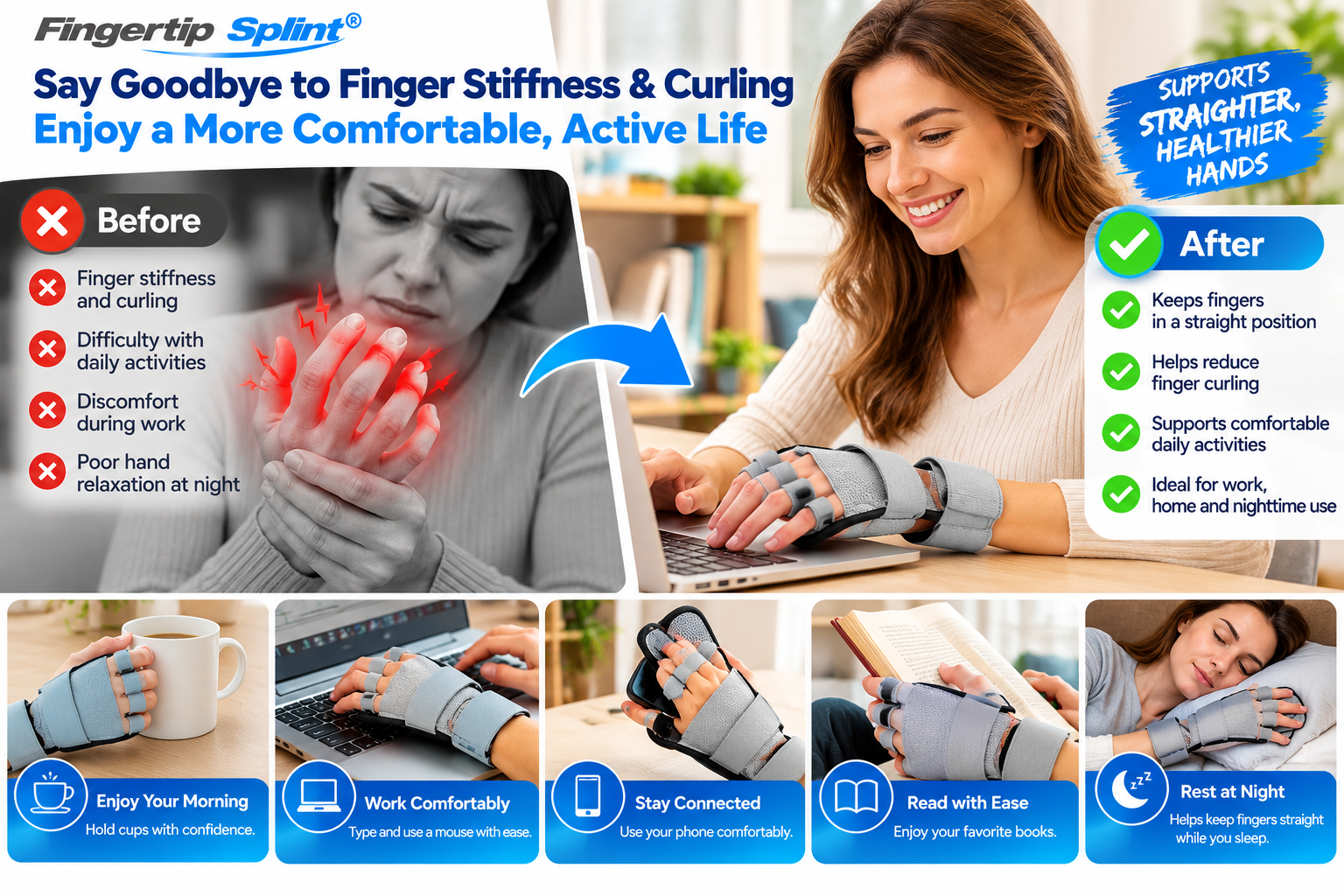
This brace is primarily designed for resting hand positioning rather than active hand use. Its structure and finger straps may limit typing, gripping and other tasks.
Can I Wear the Splint While Exercising?
Exercise and splinting may have different purposes within a rehabilitation plan. Remove or retain the splint only as directed by your clinician for the particular activity.
How Tight Should the Straps Be?
Straps should secure the hand without restricting circulation or creating painful pressure. A tighter fit does not necessarily provide better positioning.
How Long Should a Resting Hand Splint Be Worn?
Wear duration varies according to the condition, treatment plan, tolerance and skin health. There is no verified universal wearing schedule for this product.
When Is a Custom Splint More Appropriate?
A custom orthosis may be necessary when the hand has significant contractures, unusual anatomy, reduced sensation, pressure-sensitive skin or specific positioning requirements.
What Are the Most Important Fit Considerations?
The hand should rest comfortably against the support plate, the fingers should not be forced into position, and the straps should not cause circulation changes or persistent pressure marks.
Can a Resting Hand Splint Replace Hand Therapy?
No. A resting splint is a support accessory and does not replace professional assessment, prescribed exercises or treatment for the underlying condition.
Browse additional hand braces, thumb supports and finger splints available from Fingertip Splint.
Frequently Asked Questions About the 5-Finger Resting Hand Splint
1. What is a five-finger resting hand splint?
It is a hand-positioning orthosis designed to support the thumb, four fingers, palm and wrist in a selected resting position.
2. What is the main purpose of this hand brace?
Its primary purpose is supported hand positioning during appropriate rest periods.
3. Does the brace support all five fingers?
The product includes positioning areas for the thumb and four fingers.
4. Does it have adjustable straps?
Yes. The supplied images show multiple adjustable finger, hand and wrist straps.
5. Is the material breathable?
Mesh fabric sections are visible in the product images. Actual airflow and comfort depend on fit and wearing conditions.
6. Can it permanently straighten curled fingers?
No permanent correction has been established for this product. Fixed contractures require professional assessment.
7. Is it suitable for people with arthritis?
Suitability depends on the type of arthritis, the joints affected and professional recommendations.
8. Can it be used after a stroke?
Only when a qualified healthcare professional determines that the design and positioning are appropriate for the individual.
9. Does it treat Dupuytren’s contracture?
It should not be represented as a treatment or cure for Dupuytren’s contracture.
10. Can I wear it while sleeping?
Nighttime wear should follow a clinician-approved plan and manufacturer instructions.
11. Can I use it during the day?
Daytime resting use may be appropriate for some people, depending on their care plan.
12. Can I type while wearing it?
The splint restricts finger movement and is not primarily designed for typing or other active hand tasks.
13. Is the support plate adjustable?
Do not bend or reshape the plate unless the manufacturer confirms that modification is permitted.
14. What material is used in the brace?
The supplier diagram identifies mesh fabric, webbing, spandex, EVA and a steel plate. Exact material specifications require supplier confirmation.
15. Is the splint available for the left and right hands?
Confirm the available hand orientation before ordering. The supplied images do not establish universal compatibility.
16. Is this a one-size-fits-all product?
The exact size range has not been verified. Request the supplier’s measurements before purchase.
17. How should I position my fingers?
Place each finger within its corresponding support area without forcing it beyond its comfortable range of movement.
18. How tight should the straps be?
They should be secure but not constricting. Remove the splint if numbness, tingling, discoloration or increasing pain occurs.
19. Is the brace washable?
Follow the manufacturer’s cleaning instructions. Specific approved washing methods have not been confirmed.
20. Can children use this brace?
Children require age-appropriate sizing and professional fitting guidance. Adult product imagery does not establish pediatric suitability.
21. Can I use the brace after hand surgery?
Only with approval from the treating surgeon or hand therapist.
22. Can it prevent finger contractures?
Contracture prevention cannot be guaranteed. The effectiveness and appropriateness of splinting depend on the underlying condition and treatment plan.
23. What should I do if the splint causes pressure marks?
Remove it and inspect the skin. Seek professional fitting advice if redness persists or the skin becomes damaged.
24. Is the brace intended for gripping objects?
No. Its design focuses on resting hand positioning rather than active gripping.
25. Where can I find more information about Fingertip Splint products?
Visit our Frequently Asked Questions page or explore the Fingertip Splint website.
Related Blog Articles About Resting Hand Splints and Finger Positioning
Explore our educational articles to learn more about resting hand supports, finger positioning and considerations for nighttime hand care.
5-Finger Resting Hand Splint: Uses and Benefits
Learn about the design, positioning features and potential applications of a five-finger resting hand support.
Read: 5-Finger Resting Hand Splint Uses and Benefits
How a Night Hand Splint Supports Finger Straightening
Explore the role of hand positioning, adjustable support and professional fitting when considering a nighttime hand orthosis.
Read: How a Night Hand Splint Supports Finger Straightening
Resting Hand Brace for Curled Fingers: Comfort and Nighttime Support
Understand important comfort, fit and safety considerations for people exploring resting hand braces.
Read: Resting Hand Brace for Curled Fingers
Visit the Fingertip Splint Blog for more educational content about finger splints, thumb braces and hand support accessories.
Explore More Hand and Finger Support Products
At Fingertip Splint, we offer a growing collection of finger splints, thumb supports, hand braces and other external support accessories.
Browse our hand and finger support collection to compare different designs and find products that match your intended use.
For general product and ordering questions, consult our FAQ page.
Wholesale Resting Hand Splints and Distributor Inquiries
Looking for resting hand splints for resale, distribution, clinics or commercial purchasing? Contact Fingertip Splint to discuss product availability, specifications, sizing, packaging options, minimum order quantities and wholesale pricing.
Learn more about our medical support product supplier information and explore finger splint distributor opportunities.
Request a Wholesale Quote
Share your required quantity, intended market, packaging preferences and any product specification questions. Our team can review your inquiry and provide available purchasing information.
Important Safety Information and Product Disclaimer
This resting hand splint is an external hand-positioning accessory. It is not a substitute for medical diagnosis, hand therapy, prescribed custom orthoses or treatment of neurological and musculoskeletal conditions.
Do not force the fingers straight. A person with a fixed contracture, marked spasticity, recent injury or significant joint deformity may require a different splint design or individualized fitting.
Remove the brace if it causes increased pain, numbness, tingling, swelling, discoloration, persistent redness or skin breakdown. People with reduced sensation, circulation problems or fragile skin should obtain professional advice before use.
Nighttime wear should be undertaken only when appropriate for the individual’s condition and consistent with manufacturer instructions or professional guidance.
Claims and specification notice: This product has not been independently verified to prevent contractures, permanently straighten fingers, relieve arthritis, reverse stroke-related spasticity or guarantee improved morning hand function. Exact dimensions, hand orientation, material composition, package quantity, medical certifications and approved cleaning methods should be confirmed with the supplier before publication.
Reviews
There are no reviews yet.