
You know you need wrist support. But finding a brace that actually fits comfortably — one that stays in place during work, does not dig into your skin, and allows you to use your hand — can be frustrating. A brace that slips, feels too tight, or restricts movement more than necessary is not helping you. This guide explains how to find the right orthopedic wrist support, check for a correct fit, recognise a poor fit, and understand when a brace is providing appropriate protection for your hand. For a broader view of wrist support options, explore the FingerTipSplint range.
Table of Contents
- What Is Orthopedic Wrist Support?
- How to Find the Right Wrist Support Fit
- Comfort Features That Matter in Everyday Use
- Hand Protection During Work and Daily Activities
- Flexible Wrist Wrap vs Structured Brace vs Splint
- How to Wear Wrist Support Without Compromising Comfort
- Common Mistakes and When to Seek Medical Advice
- Is the Orthopedic Wrist Support Brace Right for You?
- Frequently Asked Questions
Orthopedic wrist support is designed to support the wrist and, depending on its construction, limit certain movements or help maintain a selected position. A comfortable fit should feel secure without causing numbness, tingling, swelling, or skin irritation. The right design depends on the person’s symptoms, intended activity, and professional guidance when needed.
What Is Orthopedic Wrist Support?
Orthopedic wrist support refers to devices designed to support the wrist, limit certain movements, or provide compression and stability. The term covers a wide range of designs — from soft flexible wraps to rigid splints.
Types of Wrist Support
- Wrist wraps: Provide gentle compression and light support. Allow most movement.
- Flexible braces: Provide moderate support and some movement restriction. Often use adjustable straps.
- Structured braces: Provide more stability and movement restriction. May include stays or rigid elements.
- Wrist splints: Designed to hold the wrist in a specific position. Used for more significant injuries or conditions.
The Word “Orthopedic” Does Not Guarantee Support
Not every product labeled “orthopedic” provides the same level of support. The actual design, materials, and intended use determine suitability. According to Mayo Clinic News Network guidance on choosing a brace, the decision to use a brace should be based on the specific condition and professional advice.
How to Find the Right Wrist Support Fit
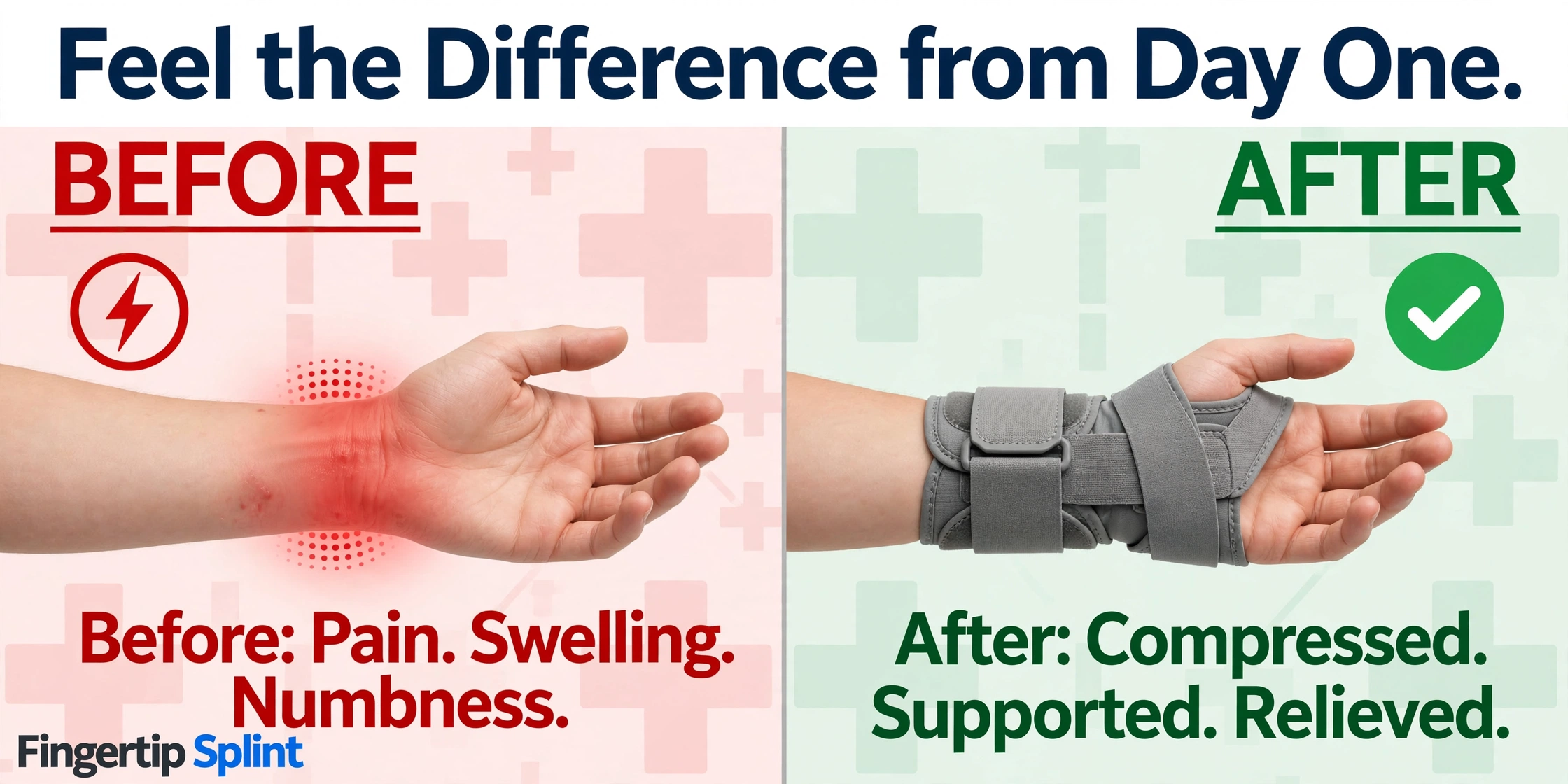
A correctly fitted brace should feel secure without causing pressure, numbness, or restriction. Here is how to find the right fit.
Step 1: Follow the Sizing Chart
Each manufacturer uses its own sizing system. Measure the area specified — usually wrist circumference — and compare with the product’s size chart. According to Leeds Community Healthcare NHS guidance on wrist and hand problems, correct fitting is essential for comfort and effectiveness.
Step 2: Choose the Correct Hand
Some braces are designed for the left wrist, some for the right, and some are universal. Confirm before ordering.
Step 3: Position the Brace Correctly
Follow the manufacturer’s placement instructions. The brace should sit over the wrist joint — not too high or too low.
Step 4: Fasten and Check
Fasten the straps comfortably and then check:
- Can you move your fingers freely?
- Is there any numbness or tingling?
- Any redness or pressure marks?
- Does the brace stay in place?
Common Fitting Problems
- Sliding: The brace may be too large or incorrectly positioned.
- Bunching at the wrist crease: The brace may be too long or not positioned correctly.
- Pressing against the thumb: The thumb opening may be too tight or the wrong shape.
- Restricting movement more than intended: The brace may be too rigid or too tight.
Comfort Features That Matter in Everyday Use
A brace that feels acceptable for five minutes may become uncomfortable during a longer task. Here are the comfort features that matter most.
Material Softness
Softer materials are generally more comfortable for extended wear. Rough seams or stiff edges can cause irritation.
Breathability
If you plan to wear the brace for long periods, breathable materials reduce moisture buildup and skin irritation.
Strap Placement
Straps should sit comfortably without digging into the skin. Wide straps distribute pressure more evenly.
Edge Finishing
Smooth edges reduce friction and irritation. Check for rough or unfinished edges before purchasing.
Ease of Fastening
The brace should be easy to put on and adjust. If it is difficult to fasten, you are less likely to wear it consistently.
Cleaning Instructions
Check the manufacturer’s cleaning instructions. Most wrist supports can be washed with mild soap and water, but some have specific requirements.
Explore Your Wrist Support Fit
Select an area below to learn about its role and safety considerations.
Hand Protection During Work and Daily Activities
A wrist support brace may help during a range of daily activities. Here is what it can and cannot do.
Computer Use and Typing
Prolonged typing can place stress on the wrist. A support brace may help provide gentle stability, but workstation adjustments and regular breaks are often more important. According to South Tees Hospitals NHS Foundation Trust guidance on wrist braces, the appropriate support depends on the individual’s needs.
Writing and Fine Motor Tasks
Holding a pen or performing fine motor tasks may be uncomfortable when the wrist is sensitive. A support brace may help, but it should not interfere with the task.
Cooking and Household Tasks
Cooking, cleaning, and lifting light objects involve wrist movement. A brace may provide support, but painful activities should be modified.
Light Lifting
Carrying shopping bags or lifting light objects may be more comfortable with a support brace. It does not make heavy lifting safe.
Hobbies and Recreational Activities
Gardening, knitting, or light sports may benefit from wrist support. However, a brace designed for daily activities may not be suitable for more demanding sports.
For a closer look at how different wrist conditions may require different support, the article on how a wrist brace supports sprains, arthritis, and carpal tunnel provides detailed condition-specific guidance.
Flexible Wrist Wrap vs Structured Brace vs Wrist Splint
Different types of wrist support serve different purposes. Here is how they compare.
| Support Type | Flexibility | Movement Restriction | Typical Use |
|---|---|---|---|
| Flexible wrist wrap | High | Minimal | Daily activities, light support |
| Structured wrist brace | Moderate | Moderate | Support during activity and rest |
| Wrist splint | Low | High | Post-injury, carpal tunnel, immobilization |
| Activity modification | N/A | N/A | Mild symptoms or complement to bracing |
A soft wrap is not interchangeable with a splint designed to hold the wrist in a particular position. If your clinician has recommended a specific wrist position, follow that guidance rather than selecting a support belt independently.
How to Wear Wrist Support Without Compromising Comfort
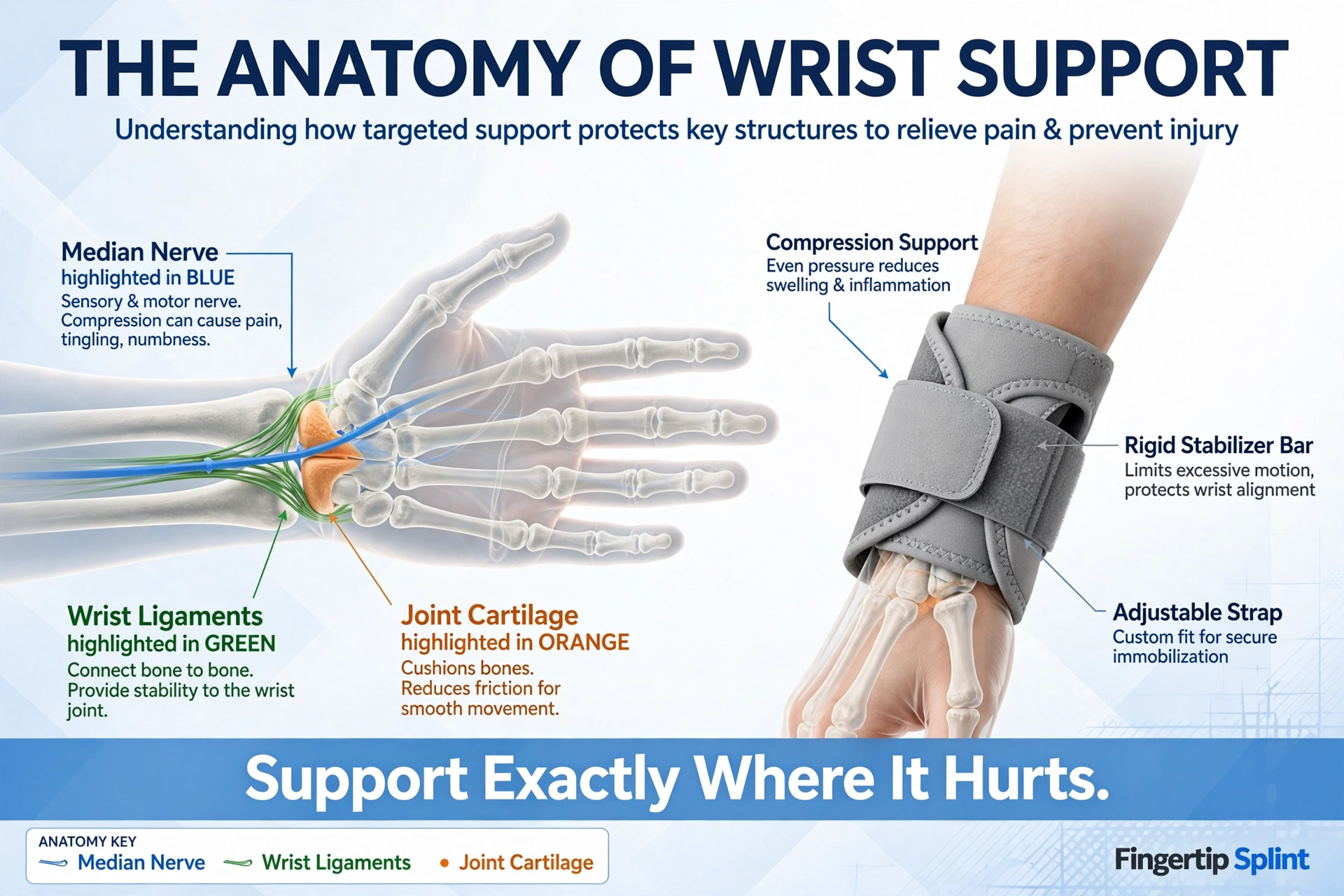
Wearing a wrist support correctly is essential for comfort and effectiveness. Follow this step-by-step process based on the product’s design and the manufacturer’s instructions.
Step 1: Check the skin. Look for cuts, redness, or irritation. Do not apply the brace over damaged skin.
Step 2: Position the brace. Follow the manufacturer’s placement instructions. The brace should sit over the wrist joint correctly.
Step 3: Fasten straps comfortably. The brace should feel secure but not tight. You should be able to move your fingers freely.
Step 4: Check sensation and finger colour. Look for numbness, tingling, or changes in colour or temperature. If any of these occur, loosen or remove the brace.
Step 5: Follow instructions. Different conditions require different wearing schedules. Follow your clinician’s or the manufacturer’s guidance.
Common Wrist Support Mistakes and When to Seek Medical Advice
Some mistakes can turn a helpful support into a source of additional problems. Here are the most common ones.
A brace that is too small or too large will not fit correctly.
Solution: Measure according to the manufacturer’s size guide.
Excessive pressure can cause numbness, tingling, or changes in colour or temperature.
Solution: Adjust the fit so it feels secure but not tight.
A brace that helps one condition may not help another.
Solution: Seek medical advice if the cause of your pain is unclear.
Serious injuries need professional assessment, not just a brace.
Solution: Seek medical advice for significant injuries.
A brace is not permission to push through pain.
Solution: Modify or pause painful activities and seek advice if symptoms persist.
Severe pain, deformity, or loss of sensation should not be ignored.
Solution: Seek urgent medical assessment for warning signs.
For general hand and wrist conditions, Mayo Clinic Orthopedics & Sports Medicine hand and wrist resources provide useful information.
Is the FingertipsSplint Orthopedic Wrist Support Brace Right for You?
If you are looking for an orthopedic wrist support to evaluate, the Orthopedic Wrist Support Brace from FingerTipSplint is one option to consider. This guide does not claim that it cures any condition or guarantees pain relief. What it offers is a design intended to support the wrist during daily activities.
Before purchasing, verify the following details on the product listing:
- Coverage: Does the brace cover the wrist, thumb, or both?
- Sizing: Does the product provide sizing guidance or a size chart?
- Material and adjustability: Is the brace adjustable? What materials is it made of?
- Closure: How does the brace fasten, and is it easy to adjust?
- Cleaning and care: Can you follow the manufacturer’s cleaning instructions?
- Intended use: What activities or conditions is the brace designed for?
If your clinician has recommended a specific type of splint, follow that guidance rather than selecting a brace independently. For additional options, browse the FingerTipSplint shop or review the frequently asked questions.
Explore the Orthopedic Wrist Support Brace
If wrist discomfort is affecting your daily activities, review the FingerTipSplint Orthopedic Wrist Support Brace, check its fit and care details, and decide whether its design matches your support needs.
View the Product Browse All ProductsFrequently Asked Questions
A correctly fitted brace should feel secure without causing pressure, numbness, or restriction. Follow the manufacturer’s sizing guide, measure the specified area, and check the fit after fastening. If the brace slides, bunches, or causes discomfort, adjust it or try a different size.
No. A wrist brace should feel secure but not tight. If you experience numbness, tingling, swelling, or changes in finger colour, the brace is too tight or incorrectly positioned. Loosen or remove it and seek advice if symptoms persist.
Wearing schedules depend on your condition, the brace design, and professional instructions. Some braces are designed for use during activities, while others are worn at night. Follow your clinician’s or the manufacturer’s guidance rather than assuming all-day wear is appropriate.
Some people can perform these tasks while wearing a brace, but comfort varies. Test the brace during short, low-risk activities first. If the brace interferes with typing or phone use, or if symptoms increase, adjust the fit or remove the brace for those tasks.
A wrist wrap provides gentle compression and light support, allowing most movement. A wrist splint is designed to hold the wrist in a specific position and limit movement more completely. The right choice depends on your condition and needs.
A wrist brace may provide some support and protection, but it does not prevent all injuries. It should not be used as a substitute for safe technique, appropriate activity modification, or professional assessment of an injury.
Stop using the brace and seek advice if you experience worsening symptoms, skin problems, numbness, tingling, increasing pain, or changes in finger colour or temperature. Seek urgent medical assessment for severe pain after injury, deformity, inability to move the wrist, or new loss of sensation.
Conclusion: The Right Fit Makes the Difference
Finding the right orthopedic wrist support is about fit, comfort, and appropriate protection. A brace that fits well and suits your activities can provide meaningful support. A brace that is too tight, too loose, or the wrong design can cause additional problems.
Use this guide as a framework: measure carefully, check the fit after fastening, monitor for warning signs, and follow professional guidance when needed. Stop using the brace if it causes pain or irritation, and seek professional advice if symptoms persist.
For readers who want to explore support products, the FingerTipSplint shop offers a selection. For more hand-care education, visit the FingerTipSplint blog. For personalized assistance, you can request a quote or review the frequently asked questions.
Your hands carry you through everything. Choosing the right support — and knowing when to seek professional advice — is part of caring for them well.