
If you have a bunion, you know how uncomfortable shoes can feel. The rubbing, the pressure, the sense that your big toe is being pushed in a direction it should not go — it can make even short walks frustrating. A bunion toe separator for day and night use may help create space between your toes, but choosing when and how to wear one matters. This guide explains what a separator does, the difference between daytime and nighttime use, how to check fit, and when professional advice is the right next step. For a broader view of foot support products, explore the full FingerTipSplint range.
Table of Contents
- What Is a Bunion Toe Separator?
- Wearing a Bunion Toe Separator During the Day
- Can You Wear One at Night?
- Day Use vs. Night Use: Which Is Better?
- How to Choose the Right Bunion Toe Separator
- Benefits and Limitations
- Common Mistakes to Avoid
- When to Seek Professional Advice
- Explore the Hallux Valgus Toe Separator
- Frequently Asked Questions
A bunion toe separator may be suitable for daytime or nighttime use, depending on its design and the manufacturer’s instructions. Daytime use requires enough room in footwear, while resting use requires a comfortable fit without excessive pressure. Stop using it if pain, numbness, tingling, or skin irritation develops. Toe separators may provide temporary comfort but do not reliably correct a bunion permanently.
What Is a Bunion Toe Separator?
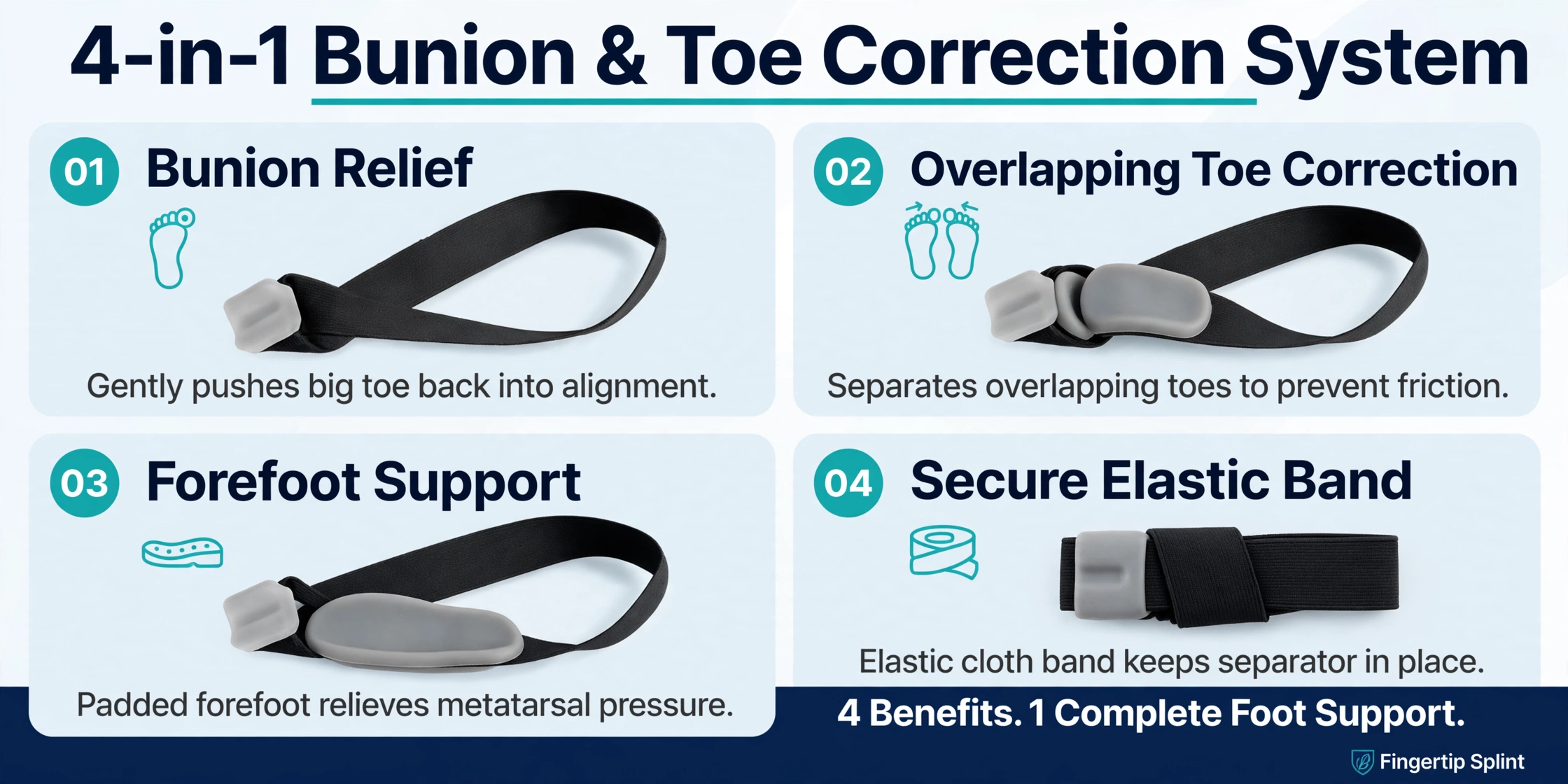
A bunion toe separator is a device placed between the big toe and the second toe to create space. It is designed to reduce contact or pressure while worn. A bunion — medically known as hallux valgus — is a condition where the big toe angles toward the smaller toes, creating a prominent joint at the base.
According to the Mayo Clinic’s bunion treatment guidance, treatment depends on symptom severity and may include roomy shoes, padding, and inserts. A separator is one conservative option.
What a Separator Does
A separator creates temporary space between the toes while worn. It may reduce direct rubbing or contact between the big toe and its neighbor.
What a Separator Does Not Do
A separator does not permanently correct the alignment of the bones. It cannot reverse a bunion or prevent progression on its own.
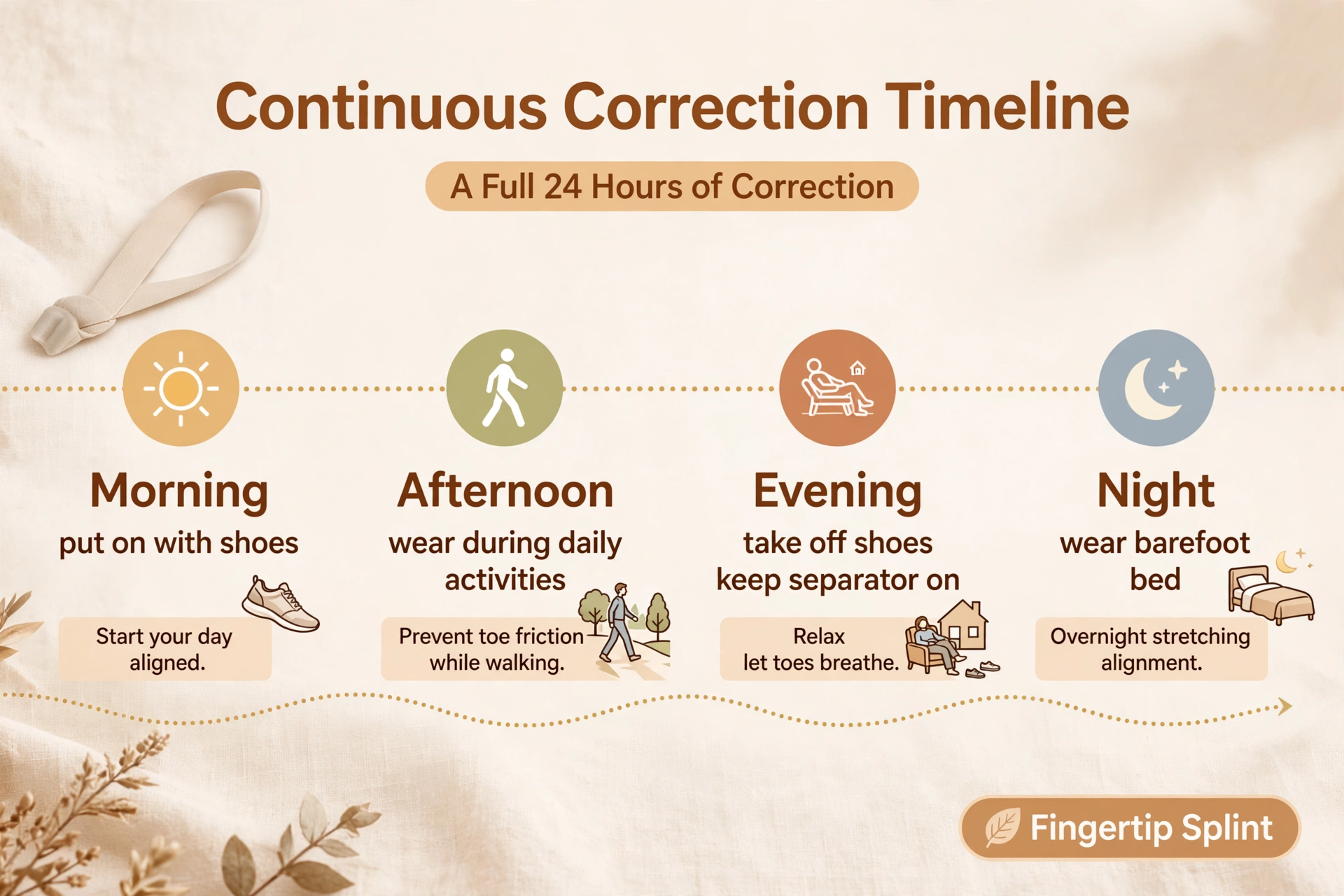
Wearing a Bunion Toe Separator During the Day
Daytime use of a bunion toe separator may help during sitting, light daily activities, or situations where friction and toe pressure are an issue. However, the separator must be compatible with your footwear.
Footwear Compatibility
A separator takes up space inside a shoe. If the shoe is narrow or tight, the separator may increase pressure instead of relieving it. According to the AAOS guide to tight shoes and foot problems, roomy toe boxes are important for foot comfort.
Activity Considerations
Not every separator is designed for walking or active use. Check the manufacturer’s instructions to see whether the device is suitable for the activities you have in mind.
When Daytime Use May Help
- During seated activities or light tasks
- When wearing shoes with adequate toe room
- For temporary comfort during specific activities
Can You Wear a Bunion Toe Separator at Night?
Nighttime use of a bunion toe separator may be appropriate for some people, depending on the product’s design and the manufacturer’s instructions.
What to Check Before Overnight Wear
- Product design: Is the device specifically designed for overnight use?
- Fit: Does it stay in place without causing pressure?
- Skin condition: Check for redness, irritation, or pressure marks before and after use.
- Circulation: Look for numbness, tingling, or changes in colour or temperature.
Do not assume that overnight wear guarantees better correction or results. According to the Cleveland Clinic’s guide to toe separators, toe separators can create space but are not a permanent fix.
Explore Your Use Case
Select a use case below to learn more about it.
Day Use vs. Night Use: Which Is Better?
There is no universal rule that one time is better than the other. The best option depends on the product’s design, your comfort, footwear, symptoms, and any clinician instructions.
| Consideration | Day Use | Night Use |
|---|---|---|
| Main goal | Comfort during suitable daily activities | Comfortable positioning while resting |
| Footwear | Must fit without squeezing toes | Shoes generally not involved |
| Main concern | Friction, pressure, and movement | Tightness, skin irritation, and unnoticed discomfort |
| Product choice | Must be suitable for the intended activity | Must be suitable for resting or overnight wear |
| Important check | Ensure the shoe has enough toe room | Follow product instructions and check skin condition |
| Expected result | Possible temporary comfort or reduced rubbing | Possible temporary spacing or comfort |
| Limitation | May not suit every shoe or activity | Does not guarantee permanent toe realignment |
How to Choose the Right Bunion Toe Separator
Choosing the right separator requires matching the product to your needs and wearing conditions.
Material
Softer materials are generally more comfortable for extended wear. Check that the material is skin-friendly.
Toe Spacing
The separator should create comfortable space without forcing the toes apart. A larger or tighter separator is not automatically more effective.
Comfort and Stability
The device should stay in place without causing pressure. If it slips or shifts, the fit may be wrong.
Shoe Room
If you plan to wear the separator inside shoes, make sure your footwear has enough room. Narrow shoes can compress the device against the toes.
Ease of Cleaning
Check the manufacturer’s cleaning instructions. Proper care affects hygiene and durability.
Wear Instructions
Follow the product’s specific instructions for wear time and placement.
If you are considering a toe separator, the FingerTipsSplint Hallux Valgus Toe Separator is one option to evaluate. Check the product details and instructions before purchasing.
Benefits and Limitations of Bunion Toe Separators
Understanding what a separator can and cannot do helps you set realistic expectations.
Potential Benefits
- Temporary spacing: Creates space between toes while worn.
- Reduced toe-to-toe rubbing: May reduce direct contact between toes.
- Comfort for some users: May provide temporary comfort during selected activities.
Limitations
- Response varies: What helps one person may not help another.
- Not a cure: A separator does not reverse the underlying deformity.
- Not a permanent fix: It cannot be assumed to stop bunion progression.
For a broader look at how a hallux valgus toe separator works, the article on hallux valgus toe separator uses and benefits provides additional context.
Common Mistakes to Avoid
Some mistakes can make the device less comfortable or unsafe. Here are the most common ones.
Forcing the toe can cause pain and injury.
Solution: Stop if the position creates pain or resistance.
Excessive pressure can cause numbness, tingling, or skin irritation.
Solution: Choose a comfortable fit that does not cause pressure.
The shoe may compress the device against the toes.
Solution: Ensure the shoe has enough room for the device.
Redness, blisters, or numbness indicate a problem.
Solution: Stop using the device and inspect the skin.
Not every separator is designed for overnight use.
Solution: Follow the manufacturer’s instructions.
Practical Checklist for Reassessing Fit
- Does the separator stay in place without slipping?
- Does it feel comfortable without pressure?
- Is there any numbness, tingling, or colour change?
- Is the skin free from redness or irritation?
- Does your footwear have enough room?
When to Seek Professional Advice
A toe separator is not a substitute for medical assessment. Seek professional advice if:
- Pain is persistent or worsening
- Symptoms affect daily activities or walking
- You develop sores, swelling, or difficulty finding shoes
Explore the Hallux Valgus Toe Separator
If you are considering a bunion toe separator, the FingerTipsSplint Hallux Valgus Toe Separator is one option to evaluate. This guide does not claim that it corrects bunions permanently or guarantees pain relief. What it offers is a design intended to create space between the toes.
Before purchasing, review the product listing for:
- Material and construction
- Intended toe placement
- Sizing and fit guidance
- Wear instructions
- Cleaning and care requirements
For a related option, the article on elastic forefoot pad for overlapping toes may be helpful if your main concern is forefoot cushioning rather than toe separation.
Looking for a Simple Way to Explore Toe-Separation Support?
Review the Hallux Valgus Toe Separator‘s product details, check its intended use and fitting instructions, and decide whether it suits your footwear and comfort needs.
View the Product Browse All ProductsFrequently Asked Questions
This depends on the product’s design and instructions. Some separators are designed for extended wear, while others are intended for specific activities. Follow the manufacturer’s guidance and remove the device if it causes discomfort.
This depends on the product. Some separators are designed for nighttime use, while others are not. Check the manufacturer’s instructions and monitor the skin for irritation. Do not assume that overnight wear guarantees better correction or results.
This depends on the device design and whether your shoes have enough room. A separator takes up space inside a shoe. If the shoe is narrow, the separator may increase pressure instead of relieving it.
No. A toe separator may create space while worn, but it does not permanently correct the alignment of the bones. Surgery is the only way to correct the structural deformity.
The separator should feel comfortable without causing numbness, tingling, or skin irritation. If you experience any of these warning signs, remove the device and seek advice.
If the bunion is painful, a separator may provide temporary comfort for some people. However, if the pain is persistent or worsening, seek professional advice. A separator should not be used to mask pain or delay assessment.
Seek medical advice if you experience persistent or worsening pain, difficulty walking, repeated skin irritation, or increasing toe deformity. People with diabetes, reduced sensation, or poor circulation should seek advice before using a pressure-producing device.
Make an Informed Decision About Bunion Comfort
A bunion toe separator may help create space and improve comfort for some people, but the right fit, suitable footwear, and realistic expectations are essential.
Use this guide as a framework: understand what a separator can and cannot do, check the specifications, follow safe-use instructions, and seek professional advice for persistent or worsening symptoms. The device may provide temporary comfort, but it does not correct the underlying deformity.
For readers who want to explore comfort products, the FingerTipSplint shop offers a selection. For more foot and hand care education, visit the FingerTipSplint blog. For personalized assistance, you can request a quote or review the frequently asked questions.
Your feet carry you through everything. Choosing the right support — and knowing when to seek professional advice — is part of caring for them well.