
You wake up, try to straighten your finger, and it catches. There is a click, a pop, or a moment where the finger locks before it releases. Perhaps it feels stiff in the morning, sore at the base, or awkward when you grip a phone, type at work, or pick up a cup. A trigger finger brace may help by limiting certain movements and supporting the finger in a selected position, but its usefulness depends on the design, the affected joint, and your symptoms. This guide explains what a trigger finger brace does, how it differs from other supports, how to choose and wear one correctly, what a realistic recovery timeline looks like, and when finger stiffness needs medical assessment. For a broader view of available finger-support products, explore the full FingertipsSplint range.
Table of Contents
- Trigger Finger Brace: What to Know Before Buying
- What Is Trigger Finger and Why Does It Happen?
- How Does a Trigger Finger Brace Work?
- Main Uses and Benefits of a Trigger Finger Brace
- Trigger Finger Brace vs. Splint vs. Sleeve
- How to Choose and Wear a Trigger Finger Brace
- Trigger Finger Recovery Timeline
- Common Trigger Finger Brace Mistakes
- When Should You See a Doctor?
- Choosing a Trigger Finger Brace: Product Guide
- Frequently Asked Questions
A trigger finger brace is a support designed to limit certain finger movements or keep a joint in a selected position, depending on its design. It may help reduce repeated bending and support symptom management for some people with trigger finger. The right brace and wearing schedule depend on the affected joint, symptom severity, and medical advice.
Trigger Finger Brace: What to Know Before Buying
The first sign is often small: a finger that feels stiff in the morning, a soft click when you bend it, or a slight catching sensation when you grip something. Over time, the click can become a pop, and the pop can become a lock. For people who type for a living, cook, care for children, or play sport, a finger that catches is more than a nuisance. It interrupts work, disrupts sleep, and creates a constant background worry about whether the finger will straighten at all.
A trigger finger brace is one of the most accessible options for people who want to manage early symptoms without jumping straight to more invasive treatment. But it is not a cure, and it is not the same as a generic finger sleeve. Choosing the wrong style can waste money, delay appropriate care, and leave you more confused than before.
What a Trigger Finger Brace Is Intended to Do
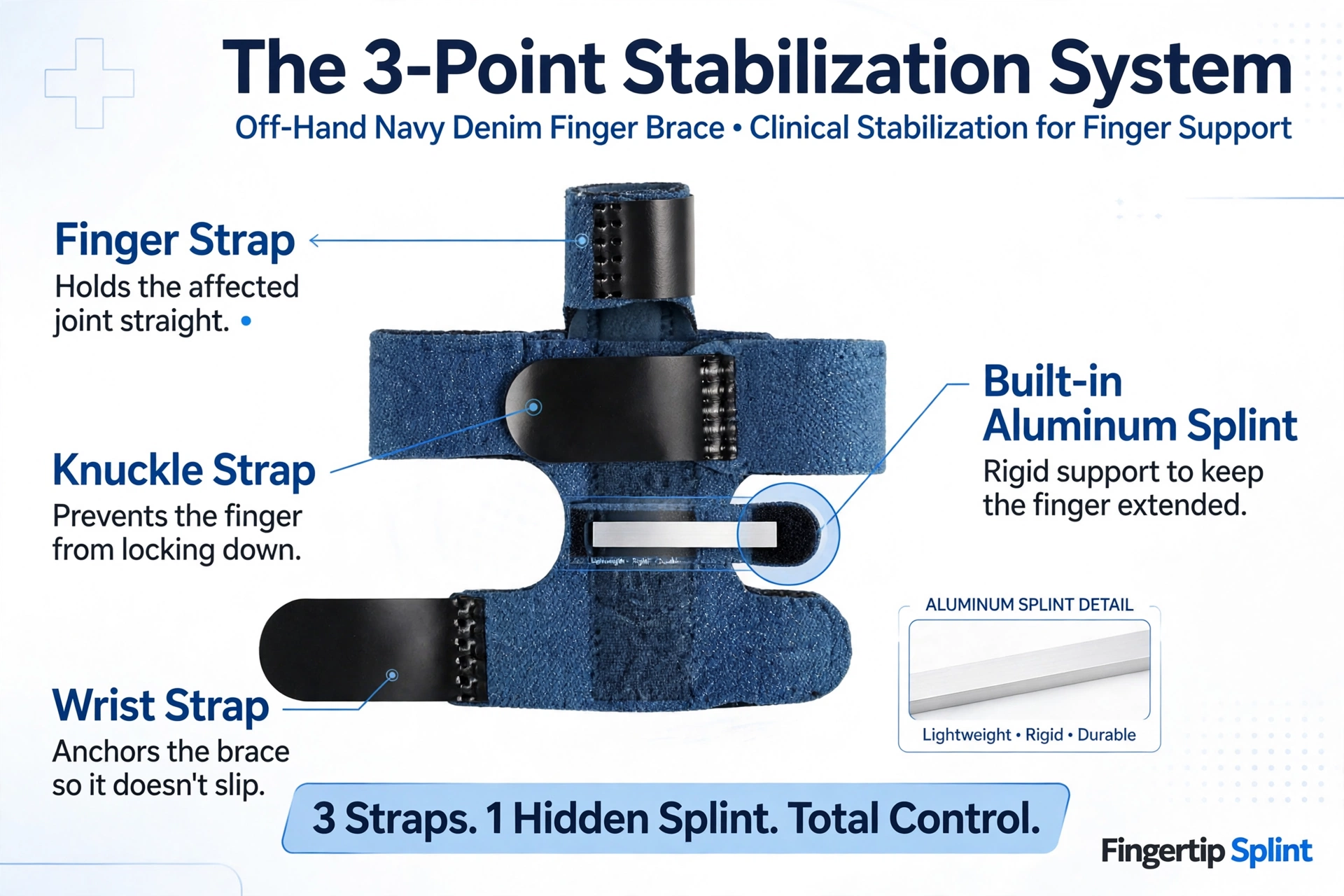
Depending on its design, a trigger finger brace may limit bending at a specific joint, hold the finger in a chosen position, or reduce repeated movement that irritates the flexor tendon. The goal is usually symptom support, not treatment of the underlying condition. The 1-piece trigger finger splint is an example of a product readers can inspect to understand how a dedicated support differs from a general sleeve.
Why Selecting the Correct Style Matters
Not all finger braces restrict movement in the same way. Some target the middle joint, others focus on the base of the finger, and some are designed for the thumb. A brace that does not match the affected joint may shift, pinch, or fail to limit the movement that triggers symptoms. For more on how different supports compare, the guide to trigger finger brace uses and benefits is a useful companion read.
Symptom Support vs. Treating the Underlying Condition
A brace may help you manage symptoms, but it does not address the underlying inflammation or thickening of the tendon sheath. Some people improve with conservative measures, while others need medical treatment. Recognizing that distinction early prevents frustration and helps you make better decisions.
What Is Trigger Finger and Why Does It Happen?
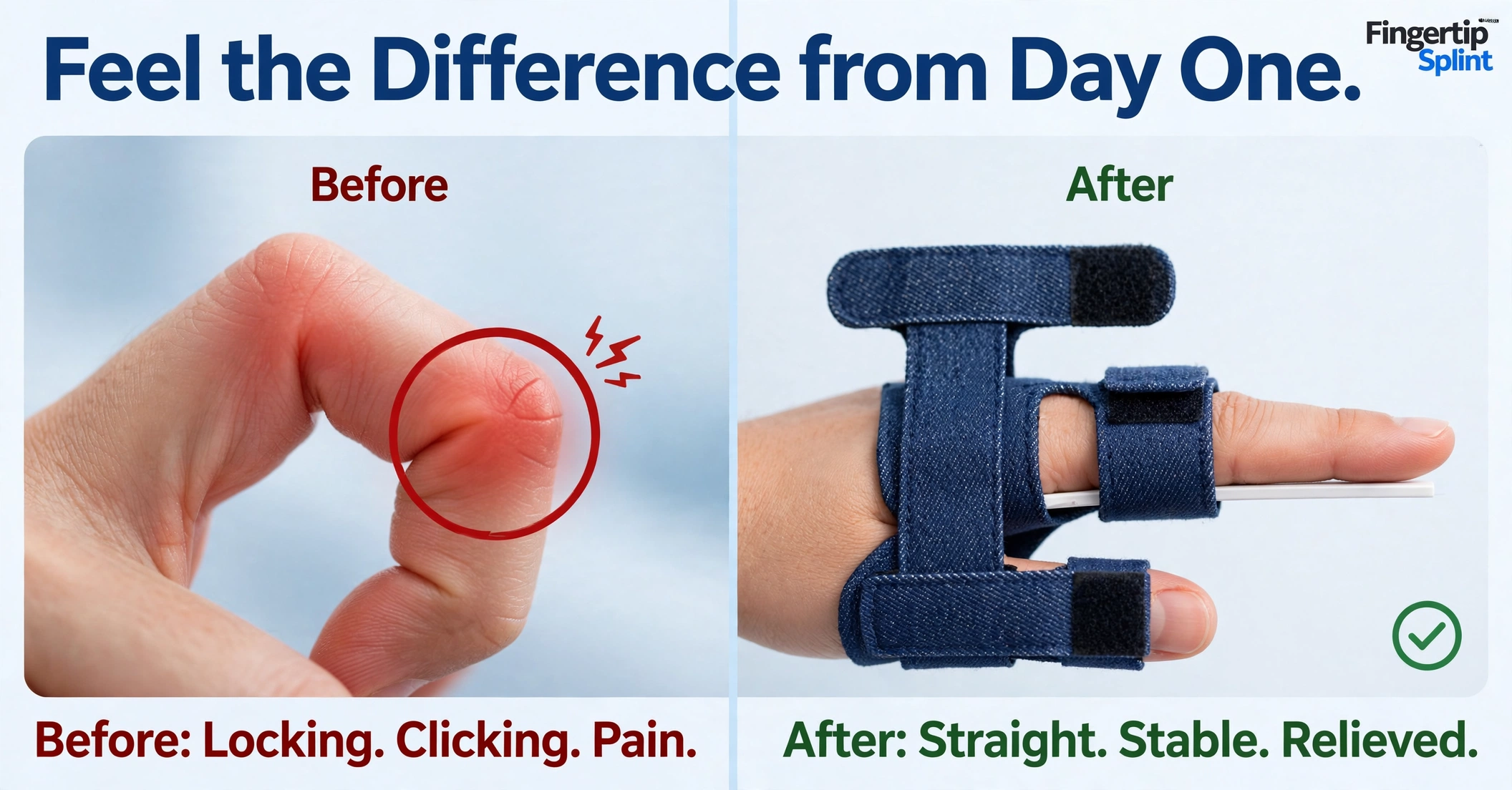
Trigger finger, also called stenosing tenosynovitis, involves the flexor tendon that runs through the finger and the pulley system that keeps it close to the bone. When the tendon or its sheath becomes irritated or thickened, the tendon can struggle to glide smoothly. The result is the familiar clicking, catching, or locking sensation that gives the condition its name.
The Mayo Clinic overview of trigger finger explains that the condition can affect any finger, including the thumb, and that symptoms often start mild before progressing. Understanding the anatomy helps explain why a brace that limits repeated bending may be useful for some people.
Common Symptoms
- Clicking or popping: A noticeable click when bending or straightening the finger.
- Morning stiffness: The finger feels stiff or locked after rest.
- Tenderness or a lump: A tender spot or small nodule near the base of the finger.
- Catching or locking: The finger catches in a bent position and then releases.
- Difficulty straightening: In more advanced cases, the finger may stay locked.
Why Other Conditions Can Cause Similar Symptoms
Finger pain, stiffness, and catching are not exclusive to trigger finger. Arthritis, tendon injuries, and other hand conditions can produce overlapping symptoms. This is why a brace should not be used as a substitute for diagnosis. The Cleveland Clinic guide to jammed finger injuries is a reminder that a single symptom can have several possible causes.
How Does a Trigger Finger Brace Work?
A trigger finger brace works by changing how the finger moves. Depending on the design, it may limit bending at a specific joint, hold the finger in a straighter position, or reduce the repeated movement that irritates the tendon. The goal is not to force the finger into a position, but to support it while symptoms settle.
Limiting Selected Movement
Repeated bending can aggravate the flexor tendon. A brace that limits movement at the affected joint may reduce that repeated irritation. This is why the fit and positioning of the brace matter. A brace that is too loose may shift and fail to limit movement, while one that is too tight may cause pressure or circulation problems.
Why Joint Positioning Matters
Different joints in the finger contribute to bending in different ways. A brace designed for the base of the finger will behave differently from one designed for the middle joint. Choosing a brace that matches the affected joint is essential. For a deeper look at how splints support finger positioning, see how a finger splint supports bent finger straightening.
Why a Generic Finger Sleeve May Not Be Enough
A flexible finger sleeve may provide light compression or coverage, but it may not limit the specific movement that triggers symptoms. A trigger finger brace is usually designed with more structure to support the affected joint. This distinction is important for buyers who assume any finger support will work.
When Clinical Guidance Matters
If the finger locks or cannot straighten, a clinician’s recommendation can be important. The AAOS OrthoInfo guide to trigger finger explains that treatment depends on severity and that splinting is one of several options. A brace should fit within a broader plan, not replace one.
Main Uses and Benefits of a Trigger Finger Brace
This is the core of the article. A trigger finger brace may offer several practical benefits, but it is important to describe them realistically. Results vary, and a brace may not resolve the condition on its own.
Movement Control
Some braces limit repeated bending at the targeted joint. For someone whose finger catches every time they grip a tool or lift a bag, reducing that repeated movement may help reduce irritation. This is the most direct mechanical benefit of a trigger finger brace.
Symptom Management
Appropriate support may help some people manage catching or discomfort during daily activities. It does not eliminate the underlying condition, but it may make symptoms more manageable while other measures are considered.
Daily Routine Support
A properly selected brace may make certain activities easier to manage. For example, someone who notices morning stiffness before work may find that a brace worn according to instructions helps them start the day with less catching. A person whose finger repeatedly catches while gripping objects may find that limiting that movement reduces the frequency of episodes.
Positioning Support
Selected designs can hold a joint in a chosen position. This may be useful when a clinician has recommended a specific resting position. The brace should be chosen to match that recommendation.
A Conservative Care Option
Splinting may be considered alongside activity modification and clinician-guided care. It is not a standalone cure, but it can be part of a conservative approach. The NHS guidance on trigger finger describes conservative options and when further treatment may be considered.
Explore Trigger Finger Support
Select a topic below to learn what matters when choosing a brace.
Trigger Finger Brace vs. Finger Splint vs. Finger Sleeve
These terms overlap, but the products may have different purposes. Understanding the differences helps you avoid buying the wrong type of support.
| Support Type | Main Purpose | Important Consideration |
|---|---|---|
| Trigger finger brace | May limit selected finger movement | Joint positioning and fit matter |
| Rigid finger splint | Restricts movement more firmly, depending on design | May require professional guidance |
| Flexible finger sleeve | Usually provides coverage or light compression | May not adequately limit triggering movement |
| Thumb brace | Supports the thumb and selected thumb joints | Not interchangeable with a finger brace |
When choosing a support, make sure it is designed for the correct digit and joint. The guide to an adjustable finger brace for thumb and finger support explains why thumb and finger supports are not interchangeable. If you are comparing options across categories, the finger support shop allows you to review product details side by side.
How to Choose and Wear a Trigger Finger Brace
Choosing and wearing a brace correctly is more important than the brand name on the package. Follow this practical process.
Do not force a locked finger straight or tighten a brace to the point of discomfort. A finger that remains locked or cannot straighten needs medical assessment. The WebMD overview of trigger finger and the Healthline guide to trigger finger both emphasise the importance of appropriate evaluation when symptoms persist.
Trigger Finger Recovery Timeline: What to Expect
This is a guide to monitoring symptoms, not a guaranteed week-by-week cure. Outcomes depend on severity, duration, and the treatment used.
Notice and assess
Note when catching occurs, how often it happens, and whether it interferes with daily tasks. Seek appropriate guidance if symptoms persist.
Follow the recommended plan
Track stiffness, locking, discomfort, and functional changes while following the prescribed plan. Adjust fit and wear time according to instructions.
Review with a clinician
If there is little improvement, review the brace’s fit and use with a clinician. Other treatment options may be appropriate.
Ask about other options
If locking persists or worsens, ask about other treatment options rather than extending self-treatment indefinitely.
Avoid assuming a fixed recovery time. Some people notice improvement in a few weeks, while others need longer or different treatment. The MedlinePlus overview of trigger finger provides additional background on treatment considerations.
Common Trigger Finger Brace Mistakes
Even a well-designed brace can cause problems if used incorrectly. Here are the most common mistakes and how to correct them.
A brace that looks comfortable may not provide the movement restriction you need.
Correction: Check the product’s intended use and joint coverage.
A brace designed for one joint may shift or fail to support another.
Correction: Match the brace to the affected finger and joint.
Excessive tightness can reduce circulation and cause numbness or tingling.
Correction: Follow the manufacturer’s fitting instructions.
Redness, numbness, or colour changes are signs to stop and reassess.
Correction: Remove the brace and seek advice if symptoms persist.
Forcing the finger can worsen irritation and delay appropriate care.
Correction: Seek medical assessment for persistent locking.
Activity changes and other recommended measures may be part of the plan.
Correction: Follow the full care plan, not just the brace.
Worsening symptoms may indicate a need for different treatment.
Correction: Seek medical advice promptly.
When Should You See a Doctor?
Not every stiff finger needs urgent care, but some situations do. Knowing the difference helps you act appropriately without unnecessary alarm.
Symptoms That Warrant Assessment
- The finger repeatedly locks or cannot straighten.
- Symptoms persist despite appropriate brace use.
- Movement becomes limited or pain interferes with everyday tasks.
- You notice redness, warmth, swelling, or signs of infection.
Symptoms That Warrant Prompt Care
Seek prompt care after an injury involving severe pain, major swelling, deformity, an open wound, or a pale, blue, cold, or numb finger. The NHS guidance on finger pain lists symptoms that may need urgent assessment.
What a Clinician May Consider
Depending on the diagnosis and severity, a clinician may consider activity modification, splinting, medication, an injection, or a procedure. Not every reader needs all these treatments. The Johns Hopkins Medicine overview of trigger finger provides a useful summary of treatment options.
Choosing a Trigger Finger Brace: Product Guide
The 1-piece trigger finger splint is one option readers can inspect. It is a dedicated support designed for trigger finger use, but buyers should verify the details before purchasing.
What to Verify on the Product Page
- Which finger and joint it supports.
- Available sizes and adjustment method.
- Materials and skin-contact areas.
- Intended use and care instructions.
- Whether its design matches your clinician’s recommendation.
Do not assume the product’s materials, sizes, or intended benefits without checking the listing. The frequently asked questions about finger supports page may answer common buyer questions. If you are buying for a clinic or team, the medical finger splint supplier and finger splint distributor pages provide business purchasing context, and the request-a-quote option may be useful for bulk orders.
Bundle Strategy
Recovery often involves different stages. A more supportive brace may be appropriate early on, while a lighter option may suit later stages when symptoms settle. Having more than one option can help you adapt as your finger responds. Browse the finger support collection to compare designs.
Find the Right Support for Your Trigger Finger
A trigger finger brace should match your affected joint, your symptoms, and any advice from a healthcare provider. Review product details carefully before buying, and seek medical assessment if the finger locks, cannot straighten, or if symptoms worsen. If you are ready to compare options, the collection is a good place to start.
View the Trigger Finger Splint Browse All Finger SupportsFrequently Asked Questions
A trigger finger brace is used to limit selected finger movements or hold a joint in a chosen position, depending on its design. It may support symptom management for some people. Function varies by brace design, so check the product description and follow clinical advice when appropriate.
Splinting may help some people manage clicking and locking by reducing repeated movement that irritates the tendon. However, persistent or severe locking may require clinical treatment. If the finger locks frequently or cannot straighten, seek medical assessment.
The wearing schedule depends on the brace design, the affected joint, and clinical recommendation. Follow the product instructions and any guidance from your healthcare provider. Do not extend wear beyond what is recommended without reassessing with a clinician.
Night splinting may be recommended in some cases, but the appropriate position and schedule are individual. Follow your clinician’s advice and the product instructions. If you notice numbness, tingling, or skin irritation during sleep, reassess the fit.
They serve different purposes. A trigger finger brace is usually designed to limit selected movement or support joint positioning. A flexible finger sleeve typically provides light coverage or compression and may not provide the joint control required for trigger finger. Choose based on your needs and clinical advice.
Some people improve with conservative approaches such as activity modification, splinting, or other clinician-guided treatment. Others may need additional intervention. Outcomes vary, so discuss options with a qualified healthcare provider rather than assuming a specific result.
Seek medical assessment if the finger repeatedly locks, symptoms persist despite appropriate brace use, movement becomes limited, or pain interferes with daily tasks. Seek prompt care after an injury involving severe pain, major swelling, deformity, an open wound, or a pale, blue, cold, or numb finger.
Conclusion: Support Your Finger, Protect Your Day
A trigger finger brace can be a practical support for people managing clicking, catching, or stiffness, but it is not a cure and it is not a substitute for diagnosis. The right brace depends on the affected joint, the severity of symptoms, and clinical advice. If your finger locks, cannot straighten, or if symptoms worsen, seek medical assessment. For more guidance, explore more finger-support guidance in the blog library and review the frequently asked questions about finger supports.