
Your thumb aches when you grip a cup. A finger feels sore after a long day of typing. You have tried wrapping it, taping it, or wearing a generic sleeve, and nothing quite fits right. Now you are staring at a page full of braces and wondering which one will actually help. An adjustable finger brace for thumb and finger support may be part of the answer, but the right product depends on which joint is affected, why it needs support, and how the brace is designed. Thumbs and fingers have different joints and movement patterns, so a brace that helps one area may not suit another. This guide explains how adjustable braces work, how to choose the right one, how to fit it safely, and when medical assessment matters more than a product purchase. For a broader view of available finger support products, explore the full FingertipsSplint range.
Table of Contents
- What to Know Before Buying
- Why Thumb and Finger Support Needs Differ
- How an Adjustable Finger Brace Works
- Potential Benefits of Adjustable Thumb and Finger Braces
- Brace vs. Thumb Brace vs. Finger Splint
- How to Choose the Right Size and Adjust the Brace
- Using Thumb and Finger Braces During Daily Activities
- Common Mistakes to Avoid
- When Should You Seek Medical Advice?
- Product Guide: What to Check Before Buying
- Frequently Asked Questions
An adjustable finger brace is a wearable support that uses a customizable fit to help support or restrict movement around a particular finger or thumb joint. Depending on its design, it may provide positioning support, light compression, or protection during selected activities. The right brace depends on the affected joint, symptoms, and whether a clinician recommends movement restriction.
Adjustable Finger Brace for Thumb & Finger Support: What to Know
Discomfort in the hand is one of those problems that feels small until it starts interfering with everything. Typing becomes slower. Gripping a cup feels awkward. Household tasks take longer. You start to notice how often you use your thumb and fingers, and you want a solution that is simple, affordable, and effective.
An adjustable brace can be a practical option for some people, but it is not a universal fix. The key is understanding what you are supporting, why you are supporting it, and whether the product is designed to address that specific area. A thumb brace and a finger brace may look similar in a product photo, but they are not interchangeable.
What an Adjustable Brace Is
An adjustable finger brace is a wearable support that can be customised to fit a particular finger or thumb joint. It may use straps, closures, or flexible materials to help secure the brace. Depending on the design, it may support a joint in a selected position, limit movement, or provide light compression during selected activities. The adjustable finger splint is a related option to review, but its suitability depends on the affected area and condition.
Why Fit and Joint Location Matter
A brace designed for the thumb may not fit an index finger correctly. A brace designed for the middle finger may not support the thumb base. The location of the discomfort is one of the most important pieces of information when choosing a brace. If you are unsure which joint is affected, a clinician can help identify it.
Support, Compression, and Immobilisation Are Not the Same
Support, compression, and immobilisation describe different levels of restriction. A flexible sleeve may provide light compression, a supportive brace may limit selected movement, and a rigid splint may immobilise a joint. These are not interchangeable, and choosing the wrong level of support can be uncomfortable or ineffective.
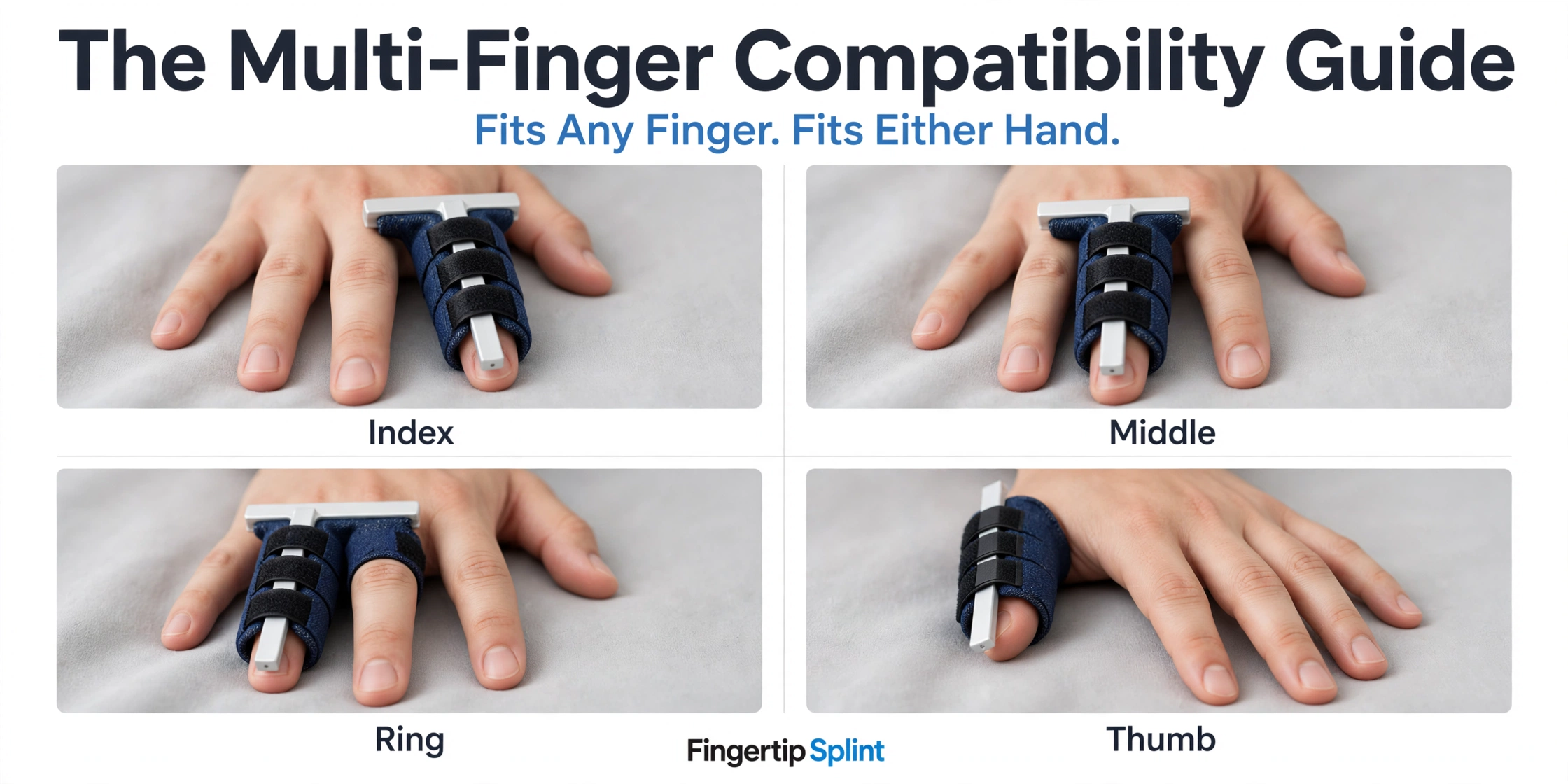
Why Thumb and Finger Support Needs Can Be Different
The thumb is not just another finger. It has a unique range of movement and a central role in gripping, pinching, and manipulating objects. The other fingers have their own joint structure and movement patterns. A brace designed to stabilise the thumb may not fit or support an index, middle, ring, or little finger correctly.
Thumb-Base Discomfort and Gripping
The base of the thumb is a common site of discomfort, especially in people who grip, pinch, or use their hands repetitively. A brace that supports the thumb base may need to extend toward the wrist to provide stability. A simple finger brace may not reach the relevant joint. The AAOS guide to thumb arthritis explains how the thumb base can be affected by wear and tear.
Finger-Joint Stiffness and Discomfort
Finger joints can become stiff or uncomfortable after injury, overuse, or other conditions. A brace that supports the affected joint may help during selected activities. The guide to how a finger splint supports bent finger straightening explains why the cause of the problem matters when choosing a support.
Repetitive Gripping and Everyday Tasks
Typing, cooking, gardening, and household tasks can all place stress on the thumb and fingers. A brace may help during some activities, but it is not a substitute for activity modification or medical assessment.
Why the Location and Cause Matter
“Hand pain” is a general label. The location and cause of the discomfort determine whether a thumb brace, a finger brace, or another support is appropriate. Persistent symptoms should not automatically be treated as a simple strain. The NHS guidance on finger pain lists symptoms that may need assessment.
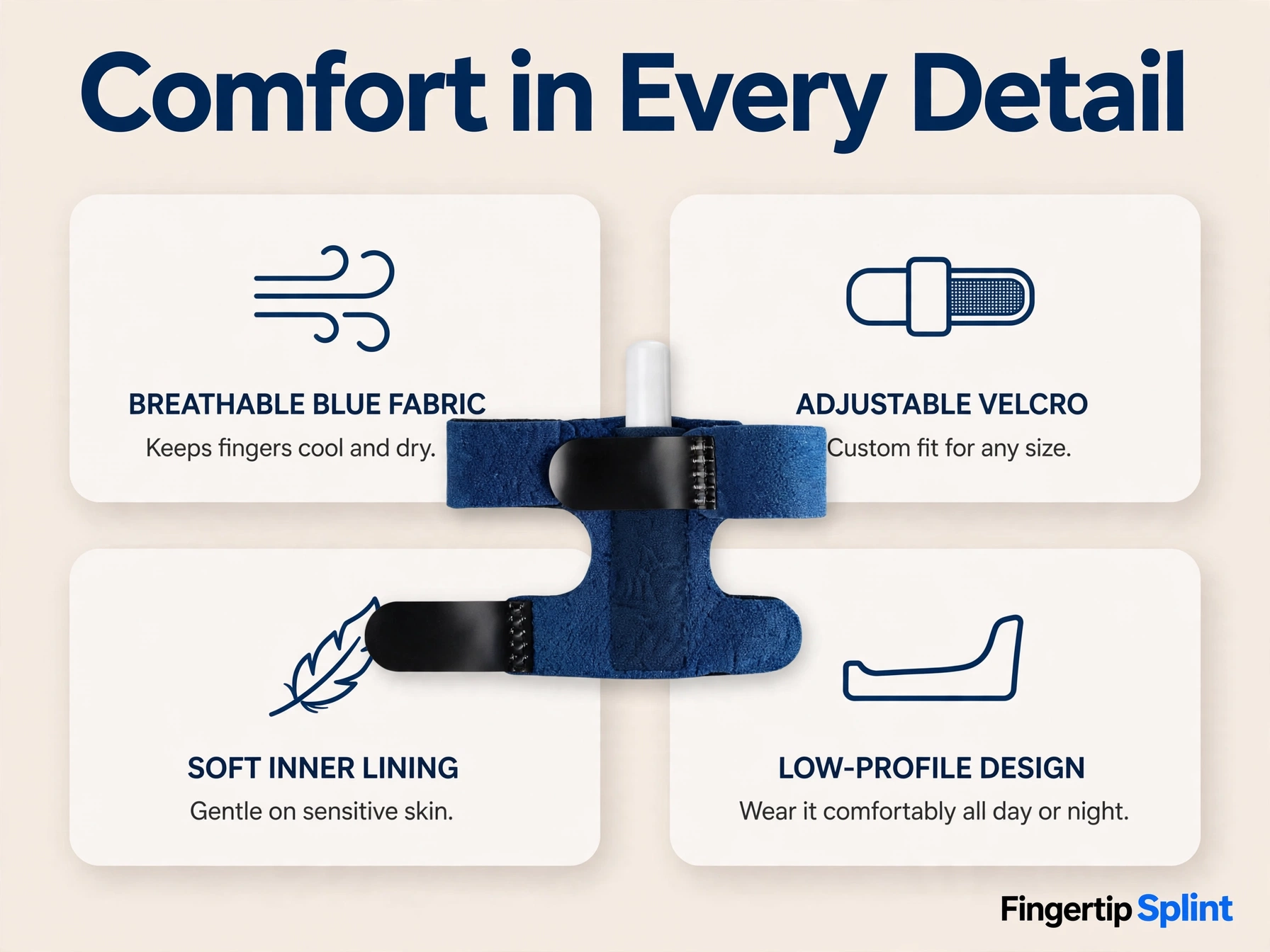
How an Adjustable Finger Brace Works
An adjustable finger brace works by providing a customisable fit around a selected joint. Depending on its design, it may support or restrict movement, provide light compression, or hold a joint in a chosen position. Not every adjustable brace provides all of these functions.
Customisable Fit
Straps or closures may help secure the brace and allow the user to adjust the fit. This can be useful for people with different hand shapes or those who find standard braces difficult to keep in position.
Movement Control
Certain designs limit movement around a selected joint. This may be useful when a clinician has recommended movement restriction. A brace that is too loose may shift and fail to limit movement, while one that is too tight may cause pressure or circulation problems.
Positioning Support
Some braces hold a joint in a chosen position. This may be important for certain injuries or conditions where the position of the joint affects healing or comfort.
Comfort and Coverage
Padded or flexible materials may improve comfort during selected tasks. Coverage may vary depending on the brace design. The product description should explain what the brace is intended to cover.
Ease of Use
Adjustment may make putting on or removing a brace more convenient. A practical closure can be helpful for people who need to remove the brace during the day.
Potential Benefits of Adjustable Thumb and Finger Braces
Adjustable braces may offer several practical benefits, but it is important to describe them realistically. Results vary, and a brace does not guarantee pain relief or recovery.
Targeted Support
A suitable design may support the joint that needs attention. This is the most direct benefit of choosing a brace that matches the affected area.
Movement Management
Some braces restrict selected movements when that is appropriate. This may help reduce irritation during selected activities, but it should be guided by clinical advice when the condition is significant.
Everyday Task Support
Users may find certain activities easier to manage when the brace suits their needs. For example, someone who types for hours may find a light brace more comfortable than no support at all. A person who grips objects throughout the day may find that a supportive brace helps them manage discomfort.
Fit Customisation
Adjustability may help accommodate different hand shapes within the product’s sizing range. A brace that fits well is more likely to stay in position and provide consistent support.
Consistent Positioning
Certain designs may help maintain a prescribed position. This may be useful when a clinician has recommended a specific position for a joint.
Convenience
A practical closure can make the brace easier to put on and remove. This may be helpful for people who need to adjust the brace during the day.
Explore Thumb & Finger Support
Select a topic to understand what to check before choosing a brace.
Adjustable Finger Brace vs. Thumb Brace vs. Finger Splint
These terms overlap, but the products have different purposes. Understanding the differences helps you choose before spending money.
| Support Type | Typical Purpose | What to Check |
|---|---|---|
| Adjustable finger brace | Supports or restricts movement around a finger, depending on design | Intended joint and fit |
| Thumb brace | Supports selected thumb joints, sometimes extending toward the wrist | Thumb-base coverage and movement restriction |
| Finger splint | Holds a finger or joint in a selected position | Whether the design matches the injury |
| Flexible finger sleeve | Often provides coverage or light compression | Whether more structured support is needed |
| Custom orthosis | Tailored support for a specific condition | Clinician or hand-therapy recommendations |
If the problem involves a trigger finger or bent finger, the trigger finger brace uses and benefits guide and the bent finger straightening guide explain why different joint problems may require different support styles. For thumb-specific conditions, the AAOS information on thumb arthritis provides useful background.
How to Choose the Right Size and Adjust the Brace
Fit matters as much as the type of brace. Follow this checklist to reduce the risk of poor fit and discomfort.
A brace that slips or pinches may not fit correctly. If the product cannot provide the support needed for the diagnosed condition, a different design may be more appropriate. The Cleveland Clinic finger-splint guidance explains fitting considerations and potential problems.
Using Thumb and Finger Braces During Daily Activities
A brace may fit into everyday routines, but it is not appropriate for every activity. The bulk of the brace, the task, and the symptoms all matter.
Typing and Writing
A bulky brace may affect dexterity and comfort during typing or writing. A slimmer brace may be more suitable for these tasks, but it may provide less support. Follow clinical advice about which activities are appropriate.
Household Tasks and Gripping Objects
Gripping objects, opening jars, and carrying bags can place stress on the thumb and fingers. A brace may help during some tasks, but it is not a substitute for activity modification or medical assessment.
Recreational Activities
Sport and hobbies may require different levels of support. Check league rules and test the brace during practice before using it in competition.
Common Mistakes to Avoid
A brace for the wrong area may not fit or support correctly.
Correction: Identify the affected joint before buying.
A brace that is too small or too large may slip or pinch.
Correction: Follow the sizing guide.
Excessive tightness can reduce circulation and cause numbness.
Correction: Tighten according to instructions.
Many braces provide support, not full immobilisation.
Correction: Check the product’s intended use.
Extended wear may cause skin irritation or muscle weakness.
Correction: Follow clinician and manufacturer guidance.
Numbness, tingling, skin irritation, or worsening pain are signs to stop.
Correction: Remove the brace and seek advice.
Continuing activity can worsen a significant injury.
Correction: Seek assessment for significant injuries.
When Should You Seek Medical Advice?
A brace is not a substitute for assessment when symptoms are significant. Knowing when to seek advice helps you avoid delays and complications.
Symptoms That Warrant Assessment
- Persistent or worsening pain.
- Repeated locking or catching.
- Significant swelling.
- Reduced movement that does not improve.
- Symptoms that interfere with daily activities.
Symptoms That Warrant Prompt Care
Seek prompt care for a suspected fracture or dislocation, major deformity, an open wound, or a cold, pale, blue, or numb digit. The NHS guidance on broken fingers lists signs that may indicate a fracture.
What a Clinician May Consider
Depending on the diagnosis, a clinician may consider activity modification, splinting, medication, therapy, injections, or other interventions. Not every reader needs all of these treatments. The American Society for Surgery of the Hand and Johns Hopkins Medicine provide specialist resources on hand conditions.
Product Guide: What to Check Before Buying
The adjustable finger splint product page is a related option readers can evaluate. It is a dedicated support, but its suitability depends on the affected area and condition.
What to Verify
- Intended finger or thumb joint.
- Available sizes and adjustment method.
- Materials and skin-contact areas.
- How much movement the product restricts.
- Wearing, cleaning, and care instructions.
- Whether the product matches your needs or a clinician’s recommendation.
Do not assume that a linked product supports the thumb unless its specifications explicitly confirm this. A related product is not necessarily the right product for every condition. If you are buying for a clinic or team, the medical finger splint supplier and finger splint distributor pages provide business purchasing context, and the request-a-quote option may be useful for bulk orders.
Find the Right Support for Your Thumb or Fingers
Choosing a brace should start with the affected joint and the type of support you need. Review the product’s intended use, fit instructions, and limitations before deciding whether it suits your situation. If your pain is persistent, worsening, or accompanied by significant swelling, deformity, or numbness, seek medical advice before relying on a brace.
Compare Support Options Read Finger Support FAQsFrequently Asked Questions
An adjustable finger brace may support or restrict movement around a selected joint, depending on its design. It may be used for comfort during selected activities, support during recovery, or positioning a joint. The right brace depends on the affected area and the reason for wearing it.
Only products specifically designed for the relevant areas should be used that way. Thumb and finger joints have different structures and movement patterns, so a brace designed for one area may not fit or support another correctly. Check the product description before buying.
It should fit securely according to the instructions without causing numbness, tingling, unusual colour changes, or increased pain. If you notice these symptoms, reassess the fit and seek advice if they persist.
Suitability depends on the brace’s bulk, the task, symptoms, and clinical guidance. A slimmer brace may be more suitable for fine tasks, but it may provide less support. Test the brace during the activity and stop if it causes discomfort or interferes with function.
A finger brace is designed to support or restrict movement around a finger joint. A thumb brace is designed to support the thumb and may extend toward the wrist. They cover different joints and are not interchangeable.
Wear time depends on the condition and the product. Follow clinician and manufacturer guidance. Do not extend wear beyond what is recommended without reassessing with a clinician.
Seek medical advice for significant injury, deformity, severe swelling, persistent pain, reduced movement, or circulation-related warning signs such as a cold, pale, blue, or numb digit. The Mayo Clinic, WebMD, and Healthline provide additional information on hand conditions, but they should not replace clinical advice.
Conclusion: Match the Brace to the Joint and the Need
An adjustable finger brace for thumb and finger support can be a practical option when it matches the affected joint and the reason support is needed. It is not a universal solution, and it is not a substitute for diagnosis when symptoms are significant. If pain is persistent, worsening, or accompanied by significant swelling, deformity, or numbness, seek medical advice. For more guidance, explore more finger-support guidance in the blog library and review the frequently asked questions about finger supports.