
Choosing a Thumb Support Splint: What Should You Consider?
Many thumb support splints look similar online, but their coverage, fastening, adjustability, flexibility, materials, and movement characteristics can differ significantly. Choosing based only on appearance or the word “support” is a common mistake. This guide teaches you a structured framework for evaluating a thumb support splint before buying one — based on what you actually need it to do.
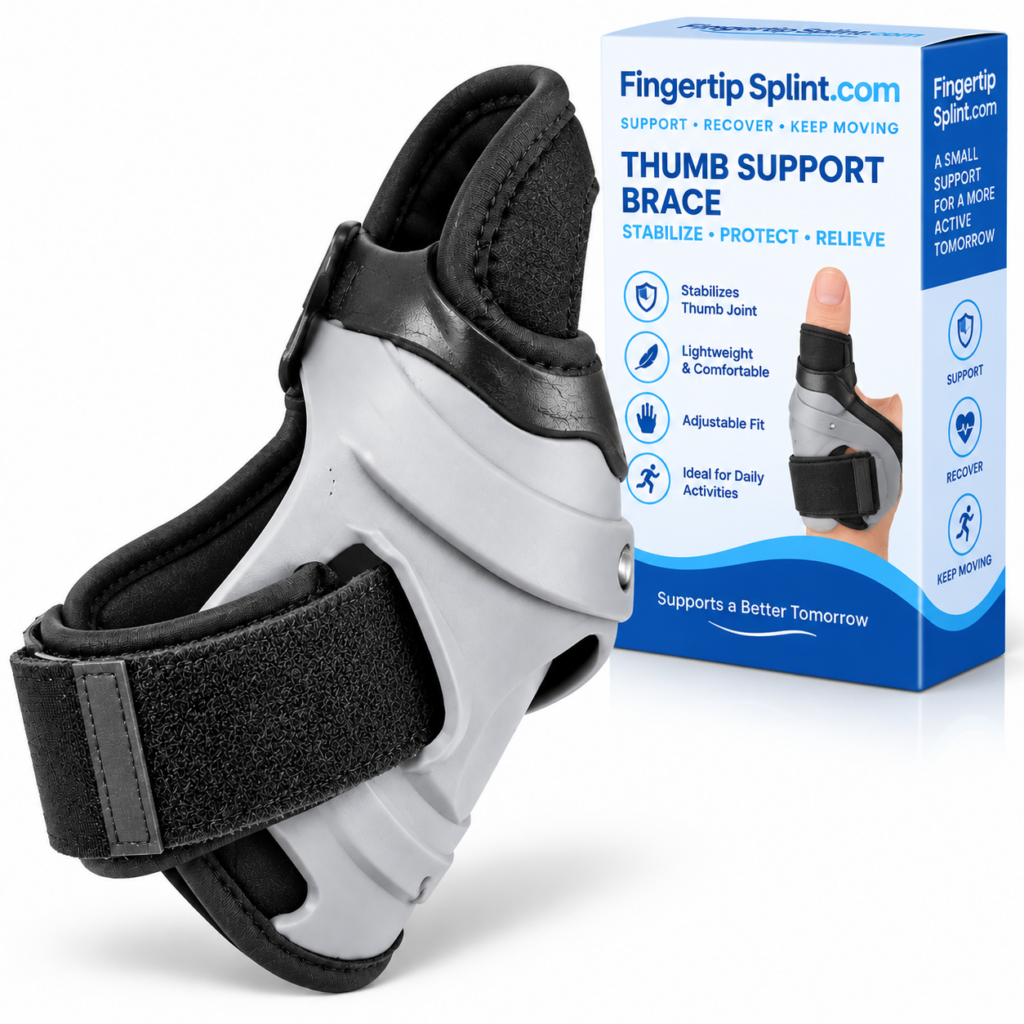
What This Guide Covers
- Quick Answer
- Start With Intended Use
- Thumb Coverage
- Level of Structural Support
- Adjustability
- Fit and Sizing
- Material and Comfort
- Flexibility and Range of Motion
- Fastening System
- Low-Profile vs Bulkier Designs
- Daily Activities
- How to Compare Two Splints
- Claims That Need Closer Examination
- Common Buying Mistakes
- Product Spotlight
- 3D Interactive: Product Anatomy
- Interactive: Splint Comparison Checklist
- What to Ask a Healthcare Professional
- When a Thumb Splint May Not Be Enough
- Quick Buyer Checklist
- Quick Tips
- FAQ
- Conclusion
Quick Answer: What Should You Consider When Choosing a Thumb Support Splint?
When choosing a thumb support splint, consider the area of coverage, intended activity, support structure, adjustability, sizing, material, comfort, fastening system, and how much thumb movement the design allows. A suitable option should fit securely without excessive pressure and should match the purpose for which it is being used.
If you still need the foundational explanation of what an adjustable thumb support splint is and how it works, the reference Adjustable Thumb Support Splint: What Is It and How Does It Work? covers that ground. This article assumes you understand the product category and now want a structured decision framework.
The First Decision: What Do You Need the Splint For?
Before comparing specific products, establish what you need the splint to do. The intended use shapes every subsequent decision — coverage, support level, adjustability, fit, and movement requirements all depend on it. Starting with the product rather than the purpose is the most common buying mistake.
| Intended Use | What to Examine |
|---|---|
| Everyday support | Comfort, fit, low profile |
| Studying or writing | Thumb mobility and bulk |
| Typing | Movement and flexibility |
| Smartphone use | Thumb mobility and fastening |
| Light household activities | Secure fit and durability |
| Rest or support | Coverage and positioning |
| General protection | Coverage and construction |
Key concept: Start with the activity, not the product. Your intended use determines which features matter most.
This step does not require a medical diagnosis. It is a product-characteristic decision. The question is what you want the splint to do on a practical level, not what condition you might have. That distinction keeps the buying decision inside the consumer product space.
Consider Thumb Coverage
Different designs cover different areas. Coverage determines which parts of the thumb and hand are enclosed by the splint, and it cannot be extended by adjustment. Understanding coverage types helps match a product to your needs.
Interactive: Coverage Map
Tap each area to see what to check
Thumb Coverage
Covers the thumb itself. This is the minimum coverage area. Check whether the design covers the specific part of the thumb you need supported, and whether the coverage allows the movement your activity requires.
Thumb-only coverage
Thumb-base coverage
Extension toward the wrist
Circumferential coverage
Partial coverage
Broader coverage
Buyer question to ask: Does the splint cover the area you actually want supported without unnecessarily restricting other areas?
Coverage is a physical property set by the product’s design. Two products with the same label may cover very different areas. Check the coverage dimensions in the listing rather than assuming based on the product name.
Consider the Level of Structural Support
“Support” is not one single feature. It is the result of several design characteristics working together. Understanding these components helps you evaluate what a specific product actually provides.
A. Material Support
How the material itself provides structure. A thicker or more rigid material may provide more positional resistance than a thin, flexible one.
B. Strap Support
How fastening helps keep the product positioned. A well-designed strap contributes to stability during movement.
C. Reinforcement
Whether the design contains structured elements that influence positioning. Some products include reinforcement in specific areas.
D. Compression and Contact
How closely the product sits against the thumb and surrounding area. Contact quality affects both comfort and stability.
A product with more structural support is not necessarily the right choice if it restricts movement you need. A product with less structural support is not necessarily insufficient if it matches your activity. The relevant question is whether the support level matches the purpose.
Adjustability: One of the Most Important Buying Factors
Adjustability is the feature that allows the wearer to modify fit or positioning after the product is on the hand. It is what separates an adjustable splint from a fixed design, and it is one of the most practical characteristics to evaluate before purchase.
Fit modification
Positioning control
Security during movement
Comfort adjustment
Accommodation of hand size differences
Tension fine-tuning
Adjustability Buyer Checklist
Tap each item as you confirm it for the product you are considering.
The mechanism reference How an Adjustable Thumb Splint Provides Flexible Support explains how adjustability interacts with support and movement in more depth.
Fit and Sizing
Fit is one of the most important factors in how a thumb support splint performs. Size and fit are not exactly the same thing — a correctly sized product can still fit poorly if positioned incorrectly or adjusted badly.
What Fit Involves
- Hand and thumb measurements
- Manufacturer sizing charts
- Strap positioning
- Gaps between material and skin
- Excessive pressure points
- Sliding during movement
- Wrinkling or bunching
Secure Fit ≠ Overly Tight Fit
A secure fit stays in position without creating excessive pressure. An overly tight fit creates discomfort and may cause concerning symptoms. The goal is an appropriate fit — not the tightest possible fit.
Signs of a Poor Fit
| Too Loose | Potentially Too Tight |
|---|---|
| Slides around during movement | Excessive pressure |
| Loses position | Numbness or tingling |
| Frequent readjustment needed | Significant discomfort |
| Poor contact with the hand | Discoloration |
If you experience numbness, tingling, significant discoloration, or persistent discomfort, remove the splint and reassess. Persistent symptoms warrant professional advice.
The detailed fit reference Thumb Splint Fit Guide: Understanding Adjustability and Comfort covers fit in more depth. Always follow the manufacturer’s sizing instructions for the specific product.
Material and Comfort
Material affects comfort, durability, and how the splint feels during extended wear. Different materials suit different needs, and no single material is universally superior.
Softness
Breathability
Moisture behavior
Skin contact
Flexibility
Thickness
Seam placement
Edge construction
Weight
Flexibility and Range of Motion
Different activities require different levels of movement. Understanding how much thumb movement your activity needs helps match the splint to your situation.
Activities That May Need More Movement
- Writing
- Typing
- Holding a phone
- Turning pages
- Light daily activities
Situations Where Movement May Be Intentionally Limited
- When more structured positioning is needed
- When the product’s design prioritizes stability
- When the activity requires a more fixed position
Important: Do not prescribe a particular degree of movement. The right amount depends on your activity, the product’s design, and your needs. What matters is that the splint allows the movement your activity requires without slipping or creating pressure.
Fastening System
The fastening system keeps the splint in position. Different products use different approaches, and the specific mechanism affects how easy the splint is to put on, adjust, and remove.
Common Fastening Approaches
- Hook-and-loop fastening
- Single strap design
- Multiple adjustment points
- Wraparound design
- Easy-on / easy-off construction
Practical Questions
- Can you put it on correctly?
- Can you adjust it easily?
- Does it remain in position during normal activity?
- Is the fastening comfortable against the skin?
- Does the fastening stay secure over time?
Low-Profile vs Bulkier Thumb Splints
Profile refers to how bulky the splint is. Different profiles suit different activities, and neither is universally superior.
| Factor | Low Profile | More Substantial Design |
|---|---|---|
| Bulk | Lower | Higher |
| Everyday convenience | Often easier | May feel more noticeable |
| Coverage | Depends on design | Depends on design |
| Movement | Depends on construction | Depends on construction |
| Comfort | Individual | Individual |
Important: Lower profile is not automatically better. A low-profile design may be easier for fine-motor activities, but a more substantial design may be appropriate when more structure is needed. The right choice depends on your purpose.
Consider Your Daily Activities
Activity compatibility is one of the most practical considerations. Different activities place different demands on a thumb splint, and the characteristics that matter most can shift from one activity to another.
Studying
- Writing comfort
- Thumb mobility
- Keyboard use
Computer Work
- Mouse use
- Keyboard movement
- Wrist interaction
Smartphone Use
- Thumb movement
- Screen interaction
- Fastening security
Travel
- Easy application
- Portability
- Adjustability on the move
Light Household Tasks
- Secure positioning
- Material durability
- Freedom of movement
The reference Why Choose an Adjustable Thumb Support Splint for Daily Activities? covers daily activity considerations in more depth.
How to Compare Two Thumb Support Splints
When comparing specific products, use a consistent framework. Instead of asking “Which looks better?”, ask “Which design matches the requirements I identified?” This keeps the comparison practical and evidence-based.
Compare these ten factors across the products you are considering. A product that performs well on most factors but poorly on one that matters most to you may still be the wrong choice. The relevant question is whether the design matches your specific requirements.
Features That Sound Good but Need Closer Examination
Certain phrases in product descriptions are meaningful but general. Translating them into specific questions helps you evaluate products more accurately.
| Claim | Follow-Up Question |
|---|---|
| “Maximum support” | What structural features provide that support? |
| “Premium comfort” | What material or construction contributes to comfort? |
| “Adjustable” | How is it adjusted, and what range does the adjustment offer? |
| “Flexible” | How does the design behave during movement? |
| “Ergonomic” | What specific design features are described? |
| “Universal fit” | What size range does it actually accommodate? |
| “Breathable” | What material or construction creates airflow? |
Translation habit: When you see a general claim, ask for the specific characteristic behind it. Listings that provide specifics are easier to evaluate than listings that rely on general language.
Common Mistakes When Choosing a Thumb Support Splint
These mistakes come up repeatedly during the buying process. Avoiding them makes the selection much more reliable.
A visually attractive design may not match the intended use.
Check: the construction, coverage, and fit information.
Excessive pressure can create discomfort and other concerns.
Check: adjust for appropriate fit, not maximum pressure.
Always check the manufacturer’s measurements before purchase.
Check: measure and compare to the sizing chart.
A design should match the activities you expect to perform.
Check: how the splint behaves during the activity you do most.
Different designs cover different areas.
Check: coverage dimensions against your intended area.
A poorly positioned strap can affect fit and stability.
Check: how the fastening works and whether it stays secure.
Persistent or significant symptoms may require professional evaluation.
Check: seek appropriate advice for significant or persistent symptoms.
Positioning, adjustment, wear time, and care vary between products.
Check: follow the manufacturer’s guidance for the specific product.
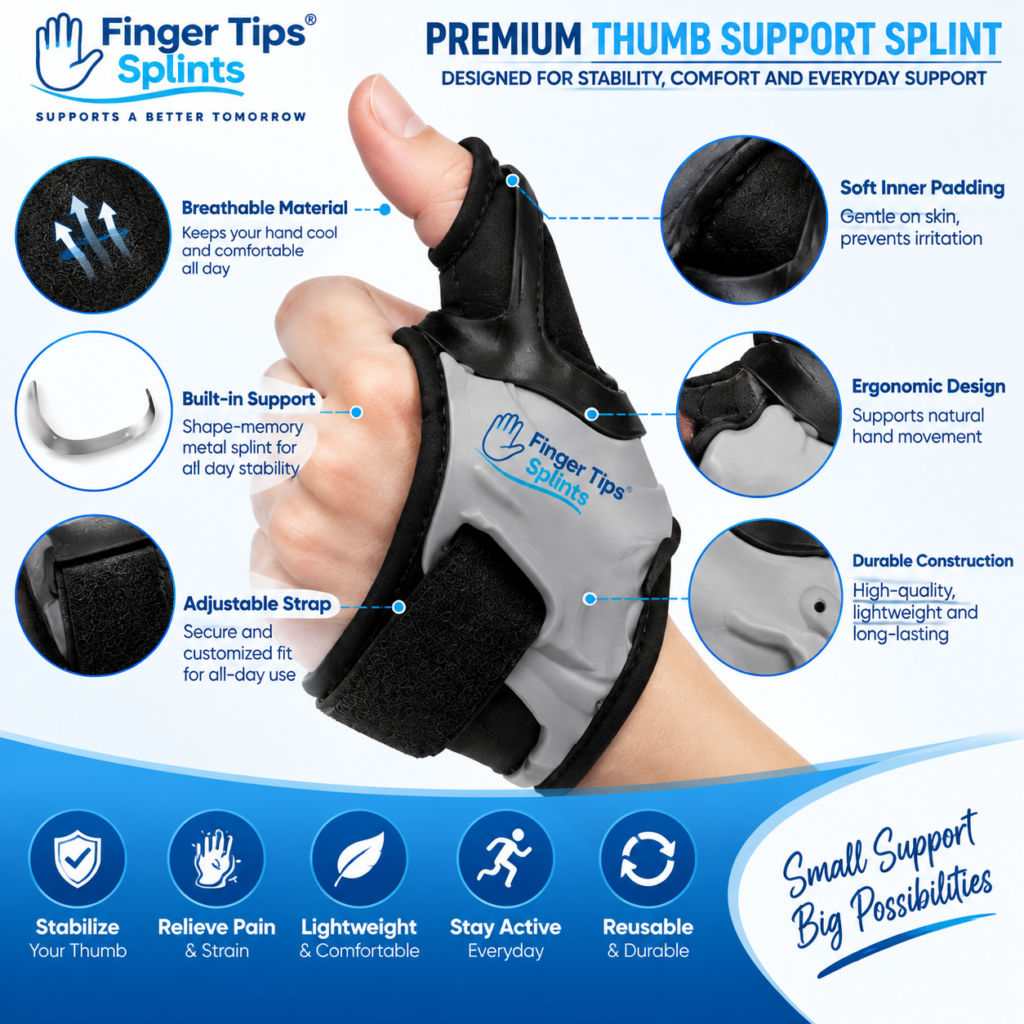
Product Solution: Adjustable Thumb Support Splint
After understanding the decision framework, here is a specific product to examine. The Adjustable Thumb Support Splint is one option if customizable fit and thumb-focused support are among your priorities.
Adjustable Thumb Support Splint
- Adjustable construction for customizable fit
- Thumb-focused support design
- Designed for thumb coverage and positioning
- Full product specifications available on the product page
Applying the Decision Framework to the Product
Coverage
Review the coverage area on the product page. Confirm the splint covers the specific thumb and hand area intended by its design.
Adjustability
Check how the adjustment works, what changes when adjusted, and whether the adjustment stays secure during movement.
Fit and Sizing
Review the sizing information. Compare your measurements against the stated range before relying on adjustment.
Everyday Usability
Consider how the splint’s characteristics match the activities you do most. Review the care instructions and any other product information.
For readers who want to understand buying considerations in more depth, the reference What to Look For When Buying an Adjustable Thumb Splint covers the buying process step by step. For the complete product reference, see Adjustable Thumb Support Splint: A Complete Buyer’s Guide.
Product Feature Breakdown: 3D Interactive
This interactive shows the key features of an adjustable thumb support splint. Tap each hotspot to see what it contributes.
Interactive 3D: Product Anatomy
Tap each hotspot to see what to examine
Thumb Coverage
What area is covered by the splint. Coverage is a physical property set by the product’s design. Check the coverage dimensions in the listing to confirm the area matches your intended purpose.
Interactive: Splint Comparison Checklist
Select the characteristics that matter to you. The result shows what to investigate before choosing a product.
What Do You Need?
Tap each item that applies to your needs.
Select items above to see what to investigate before choosing a product.
What Should You Ask a Healthcare Professional Before Using a Thumb Splint?
This section presents questions that may be useful to discuss with a qualified healthcare professional. It does not replace individualized medical advice.
Questions About Support
- What type of support is appropriate for my situation?
- Should my thumb movement be limited?
- Is there a particular design I should avoid?
Questions About Use
- How long should I use the support?
- What symptoms mean I should stop using it?
- Do I need assessment before using a support device?
For authoritative general information about thumb, hand, and wrist conditions, the following resources provide evidence-based content:
- Mayo Clinic for condition overviews and patient education.
- WebMD for general thumb and hand concern overviews.
- Healthline for practical wellness information.
- AAOS OrthoInfo for orthopedic guidance from specialists.
- NHS guide on hand pain for UK-based clinical guidance.
- MedlinePlus hand injuries and disorders for a broad reference library.
- Cleveland Clinic for clear patient-oriented explanations.
- Johns Hopkins Medicine for clinical and research-based perspectives.
- FDA for regulatory context on medical devices.
- NIH for research-based health information.
These resources provide general information and do not replace individualized advice from a qualified healthcare professional.
When a Thumb Splint May Not Be Enough
A consumer thumb support splint is a support product. It is not a substitute for professional assessment or prescribed medical support. Some situations require evaluation rather than product selection.
Seek appropriate professional evaluation for: significant trauma, visible deformity, severe pain, significant swelling, persistent numbness or tingling, major movement loss, symptoms that worsen, or symptoms that do not improve.
If a healthcare professional has prescribed a specific type of support, follow that guidance. A consumer thumb splint is not a substitute for prescribed medical support.
Quick Buyer Checklist
Before purchasing any thumb support splint, work through this checklist.
Before You Buy
Tap each item as you confirm it for the product you are considering.
Quick Tips
Frequently Asked Questions
Consider coverage area, support level, adjustability, sizing, material, comfort, flexibility, fastening system, bulk, ease of use, and activity compatibility. The features that matter most depend on your intended use. Compare specific product specifications against your requirements rather than relying on general marketing language.
Follow the manufacturer’s sizing chart for the specific product. Measure your thumb and hand according to the manufacturer’s instructions. Different manufacturers may use different sizing systems, so always check the specific product’s chart rather than assuming a size label means the same thing across products. If you are borderline between sizes, check whether the product offers an adjustment range that accommodates your measurement.
No. A thumb support splint should fit securely but not tightly. It should stay positioned during intended movement, allow the intended movement, and remain comfortable through wear. It should not create unnecessary pressure, numbness, tingling, or discoloration. Tightness is not a measure of support. Adjust for an appropriate fit, not maximum pressure.
Not automatically. Adjustable designs offer more fit flexibility within their range, which can be useful for users whose needs change across activities or whose finger dimensions fall between standard sizes. However, adjustment does not replace correct sizing. A fixed design that fits well may be perfectly suitable for everyday use. The right choice depends on your specific requirements and preferences.
The appropriate amount of movement depends on the product’s design and the activity you intend to perform. Some activities require more thumb movement than others. A splint should allow the movement appropriate to its intended design and your specific needs. If movement feels uncomfortable or the splint shifts during normal activity, check the fit or consider whether the product’s design matches your situation.
Thumb coverage refers to the area of the thumb itself that the splint covers. Wrist coverage refers to extension of the product onto the wrist area. Some thumb splints extend onto the lower palm or wrist for additional stability, while others focus specifically on the thumb. Coverage is a physical property set by the product’s design and cannot be extended by adjustment. Check the specific product’s coverage dimensions to confirm it matches your intended area.
Seek professional advice if you have significant injury, visible deformity, severe or worsening pain, substantial swelling, major loss of movement, persistent numbness or tingling, significant discoloration, or symptoms that are not improving. Also seek advice if a specific type of support has been recommended. A consumer thumb splint is not a substitute for professional medical assessment or prescribed medical support.
Choose by Requirements, Not by Appearance
Don’t choose a thumb support splint simply because it looks supportive. Evaluate the intended use, coverage, support structure, adjustability, fit, comfort, movement, fastening, and practicality — then compare those characteristics with what you actually need. Activity → Coverage → Support → Fit → Adjustability → Comfort → Movement → Practicality
The Bottom Line on Choosing a Thumb Support Splint
Choosing a thumb support splint comes down to understanding what you need it to do and comparing products against those requirements. Coverage, support level, adjustability, fit, material, comfort, movement, fastening, and activity compatibility all contribute to whether a specific product is appropriate for your situation.
The framework in this guide — Activity → Coverage → Support → Fit → Adjustability → Comfort → Movement → Practicality — works across products and situations. Starting with the intended use and evaluating each characteristic against your needs produces better outcomes than choosing by appearance or marketing language alone.
If you want to continue exploring within this cluster, the reference Adjustable Thumb Support Splint: A Complete Buyer’s Guide covers the buying process in more depth, and the mechanism article How an Adjustable Thumb Splint Provides Flexible Support covers how adjustability and support work together. For a wider reference, explore the full FingerTipSplint blog library.
This article is for general information only and is not a substitute for professional medical advice. Always consult a qualified healthcare provider for diagnosis and treatment of any medical condition.