
What to Consider When Choosing a Dynamic Finger Splint?
There are many products described as “dynamic finger splints,” “finger extension splints,” “finger rehabilitation splints,” “adjustable finger supports,” and “finger braces.” But similar terminology does not mean identical construction or intended use. The right dynamic finger splint is not simply the one with the most features — it is the one whose design, fit, movement characteristics, and intended use align with what the user actually needs. This guide provides a practical decision framework for evaluating products before choosing.
What This Buyer Guide Covers
- Quick Answer
- What Is a Dynamic Finger Splint?
- Factor 1: Start With the Purpose
- Factor 2: Consider the Finger and Joint
- Factor 3: How Much Movement Do You Need?
- 3D Interactive: 8 Things to Check
- Factor 4: Evaluate the Dynamic Mechanism
- Factor 5: Check Adjustability
- Factor 6: Fit and Sizing
- Factor 7: Comfort
- Factor 8: Materials
- Factor 9: Everyday Use
- Factor 10: Durability and Construction
- Factor 11: Ease of Use
- Interactive: Build Your Comparison Checklist
- Red Flags When Shopping
- Dynamic vs Static: Quick Comparison
- Product Spotlight
- Product Comparison Matrix
- When Should You Get Professional Advice?
- 5-Minute Buyer Check
- Quick Tips
- FAQ
- Conclusion
Quick Answer: What Should I Consider When Choosing a Dynamic Finger Splint?
Consider intended purpose, finger or joint involved, desired movement, dynamic mechanism, adjustability, sizing, comfort, materials, durability, everyday activities, and manufacturer instructions. A healthcare professional may need to guide selection when there is an injury or a specific medical condition.
If you want the foundational mechanism explanation first, the reference Dynamic Finger Extension Splint: What Is It and How Does It Work? covers that in detail. This article focuses specifically on how to evaluate and compare dynamic finger splints before choosing one.
What Is a Dynamic Finger Splint?
This section provides quick context. For a deeper explanation of the mechanism, see the dedicated article linked below.
Dynamic Support
A design built around interacting with movement. Rather than simply holding a fixed position, a dynamic splint incorporates a mechanical element that responds to finger position.
Extension-Oriented Designs
Some dynamic splints are oriented toward supporting extension-related positioning or movement — the straightening direction of the finger.
Adjustable Mechanisms
Many dynamic designs include adjustable components. Note: adjustability is a separate characteristic from dynamic vs static.
Directional Support
Dynamic designs may provide directional support. The exact direction and amount depend on the specific device construction.
For a deeper explanation of the mechanism behind dynamic designs, the reference Dynamic Finger Extension Splint: What Is It and How Does It Work? covers the topic in detail. For the broader concept, see Dynamic Finger Splints Explained: Understanding Extension Support.
Factor 1: Start With the Purpose
The first buyer criterion is purpose. Before comparing specific products, clarify what you are actually looking for. This foundational question shapes every other decision.
Possible Goals to Research
- Finger positioning
- Extension support
- Movement-oriented support
- Rehabilitation equipment
- Everyday finger support
- A device recommended by a healthcare professional
Why Purpose Comes First
A splint designed around movement support may have very different characteristics from one designed primarily to restrict movement. Comparing products without first clarifying purpose can lead to choosing a device that does not match the intended use.
Important: This section does not turn the goals into medical indications. Purpose here means the functional intent of the device — not a diagnosis. A healthcare professional can help determine whether a particular type of support is appropriate for a specific situation.
Factor 2: Consider the Finger and Joint
This is a very important but often overlooked consideration. Fingers are not identical, and neither are the joints within a single finger.
Questions to Ask
- Which finger?
- Which joint?
- How much of the finger does the device cover?
- Does it support one joint or multiple areas?
- Does the product specify a particular finger?
Critical Principle
Never assume that a splint designed for one finger or joint automatically fits or functions appropriately on another. Finger dimensions, joint positions, and movement characteristics differ between fingers.
Factor 3: How Much Movement Do You Need?
This is one of the strongest buyer criteria. Understanding what movement the device permits, supports, or restricts is essential before comparing products.
Restrict Movement?
Some designs are oriented toward restricting movement at a specific area. This may be appropriate when maintaining a position is the goal.
Support a Particular Position?
Some designs hold a specific position. The support structure maintains the positioning according to the device’s design.
Allow Some Movement?
Some designs are built to allow some movement while providing support. The amount depends on the device construction.
Provide Directional Support?
Some dynamic designs provide support in a specific direction. The exact direction depends on the mechanism.
Interact With Movement Dynamically?
Dynamic designs are built around interacting with movement. This means the mechanism can change its behavior as the finger moves. The specific behavior depends on the product.
Important: “Dynamic” describes how the support interacts with movement; it does not mean normal movement is guaranteed. The amount and direction of movement depend on the specific device.
For a deeper look at how adjustment and movement interact, the reference How an Adjustable Finger Extension Splint Supports Finger Movement covers the topic in detail.
3D Interactive: 8 Things to Check Before Choosing a Dynamic Finger Splint
This interactive shows the eight key factors to evaluate. Tap each factor to see what to check.
Interactive 3D: 8 Buyer Checkpoints
Tap each factor to see what to check
1. Purpose
Does the design match the intended use? A splint designed around movement support may have very different characteristics from one designed primarily to restrict movement. Clarify purpose before comparing products.
Compare the design — not just the product name.
Factor 4: Evaluate the Dynamic Mechanism
This is where buyers should inspect the actual components rather than relying on marketing terminology. Understanding what the mechanism does helps evaluate whether the device matches the intended purpose.
Components to Look For
- Elastic components
- Spring elements
- Tension systems
- Adjustable straps
- Directional support components
- Anchor points
- Support structures
Key Question
What does the mechanism actually do? Do not simply accept marketing terminology. Look for specific information about how the mechanism functions.
Buyer tip: If the product description uses vague language without explaining what the mechanism does, that is a reason to ask the manufacturer for more information before purchasing.
Factor 5: Check Adjustability
Adjustable designs can be useful, but adjustability is a feature — not a guarantee of suitability. More adjustment does not automatically mean better.
Strap Positions
Where the straps are placed affects how the device sits and how force is distributed.
Fastening System
The fastening system affects how easily the device can be put on and removed, and whether it stays secure.
Tension Adjustment
Tension adjustment changes how the mechanism interacts with the finger. Excessive tension is not automatically beneficial.
Positioning Adjustment
Positioning adjustment allows the device to be placed according to the manufacturer’s instructions.
Finger-Size Accommodation
Adjustability can accommodate different finger dimensions. This is useful, but it does not replace the need for correct sizing and positioning.
Key distinction: Adjustability is a feature, not a guarantee of suitability. Its usefulness depends on whether the adjustment produces a secure and comfortable fit for the intended purpose.
Factor 6: Fit and Sizing
Fit is one of the most important practical factors. A sophisticated splint with poor fit can be less useful than a correctly fitted simpler design for its intended purpose.
How Do You Know a Dynamic Finger Splint Fits Properly?
What to Examine
- Finger length
- Finger width
- Circumference where applicable
- Joint position
- Manufacturer sizing chart
- Intended finger
Signs to Reconsider the Fit
- Repeated slipping
- Excessive pressure
- Rubbing
- Uncomfortable edges
- Numbness or tingling
- Significant discoloration
- Persistent pain
Key principle: Secure is not the same as painfully tight. A splint should be appropriately positioned and secure without creating pressure points or restricting circulation.
For a detailed look at fit and features, the reference Finger Extension Splint Guide: Features, Fit and Everyday Use covers the topic in more detail.

Correct fit involves appropriate positioning, secure fastening without excessive tightness, and comfort during intended use. Always follow the manufacturer’s sizing and adjustment instructions for the specific product.
Factor 7: Comfort
Comfort affects whether the device can be worn as intended. This section breaks comfort into specific elements that can be evaluated when comparing products.
Strap Comfort
Does the strap create pressure? Consider whether the fastening system distributes pressure appropriately or concentrates it in a specific area.
Edge Comfort
Does the device rub against the skin? Consider edges, seams, and contact areas. These are common sources of irritation.
Contact Areas
Are pressure points developing? Contact areas determine how force is distributed. Incorrect contact can create discomfort.
Breathability
Does the material allow appropriate airflow? Breathability affects comfort during extended wear.
Duration of Use
Does the product’s intended-use guidance specify how long it should be worn? Follow the manufacturer’s instructions. Do not assume a wearing schedule that is not provided.
Factor 8: Materials
Materials affect how the device feels, how long it lasts, and how it should be cared for. Understanding material questions helps buyers evaluate specific products.
Questions to Ask
- What material is the support structure?
- What touches the skin?
- Is the material flexible or rigid?
- Is it washable?
- How should it be cleaned?
- Are there exposed edges?
- Does the manufacturer provide care instructions?
Important Note
Avoid assuming a material is “medical-grade” unless the product documentation actually establishes that. Look for specific information from the manufacturer rather than relying on general marketing terms.
Factor 9: Everyday Use
This is where the comparison becomes practical. Different designs interact differently with everyday activities. Consider what the device needs to allow or restrict for your situation.
Typing
Consider finger clearance, keyboard interaction, and splint bulk. The key question is whether the device allows the movement required for keyboard use.
Writing
Consider grip, finger position, and comfort. Some devices may interfere with pen grip; others may allow it.
Phone Use
Consider touchscreen interaction and grip stability. The fine movements required for tapping and swiping may be affected by the device.
Studying
Consider prolonged wear comfort and desk interaction. Periodic fit checks are useful during extended sessions.
Light Activities
Consider movement, stability, and device instructions. Do not use the splint for activities outside its intended use.
Sleep
Do not assume overnight use is appropriate. Overnight use should follow the product’s intended-use instructions or professional guidance rather than being assumed safe for every dynamic splint.
Factor 10: Durability and Construction
Durability affects how long the device remains functional. Buyers should inspect specific construction elements before purchasing.
What to Inspect
- Strap quality
- Fastening durability
- Seams
- Elastic components
- Adjustment points
- Structural integrity
- Replacement components, if applicable
Important Note
Do not assume a specific lifespan unless it is verified from the manufacturer. Different products have different construction and durability characteristics.
Factor 11: Ease of Use
A technically sophisticated splint may still be difficult to use. Practical usability matters for everyday wear.
Questions to Ask Yourself
- Can you put it on independently?
- Can you adjust it easily?
- Are the straps understandable?
- Can you remove it without difficulty?
- Can you clean it?
- Can you inspect the skin underneath?
Why This Matters
Ease of use affects whether the device can be worn consistently as intended. A device that is difficult to put on or adjust may not be used as directed.
Interactive: Build Your Splint Comparison Checklist
Select the features that matter for your situation. This tool generates a comparison checklist — not a product recommendation.
Build Your Comparison Checklist
Red Flags When Shopping
Be cautious with listings that exhibit the following warning signs. These are useful both for buyer protection and for evaluating whether a product provides the information needed to make an informed decision.
Dynamic vs Static: Quick Comparison
This is a brief reference. For the full comparison, see the dedicated article linked below.
| Question | Dynamic | Static |
|---|---|---|
| Movement interaction | Designed to interact with movement | Usually maintains a fixed position |
| Mechanical elements | May include dynamic components | Generally simpler |
| Directional support | May be present | Usually limited |
| Adjustability | Varies | Varies |
| Movement restriction | Depends on design | Often greater |
For a detailed comparison, the reference Dynamic vs Static Finger Splints: What’s the Difference? covers the trade-offs in more depth.
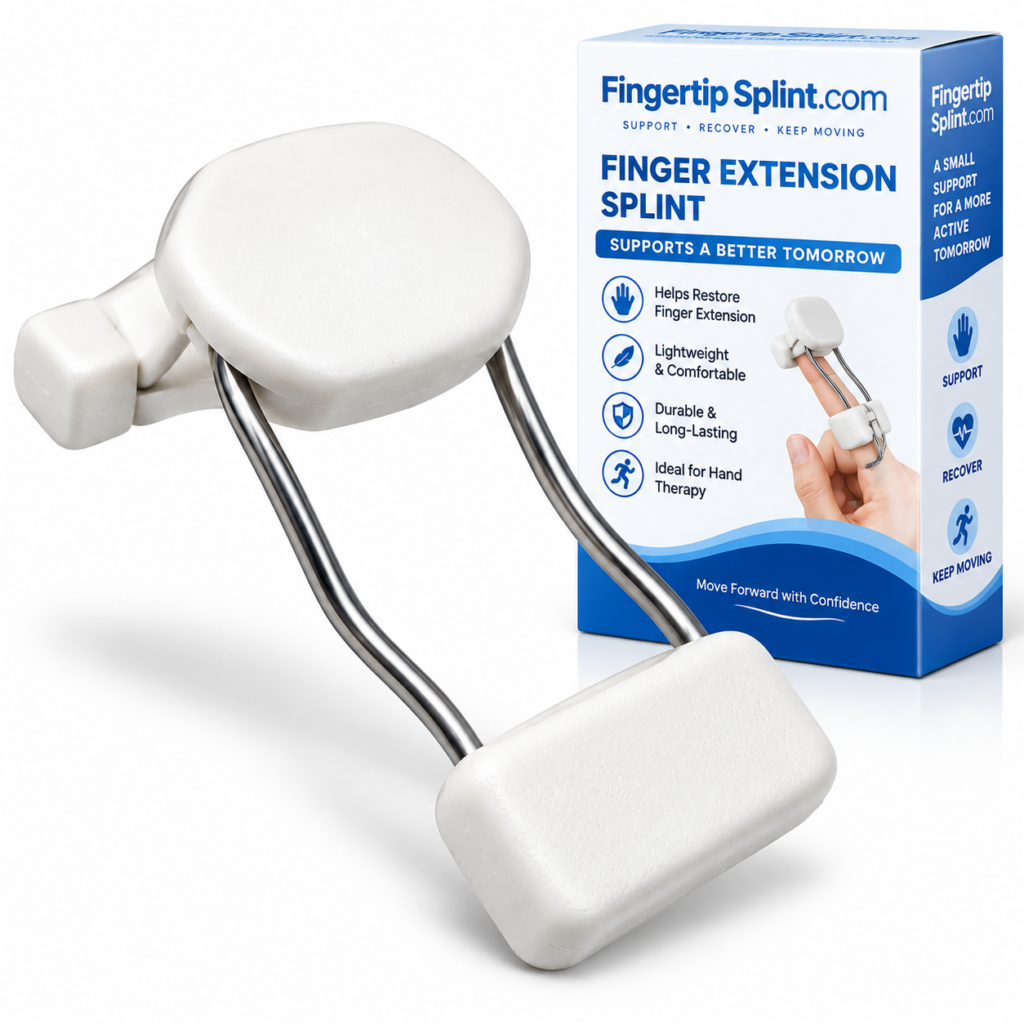
Product Spotlight: An Adjustable Dynamic Finger Extension Design to Evaluate
After understanding the buying factors, here is a specific product to examine. The Dynamic Finger Extension Splint – Adjustable Finger Rehabilitation Trainer for Joint Support provides a concrete example of the features discussed in this buying guide. It is not declared “the best” — it is presented as a design to evaluate using the checklist framework.
Dynamic Finger Extension Splint
- Dynamic finger-extension design
- Adjustable construction
- Finger support and positioning
- Rehabilitation-oriented product positioning
- Full product specifications available on the product page
Evaluating the Product Using the Buyer Framework
Design
The product is described as having a dynamic finger-extension design. This places it in the dynamic-support category.
Adjustability
The adjustable construction allows positioning or tension to be modified according to the product’s instructions. Note: adjustability is a separate characteristic from dynamic vs static.
Support
The product is designed around finger-extension support. The exact support characteristics depend on the device construction.
Practical Considerations
Review fit, positioning, comfort, and intended use on the product page. Compare these against the checklist above.
Who Should Research It?
People comparing dynamic finger-extension designs. Consider whether the design matches your intended use and follow appropriate professional guidance where applicable.
Product Comparison Matrix
This feature-based matrix can be used to compare any dynamic finger splint. It focuses on what to check rather than ranking specific products.
| Buying Factor | What to Check |
|---|---|
| Purpose | Does the design match the intended use? |
| Finger compatibility | Does it specify your finger? |
| Joint coverage | Which area does it support? |
| Movement | What movement does the design permit, support, or restrict? |
| Adjustment | What can be adjusted? |
| Size | Is a sizing guide provided? |
| Materials | Are materials clearly identified? |
| Comfort | Are pressure and contact areas manageable? |
| Maintenance | Are cleaning instructions provided? |
| Everyday use | Does the design fit your activities? |
| Instructions | Are use instructions available? |
How to use this matrix: For each product you are considering, fill in the answer for each factor. Compare the answers. The goal is to identify which design best matches your specific situation — not to find a universally “best” product.
When Should You Get Professional Advice Before Choosing a Splint?
This section is written with an EEAT (Experience, Expertise, Authoritativeness, Trustworthiness) perspective. It does not provide individualized medical advice, but it does explain situations where professional assessment may be appropriate before choosing a splint.
Significant Injury
The presence and nature of an injury affect the appropriate approach. Professional assessment helps determine what type of support is appropriate.
Visible Deformity
Visible deformity warrants professional assessment. A splint should not be used to manage a deformity without professional guidance.
Severe or Worsening Pain
Severe or worsening pain is a sign that warrants professional assessment rather than self-selecting a support device.
Major Swelling
Significant swelling affects fit and may indicate an underlying problem that requires professional assessment.
Numbness or Tingling
Numbness or tingling may indicate nerve involvement and should be assessed professionally.
Substantial Movement Loss
Significant loss of movement warrants professional assessment to determine the appropriate approach.
Symptoms Not Improving
If symptoms are not improving or are worsening, do not simply increase tension. Seek professional guidance.
Uncertainty About Movement Restriction
If you are unsure whether movement should be restricted or permitted, professional guidance can help clarify.
Uncertainty About Which Joint
If you are unsure which joint is affected, professional assessment can help identify the appropriate area of support.
What Professional Assessment Can Do
Professional assessment can help determine whether a dynamic, static, or another form of support is appropriate for the specific situation. A comparison article can explain design differences, but it cannot determine which splint is appropriate for an individual’s specific injury or condition.
For general information about finger injuries and hand conditions, see the Mayo Clinic overview of finger injuries. For broader hand anatomy and condition information, the Cleveland Clinic hand anatomy resource provides useful context. For an orthopedic perspective, the AAOS hand and wrist conditions library is a widely referenced resource. For general public health information, the NHS hand pain guidance offers a practical overview. Additional medical reference information is available through MedlinePlus hand injuries and disorders. For clinical and anatomy-focused context, Johns Hopkins Medicine hand conditions provides further reading. General educational context is also available through WebMD’s overview of finger injuries and Healthline’s general finger injury information. For peer-reviewed literature, NCBI PubMed Central hosts open-access research where appropriate. For a broader orthopedic reference, Orthobullets provides structured clinical summaries.
Important: This article does not provide individualized medical advice. Always consult an appropriate healthcare professional regarding your specific situation.
5-Minute Buyer Check
Before Purchasing, Answer These Questions
- What is the intended purpose? Clarify what you are actually looking for before comparing products.
- Which finger or joint does it support? Never assume a splint designed for one finger or joint fits another.
- What movement does it allow or restrict? Understand what movement the design permits, supports, or restricts.
- How is it adjusted? Check the adjustment system and whether the manufacturer provides adjustment instructions.
- Is there a clear sizing chart? Always use the manufacturer’s sizing instructions — sizing systems differ between products.
- What materials are used? Look for specific material information rather than general marketing terms.
- How is it cleaned? Check whether the manufacturer provides cleaning and care instructions.
- What are the manufacturer’s wearing and use instructions? Follow the manufacturer’s instructions for use.
- Can it realistically fit your daily activities? Consider typing, writing, phone use, and other activities you perform regularly.
- Do you need professional guidance? If you are unsure about any of the above, professional assessment may be appropriate.
Quick Tips for Choosing a Dynamic Finger Splint
Quick Buyer Checklist
Before purchasing, check the following. Click each item to mark it as reviewed.
Frequently Asked Questions
Consider intended purpose, finger or joint involved, desired movement, dynamic mechanism, adjustability, sizing, comfort, materials, durability, everyday activities, and manufacturer instructions. The “right” feature set depends on the purpose of the splint rather than simply maximizing support. A healthcare professional may need to guide selection when there is an injury or a specific medical condition.
Always use the manufacturer’s sizing instructions because sizing systems differ between products. Sizing may involve finger circumference, finger width, finger length, joint location, or device-specific measurements. Do not assume that your usual ring size corresponds to a splint size. Measure according to the manufacturer’s instructions, compare your measurements to the sizing chart, and select the appropriate size. If the fit is incorrect, reassess rather than forcing the device.
Not necessarily. Adjustability is a feature, and its usefulness depends on the intended purpose and fit — not a universal quality ranking. An adjustable design may be useful for accommodating different finger dimensions or positioning requirements. However, adjustability does not automatically mean better. A well-fitted simpler design can be more useful than a poorly-fitted adjustable one for its intended purpose. The appropriate choice depends on the specific situation.
It depends on the specific design and intended use. “Dynamic” describes how the support interacts with movement; it does not mean normal movement is guaranteed. Some dynamic splints may allow more movement than others. The appropriate amount of movement depends on the purpose of the device and the specific situation. If you are unsure how much movement should be permitted or restricted, professional guidance can help clarify.
A splint should be secure but not excessively tight. More tension is not automatically better. Excessive tightness can cause discomfort, pressure, rubbing, and poor tolerance. The goal is an appropriate fit that keeps the device positioned correctly without creating pressure points or restricting circulation. Secure is not the same as painfully tight. Follow the manufacturer’s adjustment instructions carefully. If you experience numbness, tingling, or significant discoloration, reassess the fit and seek guidance if symptoms persist.
It depends on the specific splint design and the activity. Some devices may be compatible with activities like typing, writing, or light tasks; others may not. The key question is whether the activity requires movements the splint is designed to support or restrict. Overnight use should follow the product’s intended-use instructions or professional guidance rather than being assumed safe for every dynamic splint. Check the product documentation and follow professional guidance where applicable.
Ask a healthcare professional if there is a significant injury, visible deformity, severe or worsening pain, major swelling, numbness or tingling, or substantial loss of movement. Also seek guidance if symptoms are not improving, if you are uncertain about whether movement should be restricted or permitted, or if you are unsure which joint is affected. Professional assessment can help determine whether a dynamic, static, or another form of support is appropriate for the specific situation. A comparison article can explain design differences, but it cannot determine which splint is appropriate for an individual’s specific injury or condition.
Conclusion: Compare the Design, Not Just the Product Name
Choosing a dynamic finger splint is not about finding the product with the most features. It is about finding the design that matches the intended purpose, the specific finger and joint, the desired movement, the fit requirements, and the everyday activities the user needs to perform.
This buyer guide has provided a decision framework across eleven factors: purpose, finger and joint, movement, dynamic mechanism, adjustability, fit, comfort, materials, everyday use, durability, and ease of use. It has also provided interactive tools, a comparison matrix, red flags to watch for, and a 5-minute buyer check. The goal has been to help readers evaluate products before purchasing — not to recommend a universal “best” splint.
Explore an Adjustable Dynamic Finger Extension Splint
Compare the product’s design, adjustment features, fit requirements, and intended use against the checklist above before deciding whether it matches what you are looking for. The Dynamic Finger Extension Splint – Adjustable Finger Rehabilitation Trainer for Joint Support provides a concrete example of the features discussed in this buying guide.
View the Dynamic Finger Extension SplintNeed information about other finger support products? Explore the FingerTipSplint shop. For general questions, see the FingerTipSplint FAQ. For B2B inquiries, see the medical finger splint supplier page or request a quote.